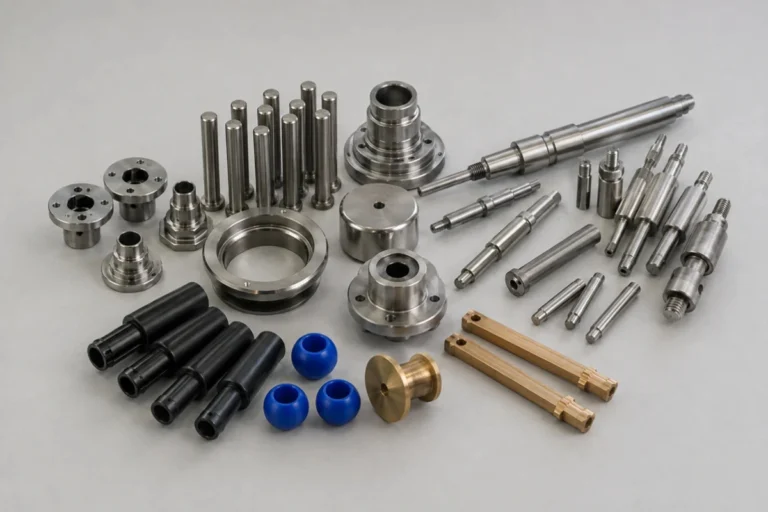
Bronze vs Brass Machining: How to Choose the Right Alloy for Your CNC Parts

Bronze vs Brass Machining: How to Choose the Right Alloy for Your CNC Parts

Brass and bronze look remarkably similar, but on the CNC machine, they behave worlds apart. Understanding bronze vs brass machining is crucial for optimal production. At Rollyu Precisio, we machine thousands of these copper alloy parts annually. This guide reveals their key machining difference s to ensure your project’s success.   What is the Difference Between Brass and…

Phosphor Bronze vs Aluminum Bronze

Phosphor Bronze vs Aluminum Bronze

Phosphor bronze and aluminum bronze are both copper-based alloys, but they are designed for different engineering applications. Phosphor bronze is mainly used for conductivity and fatigue resistance, while aluminum bronze is preferred for strength, wear resistance, and corrosion resistance   Quick Comparison: Phosphor Bronze vs Aluminum Bronze   Property Phosphor Bronze Aluminum Bronze Electrical Conductivity…

Powder Coating Services for CNC Machined Parts

Powder Coating Services for CNC Machined Parts

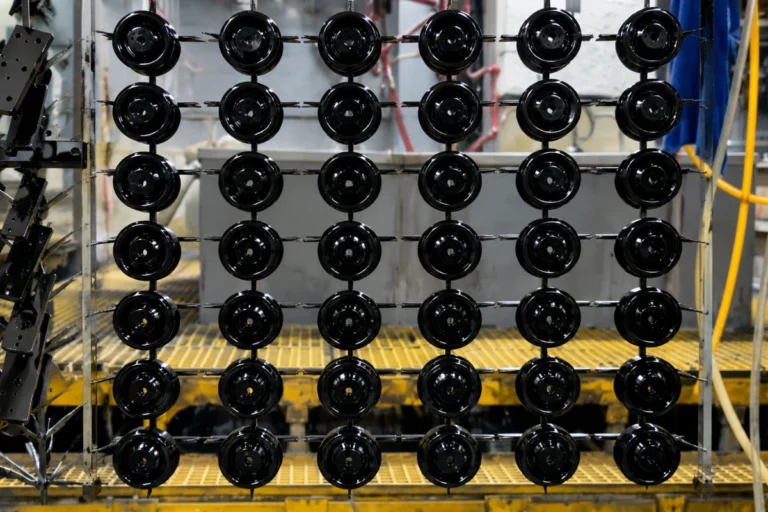
Powder coating can easily destroy a precision machined part if treated purely as a cosmetic step. Blocked threads, shrunken bearing bores, warped aluminum housings, and misaligned brackets are common results of poor application, leading directly to assembly failures.     Powder Coating for CNC Machined Parts: A Critical Dimensional Process Applying a tough finish to…

Phosphor Bronze Machining Properties Applications and CNC Guide

Phosphor Bronze Machining Properties Applications and CNC Guide

Known for its excellent fatigue resistance, wear resistance, and conductivity, phosphor bronze is ideal for applications requiring long-term reliability and stable performance. However, phosphor bronze machining can still present CNC challenges such as burr formation, heat buildup, and tool wear during cutting operations.   What Is Phosphor Bronze   Phosphor bronze is a high-performance copper…

Aluminum Bronze Machining Properties Applications and CNC Challenges

Aluminum Bronze Machining Properties Applications and CNC Challenges

Aluminum bronze is a high-strength copper alloy renowned for its outstanding wear and corrosion resistance, making it essential for harsh marine and industrial environments. However, the exact tough nature that makes it so valuable also requires highly specialized manufacturing skills. At Rollyu Precision Hardware, we have extensive experience mastering this material. In this guide, we will…

Invar vs Kovar What’s the Difference

Invar vs Kovar What’s the Difference

Confused about Invar vs Kovar  Discover the key differences in thermal expansion chemical composition applications and machining tips for your CNC project.   Invar vs Kovar Which Precision Alloy is Right for Your Project   When producing highly sensitive components for the aerospace, telecommunications, or medical sectors, controlling thermal expansion is a critical priority. In…

Invar vs. Stainless Steel: Differences, Machining and Applications

Invar vs. Stainless Steel: Differences, Machining and Applications

Discover the core differences between Invar and Stainless Steel. Learn why engineers choose Invar for thermal stability and Stainless Steel for corrosion resistance in CNC machining.   Invar vs. Stainless Steel: What You Need to Know   In the world of precision CNC machining, Invar (specifically Invar 36) and Stainless Steel (like 304/316) may both…

What Is Invar? Properties and Machinability Explained

What Is Invar? Properties and Machinability Explained

Discover what Invar and Invar 36 are. Learn about their unique low thermal expansion properties and explore why Invar machinability poses extreme challenges for CNC manufacturing.   What is Invar      Understanding Invar 36 and Its Machinability Challenges   Invar is a well known nickel iron alloy. Its name is derived from the word “invariable,”…

Invar Machining Guide Invar 36, Manufacturing Processes

Invar Machining Guide Invar 36, Manufacturing Processes

In precision manufacturing, even minor temperature shifts can quietly ruin tight tolerances. While standard metals naturally expand and contract, Invar 36 stays locked in. Thanks to its incredibly low coefficient of thermal expansion (CTE), it is the baseline material when micron-level dimensional stability is mandatory. You’ll find Invar inside satellite optics, aerospace tooling, and advanced…

End of content

End of content