18-8 Stainless Steel CNC Machining for Precision OEM Components

18-8 Stainless Steel CNC Machining for Precision OEM Components

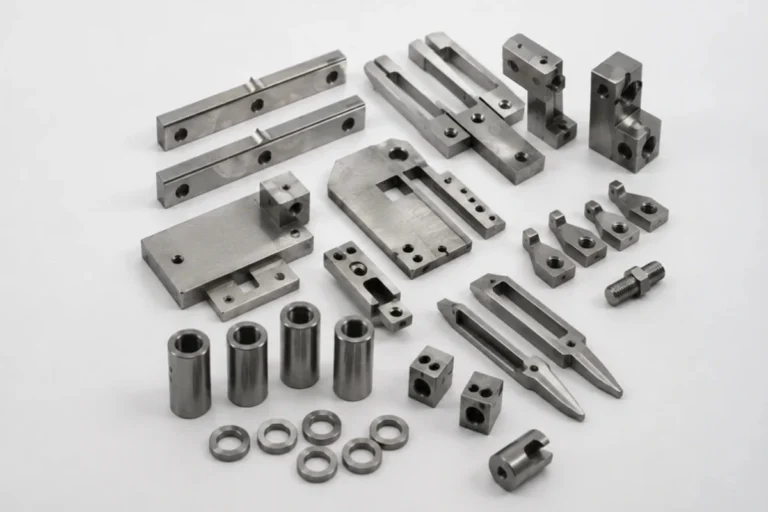
18-8 stainless steel is widely used for corrosion-resistant fasteners, threaded shafts, sensor hardware, adjustment components and precision mechanical parts. However, for an OEM mechanical engineer or sourcing team, specifying only “18-8 stainless steel” may not provide enough information for a precision CNC machining project. 18-8 generally refers to a family of austenitic stainless steels containing…

18/10 Stainless Steel CNC Machining for Precision Equipment

18/10 Stainless Steel CNC Machining for Precision Equipment

When a drawing, legacy bill of materials or supplier note calls out “18/10 stainless steel,” the first machining decision is not tool selection. It is material identification. The term describes a chromium–nickel composition commonly associated with the 304 family, but it is not a complete engineering grade or purchasing specification. That distinction matters in photonics,…

Brass vs. Stainless Steel for CNC Machining: The Engineering Answer

Brass vs. Stainless Steel for CNC Machining: The Engineering Answer

Brass and stainless steel can both produce accurate, durable CNC machined components, but they solve different engineering problems. Brass is a copper-zinc alloy family valued for machinability, conductivity and low-friction performance. Stainless steel is an iron-based alloy family containing sufficient chromium to form a protective passive film; depending on the grade, it can provide corrosion…

How to Handle Surface Oxidation of Brass, Bronze and Copper Parts

How to Handle Surface Oxidation of Brass, Bronze and Copper Parts

Short answer: Do not select a cleaning method from color alone. First identify the alloy, oxidation severity and functional surfaces. Light tarnish may need controlled cleaning; active corrosion or pitting requires engineering review. After treatment, protect the surface with an application-compatible finish and dry packaging. For UHV, optical and semiconductor applications, cleanliness, outgassing and residue…

Stainless Steel 303 vs 304 vs 316: How to Choose for CNC Machined Parts

Stainless Steel 303 vs 304 vs 316: How to Choose for CNC Machined Parts

Stainless steel 303, 304, and 316 are all austenitic 300-series alloys, but they solve different manufacturing problems. Type 303 adds sulfur to improve chip breaking and machining productivity. Type 304 is the versatile baseline for corrosion resistance, forming, and welding. Type 316 adds molybdenum to improve resistance to pitting and crevice corrosion, especially where chlorides…

316 Stainless Steel Machining for Precision, Corrosion-Resistant Components

316 Stainless Steel Machining for Precision, Corrosion-Resistant Components

316 stainless steel is selected when a component must combine corrosion resistance, mechanical durability, cleanability and dimensional stability. These requirements appear in very different products—from ultra-high-vacuum interfaces and low-dead-volume fluidic manifolds to rowing-boat mounting pins and medical-device hardware. The applications vary, but the manufacturing question is the same: can the supplier machine the part without…

Electropolishing Stainless Steel for Precision Components

Electropolishing Stainless Steel for Precision Components

Electropolishing is an electrochemical finishing process that removes a thin, controlled layer from a metal surface. The workpiece acts as the anode in an electrolytic cell. Under controlled current, temperature, chemistry, time, agitation, and electrode geometry, microscopic high points dissolve faster than valleys. The result can be a smoother, brighter, cleaner surface with reduced micro-burrs…

How to Polish Stainless Steel for Precision Industrial Parts

How to Polish Stainless Steel for Precision Industrial Parts

Polishing stainless steel is a controlled material-removal process used to reduce machining marks, burrs, weld discoloration, and microscopic peaks. The goal may be a consistent satin appearance, a low surface roughness, easier cleaning, reduced product buildup, or a highly reflective mirror finish. For precision CNC parts, however, polishing must improve the surface without rounding edges,…

Machining 304 Stainless Steel: CNC Strategies for Precision Parts
|

Machining 304 Stainless Steel: CNC Strategies for Precision Parts

Quick answer: Machine 304 with a rigid setup, sharp positive-geometry tooling, enough feed to form a real chip, controlled engagement, reliable chip evacuation, and coolant delivered to the active cutting zone. Avoid dwell and repeated light rubbing passes because they can work-harden the surface.   304 stainless steel is widely specified for food-processing and botanical-extraction…

303 Stainless Steel Machining: A Practical Guide for Precision CNC Parts

303 Stainless Steel Machining: A Practical Guide for Precision CNC Parts

303 stainless steel machining is frequently selected for precision components that require stainless-steel strength and moderate corrosion resistance but must also be produced efficiently. Type 303 is a free-machining austenitic stainless steel. Its sulfur addition promotes chip breaking, reduces the tendency to produce long stringy chips and allows it to be machined more efficiently than…

End of content

End of content