

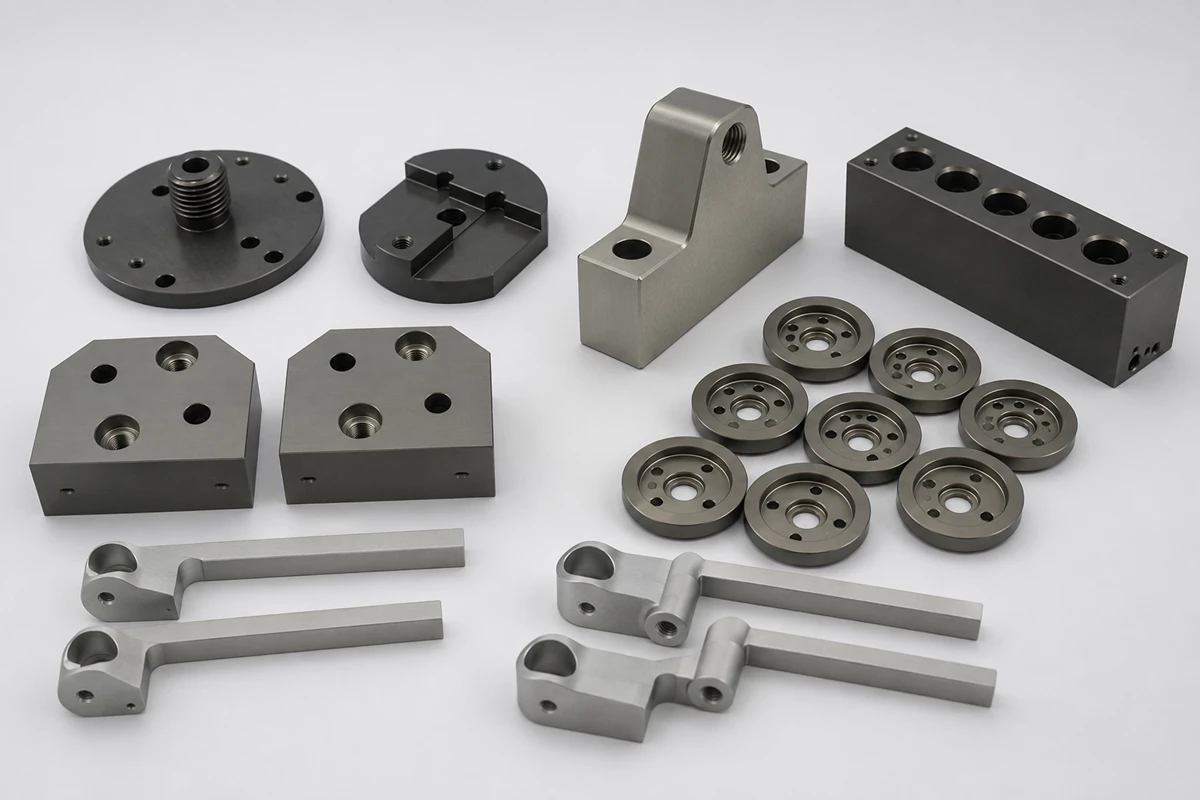
Quick Answer: What Mechanical Engineers Need to Know
Hard anodizing – also called hardcoat anodizing or Type III anodizing – is useful when an aluminum component needs a more wear-oriented oxide surface than standard Type II anodizing. The engineering value is real, but so is the design risk. Hardcoat changes the surface itself, can change final dimensions, electrically insulates the aluminum, and can respond differently on 6061, 7075 and other alloys. If your part includes bearing seats, precision bores, threads, sliding interfaces, grounding pads, optical surfaces or repeated cleaning cycles, the finish should be reviewed before the machining plan is frozen. The best outcome is not simply a “hard” surface; it is a finished part that still assembles, aligns, moves and survives its real duty cycle.
| Review the finish before the first chip is cut
Send Rollyu Precision the 3D CAD, 2D drawing, alloy/temper, Type III callout, critical fits, masking areas and inspection requirements. We can review machining allowance and finished-condition verification as one manufacturing plan. |
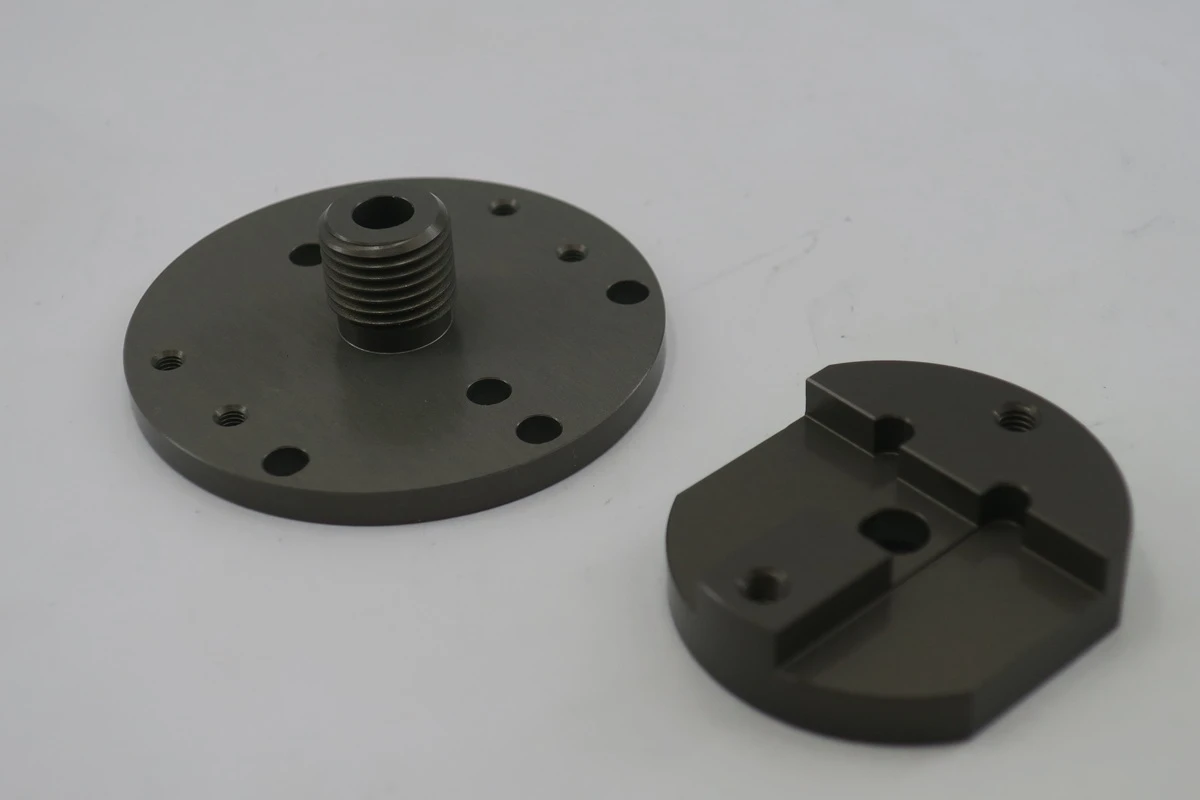
Why Type III Hardcoat Is Chosen – and Why It Can Still Cause Assembly Problems
Type II and Type III are both anodic conversion finishes, but they solve different priorities. Type II is commonly used for corrosion protection, appearance and decorative color. Type III is selected when abrasion, sliding contact, repeated handling or a harder functional surface is the primary reason for the finish. That makes it attractive for stage structures, robotic joints, actuator housings, sensor hardware, fixtures and mechanisms that see repeated contact.
The mistake is treating Type III as a cosmetic line item or automatic upgrade. The oxide can consume bore clearance, increase an outside dimension, tighten a thread, change a bearing fit or interrupt an electrical bonding path. In precision hardware, those effects may matter more than coating hardness.
| Engineering Question | Type II Anodizing | Type III Hard Anodizing |
| Primary design reason | General protection, appearance, dye options | Wear, abrasion, harder functional oxide |
| Relative build | Usually thinner | Usually thicker; greater dimensional impact |
| Color behavior | Broad decorative options | Natural color varies by alloy and coating; dyed options require control |
| Precision fits | Review required | DFM review is especially important |
| Electrical behavior | Anodic oxide is insulating | Anodic oxide is insulating; bonding areas may need masking |
| Selection rule | Choose for the actual requirement | Do not specify Type III simply because it sounds “better” |
The Dimensional Trap: A Good Coating Can Still Ruin a Good Fit
Hard anodizing converts aluminum at the surface and also grows outward. Shop rules of thumb such as “half penetration, half buildup” can be useful for early planning, but they should not be treated as a contractual constant. The actual dimensional effect depends on alloy, coating requirement, geometry and the qualified finishing process. A safer approach is to plan compensation from the drawing and processor data, then verify critical features after the finish when the drawing requires final-condition dimensions.
Bearing seats, bores, threads and locating features
A small bore can become smaller after coating; an outside diameter can become larger. Thread flank clearance can also change. In a motion stage, robotic actuator or optical mount, that can show up as unexpected preload, assembly force, runout or alignment error. The drawing should identify whether the feature receives hard coat, is masked, is machined with compensation, or is verified by gauge or measurement after anodizing.
Grounding, bonding and EMI contact
The anodic oxide is electrically insulating. Ground pads, chassis bonds, encoder or sensor reference points, and EMI contact surfaces may therefore require selective masking or a separate engineered contact strategy. “Hard anodize all over” is risky when the mechanism depends on metal-to-metal conductivity.
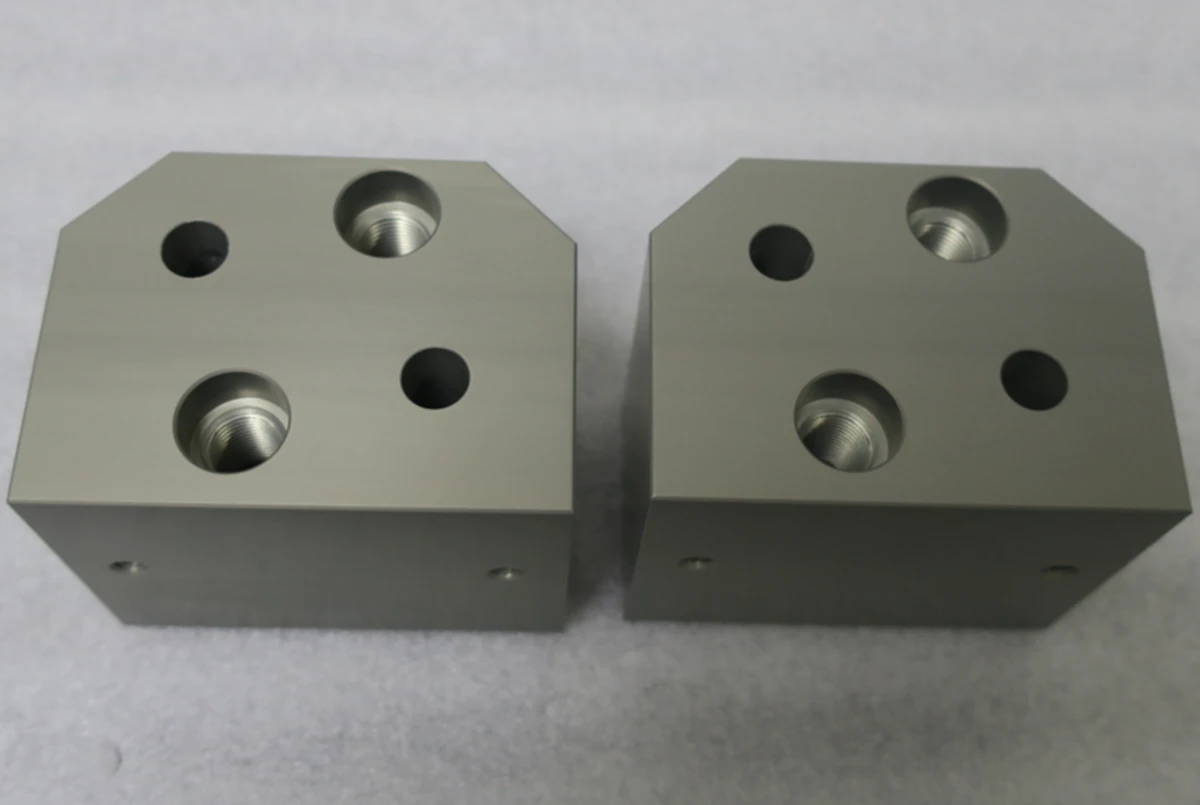
6061 vs 7075: The Alloy Is Part of the Coating Specification
6061 is a common choice for hard-anodized precision components because it combines machinability, strength and relatively predictable anodizing behavior. 7075 can also be hard anodized successfully and is often selected where higher substrate strength is important. However, the alloy chemistry changes oxide growth, natural color, surface appearance and the practical process window. Do not assume a 6061 part and a 7075 part will match visually after the same nominal Type III callout.
For visible photonics, quantum or medical assemblies, keep alloy and temper consistent where practical, define cosmetic surfaces and acceptance criteria, and use an approved sample when color matters. Specify hard coat for function first; appearance needs a separate requirement.
Sealed, Unsealed or PTFE-Impregnated? Define the Real Functional Priority
There is no universal post-treatment that is correct for every Type III part. Some wear-driven applications favor an unsealed hardcoat; other applications call for sealing to support corrosion performance or color retention. PTFE or another lubricating treatment may be specified for sliding interfaces where friction matters. These choices should follow the drawing and the qualified finishing process, because improving one property can change another.
A practical risk-control rule is simple: do not add PTFE, nickel-acetate sealing or any other post-treatment just because it is common. If the customer needs a specific friction behavior, corrosion result, dye retention or cleaning compatibility, that requirement should be stated and validated. Type III Class 1 is a classification within the governing specification; PTFE impregnation is an additional requirement when separately called out.
Hard Anodizing Design Priorities Across Six Engineering Applications
Photonics: protect alignment without assuming “black” means optical black
Optomechanical frames, detector mounts and stage components may benefit where repeated assembly causes wear. But a dark anodized surface is not automatically a stray-light solution. If reflectance is critical, specify the spectral range and validate the actual finish; visual blackness alone is not optical performance.
Quantum hardware: small fit changes can become system-level instability
Quantum instruments combine optical, vacuum, thermal and motion interfaces. A coated bore that shifts a locating fit, or a masked area that changes electrical contact, can become a system-level problem. Review datum interfaces, sensor mounts and grounding paths before deciding where Type III belongs.
Motion control: the coating must not rewrite bearing preload
Linear and rotary stages, actuator housings and motor mounts are strong candidates when wear is real. The high-risk features are bearing seats, guides, threaded adjusters and bonding points. Define final fit, not only pre-finish machining size, and identify which dimensions require post-anodize inspection.
Robotics: design for lifecycle contact, not showroom color
Robot joints, end-effector brackets and sensor mounts see repeated contact and service cycles. Type III can help where wear causes tolerance drift. If the goal is only uniform black appearance, another anodizing route may fit better. Edge loading, fasteners and conductive paths still need review.
Medical devices: a hard anodized finish is not a regulatory claim
For non-implant positioning structures, scanner hardware and fixtures, hard anodize may improve durability. It does not establish biocompatibility, sterility, patient-contact suitability or compatibility with every cleaning cycle. Define contact status, cleaning/sterilization method and regulatory requirements, then validate the intended use.
Dental equipment: protect repeated positioning and cleaning interfaces
Dental scanners, imaging equipment and positioning assemblies combine small bores, adjustment hardware and frequent cleaning. Check whether the finish survives the defined cleaning chemistry while maintaining fit and appearance, and keep patient-contact claims separate from equipment-level durability claims.
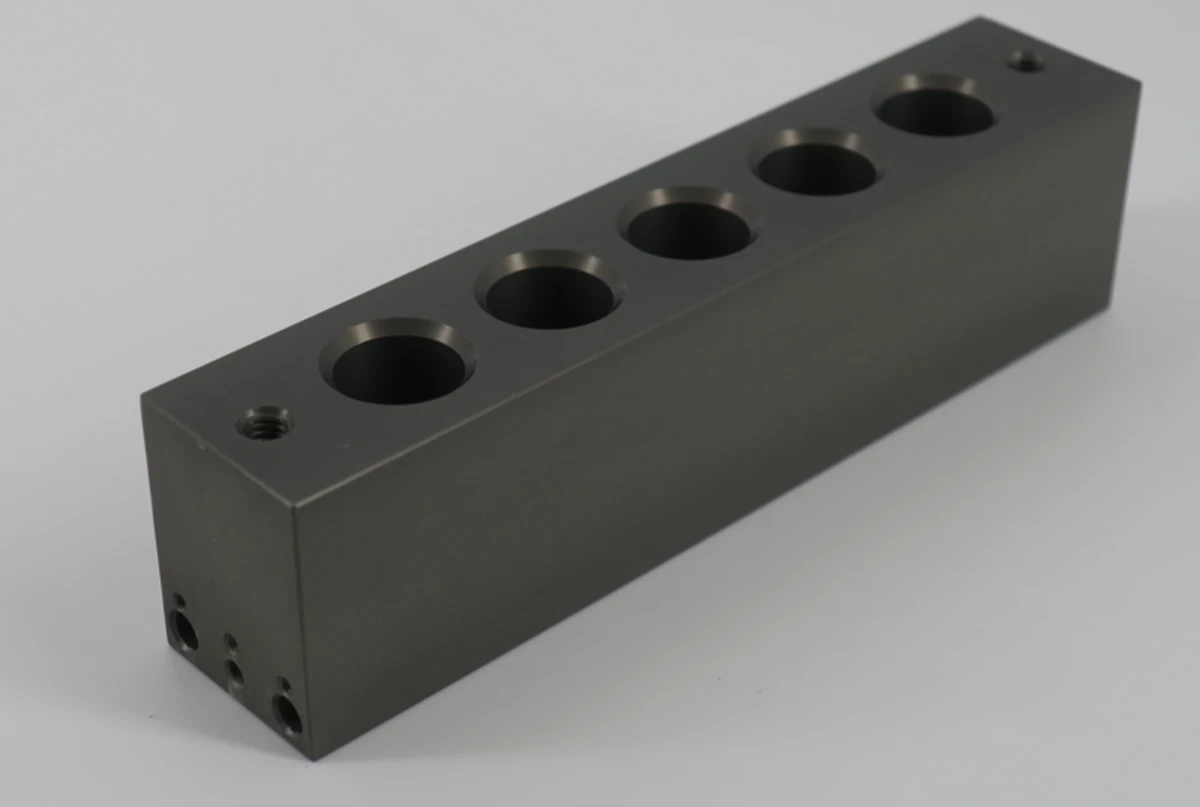
Case Study: 6061 Sensor Mount and Funnel – Drawing Requirements Drove the Process
A supplied 6061 sensor mount and matching sensor funnel drawing set specified Type III Class 1 hard anodizing with PTFE impregnation and stated that dimensions apply after coating. It also required calibrated inspection after all relevant processes, an inspection report, cleaning, and individual protective wrapping for shipment.
This treats surface finishing as part of the engineering definition, not an afterthought. The machining team must identify post-coating dimensions, understand which surfaces receive the finish, protect threads and mating features as required, and plan final inspection after anodizing. The PTFE requirement must also be flowed to the finisher exactly as specified rather than inferred from the Type III class.
For the mechanical engineer, the useful takeaway is not the specific part geometry; it is the discipline of defining the finished state. When the drawing makes post-coating dimensions and inspection explicit, the supplier can quote and manufacture against the same functional target that the assembly engineer will evaluate.
What a Type III-Ready Drawing or RFQ Should Tell the Supplier
A strong RFQ gives the supplier enough information to quote the real process instead of guessing. That reduces rework, coating disputes and the familiar problem of a part that looks good but no longer fits. For tight assemblies, include the final-condition requirements rather than relying on a generic finish note.
| RFQ Item | What to Define | Why It Matters |
| Material & temper | 6061-T6, 7075-T6, etc. | Alloy affects machining, oxide response and appearance. |
| Governing specification | MIL-PRF-8625 Type III or the exact customer specification | Prevents a supplier from assuming the wrong process or revision. |
| Class / color | Class 1 or Class 2 as applicable; define color separately when needed | Class is not a quality grade and visual appearance needs its own criteria. |
| Coating requirement | Drawing-defined thickness/performance requirement | Controls wear expectation and dimensional planning. |
| Critical final dimensions | Bores, ODs, bearing seats, threads, locating fits | Tells the supplier what must be achieved after finishing. |
| Masking | Ground pads, threads, bores or other coating-free areas | Protects fit and electrical function where required. |
| Seal / lubrication | Only as explicitly specified | Balances wear, corrosion, friction and color retention. |
| Inspection evidence | Final inspection report, gauge check, CMM or other specified verification | Confirms the part still assembles and functions after the finish. |
| Protect the fit before the hardcoat line
If your part contains bearing seats, precision bores, sliding fits, threads, optical interfaces or grounding surfaces, send those requirements with the RFQ. Rollyu Precision can flag where compensation, masking or post-finish verification should be considered before production. |
How Rollyu Precision Approaches CNC Machining + Hard Anodizing as One Plan
For precision parts, machining and finishing should be one manufacturing plan. Start with functional surfaces, the drawing callout and final acceptance criteria, then coordinate allowance, masking, deburring, handling and final inspection around the finished part.
A practical route is: drawing/DFM review -> CNC machining -> deburring and cleaning -> defined masking -> qualified Type III anodizing -> specified dye/seal/lubrication -> cleaning/drying -> finished-condition inspection -> thread/fit verification -> protected packaging. Bath chemistry and electrical parameters belong to the qualified finishing process, not a generic web recipe.
FAQ: Hard Anodizing / Type III Anodizing for CNC Aluminum Parts
Is hard anodizing the same as Type III anodizing?
In most engineering discussions, yes. MIL-PRF-8625 identifies Type III as hard anodic coatings. The customer drawing and the current governing specification control contractual work.
Is Type III always better than Type II?
No. Type III is justified when wear, abrasion or a harder functional surface is important. Type II may be the better choice for thinner build, decorative color or parts where hardcoat adds unnecessary dimensional risk.
Does hard anodizing change dimensions?
Yes. The oxide converts part of the aluminum surface and also grows outward. Critical bores, outside diameters, threads and fits should be planned using the actual drawing and qualified process data, then verified after finishing when required.
Can 6061 and 7075 both be hard anodized?
Yes, but they may not produce the same natural color, texture or process behavior. Alloy, temper, pretreatment and coating requirement all influence the result.
Is hard anodize electrically conductive?
No. The anodic oxide is electrically insulating. Grounding, bonding or EMI contact areas may need masking or a separate engineered contact strategy.
Should Type III hardcoat be sealed or PTFE treated?
It depends on the required balance of wear, corrosion, friction and color retention. Follow the drawing and the qualified finishing process; do not add a seal or PTFE treatment automatically.
Is black hard anodize suitable for photonics and quantum hardware?
It can be used on optomechanical hardware, but visual blackness does not establish optical reflectance. Stray-light-sensitive designs should specify and validate performance over the wavelengths that matter to the instrument.
Is Type III suitable for medical or dental equipment?
It can be appropriate for certain non-implant equipment components, but the coating alone does not establish biocompatibility, sterility, patient-contact suitability or cleaning/sterilization compatibility. Those requirements must be defined and validated for the intended device use.
| Make the RFQ Type III-ready
Send Rollyu Precision your CAD model, 2D drawing, alloy/temper, coating specification, critical fits, masking requirements and inspection documentation. The goal is simple: quote and manufacture the finished part that your assembly actually needs – not just a machined part that happens to be anodized. |