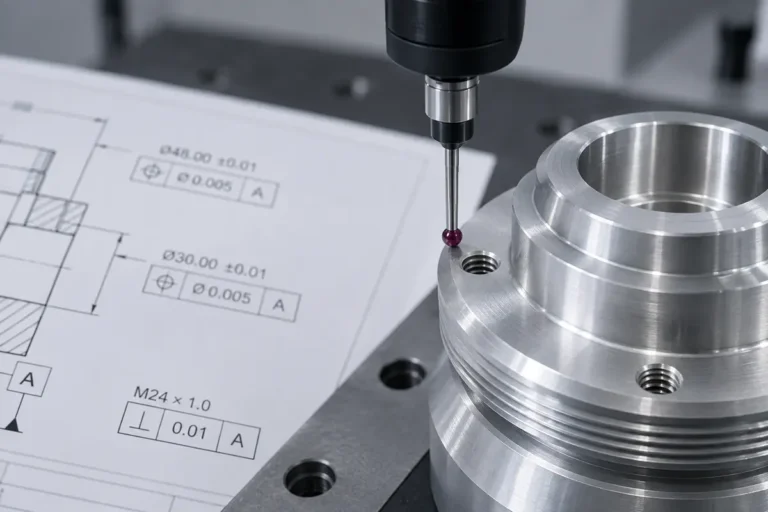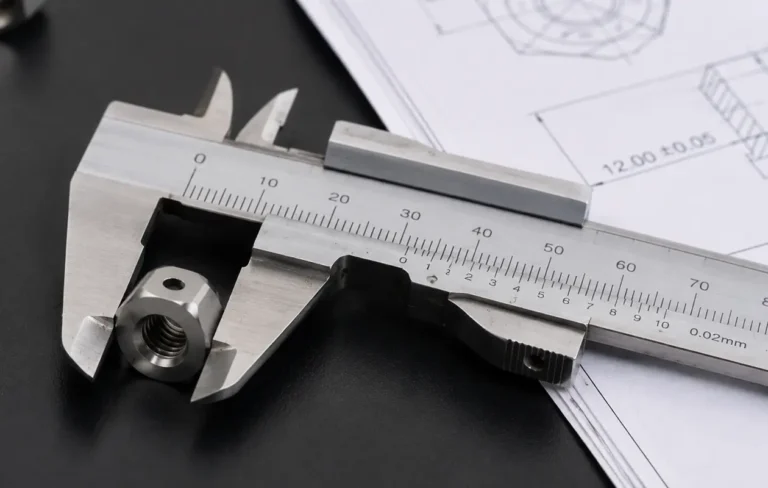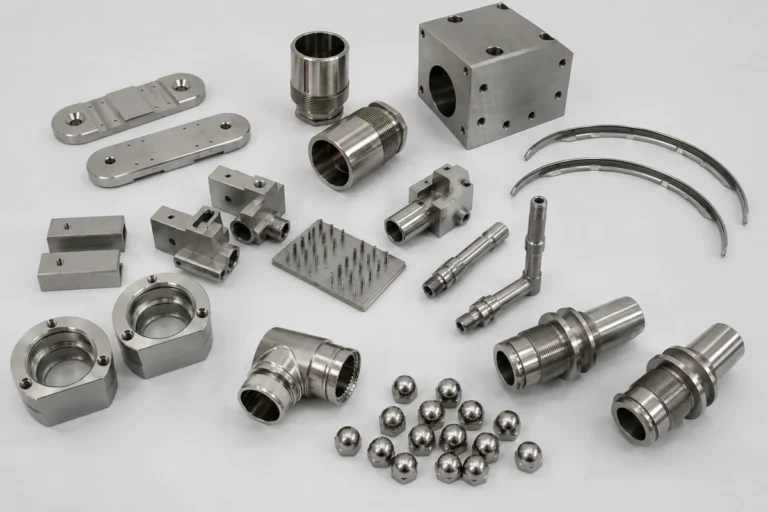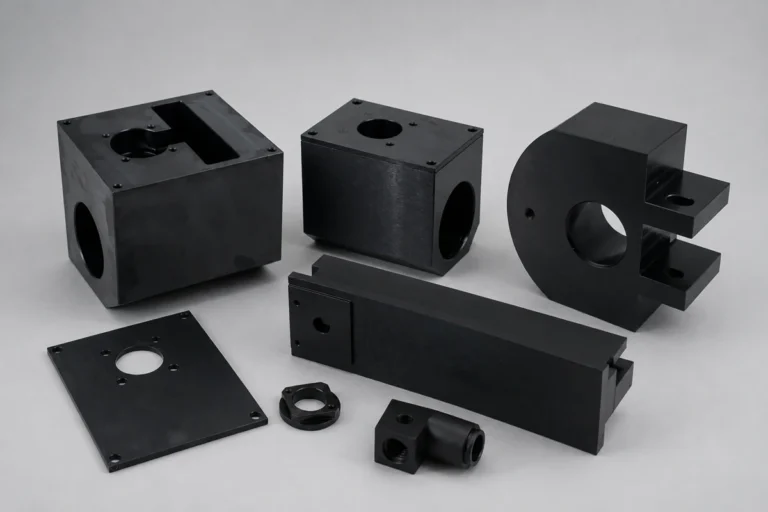
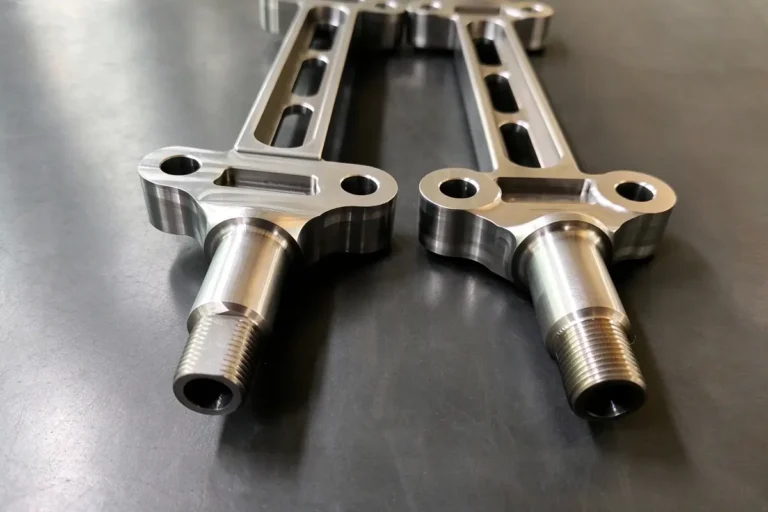
Why Is Titanium Machining Different From Standard CNC Machining?
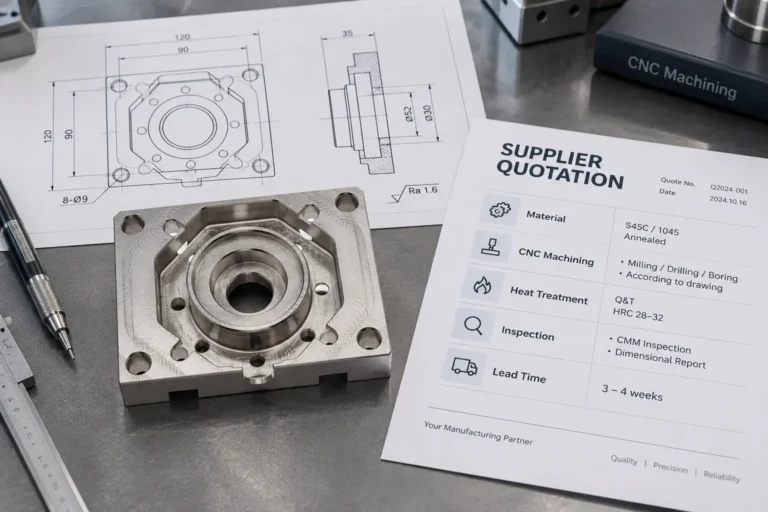
Titanium machining changes toolpaths, fixturing, cost, and inspection planning. Learn what to define on the drawing before requesting a supplier quote.
Learn how to review CNC part geometry, tool access, workholding, tolerances, materials, finishes, and inspection requirements before sending an RFQ.
UHMW vs ULTEM is not a simple ‘good versus better’ comparison. UHMW-PE is usually chosen when low friction, abrasion resistance, impact toughness, quiet sliding, and economical wear performance matter most. ULTEM is SABIC’s trade name for a family of polyetherimide (PEI) resins; PEI stock shapes are typically selected when stiffness, heat resistance, dielectric performance, and…
ULTEM machining is the CNC milling, turning, drilling and finishing of polyetherimide (PEI) stock into precision functional parts. ULTEM is SABIC’s trade name for a family of amorphous PEI resins; the family includes unfilled and reinforced grades that differ substantially in stiffness, tool wear, surface behavior and dimensional response. For buyers, the practical question is…
What Is Ultem 1000? Ultem 1000 is an unreinforced, amorphous polyetherimide (PEI) engineering thermoplastic from the ULTEM™ resin family. It is best known for combining elevated-temperature performance, inherent flame resistance, electrical insulation, mechanical strength and dimensional stability in one lightweight material. Natural stock is typically transparent to translucent amber, which also makes the material easy…
UHMW-PE can be CNC milled, turned, drilled and routed successfully, but it does not behave like aluminum, steel or even a stiffer engineering plastic such as acetal. The main machining risks are elastic deflection, heat-related dimensional change, long stringy chips, burr or “fuzz” formation and post-machining movement. A reliable process therefore depends on sharp cutting…
Torlon® machining is a specialized form of high-performance polymer machining. Buyers usually reach this topic with a practical question: can a machine shop produce accurate Torlon PAI parts without creating distortion, burrs, damaged threads, dimensional drift, or avoidable material scrap? The answer is yes, but Torlon should not be treated like nylon, acetal, or a…
G10 machining looks straightforward until the cutting tool actually enters the material. Unlike aluminum or conventional engineering plastics, G10 is a glass-fabric-reinforced epoxy laminate. Its combination of woven glass reinforcement and thermoset resin gives the material useful mechanical strength, electrical insulation, moisture resistance and dimensional stability, but the same glass reinforcement that makes G10 useful…
Polycarbonate can be CNC milled, turned, drilled, routed, threaded, and polished with good results, but heat, chip evacuation, residual stress, clamping pressure, and chemical compatibility must be controlled. Sharp tools and a correct chip load are more important than copying one fixed RPM from the internet. Polycarbonate (PC) is a strong, transparent engineering thermoplastic that…
This guide explains how to specify surface finish and cleanliness for semiconductor CNC parts by functional zone, verify test methods and supplier records, and write RFQs.
End of content
End of content