
Mechanical engineers rarely struggle with the definition of Chem Film. The costly uncertainty is whether the finished component will still assemble, ground, accept paint, resist corrosion, remain clean enough for the application, and arrive with documentation that matches the drawing. Those questions become difficult when the print says only “clear Chem Film,” when a legacy note references MIL-C-5541, or when a supplier assumes that a bright silver part must be hex-free or Class 3.
This guide connects chemical conversion coating to alloy selection, CNC features, masking, inspection, procurement evidence and RFQ preparation. It is written for photonics, quantum hardware, motion control, robotics, medical equipment and dental equipment teams that need defensible engineering decisions rather than generic coating claims.
| If your 2D drawing does not define Type and Class, do not expect suppliers to infer them from a product name, color photograph, or application label. Send the drawing and CAD together so Rollyu Precision can flag ambiguity before quoting. |
What Is Chem Film – and What Does It Not Prove?
Chem Film is a common industry name for chemical conversion coating on aluminum and aluminum alloys. The surface is chemically converted rather than covered by a thick plated metal layer. Depending on the specified system, it is selected to improve corrosion behavior, provide a pretreatment for compatible paint systems, or retain a more electrically conductive interface than anodic oxide.
It is not a hard, wear-resistant coating and should not automatically replace Type III hard anodize on sliding or abrasive surfaces. It also does not, by itself, establish biocompatibility, sterilization durability, cleanroom compatibility, vacuum outgassing, magnetic cleanliness, space-flight approval, or a guaranteed bond resistance. Those claims require application-specific criteria, compatible materials, processing records and, where necessary, testing at the part or assembly level.
Chem Film, Hex-Free Chem Film, Iridite and Alodine
Chemical conversion coating is the generic process category. Chem Film or Chemfilm is common drawing language. “Hex-free Chem Film,” “hexavalent-chromium-free Chem Film,” and “Hex Free Clear Chemfilm” typically signal a non-hexavalent system, but the controlled specification still needs to identify the applicable Type and Class. Alodine® and Iridite® are trade names associated with particular product families; they should not be treated as universal chemical identities or automatic equivalents.
| Term found on RFQs | What it communicates | What still needs confirmation |
| Chem Film / Chemfilm | Chemical conversion coating is intended | Specification, revision, Type, Class, color/appearance, masking and records |
| Hex Free Clear Chemfilm | Non-hexavalent, usually clear-appearance intent | Whether MIL-DTL-5541 Type II applies; Class; approved chemistry/source; current declarations |
| Clear Iridite / Clear Alodine | A trade-name or legacy purchasing description | Exact product/process, governing specification and approval status |
| MIL-DTL-5541 Type I | Composition contains hexavalent chromium | Class 1A or 3, color, source controls and regulatory obligations |
| MIL-DTL-5541 Type II | Composition contains no hexavalent chromium | Class 1A or 3, qualified material/source and product-specific compliance evidence |
Separate Type from Class Before You Release the Drawing
| Selection variable | Meaning | Mechanical-engineering implication |
| Type I | Compositions containing hexavalent chromium | May be selected when the approved design prioritizes the qualified system’s performance; environmental, worker-safety and customer restrictions must be managed. |
| Type II | Compositions containing no hexavalent chromium | Commonly requested as hex-free Chem Film; substitution still requires design-authority approval and current product/source verification. |
| Class 1A | Maximum corrosion protection, painted or unpainted | Use when corrosion protection or paint pretreatment dominates; do not assume the lowest contact resistance. |
| Class 3 | Corrosion protection where lower electrical resistance is required | Define the contact geometry and acceptance method if electrical performance is critical to the assembly. |
NASA/JSC PRC-5005 Rev. D is a useful engineering reference because it explicitly separates Type I from Type II and Class 1A from Class 3, requires the drawing note to identify the process, Type and Class, and calls for verification of the correct version before use. It also notes that manual brush processing is allowed only when specifically called out and that touch-up requires approval in its own program context. This does not make PRC-5005 a universal requirement for commercial parts; the customer’s contract, drawing and approved process sources remain controlling.
Why the Finish Decision Starts Before CNC Machining
- Alloy and temper: 6061-T6, 5052 sheet, cast tooling plate and other aluminum products can react differently in pretreatment and appearance. Confirm the exact material certification before finishing.
- Functional zones: identify electrical contacts, bearing seats, seal lands, optical interfaces, threads, press fits, adhesive-bond areas and paint boundaries.
- Pre- versus post-finish dimensions: do not rely on the slogan “zero thickness.” Even when dimensional effect is small, pretreatment, residues, masking transitions and handling can influence tight features.
- Surface preparation: embedded contamination, burrs, sharp edges and inconsistent tool marks can affect cleanliness, appearance and continuity.
- Mixed finishes: if Chem Film is followed by paint or powder coating, state which surfaces and edges receive each process and which areas remain conductive.
- Documentation: define certificate of conformance, processor identity, lot traceability, qualified-material restrictions, FAI, inspection report and current regulatory declarations before pricing.
Real Machining Descriptions from the RFQ Keyword Matrix
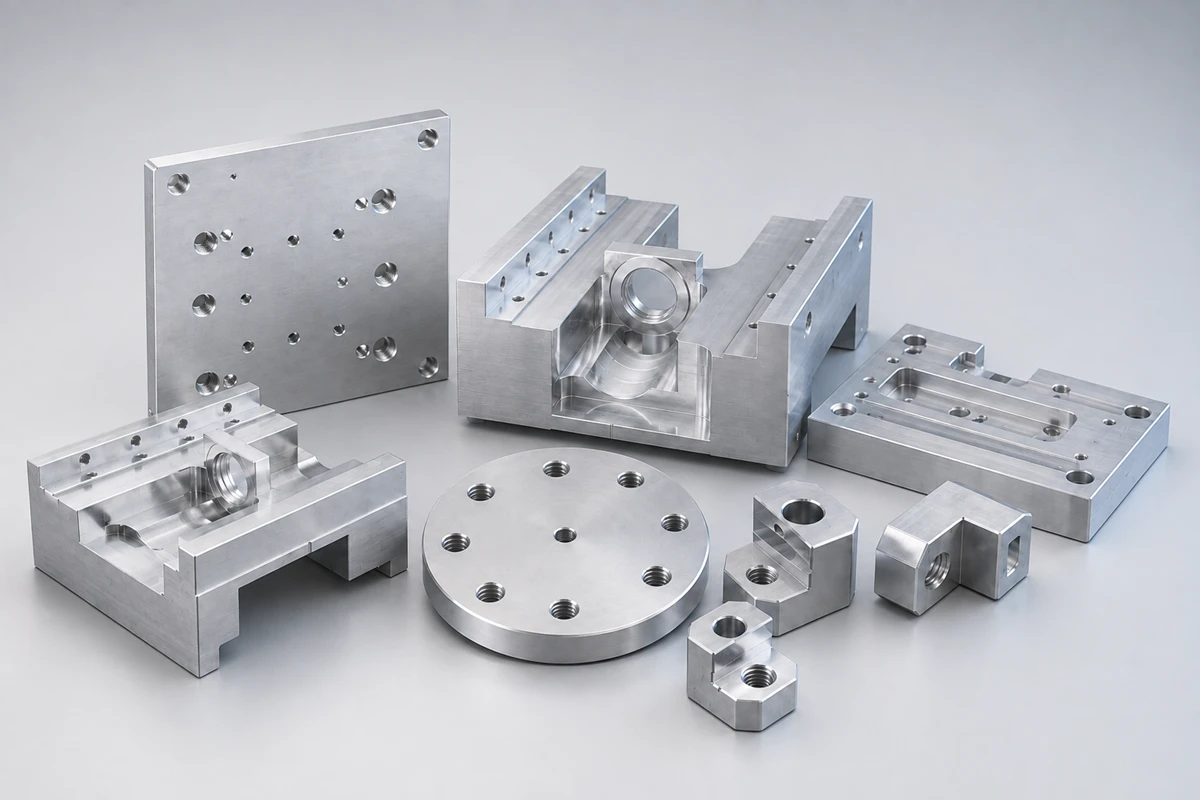
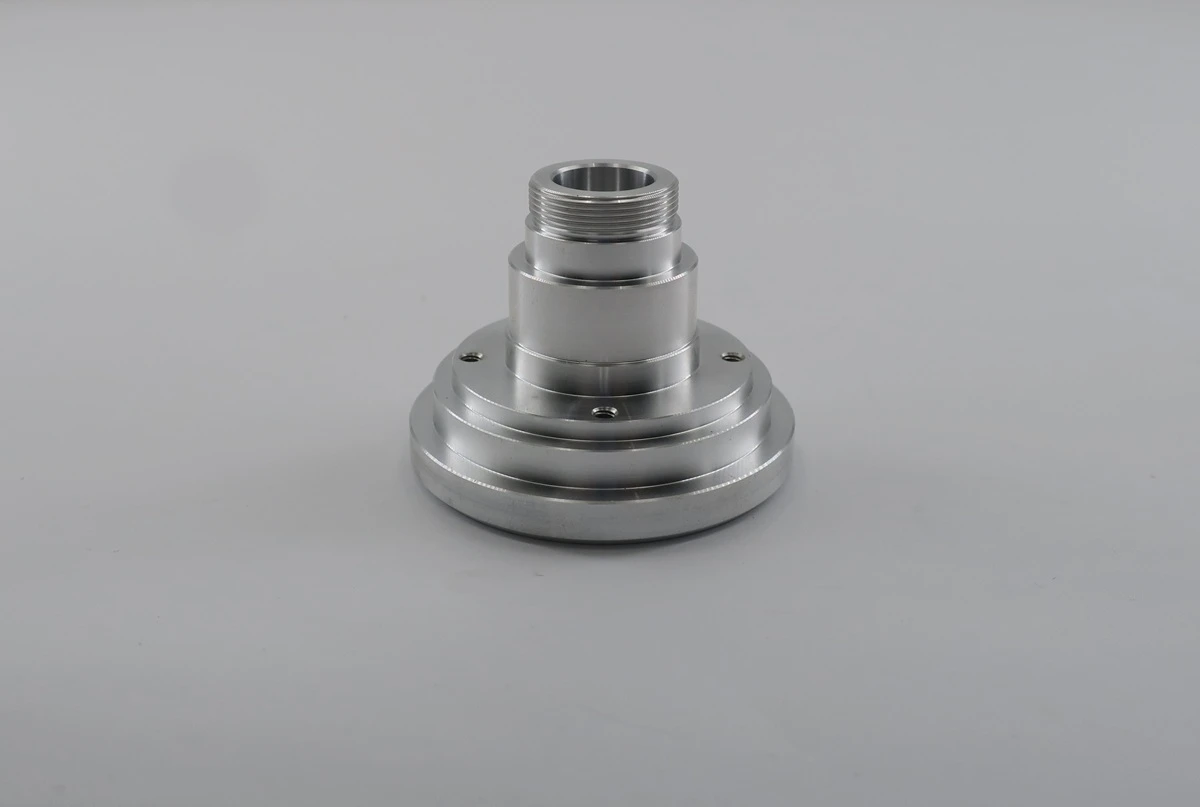
The supplied project matrix shows that Chem Film demand is not limited to simple sheet-metal panels. It appears across precision motion-control and vacuum-adjacent hardware such as base plates, top plates, slides, bearing blocks, bearing hangers, motor mounts, encoder brackets, read-head mounting bars, cord guides, preload nuts, housings, cover supports, switch cams, adapter plates and long-travel vacuum bases. Most entries specify 6061-T6 aluminum with “Hex Free Clear Chemfilm”; other entries include 5052 sheet and ATP-5 tooling plate.
These descriptions matter because each part family drives a different finishing risk. A long base or slide needs flatness, datum protection and controlled handling. A bearing block needs bore and thread cleanliness. An encoder bracket may combine grounding, positional accuracy and contamination sensitivity. Thin 5052 covers are vulnerable to distortion and cosmetic variation. A threaded preload nut needs final assembly verification. Rollyu Precision’s role is to connect those feature-level risks to the machining route and finishing purchase order rather than treating Chem Film as a generic final line item.
| Representative part family | Common material / finish wording in matrix | RFQ risk to control |
| Linear-stage bases, slides and top plates | 6061-T6; Hex Free Clear Chemfilm | Flatness, datum protection, hole pattern, post-finish acceptance, packing separation |
| Bearing blocks, hangers and preload nuts | 6061-T6; Hex Free Clear Chemfilm or Clear Iridite | Bore/fit, thread cleanliness, burr intersections, gauge plan |
| Encoder and read-head brackets | 6061-T6; Hex Free Chemfilm Clear | Electrical interface, positional relationships, masking and handling marks |
| Vacuum bases, covers and switch components | 6061-T6 or 5052; Hex Free Clear Chemfilm | Do not infer vacuum qualification; define cleaning, contamination and outgassing separately |
| Painted housings | Chem Film Type II Class 3 followed by specified powder coat | Paint boundary, conductive zones, edge coverage and process sequence |
| ATP-5 interface plate | ATP-5 tooling plate; Hex Free Clear Chemfilm | Material condition, broad-face appearance, flatness and approved finishing route |
| Send Rollyu Precision the 3D CAD, controlled 2D drawing and functional interfaces. We can review whether the finish note, masking map, post-finish inspection and certificate package are complete enough for a reliable quotation. |
A Two-Part 6061-T6 Case: Bottom Slide and Base
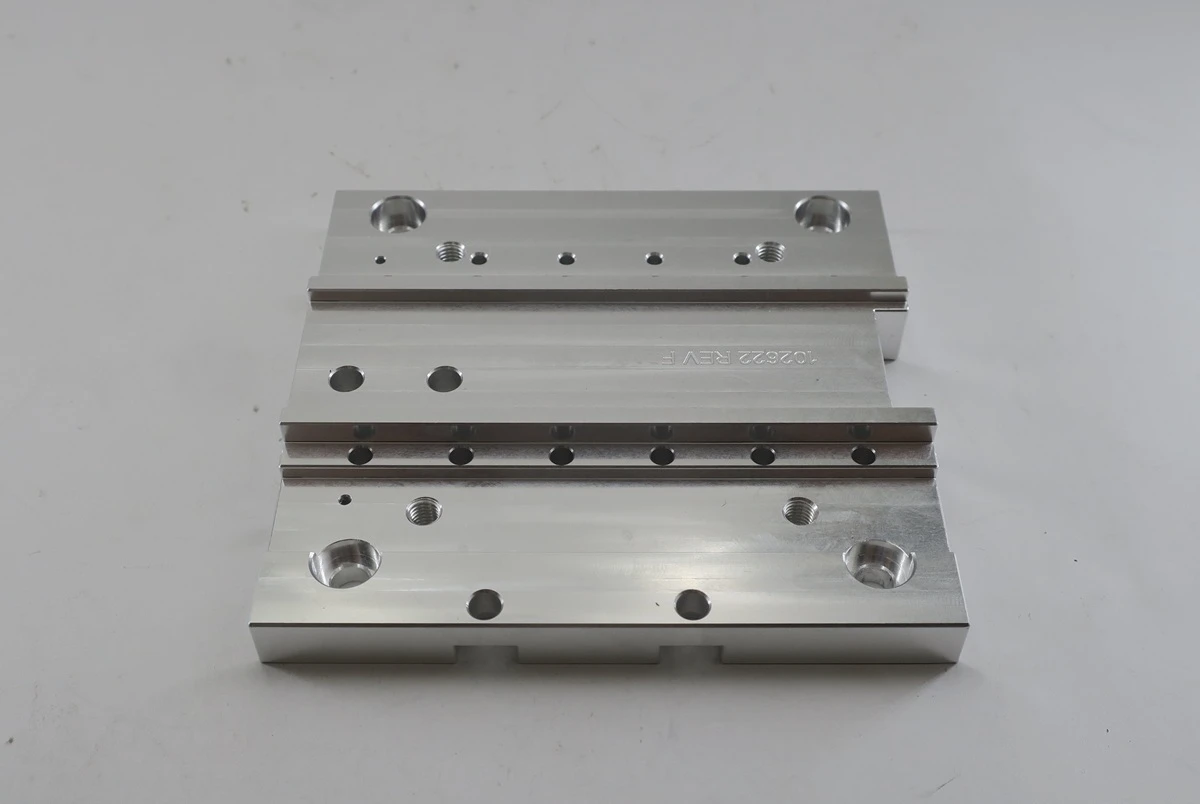
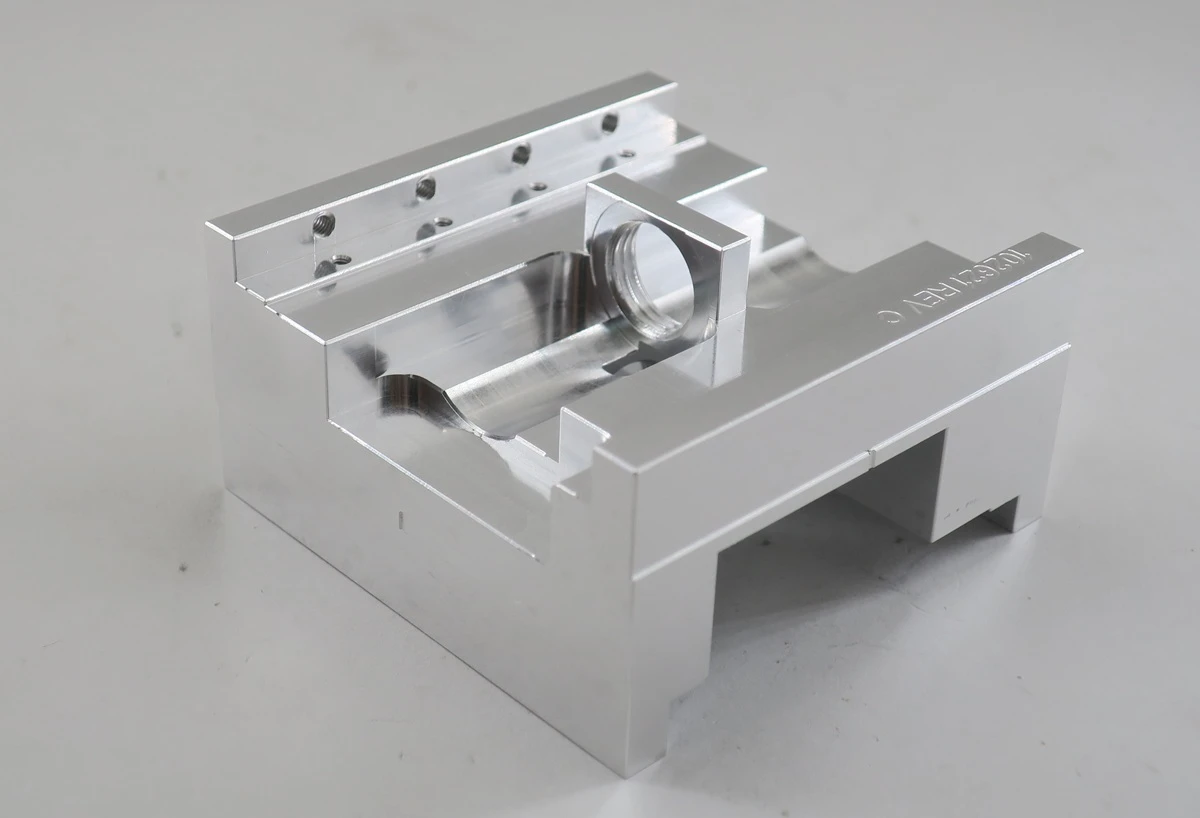
The supplied drawings for parts 102622 Rev. F and 102621 Rev. C identify Aluminum 6061-T6 and “Hex Free Clear Chem Film.” The parts include rails, pockets, multiple hole patterns, tapped M3 features, close relationships and broad machined faces. This is the type of work where machining and finishing cannot be separated administratively: burrs at intersecting holes, trapped solution, dirty threads, handling marks, datum damage or an uncontrolled process substitution can cause failure even when the parts still look bright and silver.
A defensible route is to complete critical dimensional inspection before outsourced finishing, protect the controlled datums, document the specified chemistry/class with the processor, rinse and handle parts using the approved route, then repeat the post-finish checks that matter to assembly. The inspection plan should be driven by the drawing and risk review; it should not assume that every dimension needs duplicate inspection or that Chem Film has no possible impact.
Chem Film vs Anodizing: Choose the Interface Function
| Requirement | Chem Film | Anodizing / hard anodizing |
| Electrical contact | Often preferred where a lower-resistance interface is needed; Class 3 is the relevant class under MIL-DTL-5541 | Anodic oxide is electrically insulating unless contacts are masked or otherwise engineered |
| Wear resistance | Limited; not a hard wear surface | Generally stronger choice for abrasion and sliding; Type III is used for higher wear demand |
| Dimensional effect | Usually small, but do not promise zero effect on every feature | More significant; coating growth and dimensional allowance must be designed |
| Paint pretreatment | Common engineering use when compatible with the paint system | Possible with an appropriate validated system, but not automatically interchangeable |
| Appearance | May vary by alloy, chemistry and pretreatment; clear is not a color guarantee | Dyed and natural options offer broader cosmetic control, still subject to alloy/process variation |
Industry Selection Tests for Mechanical Engineers
Photonics and quantum hardware
Use Chem Film on structural mounts, electronics housings and interface plates when corrosion control and grounding are the real functions. Specify optical blackening, scattered-light control, magnetic cleanliness, particulate cleanliness and vacuum qualification separately.
Motion control
Base plates, slides, bearing blocks, encoder brackets and motor mounts are common hex-free Chem Film applications in the supplied matrix. Control datum flatness, bearing and thread interfaces, encoder alignment, grounding zones and packing damage.
Robotics
Internal controller housings, sensor mounts and brackets may benefit from conductive, paint-ready surfaces. Use a harder finish or local protection on sliding, exposed or repeatedly serviced surfaces.
Medical devices
Chem Film may be specified on non-implantable equipment hardware, but MIL-DTL-5541 is not a biocompatibility or sterilization standard. The device manufacturer must define exposure, cleaning, sterilization and regulatory evidence.
Dental equipment
Scanner housings, imaging brackets and chairside mechanisms combine compact fits, appearance, disinfectant exposure and grounding. Qualify actual wipe chemistry and cycles; do not infer durability from the finish name.
Space and vacuum-adjacent systems
The matrix includes components named as vacuum bases, vacuum encoder covers and mirror-cell hardware with hex-free clear Chem Film. That is evidence of an application context, not proof that the coating itself is universally UHV or space qualified. Define cleaning, approved materials, outgassing, contamination control, bake limits and mission assurance separately.
Drawing Notes That Produce Comparable RFQs
A robust finish note is specific enough that two qualified suppliers are pricing the same requirement. The design authority should adapt the following structure rather than copy it blindly:
| DRAWING-NOTE PATTERN CHEMICAL CONVERSION COATING PER [GOVERNING SPECIFICATION AND REVISION], TYPE [I OR II], CLASS [1A OR 3]. [COLOR/APPEARANCE ONLY IF CONTROLLED]. MASK/PROCESS ONLY AS SHOWN. CRITICAL DIMENSIONS AND THREAD ACCEPTANCE APPLY [BEFORE/AFTER] FINISH AS DEFINED. PROVIDE [REQUIRED CERTIFICATES/REPORTS]. |
- Do not let “hex free,” “clear,” “silver,” “Alodine,” or “Iridite” replace Type and Class.
- Do not automatically update a legacy MIL-C-5541 note; request design-authority disposition.
- Do not permit Type I/Type II or Class 1A/Class 3 substitution without written approval.
- Define selective coating, contact zones, rack/contact mark restrictions and paint boundaries on a view or mask map.
- If resistance matters, define the joint or coupon test method, conditioning, contact area and acceptance limit.
- Request current, product-specific RoHS/REACH or customer substance declarations only when contractually required.
Inspection and Supplier Controls That Build Trust
- Material traceability: reconcile alloy and temper with the PO, drawing and material certificate.
- Pre-finish dimensional control: inspect critical geometry and protect datums before sending parts to the processor.
- Process-source control: confirm specification, revision, Type, Class, qualified material/source and customer approvals.
- Visual examination: inspect for discontinuity, powdery residue, staining, corrosion, damage and unacceptable handling marks against agreed criteria.
- Functional verification: gauge specified threads, bores and fits; perform electrical testing only when the drawing/control plan defines a method and limit.
- Document reconciliation: match part number, revision, finish, lot, quantity and certificate references before release.
- Clean packaging: separate finished faces with non-abrasive materials and select moisture/cleanliness controls for the actual route and customer requirement.
Risk-Control Table: Claims to Avoid
| Risky statement | Why it can fail | Safer engineering wording |
| “Hex-free Chem Film is always RoHS/REACH compliant.” | Regulatory status is product-, date-, jurisdiction- and use-specific. | Type II contains no hexavalent chromium under the specification; obtain current product-specific declarations for the project. |
| “Chem Film adds zero thickness.” | Pretreatment and process effects can still matter to tight features. | Dimensional effect is typically small; define post-finish acceptance on critical fits and threads. |
| “Class 3 guarantees grounding.” | Joint design, load, cleanliness and mating finishes determine assembly resistance. | Class 3 is intended for lower-resistance contacts; validate the actual assembled interface when critical. |
| “Clear appearance proves Type II.” | Color varies and cannot authenticate chemistry/class. | Confirm Type/Class by controlled drawing, PO and certificate. |
| “Vacuum-compatible part means vacuum-qualified Chem Film.” | The part name does not establish outgassing or cleanliness. | Qualify cleaning, materials, outgassing, bake and contamination requirements separately. |
| “Suitable for medical devices.” | Finish specification does not establish biological safety or sterilization durability. | Use only within the device manufacturer’s defined exposure, cleaning and regulatory evaluation. |
What to Send for a Fast, Defensible RFQ
- 3D CAD and controlled 2D drawing with revision.
- Aluminum alloy, temper and any approved material source restrictions.
- Quantity, prototype/production split and required delivery schedule.
- Finish specification and revision, Type, Class and approved chemistry/processor requirements.
- Masking/contact map, paint or powder-coat sequence, and cosmetic boundaries.
- Critical dimensions that apply after finishing; thread, bore, fit and flatness acceptance.
- Electrical test method and limit only if required by the assembly.
- Required CoC, material certificate, lot traceability, FAI/inspection report and regulatory declarations.
- Cleaning, packaging, vacuum, medical or space requirements stated separately from the Chem Film callout.
| Email Rollyu Precision your CAD, drawing, quantity and finish note. Our team can identify specification gaps, feature-level finishing risks, inspection needs and documentation requirements before the quotation is released. info@rollyu.com |
FAQ: Chem Film CNC Machined Parts
Is Chem Film the same as chemical conversion coating?
For aluminum machining and purchasing, Chem Film is a common name for chemical conversion coating. The generic term is safer when the proprietary chemistry is not defined.
What is hex-free Chem Film?
It describes a conversion coating system without hexavalent chromium. Under MIL-DTL-5541, Type II compositions contain no hexavalent chromium. The drawing should still state the governing specification, Type and Class.
What is the difference between Type I and Type II?
Type I compositions contain hexavalent chromium; Type II compositions contain no hexavalent chromium. Substitution requires design-authority approval.
What is the difference between Class 1A and Class 3?
Class 1A targets maximum corrosion protection, painted or unpainted. Class 3 is used where corrosion protection and lower electrical resistance are required.
Is clear Chem Film always Type II or Class 3?
No. Appearance varies with chemistry, alloy and processing. Verify Type and Class from documents, not color.
Does Chem Film change CNC dimensions?
The dimensional effect is generally much smaller than anodizing, but a universal zero-effect promise is unsafe. Define critical post-finish checks.
Can Chem Film be used for grounding?
Class 3 is intended for lower-resistance contacts, but the assembled joint controls actual performance. Define and test the interface if resistance is critical.
Is Chem Film suitable for vacuum or space hardware?
Not automatically. The finish can appear on vacuum-adjacent components, but cleaning, outgassing, contamination, bake and mission-approval requirements must be qualified separately.
Can Rollyu quote machined parts with hex-free clear Chem Film?
Rollyu Precision can review CNC machining, outsourced finishing, inspection, documentation and packaging as one RFQ package. Final availability and compliance depend on the drawing, approved processor/chemistry, quantity, destination and evidence required.
Conclusion: Buy the Function, Not the Finish Name
A strong Chem Film specification connects an interface function to controlled evidence. It tells the machining and finishing supply chain which aluminum alloy and temper are involved, which standard and revision apply, whether the coating is Type I or Type II and Class 1A or Class 3, which areas must conduct or remain protected, which features are accepted after finishing and which records must accompany the lot.
That discipline prevents three expensive outcomes: a quote based on the wrong chemistry, a finished component that fails at a fit or electrical interface, and a shipment whose paperwork cannot support receiving inspection. Rollyu Precision can bring machining, finishing coordination, inspection and packaging into one engineering review so the risk is visible before metal is cut.