
Quick Answer: What Colors Can Aluminum Be Anodized?
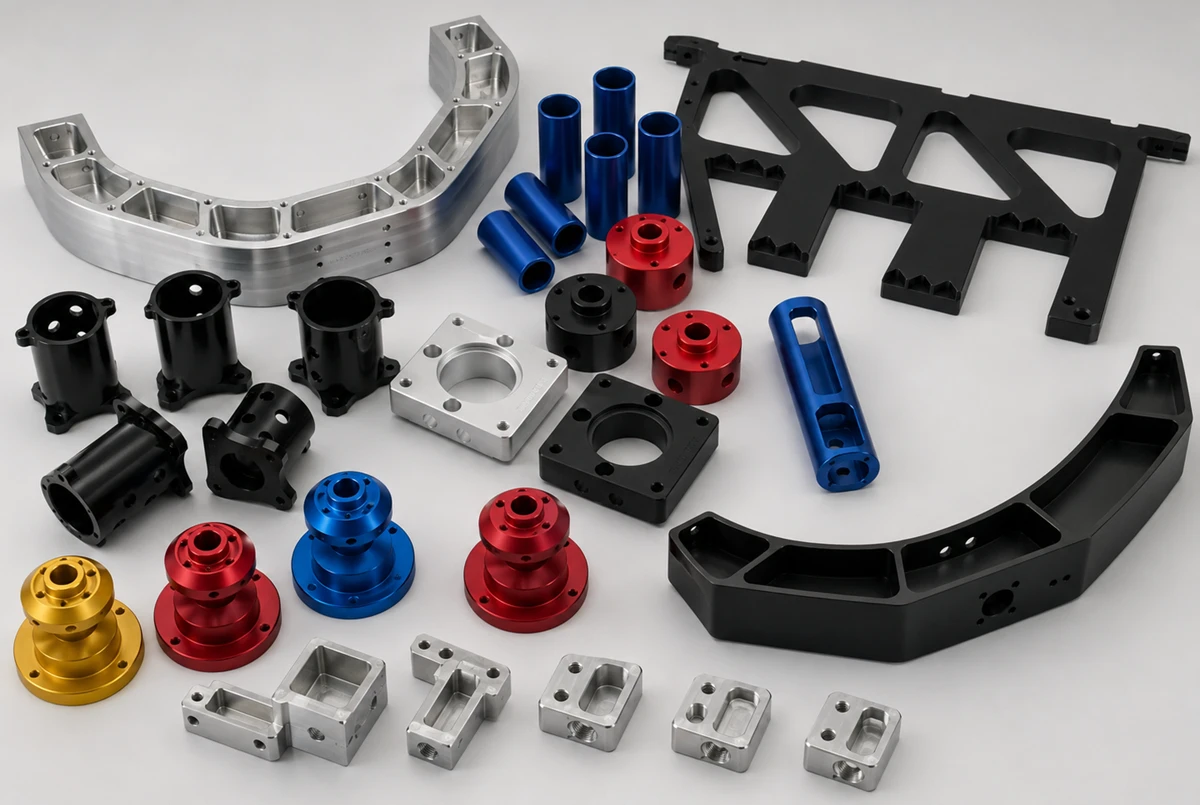
For standard Type II sulfuric anodizing, aluminum can commonly be finished in clear/natural, black, red, blue, green, gold, bronze, champagne, gray and purple, plus processor-dependent custom shades. Type III hardcoat is selected mainly for functional performance and normally has a darker natural appearance; black is common, while bright decorative colors are more limited.
The key purchasing point is that an anodized aluminum color chart is a selection guide, not a production guarantee. Final appearance can shift with alloy and temper, surface preparation, oxide growth, dye chemistry, sealing, part geometry, racking and lighting.
For precision CNC parts, the better question is not only “What color is possible?” but “What color can be reproduced within an agreed range on this alloy, geometry and production quantity?”
Confirm color feasibility before the drawing is frozen
Send Rollyu Precision your 3D CAD, 2D drawing, aluminum alloy/temper, anodizing callout, color target, cosmetic surfaces and quantity. We can review masking, dimensional risk, surface preparation and color-control requirements before production.
What Are Anodized Aluminum Colors?
Anodizing is an electrochemical process that converts the aluminum surface into an aluminum oxide layer. Unlike paint or powder coating, the anodic oxide develops from the aluminum surface rather than simply forming an opaque layer on top.
For common dyed Type II sulfuric anodizing, the newly formed oxide contains microscopic pores. Dye can enter those pores before sealing. The simplified manufacturing sequence is:
CNC machining → cleaning → surface preparation → anodizing → optional coloring → sealing → final inspection
How Does Anodized Aluminum Get Its Color?
- The aluminum surface is converted into a controlled oxide layer.
- For a dyed finish, colorant is absorbed into the porous oxide.
- Color depth is influenced by oxide characteristics and process conditions.
- Sealing closes the pores and contributes to corrosion performance and color retention.
This is why two parts called “blue anodized” or “black anodized” can still look different. Color is the outcome of a manufacturing system, not only a dye name.
What Does Clear Anodized Aluminum Mean?
Clear anodized aluminum is generally an undyed finish. Under MIL-PRF-8625 terminology, Class 1 is non-dyed and Class 2 is dyed or pigmented; those class names describe coloration, not a quality ranking.
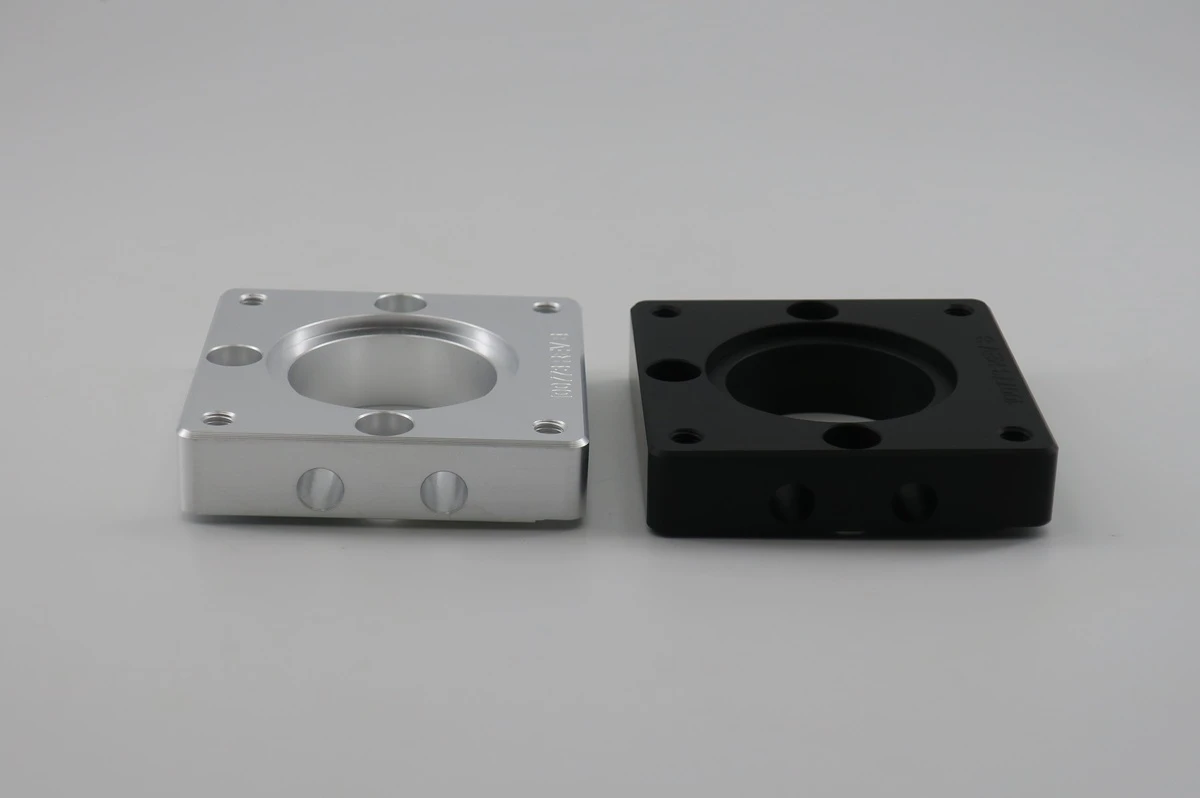
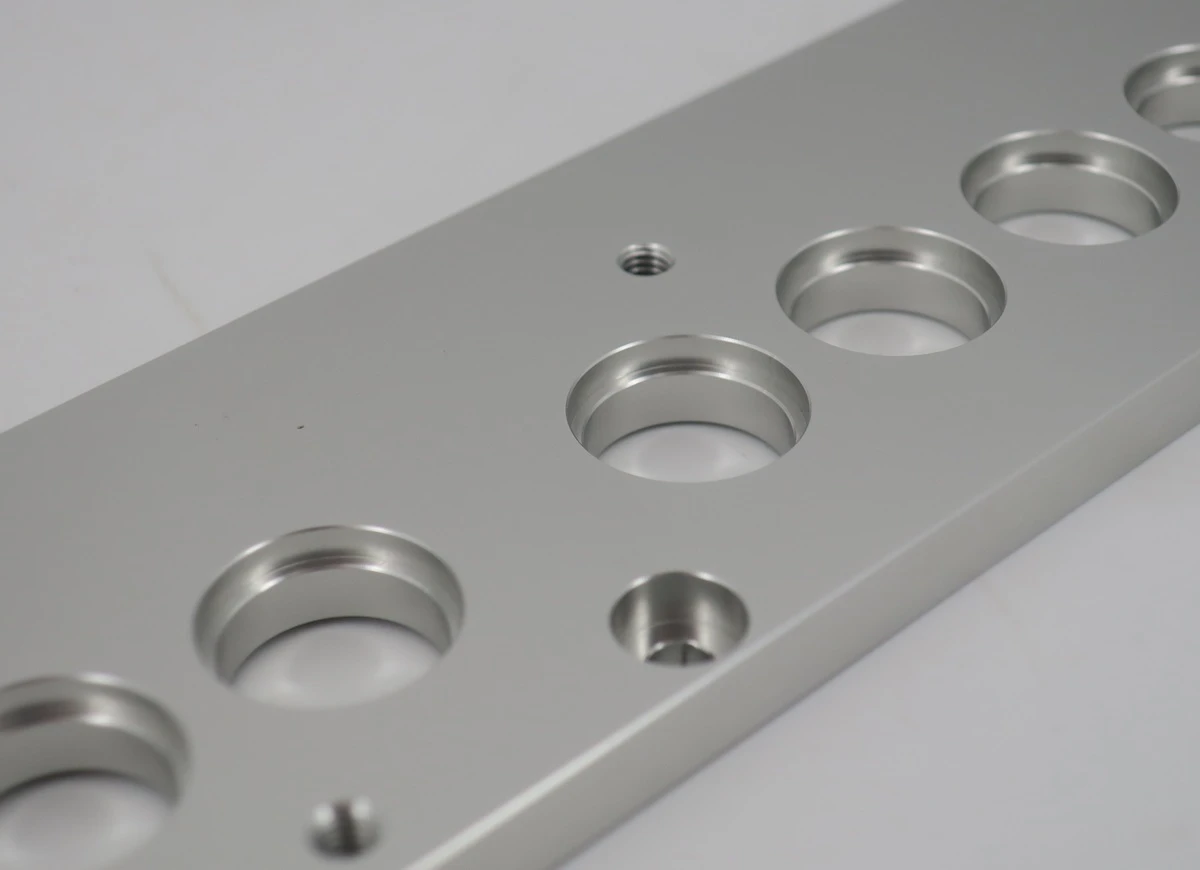
A clear anodized part does not necessarily look identical to freshly machined aluminum. Depending on alloy, etching, mechanical finish and oxide condition, the part may appear silver, light gray, slightly warmer or cooler, more matte or slightly darker than the raw machined surface.
Anodized Aluminum Color Chart: Practical Options and Limits
The following table is an engineering selection guide. It does not define a universal color standard, and availability varies by anodizing process and qualified supplier.
| Finish | Typical route | What buyers should expect | Main risk to control | Typical precision uses |
| Clear / natural | Usually Type II, undyed | Metallic silver/gray appearance remains visible | Alloy and pretreatment strongly affect tone | Instrument housings, brackets, medical/dental equipment |
| Black | Commonly dyed Type II; black hardcoat may also be specified | Dark industrial finish; matte to brighter appearance | Blackness and gloss are not universal | Photonics housings, robotics, motion-control structures |
| Red | Type II dyed | Bright identification or cosmetic finish | Shade, UV exposure and batch matching need approval | Identification, specialty equipment |
| Blue | Type II dyed | High-tech appearance and part identification | Pantone target may not reproduce exactly | Instrumentation, robotics, medical equipment |
| Green / purple | Type II dyed | Custom identification or branding | Custom shades are process-sensitive | Modules, specialty components |
| Gold / champagne / bronze | Dyed, integral or electrolytic route depending on process | Metallic warm tones | Process route changes shade and durability | Optical instruments, panels, premium housings |
| Gray | Type II or natural hardcoat appearance | Neutral industrial appearance | Alloy and oxide thickness can shift tone | Functional hardware |
| Natural hardcoat | Type III | Often dark gray, brown-gray, bronze-gray or olive/green-gray | Color is secondary to functional coating requirements | Wear interfaces, motion systems |
| Black hardcoat | Type III plus coloring when specified | Dark wear-resistant finish | Final black is influenced by the naturally dark oxide | Wear-resistant mechanical components |
Black Anodized Aluminum
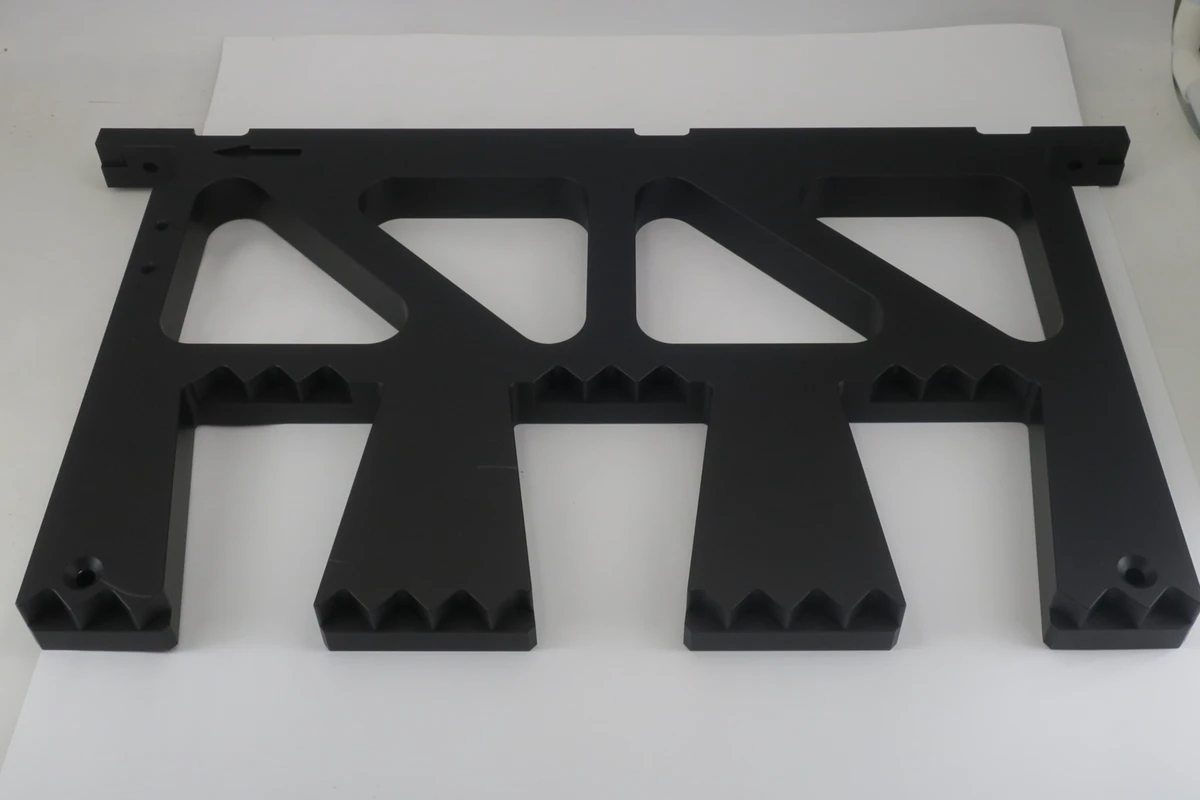
Black is one of the most common anodized aluminum colors for precision CNC parts because it is widely available, visually versatile and compatible with many industrial products. But “black anodized” is not a complete engineering callout.
The final visual result depends heavily on the surface before anodizing. A bead-blasted or etched surface usually appears more matte, while a smoother machined or polished pre-finish generally appears brighter and more reflective.
Matte Black vs Bright Black Anodized
A matte or bright appearance should be controlled through the complete finishing route rather than the dye name alone. Surface roughness, blasting media, etching, polishing, oxide formation, dyeing and sealing all influence the result.
For cosmetic surfaces, define the pre-anodize finish on the drawing or approved process sheet. Avoid relying on terms such as “premium black” or “deep black” without a physical sample or measurable acceptance requirement.
Photonics and Quantum: Black Is Not Automatically an Optical Black
Black anodizing is frequently used on optical mounts, housings, stages, brackets and instrument structures. It can reduce visible glare compared with bare aluminum, but visual blackness does not define spectral reflectance.
For stray-light-sensitive photonics, quantum, imaging or laser hardware, specify and validate optical performance over the relevant wavelength range when it matters. Near-IR, mid-IR or other spectral behavior can differ from what the eye sees, and different black anodizing routes can have different reflectance.
Clear Anodized Aluminum
Clear anodizing preserves more of the natural metallic appearance of aluminum while providing a controlled anodic oxide layer. It is often selected for instrument frames, precision brackets, electronics structures, automation hardware and non-implant medical or dental equipment components.
Clear does not mean “colorless in every alloy.” A clear anodized 6061 part can look different from a clear anodized 7075 or 2024 part because alloying elements and microstructure influence the oxide and the visible substrate.
When multiple visible parts must match, use the same alloy and temper where practical, control surface preparation and approve a production-representative sample.
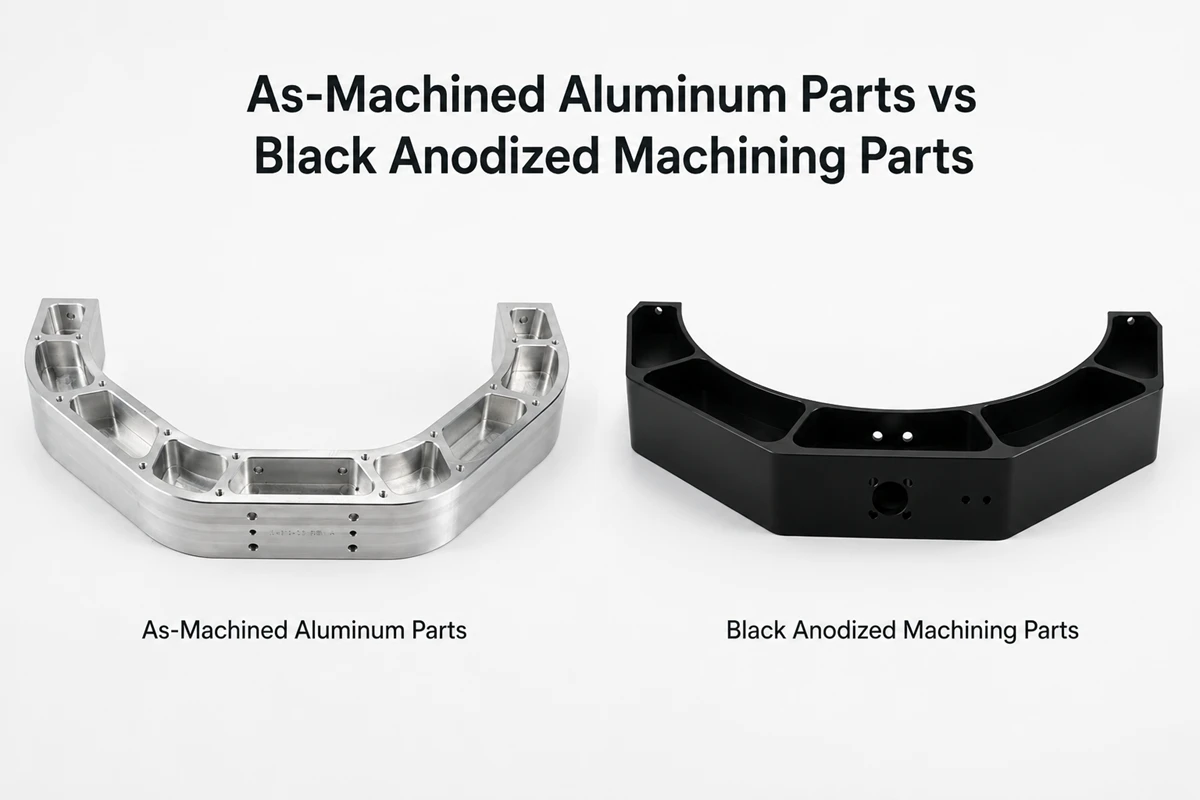
As-machined Aluminum Parts
As-machined aluminum parts retain raw metallic surfaces with visible tool marks, leaving them prone to wear. Conversely, anodizing creates a durable electrochemical oxide layer on machined aluminum. This significantly improves corrosion resistance, increases surface hardness, masks imperfections, and allows for various vibrant color customizations.
Red, Blue, Green, Purple, Gold and Other Dyed Colors
Bright dyed Type II colors can be effective for product identification, brand differentiation and equipment interfaces. They also require more explicit appearance control than a simple color name.
Red Anodized Aluminum
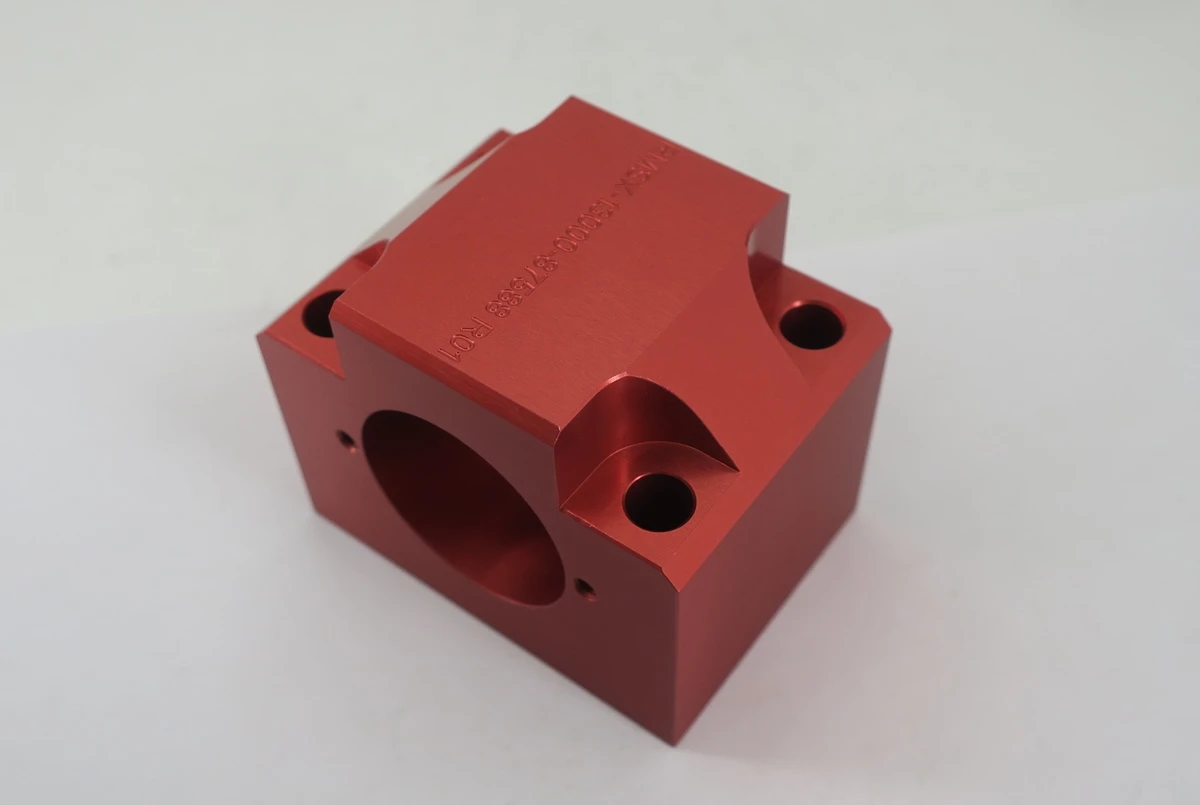
Red anodizing can be used for identification, safety-related visual differentiation and specialty components. If the red finish is cosmetic-critical, approve a physical sample produced on the same alloy and with the same surface preparation intended for production.
Blue Anodized Aluminum
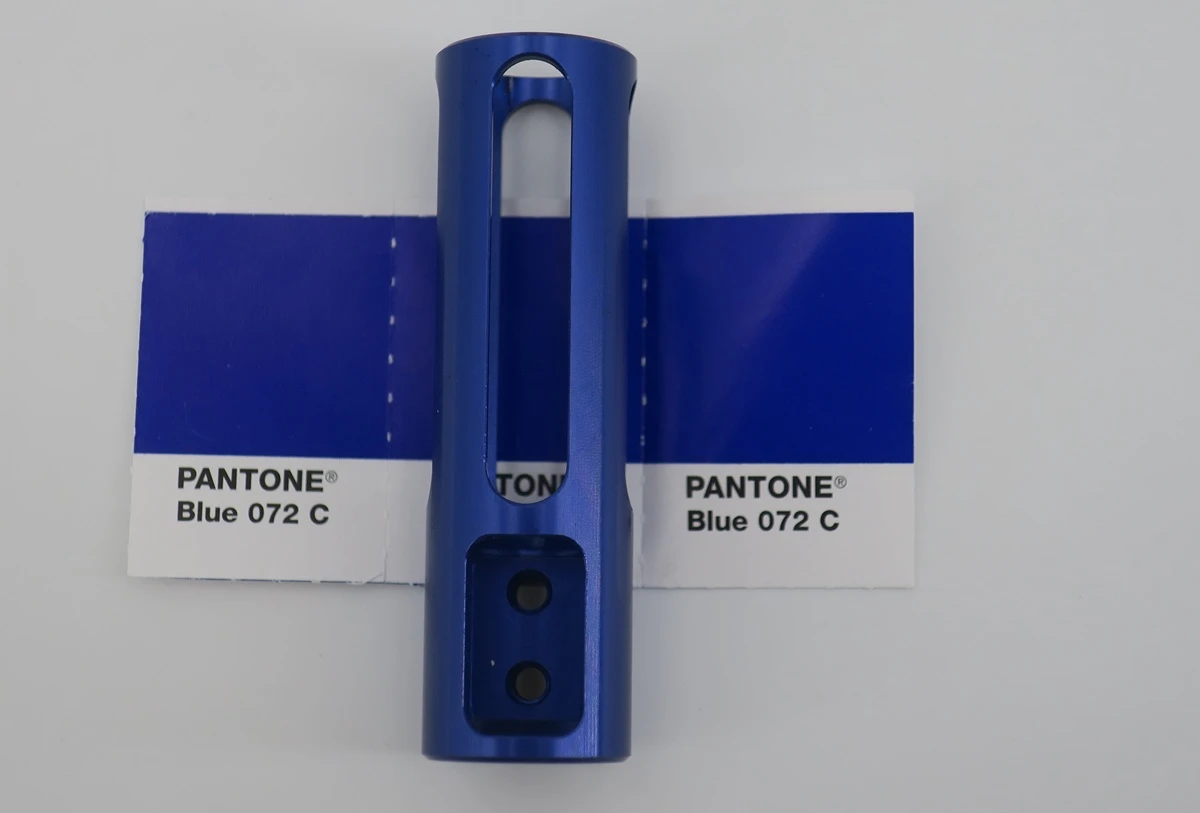
Blue anodized CNC components are common in laboratory instruments, robotics, medical equipment and specialty hardware. When a drawing references a Pantone color such as Blue 072 C, treat it as a color target unless the purchase specification explicitly defines an approved measurement and acceptance method.
Gold, Champagne and Bronze Anodizing
Gold, champagne and bronze appearances can be produced through different coloring approaches. The exact shade, outdoor durability and process capability depend on the qualified finishing route. Avoid assuming that one supplier’s “champagne” or “bronze” is visually interchangeable with another supplier’s finish.
Can Anodized Aluminum Be Pure White?
Standard sulfuric-acid anodizing with conventional dyeing generally does not produce a true opaque white comparable to white paint or powder coating. If an opaque white appearance is mandatory, evaluate an alternative finishing system rather than writing “white anodize” without processor confirmation.
Type II vs Type III: How Anodizing Type Changes Color Options
MIL-PRF-8625 currently remains an active U.S. performance specification for anodic coatings on aluminum and aluminum alloys. It covers more than only Type II and Type III; however, these two types are among the most common references for precision CNC components. Before quoting compliance, verify the latest customer drawing and current specification revision.
Type II Sulfuric Anodizing
Type II is commonly used when corrosion protection, appearance and a broad dyed color range are required. Clear/natural, black and many decorative colors are widely available, subject to alloy, coating requirement and processor capability.
Type III Hardcoat Anodizing
Type III hardcoat is selected primarily for functional performance such as wear resistance and a harder surface. The naturally thicker oxide is usually darker, and color options are more limited than Type II. Natural hardcoat color can vary from gray to brown, bronze or olive tones depending on alloy and process; black may be added when specifically required and feasible.
Do not choose Type III merely as a “better-looking” or universally “better” anodize. The thicker coating can affect fits, bores, threads, sliding interfaces, surface roughness and electrical contact areas.
| Dimensional-risk control |
| Avoid using a universal fixed buildup/penetration ratio as a contractual design rule unless the qualified processor and governing specification support it. For critical bores, bearing seats, threads and sealing interfaces, review final dimensions, masking and machining compensation with the finishing source. |
Why Do Anodized Aluminum Colors Vary in Production?
Color variation is not caused by one variable. It is the combined result of material, geometry, surface condition and process control.
1. Aluminum Alloy and Temper
Different alloys form anodic oxide differently. 6xxx-series wrought alloys such as 6061 are often easier to control cosmetically than high-copper, high-zinc or many cast alloys. 7075 and 2024 can be anodized, but they may show different natural tone or dye response. Cast alloys can show gray, mottled or less uniform appearance because silicon and microstructure influence the surface.
Avoid publishing “6061 always matches perfectly” or “7075 cannot be color anodized.” The safer engineering statement is that alloy chemistry changes appearance and repeatability, so color-critical programs should be validated on the actual material.
2. Surface Finish Before Anodizing
Anodizing does not hide machining history. Tool marks, polishing direction, bead-blast texture, scratches and hand-finishing differences can remain visible or become more obvious after anodizing.
For visible assemblies, control surface roughness and finishing route before color approval.
3. Oxide Growth, Geometry and Racking
Oxide development and current distribution can vary with part geometry and electrical contact. Sharp edges, deep pockets, narrow slots, large continuous faces and rack/contact locations can make appearance control more difficult.
Do not promise identical color in every recess or on every edge unless the geometry and process have been validated.
4. Dye Bath and Process Conditions
Dye concentration, temperature, time, pH, contamination, agitation, loading and bath condition can influence shade. This is one reason a sample approved months earlier may not reproduce identically in a later production lot without a controlled color-management plan.
5. Sealing
Sealing closes the anodic pores and contributes to corrosion performance and color retention. The sealing method should be compatible with the required specification and application. Avoid making universal claims about UV life or salt-spray life unless those values are supported by the exact process, material, test method and acceptance data.
6. Lighting and Viewing Angle
Anodized aluminum is metallic and directionally reflective. The same part can look different under daylight, warm indoor lighting, LED inspection lights, direct photography or a different viewing angle. Cosmetic-critical programs should define inspection conditions when visual acceptance matters.
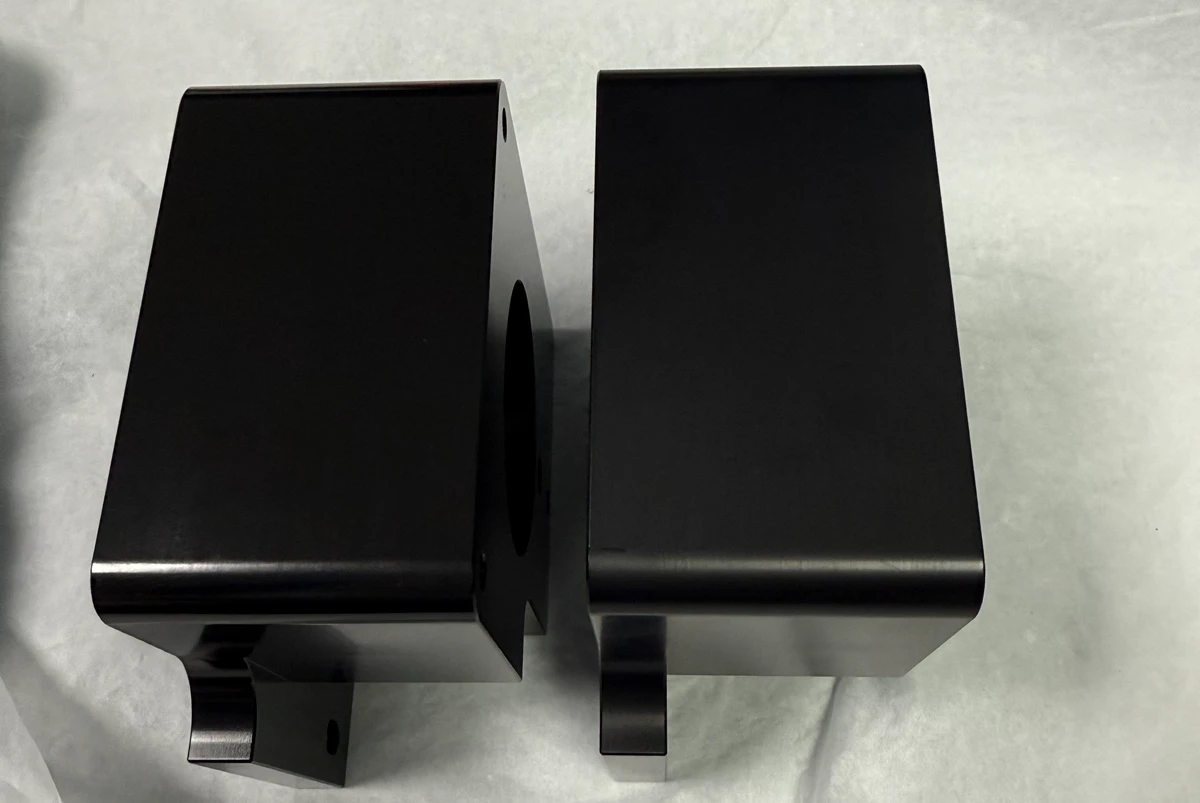
Black Anodized Color Variation: Why Two Parts Can Look Different
Even when two CNC parts use the same nominal black anodizing callout, visible shade or gloss differences can occur because of alloy lot, temper, surface roughness, oxide development, dye uptake, racking, sealing and lighting.
For a detailed production example, “black anodized color variation” to Rollyu Precision’s anodized aluminum color-difference control case study.
| Need batch-to-batch color control? |
| Provide the approved sample, alloy/temper, surface preparation, cosmetic surfaces, annual quantity and inspection method. Rollyu Precision can review a practical light/dark range, sampling approach and lot-control plan before production. |
Can Anodized Aluminum Match Pantone or RAL Colors?
Pantone and RAL references can be useful targets for communicating a desired hue, but they should not be treated as automatic proof that anodized aluminum will reproduce a printed or painted color exactly.
Anodized appearance remains affected by the base alloy, temper, surface finish, oxide transparency, dye uptake, sealing, geometry, gloss and lighting. A drawing that says only “Blue Anodize — Pantone Blue 072 C” may therefore be incomplete for cosmetic acceptance.
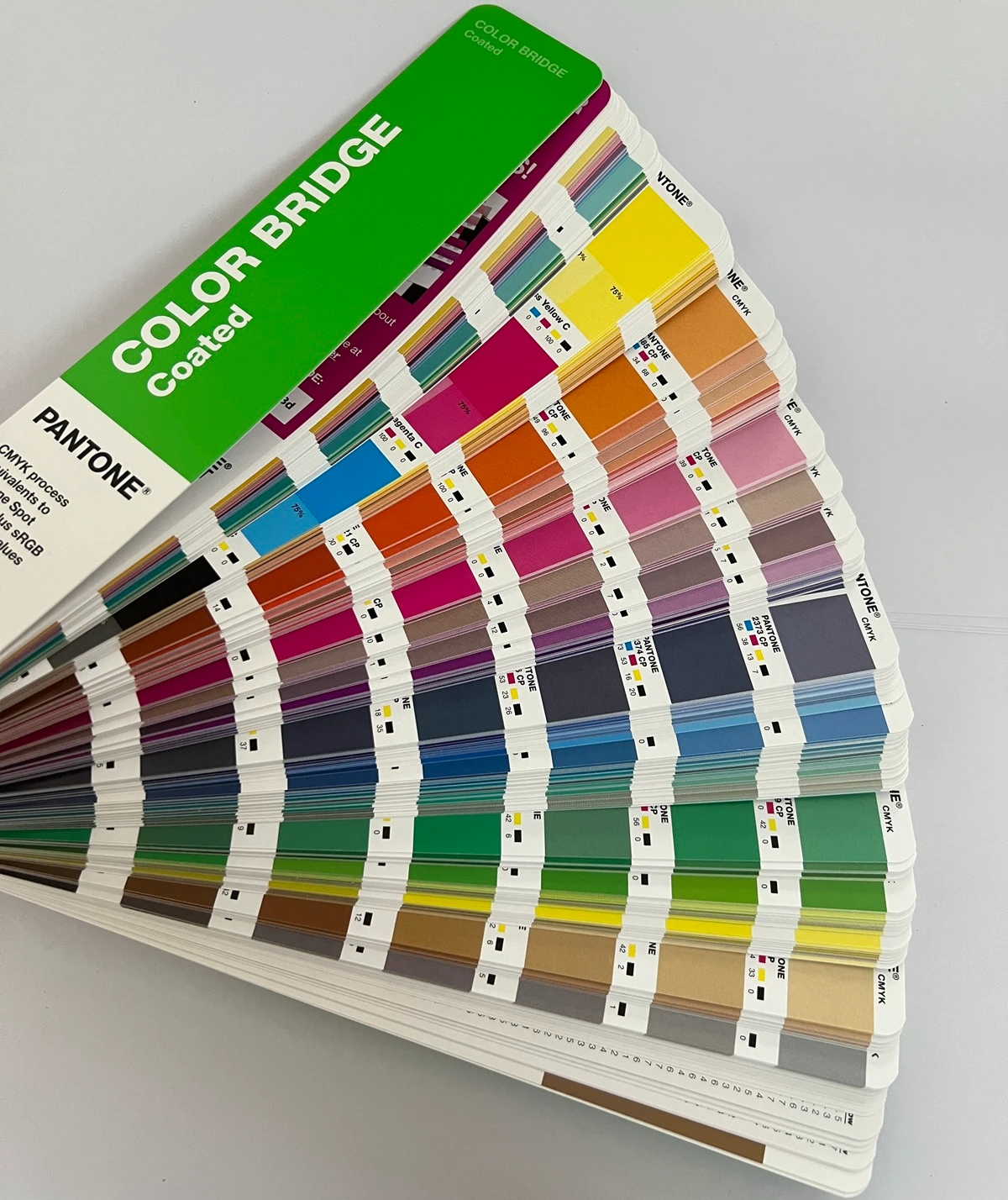
A Safer Color-Matching Method for Precision CNC Parts
- Specify the exact aluminum alloy and temper.
- Define the pre-anodize surface preparation.
- Specify the anodizing type/class or governing process specification.
- Provide a physical approved master sample whenever color is critical.
- Use light/dark limit samples when visual range control is appropriate.
- Identify Class A cosmetic surfaces and non-critical surfaces.
- Define inspection lighting and viewing conditions where needed.
- If instrumental color control is required, agree the instrument, geometry, illuminant, measurement location and acceptance criterion.
What About ΔE?
CIELAB (L*, a*, b*) and ΔE measurements can add objective color data, but metallic and directionally reflective surfaces require a defined measurement method. Instrument geometry, illuminant, gloss, sample orientation and measurement location can change the result. Do not publish a universal ΔE acceptance number for anodized aluminum unless it has been validated for the specific customer program.
| Planning a Pantone-targeted anodized part? |
| Send the physical color reference or Pantone/RAL target together with the CAD drawing, alloy, surface finish and quantity. Rollyu Precision can determine whether a sample-based range or an instrumental acceptance method is more realistic than an “exact match” promise. |
As-Machined vs Clear Anodized vs Black Anodized Aluminum
| Feature | As-machined | Clear anodized | Black anodized |
| Metallic appearance | Fully visible | Visible through anodic oxide | Mostly visually suppressed by dark color |
| Corrosion protection | Depends on environment and natural oxide | Improved when correctly processed/sealed | Improved when correctly processed/sealed |
| Cosmetic appearance | Machining marks visible | Silver/gray metallic | Matte, satin or brighter black |
| Dimensional planning | No anodize buildup | Review critical dimensions | Review critical dimensions |
| Electrical behavior | Conductive aluminum surface after oxide is locally removed/controlled | Anodic oxide is insulating | Anodic oxide is insulating |
| Optical behavior | Reflective | Metallic/reflective | Darker visually; spectral reflectance still needs validation |
Note: “corrosion protection” and “electrical behavior” depend on the actual environment, sealing, thickness and surface design. Do not translate this comparison table into guaranteed test values without project-specific validation.
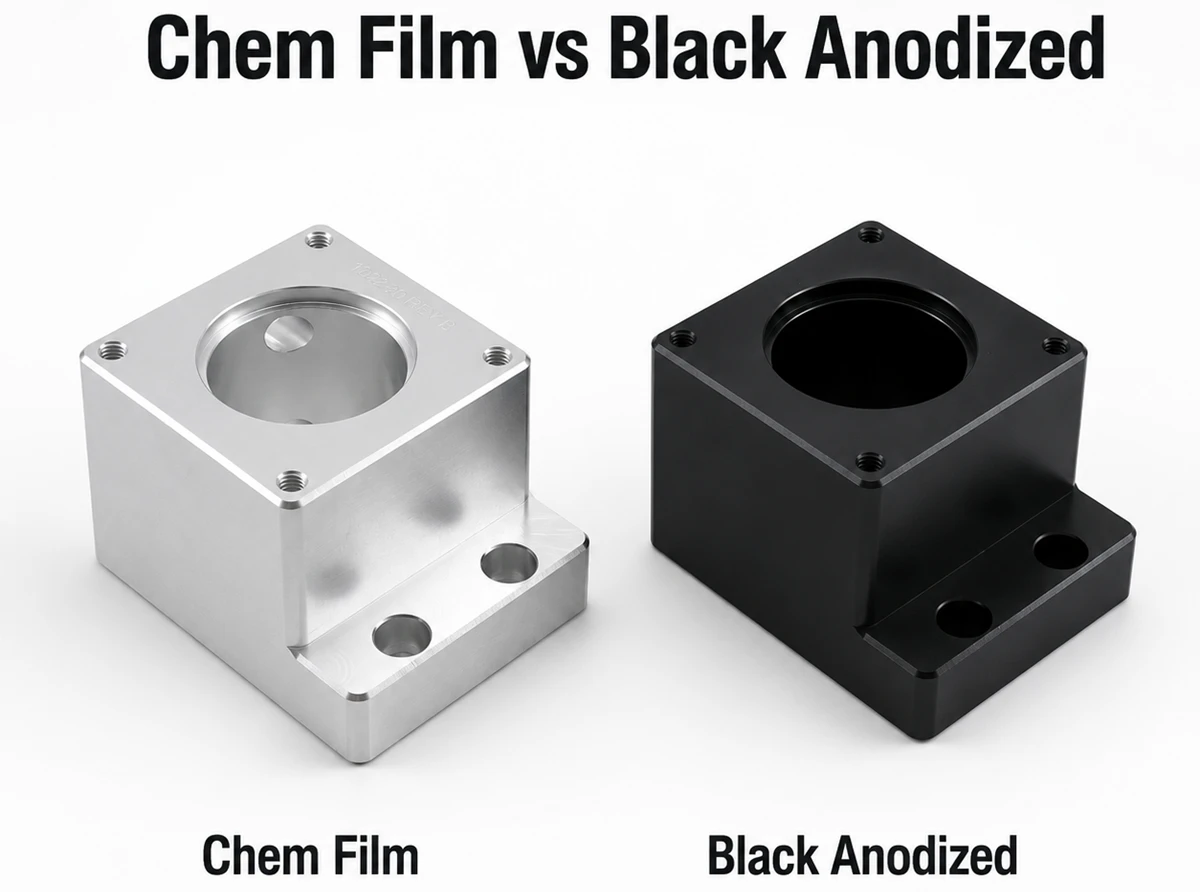
Chem Film vs Anodizing: When Color Is Not the Main Requirement
Chem Film, also called chemical conversion coating, is a different surface treatment from anodizing. Depending on the chemistry and specification, chemical conversion coatings can appear clear, iridescent, yellow or other tones; a silver image should not be interpreted as the universal appearance of all Chem Film.
Chem Film may be considered when a design needs corrosion protection with minimal dimensional effect, pretreatment before painting, or a surface strategy compatible with electrical bonding/contact requirements. Actual electrical/contact-resistance performance depends on the specified chemistry, class, application and test requirements.
Anodizing is generally preferred when the design requires a harder oxide surface, decorative color or enhanced wear resistance. Because anodic oxide is electrically insulating, grounding points, conductive interfaces, critical threads or precision fits may require masking or another engineered approach.
Selecting Anodized Aluminum Colors by Industry
The correct finish should follow the component function and customer specification, not the industry label alone.
Photonics and Quantum Hardware
Common anodized components include optical mounts, instrument housings, positioning stages, detector brackets, sensor housings and optomechanical frames. Black anodizing is common for a dark mechanical appearance, but optical-critical surfaces should use measurable reflectance requirements where needed.
Space and Satellite Hardware
Typical components include structural brackets, payload frames, electronics housings and positioning hardware. Do not assume a decorative dyed anodize is automatically suitable for vacuum, contamination-sensitive, UV-exposed or mission-critical service. The project or agency specification should control material, dye, sealing, cleaning, bonding and qualification requirements.
Motion Control
Black or clear Type II anodizing is common on housings, stages and brackets, while Type III may be considered for wear-related functions. Bearing seats, bores, threaded interfaces, sliding surfaces and grounding areas should be reviewed for coating allowance or masking before machining dimensions are released.
Robotics
Anodized aluminum is widely used for robot structures, end-effector components, sensor mounts, actuator housings and camera brackets. Colored anodizing can support identification or product differentiation, but wear surfaces may require hardcoat or another engineered finish rather than a color-first decision.
Medical Device and Dental Equipment
Black, clear, blue and other anodized finishes can be used on equipment housings, diagnostic structures, instrument panels, positioning hardware and non-implant mechanical components. Anodizing alone does not make a component “medical grade,” biocompatible, sterilization-compatible or regulatory-compliant. Those requirements must be evaluated and validated for the intended device, cleaning process and patient-contact category.
| Industry-specific DFM + finishing review |
| For photonics, quantum, space, motion-control, robotics, medical or dental parts, Rollyu Precision can review the alloy, machining route, masking, finish callout, critical dimensions and inspection plan together before production. |
How to Specify Anodized Aluminum Color on a Drawing
A production-ready anodizing callout should answer more than “what color?” The following checklist reduces ambiguity between engineering, machining and the finishing supplier.
| Item | What to define | Risk avoided |
| 1. Alloy and temper | Example: 6061-T6, 7075-T6 | Different alloys can produce different tones |
| 2. Governing process | Applicable anodizing type/class or customer specification | Avoids vague “anodize” callouts |
| 3. Functional thickness | Specify only when required by the design/spec | Prevents color from being used as a thickness proxy |
| 4. Surface preparation | As-machined, bead blasted, brushed, polished, approved sample | Controls gloss and visible machining marks |
| 5. Color reference | Black, clear, approved physical sample, Pantone/RAL target | Defines target without overpromising exact match |
| 6. Cosmetic surfaces | Class A surfaces, hidden areas, allowable rack marks | Prevents disputes on non-critical faces |
| 7. Masking | Grounding, threads, bearing fits, sealing faces, critical bores | Controls electrical and dimensional risk |
| 8. Acceptance | Physical master, light/dark limits, controlled lighting or agreed instrument method | Creates objective production criteria |
Eight Common Mistakes That Lead to Anodized Color Problems
Mistake 1: Choosing the color before choosing the alloy
A bright color proven on 6061 may not look the same on 7075, 2024 or cast aluminum.
Mistake 2: Mixing different alloys in one visible assembly
Even with the same nominal color, the parts may not visually match.
Mistake 3: Writing only “black anodize”
That does not define type, class, surface preparation, masking, thickness or cosmetic acceptance.
Mistake 4: Treating Pantone as an exact anodizing formula
Use it as a target and approve a physical sample or agreed measurement method.
Mistake 5: Assuming black anodize is automatically low-reflectance
For photonics, specify spectral reflectance where optical performance is critical.
Mistake 6: Assuming a fixed 50/50 coating growth rule
Buildup and penetration are process-dependent; use qualified processor/spec data for critical dimensions.
Mistake 7: Assuming re-anodizing is dimensionally harmless
Stripping can remove base aluminum and may alter tight-tolerance features.
Mistake 8: Treating anodize as proof of medical, space or corrosion qualification
Device, mission and environmental performance require separate applicable validation.
Why Color Control Should Start During CNC Machining
Anodizing cannot fully correct an inconsistent machined surface. If a family of parts must look consistent, the manufacturing plan should control material, tool condition, finishing strategy, surface roughness, deburring, hand polishing, blast media, cleaning and part handling.
- Use the same alloy and temper across visible assemblies where practical.
- Control machining and deburring so cosmetic faces have comparable texture.
- Define bead blasting or polishing rather than leaving pre-finish open to interpretation.
- Separate cosmetic-critical surfaces from functional or hidden surfaces.
- Plan rack/contact locations and masking before production.
- Inspect color under agreed lighting and against approved physical references.
Rollyu Precision therefore treats anodized aluminum as a combined Material → CNC machining → surface preparation → anodizing → inspection workflow.
FAQ About Anodized Aluminum Colors
What colors can aluminum be anodized?
Type II sulfuric anodizing can commonly be supplied in clear/natural, black, red, blue, green, purple, gold, bronze, champagne and gray, plus process-dependent custom shades. Actual availability depends on the alloy, anodizing route and processor.
What is the most common anodized aluminum color?
Black and clear/natural are among the most common industrial choices for precision CNC components.
What is the most repeatable anodized color?
Black and clear/natural are often easier to manage visually than many bright custom colors, but no anodized color should be described as perfectly invariant. Alloy, surface preparation and process conditions still matter.
Can anodized aluminum match a Pantone color exactly?
A Pantone color can be used as a target, but exact paint-like replication should not be assumed. A physical anodized sample and agreed acceptance range are safer for appearance-critical production.
Why do two black anodized parts look different?
Different alloy lots, temper, surface texture, oxide development, dye conditions, sealing, racking, geometry and lighting can all contribute.
Can 6061 and 7075 have the same anodized color?
They can be processed toward the same nominal color, but visible differences may remain because the alloys form and display anodic oxide differently.
Can Type III hard anodizing be colored?
Type III is naturally darker and can be supplied in dark natural tones; black is common when specified and feasible. Bright decorative colors are more limited than with Type II.
Is clear anodizing the same as bare aluminum?
No. Clear anodizing creates a controlled oxide layer. Tone, gloss and final dimensions can differ from the as-machined condition.
Is Chem Film the same as clear anodizing?
No. Chemical conversion coating and anodizing are different surface-treatment systems with different thickness, wear and electrical characteristics.
Does anodizing affect CNC part dimensions?
Yes. The process develops an oxide layer into and above the original surface. For critical fits, use the governing specification and qualified processor data rather than a universal buildup assumption.
Does anodized aluminum color fade?
Some dyed finishes can change with UV or environmental exposure. Durability depends on dye system, sealing, exposure and application; do not promise a universal service life without test data.
Can anodized aluminum be reworked?
Sometimes, but stripping the existing oxide can remove base aluminum and alter dimensions. Tight-tolerance rework should be reviewed before stripping.
Is black anodized aluminum suitable for photonics?
Often for housings and optomechanical structures, yes. For stray-light-critical surfaces, validate spectral reflectance rather than relying only on the visual black color.
Is anodized aluminum automatically suitable for medical devices?
No. Anodizing alone does not establish biocompatibility, sterilization compatibility, patient-contact suitability or regulatory compliance.
Is anodized aluminum automatically suitable for space or vacuum?
No. Mission-specific contamination, vacuum, thermal, optical, bonding and environmental requirements must be evaluated separately.
Custom Anodized Aluminum CNC Parts From Rollyu Precision
For precision parts, anodized color should be considered during manufacturing planning rather than added as an afterthought after machining.
Rollyu Precision supports custom aluminum CNC components for photonics and quantum hardware, space and satellite systems, motion-control equipment, robotics, medical devices, dental equipment and precision instrumentation.
A strong RFQ package should include:
- 3D CAD and 2D drawing
- aluminum alloy and temper
- prototype and production quantity
- anodizing type/class or customer specification
- desired color or physical reference
- surface preparation and cosmetic requirements
- masking / grounding requirements
- critical dimensions and inspection requirements
Review Your Anodized Aluminum Part Before Production
If your project requires black, clear, red, blue, gold, bronze, custom-color or hardcoat anodized CNC aluminum parts, send Rollyu Precision your CAD files and drawing.
We can review alloy suitability, machining strategy, cosmetic surfaces, Type II vs Type III selection, color feasibility, Pantone/sample-based targets, critical fits, masking and batch-to-batch color-control strategy.
Request a manufacturing review and quotation before locking the anodized color into the production drawing.