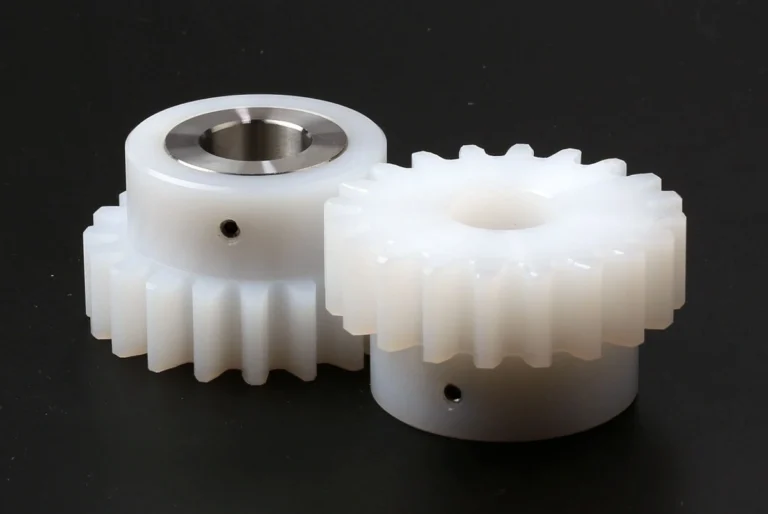
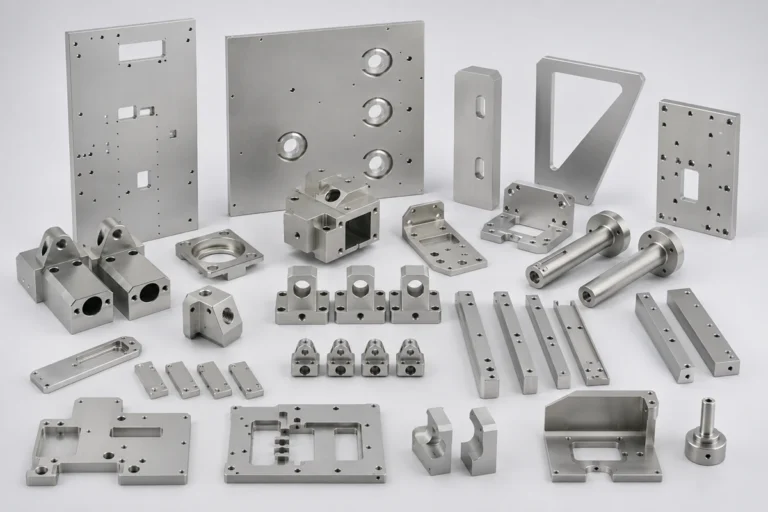
Nylon CNC Machining: Machinability, Hardness, Heat Treatment, Speeds & Tooling

Nylon CNC Machining: Machinability, Hardness, Heat Treatment, Speeds & Tooling

Nylon (polyamide, PA) is widely used for CNC-machined gears, bushings, rollers, wear pads, guides, insulators and other functional components because it combines low density, wear resistance, useful fatigue performance and relatively low friction. It is also easy to underestimate. Compared with metals, nylon has lower stiffness, lower thermal conductivity, much higher thermal expansion and a…

PA6 GF30 vs PA66 GF30: Machinability, Hardness and CNC Material Selection

PA6 GF30 vs PA66 GF30: Machinability, Hardness and CNC Material Selection

PA6 GF30 vs PA66 GF30: Quick Answer PA6 GF30 and PA66 GF30 are both 30% glass-fiber-reinforced polyamides used for structural, wear-resistant, and dimensionally demanding parts. For CNC machining, both can produce accurate components from rod or plate, but the glass fibers increase tool wear compared with unfilled nylon. PA66 GF30 generally offers a higher melting…

ABS CNC Machining: How to Machine ABS Plastic for Accurate, Clean Parts

ABS CNC Machining: How to Machine ABS Plastic for Accurate, Clean Parts

ABS CNC machining is a practical way to manufacture functional plastic prototypes, fixtures, housings, covers, instrument panels, brackets, and low-volume end-use parts without investing in injection-molding tooling. ABS (acrylonitrile butadiene styrene) is relatively tough, rigid, low in density, and generally easy to cut. The machining challenge is not tool wear in the metalworking sense; it…

Machining 440C Stainless Steel: CNC Strategies for Hardened Precision Parts

Machining 440C Stainless Steel: CNC Strategies for Hardened Precision Parts

Machining 440C stainless steel is not simply a matter of reducing cutting speed and using stronger tools. For precision parts, the critical decision is the complete process route: material condition, rough machining, heat treatment, finishing, grinding or EDM, and final inspection. 440C is a high-carbon martensitic stainless steel, commonly identified as UNS S44004. Carpenter Technology…

CNC Machining Quality Control: How Rollyu Inspects Precision Machined Parts

CNC Machining Quality Control: How Rollyu Inspects Precision Machined Parts

What Is Quality Testing for CNC Machined Parts? Quality testing for CNC machined parts is the planned verification of material, dimensions, GD&T, threads, surface condition, functional interfaces and documentation from incoming inspection through final release. A defensible process combines first article inspection, in-process quality control, dimensional inspection, CMM or optical measurement where appropriate, final inspection…

How to Machine 420 Stainless Steel Before and After Heat Treatment

How to Machine 420 Stainless Steel Before and After Heat Treatment

Quick answer: 420 stainless steel can be CNC machined successfully, but its machining behavior changes sharply with material condition and final hardness. For many tight-tolerance parts, the most controllable route is to remove most material while the alloy is in a softer condition, leave deliberate finishing stock on distortion-sensitive features, perform the specified heat treatment,…

Medical Device CNC Machining: Which Inspection Documents Should Buyers Request?
|

Medical Device CNC Machining: Which Inspection Documents Should Buyers Request?

Medical device CNC machining buyers should request inspection documents tied to the released drawing, material lot, measured results, and controlled processes. This guide explains which records to request, when they apply, and how to define them in an RFQ or purchase order.

416 Stainless Steel CNC Machining for Precision Machined Parts

416 Stainless Steel CNC Machining for Precision Machined Parts

416 stainless steel is a free-machining martensitic stainless steel designed for precision components that require efficient turning, milling, drilling, threading and other extensive machining operations. Its sulfur addition improves chip breaking and reduces cutting resistance, while its martensitic structure allows the material to be hardened and tempered when higher strength or wear resistance is required….

End of content

End of content