

PEEK and ULTEM are both high-performance thermoplastics used when standard plastics cannot provide enough heat resistance, dimensional stability, mechanical performance, or electrical reliability. They can both be CNC milled, turned, drilled, reamed, and finished into precision parts, but they do not behave the same way during machining or in service. PEEK is a semi-crystalline polyetheretherketone (PAEK-family) material known for high-temperature capability, chemical resistance, wear performance, and fatigue strength. ULTEM is SABIC’s trade name for polyetherimide (PEI), an amorphous material valued for dimensional stability, electrical insulation, inherent flame resistance, and a more economical performance envelope for many medium-to-high temperature applications. The correct choice is therefore not “which material is better,” but which one matches the part’s load, temperature, chemical exposure, electrical function, geometry, regulatory requirements, and budget.
| Quick selection rule: Choose PEEK when the part must survive higher continuous temperature, aggressive chemicals, sliding wear, fatigue, or severe mechanical duty. Choose ULTEM/PEI when electrical insulation, flame performance, dimensional stability, amber translucency, machinability, and cost control are the stronger priorities. Always confirm the exact grade and stock-form datasheet before release. |
What Are PEEK and ULTEM (PEI)?
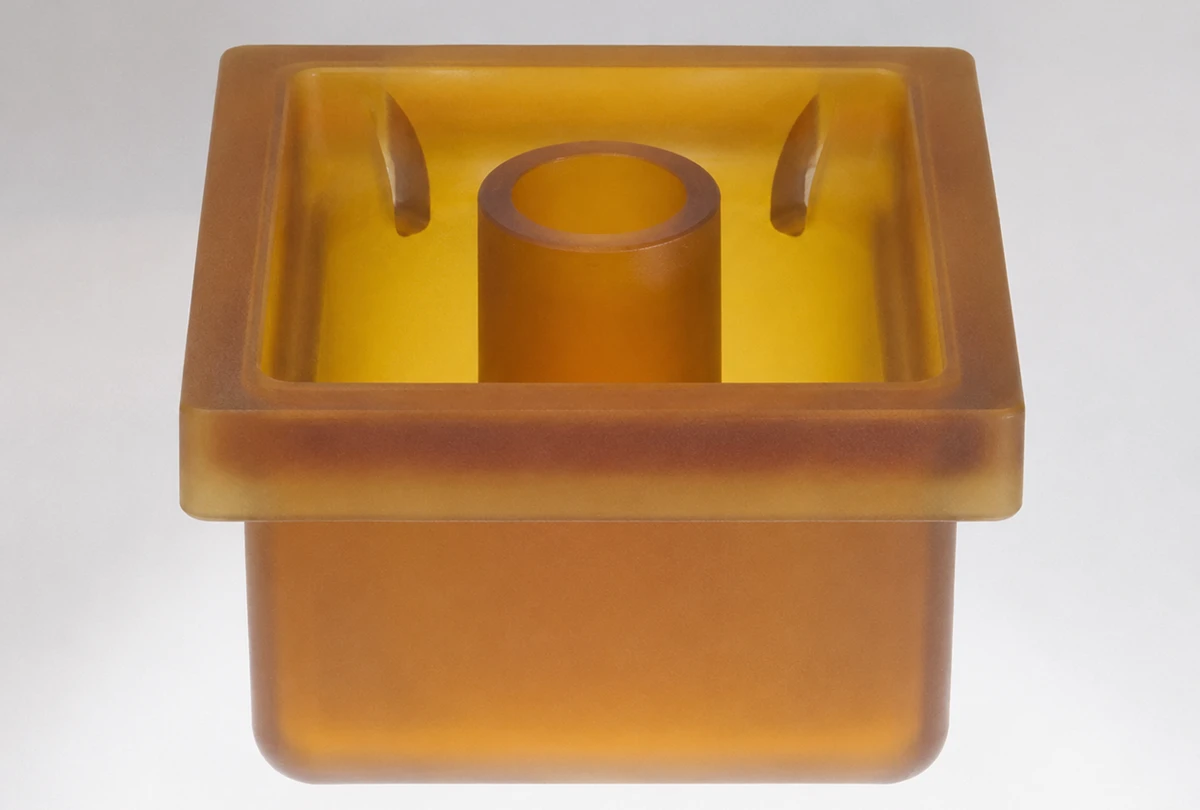
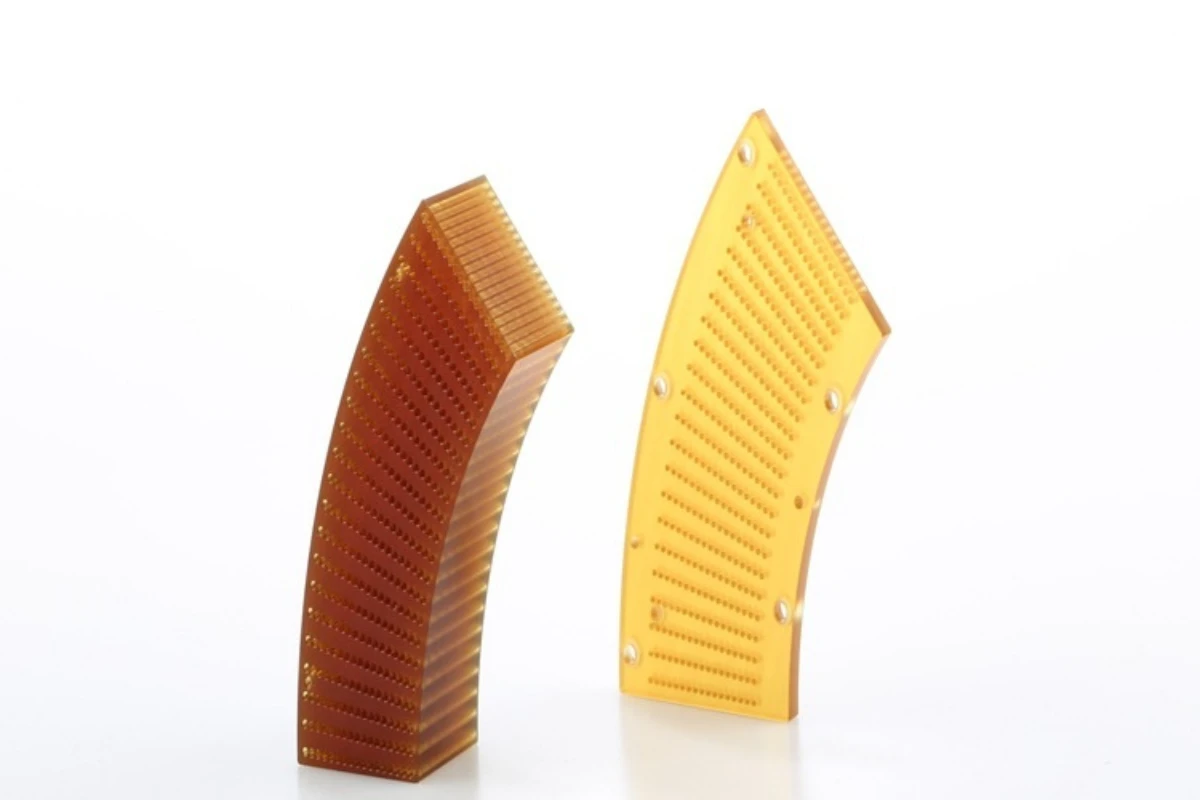
PEEK is a semi-crystalline thermoplastic with a melting point around 343°C and a continuous-use capability commonly specified near 250–260°C for standard high-performance grades. Its semi-crystalline morphology helps retain strength, creep resistance, chemical resistance, and wear performance in demanding service. ULTEM/PEI is amorphous; ULTEM 1000 is an unfilled transparent amber PEI grade with a glass transition temperature of about 217°C, while reinforced ULTEM families add glass fiber to increase stiffness and reduce thermal expansion. Because ULTEM is amorphous rather than semi-crystalline, it has no crystalline melting point like PEEK and is often easier to use for complex insulating housings, structural electrical parts, and visual functional prototypes.
PEEK vs ULTEM: Engineering Comparison for CNC Parts
| Selection Factor | PEEK | ULTEM / PEI | Design Direction |
| Thermal duty | Higher continuous service capability; semi-crystalline | High Tg and good medium/high-temperature stability; amorphous | Favor PEEK for sustained extreme heat |
| Chemical resistance | Very broad, including many aggressive chemicals | Broad but more sensitive to certain solvents/strong alkaline environments | Validate the exact chemical, concentration, temperature, and exposure time |
| Wear / fatigue | Typically stronger for sliding, bearings, gears, high-cycle duty | Better suited to structural/insulating functions than severe tribology | Favor PEEK for moving or high-wear parts |
| Electrical / flame | Strong electrical properties; grade dependent | Excellent dielectric behavior and inherent flame resistance are key strengths | ULTEM is often attractive for electrical housings and isolators |
| Transparency | Usually opaque natural beige or filled colors | Unfilled PEI can be amber translucent | Do not interpret translucency as an optical-grade guarantee |
| Cost | Usually higher | Usually lower for comparable unfilled engineering stock | Avoid over-specifying PEEK when ULTEM meets the actual duty |
Machinability: PEEK vs ULTEM
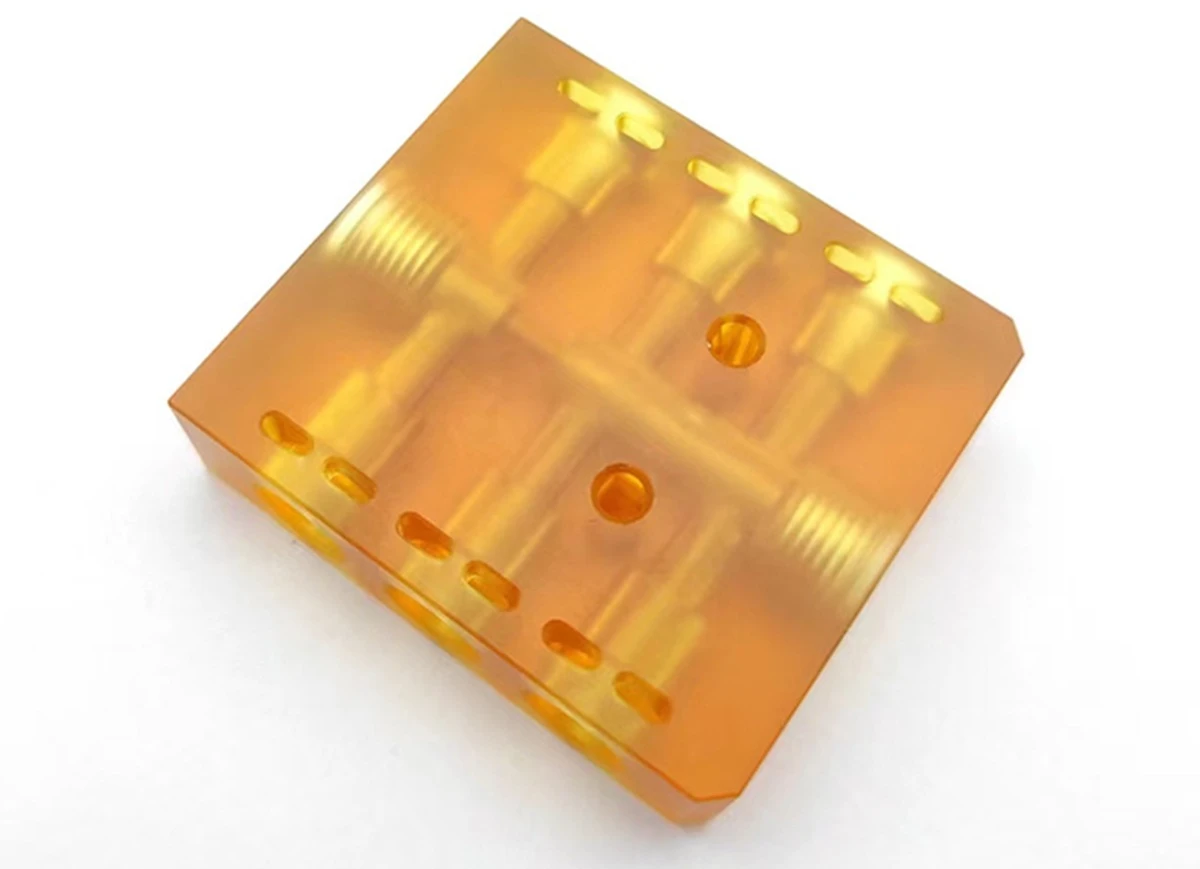
Both materials can be machined to precise geometry, but dimensional control depends on stock quality, grade, wall thickness, tool sharpness, heat input, fixturing, material-removal balance, and inspection temperature. PEEK generally machines cleanly with sharp tools and can tolerate comparatively productive feed rates, especially in unfilled stock. Reinforced PEEK is more abrasive and may require carbide, coated carbide, or diamond tooling. ULTEM/PEI also machines well, particularly unfilled grades, but its lower thermal conductivity means heat can accumulate around the cutting zone. Thin walls, deep pockets, abrupt section changes, and aggressive clamping can increase the risk of local deformation, burrs, or stress release. For either material, remove stock symmetrically where possible, avoid unnecessary dwell, keep chips moving away from the cut, and allow the part to return to a stable temperature before final sizing.
Tooling for PEEK and ULTEM
Sharp cutting edges are more important than simply using a “plastic” tool. For unfilled PEEK and unfilled ULTEM, polished carbide tools with positive rake and good chip clearance are a robust default for production. HSS may be acceptable for light prototype work, but carbide normally holds edge geometry longer. Filled or reinforced grades change the decision: glass fiber and carbon fiber increase abrasion, so coated carbide or PCD may be justified when tool life, edge quality, and batch consistency matter. Drills should evacuate chips without rubbing; peck cycles are useful in deeper holes. Milling cutters should avoid blunt edges that generate heat rather than shear material. During finishing, a stable tool, light radial engagement, and one controlled final pass are generally more reliable than repeated rubbing passes.
Speeds & Feeds: Use Starting Windows, Not Copy-and-Paste Settings
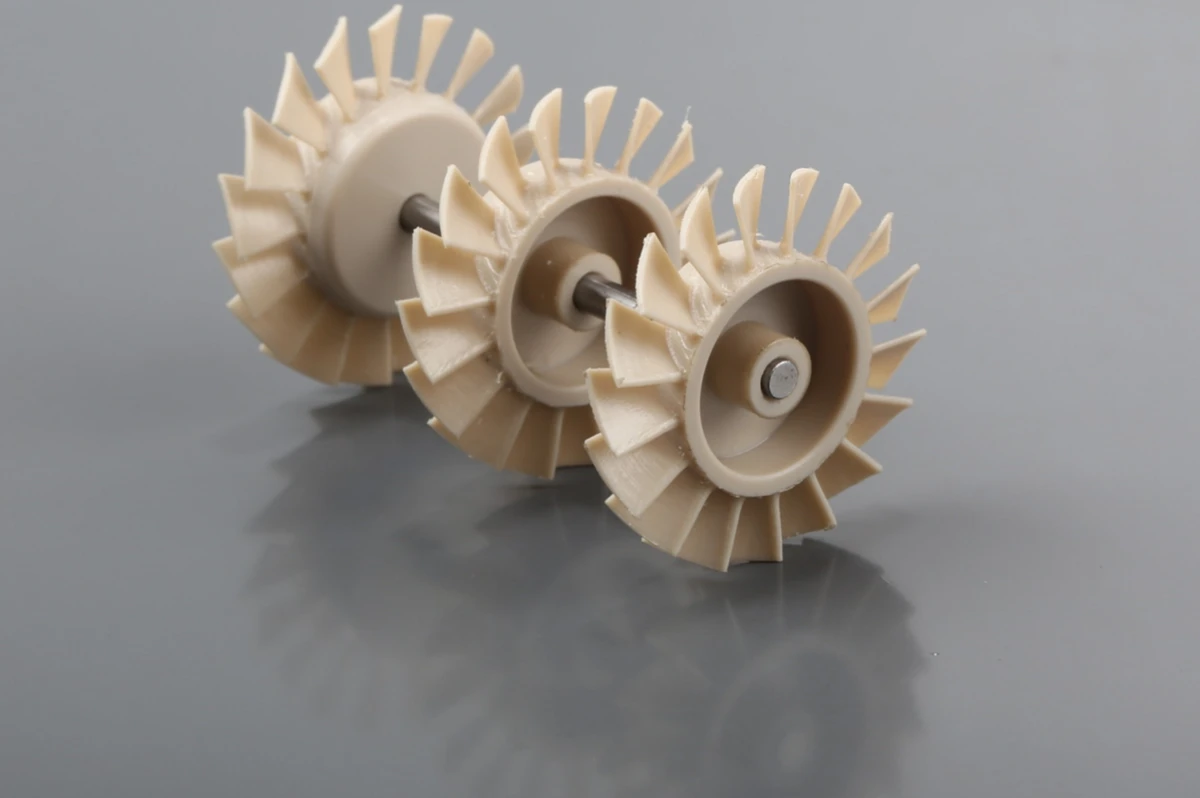
A published cutting number should be treated as a process-development starting point, not a production promise. Tool diameter, flute count, machine rigidity, coolant strategy, grade, reinforcement, hole depth, wall thickness, stock condition, and required finish can shift the stable window substantially. For PEEK, Victrex publishes generic machining guidance for its materials; the table below uses those values as a reference. For ULTEM/PEI, publish directional guidance rather than a single universal RPM because stock suppliers and grades differ. Convert surface speed to spindle speed for the actual cutter diameter and validate on first-off material before release.
| Operation | PEEK Reference Starting Point | ULTEM / PEI Publication-Safe Guidance | Control Note |
| Turning | 100–300 m/min; 0.10–0.70 mm/rev for unfilled reference conditions | Use sharp carbide; start conservatively and increase only while chip formation, heat, and dimensions remain stable | Filled grades usually require more wear-resistant tooling and often lower surface speed |
| Milling | 180–230 m/min for unfilled; filled/reinforced grades may be lower | Use positive-rake carbide, controlled chip load, good evacuation, and avoid dwell/rubbing | Calculate RPM from cutter diameter; do not copy one RPM between tools |
| Drilling | About 120 m/min unfilled; 75–120 m/min filled; 0.05–0.20 mm/rev | Use peck drilling for deeper holes, sharp lips, and reduced exit load on thin sections | Check chip packing and hole-size drift as the drill heats |
| Coolant / air | Compatible water- or oil-based coolant may be used; air is also common in suitable operations | Air or compatible coolant may be used depending on finish, cleanliness, and heat control | Confirm chemical compatibility and downstream cleaning requirements |
Moisture: Pellet Drying Is Not the Same as Conditioning CNC Stock
Do not copy injection-molding pellet drying instructions directly onto CNC plate, rod, or block. Resin pellets are dried before melt processing to prevent moisture-related molding defects. For example, Victrex specifies very low residual moisture for PEEK pellets before injection molding, while ULTEM resin drying must follow the current SABIC grade-specific processing guide. Machined stock has already been extruded, compression molded, or otherwise converted into a solid shape. For CNC work, the more relevant controls are clean dry storage, thermal equilibrium before roughing and inspection, and humidity/temperature conditioning when dimensional requirements justify it. If the finished component will see steam, hot water, vacuum, cryogenic service, or a controlled optical/electrical environment, evaluate the material in the actual service condition rather than assuming room-temperature dimensional data will predict field behavior.
Post-Curing and Annealing: When Is It Actually Needed?
Neither PEEK nor ULTEM should be described as requiring a universal “post-cure” after CNC machining. These are thermoplastics, not thermoset materials that always need a cure cycle. The useful term for precision machining is usually stress-relief annealing or thermal conditioning. Victrex states that secondary annealing is not necessary for the majority of properly processed PEEK applications, but annealing can be used to adjust crystallinity, remove machining or molding stress, or improve dimensional stability at elevated service temperatures. Where it is used on a machined PEEK part, the sequence is commonly rough machine → stress-relief/anneal if justified → stabilize → finish machine → inspect. For ULTEM/PEI stock, a stress-relief step may also help after heavy material removal or before final machining on thin, asymmetric, or tight-tolerance geometry, but the actual temperature, support method, hold time, and cooling rate must come from the stock/resin supplier and project validation. A blanket “all ULTEM machining requires post-curing” statement should not be published.
Inspection and Tolerance Strategy
Do not advertise one tolerance for every PEEK or ULTEM part. Achievable tolerance is a result of geometry, part size, feature depth, wall thickness, reinforcement, stock form, tool access, thermal state, and the measurement method. A 10 mm thick ring with a simple bore is fundamentally different from a 400 mm plate with thin ribs and large material removal. For reliable inspection, define functional datums on the drawing, allow the part to reach a stable measurement temperature, and use a measurement method that does not distort the plastic. CMM probing is appropriate for many datum, position, and profile checks; optical systems can be valuable for thin or flexible edges; plug, pin, thread, and bore gauges are efficient for functional features; and surface plates or controlled fixtures can support flatness checks. For high-precision work, separate rough machining from final inspection and re-check critical features after the part has stabilized. If the application includes thermal cycling, sterilization, vacuum bakeout, or long-term load, dimensional validation after the relevant conditioning step may be more meaningful than a single room-temperature inspection.
Applications: Medical, Aerospace, Photonics and Electronics
Medical and Life Science
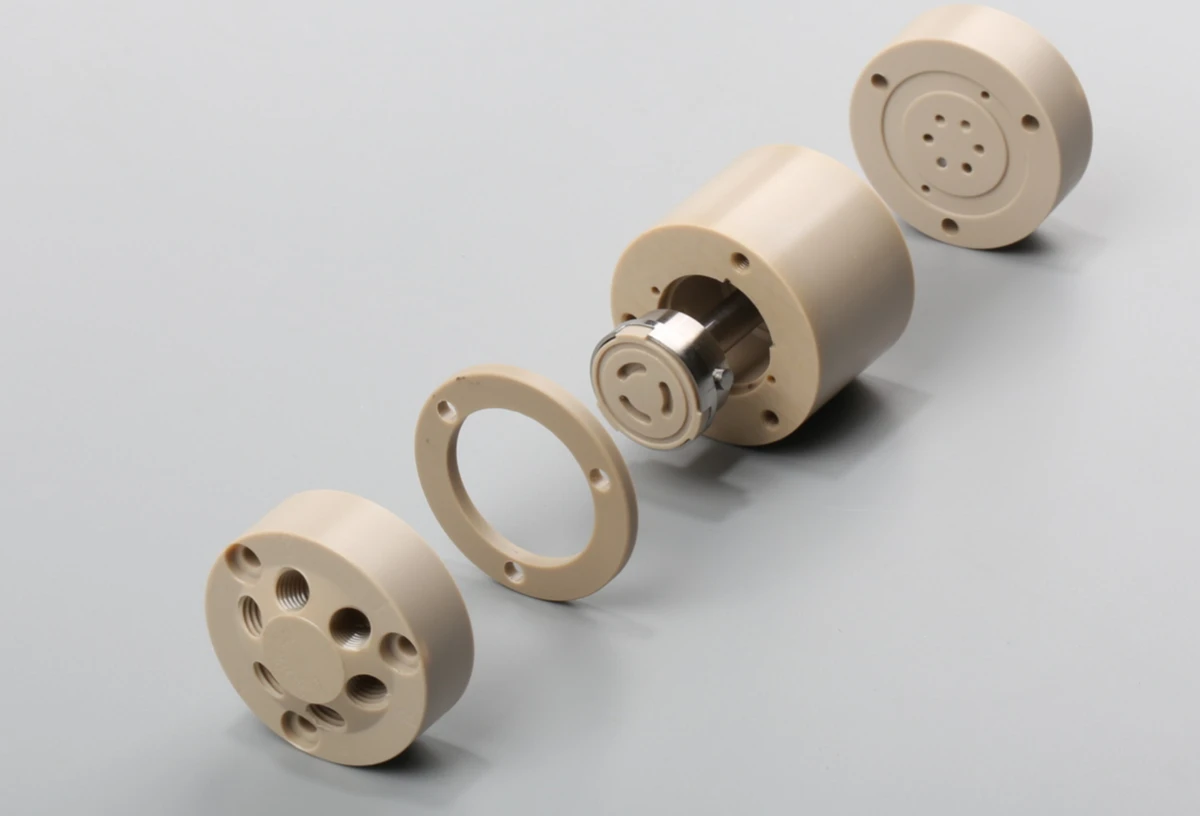
PEEK is widely considered for instruments, fluid-handling parts, wear components, and—when a specifically qualified implant-grade material and validated device program are used—implantable applications. ULTEM/PEI can be useful for reusable instrument components, housings, insulators, and analytical equipment. However, “PEEK” or “ULTEM” by itself is not a medical approval. FDA, USP Class VI, ISO 10993, sterilization, and body-contact claims must match the exact grade, stock-shape supplier, color/additives, contact duration, cleaning process, and finished-device validation.
Aerospace
PEEK is attractive when higher temperature, chemical exposure, fatigue, or structural duty drives the material choice. ULTEM is often evaluated for electrical isolators, housings, connectors, interior components, and other parts where dielectric behavior and flame/smoke performance matter. Do not state that all PEEK or all ULTEM is “aerospace approved.” Flame, smoke, toxicity, UL, FAR, and program-specific qualifications are grade-, thickness-, manufacturing-route-, and customer-specific.
Photonics, Electronics and High-Voltage Hardware
ULTEM/PEI is often attractive for electrically insulating structures, sensor housings, connector bodies, optical-mechanical supports, and instrument components. PEEK is useful where those functions are combined with harsher chemistry, wear, higher service temperature, or vacuum/thermal demands. For photonics, do not treat amber translucency as evidence of optical-grade performance. Wavelength transmission, birefringence, refractive index, outgassing, ionic cleanliness, and dimensional stability should be verified for the exact grade and application.
How to Choose Between PEEK and ULTEM for Your Part
- Choose PEEK when sustained high temperature, aggressive chemicals, wear, fatigue, creep resistance, or severe mechanical service is the dominant requirement.
- Choose ULTEM/PEI when electrical insulation, flame performance, stable precision geometry, amber translucency, prototype flexibility, and cost efficiency are more important than extreme thermal or tribological performance.
- For filled grades, re-evaluate tooling, anisotropy, surface finish, drilling breakout, and dimensional behavior; do not assume the unfilled-grade process transfers directly.
- For regulated applications, start with the compliance requirement and approved material grade, then design the machining process around that specification.
- When the choice is close, machine a first article from the intended production stock and test it under real temperature, load, chemical, sterilization, electrical, or vacuum conditions.
FAQ: PEEK vs ULTEM
Is PEEK better than ULTEM?
Not universally. PEEK is generally preferred for more extreme heat, chemical exposure, wear, and fatigue. ULTEM can be the better engineering choice when electrical insulation, flame performance, dimensional stability, machinability, and cost are the main drivers.
Can ULTEM replace PEEK?
Sometimes. It may replace PEEK in moderate-temperature structural or electrical applications if the load, chemical exposure, wear, sterilization, and compliance requirements allow it. It should not be treated as a drop-in substitute for high-temperature, high-wear, or aggressive-chemical PEEK applications without validation.
Which material machines more easily?
Both are highly machinable in stock form. Unfilled ULTEM/PEI can machine very cleanly, while unfilled PEEK also supports efficient CNC production. Reinforced grades of either material are more abrasive and may require more wear-resistant tooling and different feeds and speeds.
Do PEEK and ULTEM need post-curing after machining?
No blanket post-cure is required. Stress-relief annealing or thermal conditioning may be used for selected parts when residual stress, crystallinity, high service temperature, or tight dimensional control justify it. Follow the grade and stock-shape supplier’s validated procedure.
What tolerance can Rollyu hold on PEEK or ULTEM?
Tolerance should be quoted from the drawing, not from the material name alone. Part size, wall thickness, feature geometry, grade, stock condition, machining sequence, and inspection environment determine what is practical and repeatable.
Which is better for medical or FDA-related applications?
The answer depends on the exact grade and intended use. A resin family name is not an FDA or biocompatibility approval for a finished part. Use grade-specific compliance documentation and validate the finished component or device to the applicable regulatory requirements.
RFQ CTA: Send Your PEEK or ULTEM Project for DFM Review
| Need help choosing PEEK vs ULTEM for a precision CNC part? Send Rollyu Precision your 2D drawing, STEP file, expected quantity, operating temperature, chemical/sterilization exposure, electrical or optical requirements, target inspection criteria, and any required material/compliance documents. Our engineering team can review material selection, machining strategy, tooling risk, stress-management needs, inspection approach, and RFQ feasibility before production. Website: www.rollyu.com |