Many aerospace and power transmission components depend on carburized gear steels to handle repeated contact loads. Among them, 9310 alloy steel is a common choice for gears, pinions, and gear shafts. This guide explains 9310 steel machining, heat treatment, and typical applications.
What Is 9310 Alloy Steel
Chemical Composition
Nickel, chromium, and molybdenum give 9310 alloy steel its characteristic combination of hardenability, toughness, and fatigue resistance. Compared with many general-purpose alloy steels, the higher nickel content helps improve core toughness, while chromium and molybdenum contribute to strength and heat-treatment response. These elements are a major reason why 9310 steel properties are well suited to heavily loaded gear and transmission components.
Key Mechanical Properties
Mechanical performance is one of the main reasons engineers select 9310 for demanding applications. After carburizing and heat treatment, the material develops a hard wear-resistant surface while retaining a tougher core beneath it. This combination helps components resist contact fatigue, repeated loading, and surface wear. Depending on the heat-treatment condition, 9310 steel hardness can vary significantly, allowing manufacturers to balance durability and service life according to application requirements.
Why 9310 Is Used for Critical Gear Applications
Gear systems place different demands on a material than static structural components. Gear teeth must resist repeated contact stress while the core remains tough enough to absorb shock loads. This requirement has made 9310 gear steel a common choice for aircraft gear steel, transmission gears, pinions, and other critical drive components. The ability to combine a hard case with a durable core allows the material to perform reliably in high-load gear applications where long fatigue life is important.
| Property | Typical Value |
| Material Type | Nickel-Chromium-Molybdenum Alloy Steel |
| Heat Treatment | Carburizing |
| Surface Hardness | 58–62 HRC |
| Core Property | High Toughness |
| Primary Applications | Gears, Pinions, Gear Shafts |
| Machinability | Good (Annealed Condition) |
9310 Steel Machinability
Is 9310 Steel Easy to Machine
In the annealed condition, 9310 offers reasonable machinability for an alloy steel used in demanding mechanical applications. It is generally easier to machine before carburizing than after heat treatment, making process planning an important consideration. Compared with some other high-strength alloy steels, such as 4140 steel, 9310 is often selected for applications where fatigue performance and carburizing response are more important than machining efficiency alone.
Factors Affecting Machinability
Several factors influence CNC machining 9310 steel. Material condition is one of the most important, as heat treatment and surface hardness can significantly change cutting behavior. Tool selection also plays a major role in maintaining dimensional accuracy and surface quality throughout production.
Why Choose Rollyu for Alloy Steel Machining
Rollyu specializes in precision CNC machining for alloy steel components, including gears, gear shafts, pinions, and other power transmission parts. Our machining capabilities cover both annealed and heat-treated materials, supporting components that require high dimensional accuracy before and after heat treatment.
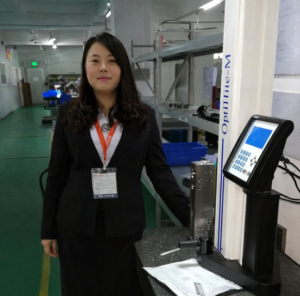
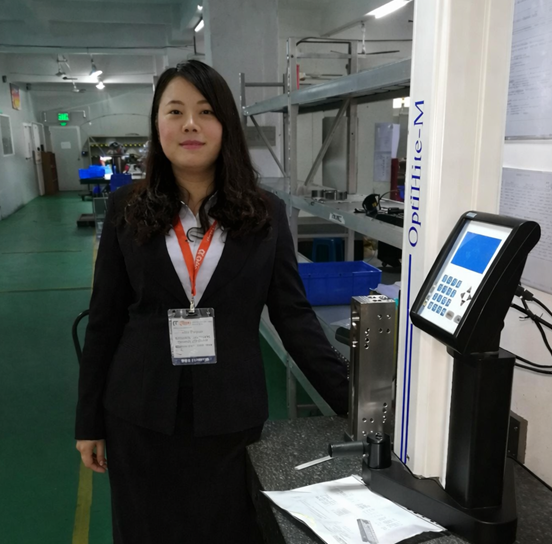
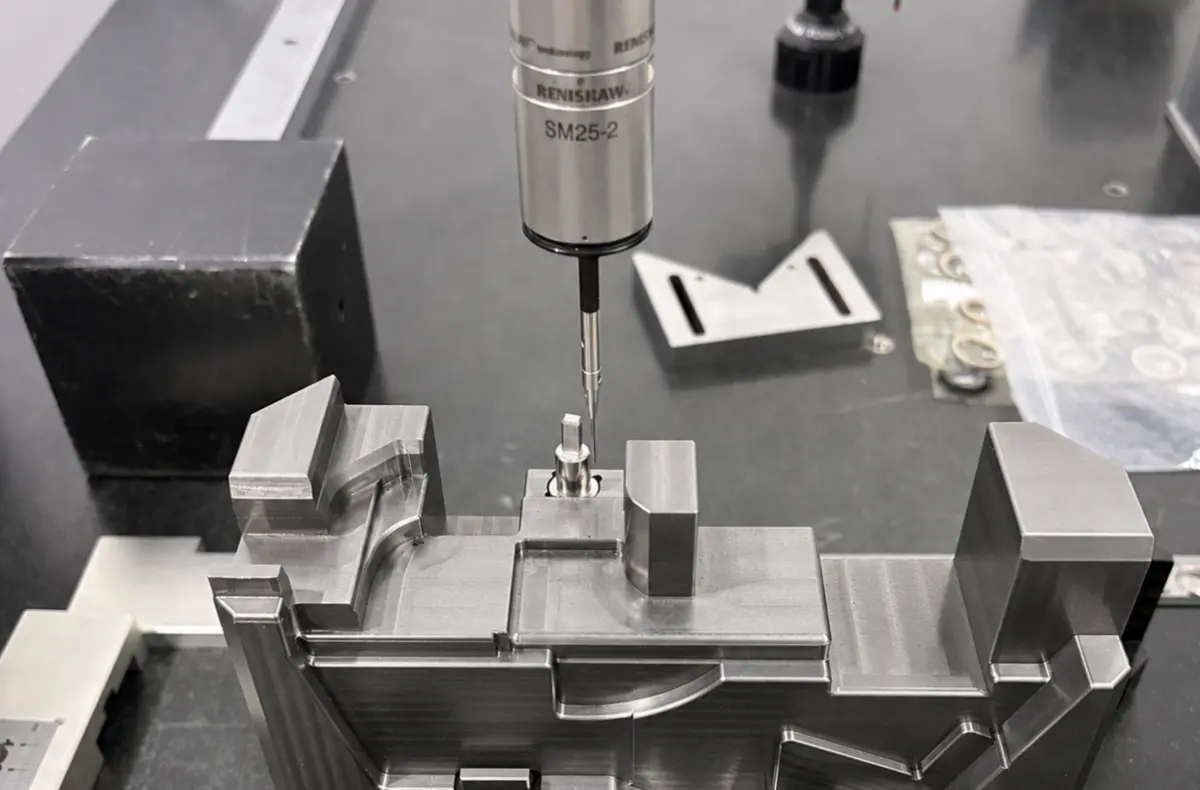
We achieve tolerances up to ±0.01 mm, with every critical dimension verified through in-process and final inspection. Material certificates and inspection reports are available when required.
From prototype machining to production, we focus on stable machining processes and consistent dimensional accuracy for precision alloy steel components.
utting parameters, workholding stability, and feature geometry can further affect machining performance, especially on components that require tight tolerances or multiple operations.
Recommended Machining Practices
Many manufacturers machine 9310 in the annealed condition whenever possible and perform carburizing after most material removal is complete. Maintaining sharp tooling, stable cutting conditions, and consistent inspection practices helps improve dimensional control and reduce variation between production runs. For critical components, rough and finish machining operations are often separated to support final accuracy requirements.
Heat Treatment and Carburizing
What Makes 9310 a Carburizing Steel
9310 contains enough alloying elements to develop a hard wear-resistant case while maintaining a tougher core after heat treatment. Its relatively low carbon content makes the material well suited for carburizing, allowing carbon to be concentrated near the surface rather than throughout the entire section. For this reason, 9310 is often grouped with other carburizing steels used in gears, shafts, and power transmission components.
Typical Heat-Treatment Process
Most 9310 components are machined in the annealed condition before heat treatment begins. After machining, the material is carburized to increase surface carbon content, then hardened and tempered to achieve the required performance. Separating machining and heat treatment in this sequence helps improve dimensional control while allowing the final component to develop a hardened surface.
Surface Hardness and Core Toughness
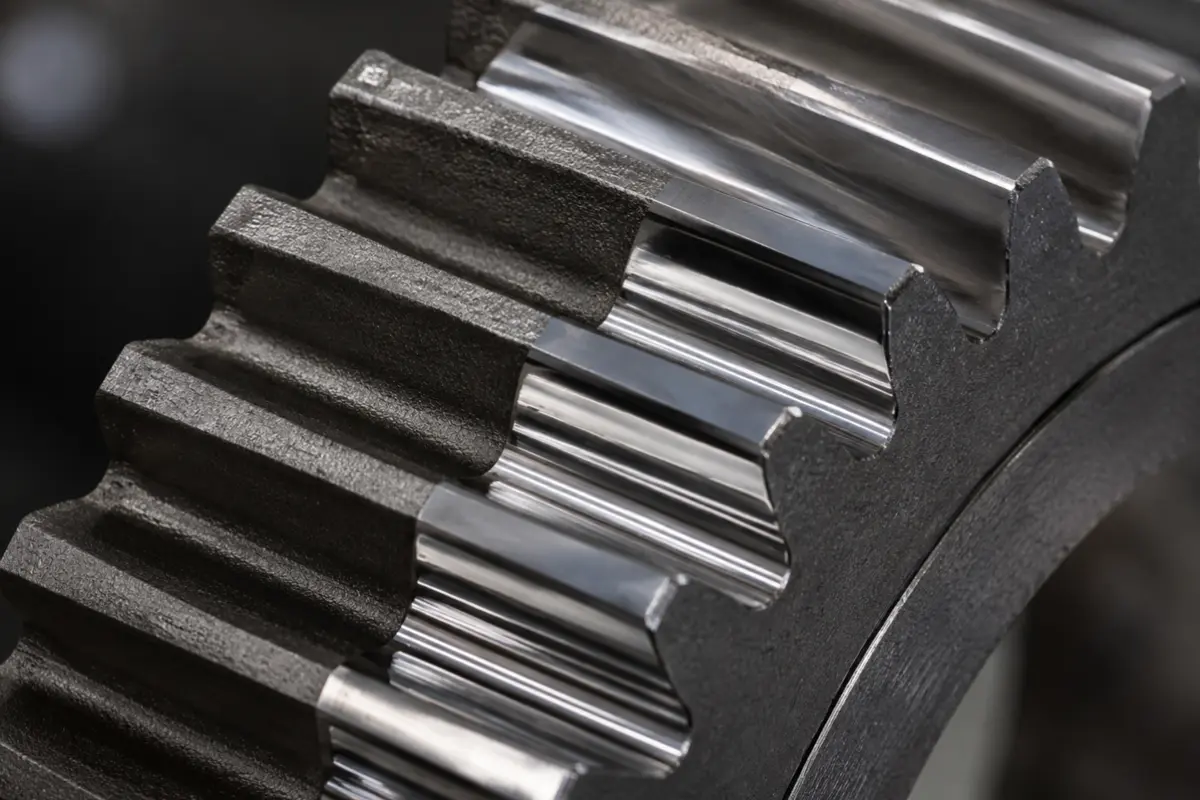
A defining characteristic of case-hardening steel is the ability to create different properties within the same part. The hardened outer layer resists wear and repeated contact stress, while the tougher core helps support impact loading and bending forces.
This combination is especially valuable in gears, pinions, and gear shafts where both surface durability and structural strength are required throughout service life.
CNC Machining Operations for 9310 Steel
Turning and Milling
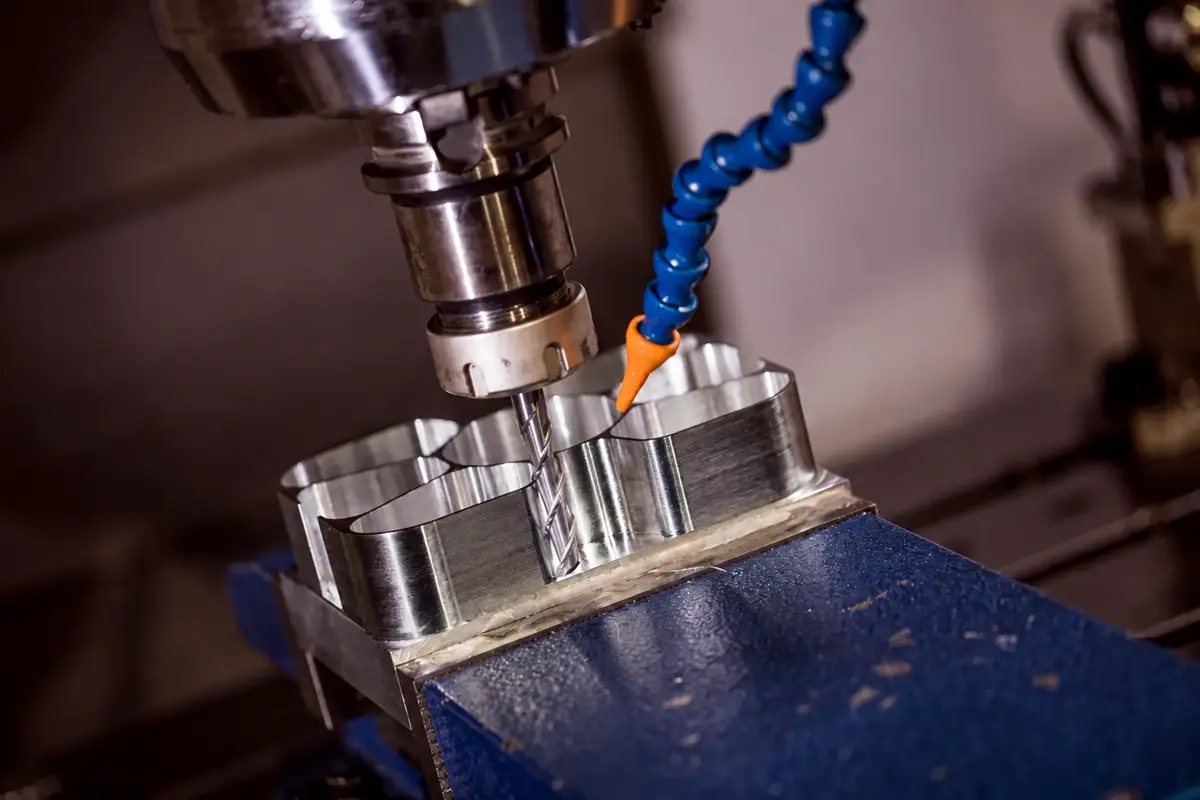
Turning and milling are the most common machining operations used for 9310 steel components. Turning is typically used to produce shafts, pinions, bearing seats, and other rotational features, while milling creates flats, keyways, mounting surfaces, and complex gear-related geometries. Many gear shafts and transmission components require a combination of both processes to achieve the required dimensions and functional features.
Drilling and Threading
Drilling is commonly used to produce mounting holes, lubrication passages, and other internal features in 9310 steel components. Threading operations may be performed by tapping, thread milling, or single-point threading, depending on thread size and production requirements. Maintaining proper hole location and thread quality is important for components that must integrate with bearings, housings, or fastening systems.
Maintaining Dimensional Accuracy
Dimensional accuracy depends on stable machining conditions, consistent workholding, and controlled inspection throughout production. For critical gear and transmission components, manufacturers often verify key diameters, hole locations, and mating features during multiple stages of machining to help maintain compliance with drawing requirements.
Common Applications of Machined 9310 Parts
Aircraft Gears
Gear failure is not an option in aerospace transmission systems. Components must withstand repeated contact loading over long service periods while maintaining dimensional stability and reliability. These requirements have made 9310 a common aircraft gear steel for aerospace gearboxes and drive assemblies. The material’s response to carburizing helps support the demanding performance standards expected in aviation applications.
Transmission Gears
Industrial gearboxes often operate continuously under changing loads and operating conditions. Material selection therefore focuses on long-term durability and consistent performance throughout service life. As a transmission gear steel, 9310 is frequently used for gears that must maintain reliable operation in heavy-duty mechanical systems where downtime and component replacement can be costly.
Gear Shafts and Pinions
Gear shafts and pinions transfer torque while supporting rotating components throughout the drivetrain. Material selection must balance surface durability with the ability to withstand bending and torsional loads. For these reasons, 9310 is regularly specified for gear shafts and pinions used in demanding transmission and motion-control systems.
Power Transmission Components
Many power transmission systems include splined shafts, couplings, drive elements, and other rotating components that experience repeated loading cycles. As an alloy steel for power transmission applications, 9310 is commonly used where long service life and dependable mechanical performance are important. These components can be found in industrial machinery, aerospace equipment, and other heavy-duty drive systems.
Related Alloy Steel Categories
Carburizing Steels
Carburizing steels are designed to develop a hard, wear-resistant surface while maintaining a tough core after heat treatment. These materials are commonly used for gears, shafts, and other heavily loaded transmission components. As one of the most widely used carburizing steels, 9310 is selected when high fatigue strength and long service life are required. 8620 steel is another common case-hardening grade used for similar applications.
Through-Hardening Steels
Through-hardening steels develop relatively uniform hardness throughout the entire cross-section during heat treatment. They are commonly used for shafts, structural parts, tooling, and industrial machinery where overall strength is more important than a hardened surface. 4140 steel is one of the most widely used through-hardening steels for CNC machining and heavy-duty mechanical components.
Chromium-Molybdenum Steels
Chromium-molybdenum steels offer a balanced combination of strength, toughness, machinability, and weldability. They are widely used in aerospace, automotive, and industrial equipment. 4130 steel is a well-known chromium-molybdenum alloy steel that is commonly selected for welded structures and precision machined components.
Why Choose Rollyu for Alloy Steel Machining
Rollyu specializes in precision CNC machining for alloy steel components, including gears, gear shafts, pinions, and other power transmission parts. Our machining capabilities cover both annealed and heat-treated materials, supporting components that require high dimensional accuracy before and after heat treatment.
We achieve tolerances up to ±0.01 mm, with every critical dimension verified through in-process and final inspection. Material certificates and inspection reports are available when required.
From prototype machining to production, we focus on stable machining processes and consistent dimensional accuracy for precision alloy steel components.
F A Q
What is 9310 steel used for
Aircraft gearboxes, helicopter transmissions, and industrial drive systems commonly use 9310 for gears, pinions, and gear shafts. Its high fatigue strength and wear resistance make it well suited for components operating under repeated contact loads.
Is 9310 steel easy to machine
Yes. Machining is typically performed in the annealed condition, where stable cutting performance and good dimensional accuracy can be achieved. After carburizing, the hardened surface becomes significantly more difficult to machine.
Can 9310 steel be carburized
Yes. Carburizing creates a hard wear-resistant surface while preserving a tough core. This combination improves contact fatigue resistance and supports long service life in heavily loaded transmission components.
What is the hardness of carburized 9310 steel
Surface hardness typically reaches 58–62 HRC after carburizing, depending on the heat-treatment process and application requirements. Beneath the hardened case, the core remains tough enough to withstand impact and cyclic loading.
Why is 9310 used for aircraft gears
Aircraft gears experience continuous contact stress, shock loading, and demanding reliability requirements. A carburized surface combined with a tough core helps maintain durability throughout long operating cycles.
What is the difference between carburizing and through hardening
Carburizing hardens only the outer layer while maintaining core toughness. Through hardening increases hardness throughout the entire cross-section. The appropriate process depends on component geometry, loading conditions, and service requirements.
Conclusion
For applications that require high fatigue strength, long service life, and reliable performance under repeated contact loading, 9310 remains a proven choice for gears, gear shafts, pinions, and other critical power transmission components. Selecting the appropriate material and machining process is equally important to achieving consistent performance.
Rollyu supports precision CNC machining for carburizing steels, through-hardening steels, and chromium-molybdenum steels, helping customers manufacture high-quality alloy steel components from prototype through production.