When engineers design components subjected to heavy loads, repeated impact, or demanding operating conditions, material selection becomes critical.
Among the many engineering steels available today, AISI 4140 alloy steel remains one of the most trusted choices.
Its unique combination of strength, toughness, wear resistance, heat treatability, and reasonable machinability makes it suitable for a wide range of precision machined components.
At Rollyu Precision, we manufacture custom 4140 alloy steel machined parts for customers in industrial automation, motion control, semiconductors, robotics, aerospace support equipment, oil and gas, and heavy machinery industries.
This guide explains what 4140 steel is, why engineers choose it, how it is machined, and how heat treatment affects its performance.
What Is 4140 Alloy Steel
AISI 4140 steel is a chromium-molybdenum low-alloy steel containing approximately 0.40% carbon. It is widely used for shafts, gears, couplings, drive components, and other heavily loaded machined parts because of its excellent balance of strength, toughness, wear resistance, and machinability.
Compared with plain carbon steels, it offers:
Higher strength
Better toughness
Excellent hardenability
Improved fatigue resistance
Superior wear resistance
Because of these characteristics, 4140 is widely used in applications where reliability and durability are essential.
Typical Chemical Composition of AISI 4140
AISI 4140 is a high-strength chromium-molybdenum alloy offering a unique combination of toughness, wear resistance, and versatile machinability. Its chemical profile ensures the superior hardenability and durability needed for critical industrial and structural applications.
| Element | Content (%) |
| Carbon (C) | 0.38–0.43 |
| Chromium (Cr) | 0.80–1.10 |
| Molybdenum (Mo) | 0.15–0.25 |
| Manganese (Mn) | 0.75–1.00 |
| Silicon (Si) | 0.15–0.35 |
| Phosphorus (P) | ≤0.035 |
| Sulfur (S) | ≤0.040 |
Why Choose 4140 Alloy Steel Machined Parts
The demand for 4140 alloy steel machined parts has surged because the material offers an optimal balance between mechanical performance, heat treatability, and excellent machinability, making it the most widely specified engineering steel for critical components.
High Strength
4140 provides significantly higher strength than mild steels such as 1018 and 1045.
Typical tensile strength ranges from:
- Annealed: approximately 655 MPa
- Pre-hardened: 850–1100 MPa
- Quenched and tempered: over 1,400 MPa
This makes it suitable for heavily loaded mechanical components.
Excellent Toughness
Unlike some high-hardness tool steels, properly heat-treated 4140 maintains excellent impact resistance.
It performs well in:
- Shock-loaded assemblies
- Dynamic systems
- High-cycle applications
Outstanding Fatigue Resistance
Many machine failures occur because of fatigue.
4140 performs exceptionally well in:
- Rotating shafts
- Drive systems
- Couplings
- Robotic joints
- Transmission components
Heat Treatment Flexibility
One of the biggest advantages of 4140 is that its properties can be tailored through heat treatment.
Engineers can optimize:
- Surface hardness
- Core toughness
- Wear resistance
- Fatigue performance
for specific applications.
Mechanical Properties of 4140 Steel
Typical mechanical properties for AISI 4140 are detailed below. Performance characteristics are highly dependent on heat treatment conditions; values will fluctuate depending on whether the material is annealed, quenched, or tempered.
| Property | Typical Value |
| Density | 7.85 g/cm³ |
| Tensile Strength | 655–1,400+ MPa |
| Yield Strength | 415–1,200 MPa |
| Elastic Modulus | 205 GPa |
| Annealed Hardness | 197–220 HB |
| Q&T Hardness (Quenched & Tempered) | 28–50 HRC |
| Induction Hardened Hardness | Up to 60 HRC |
| Elongation | 12–25% |
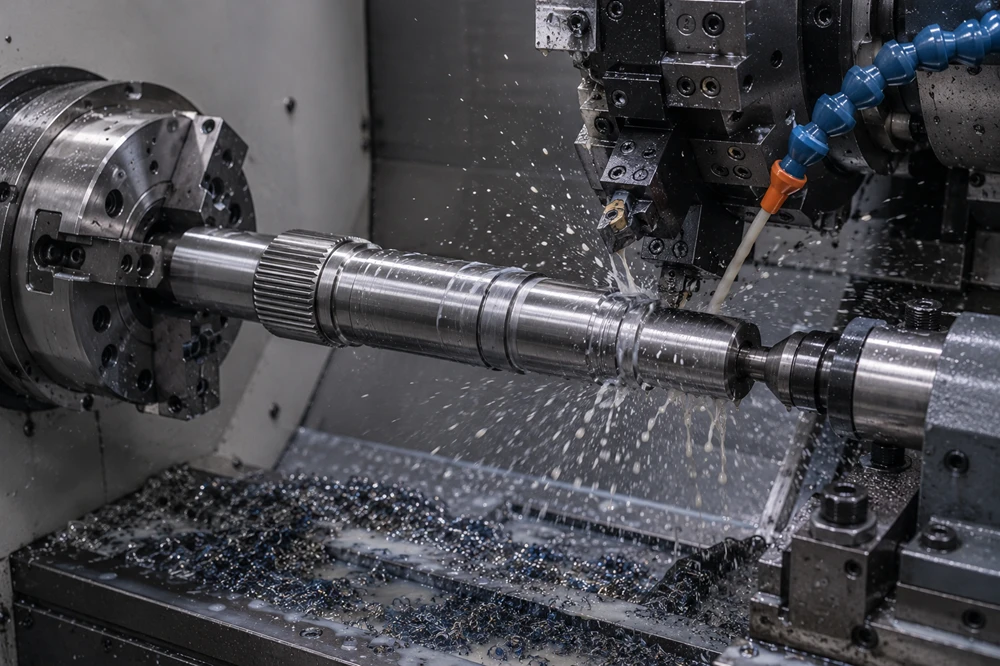
CNC Machining 4140 Alloy Steel
As one of the most widely used materials in alloy steel CNC machining, carrying a rating of 65% compared to AISI 1112 free-machining steel. Rollyu Precision specializes in processing this alloy, providing precision machined 4140 parts across all project scales—from initial prototypes to high volume production quantities
CNC Turning
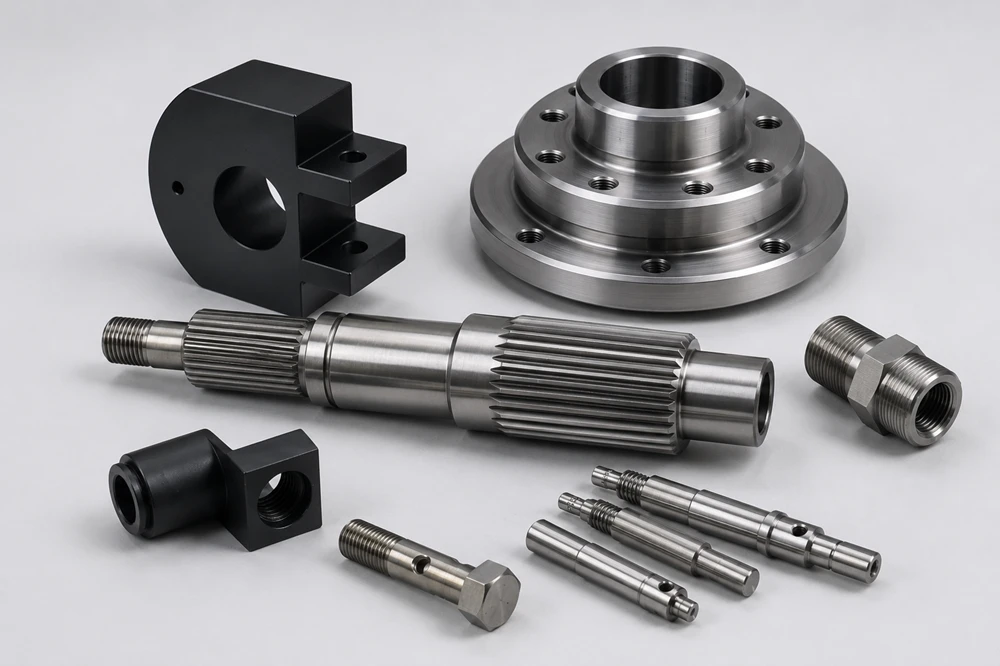
Rollyu Precision provides expert CNC turning for essential components including drive shafts, pins, sleeves, couplings, adapter fittings, and bushings. Whether for prototypes or production runs, we deliver consistent quality and precision across all turned parts
CNC Milling
4140 alloy steel is an ideal material for CNC milling, offering the durability and precision required for complex geometries. We frequently utilize it to produce high-strength parts such as keyways, mounting features, and brackets, as well as robust structural components and high-performance robotics housings.
Drilling and Tapping
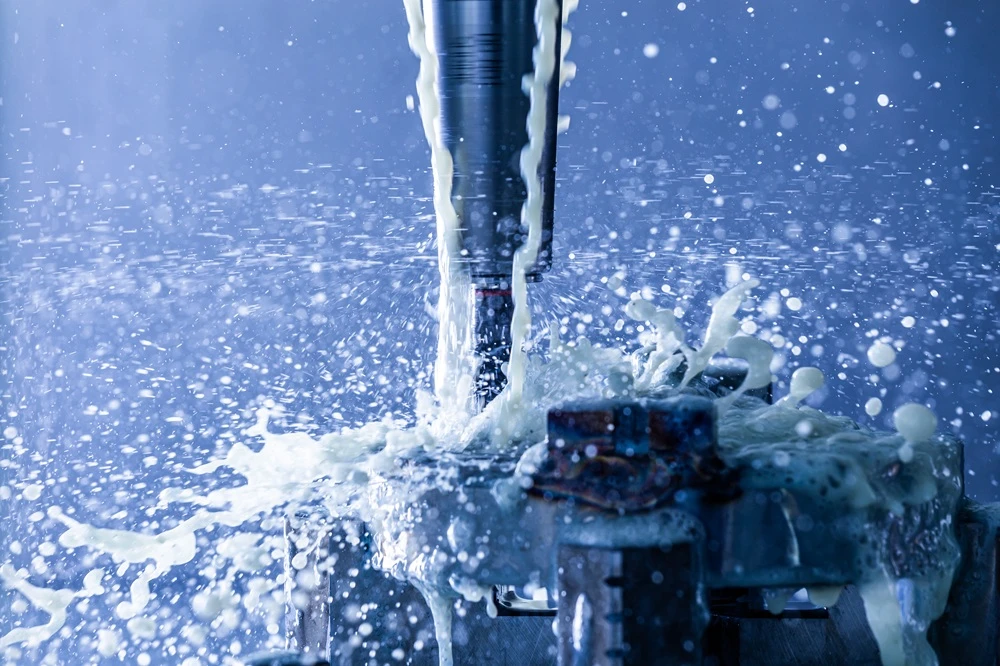
The machinability of 4140 allows for high-accuracy threading, ranging from standard pitches to intricate fine threads. It is also well-suited for deep-hole drilling applications when paired with optimized coolant systems and high-performance tooling, ensuring clean finishes and dimensional consistency for every component.
Precision Grinding
Precision grinding is typically performed following heat treatment to achieve tight dimensional tolerances, superior surface finishes, and excellent concentricity. This specialized process is essential for high-performance applications, including the manufacturing of precision shafts and spindle components.
Surface Finish Options for 4140 Steel Parts
One of the advantages of 4140 alloy steel machined parts is that they are compatible with a wide range of surface finishes. The right finish can improve corrosion resistance, wear resistance, fatigue life, appearance, and assembly performance.At Rollyu Precision, the most common surface finishes specified for 4140 steel include the following:
As-Machined Finish
The part is supplied directly after CNC machining without additional finishing processes.
Appearance
- Bright metallic gray
- Visible machining marks
Uniform tool paths
Typical Surface Roughness
| Process | Typical Ra |
| CNC Turning | Ra 1.6–3.2 μm |
| CNC Milling | Ra 1.6–3.2 μm |
| Fine Finishing Pass | Ra 0.8–1.6 μm |
Precision Ground Finish
Grinding is performed after machining and often after heat treatment.
Appearance
- Smooth satin metallic finish
- Fine directional grinding lines
Typical Surface Roughness
Ra 0.2–0.8 μm
Black Oxide (MIL-DTL-13924, Class 1)
black oxide a chemical conversion coating that produces a black appearance without significantly changing dimensions.
Appearance
- Matte black
- Satin black
Coating Thickness
Approximately 0.5–1.5 μm
Electroless Nickel Plating
An autocatalytic nickel-phosphorus coating applied uniformly across all surfaces.
Appearance
- Bright silver
- Satin silver
Coating Thickness
Typically 10–50 μm
Heat Treatment Options for 4140 Steel Parts
The extensive versatility of 4140 stems from its superior adaptability to diverse heat treatment techniques.
Annealing
Annealing is utilized to enhance the machinability of 4140 steel while effectively relieving internal stresses. This process prepares the material for high-precision fabrication, typically resulting in a stabilized hardness range of 197–220 HB.
Quenching and Tempering
Quenching and tempering enhances 4140’s structural integrity and wear resistance, resulting in a typical hardness of 28–50 HRC. This versatile heat treatment ensures the material is robust enough to meet the rigorous performance standards of the industrial machinery industry
Induction Hardening
By selectively hardening wear surfaces to 60 HRC, induction hardening ensures critical parts like shafts, splines, and bearing journals offer superior wear resistance without sacrificing internal toughness. This dual-property result is essential for components subject to both friction and high impact.
Nitriding / QPQ
Nitriding and QPQ (Quench-Polish-Quench) treatments are utilized to significantly enhance surface hardness, improve wear resistance, and increase fatigue strength, typically achieving a range of 49–57 HRC. These processes are highly valued for providing excellent dimensional stability and minimal distortion, making them ideal for precision-engineered components.
Recommended Surface Finish by Application
| Application | Recommended Finish |
| Precision Spindles | Precision Grinding |
| Drive Shafts | QPQ / Nitriding |
| Splined Shafts | Gas Nitriding |
| Robot Joint Components | QPQ |
| Adapter Fittings | Black Oxide |
| Fluid System Components | Electroless Nickel |
| Industrial Hardware | Zinc Plating |
| Prototype Parts | As-Machined |
| Bearing Journals | Grinding |
| Heavy Wear Components | Nitriding |
Common Applications of 4140 Alloy Steel Machined Parts
With an optimal combination of ductility and strength, 4140 steel is a preferred material for numerous industrial applications. Its widespread use in sectors like robotics and manufacturing underscores its reputation for providing reliable and consistent performance in the field.
Industrial Automation
Precision Engineered 4140 Alloy Steel Components for Industrial Automation
Examples include:
- Servo shafts
- Timing mechanisms
- Couplings
- Transmission components
Robotics
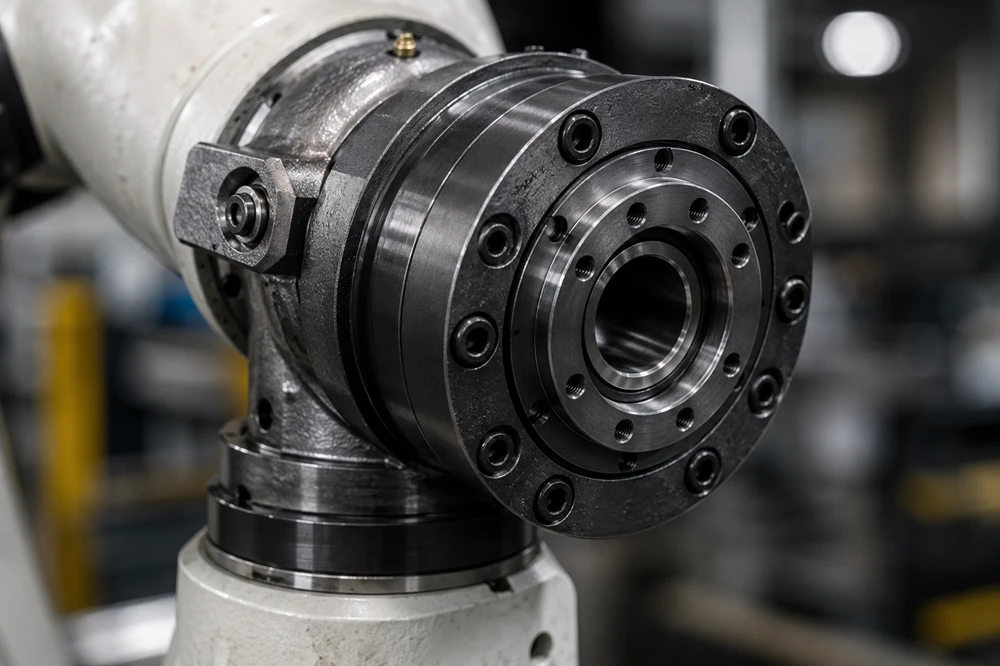
Engineered for high-cycle durability and impact resistance, our machined 4140 alloy steel parts provide the structural integrity required for advanced robotic joints, drive shafts, and high-torque internal components.
Applications include:
- Joint shafts
- Actuator components
- Load-bearing structures
- Motion control assemblies
Aerospace Support Equipment
We specialize in machining 4140 steel parts engineered to the exacting standards of the aerospace industry. Our components provide the structural integrity and high fatigue strength required for critical aerospace support equipment and maintenance tooling.
Used for:
- Tooling
- Fixtures
- Structural hardware
Oil and Gas Equipment
We specialize in machining 4140 alloy steel parts engineered to withstand the rigorous demands of the energy sector. Our components provide the superior toughness and high yield strength essential for downhole tools, pressure containing equipment, and high load exploration systems.
Typical components include:
- Valve parts
- Pump shafts
- Pressure-related hardware
Heavy Equipment
Utilizing the superior fatigue strength and heat-treatability of 4140, we provide precision machined solutions for high stress heavy equipment systems. These parts are designed to maintain structural integrity under severe mechanical shock, ensuring reliable performance in the most demanding field environments.
Common applications include:
- Pins
- Gears
- Mechanical linkages
- Wear components
Design Considerations for 4140 Machined Parts
To maximize manufacturability and performance, engineers should consider the following:
Define Final Hardness Early
Specify required hardness during the design stage.
This allows manufacturers to plan machining and heat treatment accordingly.
Allow for Grinding Stock
Heat treatment may introduce slight distortion.
Extra stock allows critical dimensions to be finished accurately after hardening.
Avoid Extremely Thin Sections
Thin walls may distort during heat treatment.
Whenever possible, maintain adequate section thickness.
Clearly Define Critical Features
Identify GD&T requirements such as:
- Concentricity
- Runout
- Position
- Flatness
to improve process planning and inspection accuracy.
Why Choose Rollyu Precision for 4140 Alloy Steel Machined Parts
Rollyu Precision manufactures tight-tolerance 4140 steel components for demanding applications.
Our capabilities include:
CNC Machining
Precision CNC machining of 4140 alloy steel delivers high strength, durable components engineered for the most demanding industrial applications.
- 3-axis milling
- 4-axis milling
- 5-axis machining
- CNC turning
- Swiss machining
- Grinding
Heat Treatment Coordination
We provide expert heat treatment coordination for 4140 alloy steel machined parts, ensuring optimized hardness and superior mechanical strength.
- Annealing
- Quenching
- Tempering
- Induction hardening
- Nitriding
- Stress relieving
Quality Assurance
Rollyu Precision provide strict quality control for 4140 alloy steel parts, ensuring optimal hardness and structural integrity to meet your most exacting engineering and performance standards.
- ISO 9001:2015 certified
- Full material traceability
- First article inspection
- CMM verification
- Surface finish inspection
Whether you require prototypes or production volumes, we help engineers transform complex designs into reliable components.
Conclusion
AISI 4140 remains one of the most versatile engineering materials available today. Its combination of strength, toughness, fatigue resistance, heat treatment flexibility, and CNC machinability makes it an outstanding choice for mission-critical components.
For engineers developing demanding mechanical systems, custom 4140 alloy steel machined parts continue to provide a proven balance of performance, reliability, and cost-effectiveness.
If you are looking for a trusted manufacturing partner for custom 4140 components, Rollyu Precision can support your project from DFM review and prototyping to full-scale production.
Upload your CAD files today for a free manufacturability review and quotation.
FAQ
What is 4140 alloy steel
4140 is a chromium-molybdenum low-alloy steel containing approximately 0.40% carbon. It offers an excellent combination of strength, toughness, wear resistance, and heat treatment capability.
What are 4140 alloy steel machined parts used for
4140 machined parts are commonly used for shafts, gears, couplings, robotic components, actuator assemblies, valve parts, tooling, and other heavily loaded applications.
Is 4140 steel suitable for CNC machining
Yes. Although stronger than mild steel, 4140 offers good machinability and is one of the most commonly machined alloy steels.
How hard can 4140 steel become
Depending on the heat treatment method, 4140 can achieve hardness levels up to approximately 60 HRC through induction hardening.
Can 4140 steel be heat treated after machining
Yes. 4140 can be annealed, quenched and tempered, induction hardened, or nitrided after machining to achieve desired mechanical properties.
Is 4140 steel corrosion resistant
4140 has moderate corrosion resistance but is not stainless steel. Protective finishes such as black oxide, phosphate coating, nitriding, or plating may be recommended depending on the environment.
What industries commonly use 4140 machined parts
Industrial automation, robotics, aerospace support equipment, oil and gas, agricultural equipment, and heavy machinery industries frequently specify 4140 components.