
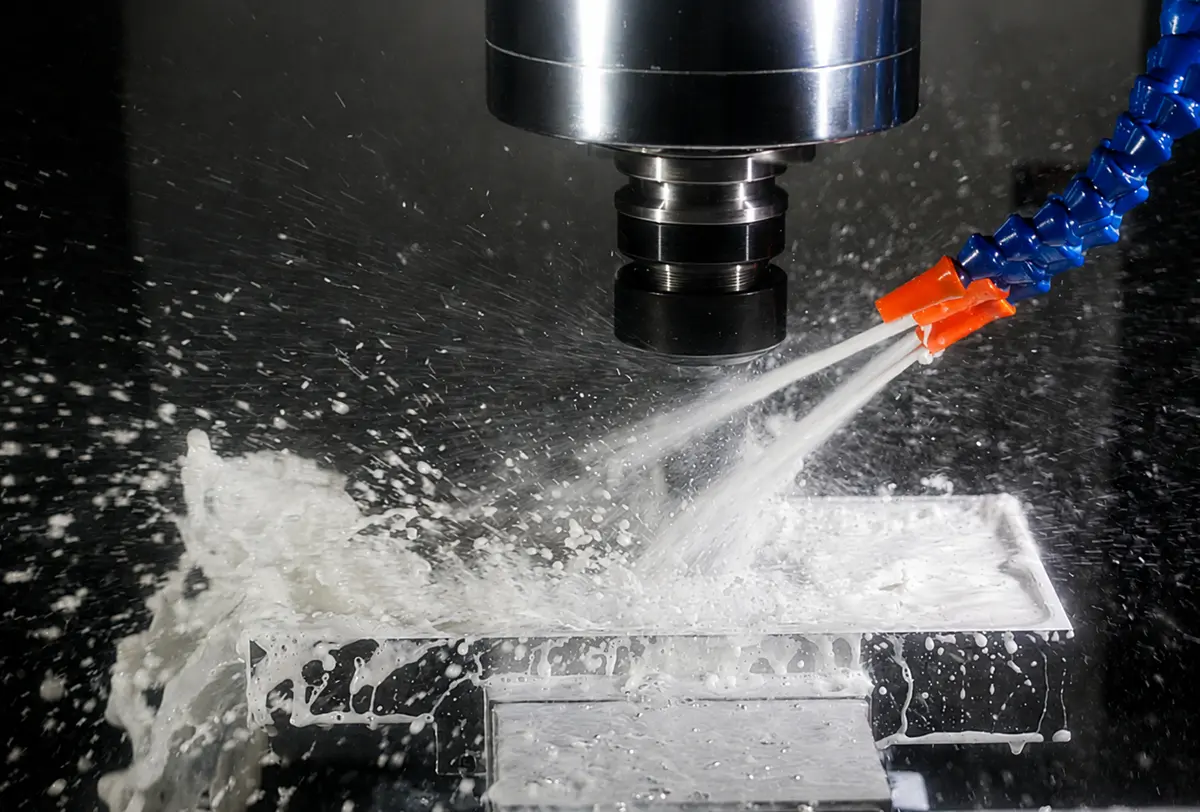

4340 steel combines high strength, toughness, and fatigue resistance, making it suitable for demanding machined components. This guide explains its material properties, machinability, CNC machining methods, heat-treatment considerations, and common applications.
4340 Alloy Steel: Composition, Properties, and Grades
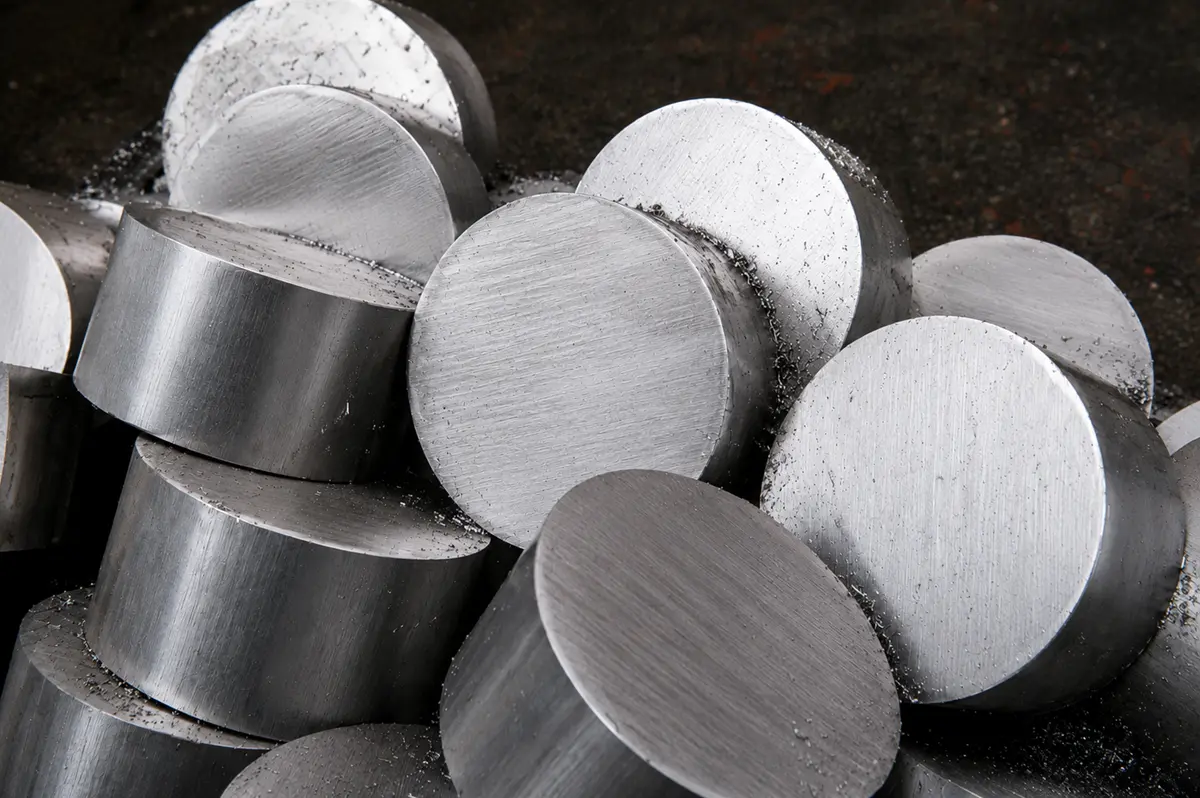
Chemical Composition
4340 alloy steel belongs to the nickel-chromium-molybdenum family of low-alloy steels. Its chemical composition is designed to achieve an excellent balance of strength, toughness, and hardenability, making it well suited for demanding mechanical components and precision CNC machining.
| Element | Content (%) | Primary Contribution |
| Carbon (C) | 0.38–0.43 | Strength and hardness after heat treatment |
| Silicon (Si) | 0.15–0.35 | Deoxidation and material stability |
| Manganese (Mn) | 0.60–0.80 | Hardenability and strength |
| Nickel (Ni) | 1.65–2.00 | Toughness and impact resistance |
| Chromium (Cr) | 0.70–0.90 | Hardenability and wear resistance |
| Molybdenum (Mo) | 0.20–0.30 | High-temperature strength and temper resistance |
| Phosphorus (P) | ≤0.035 | Controlled impurity |
| Sulfur (S) | ≤0.040 | Controlled impurity |
Rather than relying on a single alloying element, 4340 steel achieves its mechanical performance through the combined effect of nickel, chromium, molybdenum, and carefully controlled carbon content.
Mechanical Properties
The mechanical properties of 4340 steel depend largely on its heat-treatment condition. In the annealed state, the material offers good machinability for rough machining, while quenching and tempering significantly improve its strength, hardness, and fatigue resistance for demanding engineering applications.
| Property | Annealed | Quenched & Tempered |
| Tensile Strength | 108 ksi (745 MPa) | 230–260 ksi (1585–1793 MPa) |
| Yield Strength | 95 ksi (655 MPa) | 200–230 ksi (1379–1585 MPa) |
| Elongation | 22% | 10–12% |
| Hardness | 217 HB | 50–55 HRC |
Physical Properties
| Property | Typical Value |
| Density | 7.85 g/cm³ |
| Melting Point | 1505°C |
| Elastic Modulus | 205 GPa |
| Shear Modulus | 80 GPa |
| Thermal Conductivity | 44.5 W/m·K |
| Specific Heat | 475 J/kg·K |
| Poisson’s Ratio | 0.29 |
Actual values may vary depending on section size and heat-treatment parameters.
Alloy Steel Grades
4340 belongs to the AISI/SAE family of chromium-molybdenum alloy steels. Other commonly used engineering grades include 4130, 4140, 8620, and 9310, each developed to provide different combinations of strength, hardenability, wear resistance, weldability, and manufacturing performance. Material selection should be based on the specific application requirements rather than a single mechanical property.
High-Strength Alloy Steel Grades
Among standard AISI alloy steels, 4340 is recognized for its excellent combination of strength, toughness, fatigue resistance, and deep hardenability after heat treatment. These characteristics make it a preferred material for components subjected to heavy loads, impact, and cyclic stresses.
For applications requiring even greater performance, aerospace-grade materials such as 4330V and D6AC are also available. However, their higher material costs and more demanding processing requirements generally limit their use to specialized aerospace and defense applications.
4340 Steel Machinability
Machinability Characteristics
4340 steel has a machinability rating of approximately 45–50%, compared with free-machining steels rated at 100%. In the annealed condition (typically around 217 HB), it can be machined efficiently with standard carbide tooling. As hardness increases after heat treatment, cutting forces and tool wear also increase, requiring more conservative machining strategies.
Machining Considerations
Material condition has the greatest influence on machining 4340 steel. Compared with many alloy steels in the annealed state, its higher nickel, chromium, and molybdenum content generally leads to greater tool wear. Cutting heat, machine rigidity, coolant delivery, and workholding stability all affect dimensional accuracy and tool life, especially during long machining cycles or heavy material removal.
Best Cutting Parameters
Cutting speed, feed rate, depth of cut, and tool geometry should be adjusted according to material hardness and machining objectives. Annealed stock can generally be machined at higher cutting parameters, while pre-hardened and hardened material benefits from lower cutting speeds and more stable machining conditions. Proper parameter selection improves chip control, reduces tool wear, and supports consistent machining quality.
Surface Finish Capability
With appropriate tooling and machining strategies, CNC machining of 4340 steel can produce surface finishes suitable for most engineering applications. Typical milling and turning operations commonly achieve surface finishes around Ra 3.2 μm, while finish machining can reach approximately Ra 1.6 μm. When tighter surface finish or dimensional requirements are specified, precision grinding and polishing are often used as final finishing operations.
CNC Machining Operations for 4340 Steel
Turning
Rotational components such as shafts, pins, bushings, spindles, and bearing journals are typically produced by CNC turning. The process machines outside diameters, internal bores, grooves, and threads while maintaining concentricity and dimensional accuracy. Rough turning is usually completed before heat treatment, with finish turning performed where appropriate.
Milling
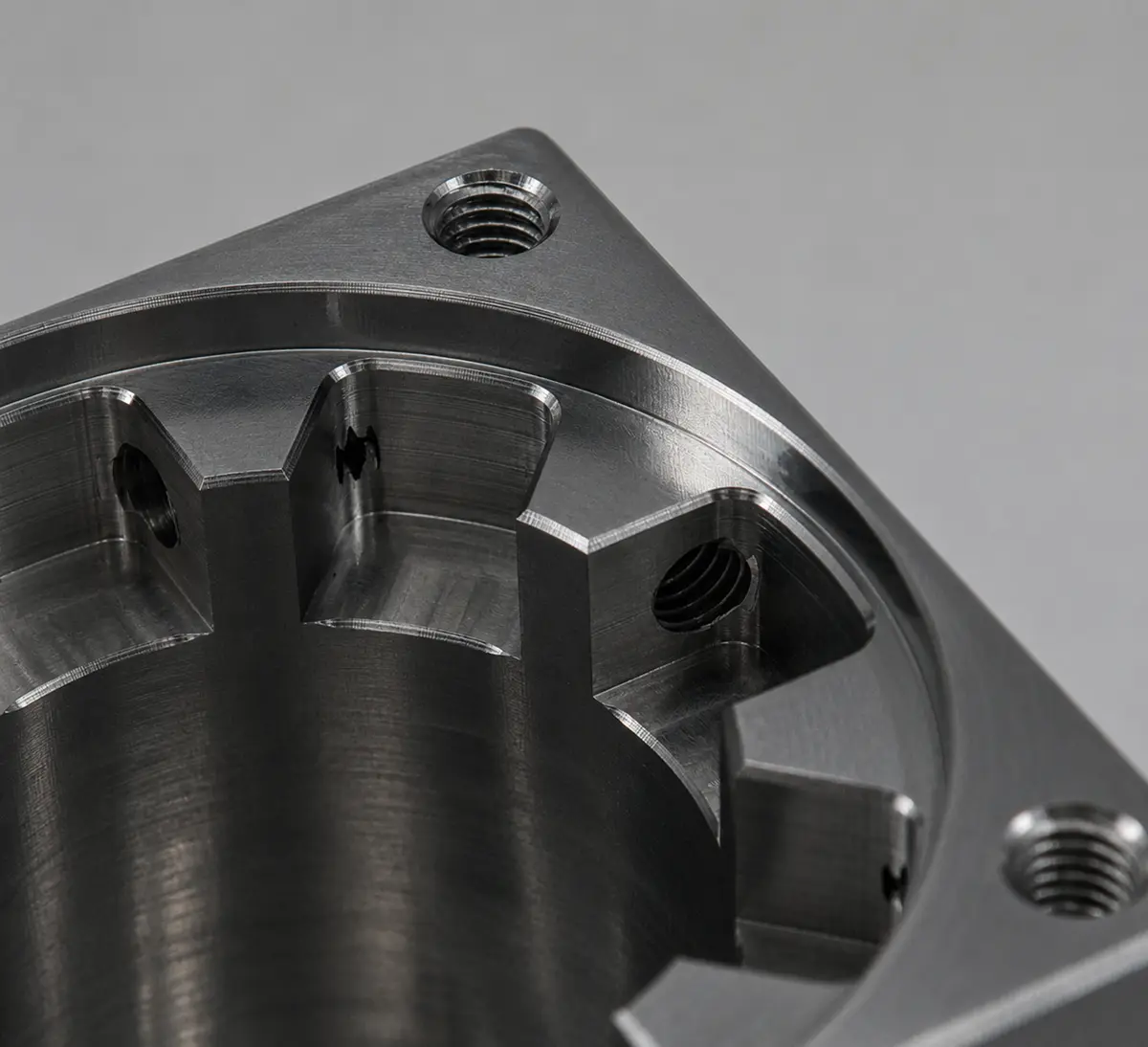
Keyways, slots, precision pockets, flat mounting surfaces, fixture interfaces, and other non-rotational features are typically machined by CNC milling. Multi-axis machining is often used to reduce setup time and improve positional accuracy when producing structural parts and components with complex geometries.
Drilling
Drilling creates mounting holes, lubrication passages, and precision bores required for assembly and mechanical operation. When tighter hole tolerances are required, drilling is commonly followed by reaming, boring, or thread machining to achieve the specified size, location, and fit.
Grinding
Many 4340 components require grinding after heat treatment to restore dimensional accuracy and critical fits. The process is commonly applied to bearing journals, seal diameters, and other precision features where roundness, straightness, and geometric accuracy directly affect component performance.
Heat Treatment Strategy
Annealed Machining
Most 4340 steel components are machined in the annealed condition before heat treatment. At a typical hardness of approximately 217 HB, the material allows efficient rough machining while reducing cutting forces and tool wear. Leaving machining allowance before heat treatment also helps compensate for dimensional changes that may occur during subsequent hardening and tempering.
Quenched and Tempered Machining
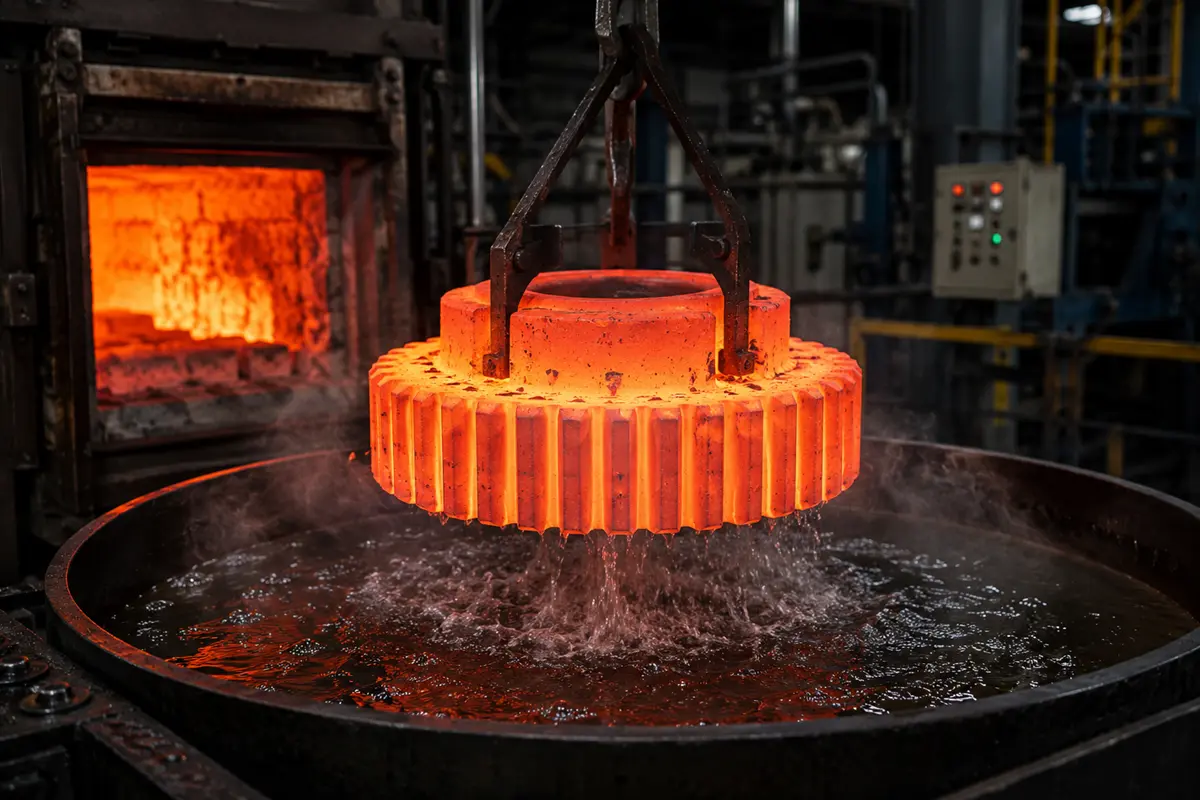
After rough machining, 4340 steel is commonly quenched and tempered to achieve the required combination of strength, hardness, and toughness. A typical process includes austenitizing, oil quenching, and tempering. Adjusting the tempering temperature changes the final hardness and mechanical properties, allowing the material to be optimized for different service conditions. Actual heat-treatment parameters should always follow the applicable material specification and engineering requirements.
| Tempering Temperature | Typical Hardness |
| 200°C | 54 HRC |
| 300°C | 49 HRC |
| 400°C | 44 HRC |
| 500°C | 38 HRC |
| 600°C | 30 HRC |
| 650°C | 27 HRC |
Lower tempering temperatures generally produce higher hardness, while higher tempering temperatures improve toughness and dimensional stability.
Finish Grinding
Heat treatment can introduce slight dimensional changes, making finish grinding an important final operation for many precision components. Grinding restores critical dimensions, improves geometric accuracy, and prepares bearing journals, seal diameters, and other functional surfaces for assembly. For high-precision parts, stress-relief treatment before finish grinding may further improve dimensional stability throughout service life.
Typical Applications
Aerospace
Landing gear components, structural fittings, arresting hooks, and turbine shafts place exceptionally high demands on material performance. These critical parts require consistent strength and reliability after heat treatment, making 4340 steel a common choice for aerospace applications where mechanical integrity cannot be compromised.
Automotive
Crankshafts, connecting rods, transmission shafts, axle shafts, and differential components are subjected to repeated torsional and impact loads throughout their service life. 4340 steel is frequently selected for these drivetrain components because it maintains mechanical performance under demanding operating conditions, making it suitable for both high-performance road vehicles and motorsport applications.
Heavy Equipment
Large shafts, gears, couplings, and other rotating components are widely used in mining equipment, construction machinery, industrial presses, and power generation systems. Deep hardenability allows 4340 steel to develop consistent mechanical properties throughout thick sections, making it well suited for large components that operate under heavy mechanical loads over extended service periods.
Oil & Gas
Tool joints, drill collars, drive shafts, and other downhole components operate in demanding drilling environments where reliability is essential. After appropriate heat treatment and finish machining, 4340 steel provides the strength and dimensional stability required for critical oil and gas equipment subjected to high loads and repeated service cycles.
F A Q
Is 4340 steel easy to machine?
4340 steel has moderate machinability and is easiest to machine in the annealed condition. Hardened material requires more conservative machining parameters and wear-resistant tooling.
What heat treatment is commonly used for 4340 steel?
4340 steel is typically austenitized, oil quenched, and tempered to achieve the required combination of strength and toughness.
What is the recommended austenitizing temperature for 4340 steel?
The recommended austenitizing temperature is 802–857°C (1475–1575°F), depending on the heat-treatment specification.
Can 4340 steel be machined after heat treatment?
Yes. Finish machining or grinding is commonly performed after heat treatment to achieve final dimensions and tighter tolerances.
What hardness can 4340 steel achieve?
Quenched and tempered 4340 steel typically reaches 50–55 HRC, depending on the tempering temperature.
What industries use 4340 machined parts?
4340 steel is commonly used in aerospace, automotive, heavy equipment, and oil & gas applications requiring high strength and fatigue resistance.
Conclusion
4340 steel is a practical choice for machined components that require high strength, toughness, and reliable performance. Selecting the appropriate machining process and heat-treatment strategy helps achieve consistent quality and long service life.
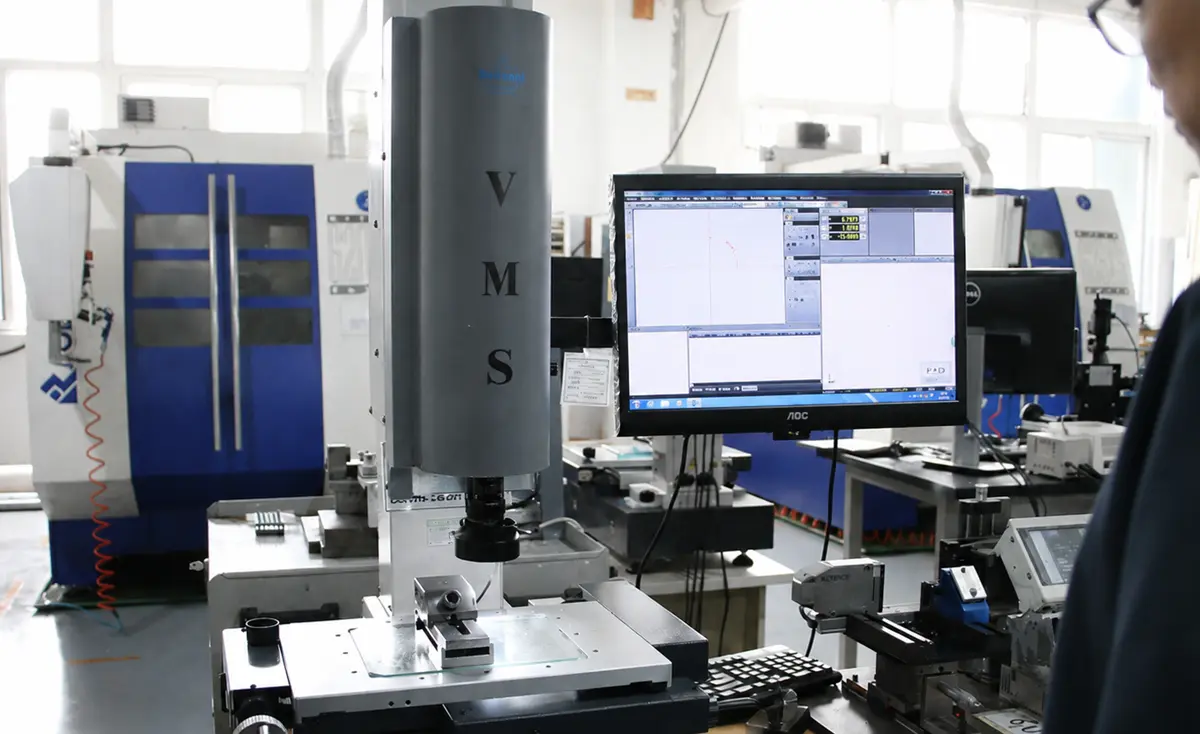
Whether you require prototype quantities or production machining, Rollyu Precision supports every stage from raw material sourcing and CNC machining to heat treatment, grinding, precision inspection, and final delivery. Contact our engineering team to discuss your 4340 steel machining project.