52100 steel is a high-carbon chromium bearing steel known for its exceptional hardness, wear resistance, and rolling contact fatigue resistance. Unlike many general alloy steels, it is typically machined in the annealed condition and finished by precision grinding after heat treatment to achieve tight tolerances. This guide covers its material properties, machinability, heat treatment, CNC machining processes, and typical bearing applications.
What Is 52100 Steel?
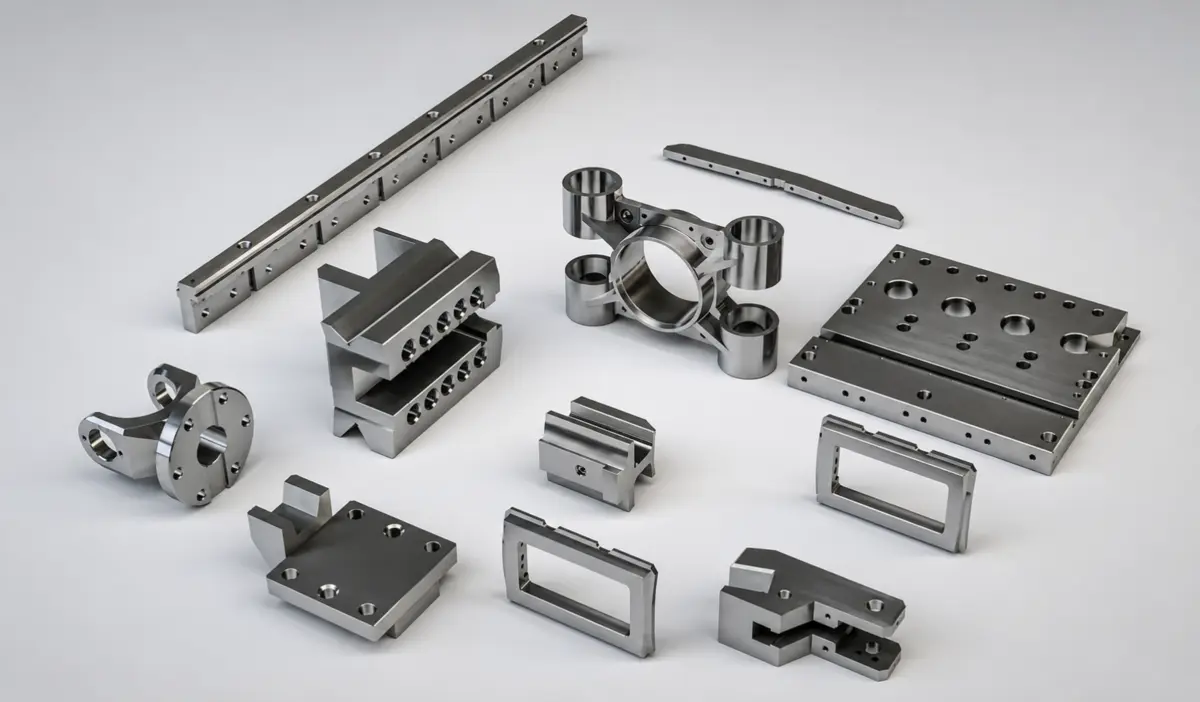
52100 steel, also known as AISI 52100 or SAE 52100, is a high-carbon chromium alloy steel developed for rolling-element bearings and other precision wear-resistant components. It combines high hardness, excellent wear resistance, and outstanding rolling contact fatigue performance after heat treatment. Although originally designed for bearing applications, 52100 steel is also widely used for precision rollers, bushings, guide components, and other parts requiring long service life under repeated contact loads.
Chemical Composition
The performance of 52100 steel is primarily achieved through its high carbon content and carefully controlled chromium addition. Carbon provides the hardness required after heat treatment, while chromium improves hardenability, wear resistance, and the formation of hard chromium carbides. Small additions of manganese and silicon contribute to strength and heat-treatment response, while phosphorus and sulfur are kept at low levels to maintain toughness and material quality.
| Element | Typical Content (%) | Primary Contribution |
| Carbon (C) | 0.98–1.10 | High hardness and wear resistance |
| Chromium (Cr) | 1.30–1.60 | Hardenability and carbide formation |
| Manganese (Mn) | 0.25–0.45 | Strength and hardenability |
| Silicon (Si) | 0.15–0.35 | Deoxidation and material stability |
| Phosphorus (P) | ≤0.025 | Controlled impurity |
| Sulfur (S) | ≤0.025 | Controlled impurity |
Unlike general alloy steels, 52100 contains nearly 1% carbon together with chromium, making it a high-carbon chromium bearing steel capable of achieving exceptional hardness and wear resistance after proper heat treatment.
Typical Mechanical Properties
The mechanical properties of 52100 steel vary depending on its heat-treatment condition. In the annealed state, the material offers good machinability for rough machining. After hardening and tempering, it develops the high hardness, wear resistance, and fatigue strength required for precision bearing applications.
| Property | Typical Value* |
| Tensile Strength | 760–980 MPa (Annealed) |
| Yield Strength | 410–580 MPa (Annealed) |
| Hardness | 60–66 HRC (Hardened) |
| Density | 7.81 g/cm³ |
| Elastic Modulus | 210 GPa |
| Thermal Conductivity | 46 W/m·K |
Actual values vary depending on heat-treatment condition and material specification.
Why Is 52100 Called Bearing Steel?
52100 steel is known as bearing steel because its composition and heat-treatment response are specifically optimized for rolling contact applications. Its high carbon content allows the material to achieve very high hardness, while chromium improves hardenability and promotes the formation of wear-resistant carbides. This combination provides excellent resistance to abrasion and surface fatigue during continuous rolling contact.
In addition to its hardness, properly heat-treated 52100 steel offers excellent dimensional stability and high resistance to rolling contact fatigue, allowing bearing races and rolling elements to maintain precision over long service periods. These characteristics are essential for applications where even slight wear or deformation can affect rotational accuracy and service life.
These characteristics make 52100 steel one of the most widely used materials for precision bearings and other wear-resistant components.
52100 Steel Machinability
52100 steel has a machinability rating of approximately 40–45% compared with free-machining AISI 1212 steel rated at 100%. Its higher carbon content and chromium alloying improve hardness and wear resistance but also increase cutting forces and tool wear. Compared with 4140 steel, 52100 is generally more difficult to machine, particularly after heat treatment. Its machinability is similar to or slightly lower than that of 4340 steel, depending on hardness and machining conditions. For most CNC machining operations, the annealed condition provides the best balance between productivity, dimensional control, and tool life.
Machinability Rating
Material condition has a significant influence on the machinability of 52100 steel. In the annealed state, the material can be machined efficiently using carbide tooling and appropriate cutting parameters. Once hardened, however, the increased hardness greatly accelerates tool wear and limits cutting speeds. For this reason, rough machining is typically completed before heat treatment, while grinding is reserved for achieving final dimensions and surface finish.
| Material | Approximate Machinability* |
| AISI 1212 | 100% |
| 4140 Steel | 65–70% |
| 4340 Steel | 45–50% |
| 52100 Steel | 40–45% |
Approximate values for comparison only. Actual machinability varies with hardness, tooling, and cutting conditions.
Factors Affecting Machining
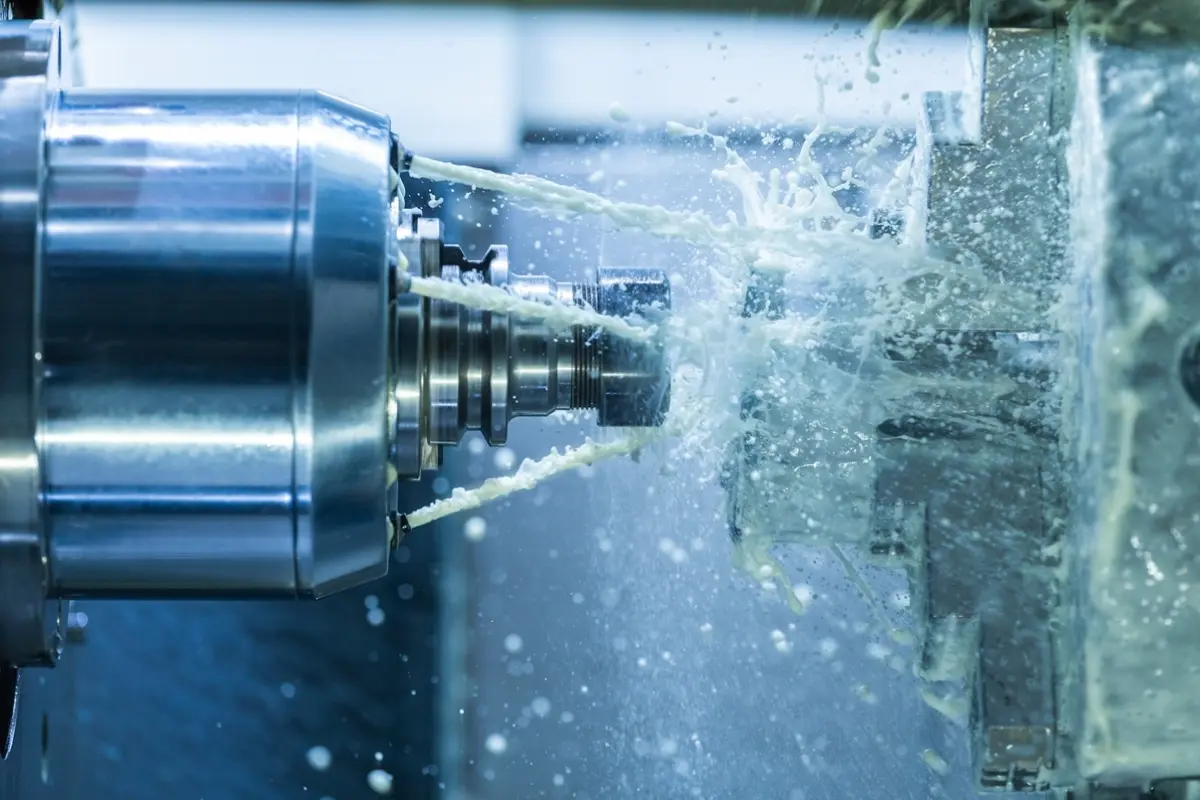
Several factors influence the machining performance of 52100 steel. Material hardness has the greatest effect, especially after heat treatment. Selecting wear-resistant carbide tooling helps maintain cutting performance, while appropriate cutting speeds reduce excessive heat generation. Effective coolant delivery improves temperature control and chip evacuation, and a rigid machine setup minimizes vibration that could affect dimensional accuracy and surface finish. Stable workholding is equally important when machining precision bearing components with tight tolerances.
Common Machining Challenges
The high carbon and chromium content of 52100 steel creates several machining challenges. Cutting tools are subjected to rapid wear because of the material’s hardness and abrasive carbide particles. Heat generated during machining can shorten tool life and reduce dimensional consistency if not properly controlled. Built-up edge may occur under unsuitable cutting conditions, while long or poorly controlled chips can interfere with machining stability. Since many bearing components require excellent surface integrity, excessive cutting forces or unstable machining may also introduce surface damage that affects fatigue performance after heat treatment.
Recommended Machining Strategies
Successful machining of 52100 steel depends on selecting appropriate tooling and stable cutting conditions. Coated carbide inserts or carbide end mills are commonly used to improve wear resistance, while moderate cutting speeds help control heat generation. Flood coolant assists both cooling and chip evacuation during continuous machining, and rigid workholding minimizes vibration when producing precision components. It is also common practice to leave a small machining allowance before heat treatment so that grinding can remove distortion and achieve the required dimensional accuracy and surface finish.
Many precision 52100 components are intentionally left oversized before heat treatment to allow finish grinding.
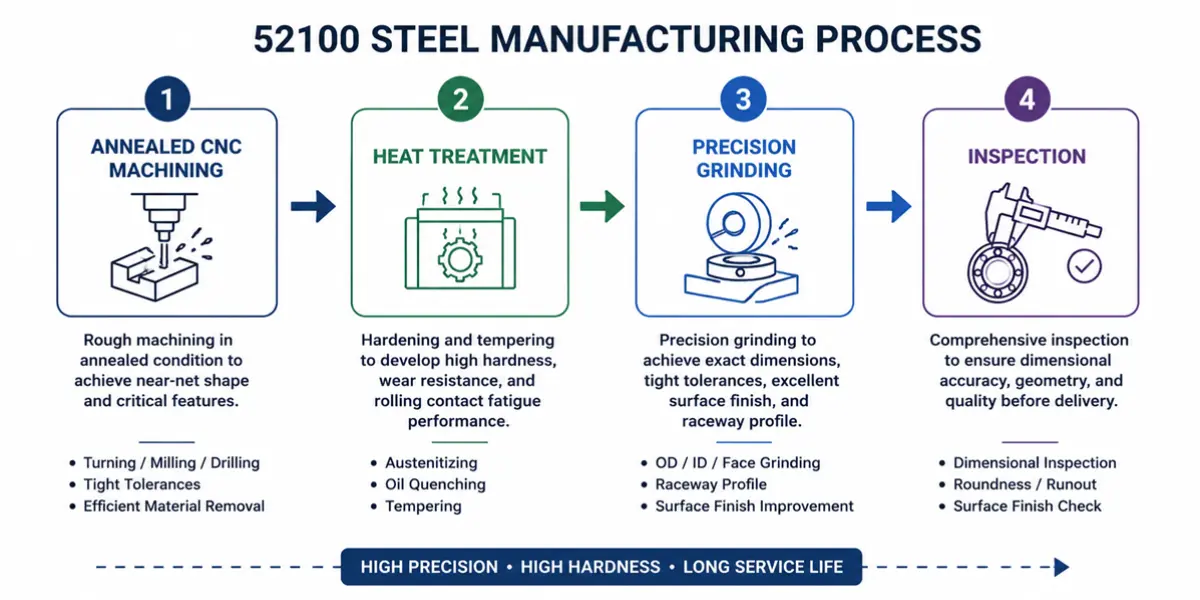
Manufacturing Process of 52100 Bearing Components
Unlike many engineering alloy steels, 52100 steel is typically manufactured through a staged machining process rather than completed by conventional CNC machining alone. Most material removal is performed before heat treatment, while precision grinding is used after hardening to achieve the final dimensions and bearing-quality surfaces. This manufacturing sequence improves machining efficiency while ensuring the accuracy, wear resistance, and long service life required for precision bearing components.
Stage 1 – Rough Machining in the Annealed Condition
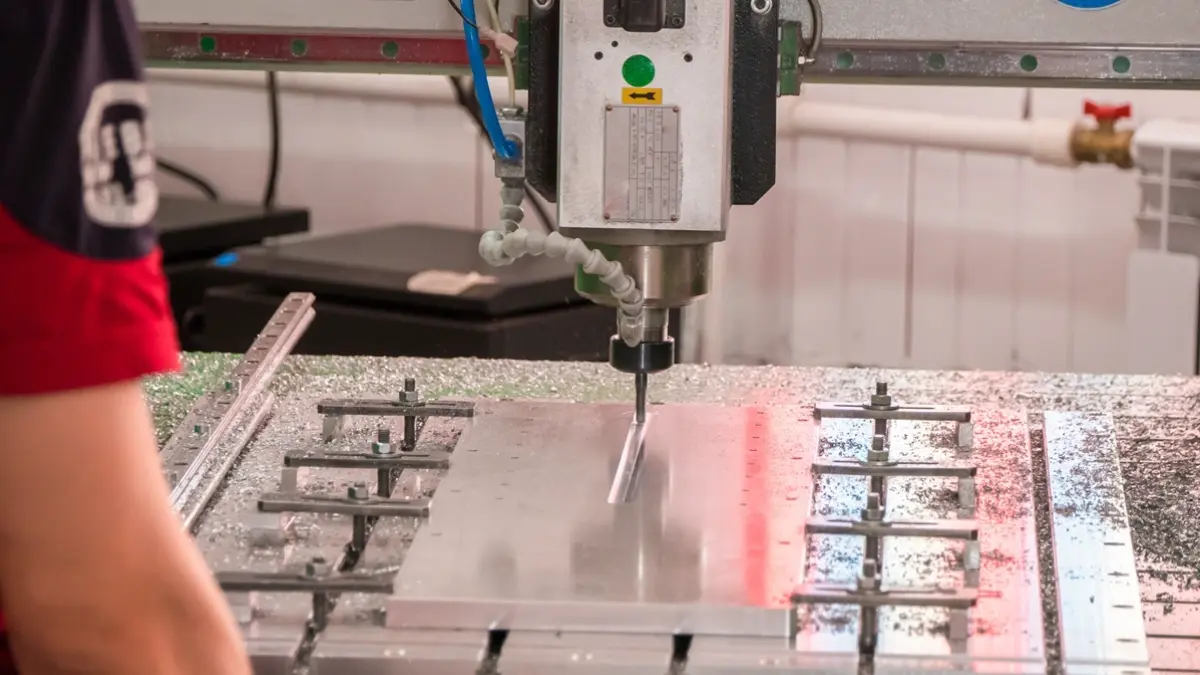
Most 52100 components are rough machined before heat treatment, when the material offers its best machinability. In the annealed condition, CNC turning produces bearing rings, bushings, sleeves, and other rotational features, while milling creates keyways, slots, and mounting surfaces. Drilling is commonly used to produce lubrication passages and assembly holes required for subsequent assembly. During this stage, a small machining allowance is intentionally left on critical surfaces to compensate for dimensional changes during heat treatment and to prepare the part for finish grinding.
Stage 2 – Heat Treatment
After rough machining, 52100 steel is hardened and tempered to develop the high hardness and wear resistance required for rolling contact applications. Heat treatment significantly improves the mechanical properties of the material but may also introduce slight distortion or dimensional variation. As a result, critical bearing surfaces are generally not finished before heat treatment, ensuring that the final dimensions can be accurately restored during the grinding process.
Stage 3 – Precision Grinding
Precision grinding is the defining manufacturing process for 52100 bearing components. After heat treatment, grinding restores dimensional accuracy, roundness, cylindricity, and surface finish that cannot be achieved efficiently through conventional machining. It is commonly applied to bearing races, bearing rings, rollers, journals, and other functional contact surfaces where geometric accuracy directly influences rotational performance and service life.
Carefully controlled grinding parameters also help minimize grinding burn, excessive residual stress, and surface damage, all of which can reduce fatigue life. For many precision bearings, grinding is the final machining operation before inspection and assembly.
Stage 4 – Final Inspection
Once grinding is complete, every critical feature should be verified to ensure compliance with engineering specifications. Typical inspections include diameter, roundness, cylindricity, concentricity, and surface roughness measurements. Comprehensive dimensional inspection helps confirm that the component is ready for assembly while maintaining the precision and reliability expected of high-performance bearing parts.
Heat Treatment Process for 52100 Steel
Heat treatment is one of the most important stages in manufacturing 52100 steel components. It develops the high hardness, wear resistance, and rolling contact fatigue strength required for bearing applications. Because heat treatment can also introduce slight dimensional changes, it is normally combined with precision grinding to achieve the final size, geometry, and surface finish.
Machining Before Heat Treatment
52100 steel is typically machined in the annealed condition before heat treatment, when cutting forces are lower and tool life is longer. Rough machining removes most of the material while producing the basic geometry of the component. To compensate for dimensional changes caused by hardening, a small machining allowance is intentionally left on critical bearing surfaces. This additional stock is removed during finish grinding, ensuring that tight tolerances and surface quality can be achieved after heat treatment.
Hardening and Tempering
After rough machining, 52100 steel is heat treated to develop the hardness required for rolling contact applications. A typical heat-treatment process includes austenitizing, oil quenching, and tempering. Austenitizing dissolves carbides and prepares the steel for hardening, oil quenching rapidly increases hardness, and tempering improves toughness while relieving internal stresses. The final hardness depends largely on the selected tempering temperature and should be chosen according to the performance requirements of the finished component. This process forms a hardened martensitic microstructure containing finely dispersed chromium carbides, providing the wear resistance and rolling contact fatigue strength required for bearing applications.
| Tempering Temperature | Typical Hardness |
| 150°C | 64–66 HRC |
| 200°C | 63–65 HRC |
| 250°C | 61–63 HRC |
| 300°C | 59–61 HRC |
| 350°C | 57–59 HRC |
Actual hardness values may vary depending on material specification, section size, and heat-treatment parameters.
Finish Grinding After Heat Treatment
Although heat treatment provides the required hardness, it may also cause slight distortion, dimensional variation, or changes in roundness. For this reason, critical bearing components are typically finish ground after hardening rather than finish machined.
Precision grinding restores roundness, dimensional accuracy, and surface finish while producing the bearing raceways and other functional surfaces required for smooth rolling contact. By removing the machining allowance left before heat treatment, grinding also compensates for heat-treatment distortion and helps ensure that every critical dimension meets specification before final inspection and assembly. It also restores the raceway profile, ensuring smooth rolling contact and consistent load distribution.
Why Grinding Is Critical for Bearing Steel
Unlike many engineering alloy steels, 52100 bearing steel typically requires precision grinding after heat treatment rather than relying solely on conventional finish machining. Because bearing components operate under continuous rolling contact, even small deviations in geometry or surface quality can affect rotational accuracy, load distribution, and service life. Precision grinding ensures that critical bearing surfaces achieve the dimensional accuracy and surface integrity required for long-term performance.
Bearing Raceway Accuracy
The raceway is the primary contact surface between the rolling elements and the bearing ring, making its geometry one of the most critical factors affecting bearing performance. Precision grinding produces the roundness, profile accuracy, and concentricity required for smooth rolling motion and uniform load distribution. Even minor geometric errors can increase vibration, generate additional heat, and accelerate fatigue failure during operation.
Surface Finish
Surface finish directly influences friction, lubrication performance, and rolling contact fatigue life. Precision grinding typically produces surface finishes around Ra 0.2–0.4 μm, while superfinishing can further improve the surface to approximately Ra 0.05–0.10 μm for demanding bearing applications. A smoother raceway reduces friction, improves lubricant film stability, and helps extend bearing service life under continuous operating conditions.
| Process | Typical Surface Finish (Ra) |
| Precision Grinding | 0.2–0.4 μm |
| Superfinishing | 0.05–0.10 μm |
Actual surface finish depends on the grinding process, equipment, and application requirements.
Dimensional Stability
Bearing components are manufactured to extremely tight dimensional tolerances because even slight variations can affect preload, running clearance, and rotational accuracy. Precision grinding compensates for the small dimensional changes introduced during heat treatment while maintaining consistent diameter, roundness, and cylindricity. This level of dimensional stability is essential for precision bearings operating at high speeds or under heavy cyclic loads.
Residual Stress Control
Grinding parameters must be carefully controlled to preserve the integrity of hardened bearing surfaces. Excessive grinding heat may cause grinding burn, which locally softens the material and reduces fatigue performance. Improper grinding conditions can also produce grinding cracks or undesirable residual stresses, increasing the risk of premature failure under repeated rolling contact. Optimized grinding processes help maintain both surface integrity and long-term bearing reliability.
Typical Applications of 52100 Steel
Thanks to its exceptional hardness, wear resistance, and rolling contact fatigue performance, 52100 steel is primarily used in precision motion components where dimensional accuracy and long service life are essential. After heat treatment and precision grinding, it provides reliable performance under continuous rolling or sliding contact, making it one of the most widely used materials for high-precision mechanical systems.
Rolling Contact Components
Rolling contact applications place extremely high demands on hardness, surface finish, and fatigue resistance. Components operating under continuous rolling motion require precisely ground contact surfaces to minimize friction and distribute loads evenly throughout their service life.
Typical components include:
- Ball bearings
- Roller bearings
- Bearing rings
Precision Motion Components
Many precision motion systems rely on 52100 steel to maintain consistent alignment and smooth mechanical movement. Its excellent dimensional stability after heat treatment and grinding makes it suitable for components that require accurate guidance and repeated positioning under continuous operation.
Typical components include:
- Precision rollers
- Guide bushings
- Linear guide rollers
High-Speed Rotating Components
High-speed rotating equipment requires components capable of maintaining geometric accuracy while resisting wear and rolling fatigue. Properly heat-treated and precision-ground 52100 steel provides the stability needed for demanding rotational applications where vibration and dimensional variation must be minimized.
Typical components include:
- Machine tool spindles
- Bearing journals
- Precision rotating shafts
Material Selection: When Should You Choose 52100 Steel
Selecting the right engineering steel depends on the operating environment, loading conditions, and performance requirements of the finished component. While 52100 steel is widely recognized for its exceptional wear resistance and rolling contact fatigue performance, it is not the best choice for every application. Understanding where 52100 excels—and where other alloy steels may be more suitable—helps engineers select the most appropriate material for each design.
Choose 52100 Steel for Wear-Resistant Precision Components
52100 steel is the preferred choice for components subjected to continuous rolling or sliding contact. After proper heat treatment and precision grinding, it develops excellent hardness, wear resistance, and dimensional stability, making it particularly suitable for bearing rings, rolling elements, precision rollers, guide bushings, and other high-precision motion components. When long service life and consistent geometric accuracy are the primary design objectives, 52100 steel is often the best material choice.
Consider 4340 Steel for High Impact Applications
If a component is exposed to heavy shock loads, high torque, or repeated impact rather than continuous rolling contact, 4340 steel is generally a better option because it provides higher toughness and impact resistance after heat treatment.
Related Reading: 4340 Steel Machining Guide (Internal Link)
Consider 8620 Steel for Case-Hardened Components
For gears, shafts, and other components requiring a hard wear-resistant surface combined with a tough core, 8620 steel is often a more suitable material. Its carburizing capability provides an excellent balance of surface hardness and core toughness for heavily loaded transmission components.
Related Reading: 8620 Steel Machining Guide (Internal Link)
Quick Material Selection Guide
| If Your Priority Is… | Recommended Steel |
| High wear resistance and rolling contact fatigue | 52100 |
| Precision bearings and motion components | 52100 |
| High impact strength and toughness | 4340 |
| Carburized gears and transmission parts | 8620 |
FAQ
What is 52100 steel?
52100 steel is a high-carbon chromium alloy steel, commonly known as bearing steel. It offers excellent hardness, wear resistance, and rolling contact fatigue performance after heat treatment, making it widely used for precision bearings and other wear-resistant components.
Why is 52100 called bearing steel?
52100 steel is called bearing steel because it was specifically developed for rolling-element bearings. Its high hardness, wear resistance, and fatigue strength enable bearing components to withstand continuous rolling contact while maintaining dimensional accuracy.
Is 52100 steel stainless?
No. Although 52100 steel contains chromium, its chromium content is not high enough to provide stainless properties. Without proper surface protection, it can rust when exposed to moisture or corrosive environments.
Can 52100 steel be machined after heat treatment?
Yes, but machining becomes significantly more difficult after hardening. Most components are rough machined before heat treatment, while precision grinding is performed afterward to achieve the final dimensions and surface finish.
How is 52100 steel heat treated?
A typical heat-treatment process includes austenitizing, oil quenching, and tempering. This sequence develops the high hardness and wear resistance required for bearing applications while improving dimensional stability.
What hardness can 52100 steel reach?
Properly heat-treated 52100 steel typically reaches 60–66 HRC, depending on the heat-treatment process and the required application.
Is 52100 steel difficult to machine?
Compared with many engineering alloy steels, 52100 steel has moderate machinability in the annealed condition but becomes considerably more difficult to machine after heat treatment due to its high hardness and wear resistance.
Conclusion
52100 steel is the preferred choice for precision bearing components requiring high hardness, excellent wear resistance, and long rolling contact fatigue life. Combined with proper heat treatment and precision grinding, it delivers outstanding dimensional accuracy and durability. From material sourcing and CNC machining to heat treatment, grinding, and final inspection, Rollyu Precision provides complete manufacturing solutions for high-quality 52100 steel components.