A tooling quote is easier to compare when it identifies the die scope, the work included in the build, the trial or sample line items, and the stated exclusions. A single total does not show whether two suppliers are quoting the same die configuration or the same work.
This guide helps sourcing and engineering teams read a die-casting tooling quote before they place an order. It covers the scope details behind a total, the assumptions the quote should state, and the questions that make competing quotes easier to compare. It does not set tooling prices, define production approval, or decide tool ownership and maintenance terms.
Make the Tool Scope Visible Before Comparing Cost
Start by confirming that every supplier is pricing the same product definition and production route. Compare prices after the quote makes those inputs visible.
The Product Revision and Tool Configuration
Each tooling quote should identify the part number, CAD or drawing revision, alloy, stated dimensional or surface requirements, cavity count, and named die features that affect the build scope. That information shows whether suppliers are pricing equivalent production assumptions instead of different revisions or different tool configurations.
The Manufacturing Route Covered by the Quote
A tooling quote should identify which manufacturing route it prices. Separate the scope into the parts that shape the purchase decision for the die-casting process:
- The die build and any stated tooling work.
- Trial or sample activities and their listed deliverables.
- Later casting orders and downstream operations, such as trimming, secondary machining, finishing, inspection records, or packaging.
Do not assume that a tooling charge includes a later casting order or downstream operation. Where a supplier separates amounts, identify the tool-build, trial or sample, and downstream scope before comparing totals.
Ask Suppliers to Explain the Cost Drivers They Are Pricing
Quotes should name the scope drivers that make one die proposal differ from another.
Die Architecture and Part Complexity
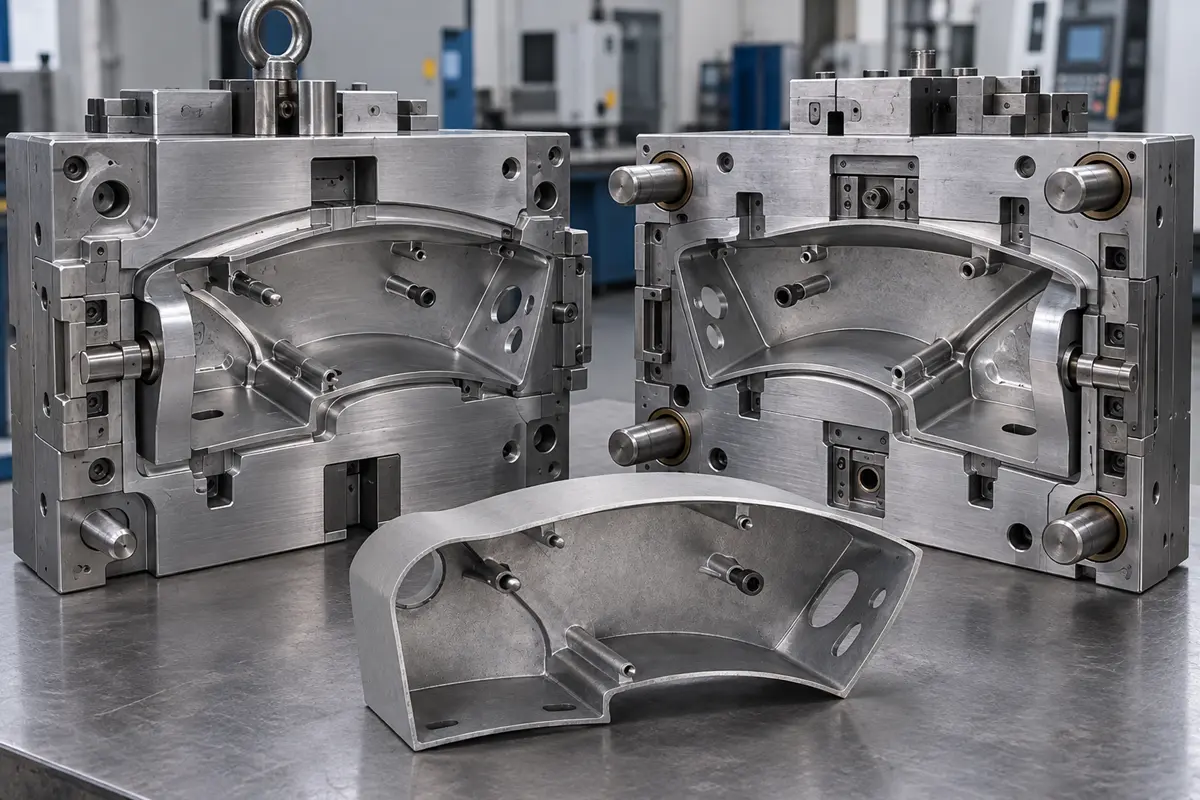
Part geometry can change the die architecture. NADCA’s product-design sourcebook notes that die components such as core slides add to the cost of manufacturing and maintaining dies. The tool scope should therefore state whether the proposal includes moving members, cores, inserts, a trim die, or a multi-cavity configuration when those items apply to the part.
A detailed scope shows whether a lower total reflects a simpler stated assumption rather than the same tool.
Tool Materials and Build Work
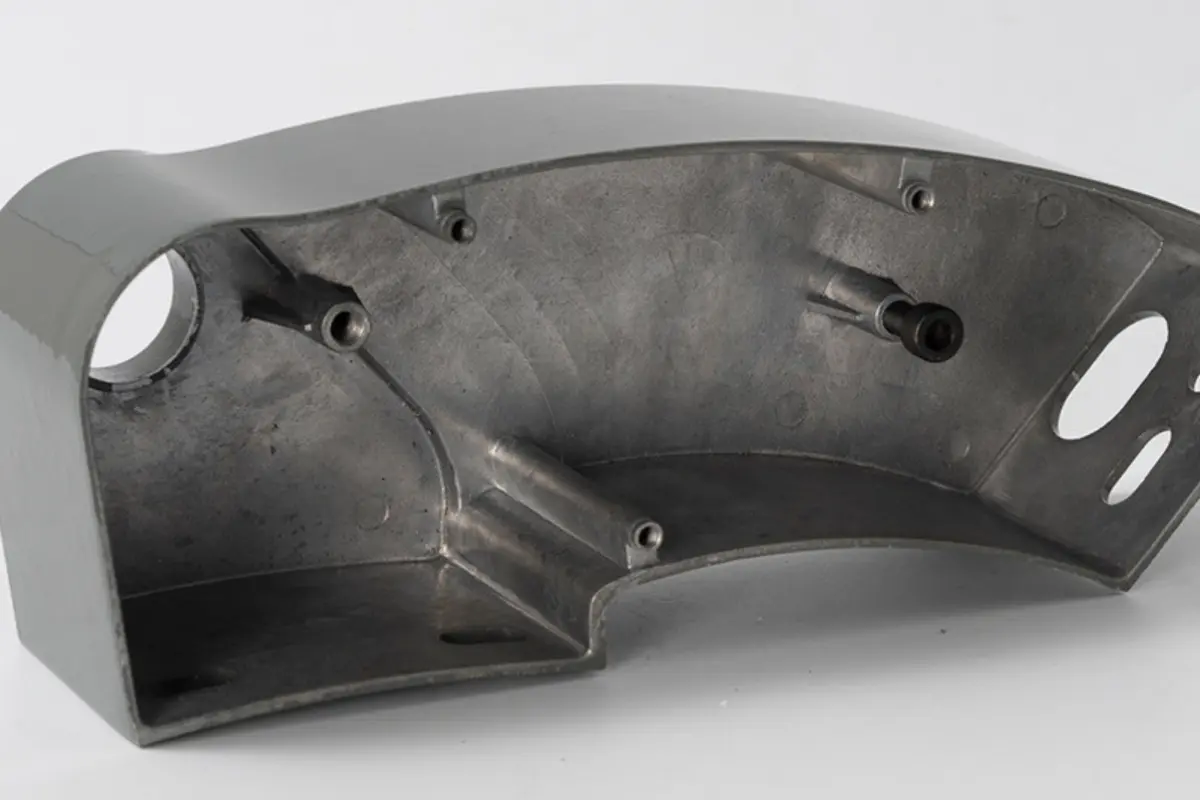
Tool steel, machining, EDM, heat treatment, and assembly work belong to the build scope when the supplier has included them. Rollyu Precision’s Die-Casting Parts page lists hardened tool steel such as H13, CNC machining, EDM, and heat treatment within its mold-design and tooling description. That page confirms Rollyu’s listed service scope, but it does not make H13 or any process step an automatic specification for every project. A tooling quote does not set tool life or production performance without a separate, supported agreement.
Separate Included Work From Project Assumptions
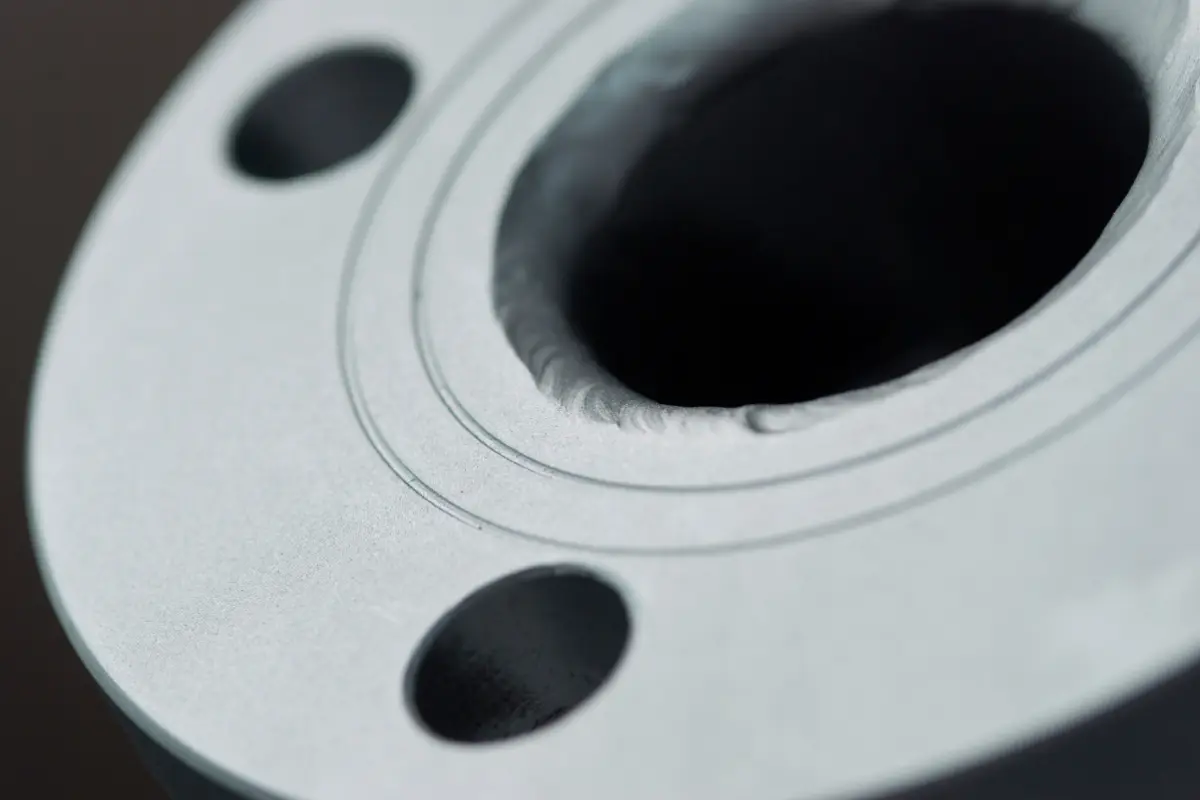
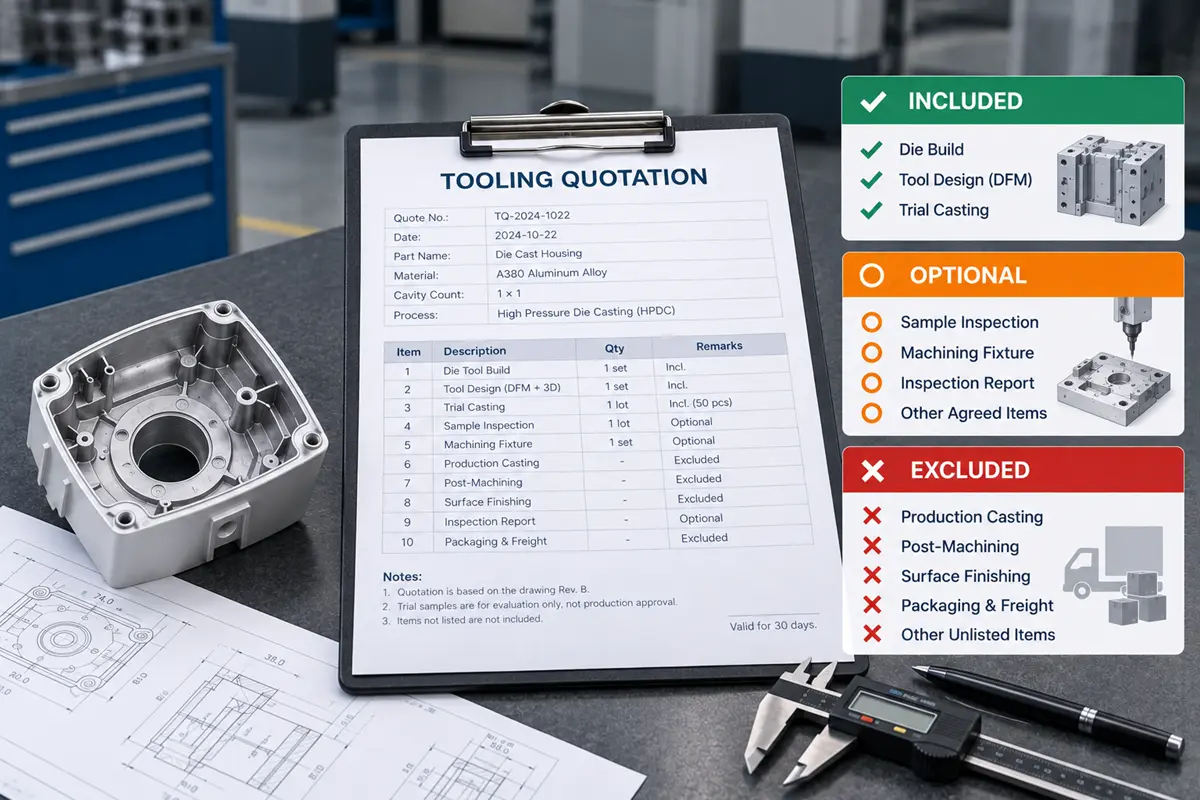
A supplier can include an item in a tooling quote, price it as an option, or leave it outside the quoted scope. The document should label each item as included, optional, or excluded so the buyer does not turn an assumption into a procurement commitment.
Engineering and Tooling Deliverables
Engineering scope can include a DFM review, a tool-design package, or a documented list of tool assumptions. The quote should make two inputs visible:
- The included deliverables and the revision or release point each output will use.
- The party providing current product inputs and the open items to resolve before the tool build starts.
Trial and Sample Scope
A trial or sample line item should identify the activity and deliverables it covers, such as trial casting, sample quantity, listed records, or shipping treatment. Ask the supplier to identify any item that the quote leaves unstated. Trial samples do not, by themselves, define production approval. Production acceptance criteria, first-article decisions, and controlled changes belong in the project’s high pressure die casting quality plan, not in a generic tooling-cost comparison.
Exclusions and Open Assumptions
Read exclusions as carefully as inclusions. The quote should identify whether it excludes casting lots, secondary machining, finishing, inspection documentation, packaging, freight, taxes, or later engineering work.
Open assumptions call for the same treatment. If the total depends on an unconfirmed alloy, cavity count, cosmetic requirement, sample plan, or product revision, label that condition before comparing it with a quote that uses a confirmed input. A lower total may reflect a narrower stated scope rather than a different price for the same tool.
Keep Ownership, Maintenance, and Change Terms Separate
Tool ownership, maintenance, storage, repair authority, and engineering changes are commercial terms for a separate controlled review. A tooling quote should identify the proposal section or separate agreement that governs those terms, but a total alone does not establish them.
This page directs contract and quality teams to confirm whether the supplier identifies those terms. The substantive terms belong in the separate tooling-ownership review.
Compare Tooling Quotes With One Scope Matrix
Use the same product package and questions for every supplier. This matrix compares declared scope; it is not a universal RFQ or acceptance checklist.
| Scope field | What to confirm in the quote | Why the field matters when comparing quotes |
|---|---|---|
| Product identity | Part number, CAD or drawing revision, alloy, and stated part requirements used for pricing | Confirms the suppliers priced the same design input. |
| Tool configuration | Cavity count and any named slides, cores, inserts, or trim-die scope | Shows whether the quoted die architecture is comparable. |
| Tool materials and build | Any stated tool-steel selection, machining, EDM, heat treatment, and assembly scope | Separates a named build scope from an assumed one. |
| Engineering deliverables | DFM, tool-design output, or documented assumptions that the supplier includes | Identifies whether engineering work is inside the tooling total or outside it. |
| Trial and samples | Trial activity, sample quantity, listed records, and shipping treatment | Separates quoted trial deliverables from later approval decisions. |
| Downstream operations | State whether the supplier includes casting, trimming, post-machining, finishing, inspection records, packaging, or freight | Keeps a total for the die distinct from a wider manufacturing scope. |
| Open assumptions | Unconfirmed revision, alloy, surface requirement, cavity count, or sample plan | Flags a condition that could change the proposal after clarification. |
| Commercial handoff | The proposal section or separate agreement for ownership, maintenance, storage, repair, and changes | Directs the buyer to the terms that a tooling total does not settle. |
Ask each supplier to complete the same fields against the same controlled drawing package before comparing totals. Use the same matrix with any precision manufacturing partner that will handle more than the die build.
Confirm Whether the Route Includes Post-Machining
If later machining is part of the casting versus machining decision, the proposal should identify the features the supplier will finish after casting. Confirm whether the tooling quote covers the die by itself or also identifies the downstream machining route.
The buyer and supplier should confirm the exact tool configuration, machining scope, inspection requirements, and responsibility boundaries for the individual project.
Rollyu Precision lists mold design and tooling, aluminum and zinc die casting, and CNC post-machining such as milling, drilling, reaming, and tapping under its die-casting services. That stated scope gives the buyer a basis to ask whether one supplier can quote both the casting and later machining route.
Frequently Asked Questions
What Is a Trim Die in a Die-Casting Tooling Quote?
A trim die is a separate tool that removes runners, overflows, and flash from a casting after it leaves the casting die. If the project uses trim tooling, the quote should state whether the trim die is in the tooling scope and which secondary features it will handle. This scope line does not set trimming acceptance criteria or tool ownership.
Should a Tooling Quote Identify Special Gauges or Machining Fixtures?
Yes. When a project uses dedicated gauges or machining fixtures, the tooling quote should state whether the buyer or die caster supplies them and whether they are in the tooling package. NADCA’s tooling checklist includes those gauges and machining fixtures as quote-stage items. This check identifies physical support tools, while the project’s separate quality controls set inspection acceptance.
What Should a Buyer Provide When Asking a Supplier to Quote an Existing Die?
Start by making the existing casting die, relevant trim die, and applicable machining fixtures available for the supplier’s review. NADCA’s checklist uses that review to identify whether inherited tooling and fixtures can meet the part requirements and whether rework or equipment adaptations are in scope. The supplier’s quote should keep that technical review separate from commercial asset terms.
What Is a Unit Die in a Die-Casting Tooling Quote?
A unit die uses a standardized main die frame with replaceable cavity units. NADCA describes unit dies as generally used for smaller parts or family parts with no slides or a constrained slide configuration because the arrangement limits core slides. If a supplier proposes a unit die, the quote should identify the frame, cavity units, and the part numbers or revisions that configuration covers.