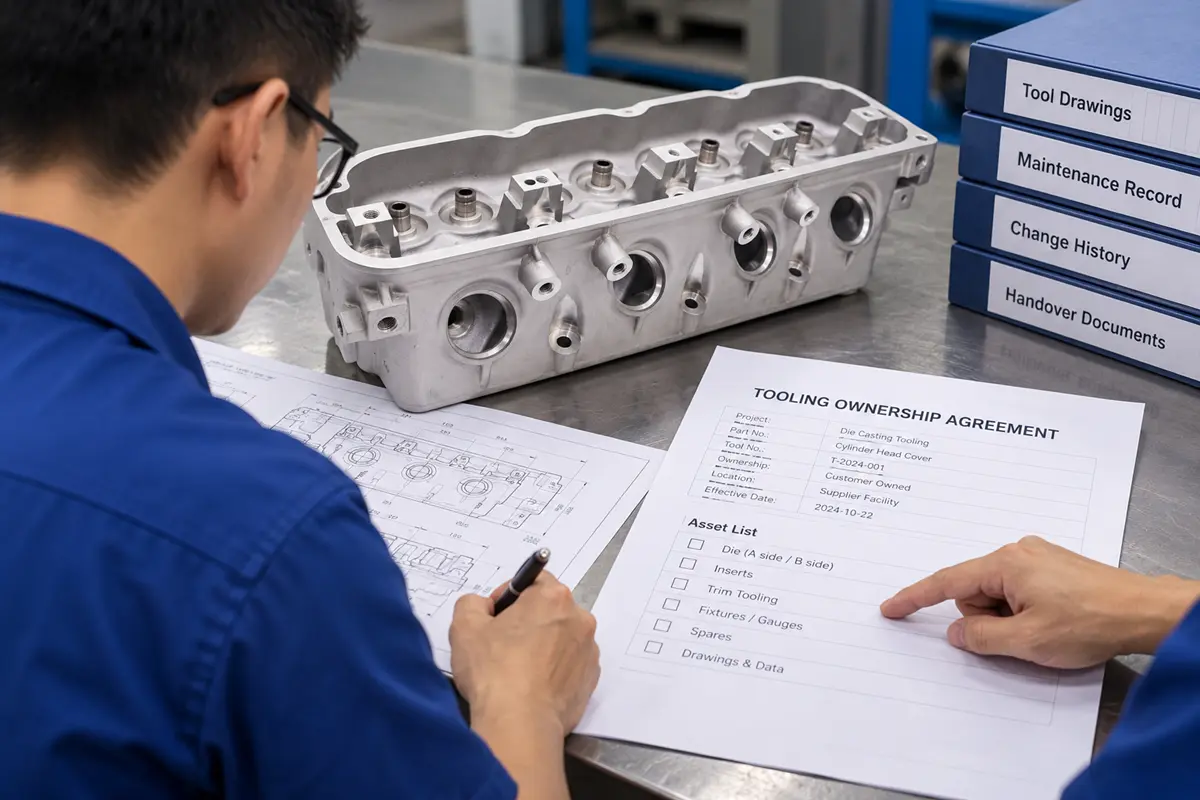
Before ordering die cast tooling, confirm the covered assets, when ownership takes effect, and how the supplier will release the tool. Put those terms in the agreement rather than inferring them from a tooling payment or the phrase “customer-owned.” A tool can remain at the supplier’s facility while the customer owns it.
The written scope should also assign responsibility for records, storage, repairs, and changes. The checks below help sourcing and engineering teams agree on those responsibilities before authorizing the order. They are commercial guidance, not jurisdiction-specific legal advice.
What Does Tooling Ownership Mean in the Agreement?
Confirm who owns each listed asset and which rights the agreement gives that party. Physical possession, access to files, and permission to use the tool need their own terms.
| Item to confirm | Written definition to obtain | Question to settle |
|---|---|---|
| Asset scope | Die identification and included or excluded components | What does each party own? |
| Ownership trigger | The agreed event and its supporting record | When does ownership take effect? |
| Documentation | Included files, records, formats, and release timing | What information will the buyer receive? |
| Custody | Holder, location, and access arrangements | Who holds the tool, and where? |
| Maintenance and repair | Work scope, approval steps, and cost responsibility | Who does the work and pays for it? |
| Engineering changes | Approval authority and revision record | Who authorizes a change? |
| Release and transfer | Release conditions, handover records, and transport responsibilities | What is needed to move the tool? |
| End-of-program arrangement | Continued custody, return, and record retention | What remains to be settled after production? |
The Asset List
Identify the die and list the related items that the ownership terms cover. Depending on the project, those items may include inserts, trim tooling, fixtures, gauges, or spares. State exclusions alongside inclusions. NADCA’s commercial-practices guidance recommends an ownership record describing the die and its additional components.
The Ownership Trigger
Name the event that establishes ownership and the record that confirms it. If the agreement ties ownership to payment, completion, or an acceptance milestone, identify the exact milestone.
Ask how any supplier-funded or amortized tooling arrangement affects that event. Record the answer in the agreement or its named attachment; the payment arrangement and ownership trigger need to be read together.

Which Documentation and Access Terms Need a Written Scope?
List the information the buyer can access during production and receive at handover. Owning the physical die does not resolve the scope of associated data rights.
Tool Identification and Condition Records
Agree on a tool identifier and a condition record for handover. Include the revision, component inventory, known damage, and unfinished work where relevant.
Keep asset records distinct from part-measurement evidence such as a CMM inspection report. If the agreement uses a part-acceptance event as an ownership trigger, name the supporting report and event explicitly.
Technical Data and Related Project Records
Specify the agreed file package, formats, and delivery timing. The package may include tool drawings, as-built revisions, CAD files, maintenance history, and operating instructions. Confirm who can retain, use, or share each file.
If the handover includes a First Article Inspection record, identify its role in the package. A part-verification record and a tool-ownership record answer different questions, even when the agreement connects them.
Who Has Custody While the Supplier Holds the Tool?
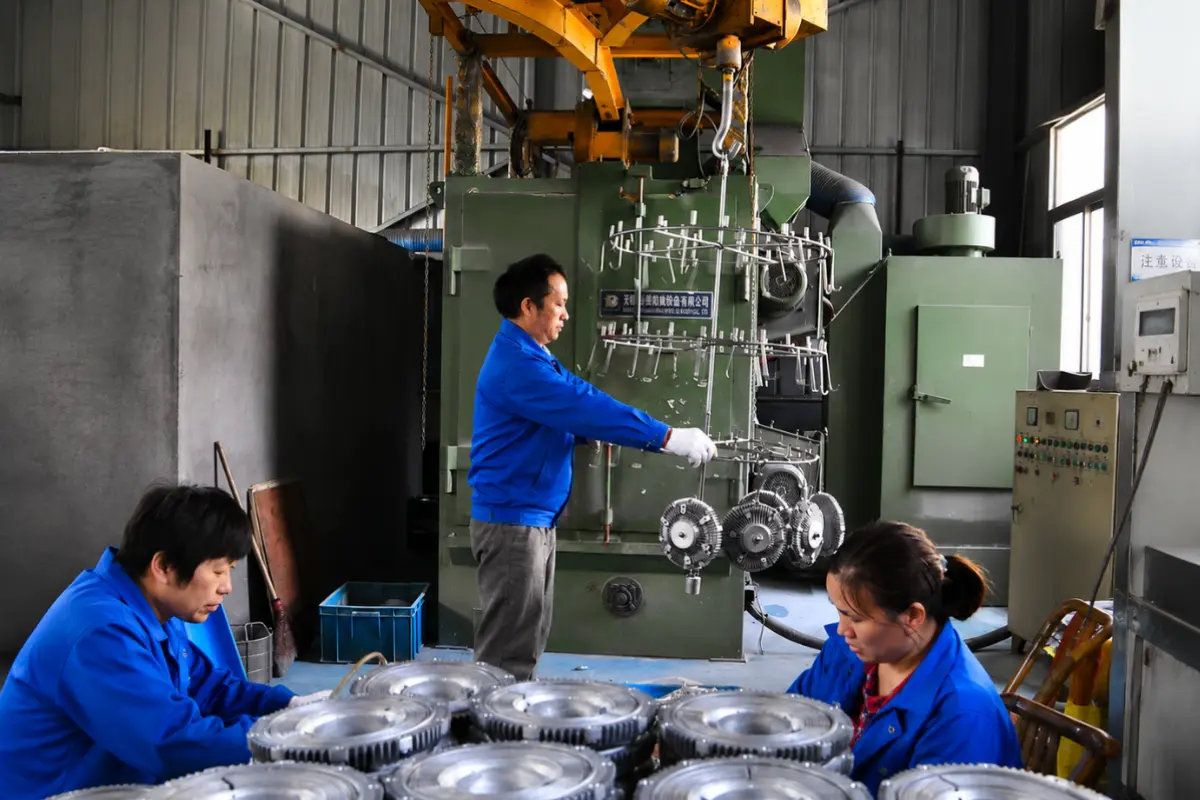
Name the company and facility that will physically hold the tool. Then confirm the access and care arrangements that apply while the tool stays there.
Storage Location and Access
Record the storage address, tool marking, and contact for status checks or site visits. If a subcontractor holds the tool, identify that company and its location.
Agree on notice and approval arrangements before the supplier moves the die or places it with another facility. Confirm how the asset record will show the new location.
Inactivity, Loss, and Damage Handling
For inactive tooling, confirm storage duration, any storage charges, and who checks its condition. Separately assign loss or damage reporting and insurance responsibility. Ask what coverage applies to this tool; its presence at an insured factory does not establish the agreed coverage.
How Should Maintenance, Repair, and Engineering Changes Be Assigned?
Agree on who performs the work, approves it, and accepts the cost. Rollyu Precision’s die-casting capability describes its manufacturing scope; project-specific maintenance and ownership arrangements need written confirmation.
Routine Maintenance and Repair Approval
Define the work covered by routine maintenance and the repairs that need a separate decision. Ask:
- Who performs the work and updates the tool record?
- Which repairs need prior approval, and who gives it?
- Who pays under the agreed maintenance or repair terms?
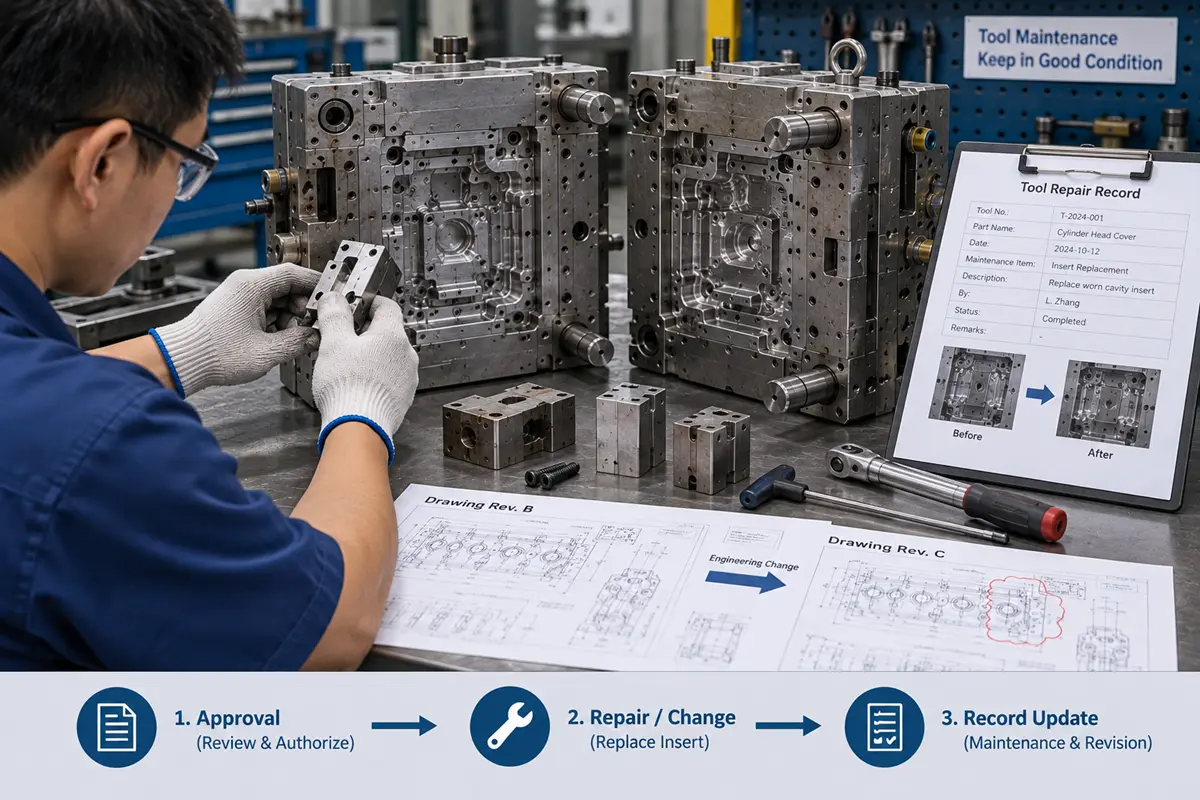
Record the completed repair and any component changes. Keep the repair history with the tool’s condition record.
Engineering Change Control
Name the person authorized to request a change and the people who approve its scope and commercial terms. Identify the drawing revision that controls the work and how the supplier will record the completed change.
Keep production acceptance controls in the high pressure die casting OEM quality plan. For ownership purposes, confirm how the approved change affects the asset list and responsibility for the modified tooling.
What Happens When Production Stops or the Tool Moves?
Agree on a release process and closeout responsibilities while the parties are placing the order. Include any payment or other contractual conditions that apply to release.
Release and Transfer Conditions
Identify who receives the transfer request, confirms release, and arranges preparation, packing, transport, and receipt. State the agreed notice period and responsibility for those activities without assuming that transfer is included in the original tooling payment.
At handover, reconcile the tool identifier, component list, current revision, condition, and open work with the receiving party.
End-of-Program Arrangements
Confirm whether the supplier will retain the tool for service-part needs or return it after production ends. Assign responsibility for storage and for keeping the related records and spares. Record the agreed retention period and the contact who will handle closeout instructions.
Questions to Get Answered in Writing Before You Order
Before authorizing a Rollyu Precision tooling order, ask for the completed asset list and written ownership, custody, repair, and release terms. Identify unresolved items and the person responsible for confirming them before the order proceeds.
Frequently Asked Questions
What Should Happen if a Supplier Stops Supporting the Program?
Agree on a disruption-notification and escalation contact before placing the order. Ask who can respond if the usual supplier contact or facility is no longer available. Have counsel review the proposed access and recovery terms for a closure or restructuring.
Can a Supplier Use Customer-Owned Tooling for Another Project?
Confirm permitted use in the agreement. Identify the programs the supplier may support with the tool and who can authorize another use. Address shared components and associated design data separately where they affect that permission.
Can Inactive Customer-Owned Tooling Be Scrapped?
Check the agreed disposal terms before authorizing scrap. Name who can issue the instruction, what notice applies, and how the parties will document disposal. Avoid treating a period of inactivity as automatic permission to destroy the tool.
Should a Replacement Die Follow the Original Ownership Terms?
Confirm whether the agreement extends to replacement dies. Some purchasing terms expressly cover replacement ownership, so check that provision before treating the new die as a separate asset purchase. Record its identity and any agreed differences in ownership or responsibilities.
When Is Legal Review Appropriate for Tooling Ownership Terms?
Seek legal review when title, data rights, release restrictions, liability, or cross-border arrangements could affect the purchase. Give counsel the proposed agreement and asset list, including any third-party holder or claim. Counsel can advise on wording and enforceability for the actual arrangement.