Moving a CNC prototype to production requires a released part definition, a repeatable machining route, and inspection that reflects production risk. Increasing the order quantity alone does not establish process control.
This guide covers the shift after prototype approval, the purpose of a pilot run, and the information needed for a production RFQ. It shows how to retain useful prototype findings without assuming that one accepted part proves the supplier can repeat the same result.
What Changes When a CNC Prototype Moves to Production?
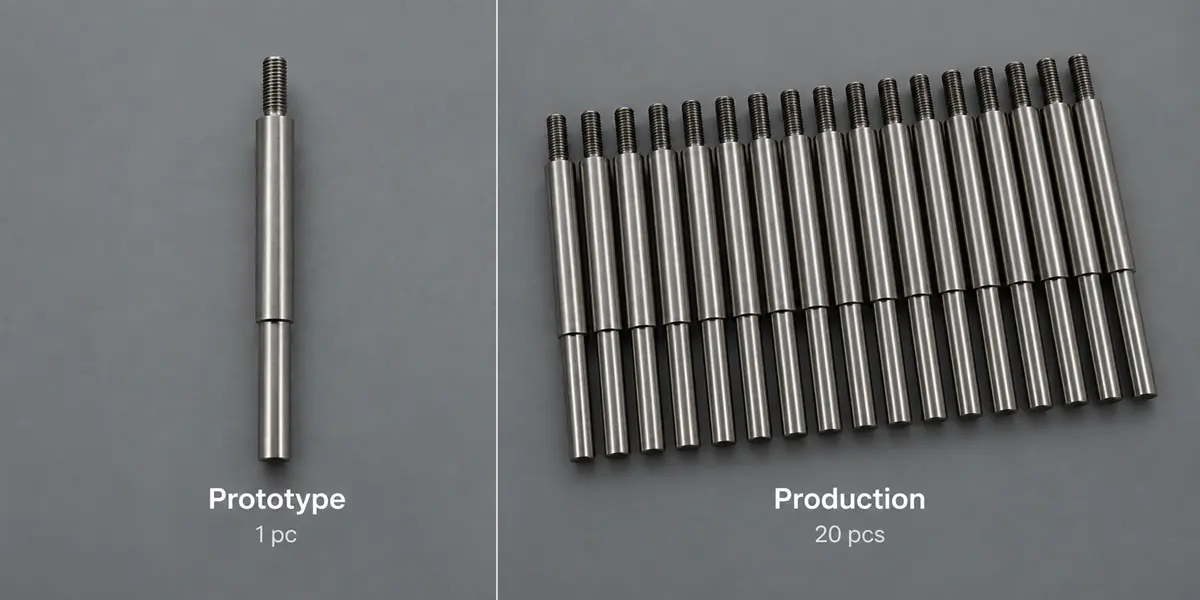
A CNC prototype answers a design question. Production requires the supplier to make the specified result repeatedly through a controlled process. As the project advances, the team has less freedom to change the drawing, material, workholding, toolpath, finishing route, or inspection scope without reviewing the effect on the part.
Each stage supports a different decision. Release gates and required records vary with the part, customer requirements, contract, and applicable quality system.
| Stage | Primary Question | Design State | Manufacturing Setup | Inspection Focus | Next Decision |
|---|---|---|---|---|---|
| Proof prototype | Does the concept or basic geometry work? | Open to major changes | Flexible setup suited to learning | Features needed for the immediate test | Revise or build a functional prototype |
| Functional prototype | Does the part fit, assemble, and perform under the planned test? | Near production intent, with known open items | Material and process chosen for the test purpose | Functional interfaces and critical features | Close design risks or prepare a pilot run |
| Pilot run | Can the planned route produce acceptable parts more than once? | Controlled revision | Planned workholding, program, finish, and inspection route | First parts and variation across the batch | Correct the process or release repeat production |
| Repeat production | Can the approved route support the ordered quantity and acceptance criteria? | Released revision with controlled changes | Documented production route | In-process control and final acceptance | Continue, correct, or review a change |
Higher quantities often reveal adjustments hidden by a one-off prototype build. A machinist may have changed an offset, altered the clamping sequence, or spent extra time on deburring. Production planning captures decisions worth repeating so another shift or later order does not depend on individual memory.
Confirm the Prototype Is Ready for a Pilot Run
A pilot run is useful once the prototype has answered its test questions and the remaining risks are visible. The approval record needs to identify the tested revision, the test scope, and any open item that may affect production.
Functional and Critical-Feature Results
Review the prototype against its original purpose. A visual model may confirm the envelope and appearance while providing little evidence about bearing fits, sealing faces, threaded joints, alignment, stiffness, wear, or thermal behavior. Functional CNC prototype machining provides more relevant evidence when the test uses the intended material, feature tolerances, finish, and assembly conditions.
Keep the result with the feature that controls the next decision. For a bearing bore, record its measured size and the mating-part condition. For a sealing face, retain the finish requirement and test condition. A general note that the prototype passed does not preserve enough detail for production planning.
Open Design and Process Risks
Put unresolved items on a visible issue list before requesting the pilot quote. Each entry needs the affected feature and the decision still open. Examples include:
- A tolerance that still needs functional test data
- A corner radius changed for tool access
- A stock or coating allowance that affects final size
- A thin wall that moved during machining
- An assembly feature that required hand fitting
Frequent geometry changes or unclear acceptance criteria weaken the value of a pilot run because the run no longer tests a stable route. Keep experimental features identified instead of labeling the entire part production ready.
Freeze the Production Definition
Production planning starts from one controlled definition of the part. Before pilot programming begins, engineering and sourcing teams need to align the model, drawing, revision, material, finish, quantity, and acceptance criteria.
CAD, Drawing, and Revision Control
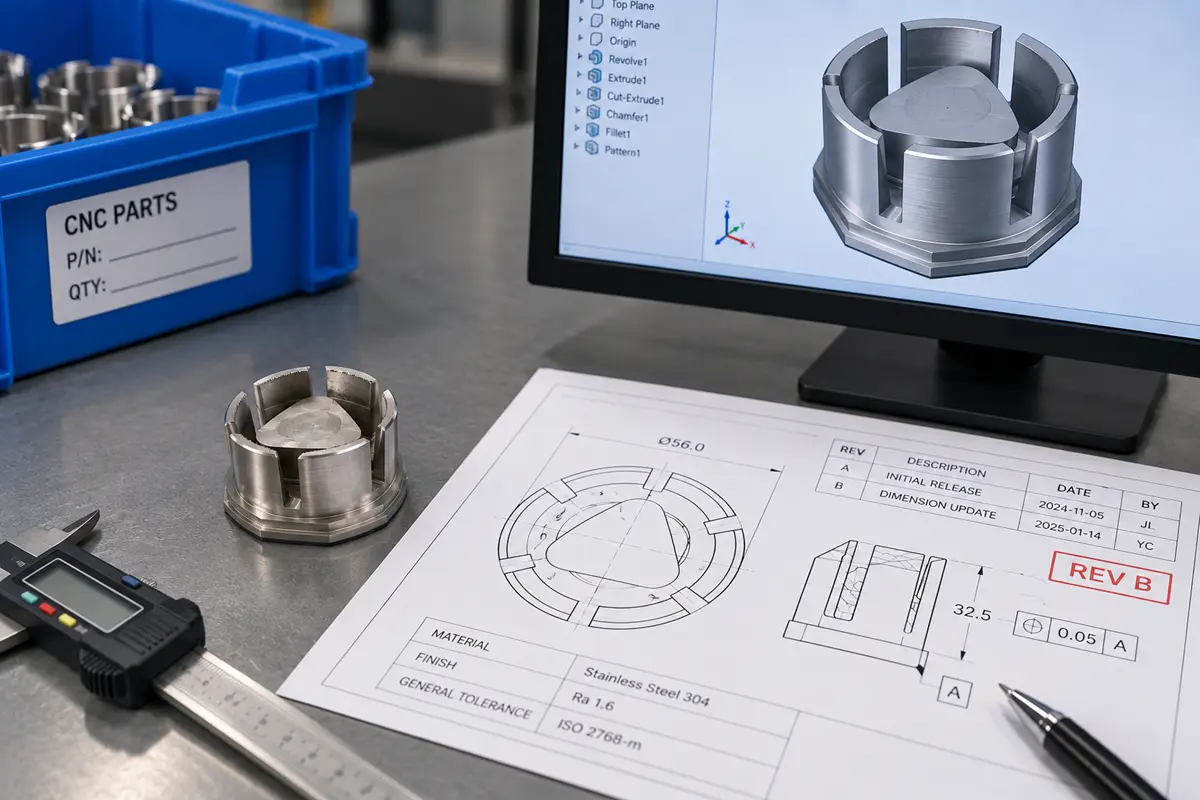
The released package may contain a 3D model, a 2D drawing, or both. The geometry must agree across the files. The drawing or another controlled specification can then define information the model may not communicate, including datums, tolerances, threads, surface finish, coating, inspection notes, and critical characteristics.
Use a clear revision reference on the quote, program, inspection report, approved deviation, and purchase order. A later design change may affect tooling, the CNC program, inspection method, finish, or stock allowance, so those items need review before the next batch. A technical drawing for CNC machining keeps manufacturing and acceptance requirements with the released part definition.
Material, Finish, and Acceptance Criteria
Specify the material grade and condition when those details affect strength, corrosion behavior, heat treatment, machinability, or certification. Add finish, coating, masking, color, texture, and cosmetic boundaries only where the project requires control. Acceptance criteria should direct inspection toward features that affect fit, function, assembly, or customer approval. Applying the tightest tolerance to every dimension can add machining and inspection work without improving performance. Separate functional limits from reference dimensions and ordinary features.
Build a Repeatable CNC Process
A repeatable CNC process connects the released part definition to workholding, programs, cutting tools, in-process checks, finishing, and final inspection. The prototype method may remain useful, but temporary adjustments need review before they become part of the production route.
Workholding and Datum Transfer
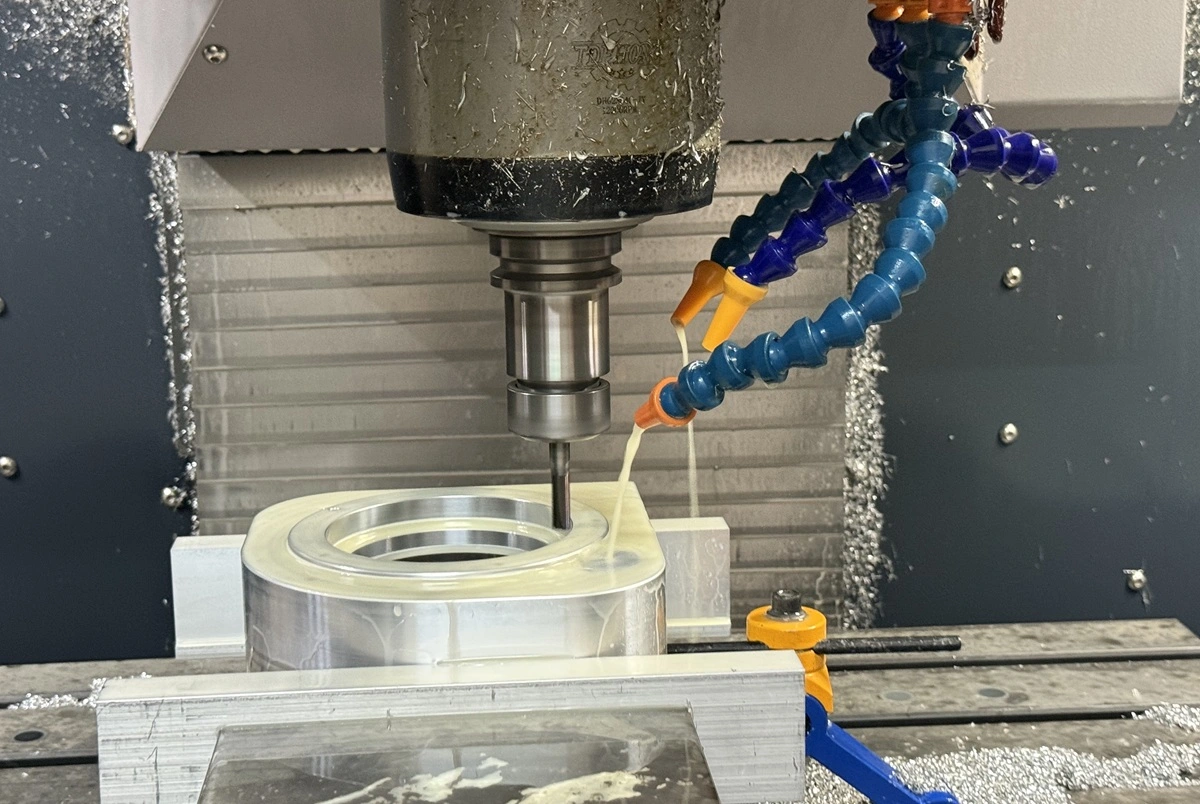
Prototype machining often uses flexible workholding because the geometry may change. Dedicated jaws, fixtures, stops, or gauges can make sense when the quantity and repeat-order forecast justify their cost and they reduce setup variation or handling time. The process plan also needs to show how each setup locates the part and which surfaces establish the next operation. Thin walls, long parts, soft materials, and tight positional relationships may require specific controls for clamp force, tool access, chip clearance, or deformation.
Tooling, Programs, and Cycle Planning
An approved prototype program is a starting point for production planning, not proof of a production method. The review covers tool reach and life, cutting conditions, operation order, deburring, inspection access, and the effect of tool wear on critical features. A prototype route may favor speed to the first part and rely on more manual attention. For repeat production, additional fixture, tool, or programming work may reduce recurring setup or machine time. Forecast quantity and repeat frequency determine whether that upfront work pays off.
In-Process Checks and Change Control
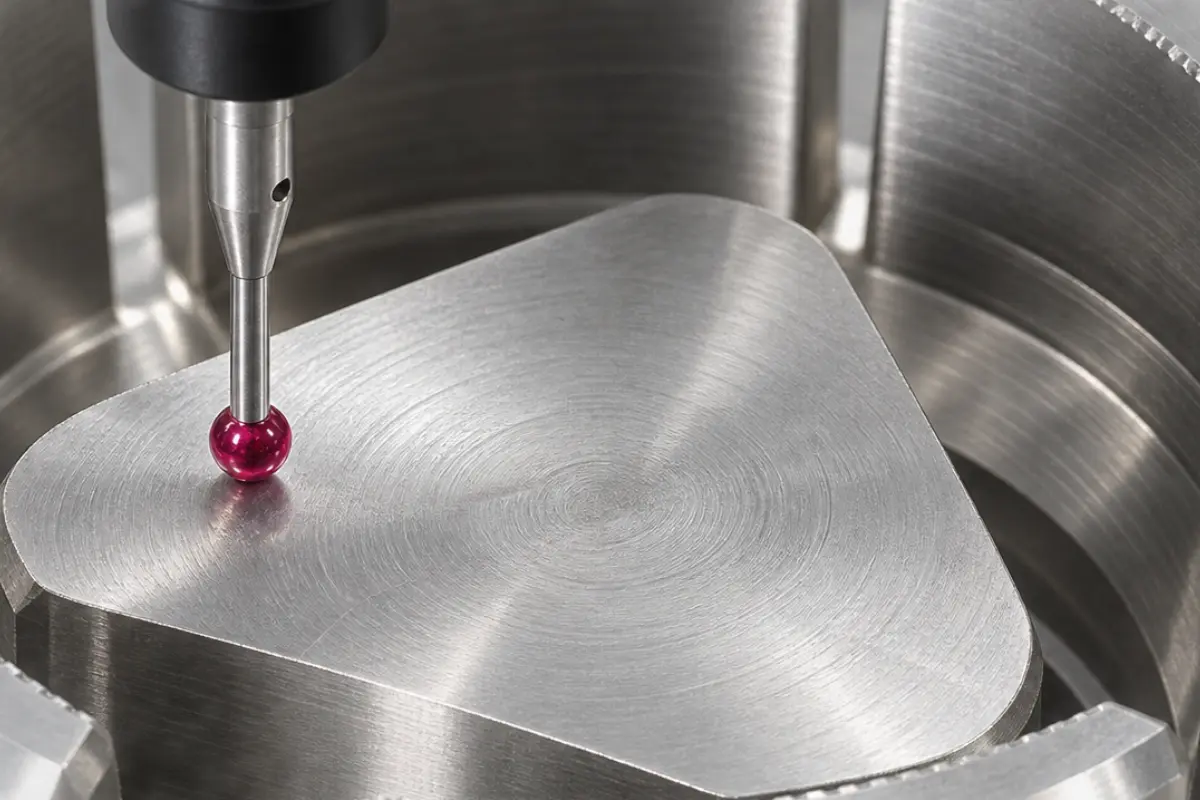
In-process checks focus on measurements that can reveal tool wear, offset drift, fixture movement, or another process change before final inspection. The agreed quality plan sets the method and frequency based on feature risk, process behavior, and quantity. A CMM may suit complex datum relationships, while a bore gauge, thread gauge, micrometer, or dedicated gauge may be faster for one repeated characteristic.
The control plan also needs a response when a measurement approaches its limit. Depending on project requirements, the manufacturing team may correct an offset, change a tool, inspect the fixture, increase inspection, or review parts made since the previous accepted check. The applicable customer or quality procedure determines the final reaction and lot disposition.
Use the Pilot Run to Check Production Readiness
A pilot run checks the planned manufacturing route at a controlled quantity before repeat production. To produce useful evidence, the run needs the planned revision, material, workholding, CNC program, finishing path, and inspection method.
First-Article and Batch Inspection
A first-article inspection can connect the initial production result to the released requirements when the customer, contract, or quality plan calls for it. Project requirements determine the inspection scope, including the drawing revision, characteristic, method, result, and disposition. A prototype made through a flexible development setup does not automatically qualify as a production first article.
The rest of the pilot batch tests whether the route stays controlled beyond the first accepted piece. Review measurements across the run where variation matters, and record manual corrections, fixture adjustments, tool changes, rework, or deviations that would require control during repeat production.
Finishing and Supplier Handoffs
Finishing may alter dimensions, edge condition, appearance, masking boundaries, or assembly fit. Include the planned finish in the pilot route when those changes affect acceptance. If machining and finishing occur at different facilities, the work order and inspection plan need a consistent revision and clear ownership at each handoff. Apply the same project-specific control to outside heat treatment, coating, specified cleaning, or assembly when those operations are part of the agreed scope. Engineering and sourcing teams need to know who owns each operation, which records return with the parts, and where final acceptance occurs.
Cost Changes Between Prototype and Production
Prototype and production costs shift as one-time work and recurring work change at the planned quantity. Prototype pricing spreads programming, setup, and engineering effort across a small number of parts. Repeat orders can distribute some of that work across more units, while dedicated fixtures, gauges, process documents, finishing controls, or expanded inspection add upfront cost.
The lowest prototype price may not lead to the lowest production cost. Compare material yield, setup count, machine time, tool consumption, finishing, inspection, documentation, expected repeats, and the effect of a rejected or delayed batch. Request separate prices for prototype, pilot, and repeat quantities so changes in the manufacturing approach and one-time costs remain visible.
Volume can also change the process choice. CNC machining may remain suitable for low-volume and repeat custom parts when geometry changes, material requirements, or tooling investment make another route unattractive. Higher or steadier demand may support casting, molding, or forming, with CNC machining reserved for critical features. Rollyu’s rapid prototyping services include CNC prototyping, 3D printing, vacuum casting, and sheet metal prototyping for different validation and low-volume needs. The final choice still depends on part-specific cost, tolerance, material, and tooling evidence.
What to Include in a Prototype-to-Production RFQ
A prototype-to-production RFQ should identify the current part definition, the manufacturing stage, and the result the next order needs to prove. Include the available 3D model and drawing, active revision, material and finish requirements, production-relevant prototype findings, pilot and repeat quantities, target timing, and requested inspection or documentation.
Flag expected design changes, recurring demand, critical features, mating parts, supplied hardware, outside processes, and customer approval points. This information helps the supplier separate flexible prototype work from the fixtures, gauges, and process controls needed for repeat orders.
Rollyu Precision supports custom CNC machining from prototypes through production runs, including DFM review, finishing, in-process inspection, final dimensional inspection, CMM inspection, and traceability options. Confirm project-specific tolerances, records, outside processes, assembly work, and approval responsibilities during quoting.
Frequently Asked Questions
Is a CNC Prototype the Same as a First Article?
No. A CNC prototype usually tests design, fit, function, or manufacturability, while a production first article checks a part made from the intended production definition and process against specified requirements. One part may serve both purposes if the contract or quality plan defines the production setup, documentation, and approval scope that way.
What Quantity Fits a CNC Pilot Run?
No single CNC pilot-run quantity fits every project. The batch needs enough parts to expose relevant risks, such as repeated setups, tool wear, finishing consistency, or measurable variation, while remaining small enough to correct the route before a larger commitment. Engineering, quality, and sourcing teams set the quantity from the test plan, part risk, expected production volume, and customer requirements.
Can a CNC-Machined Prototype Validate a Future Cast or Molded Part?
A CNC-machined prototype can validate geometry, assembly, and selected functional features, but it does not reproduce every property of a future cast or molded part. Material structure, draft, wall behavior, shrinkage, tooling marks, porosity, and process-specific tolerances may differ. Use the CNC prototype for the questions it can answer, then validate the production-intent process before releasing cast or molded production parts.