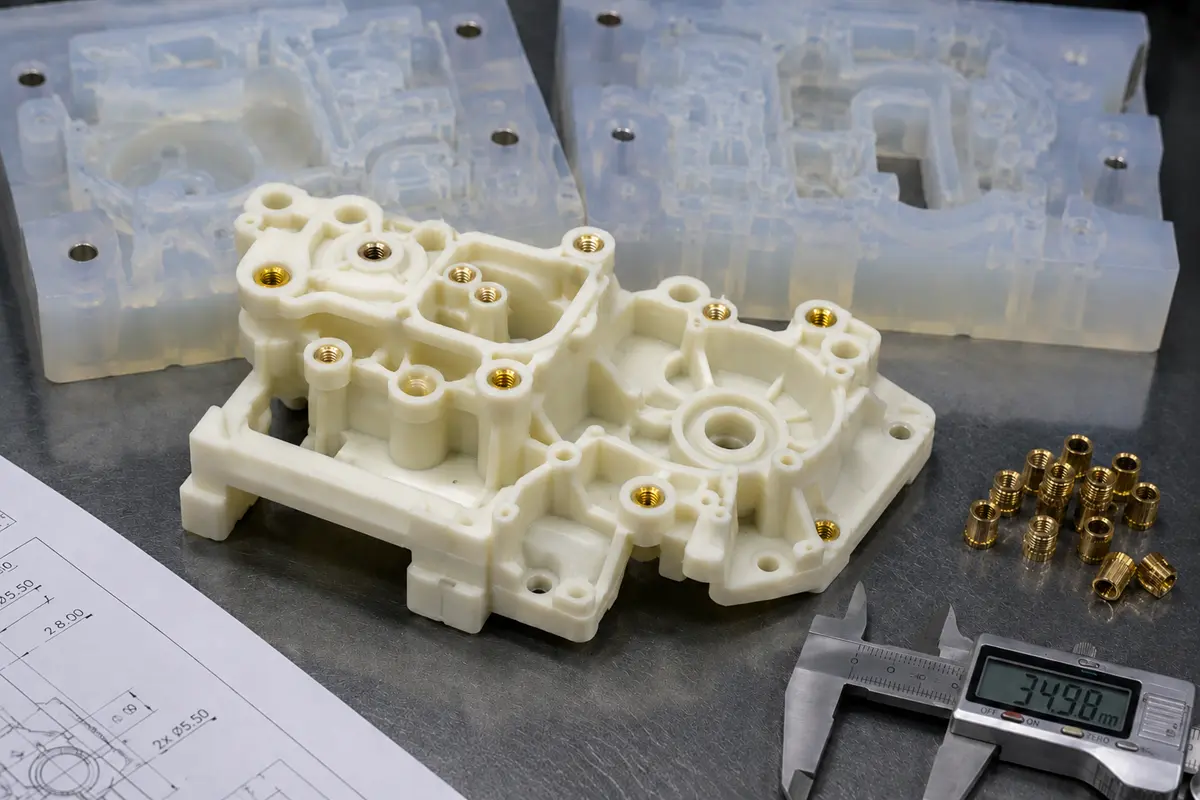
Use urethane casting when a buyer needs custom cast urethane parts with molded-part surface detail before injection mold tooling. The process fits housings, covers, grips, display samples, and bridge parts when the design is close to stable.
ISO/ASTM 52900:2021 defines additive manufacturing as building 3D geometry through successive material addition. A urethane casting service uses a different route: master pattern, silicone mold, polyurethane resin, finishing, and inspection.
What Is Urethane Casting?
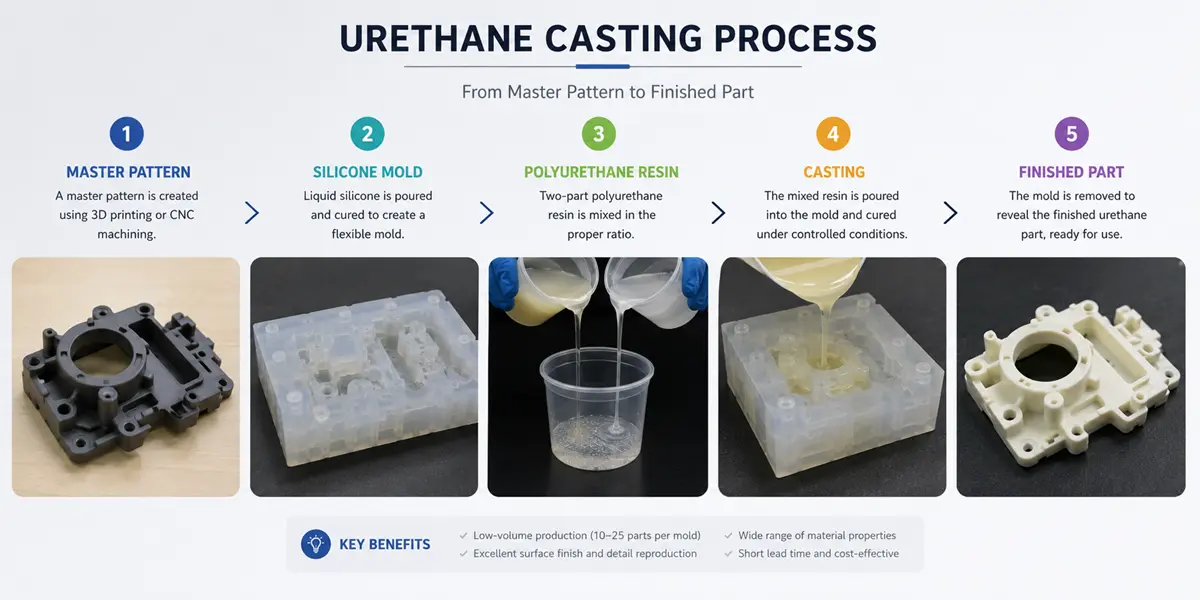
Urethane casting is a soft-tooling process that uses a master pattern and a silicone mold to produce short runs of polyurethane parts. Some suppliers also call this process urethane molding or vacuum casting when vacuum equipment helps reduce trapped air during resin filling.
How Does the Urethane Casting Process Work?
Urethane casting depends on four controls: a clean master pattern, a sound silicone mold, the right resin, and inspection that matches the test. If one control is vague, the same defect can repeat through the batch.
| Step | What Happens | Buyer Check |
|---|---|---|
| Master pattern | The supplier makes and finishes the reference part. | Approve geometry, cosmetic faces, and texture before mold making. |
| Silicone mold | Liquid silicone cures around the master and forms a flexible tool. | Review gates, vents, parting lines, inserts, and release risk. |
| Resin casting | Two-part polyurethane resin fills the mold and cures. | Match resin to hardness, color, clarity, heat, and impact needs. |
| Finishing and inspection | The supplier trims, finishes, and checks parts. | Define cosmetic, dimensional, assembly, and test requirements. |
Master Pattern Preparation
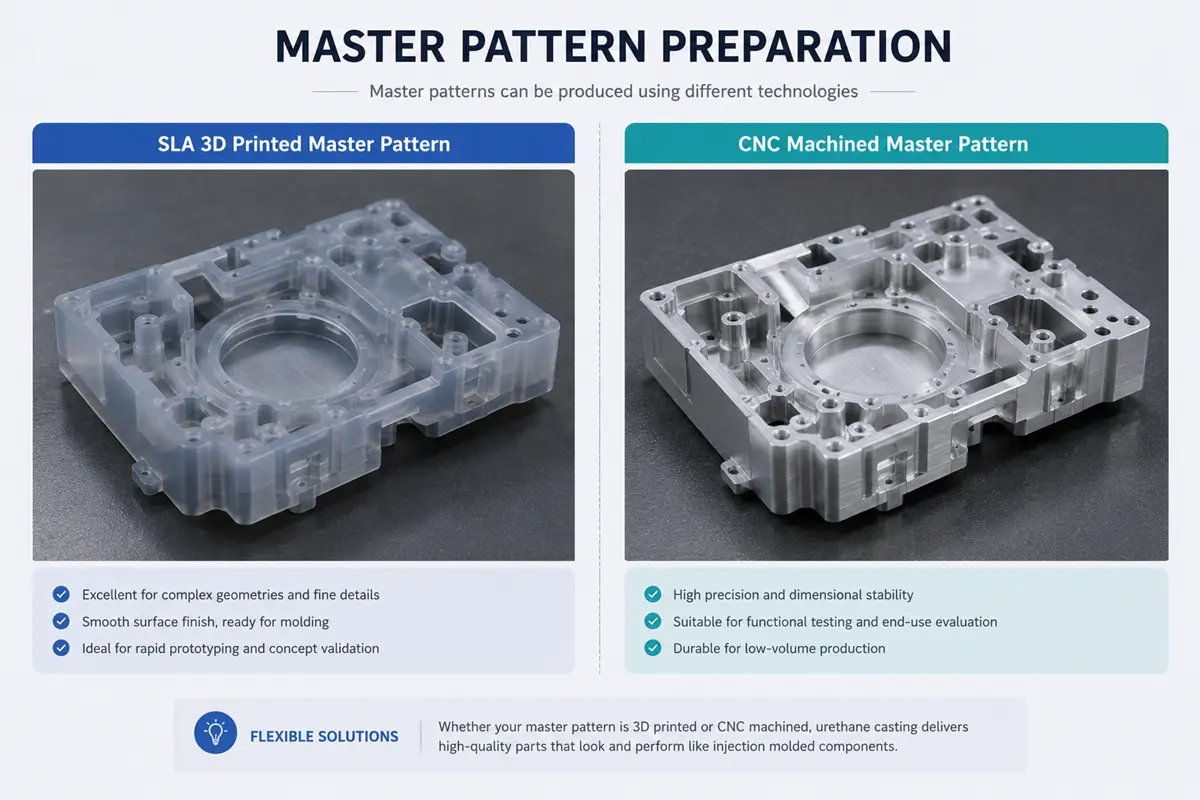
The master pattern sets the shape, texture, and surface quality of the cast parts. Shops often make the master with SLA 3D printing, CNC machining, or another high-detail process, then sand, polish, texture, or paint the master before mold making.
Engineers should review these features before the supplier pours silicone:
- parting lines
- ribs, bosses, and thin walls
- insert locations
- cosmetic A-surfaces
- texture, gloss, and color targets
- critical assembly faces
Silicone Mold Making
Silicone mold making surrounds the master pattern with liquid silicone, cures the silicone, and cuts the cured mold open so the supplier can remove the master. Gates, vents, and parting lines control resin flow and trapped air.
Silicone captures fine surface detail and flexes around some undercuts. Deep hooked features, thin ribs, sharp internal corners, and aggressive textures can still tear the soft mold or make part release more difficult.
Polyurethane Resin Casting
Polyurethane resin casting mixes two-part resin, degasses the mix when needed, pours or injects the resin into the silicone mold, and cures the resin under controlled conditions. Vacuum or pressure can help reduce bubbles in thin walls, corners, and cosmetic surfaces.
Resin choice affects the test result:
- hardness and stiffness
- color and transparency
- impact feel
- heat exposure
- chemical contact
- snap fit and assembly behavior
A buyer should choose resin during test planning, not after the mold is ready.
Trimming, Finishing, and Inspection
After curing, the supplier removes the part, trims gates and flash, then applies the required finish. Finishing can include sanding, painting, dyeing, texturing, polishing, clear coating, insert work, or light assembly.
Inspection should match the part’s job:
| Part Goal | Useful Check |
|---|---|
| Visual model | cosmetic review, color approval, surface inspection |
| Assembly sample | dimensional checks, datum review, thread checks |
| Flexible sample | hardness check, compression feel, insert pull review |
| Clear part | clarity review, bubble check, coating review |
| Functional sample | fit test, limited load test, assembly trial |
What Materials Can Urethane Casting Use?
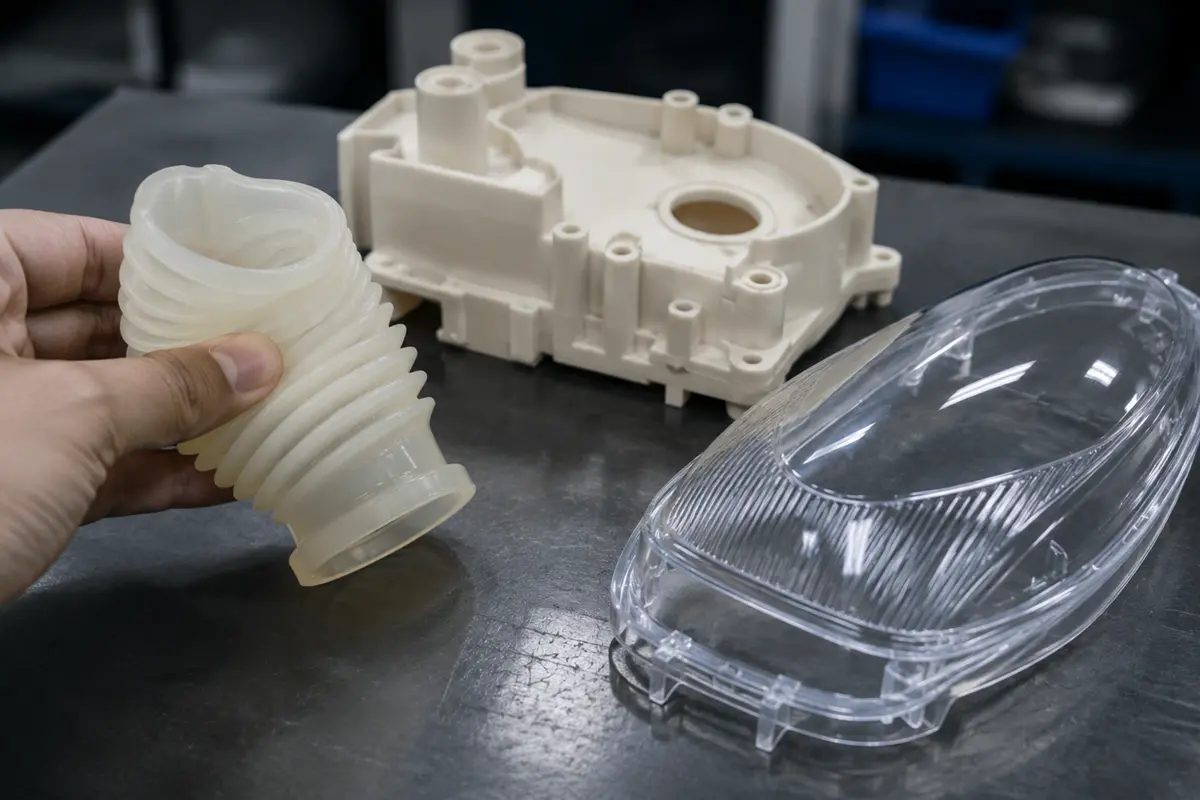
Urethane casting uses polyurethane resins that imitate common production plastics in appearance and handling. Buyers should match cast polyurethane parts to the test because cast urethane is not the same material as molded ABS, PC, PP, TPU, or silicone.
| Material Type | Fits | Watch Point |
|---|---|---|
| Rigid urethane | housings, covers, bezels, brackets, display parts | ABS-like or PC-like labels do not prove final resin performance. |
| Flexible urethane | grips, bumpers, pads, feet, soft-touch samples | Shore value does not define rebound, abrasion, or heat aging alone. |
| Clear urethane | lenses, light pipes, windows, fluid-viewing parts | Clarity, yellowing, coating, and wall thickness need review. |
| Colored or textured urethane | sales samples, finish studies, ergonomic models | Master quality controls the copied surface. |
Rigid Polyurethane Resins
Rigid polyurethane resins fit housings, covers, bezels, brackets, display parts, and handling samples. Suppliers often group rigid systems as ABS-like, PC-like, or PP-like so buyers can compare stiffness, impact feel, and surface quality.
The “like” label needs caution. A rigid urethane may feel close enough for a design review, but the resin may not match the final plastic’s heat deflection, fatigue behavior, UV stability, flame rating, or chemical resistance.
Flexible and Rubber-Like Urethanes
Flexible urethanes fit grips, bumpers, seals, pads, feet, overmold-style samples, and soft-touch prototypes. Buyers usually compare flexible options by Shore hardness, tear behavior, compression feel, and surface tack.
Shore A and Shore D values help compare softness and stiffness, while ASTM D2240 is the common durometer hardness reference. A Shore value alone does not define abrasion resistance, rebound, heat aging, or chemical exposure.
Clear, Colored, and Textured Parts
Urethane casting can support clear, tinted, opaque, painted, matte, gloss, and textured parts. A polished master can improve transparency, while a textured master can transfer a grain or touch pattern into the silicone mold.
Clear urethane parts help review light pipes, lenses, windows, and fluid-viewing features, but optical performance needs caution. Urethane clarity, yellowing, coating, and wall thickness can differ from the final production resin.
Material Match and Performance Limits
Material matching starts with the test condition. A buyer should state whether the part must check appearance, hand feel, snap fit, heat exposure, impact, sealing, chemical contact, or assembly behavior.
If the process route is still open, plastic prototype manufacturing helps buyers compare urethane casting with CNC machining, 3D printing, and other plastic prototype methods. The RFQ should name the target material, acceptable substitutions, test conditions, and any data sheet requirements.
What Are the Benefits and Limits of Urethane Casting?
Use urethane casting for small batches when molded appearance matters and hard tooling is too early. The value depends on quantity, finish, tolerance, material match, and inspection scope.
| Factor | Benefit | Limit to Check |
|---|---|---|
| Tooling cost | Silicone molds lower upfront tooling cost for short runs. | Total batch cost can rise when quantity, finish, and inspection grow. |
| Surface detail | Cast parts copy the prepared master surface. | A flawed master or poor venting plan repeats defects. |
| Lead time | Silicone tooling often moves faster than injection mold tooling. | Clear parts, paint matching, inserts, and inspection can extend schedule. |
| Mold life | Silicone molds work well for limited batches. | Heat, undercuts, texture, and release force can shorten mold life. |
| Tolerance | Urethane casting can support fit checks and assembly trials. | Silicone flex and resin shrink make tight fits harder than CNC machining. |
| Material match | Polyurethane can imitate common plastics. | Polyurethane does not equal the final production resin. |
Lower Tooling Cost for Small Batches
Silicone tooling usually costs less to start than aluminum or steel injection tooling because the tool is soft and faster to make. This lower setup cost helps when the buyer needs a small batch of urethane cast parts for testing, sales samples, or bridge builds.
Once quantity rises, the cost logic changes. Urethane casting still needs pattern work, mold work, casting labor, trimming, and finishing. Rollyu’s rapid prototyping cost guide covers how process choice, material, tolerance, finish, inspection, and quantity shape a quote.
Better Surface Detail Than Many Printed Parts
Urethane casting can produce smoother surfaces than raw 3D printed parts because each cast part copies the prepared master. A polished or textured master can give each casting a more finished look.
Master approval is the quality gate. A poor master, weak venting plan, or trapped air can copy defects into every cast part.
Shorter Lead Time Than Production Tooling
Urethane casting usually moves faster than injection mold tooling because silicone tooling needs less machining, fitting, and tool validation. This speed helps teams test a near-final design while demand, budget, or production tooling plans are still under review.
The quoted schedule should state whether the schedule includes these items:
- master pattern production
- master approval
- silicone mold making
- casting and curing
- trimming and finishing
- inspection
- packing and shipping
Mold Life, Tolerance, and Material Limits
A silicone mold is a short-run tool. Heat, resin chemistry, undercuts, part size, surface texture, and release force can wear or tear the mold, so buyers should ask the supplier to quote the expected acceptable part count from each mold.
Critical bores, bearing fits, threaded features, sealing faces, and datum surfaces need focused review. These features may need CNC machining, secondary machining, or a different process when the test requires tight control.
When Should Buyers Choose Urethane Casting?
Choose urethane casting when the project needs multiple plastic-like parts for a defined test and hard tooling is too early. The fit is strongest when design intent is stable, cosmetic quality matters, and the required quantity sits between one-off prototyping and production tooling.
Low-Volume Production Needs
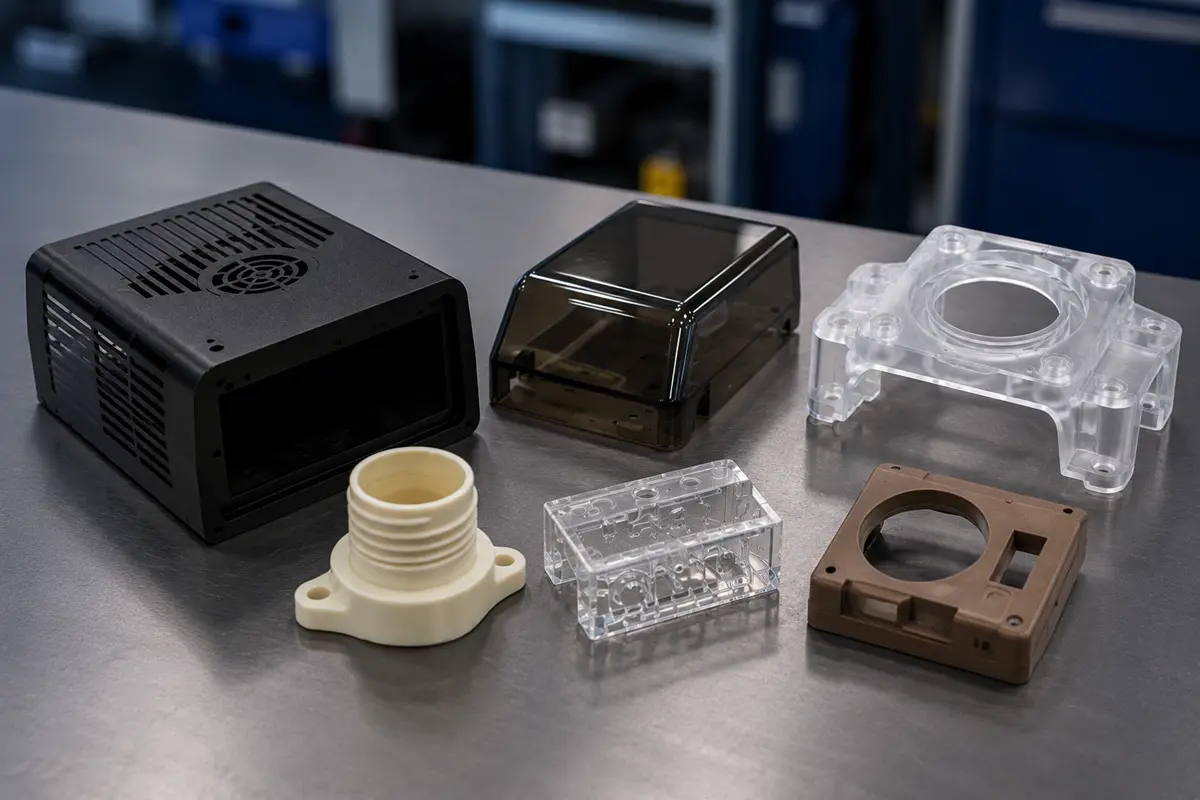
Urethane casting fits low-volume needs such as pilot samples, customer handling units, enclosure sets, demo parts, color variants, and pre-tooling bridge builds. This process can also support sensor covers, pendant housings, gripper pads, and protective shells when plastic-like behavior is enough for the test.
Use caution when parts face:
- high heat
- long UV exposure
- harsh chemicals
- tight sealing
- repeated load cycles
- regulated end-use approval
These conditions may point to injection molding, CNC machining, or a certified production process.
Urethane Casting vs 3D Printing
| Choose Urethane Casting When | Choose 3D Printing When |
|---|---|
| The design is close to stable. | The design is changing quickly. |
| The team needs multiple similar parts. | One or two early models are enough. |
| Color, finish, texture, or hand feel matter. | Internal geometry is complex. |
| Molded-part appearance matters. | Speed of early iteration matters more than surface repeatability. |
If the process choice is still open, rapid prototyping services can help compare shape checks, functional prototypes, and short-run casting before urethane casting becomes worth the mold work.
Urethane Casting vs CNC Machining
| Choose Urethane Casting When | Choose CNC Machining When |
|---|---|
| The part needs a plastic-like look or feel. | The test needs real metal or engineering plastic stock. |
| The batch needs color or flexible material options. | The part needs tight bores, threads, or datum features. |
| Cosmetic consistency matters across a small batch of samples. | Flat sealing faces or bearing fits drive function. |
| The project needs bridge parts before tooling. | Material behavior drives the test result. |
A CNC master can improve urethane casting when the cast part needs a clean reference surface. For functional parts where material behavior and machined features drive the test, CNC prototype machining is often the better route.
Urethane Casting vs Injection Molding
| Choose Urethane Casting When | Choose Injection Molding When |
|---|---|
| The design still needs market feedback. | The team has frozen the design. |
| The buyer needs small-batch validation. | Demand supports production tooling. |
| Finish or color options still need review. | Resin requirements are firm. |
| Upfront tooling cost must stay lower. | Repeatable production matters more than early flexibility. |
Injection molding has higher tooling cost, but the process supports repeatable production parts once demand, resin, geometry, and quality requirements are stable.
RFQ Details Suppliers Need
A useful RFQ for urethane casting services should include:
| RFQ Input | Why It Matters |
|---|---|
| 3D CAD file and 2D drawing | Defines geometry, tolerance, threads, and drawing-controlled features. |
| target resin and acceptable alternatives | Keeps material matching tied to the test. |
| quantity and revision stage | Helps the supplier plan mold count and production route. |
| finish, color, texture, and cosmetic notes | Controls master preparation and post-processing. |
| inserts, threads, and hardware | Flags molding, pull-out, torque, and assembly risks. |
| inspection scope | Aligns checks with visual, dimensional, and functional needs. |
| test purpose | Helps the supplier judge whether urethane casting is the right route. |
The drawing should mark critical features instead of applying tight tolerance across the whole part. For quote planning, drawings should call out tolerances, surface finish requirements, material callouts, thread specifications, and GD&T where those details affect function.
A supplier such as Rollyu Precision can review whether urethane casting, CNC machining, 3D printing, or sheet metal prototyping fits the test. The review should cover DFM, process route, material availability, finishing, inspection, and documents before the buyer compares price.
When one project may use multiple prototype routes, the RFQ should ask the supplier to compare CNC, 3D printing, vacuum casting, and sheet metal options under one scope. Clear inputs reduce quote gaps and help the supplier flag mold, material, tolerance, or finish risks early.
FAQ
Is Urethane Casting the Same as Vacuum Casting?
Often, yes. Vacuum casting usually means urethane casting with vacuum equipment used to reduce trapped air and help resin fill the silicone mold. Supplier terminology varies, so the RFQ should still name the resin, finish, quantity, tolerance, and inspection needs.
How Many Parts Can One Silicone Mold Usually Produce?
Mold life depends on part design and resin behavior. A common supplier planning range is 10 to 25 parts per silicone mold, but large parts, deep undercuts, clear resin, aggressive texture, tight release, or insert work can reduce that count. Ask the supplier to quote expected mold life before approving the batch.
Can Urethane-Cast Parts Be Used for Functional Testing?
Yes, when the test matches polyurethane resin behavior. Urethane-cast parts can check fit, handling, appearance, snap feel, grip, and limited assembly use. Tests involving high heat, harsh chemicals, long fatigue cycles, pressure sealing, or regulatory approval may need CNC machining, injection molding, or production-intent materials.
Can Urethane Casting Support Threaded Inserts or Assembly Hardware?
Yes, urethane casting can support inserts and some assembly hardware. The supplier needs insert type, position, pull-out risk, torque expectation, and installation method before mold design. Tight metal threads, high load joints, and repeated disassembly may need machined inserts or secondary operations.
Does Urethane Casting Require a Separate Tooling Charge?
Usually, yes. Urethane casting needs a master pattern and silicone mold before the supplier casts parts. Some quotes show pattern and mold work as separate line items, while other quotes roll setup into the batch price. Buyers should check whether the quote includes extra molds, revisions, inserts, finishing, and inspection.