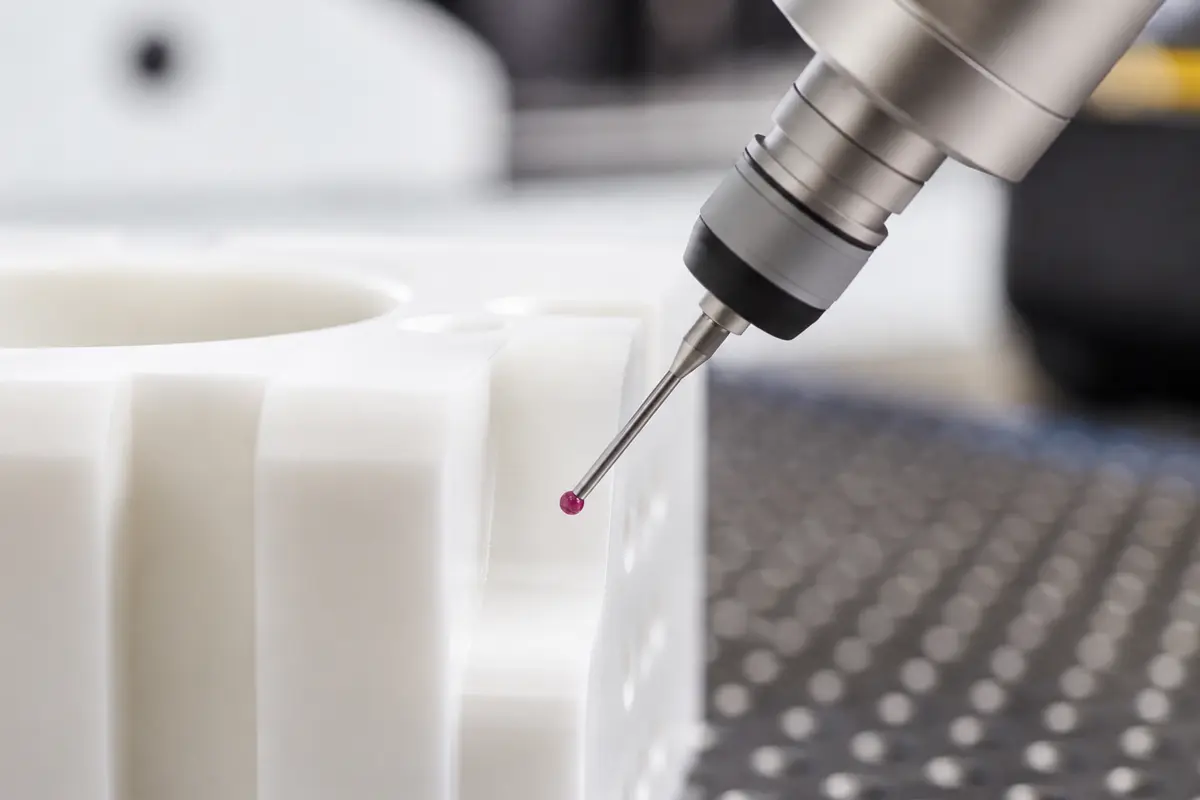
Plastic machining enables the production of complex, high-precision components from a wide range of engineering plastics. At Rollyu Precision, materials such as PEEK, Delrin, Nylon, and PTFE are commonly machined for applications requiring tight tolerances and reliable dimensional stability. Material selection, machining strategy, and process control all play a key role in achieving consistent results.
What Is Plastic Machining
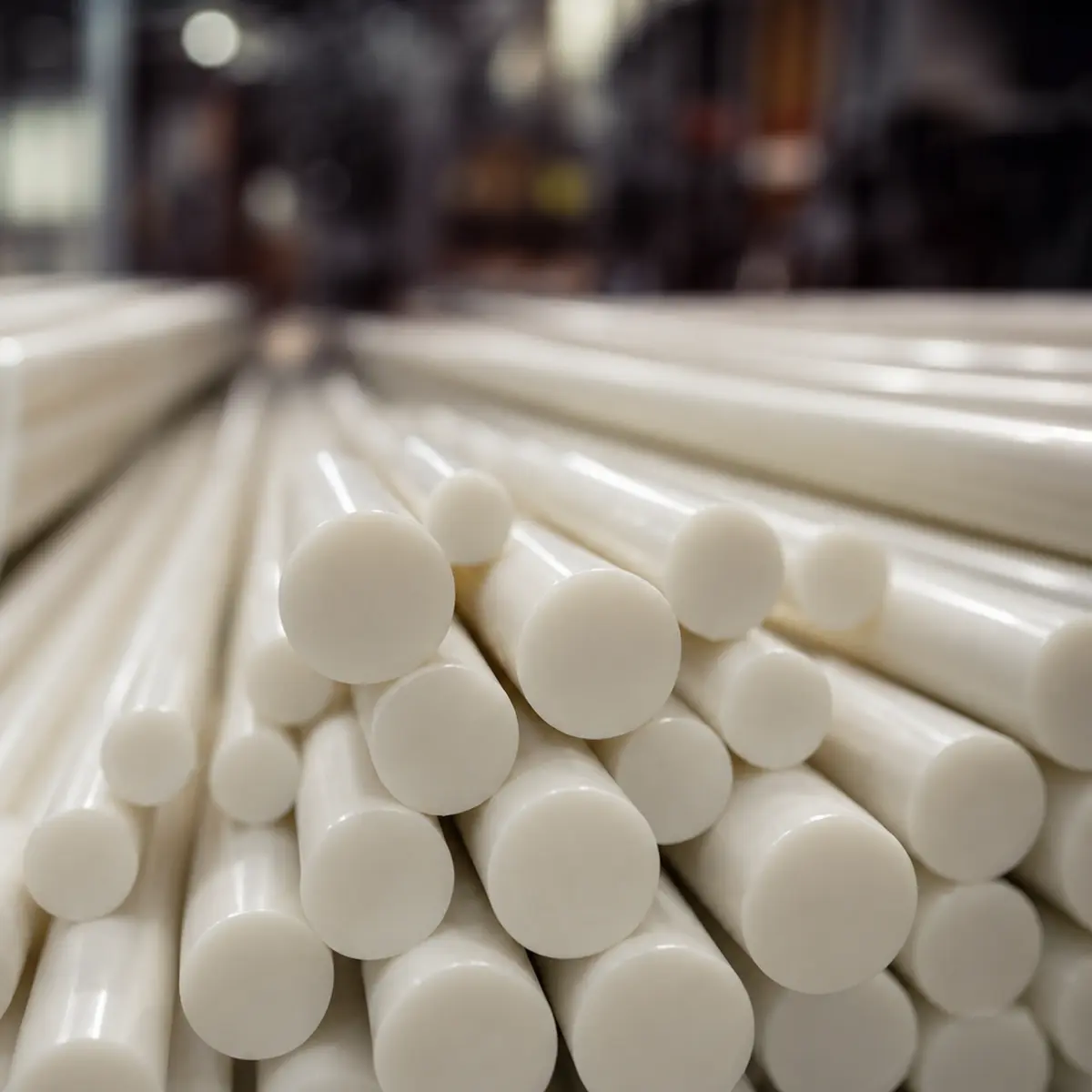
Plastic machining is the process of manufacturing custom plastic components from solid material stock using CNC-controlled equipment. The process is widely used for prototypes, low-volume production, and precision parts that require consistent dimensional control.
How Plastic Machining Works
Several machining operations are commonly used to produce machined plastic parts.
CNC milling creates pockets, slots, contours, and complex three-dimensional features. CNC turning is typically used for cylindrical components such as bushings, spacers, rollers, and threaded parts. Drilling produces accurate holes for assembly and functional features, while threading creates internal and external threads for mechanical connections.
By combining these operations, manufacturers can produce plastic components with complex geometries and precise dimensional requirements.
Advantages of Machined Plastic Parts
Compared with many metal components, engineered plastics can reduce weight while offering excellent resistance to corrosion and chemical exposure. Many materials also provide inherent electrical insulation, making them suitable for applications where conductivity must be controlled.
Another advantage is material versatility. Different plastics can be selected to meet specific requirements for strength, wear resistance, dimensional stability, or environmental performance, allowing engineers to optimize components for a wide range of applications.
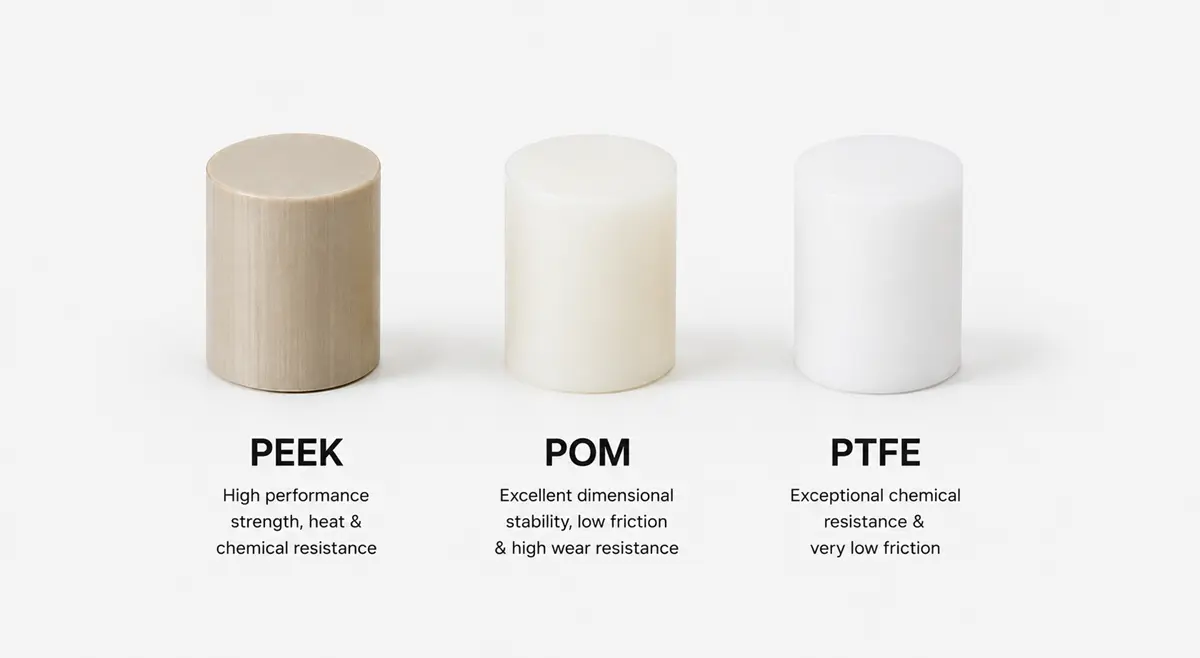
PEEK
PEEK is a high-performance engineering plastic widely used in medical devices, semiconductor equipment, aerospace systems, and other demanding applications. Its combination of high temperature resistance, chemical resistance, and dimensional stability makes it suitable for environments where conventional plastics may not provide sufficient long-term performance.
For a more detailed discussion of machining strategies and applications, see our CNC machining guide for PEEK.
Delrin (POM)
Delrin, also known as acetal or POM, is one of the most frequently machined engineering plastics. The material offers excellent dimensional stability, low friction, and good machinability, making it a popular choice for bushings, rollers, gears, spacers, and automation components.
Learn more in our Acetal (POM) machining guide.
PTFE
PTFE, often referred to by the trade name Teflon, provides exceptional chemical resistance and a very low coefficient of friction. It is commonly used in sealing components, insulation parts, and applications involving aggressive chemicals or demanding operating environments.
Plastic CNC Milling vs Plastic CNC Turning
CNC milling and CNC turning are the two most common processes used in plastic machining. While both can produce precise plastic components, each process is better suited to specific part geometries and manufacturing requirements.
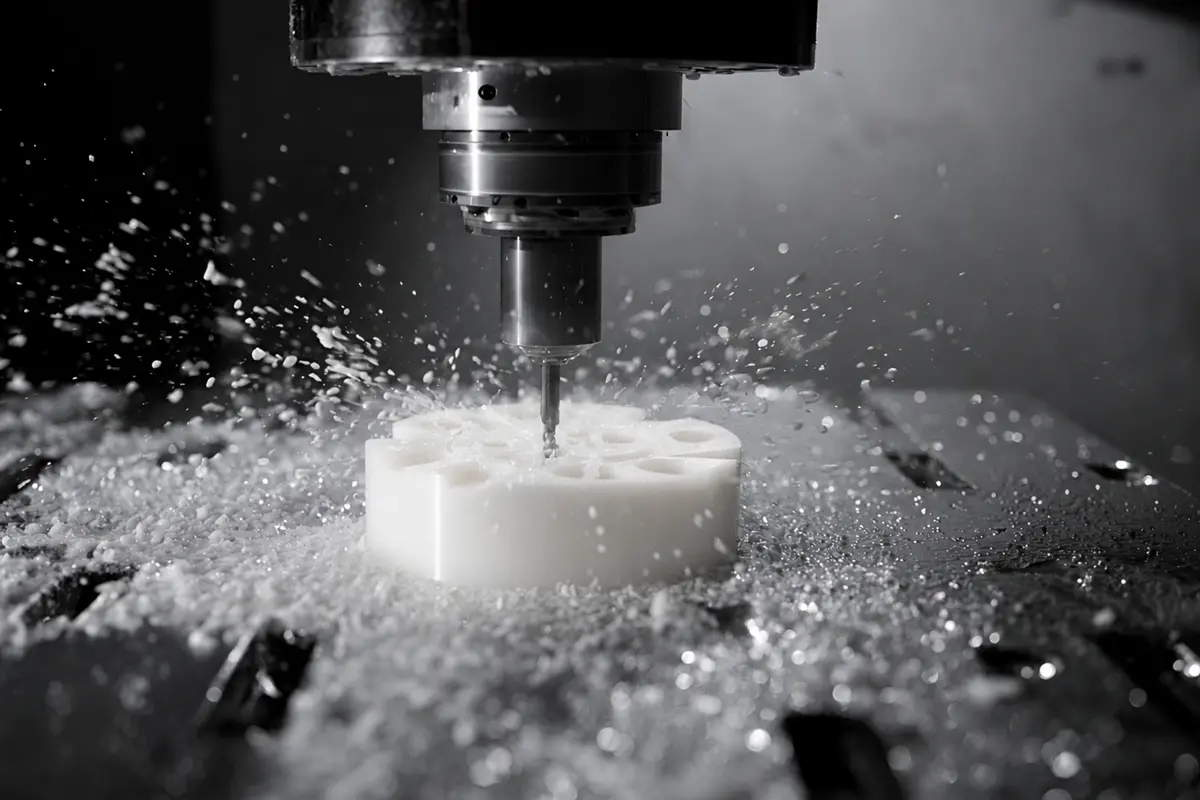
CNC Milling for Plastic Parts
Plastic CNC milling is commonly used for parts that contain pockets, slots, flat surfaces, or complex three-dimensional features. The process is often selected for housings, brackets, fixtures, insulation components, and custom parts that require machining on multiple faces.
CNC Turning for Plastic Components
Plastic CNC turning is typically used for cylindrical components such as bushings, spacers, sleeves, rollers, and threaded parts. Because the material rotates during machining, turning is often a highly efficient process for producing round parts with consistent dimensions and smooth surface finishes.
Choosing the Right Process
The most suitable process depends primarily on part geometry and functional requirements.
| Feature | CNC Milling | CNC Turning |
| Best For | Complex multi-face parts | Round and cylindrical parts |
| Common Features | Pockets, slots, surfaces, contours | Diameters, bores, threads |
| Typical Parts | Housings, fixtures, brackets | Bushings, spacers, rollers |
| Machining Flexibility | High | Moderate |
| Production Efficiency | Better for complex parts | Better for rotational parts |
As a general rule, milling is preferred for complex geometries, while turning is more efficient for cylindrical components.
Why Holding Tight Tolerances in Plastic Is Difficult
Achieving tight tolerances in plastic machining is often more challenging than in metal machining. Material behavior, environmental conditions, and machining forces can all influence dimensional accuracy during production.
Typical plastic machining tolerances range from ±0.05 mm to ±0.10 mm.
For critical features, tighter tolerances may be achievable depending on material selection and geometry.
Heat Expansion
Most engineering plastics expand more than metals when exposed to heat. During machining, cutting forces generate localized heat that can temporarily affect part dimensions. As the material cools, dimensions may change slightly, making tight-tolerance plastic machining more difficult.
Internal Stress
Many plastic materials contain residual stress from the extrusion or manufacturing process. As material is removed during machining, these internal stresses can be released unevenly, causing slight movement or distortion. The effect is often more noticeable in thin-wall parts, large pockets, and complex geometries.
Moisture Absorption
Some plastics absorb moisture from the surrounding environment. Changes in humidity can lead to small dimensional variations over time, particularly for components requiring precise fits or alignment. Material selection becomes an important factor when long-term dimensional stability is required.
Material Deflection During Machining
Compared with metals, plastics generally have lower stiffness and may deflect more easily under cutting forces. Excessive clamping pressure, aggressive cutting parameters, or insufficient support can affect dimensional accuracy during machining.
For precision plastic components, controlling these variables is often essential for maintaining consistent tolerances across production batches.
How to Control Plastic Machining Deformation
Controlling deformation is often a key part of precision plastic machining. Several manufacturing strategies can help improve dimensional stability and reduce unwanted movement during production.
Annealing Before Machining
Some engineering plastics are annealed before machining to reduce residual stress within the material. This process can improve dimensional stability and lower the risk of movement after material removal.
Balanced Material Removal
Removing large amounts of material from one side of a component may cause uneven stress release. Balanced machining strategies help distribute cutting forces more evenly and improve part stability throughout the machining process.
Proper Fixturing
Workholding plays an important role in plastic machining. Excessive clamping force can distort softer materials, while insufficient support may allow movement during cutting. Proper fixturing helps maintain dimensional accuracy without introducing additional stress.
Material-Specific Strategies
Different plastics respond differently to machining conditions. Materials such as Delrin (POM) may require specific approaches to minimize dimensional movement and maintain precision. For a more detailed discussion, see our guide on controlling POM machining deformation.
Surface Finish Options for Machined Plastics
Surface finish can affect both the appearance and functionality of machined plastic parts. The appropriate finish depends on the material, application requirements, and end-use environment.
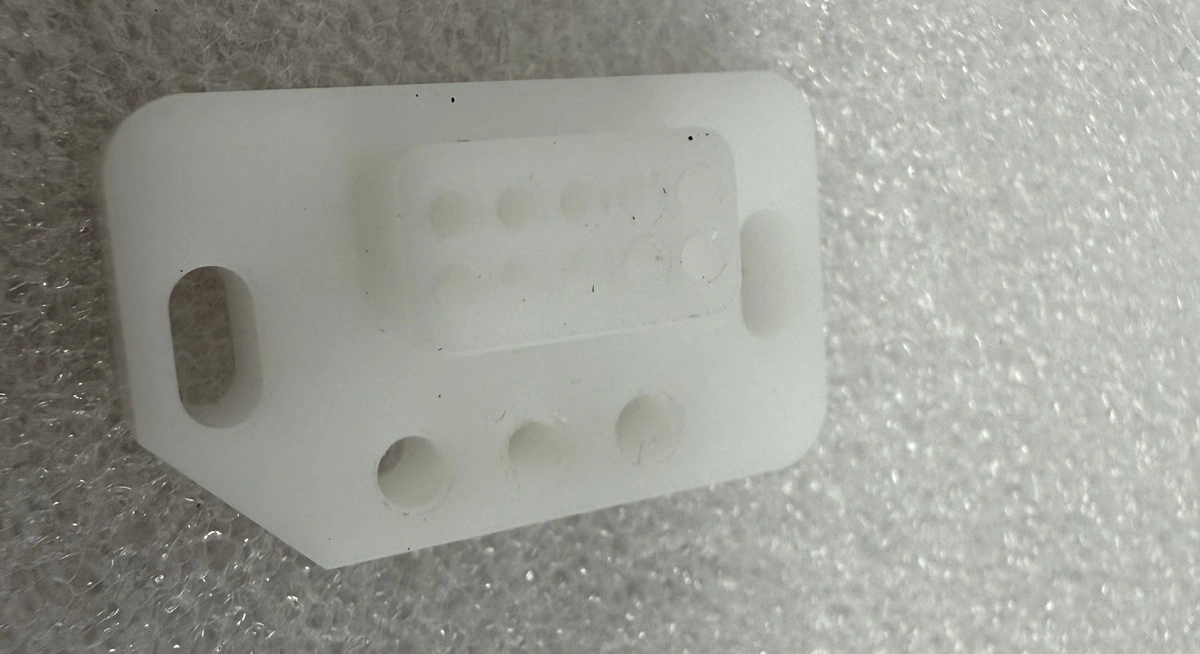
Deburring
Small burrs may form around holes, edges, slots, and threaded features during machining. Deburring removes these imperfections to improve assembly, handling safety, and overall part quality.
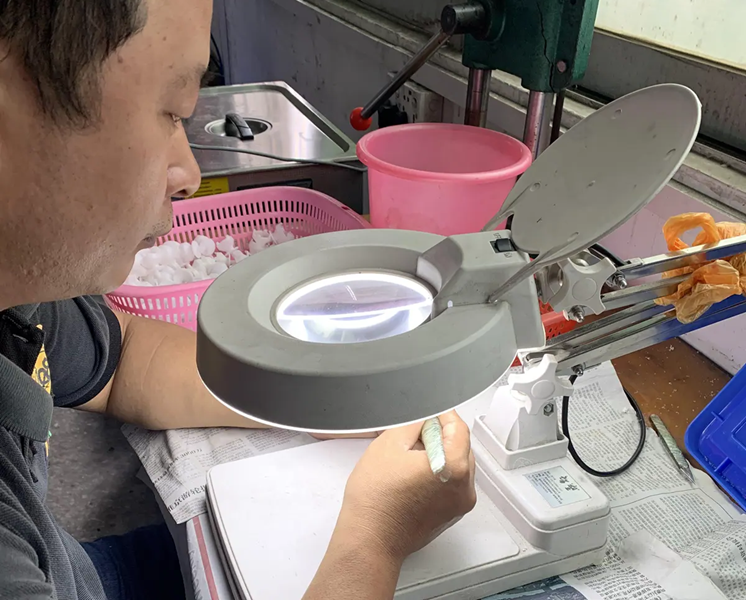
Polishing
Polishing is often used when smoother surfaces or improved appearance are required. Depending on the material, polishing can also help reduce friction and improve cleanability.
Cosmetic Surface Requirements
Some plastic components are visible in the final product and require a consistent appearance. Surface quality requirements may include minimizing machining marks, controlling scratches, and maintaining uniform color across the part.
Optical Clear Plastic Finishes
Transparent materials such as acrylic and polycarbonate may require additional finishing to improve clarity. Careful machining and polishing processes help reduce surface imperfections that can affect light transmission and visual quality.
Plastic vs Metal Machining
Both plastic and metal machining are widely used in precision manufacturing. The best choice depends on application requirements such as weight, strength, corrosion resistance, operating environment, and cost.
| Feature | Plastic | Metal |
| Weight | Lower | Higher |
| Strength | Lower | Higher |
| Corrosion Resistance | Better | Lower |
| Cost | Depends on material and complexity | Depends on material and complexity |
| Electrical Conductivity | Lower | Higher |
| Chemical Resistance | Often Better | Varies by alloy |
| Machining Speed | Often Faster | Often Slower |
Plastic components are often selected when lightweight construction, corrosion resistance, electrical insulation, or chemical compatibility are priorities. Metal components remain the preferred choice for applications requiring maximum strength, rigidity, or high-temperature performance.
Plastic Machining for Medical Devices
Medical plastic machining is widely used for components that require precision, reliability, and long-term dimensional stability. Material selection often depends on operating conditions, cleaning requirements, and application-specific performance needs.
Why Medical Equipment Uses PEEK
PEEK is one of the most commonly used engineering plastics in medical applications. Its combination of dimensional stability, chemical resistance, and durability makes it suitable for components used in diagnostic equipment, laboratory instruments, positioning systems, and other precision medical devices.
For a more detailed discussion, see our PEEK CNC Machining Guide.
Delrin Components in Dental Equipment
Delrin is frequently used in dental and medical equipment where smooth movement, dimensional consistency, and low friction are important. The material is commonly found in positioning mechanisms, support components, and precision mechanical assemblies.
For a practical example, see our Black Delrin Dental Component Case Study.
Plastic Machining for Aerospace Applications
Aerospace plastic machining is commonly used for components that require weight reduction, dimensional stability, and reliable performance in demanding operating environments. Engineering plastics are often selected when traditional metal components add unnecessary weight or complexity.
Weight Reduction Benefits
Reducing component weight remains an important design objective in aerospace systems. Compared with many metals, engineering plastics can help lower overall assembly weight while maintaining the performance required for specific applications.
High-Temperature Materials
Some aerospace components operate in environments where standard plastics may not provide sufficient thermal stability. High-performance materials such as PEEK are often selected for applications requiring elevated temperature resistance and long-term dimensional stability.
Electrical Isolation Components
Many aerospace systems contain sensors, control systems, and electronic assemblies that require electrical isolation. Engineering plastics are frequently used for spacers, insulators, housings, and support components where conductivity must be minimized.
PEEK vs Delrin: Which Material Should You Choose
PEEK and Delrin are two of the most commonly machined engineering plastics, but they are designed for different performance requirements. Material selection should be based on operating conditions, mechanical demands, and project budget.
When to Choose PEEK
PEEK is often the preferred choice when applications involve elevated temperatures, chemical exposure, demanding operating environments, or long-term dimensional stability. The material is commonly used in medical equipment, semiconductor systems, aerospace components, and other high-performance applications.
When to Choose Delrin
Delrin is typically selected for general mechanical components that require good dimensional stability, low friction, and cost-effective manufacturing. It is widely used for bushings, rollers, gears, spacers, and automation equipment components.
Quick Comparison Table
| Requirement | Recommended Material |
| High Temperature | PEEK |
| Chemical Exposure | PEEK |
| Long-Term Dimensional Stability | PEEK |
| Lightweight Mechanical Components | Delrin |
| Low Friction Applications | Delrin |
| Cost-Sensitive Projects | Delrin |
| Medical and Semiconductor Equipment | PEEK |
| General Automation Components | Delrin |
For a more detailed comparison, see our complete guide to PEEK vs Delrin.
Conclusion
Rollyu provides custom plastic machining services for prototypes, low-volume production, and precision components. Our CNC milling and turning capabilities support a wide range of engineering plastics, including PEEK, Delrin, Nylon, and PTFE for applications requiring reliable dimensional control.
F AQ
What plastics are easiest to machine
Delrin (POM), Acrylic, and Nylon are generally considered among the easiest plastics to machine. These materials offer good dimensional stability and produce consistent machining results.
What is the best plastic for CNC machining
There is no single best plastic for CNC machining. Delrin is often preferred for dimensional stability and machinability, while PEEK is selected for high-temperature and demanding environments.
Is PEEK difficult to machine
Yes. PEEK is more challenging to machine than many standard engineering plastics due to its material cost, heat sensitivity, and tight-tolerance requirements. Proper tooling and machining strategies are important for achieving consistent results.
How accurate is CNC plastic machining
The achievable tolerance depends on material type, part geometry, and machining requirements. Precision plastic components can often be manufactured to tight tolerances when proper process controls are used.
Can plastic parts replace metal parts
In many applications, yes. Engineering plastics can provide advantages such as reduced weight, corrosion resistance, electrical insulation, and lower material costs while maintaining the required performance.