Rapid prototyping is the process of making physical test parts from CAD files before full production begins. Engineers use rapid prototypes to check fit, function, material behavior, and assembly risk before committing to tooling, fixtures, or larger production runs.
Rapid prototyping can use CNC machining, 3D printing, vacuum casting, or sheet metal fabrication, depending on what the prototype must prove. This guide explains how the process works, how to compare the main methods, and what to check before choosing a supplier.
How Does Rapid Prototyping Work?
Rapid prototyping works by turning a design file into one or more test parts, then using those parts to verify the design before production. A useful prototype workflow checks manufacturability, process fit, dimensions, and revision needs before the design moves forward.
Design Review and Process Planning
Design review starts with the CAD file, drawing, material target, quantity, tolerance needs, and test goal. The supplier checks whether to machine, print, cast, or form the part from sheet metal.
This early review helps catch thin walls, deep pockets, tight internal corners, thread risks, and finishing issues before prototype manufacturing starts. A prototype can pass a visual check and still fail assembly if the team has not reviewed clearance, load, inserts, or mating surfaces.
Prototype Manufacturing and Inspection
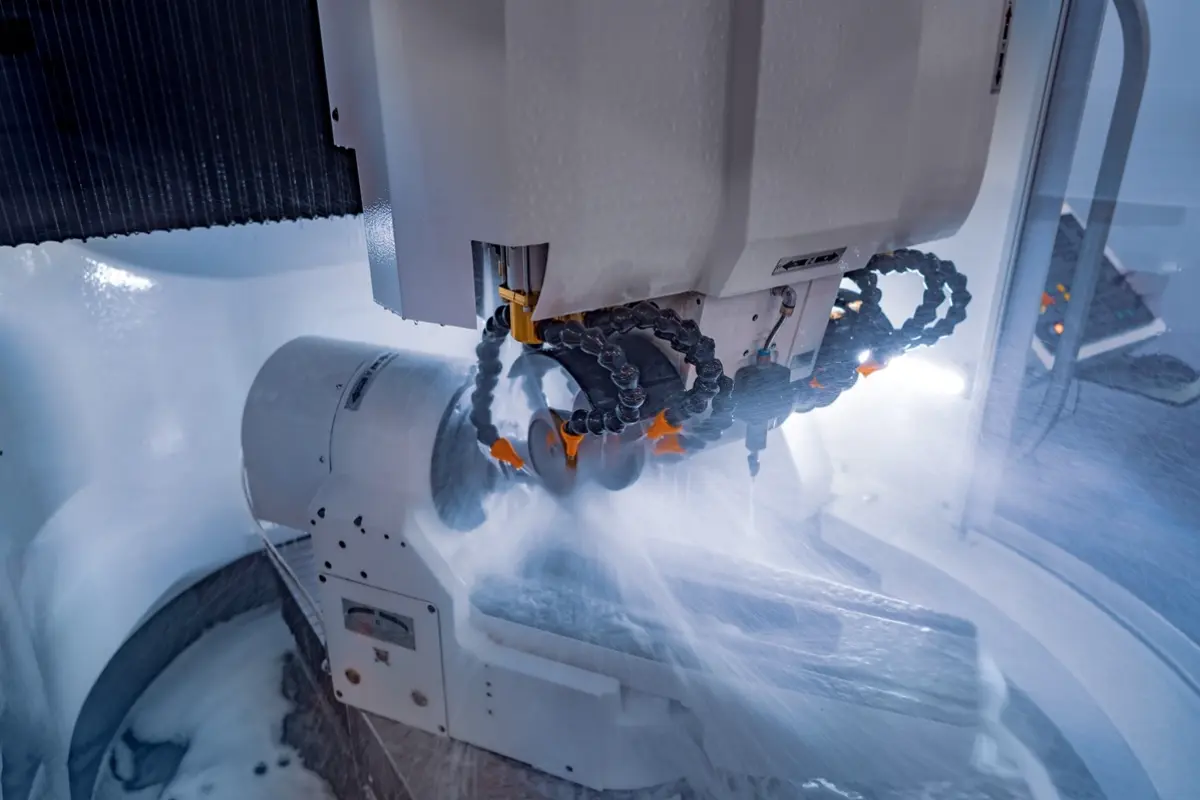
Prototype manufacturing should match the test purpose. CNC prototyping cuts metal or plastic from solid stock when strength, tolerance, and material behavior matter. 3D printing builds parts layer by layer when speed, shape complexity, or early form testing matters. Vacuum casting supports small batches of plastic-like parts, while sheet metal prototyping works for brackets, panels, frames, and enclosures.
Inspection confirms whether the prototype is useful for the next decision. Basic prototypes may need only a visual check and hand measurements. Functional prototypes may need dimensional inspection, thread checks, surface finish review, or a report for features that affect fit and assembly.
Testing, Feedback, and Revision
Testing gives the prototype its value. Engineers use prototype parts to check fit with mating parts, confirm clearances, test sealing surfaces, compare materials, evaluate finish, or run an early load test.
Revision should happen while the cost of change is still low. If a prototype shows a clearance problem or a weak feature, engineers can correct the CAD file before they order tooling, fixtures, or repeat parts. For parts where load, fit, or machined material behavior matters, CNC machining prototyping can give better test evidence than a visual model.
What Are the Main Types of Rapid Prototyping?
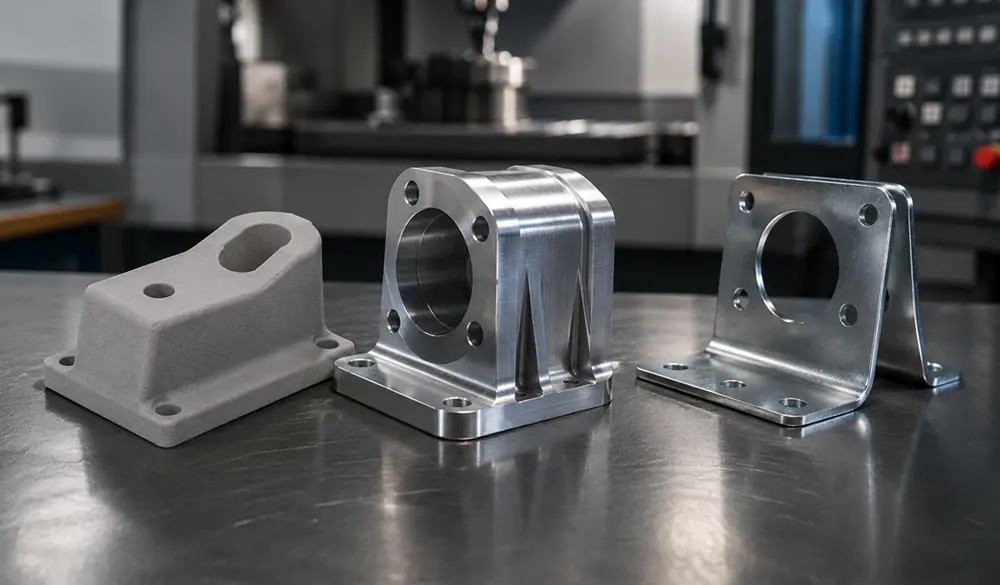
The main rapid prototyping methods differ in speed, material behavior, tolerance, surface finish, and cost. Teams still comparing different rapid prototyping methods should decide which test result matters most before choosing the first build.
| Method | Best fit | Main limit |
|---|---|---|
| CNC prototyping | Functional metal and plastic parts | Higher cost for complex geometry |
| 3D printing | Fast form checks and complex shapes | Material and finish may differ from production |
| Vacuum casting | Small batches of plastic-like parts | Short mold life and limited material choices |
| Sheet metal prototyping | Brackets, panels, enclosures, and frames | Bend radius and flat pattern rules control the design |
CNC Prototyping
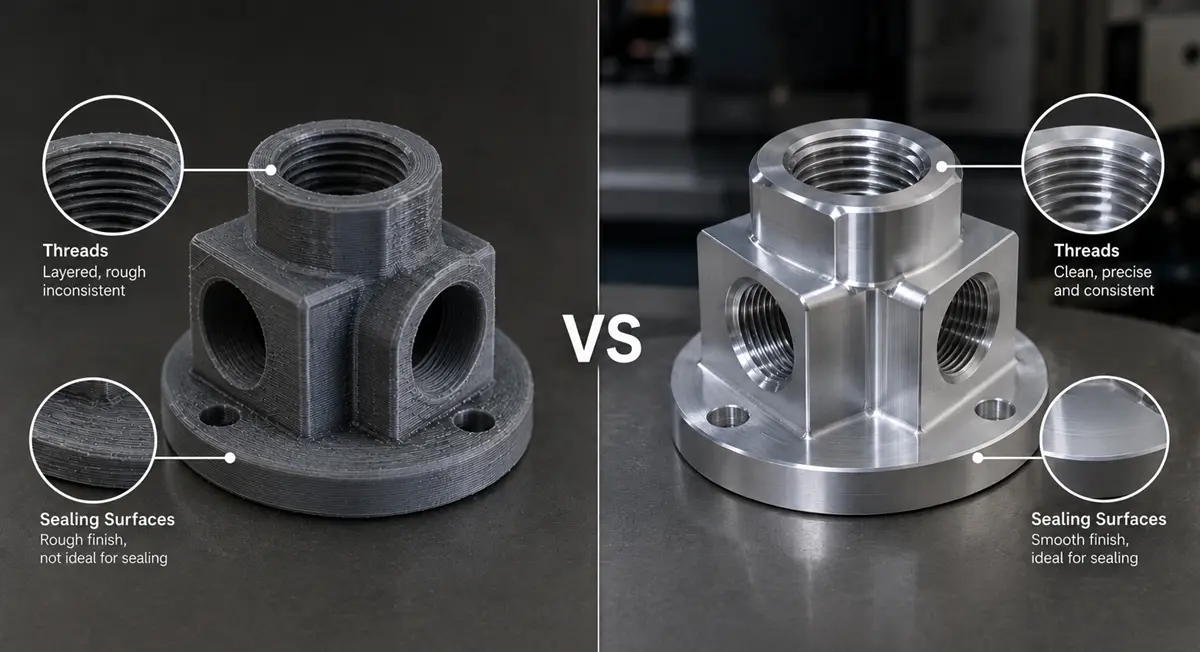
CNC prototyping is a strong choice when the prototype must behave close to a production part. CNC machining uses production-grade materials such as aluminum, stainless steel, titanium, brass, copper, PEEK, PTFE, POM, PMMA, PA, and PC. This makes CNC prototypes useful for fit checks, threaded features, sealing surfaces, fixture parts, and test components that need tighter dimensions.
CNC prototyping can cost more than printing when the part has deep pockets, small internal radii, hard-to-reach features, or multiple setups. The tradeoff is useful when the buyer needs material strength, machined surface quality, or tight feature control.
3D Printing
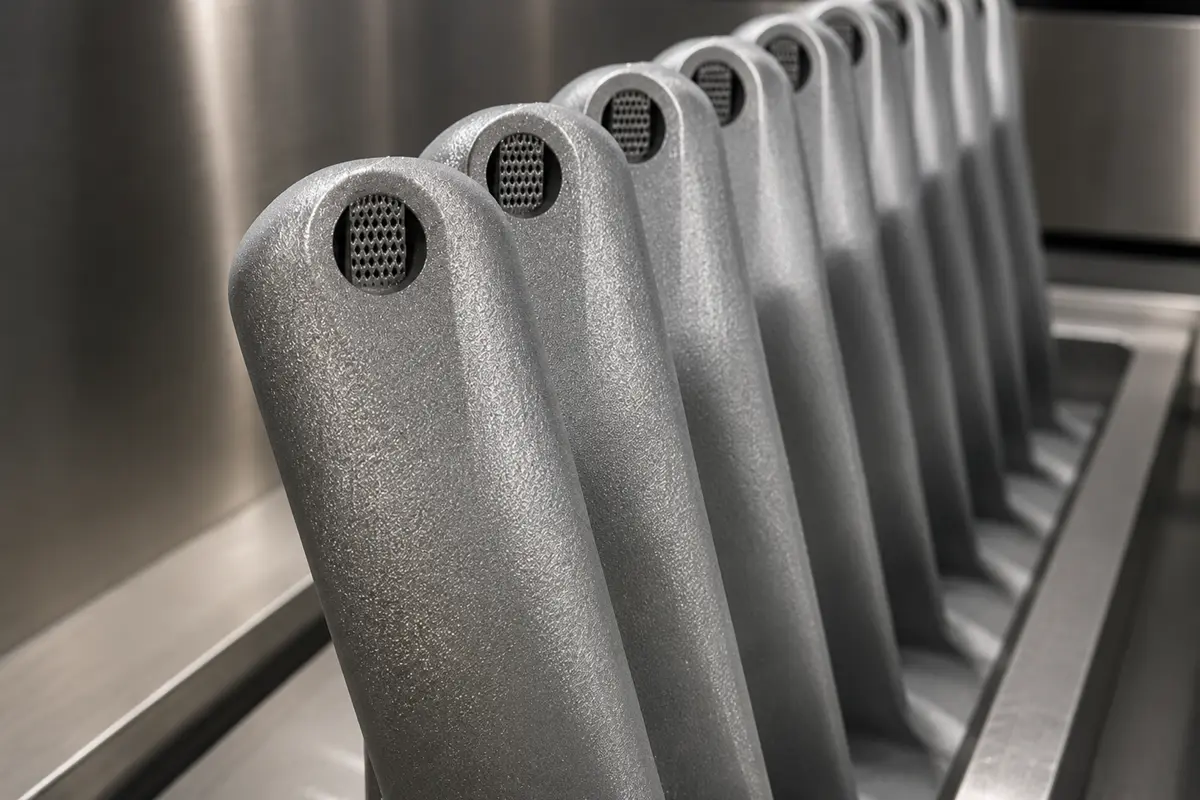
3D printing is useful when the design needs a fast shape check, complex form, or early physical model. Plastic 3D printing can show ergonomics, clearance, packaging fit, and assembly access. Metal 3D printing can support more advanced prototypes when geometry is hard to machine, although post-processing and inspection still matter.
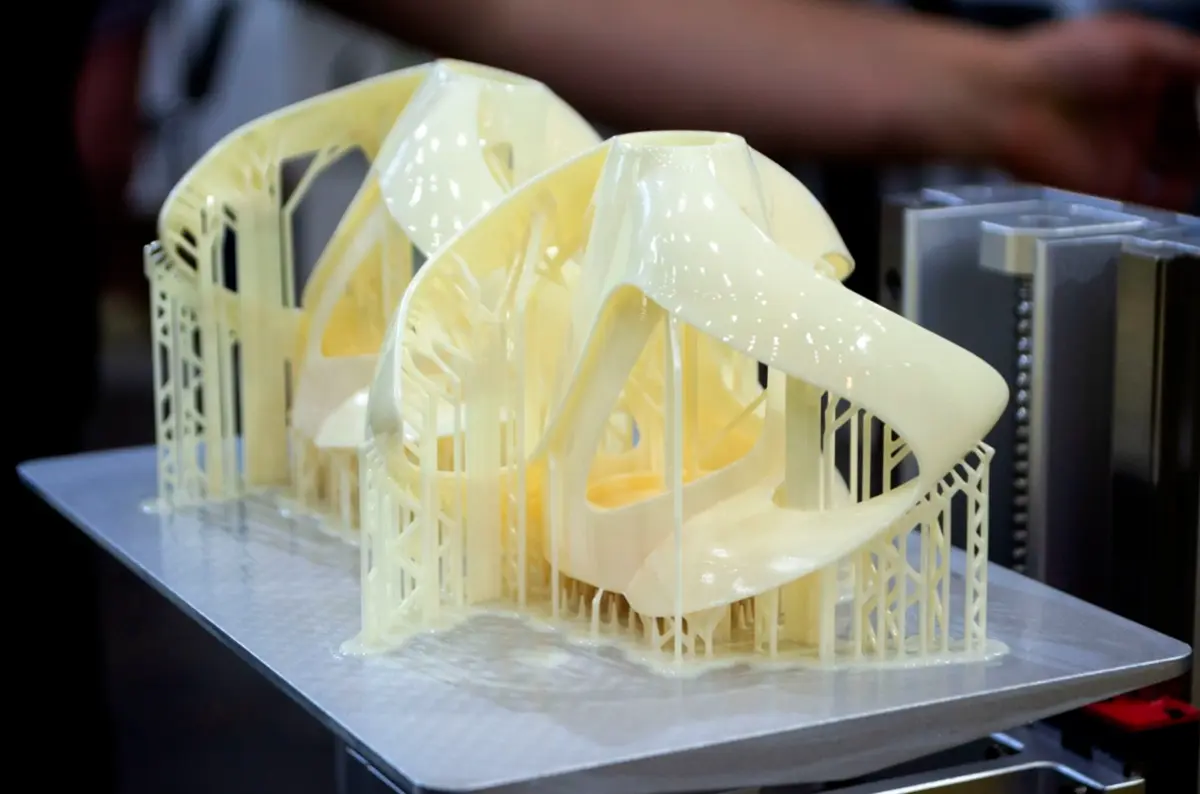
The main risk is mistaking a printed model for production behavior. A 3D printed part may not match the final material strength, surface finish, dimensional stability, or thread quality. If the project sits between a printed model and a machined sample, compare 3D printing vs CNC machining before choosing the process.
Vacuum Casting and Sheet Metal Prototyping
Vacuum casting works well when a team needs a small batch of plastic-like parts for user testing, fit checks, or low-volume validation. The process uses a reference pattern and silicone mold to make urethane parts with production-like appearance.
Sheet metal prototyping works for bent brackets, panels, frames, shields, and enclosures. The design must account for bend radius, flat pattern layout, hole placement near bends, welding distortion, deburring, and finish buildup.
How Do You Choose the Right Rapid Prototyping Method?
Choose the rapid prototyping method by starting with what the prototype must prove. A prototype made for visual approval has different requirements from a prototype made for load testing, thermal behavior, sealing, or regulated component review.
When a project may need CNC, 3D printing, vacuum casting, or sheet metal prototypes under one RFQ, Rollyu’s rapid prototyping services help sourcing teams compare process options around the same design goal.
Prototype Purpose and Test Requirements
The test goal should lead the process choice. Use 3D printing for early form, clearance, and geometry checks. Use CNC prototyping when the part needs production-intent material, tighter tolerance, threads, smooth sealing faces, or repeatable mechanical behavior.
Use vacuum casting when the team needs multiple plastic-like parts for handling or user feedback. Use sheet metal prototyping when the part must test bends, fasteners, welds, or enclosure fit.
Material, Tolerance, and Surface Finish
Material choice should match the part function, not just the fastest available process. Aluminum prototypes work well for lightweight brackets and housings. Stainless steel supports corrosion-resistant fixtures, covers, and medical device components. Engineering plastics such as PEEK, PTFE, POM, and PC help test insulation, chemical resistance, wear, or weight reduction.
Call out tolerance and surface finish only where the part needs them. A better drawing marks the features that affect assembly, sealing, alignment, or inspection, while leaving noncritical surfaces with more practical requirements.
Quantity and Timeline
Quantity changes the manufacturing choice. One part may be fastest through 3D printing or CNC machining. The Rollyu CNC Machining Handbook describes CNC prototyping runs as small validation builds, typically around 1 to 20 parts. Ten to fifty plastic-like parts may fit vacuum casting. A small run of brackets or enclosures may fit sheet metal prototyping, especially when the team must install the prototype into real equipment.
Treat timeline with the same caution. Fast turnaround is useful, but the fastest process may not be the safest technical choice if the prototype cannot answer the test question.
How Much Does Rapid Prototyping Cost?
Rapid prototyping cost depends on process, material, geometry, tolerance, finish, inspection, and revision cycles. A useful quote separates features needed for testing from features that can wait until production design is more stable.
Process, Material, and Geometry Cost
Process choice has a direct effect on rapid prototyping cost. The quote usually changes when the prototype needs production-like material behavior, complex geometry, or extra setup work.
- Process choice: A printed resin part may cost less for an early shape check, but the printed resin may not represent the strength, heat resistance, chemical resistance, or wear behavior of a machined or molded production part.
- Production-intent material: Material cost rises when the test involves load, threads, sealing, heat, fluids, friction, or sterilization exposure. In those cases, CNC machining or a more carefully selected print or casting process may give better test evidence than the fastest prototype option.
- Geometry complexity: Deep pockets, thin walls, small internal radii, long tool reach, support removal, and difficult workholding can increase prototype cost. Simplifying noncritical features during early validation can keep the quote focused on the test goal.
Tolerance, Finish, Inspection, and Revision Cost
Prototype cost depends on the work needed to make the sample answer the test question. A simple shape with loose tolerances may quote quickly, while a functional part with tight fits, finish requirements, and inspection records needs more planning.
| Cost factor | What raises cost | How to control it |
|---|---|---|
| Material | Production-grade metals, engineering plastics, or specialty resins | Match material to the test goal, not every future use case |
| Geometry | Deep pockets, thin walls, small radii, complex supports, or difficult bends | Simplify noncritical features during early validation |
| Tolerance | Tight callouts on broad or noncritical surfaces | Apply tight tolerances only to fit, sealing, datum, and alignment features |
| Finish | Polishing, anodizing, plating, painting, or cosmetic surface work | Confirm which surfaces need the finish before quoting |
| Inspection | CMM checks, dimensional reports, FAI, or material documents | Request reports only for features tied to approval or risk |
| Revision cycles | Repeating the same build without clear feedback | Use marked drawings, test notes, and inspection results before the next order |
CNC machining cost increases when the part needs multiple setups, long tools, small cutters, deep pockets, or difficult workholding. 3D printing cost can rise with build size, support removal, material choice, and post-processing.
Revision cost is often missed during quoting. A low unit price is less useful if the supplier cannot explain why a feature failed or how to revise the part. Clear feedback, marked-up drawings, and inspection results help the team fix the design instead of repeating the same problem.
How Do You Choose a Rapid Prototyping Supplier?
Choose a rapid prototyping supplier by checking whether the supplier can review the design, make the part with the right process, inspect the features that matter, and support the next build. A supplier such as Rollyu Precision should help the buyer reduce technical uncertainty, not just ship a sample.
DFM and Manufacturing Range
DFM support is important because rapid prototyping often exposes design issues before production. The supplier should review wall thickness, corner radii, hole depth, thread access, bend rules, workholding, finishing effects, and tolerance callouts.
The right supplier should support the process that fits the design, rather than forcing every prototype into one method. This range matters when the same product may need a printed form model, a machined functional sample, and a sheet metal enclosure before release.
Inspection and Documentation Support
Inspection support should match the part’s risk level. For simple visual models, basic checks may be enough. For functional components, buyers may need dimensional inspection, thread verification, surface finish review, and material confirmation.
Rollyu Precision is ISO 9001:2015 and ISO 13485:2016 certified and supports CMM inspection, in-process inspection, final dimensional inspection, and traceability for custom components. These controls are useful when prototype approval must support a production decision, supplier qualification, or engineering record.
FAQs
What files should I prepare for a rapid prototyping quote?
Prepare a 3D CAD file, target quantity, material, surface finish, and any critical tolerance requirements. The Rollyu CNC Machining Handbook lists common 3D formats such as STEP, IGES, SolidWorks, and Parasolid, plus 2D formats such as PDF, DWG, and DXF for drawings with threads, GD&T, surface finish, or inspection notes.
Can I request an NDA before sharing prototype files?
Yes, you can request an NDA before sharing prototype CAD files or technical drawings. For sensitive projects, send only the files needed for quoting and confirm how the supplier stores, accesses, and protects design data.
Will a prototype perform the same as the production part?
A prototype will perform like the production part only when the material, process, tolerance, and finish are close to the final manufacturing plan. For load, heat, sealing, wear, or fatigue testing, use production-intent materials and define test-critical features before quoting.
Should I order one prototype or a small batch first?
Order one prototype when the main risk is geometry, fit, or basic function. Order a small batch when you need to test assembly variation, finishing consistency, user handling, packaging fit, or inspection repeatability across multiple parts.
What inspection should I request for prototype parts?
Request inspection for features that affect fit, function, sealing, alignment, or assembly. A dimensional report, FAI, Certificate of Conformance, or Material Test Report may be useful when the prototype supports engineering approval or regulated component development.