
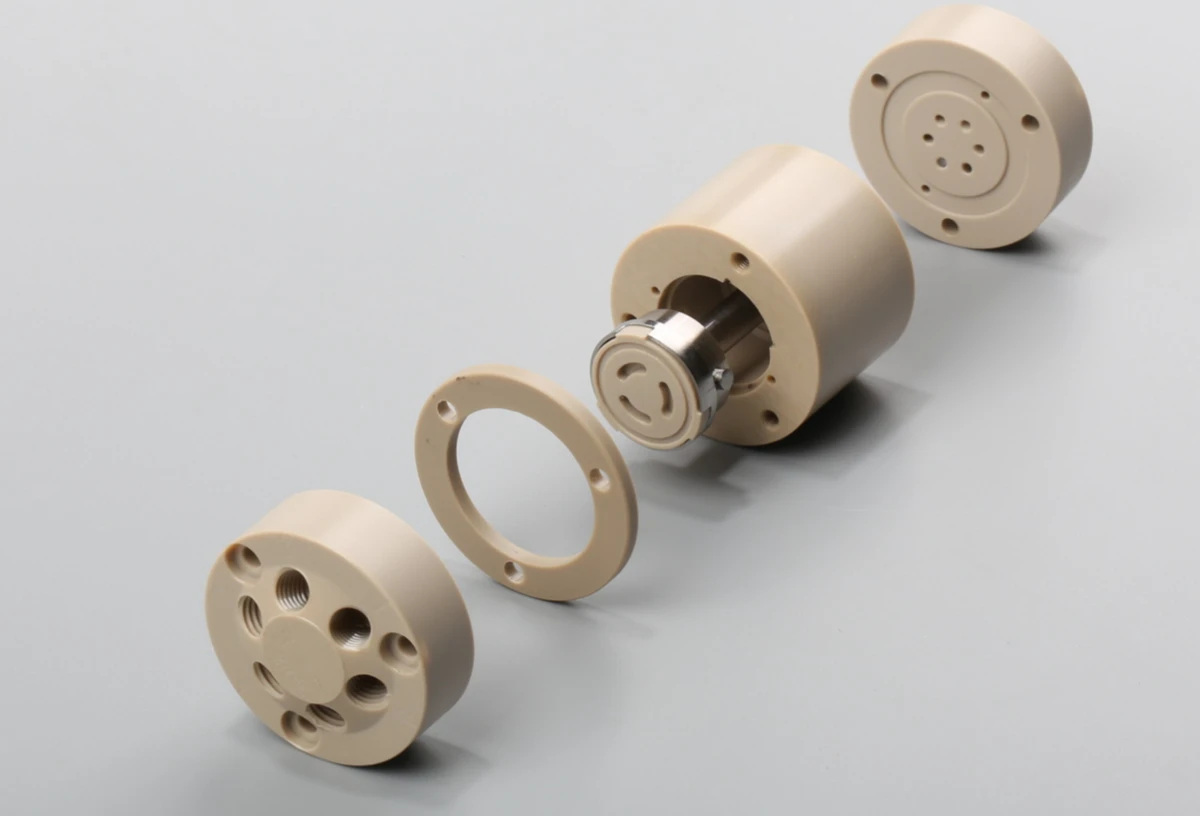
PEEK and ULTEM are high-performance thermoplastics used when standard plastics cannot provide enough heat resistance, dimensional stability, mechanical performance, or electrical reliability. PEEK is a semi-crystalline polyetheretherketone known for higher-temperature capability, broad chemical resistance, wear performance, fatigue strength, and demanding mechanical service. ULTEM is SABIC’s trade name for polyetherimide (PEI), an amorphous material valued for dimensional stability, electrical insulation, inherent flame resistance, amber translucency in unfilled grades, and a more economical performance envelope for many medium-to-high-temperature applications. The correct choice depends on load, temperature, chemical exposure, electrical function, geometry, compliance requirements, and budget.
What Are PEEK and ULTEM?
What Is PEEK?
PEEK is a semi-crystalline high-performance thermoplastic. The source draft identifies a melting point around 343°C and continuous-use capability commonly specified near 250–260°C for standard high-performance grades. Its semi-crystalline morphology supports strength retention, creep resistance, chemical resistance, wear performance, and fatigue resistance in demanding service. Reinforced PEEK grades can further change stiffness, thermal expansion, wear behavior, and machining tool life.
What Is ULTEM / PEI?
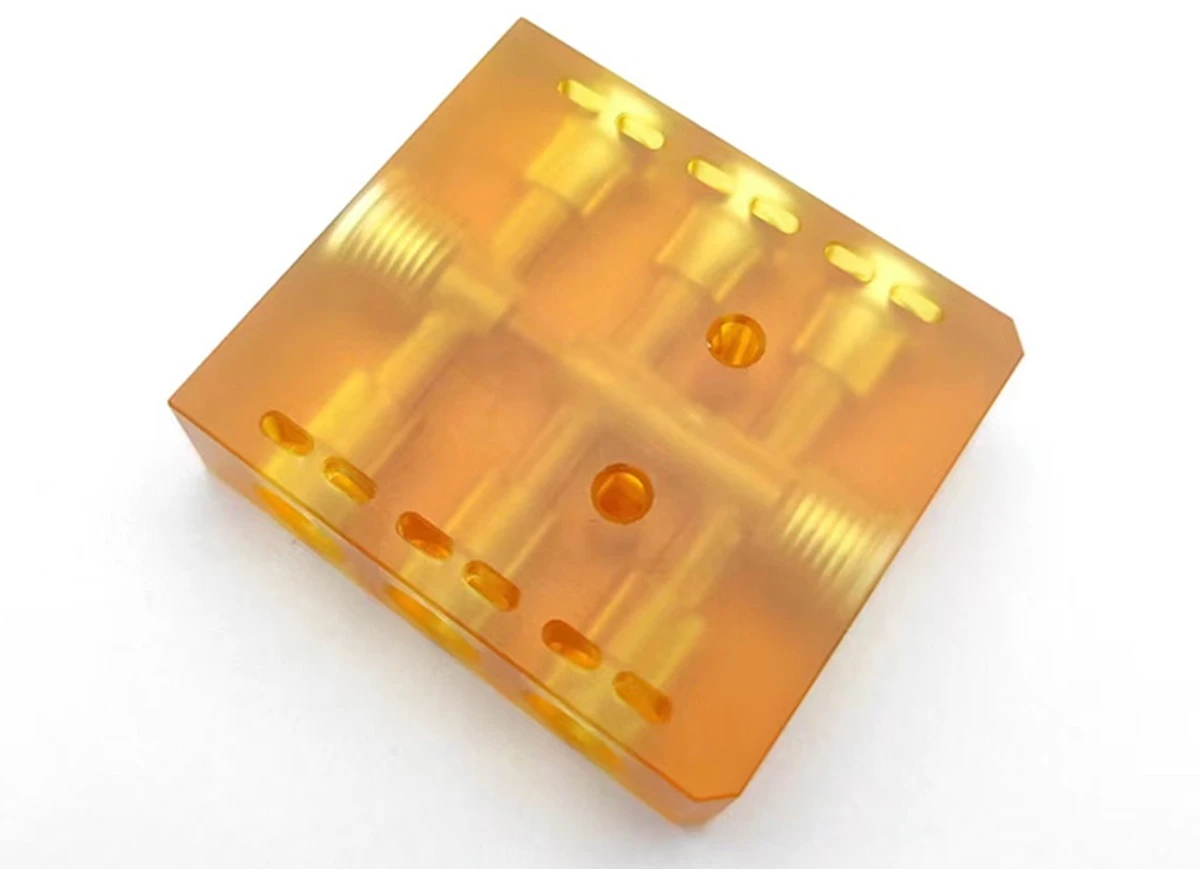
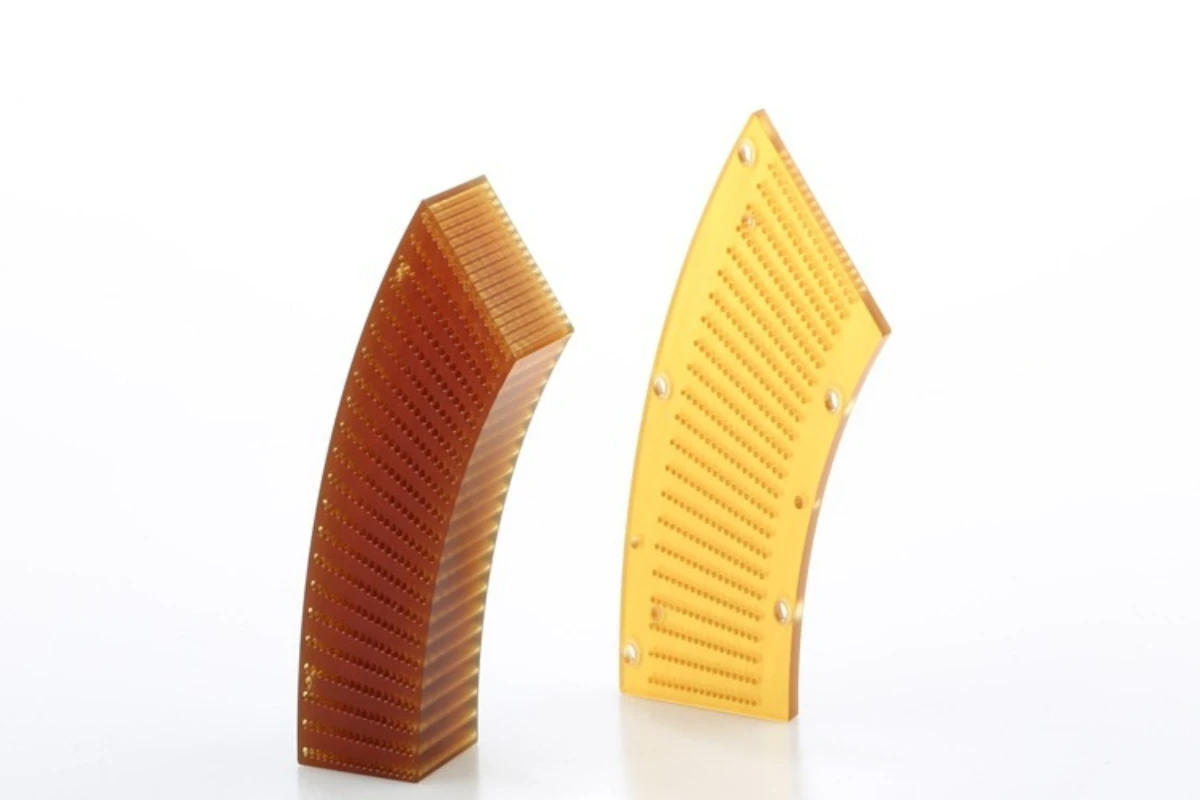
ULTEM is SABIC’s trade name for a family of PEI resins. The source draft describes ULTEM 1000 as an unfilled transparent amber PEI grade with a glass-transition temperature of about 217°C, while reinforced ULTEM families add glass fiber to increase stiffness and reduce thermal expansion. Unlike semi-crystalline PEEK, PEI is amorphous and does not have a crystalline melting point. It is commonly considered for insulating housings, structural electrical parts, instrument components, and other applications where dimensional stability and electrical performance matter.
PEEK vs ULTEM at a Glance
Key Property Differences
| Selection Factor | PEEK | ULTEM / PEI | Design Direction |
| Thermal duty | Higher continuous-service capability; semi-crystalline | High Tg and good medium/high-temperature stability; amorphous | Favor PEEK for sustained extreme heat. |
| Chemical resistance | Very broad, including many aggressive chemicals | Broad, but more sensitive to certain solvents/strong alkaline environments | Validate chemical, concentration, temperature, and exposure time. |
| Wear / fatigue | Typically stronger for sliding, gears, bearings, and high-cycle duty | Better suited to structural/insulating functions than severe tribology | Favor PEEK for moving or high-wear parts. |
| Stiffness / creep | Strong structural and creep performance, grade dependent | Good rigidity and dimensional stability; reinforced grades increase stiffness | Review actual load, temperature, and grade. |
| Electrical / flame | Strong electrical properties; grade dependent | Excellent dielectric behavior and inherent flame resistance are key strengths | ULTEM is often attractive for electrical housings and isolators. |
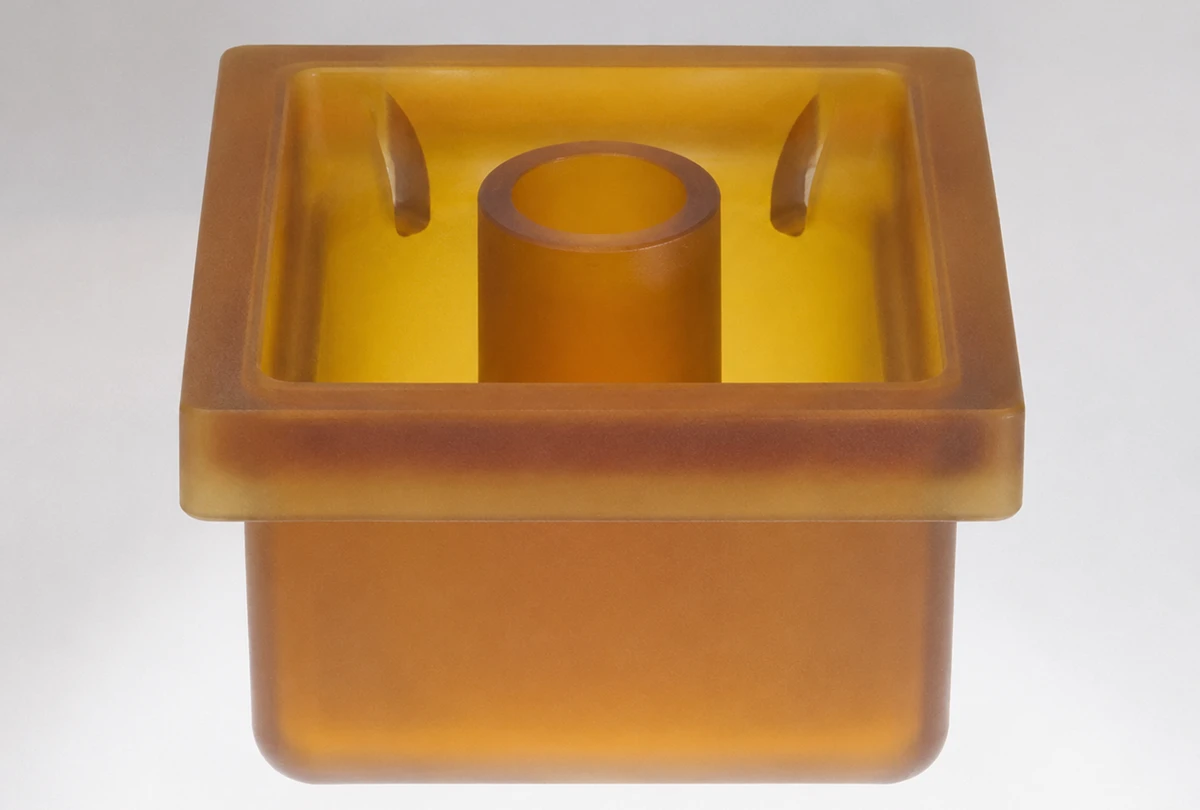
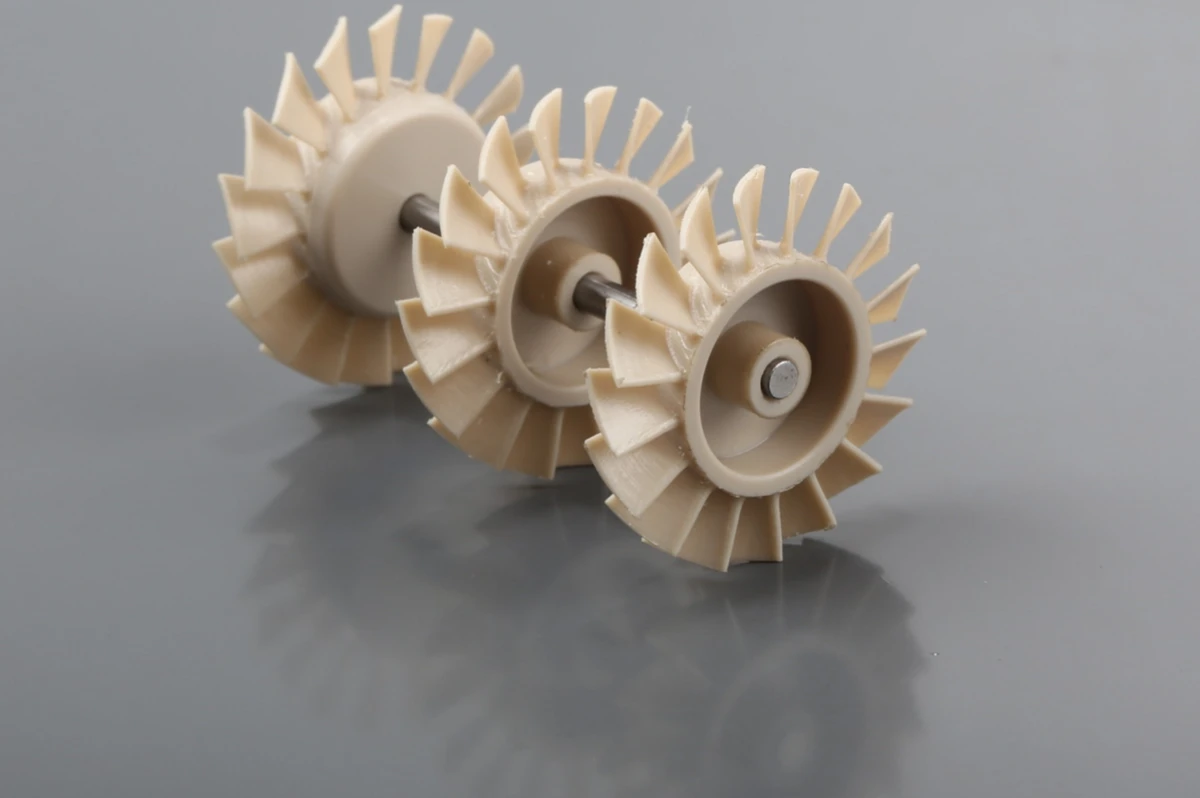
| Transparency | Usually opaque natural beige or filled colors | Unfilled PEI can be amber translucent | Translucency does not prove optical-grade performance. |
| Moisture / environment | Low moisture sensitivity in many applications | More moisture uptake than PEEK; conditioning can matter for precision work | Evaluate the actual service and inspection condition. |
| Cost | Usually higher | Usually lower for comparable unfilled engineering stock | Avoid over-specifying PEEK when ULTEM meets the duty. |
How to Read the Comparison
The better material is the one that satisfies the dominant failure mode and service condition. A sliding component exposed to heat and aggressive chemistry may justify PEEK, while an electrical housing may obtain the required rigidity, insulation, flame performance, and dimensional stability from ULTEM at lower material cost. Always confirm the exact grade and stock-form data before release, especially when reinforcement, regulatory documentation, or unusual environmental exposure is involved.
PEEK vs ULTEM: Temperature Performance
High-Temperature Capability
PEEK is the stronger candidate when sustained high-temperature service is the dominant requirement. The original draft places standard high-performance PEEK grades near 250–260°C continuous-use capability, while ULTEM/PEI is positioned for lower but still demanding medium-to-high-temperature service. These values should be treated as grade-dependent design references rather than universal limits; load, exposure time, geometry, reinforcement, and supplier data remain decisive.
Thermal Behavior and Dimensional Stability
PEEK’s semi-crystalline structure and PEI’s amorphous structure lead to different thermal behavior. PEEK is often selected where high-temperature strength, creep resistance, and severe mechanical duty must coexist. ULTEM is valued for stable precision geometry and predictable structural behavior across many electrical and instrument applications. For close-tolerance parts, thermal equilibrium, stock condition, wall thickness, and material-removal balance still affect dimensional results in both materials.
PEEK vs ULTEM: Mechanical Properties
Strength, Stiffness, and Creep
Both material families offer substantially higher structural performance than commodity plastics, but PEEK is generally favored when severe load, creep resistance, fatigue, and elevated-temperature mechanical performance dominate. ULTEM provides strong rigidity and dimensional stability for structural and insulating components, and glass-reinforced PEI grades can further increase stiffness. The exact comparison changes with grade, reinforcement, temperature, and loading mode.
Wear, Fatigue, and Structural Duty
PEEK has the advantage when sliding wear, bearings, gears, repeated cycling, or other demanding tribological service drives the selection. ULTEM is better positioned for housings, isolators, supports, and precision structures than for severe wear duty. If a component combines wear with high temperature or aggressive chemistry, PEEK’s broader performance envelope can justify its higher material cost.
PEEK vs ULTEM: Chemical and Moisture Resistance
Chemical Resistance
PEEK is known for very broad chemical resistance and is often preferred when the component will see aggressive process fluids or harsh cleaning environments. ULTEM/PEI also offers useful chemical resistance but can be more sensitive to certain solvents and strong alkaline conditions. Suitability should be checked against the exact chemical, concentration, temperature, stress level, and exposure duration.
Moisture and Environmental Stability
For machined plate, rod, or block, injection-molding pellet-drying instructions should not be copied directly into the CNC process. The original draft emphasizes clean dry storage, thermal equilibrium before roughing and inspection, and application-specific conditioning when dimensional requirements justify it. Finished parts intended for steam, hot water, vacuum, cryogenic, optical, or electrical service should be evaluated in the relevant service condition rather than judged only from room-temperature dimensions.
PEEK vs ULTEM: Electrical and Flame Performance
Electrical Insulation
Both families can provide useful electrical properties, but ULTEM/PEI is especially attractive when dielectric behavior is a central design requirement. This supports its use in connector bodies, electrical isolators, sensor housings, instrument structures, and high-voltage hardware. PEEK becomes more attractive when electrical function must be combined with harsher chemistry, higher service temperature, wear, or severe mechanical duty.
Flame Performance and Application Requirements
Inherent flame resistance is an important strength of ULTEM, while PEEK grades also serve demanding aerospace and electrical environments. Neither material family should be described as universally approved for a regulated program. Flame, smoke, toxicity, UL, FAR, thickness, color, manufacturing route, and customer-specific requirements must be matched to the exact grade and documentation.
PEEK vs ULTEM Machinability
How PEEK Behaves During CNC Machining
Unfilled PEEK generally machines cleanly with sharp tools and supports efficient precision machining. Reinforced grades are more abrasive and can increase tool wear, so the process must be adjusted for filler content, geometry, wall thickness, and finish requirements. Heat input, fixturing, chip evacuation, and balanced material removal remain important when dimensional stability is critical.
How ULTEM Behaves During CNC Machining
Unfilled ULTEM/PEI also machines well, but its lower thermal conductivity can allow heat to accumulate around the cutting zone. Thin walls, deep pockets, abrupt section changes, and aggressive clamping can increase deformation or stress-release risk. Reinforced grades add abrasion and may require more wear-resistant tooling. For detailed ULTEM guidance covering tool selection, cutting parameters, heat control, stress relief, and inspection planning, see our ULTEM Machining Guide.
PEEK vs ULTEM: Cost and Manufacturing Considerations
Material and Machining Cost
PEEK is usually the more expensive raw material, while ULTEM can offer a lower-cost route to high-performance plastic parts when its thermal, chemical, and mechanical limits are sufficient. Total cost also depends on stock availability, reinforcement, machining time, tool wear, scrap risk, inspection effort, compliance documentation, and the cost of failure or replacement in service.
When PEEK’s Higher Cost Is Justified
The PEEK premium is easier to justify when the application genuinely requires higher sustained temperature, aggressive-chemical resistance, wear, fatigue, creep resistance, or severe mechanical service. If the component mainly needs electrical insulation, flame performance, stable precision geometry, and medium-to-high-temperature capability, ULTEM may provide a more economical solution without paying for performance the part does not use.
PEEK vs ULTEM Applications
When to Choose PEEK
PEEK is a strong candidate for high-temperature components, chemical-handling parts, wear components, gears, bearings, fluid-handling parts, and precision structures exposed to demanding mechanical, vacuum, or thermal conditions. The original article also notes its use in medical and aerospace programs, but any implant, FDA, biocompatibility, FST, or aerospace qualification must be tied to the exact grade, stock source, manufacturing route, and finished-device or program validation.
When to Choose ULTEM
ULTEM/PEI is attractive for electrical isolators, connector bodies, sensor housings, reusable instrument components, analytical equipment, optical-mechanical supports, and structural electrical parts where dielectric behavior, flame performance, dimensional stability, and cost efficiency are important. Amber translucency should not be treated as proof of optical-grade performance; transmission, birefringence, outgassing, cleanliness, and other functional requirements must be verified for the exact material and application.
PEEK vs ULTEM: Which Material Should You Choose?
Choose PEEK When…
Choose PEEK when sustained high temperature, aggressive chemicals, wear, fatigue, creep resistance, or severe mechanical service is the dominant requirement. It is also the stronger starting point when several of those demands occur together and the additional material cost is justified by service life or reliability.
Choose ULTEM When…
Choose ULTEM/PEI when electrical insulation, flame performance, stable precision geometry, amber translucency, and cost efficiency matter more than extreme thermal or tribological performance. For filled grades of either family, re-evaluate tooling, anisotropy, surface finish, drilling breakout, and dimensional behavior rather than assuming the unfilled-grade process transfers directly.
FAQ About PEEK vs ULTEM
What is the main difference between PEEK and ULTEM?
PEEK is generally selected for more extreme temperature, chemical, wear, fatigue, and mechanical duty. ULTEM/PEI is often selected for electrical insulation, flame performance, dimensional stability, amber translucency, and lower material cost.
Is PEEK stronger than ULTEM?
PEEK generally offers the broader performance envelope for severe mechanical service, creep, fatigue, and elevated-temperature loading. The exact comparison depends on grade, reinforcement, temperature, and loading mode.
Which handles higher temperatures, PEEK or ULTEM?
PEEK generally provides the higher sustained-temperature capability. The exact allowable service temperature must still be confirmed for the specified grade, load, environment, and required life.
Which has better chemical resistance?
PEEK generally offers broader resistance to aggressive chemicals. ULTEM also performs well in many environments but can be more sensitive to certain solvents and strong alkaline conditions.
Which is better for wear and fatigue?
PEEK is generally the stronger choice for sliding wear, gears, bearings, repeated cycling, and other demanding tribological or fatigue applications.
Which is easier to machine, PEEK or ULTEM?
Both are highly machinable in stock form. Unfilled grades of either material can machine cleanly, while reinforced grades are more abrasive. ULTEM requires particular attention to local heat and stress release on thin or heavily pocketed geometry.
Is ULTEM cheaper than PEEK?
Usually yes for comparable unfilled engineering stock. The final decision should consider total part cost and service requirements rather than raw material price alone.
Can ULTEM replace PEEK?
Sometimes. ULTEM may replace PEEK in medium-to-high-temperature structural or electrical applications if the load, chemical exposure, wear, compliance, and environmental requirements permit it. It should not be treated as a drop-in substitute for severe PEEK service without validation.
Need Help Choosing Between PEEK and ULTEM?
Send Rollyu Precision your 2D drawing, STEP file, expected quantity, operating temperature, chemical or sterilization exposure, electrical or optical requirements, critical dimensions, and any required material or compliance documents. Our engineering team can review the geometry, material-selection risks, manufacturing approach, and inspection requirements for prototype or low-volume CNC production.