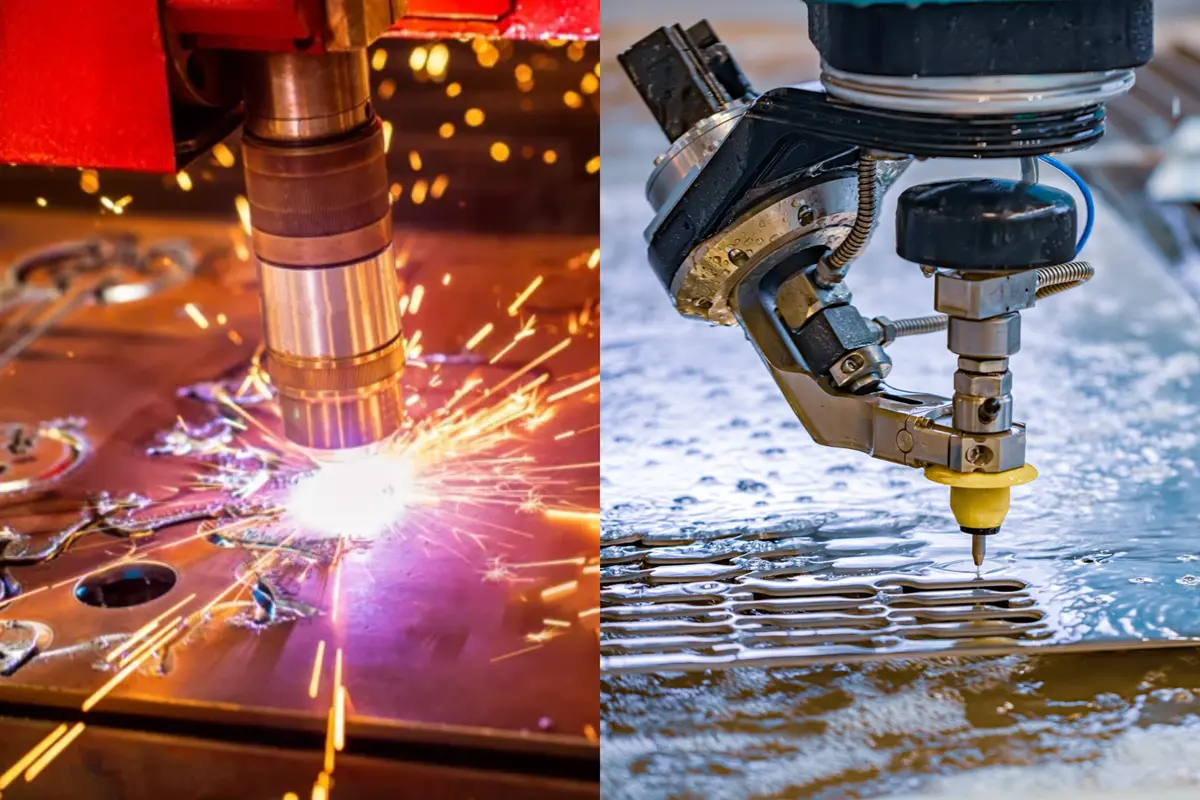
Laser cutting is usually the first route to check for sheet metal parts whose edges can tolerate some heat. Abrasive waterjet moves to the front when the drawing restricts thermal changes, or when the plate is too thick for the available laser to cut with an acceptable edge. Metal grade, thickness, and allowable heat effect decide which process you check first. From there, compare contour detail, edge condition, quantity, and the work each route leaves after cutting, and choose the one that delivers the finished part at the lower total cost.
How Waterjet and Laser Cutting Remove Metal
Abrasive waterjet wears metal away by erosion, while conventional laser cutting removes it with concentrated heat.
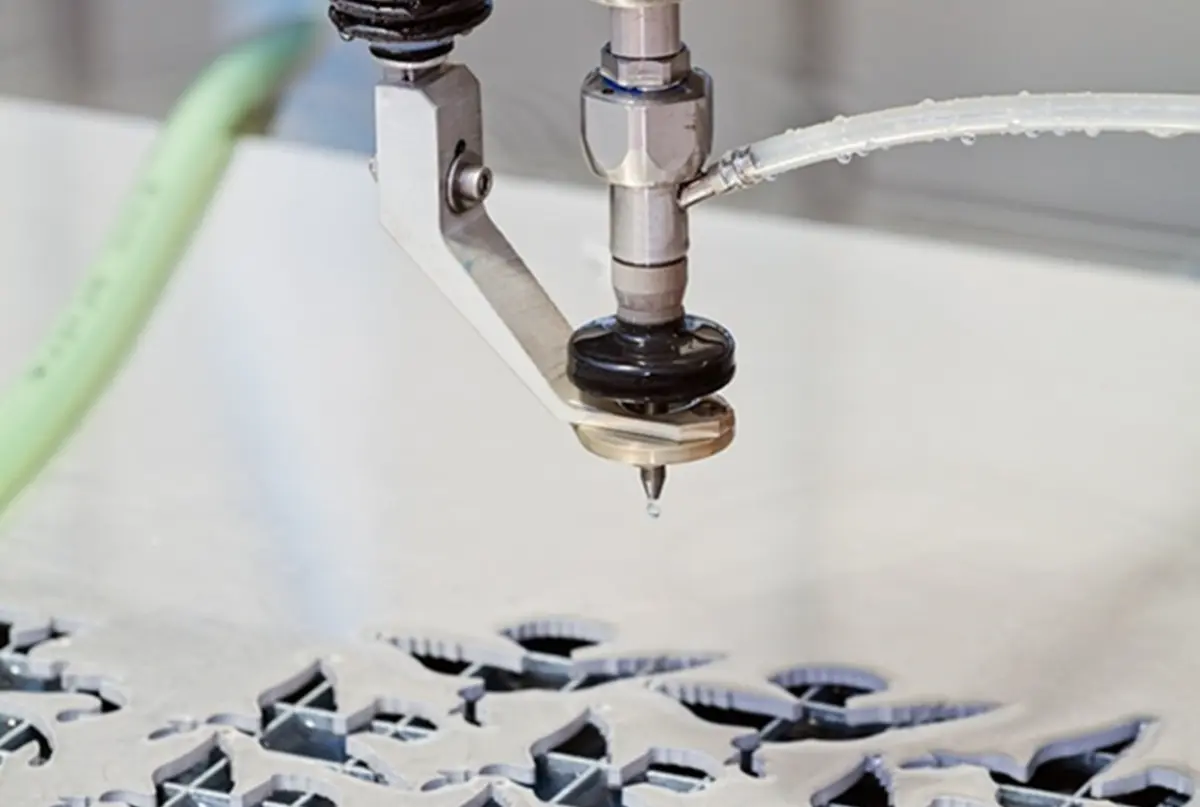
For metal parts, “waterjet” means abrasive waterjet cutting. A high-pressure water stream accelerates abrasive particles, usually garnet, and the particles erode a narrow path through the metal. Abrasive waterjet cuts cold and leaves no heat-affected zone at the cut edge. Pure-water cutting is a separate process used on softer materials.
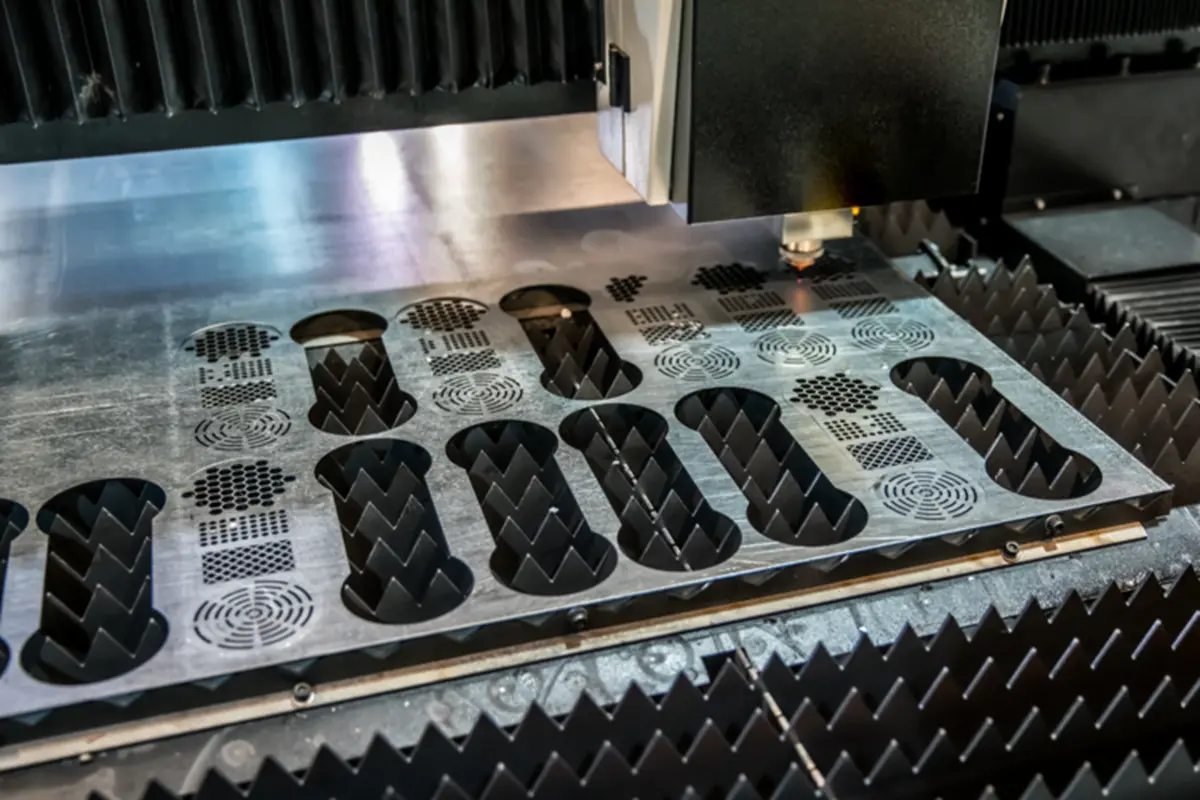
An industrial laser cutter focuses a beam onto the sheet or plate, and an assist gas clears molten metal from the cut. Metal fabrication uses fiber and other solid-state lasers, as well as suitable CO2 systems. This guide covers conventional sheet and plate cutting, not hobby machines or ultrashort-pulse micromachining.
Which Cutting Route Fits Your Part?
Start with whatever limits your part most. The table gives a starting route for common cases, and the last column lists what you still need to confirm on your drawing.
| Part condition | Check first | Why | Still to confirm |
|---|---|---|---|
| Sheet metal panel with repeated cutouts and acceptable heat effects | Laser | Narrow cuts and high throughput can suit repeated sheet metal profiles | Smallest features, cut edge condition, flatness, and batch price |
| Heat-treated metal with a restriction on thermal changes at the edge | Abrasive waterjet | Cold erosion leaves no heat-affected zone from cutting | Material condition, taper, roughness, and final dimensions |
| Plate too thick for the available laser to cut with an acceptable edge | Abrasive waterjet | Waterjet gives another route through thick stock | Through-thickness accuracy, cutting time, and required edge finish |
| Copper or brass profile | Either, depending on available equipment | Waterjet doesn’t rely on the metal absorbing light; suitable solid-state lasers also cut these metals | Exact alloy, thickness, laser compatibility, and edge requirements |
| General outline plus close-fit holes or locating surfaces | Either process, with machining where needed | Cutting can make the profile while machining holds the critical features | Machining allowance, workholding, datums, and inspection after later operations |
Material, Thickness, and Heat Limits
The question to answer is whether a shop can cut your exact material and thickness to the edge your drawing specifies. A machine’s maximum cutting thickness only shows that it can get through the plate, not what edge it leaves.
Alloy and Material Condition
Specify the alloy and its supplied condition, including temper or heat treatment where it matters. Abrasive waterjet cuts aluminum, stainless steel, carbon steel, copper, brass, titanium, and hardened tool steel, and a reflective surface has no effect on how it cuts. With a laser, the beam type and how the metal absorbs it matter more. Reflectivity alone is no reason to rule out a laser: suitable solid-state systems cut copper and brass.
Thickness and Heat-Affected Edges
No single thickness divides the two processes. As thickness increases, cutting time and edge quality change for both. A laser that gets through a plate may still leave an edge that needs more work, and a waterjet on the same plate may need a slower pass to control taper and striations, the curved lines the jet leaves on the cut face.
A heat-affected zone (HAZ) is the metal beside the cut whose properties have changed from heating. If the drawing or material specification limits those changes, check abrasive waterjet first. Laser cutting stays in the running when the allowed heat effect, together with any edge stock you plan to machine off, still produces a part that meets the drawing for that alloy and application.
Contour Detail and Cut Edge Quality
Check the cut through the full thickness of the part. A clean top edge says nothing about the size or squareness of the cut face below it.
Small Features and Kerf
Kerf is the width of material a cut removes. Laser cutting usually leaves a narrower kerf than abrasive waterjet, which helps with closely spaced cutouts and small profile details. Waterjet kerf depends on the nozzle and cutting setup, and specialized micro-abrasive systems extend its small-feature range. Neither process has one minimum feature size that holds for every machine and plate. For a narrow slot, small hole, or thin web, ask the shop to check the actual geometry in your stock.
Keep laser kerf size separate from the clearance your assembly needs. The shop compensates for kerf in the cutting program, and that setting doesn’t decide whether mating parts have enough room.
Taper, Striations, and Edge Condition
Taper on a waterjet cut is the change in cut width from the top of the material to the bottom. The jet also lags behind the nozzle as it loses energy through the thickness. That lag affects the contour at corners and curves and roughens the lower cut face, especially in thicker stock. A slower cut or a taper-compensating head improves the edge, at the cost of more cutting time or more capable equipment.
Laser edges depend on focus, speed, material, and assist gas. Defects show up as drag lines, burrs, or dross, which is molten metal that solidifies again on the bottom edge. Oxygen assist leaves an oxidized edge, while nitrogen or argon fusion cutting avoids that oxide. Specify the edge condition your next operation needs. A laser-cut edge doesn’t automatically need grinding, and a waterjet edge isn’t automatically ready for assembly.
What Does the Part Need After Cutting?
The part needs only the work the cut can’t deliver. If the outline, holes, and edges already meet the drawing, cutting can be the last shaping operation.
Deburring and Surface Preparation
Specify the edge condition and appearance you need, and build the matching deburring or surface preparation into the route. A handling edge, an exposed panel edge, and a surface going to coating can each need different treatment. An oxide-free laser edge from nitrogen or argon cutting can save a preparation step before welding or coating, though the material and agreed process still set what’s required. Waterjet leaves no thermal oxide, but its textured cut face still has to suit the finish you plan.
Machining Critical Features
A clearance opening and a locating bore do different jobs. When the cut can’t hold the size, position, or surface finish a feature needs, plan to drill, ream, or mill that feature. Agree on how much stock to leave for machining and how the part will be located and held. Deburring cleans up an edge, but it can’t bring an undersized or misplaced hole back into tolerance.
At Rollyu Precision, we offer CNC machining alongside sheet metal fabrication, so a laser-cut part with critical holes or mating surfaces can go through one DFM review. In that review, we work out with you which features stay as cut and which need machining. Each feature then carries the tolerance of the process that makes it: a reamed bore holds a machining tolerance, while the laser-cut outline around it holds a cutting tolerance.
Compare the Cost of the Complete Cutting Route
The cheaper route is the one with the lower cost for the finished part, which may not be the lower cutting price. A cutting-only quote and a quote that includes edge preparation and critical-feature machining cover different work.
Cost Drivers for Each Process
On suitable thin sheet, laser cutting is often the faster process. Abrasive waterjet uses up abrasive and wear parts, and a finer edge quality setting means more cutting time. Laser cutting has its own running costs in assist gas, consumables, and handling. For either process, thickness, contour length, the number of pierces, part geometry, and required edge quality change the price.
Quote Comparison on the Same Scope
Give both shops the same material, drawing revision, quantity, cut quality, and post-cut operations. Then compare setup and programming, material use, cutting, consumables, finishing, machining, and inspection line by line. A larger order spreads setup cost over more parts, but it can’t fix a heat restriction or a feature the process can’t hold.
A slower cut can still be the cheaper route if it removes a finishing operation you’d otherwise need. A fast laser cut can stay economical even with secondary machining when that machining is limited to a few critical features. Neither technology wins on cost by default; the quotes for your actual part settle it.
Applying the Choice to Brackets, Panels, and Enclosures
On real parts, the hardest feature to hold picks the cutting route, and the operations after cutting decide whether the finished part works.
Bent Stainless Steel Brackets
For a stainless steel bracket with mounting slots and two bends, laser cutting is a practical starting point if the slots, edges, and heat effects meet the drawing. A flat blank that matches its pattern can still end up with flanges or holes out of position after sheet metal bending. Check those relationships on the formed bracket.
Panels With Repeated Small Openings
Check the smallest opening and the acceptable edge finish before pricing the batch. A narrow laser kerf may favor this layout. If the drawing prohibits thermal changes, ask the waterjet shop to confirm the openings with its actual nozzle, quality setting, and stock thickness.
Mounting Plates With Locating Bores
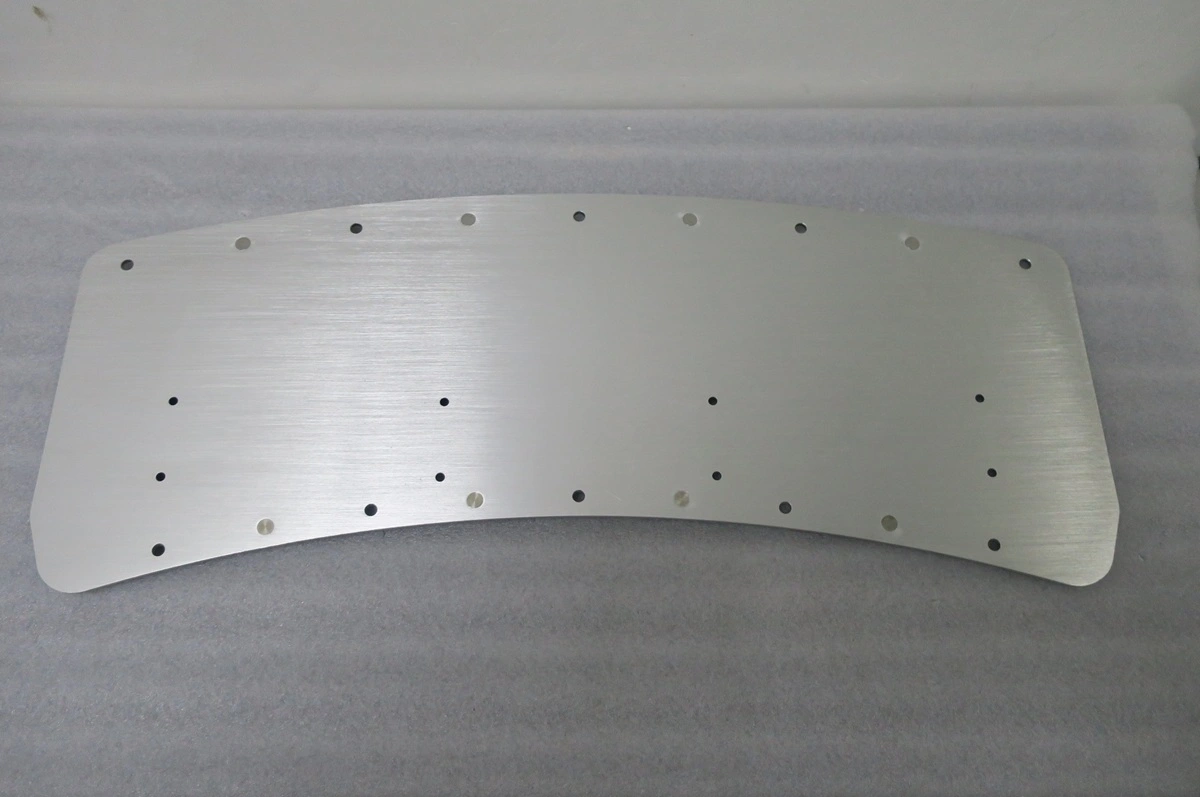
A thicker mounting plate with a close-fit locating bore needs two decisions: how to cut the blank and how to finish the bore. Waterjet fits a plate with a thermal restriction, and laser fits when the material and thickness allow it. Either way, the bore can be machined after cutting.
Enclosures
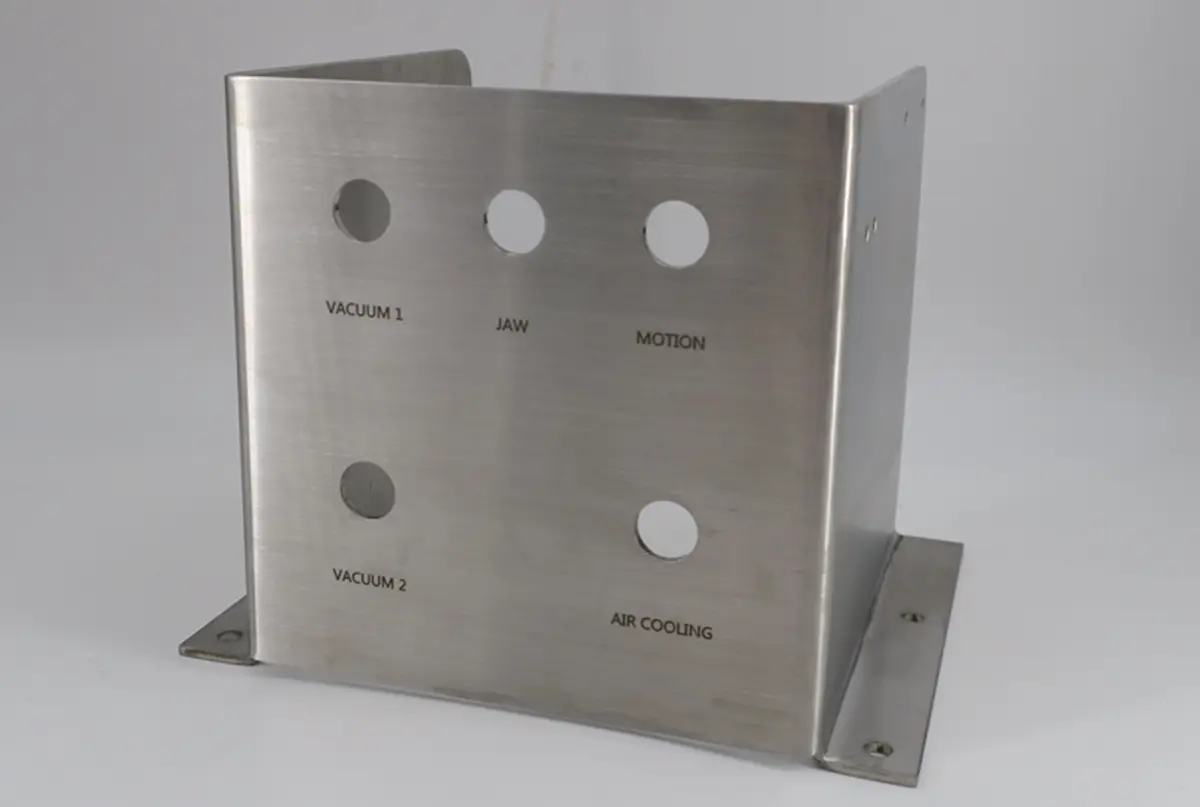
Compare cutting, forming, joining, and finishing as one route. Where panels locate on each other with tabs and slots, the cut width decides how tightly they fit before welding. Bending, welding, and finishing after the cut all feed into sheet metal fabrication cost, and a cheaper cut that creates rework at the press brake or welding station can cost more in the end.
Reviewing a Laser-Cut Project With Rollyu Precision
Rollyu Precision takes laser-cut sheet metal parts through forming, welding, finishing, and selected CNC operations, and we plan the full route for each part in a DFM review before production.
Connecting Cutting With Fabrication
Our sheet metal fabrication services cover laser cutting of stainless steel and aluminum, press brake bending, TIG, MIG, and spot welding, and manual or automated deburring. The workflow starts with DFM review and also includes surface finishing, caliper measurement, and CMM inspection. That lets us quote a bracket, panel, or housing as a finished part, with the cut and every operation after it planned together.
Preparing a Useful Project Review
Send your drawing and CAD files with your quote request, along with these details:
- Material: metal grade, supplied condition, and thickness
- Order: quantity and drawing revision
- Limits: heat restrictions and critical dimensions
- Edges and finish: edge condition and surface finish requirements
Mark whether each feature is accepted as cut or measured after forming, machining, or finishing. For automation equipment parts such as sensor brackets and control housings, include the mounting and locating relationships that decide how the part fits the assembly.
Before you order, we confirm the laser-cut route, any CNC work, the inspection scope, and the delivered condition with you. If the drawing restricts heat effects and you expect the part to need abrasive waterjet, note that in the request so we can confirm the cutting route before quoting.
Frequently Asked Questions
Can Waterjet Cut Several Metal Sheets at Once?
Yes, abrasive waterjet can cut stacked sheets in one pass. The total stack thickness sets the cutting conditions, so taper and dimensions can differ between the top and bottom sheets. Ask the shop to check layer-by-layer results for your proposed stack; a single-sheet sample won’t show how the bottom sheet comes out.
Can Waterjet or Laser Cutting Produce Beveled Edges?
Yes, with a multi-axis or bevel-capable cutting head. Multi-axis abrasive waterjets and bevel-capable laser systems can cut angled edges. A standard vertical setup can’t, which means a normal profile-cutting quote won’t include bevels. Confirm the bevel angle, material, thickness, and inspection method with the shop, or plan to machine the bevel as a separate operation.