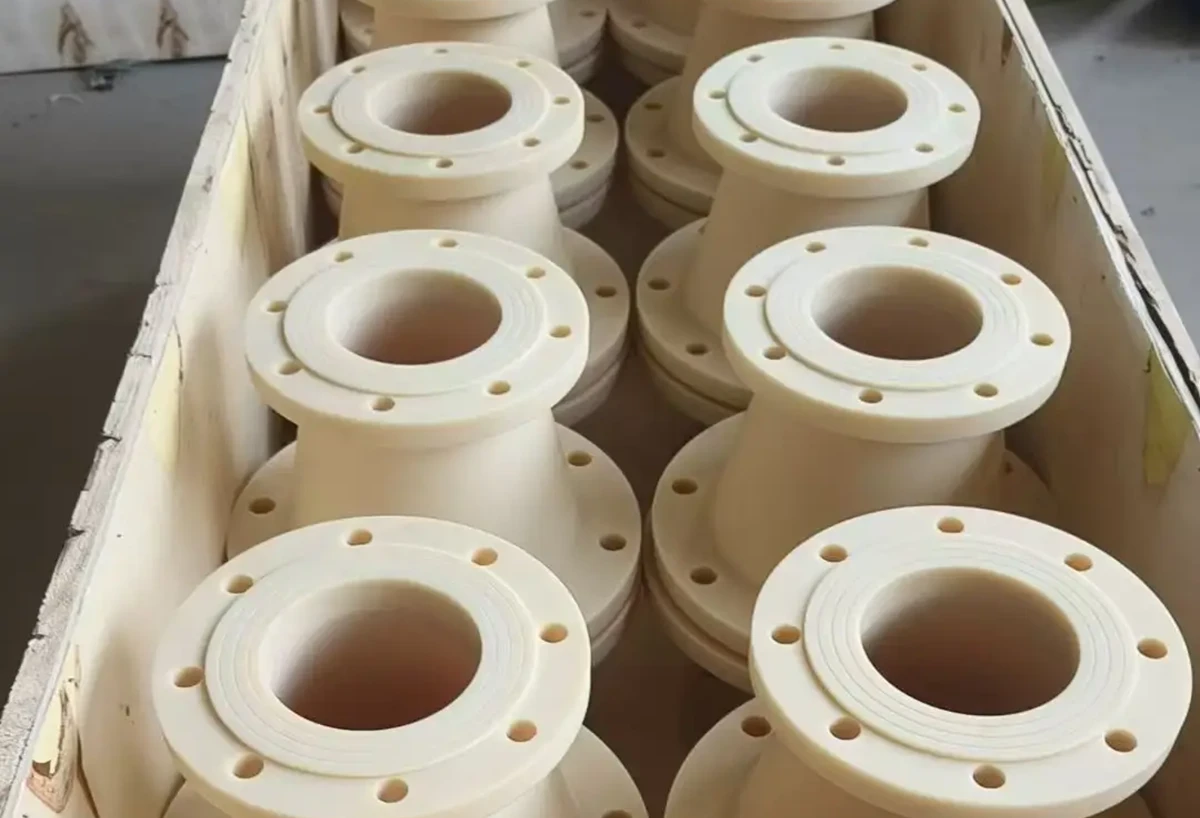
UHMW and ULTEM solve very different engineering problems. UHMW-PE is usually selected for low friction, abrasion resistance, impact toughness, quiet sliding, and economical wear performance. ULTEM is SABIC’s trade name for a family of polyetherimide (PEI) resins and is typically considered when stiffness, heat resistance, electrical insulation, and dimensional stability are more important. The better material depends on what the part must do, not simply which plastic has the higher specification.
What Are UHMW and ULTEM?
What Is UHMW-PE?
UHMW-PE, or ultra-high-molecular-weight polyethylene, is a tough, low-friction thermoplastic widely used for wear and sliding components. Its low surface friction, abrasion resistance, impact performance, and very low moisture uptake make it useful for guides, liners, wear strips, rollers, bushings, and material-handling parts. The trade-off is relatively low stiffness: thin, long, or heavily clamped features can deflect, creep, or spring back.
What Is ULTEM / PEI?
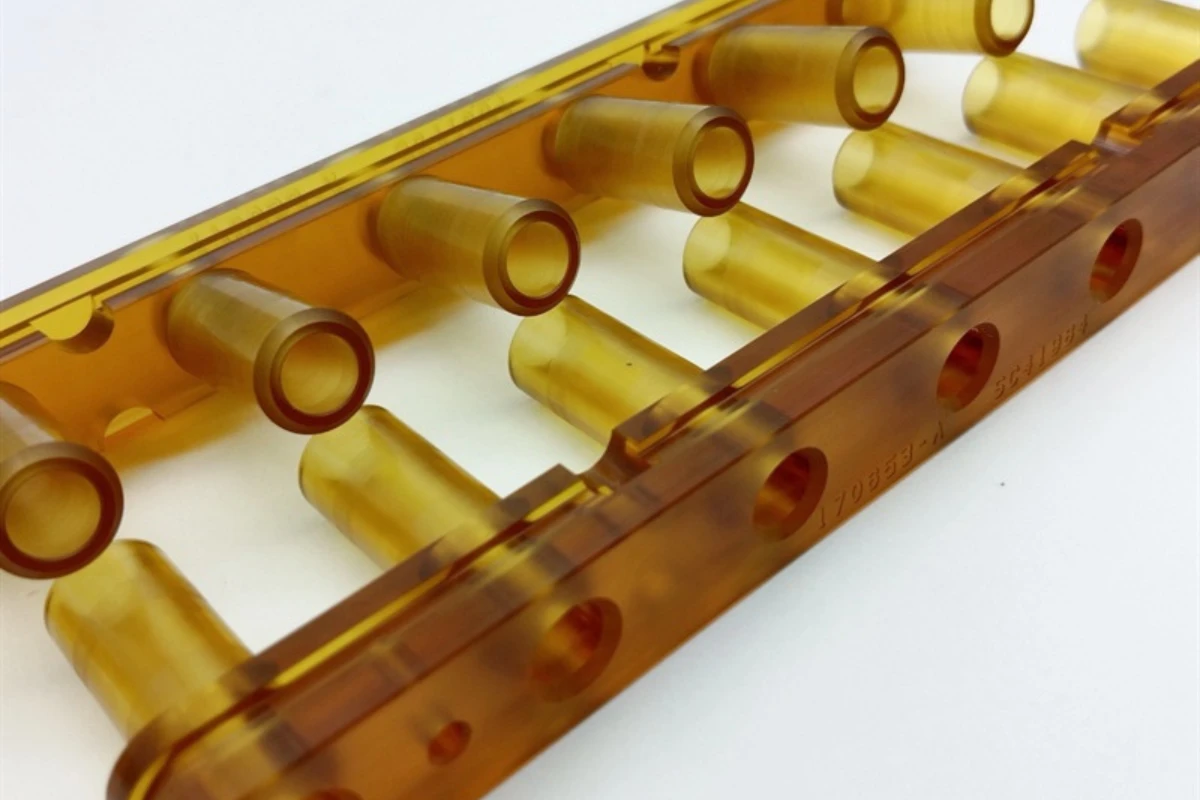
ULTEM is a trademarked family of PEI resins. Compared with UHMW, unfilled PEI is substantially more rigid and is better suited to structural, insulating, and elevated-temperature components that must retain geometry. Reinforced PEI grades can provide even higher stiffness, although filler content changes machining behavior and tool wear. Exact grade and compliance requirements should always be confirmed from supplier documentation rather than inferred from color or appearance.
UHMW vs ULTEM at a Glance
Key Property Differences
| Decision Factor | UHMW-PE | ULTEM / PEI | Engineering Takeaway |
| Primary strength | Wear, impact, low friction | Heat, stiffness, dimensional stability | Choose by part function. |
| Rigidity / creep | Flexible; creep and clamp distortion can matter | Much more rigid; better structural retention | ULTEM suits load-bearing geometry better. |
| Wear / sliding | Excellent fit for wear and sliding service | Not normally selected primarily for low-friction wear | UHMW usually leads for guides and liners. |
| Temperature positioning | Lower-temperature wear service; grade-specific limits | Higher-temperature structural service; grade-specific limits | Verify the exact grade and service condition. |
| Moisture behavior | Very low moisture uptake | PEI absorbs more moisture than UHMW | Conditioning can matter more for close-tolerance PEI. |
| Electrical insulation | Useful in some applications | A major selection advantage of PEI | Check exact grade requirements. |
| Machining character | Soft, elastic, burr/deflection risk | Rigid, heat/stress sensitive; filled grades more abrasive | The machining risks are different. |
| Cost positioning | Usually lower | Usually substantially higher | Compare life-cycle value, not resin price alone. |
| Typical parts | Guides, liners, rollers, wear strips | Insulators, housings, fixtures, structural components | Match material to duty. |
How to Read the Comparison
No single row should decide the material. A wear component may favor UHMW even if PEI is stiffer, while an electrical housing may favor PEI even if UHMW costs less. Operating temperature, load, chemical exposure, dimensional requirements, wear mechanism, inspection condition, and any regulatory documentation should be considered together.
UHMW vs ULTEM: Mechanical Properties
Wear, Friction, and Impact Resistance
UHMW is usually the stronger candidate when the component’s primary job is to slide, resist abrasion, absorb impact, or reduce noise. These characteristics explain its use in conveyor guides, chute liners, wear strips, rollers, and replaceable bushings. ULTEM can serve in moving assemblies, but low-friction wear is not normally the main reason to choose PEI.
Stiffness, Creep, and Structural Stability
ULTEM has the advantage when rigidity and structural retention are more important. UHMW’s flexibility can be useful for impact and wear service, but the same flexibility can cause clamp distortion, creep, or movement in long spans and thin walls. PEI is better suited to pockets, bores, mounting datums, insulating structures, and components that must preserve geometry under load or at elevated temperature.
UHMW vs ULTEM: Temperature and Dimensional Stability
Heat Resistance
ULTEM is positioned for substantially higher-temperature structural service than UHMW. However, neither material family should be assigned one universal service-temperature limit. The exact resin or stock-shape grade, load, thickness, environment, and required life all affect usable temperature. Supplier data for the specified grade should govern design decisions.
Thermal Expansion and Dimensional Control
UHMW can change shape under clamping, probing, or long-term load because it is soft and flexible. PEI is much more rigid, but temperature, residual stock stress, machining sequence, and inspection condition still matter for close-tolerance components. For either plastic, dimensional capability should be reviewed by feature and geometry rather than promised as one universal tolerance.
UHMW vs ULTEM: Moisture and Chemical Resistance
Moisture Absorption
UHMW has extremely low moisture uptake, which is useful in wet environments and reduces moisture-related dimensional concerns. PEI absorbs more moisture than UHMW, so close-tolerance PEI parts may require greater attention to storage, stabilization, and the condition in which final inspection is performed. Injection-molding pellet-drying instructions should not automatically be applied to machined plate, rod, or block.
Chemical Environment
Both materials can perform well in many industrial environments, but chemical resistance is application-specific. Temperature, concentration, exposure time, stress level, cleaning agents, and the exact grade can change suitability. Material selection should therefore be checked against the actual service fluid rather than relying on a generic statement that either material is chemically resistant.
UHMW vs ULTEM Machinability
How UHMW Behaves During CNC Machining
UHMW machines with relatively low cutting forces, but its elasticity creates a different challenge: the workpiece can move away from the cutter or distort under excessive clamping. Dull tools may rub instead of shear, producing heat, stringy chips, smeared surfaces, and burrs. Sharp cutting action, generous chip space, controlled workholding, and allowance for relaxation help maintain edge quality and geometry.
How ULTEM Behaves During CNC Machining
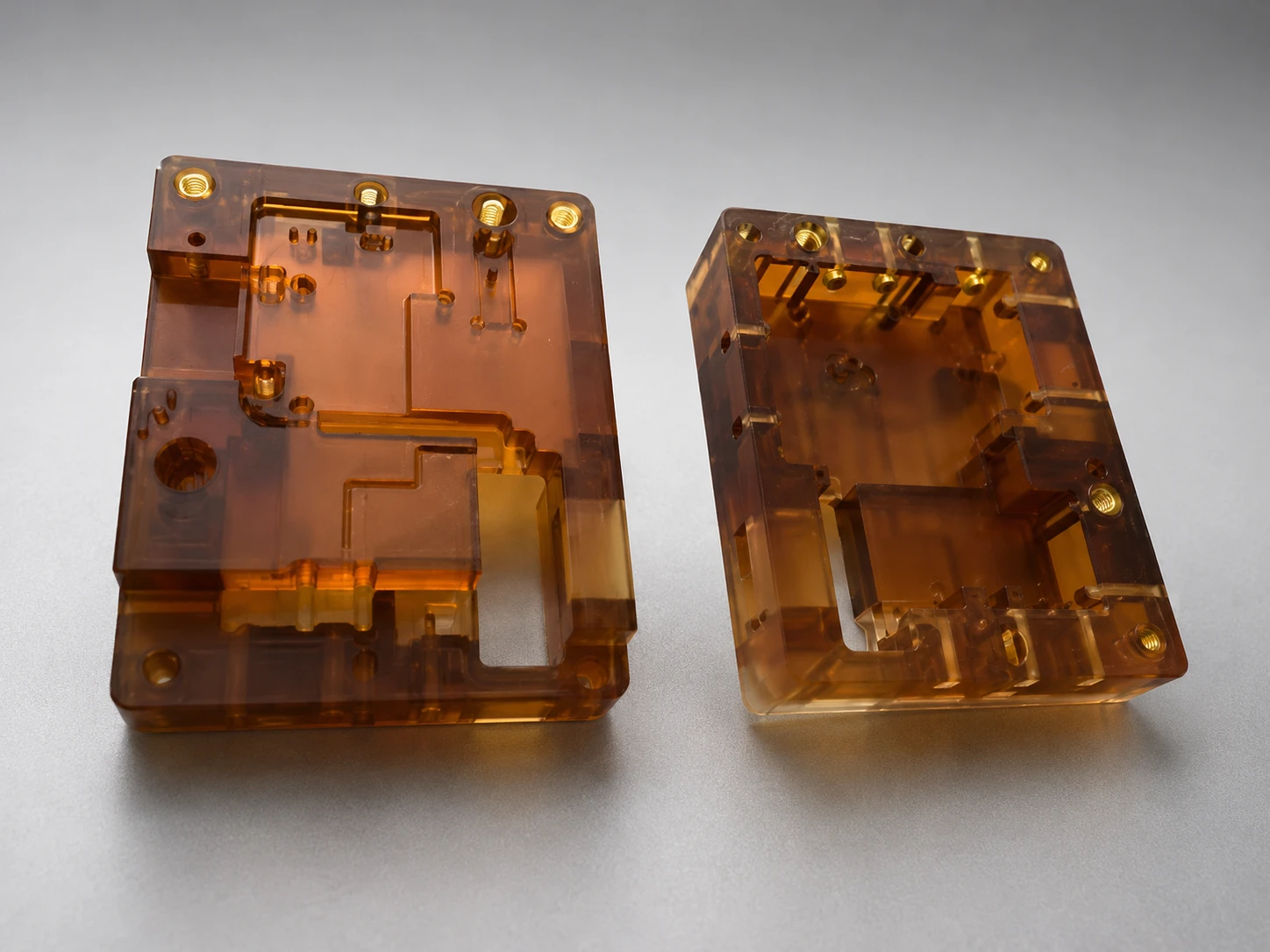
Unfilled PEI is more rigid and generally holds pockets, bores, and datums more predictably than UHMW, but local cutting heat and residual stress require greater attention. Glass-filled PEI is more abrasive and may change tool-life and edge-finish requirements. For detailed guidance on tool selection, cutting parameters, heat control, stress relief, and inspection planning, see our ULTEM Machining Guide.
UHMW vs ULTEM: Cost and Manufacturing Considerations
Material and Machining Cost
UHMW is usually the lower-cost material, while PEI is a premium engineering thermoplastic. Raw material price is only part of the decision. Machining time, scrap risk, tool wear, inspection effort, expected service life, replacement frequency, and the cost of part failure can outweigh the initial resin-price difference.
When Higher Material Cost Is Justified
ULTEM’s higher cost may be justified when the application requires stiffness, electrical insulation, heat resistance, or structural dimensional stability that UHMW cannot provide. Conversely, paying for PEI offers little value when the component is fundamentally a low-friction wear strip or replaceable liner. The most economical material is the one that satisfies the functional requirement without paying for properties the part does not use.
UHMW vs ULTEM Applications
When to Choose UHMW
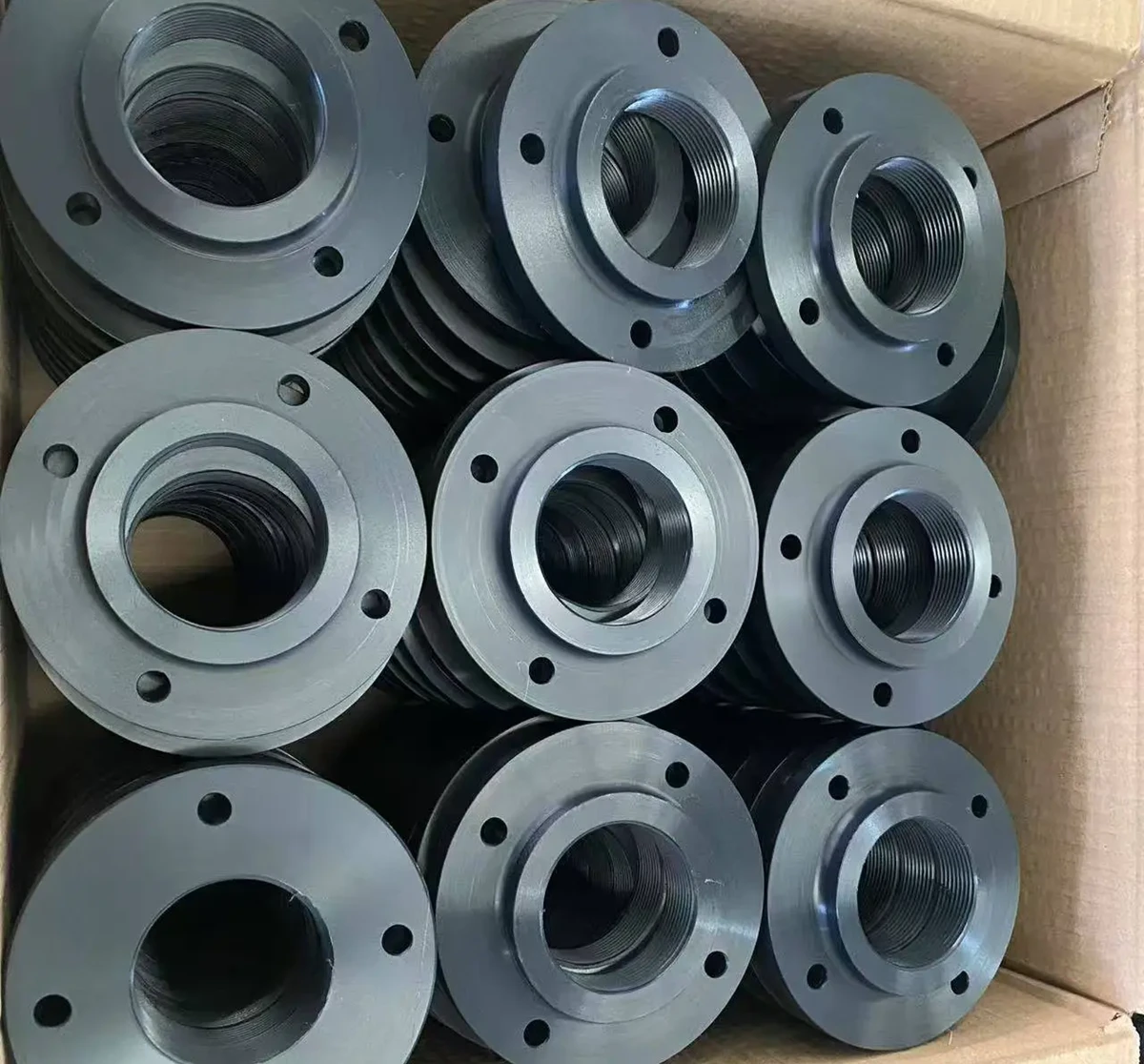
Choose UHMW when the component is primarily a wear or sliding element: wear strips, conveyor guides, chute liners, chain guides, rollers, bushings, impact pads, and similar material-handling parts. Its combination of low friction, abrasion resistance, impact toughness, quiet operation, and low moisture uptake is particularly valuable in these roles.
When to Choose ULTEM
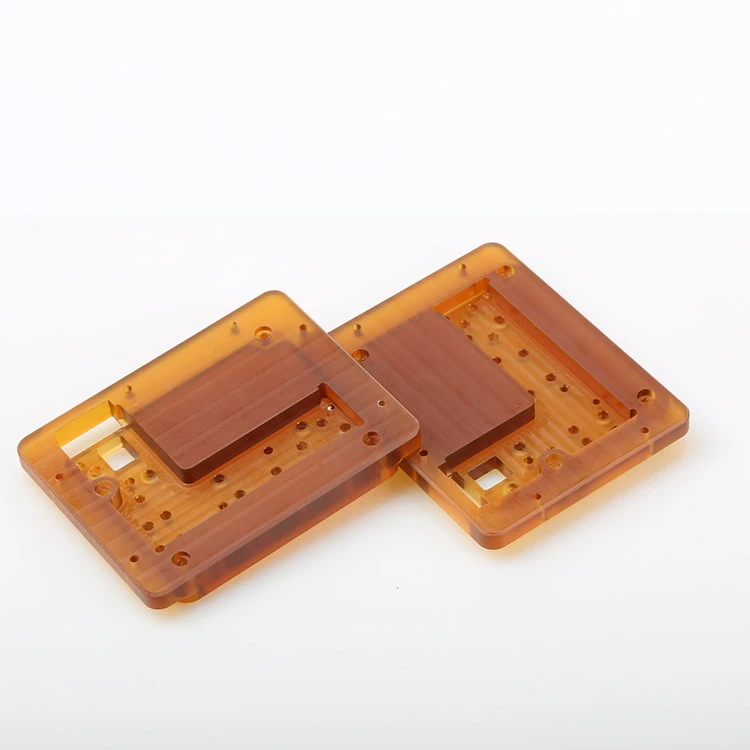
Choose ULTEM/PEI when the component needs greater stiffness, elevated-temperature capability, electrical insulation, or better structural dimensional retention. Typical categories include electrical insulators, connector bodies, sensor and instrument housings, precision fixtures, high-temperature supports, and structural components in industrial, semiconductor, aerospace, or medical equipment. Application use does not itself establish certification; exact grade and documentation must support any regulated claim.
UHMW vs ULTEM: Which Material Should You Choose?
Choose UHMW When…
UHMW is usually the better starting point when sliding wear, impact, abrasion, low noise, moisture resistance, and economical replacement are the dominant requirements and the service temperature and structural stiffness demands are moderate.
Choose ULTEM When…
ULTEM/PEI is usually the better starting point when the part must be rigid, electrically insulating, dimensionally stable, or capable of retaining useful mechanical performance at higher temperature. If neither material fully fits the duty, reinforced PEI, PEEK, POM, PPS, or another engineering plastic may need to be evaluated.
FAQ About UHMW vs ULTEM
What is the main difference between UHMW and ULTEM?
UHMW is primarily valued for low friction, wear resistance, impact toughness, and economical sliding performance. ULTEM/PEI is primarily valued for stiffness, heat resistance, electrical insulation, and dimensional stability.
Which is stronger, UHMW or ULTEM?
The answer depends on the property being compared. ULTEM is much more rigid and better suited to structural geometry, while UHMW is highly impact-tough and excels in wear and sliding applications.
Which has better wear resistance, UHMW or ULTEM?
UHMW is generally the better choice when abrasion resistance and low-friction sliding are the primary requirements.
Which handles higher temperatures, UHMW or ULTEM?
ULTEM/PEI is positioned for substantially higher-temperature structural service. Exact allowable temperature remains grade-, load-, and application-specific.
Which is more dimensionally stable?
ULTEM is generally more rigid and better at retaining structural geometry. UHMW can creep, deflect, or spring back, especially in thin or heavily clamped features.
Which is easier to machine, UHMW or ULTEM?
Both are machinable, but the problems differ. UHMW is soft and elastic, while PEI is more rigid but requires greater attention to heat, residual stress, and tool wear in reinforced grades.
Is ULTEM more expensive than UHMW?
Usually yes. ULTEM/PEI is typically a substantially higher-cost engineering plastic, so its added thermal, structural, or electrical properties should justify the premium.
When should I choose UHMW instead of ULTEM?
Choose UHMW when the part is mainly a wear, sliding, impact, or replaceable guide component and does not require the higher stiffness, heat capability, or electrical performance of PEI.
Need Help Choosing Between UHMW and ULTEM?
Send Rollyu Precision your 2D drawing, 3D model, target material if already specified, quantity, operating temperature, chemical or cleaning exposure, critical tolerances, wear or sliding requirements, and inspection or traceability needs. Our engineering team can review the geometry and manufacturing risks and help determine whether the specified material is practical for prototype or low-volume CNC production.