
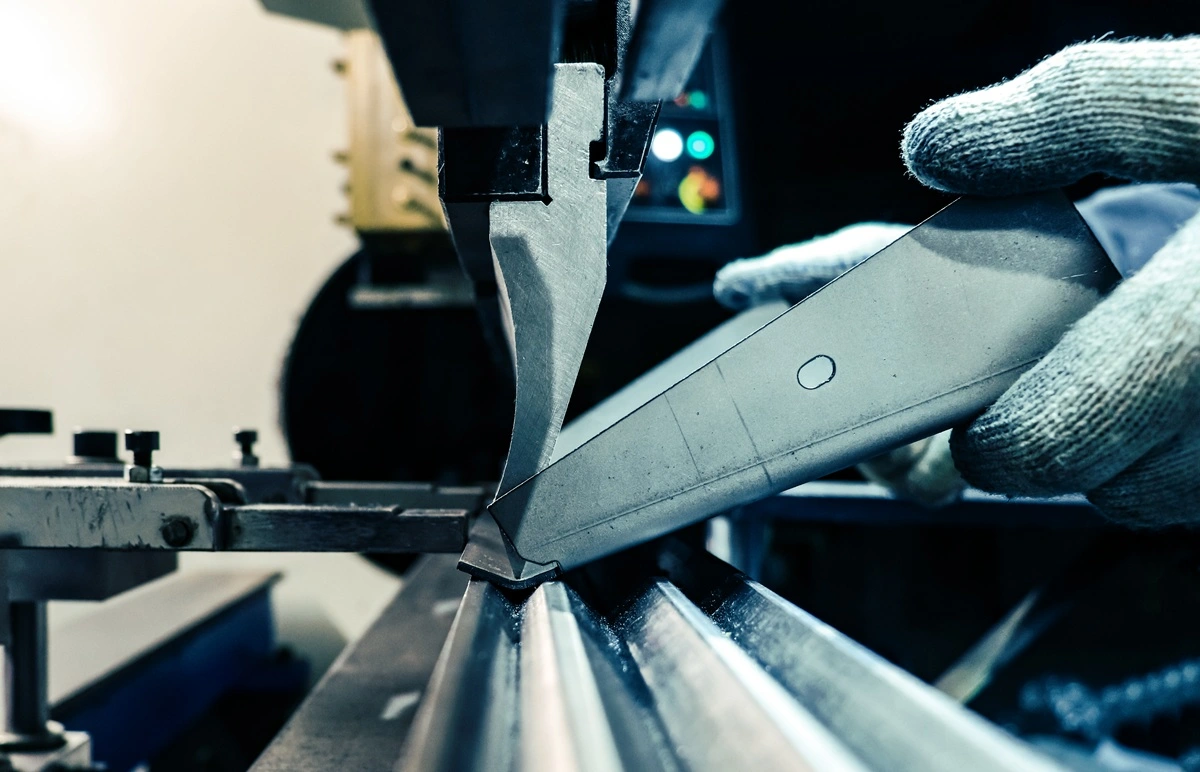

ASTM uses separate specifications for the two products. ASTM A1011/A1011M-25 covers hot-rolled sheet and strip, while ASTM A1008/A1008M-26 covers cold-rolled sheet. The rolling route changes thickness control, surface condition, and mechanical condition even when the steel chemistry looks similar.
Choose hot rolled steel when cost, thickness, and structural fabrication matter more than appearance or close stock dimensions. Choose cold rolled steel when the part needs thin stock, a smooth surface, or tighter dimensional control. Grade, temper, coating, forming, welding, and finish requirements still need separate review.
What Is the Difference Between Hot Rolled and Cold Rolled Steel?
Hot rolled steel reaches its final mill thickness while hot, whereas cold rolled steel receives additional reduction after the hot-rolled product has cooled and been descaled. The extra processing usually gives cold rolled steel closer dimensions and a smoother surface, but the product specification and delivery condition determine the actual properties.
| Decision factor | Hot rolled steel | Cold rolled steel |
|---|---|---|
| Mill process | Rolled at elevated temperature | Hot-rolled feedstock is pickled, then reduced at or near room temperature |
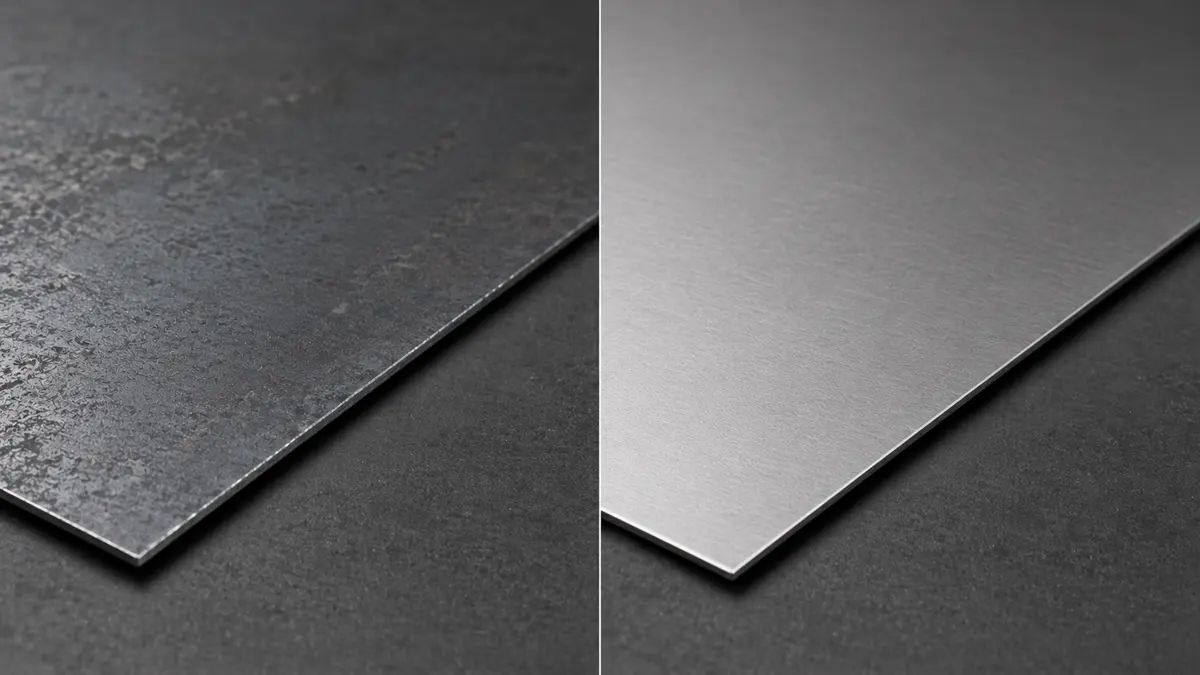
| Surface | Usually rougher, with mill scale unless pickled | Smoother and more uniform, often supplied with protective oil |
| Dimensional control | More variation from cooling and contraction | Closer control of thickness, width, shape, and edge condition |
| Mechanical condition | Often less work-hardened in comparable low-carbon products | Cold reduction can raise strength and hardness; annealing can restore formability |
| Fabrication concern | Scale may need removal before welding, coating, or precision work | Oil needs removal, and cold-worked stock may show more springback or residual stress |
| Cost pattern | Usually lower mill cost for comparable grade and size | Additional processing usually raises material cost |
Hot and Cold Rolling Processes
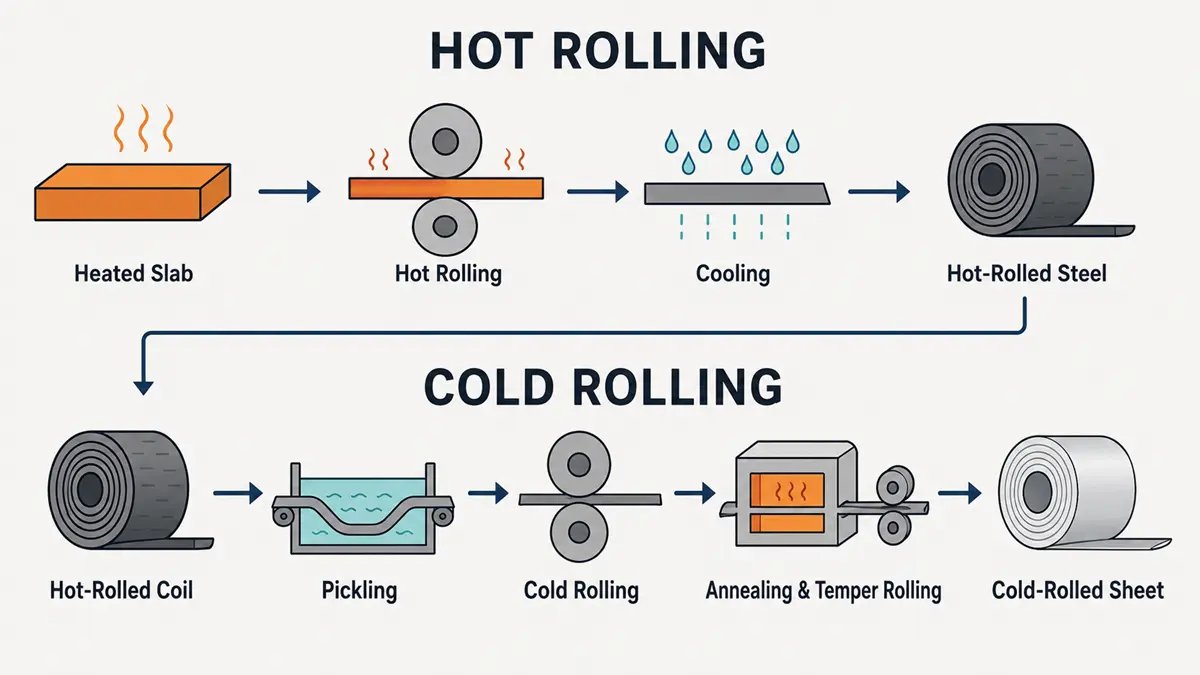
Hot rolling reduces a heated slab, billet, or strip while the steel is above its recrystallization range. The steel deforms with less rolling force, then contracts as it cools. Cooling makes exact final dimensions harder to control and leaves an iron oxide layer called mill scale on an as-rolled surface.
Cold rolled sheet starts as hot-rolled sheet. The mill removes scale by pickling and reduces the sheet at or near room temperature. Depending on the required delivery condition, the mill may then anneal and temper roll the sheet to set its formability, flatness, and surface texture. Cold rolled sheet may be supplied full hard or annealed. These conditions have different strength and ductility, so “cold rolled” alone does not define one fixed mechanical condition.
Strength, Hardness, and Ductility
Cold reduction can increase yield strength and hardness through strain hardening, but cold rolled steel is not automatically stronger than every hot rolled product. A hot-rolled high-strength low-alloy grade can exceed the strength of a cold-rolled commercial steel. Full-hard cold rolled sheet also behaves differently from cold rolled sheet that has been annealed for drawing or forming.
Use certified material properties, not the rolling label, for load calculations. Check the material standard, grade, yield strength, tensile strength, elongation, specified hardness, and delivery condition on the material test report. If a bend or drawn feature controls the design, available ductility may matter more than the highest strength value.
Dimensional Accuracy, Surface Finish, and Mill Scale
Cold rolled steel normally provides tighter stock dimensions and a smoother, more uniform surface. These features help when sheet thickness affects a formed stack, a slot or tab fit, a visible panel gap, or finish preparation. Cold rolling does not guarantee finished-part tolerance because cutting, forming, welding, and stress release can still move the part.
As-rolled hot rolled steel has a darker, rougher surface with mill scale. Pickling can remove that scale without turning the material into cold rolled steel. Hot rolled pickled and oiled steel, usually called HRPO, suits fabrication that needs a cleaner surface but not the full dimensional and surface control of a cold-rolled product.
Machining, Bending, and Welding Behavior
Neither rolling route is universally easier to machine, bend, or weld. The actual grade, hardness, thickness, condition, geometry, and process setup determine how the material behaves.
- Machining: Heavy cutting can release residual stress in cold-worked stock and move the part. Hot rolled scale can interfere with locating and tool contact, so clean the setup and cutting areas when needed.
- Bending: Use the grade-specific minimum radius and allow for springback. Higher yield strength generally requires more forming force and overbend, whether the sheet is sold as hot rolled or cold rolled.
- Welding: Remove mill scale, rust, oil, and coatings from the joint area, then use a qualified procedure for the actual grade and thickness. Thin sheet also needs controlled heat input because sheet metal welding warpage can shift hole positions, joint alignment, and panel geometry.
Where Are Hot Rolled and Cold Rolled Steel Used?
Hot rolled or HRPO stock often suits heavier supports and welded structures. Cold rolled sheet often suits thin brackets, covers, panels, and closely fitted features within the same assembly.
Automation Fixtures and Machine Frames
Hot rolled plate, bar, and structural sections fit base plates, load frames, and structural frames when load capacity and stiffness matter more than an exposed mill finish. Designers can machine locating faces and mounting holes after fabrication instead of relying on raw-stock dimensions across the whole structure. HRPO reduces scale cleanup, although its protective oil still needs removal before welding or coating.
Cold rolled sheet works for sensor brackets, encoder brackets, protective housings, and PLC mounting panels when consistent thickness and clean bends simplify assembly. The correct choice depends on the load path, weld sequence, finish plan, and which dimensions machining must establish after welding. Buyers evaluating automation fixtures and machine components should identify those requirements on the drawing.
Robotics Mounts and Brackets
Cold rolled sheet fits sensor enclosures, cable brackets, camera mounts, and actuator plates when consistent gauge and clean edges simplify assembly. Hot rolled or HRPO stock can suit chassis plates, robot bases, and structural frames where thicker material carries the primary load. Rolling route alone does not determine stiffness. Section thickness, flange depth, bend geometry, unsupported span, and joint design usually control deflection.
Renewable Energy Enclosures and Fixtures
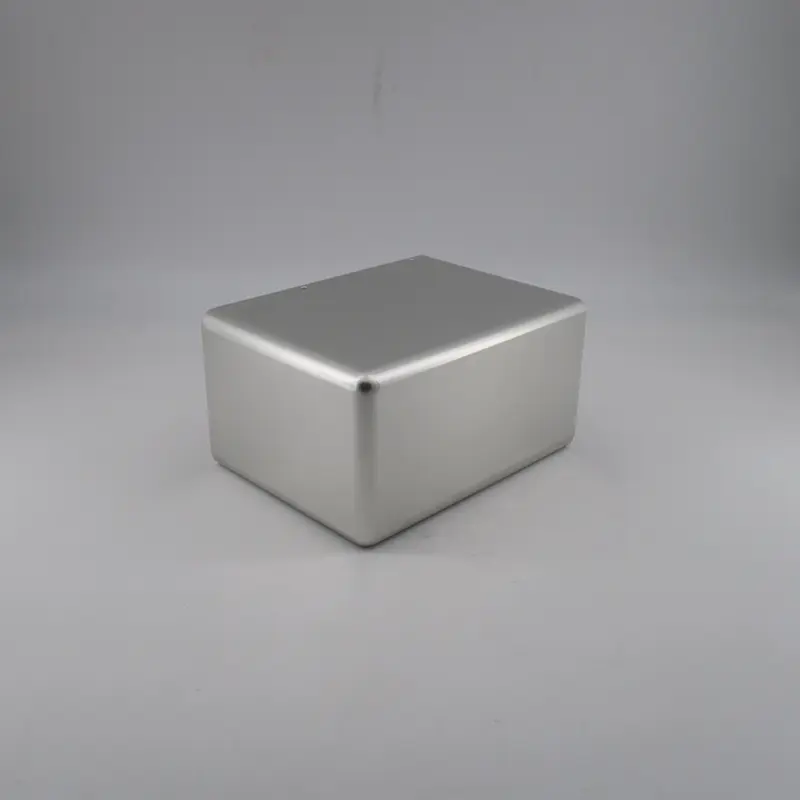
Renewable energy and power-generation equipment may use hot rolled steel for structural fixtures and load-bearing hardware. Cold rolled sheet can suit enclosures, covers, and thermal-management parts where fit and surface consistency matter.
Rolling route alone does not provide corrosion protection. Outdoor or humid service needs a separate decision on steel grade, drainage, joint design, pretreatment, and coating. Match the protection system to the exposure and maintenance requirements.
Industrial Equipment Panels and Housings
Cold rolled steel often suits equipment panels, control housings, and custom enclosures because repeatable thickness and a smooth surface help control bends, seams, and visible gaps. Hot rolled or HRPO sheet can work for support frames and heavier internal structures when the drawing allows broader stock variation. Laser cutting and bending, machined plate, and welded assemblies are precision metal fabrication methods with different tolerance, tooling, and cost tradeoffs, so the drawing should drive the process mix.
When Should You Choose Hot Rolled Steel?
Choose hot rolled steel when the part needs economical structural stock, heavier sections, or a fabricated shape whose critical interfaces will be machined later. Avoid hot rolled steel when raw thickness, exposed surface quality, or narrow panel gaps drive acceptance.
Cost-Sensitive Fabrication
Hot rolled steel usually costs less than a comparable cold rolled product because the mill performs fewer finishing steps. Material price is only one part of fabricated cost. Descaling, flattening, extra machining, weld cleanup, and surface preparation can reduce or erase the initial savings.
Compare the grade and required properties before comparing prices. A lower-cost rolling route does not compensate for an underspecified load-bearing part, and a higher-strength grade may allow a different section design. Yield strength, tensile strength, and hardness shape metal strength and alloy selection, but the drawing and governing design code still control the final choice.
Larger Sections and Thicker Stock
Hot rolling is often the practical source for plate, bar, wide flange, channel, angle, and other heavier products. Availability varies by steel grade, mill, region, and order quantity, so confirm the actual size range before locking the design. Specify flatness, straightness, thickness, edge condition, and machining allowance where those features affect setup or assembly. A large welded base may also need a controlled weld sequence, stress relief, or finish machining after fabrication.
Flexible Tolerance and Finish Requirements
Hot rolled steel is a good choice when the raw surface will be hidden, coated after preparation, or machined only at functional interfaces. A frame can use economical as-rolled stock while machined datums and bores control alignment.
Before production, Rollyu Precision can review CAD files, critical tolerances, inspection points, and finishing requirements through DFM. Confirm the specified grade and product form during quoting because availability varies by mill and region.
When Should You Choose Cold Rolled Steel?
Choose cold rolled steel when close stock dimensions, thin gauges, clean formed edges, or a uniform visible surface reduce downstream work. The extra processing may add cost without value when the part will be heavily machined, hidden, or fabricated to tolerances that make the stock finish irrelevant.
Tight Dimensional Requirements
Cold rolled sheet can reduce variation in thickness, width, flatness, and edge condition before fabrication. That control helps tabs enter slots, hems close consistently, and formed parts stack with less accumulated variation. The finished tolerance still depends on the cutting method, bend sequence, tooling, rolling direction, and weld distortion.
When requesting sheet metal fabrication services, submit the material standard, grade, thickness, temper or condition, surface requirement, bend radii, and inspection criteria. The supplier should confirm material availability and process capability instead of substituting a generic “cold rolled steel” description.
Smooth and Consistent Surfaces
Cold rolled steel is usually the better starting surface for visible panels, painted housings, and parts where scratches, scale, or texture could show through the finish. A smooth mill surface can reduce descaling and cosmetic correction, but it does not replace degreasing, pretreatment, or coating qualification. Specify the acceptable surface class, protective oil, scratch limits, and final coating on the purchase documents. Cold rolled steel can rust after the temporary oil is removed, so storage and corrosion protection still matter.
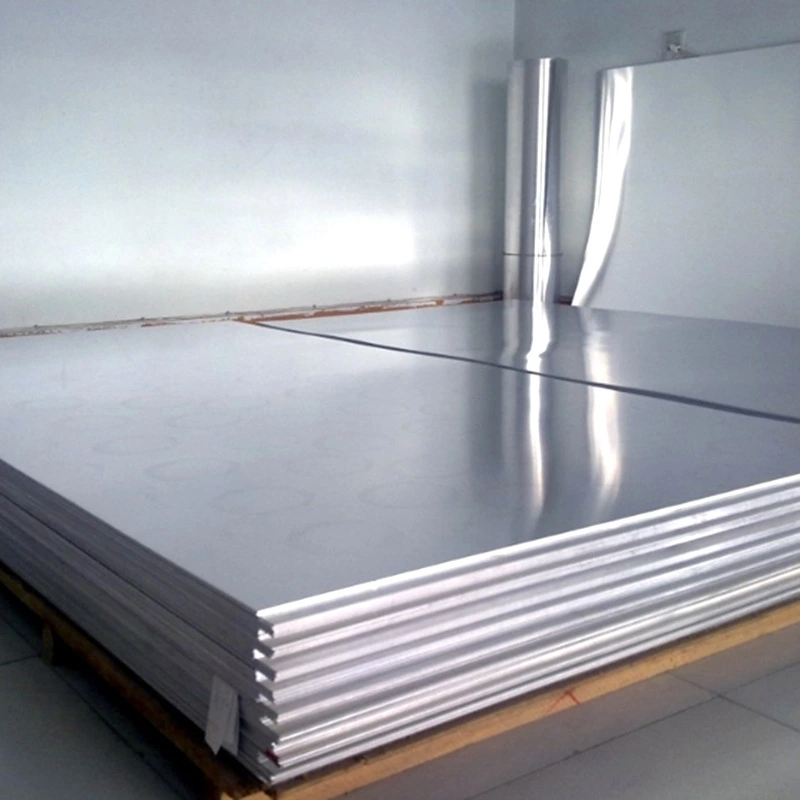
Thin-Sheet and Appearance-Sensitive Parts
Cold rolled steel is often available in thin sheet suited to covers, trays, brackets, bezels, and enclosure skins. Consistent thickness supports repeatable press-brake results, while the cleaner surface helps with cosmetic finishes and visible seams.
Thin sheet is also more sensitive to heat input, forming marks, and handling damage. Set realistic inside bend radii, account for springback, protect cosmetic faces during fabrication, and define whether rolling direction must follow a specific orientation. A first article can verify panel gaps, hole position, and surface acceptance before production quantities increase.
FAQs
Is Cold Rolled Steel the Same as Cold-Formed, Cold-Drawn, or Cold-Finished Steel?
No. These terms describe different products or operations. Cold rolled steel usually means flat sheet or strip reduced at or near room temperature, while cold-formed steel refers to sheet or strip shaped by press braking or roll forming. Cold drawing pulls bar, wire, or tube through a die; cold-finished is a broader term for bars processed by drawing, turning, grinding, polishing, or related operations. ASTM A108 covers cold-finished carbon and alloy steel bars, not cold-rolled sheet.
Can Hot Rolled and Cold Rolled Steel Be Substituted When the Grade Is the Same?
Only substitute hot rolled and cold rolled steel after reviewing the drawing and full material specification. ASTM A1011 covers hot-rolled sheet, while ASTM A1008 covers cold-rolled sheet, and the two specifications can differ in product designations, delivery condition, surface, dimensional tolerances, and mechanical properties. Approve a substitution only after checking strength and elongation, stock tolerance and flatness, bend behavior, welding requirements, and finished-part acceptance criteria.
How Can You Verify Whether an Unknown Steel Sheet Is Hot Rolled or Cold Rolled?
You cannot reliably identify the rolling route by appearance alone. Dark mill scale and a rough surface suggest as-rolled hot rolled steel, while a smooth matte or lightly oiled surface suggests cold rolled steel. HRPO can resemble cold rolled sheet, so check the coil tag, purchase record, material certificate, and product standard first. If traceability is missing, hardness, tensile data, thickness mapping, and surface examination may support identification. Chemical analysis may narrow the grade, but it does not establish the rolling route.
Should You Specify Hot Rolled and Cold Rolled Sheet by Gauge or Decimal Thickness?
Use decimal thickness when sheet thickness controls fit, strength, or formed geometry. A gauge number is a nominal size designation, while decimal thickness gives the supplier a measurable requirement. State the material standard, grade, rolling condition, nominal or minimum thickness, and applicable tolerance on the drawing or purchase order.
Does Rolling Direction Need to Be Specified for Cold Rolled Sheet Metal Parts?
Yes, when bend radius, crack risk, springback, surface texture, or directional properties affect acceptance. Show the rolling direction relative to each critical bend line, especially for tight radii, high-strength grades, or appearance-sensitive parts. Bend recommendations can differ for transverse and longitudinal bends, so follow the applicable grade datasheet. Rolling direction can also matter for hot rolled steel.