
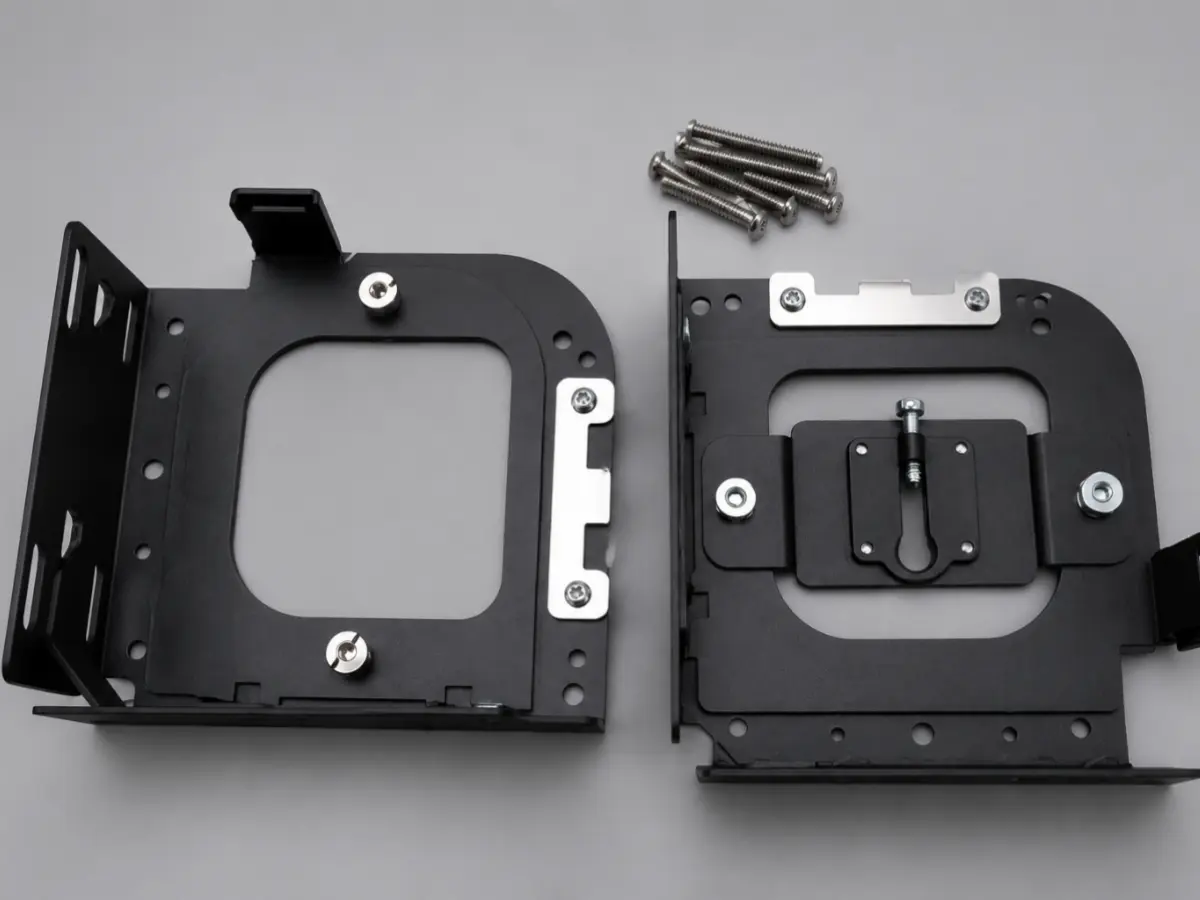
Custom enclosure quotes vary based on raw sheet utilization, cutting and forming complexity, seam construction, surface finishing, and assembly scope. External dimensions or finished weight alone never tell the full story. Two identical-looking boxes can have drastically different blank layouts, machine setups, weld grinding hours, or hardware installation requirements. Engineering and sourcing teams achieve reliable cost comparisons only when quoting against an identical drawing revision with clearly defined boundary assumptions.
Why Do Similar Enclosures Receive Different Quotes?
Two enclosures with identical exterior dimensions often follow completely different sheet metal fabrication routes. A wrapper-style enclosure folded from a single blank with a slip-on cover requires minimal secondary joining. In contrast, a five-piece welded frame demands corner fit-up, manual welding, cosmetic seam grinding, and post-weld straightening to correct thermal warpage.
Pricing gaps also stem from unstated scope assumptions. One fabricator may quote bare, loose panels bulk-packed on a wooden pallet. Another may account for installed self-clinching fasteners, precision masking on grounding pads, and custom foam packaging. Establishing whether hardware, finishing, and pre-assembly are included prevents treating an incomplete bid as a true manufacturing saving.
How Do Material and Blank Layout Affect Enclosure Cost?
Raw sheet consumption depends on cutting utilization and the structural rigidity demanded by the enclosure’s operating environment. Fabricators evaluate the flat pattern footprint against standard mill stock and assess whether sheet thickness requires secondary stiffening.
Standard Sheet Nesting and Drop Scrap
Fabricators purchase sheet metal in standard mill-run sizes, typically 4×8 ft (1220×2440 mm) or 5×10 ft (1500×3000 mm). If an unfolded wrapper blank exceeds standard stock by even an inch, the shop must purchase oversized raw material or absorb heavy drop scrap. Splitting a large wrapper into two separate panels can improve nest density and sheet yield, but the raw material savings must be balanced against the added press brake setups and joining labor.
Sheet Gauge and Structural Stiffening Trade-Offs
Down-gauging does not automatically lower finished enclosure cost. Reducing sheet thickness from 14 gauge to 18 gauge cuts raw metal weight, but the panel loses flexural rigidity, making large surfaces prone to oil-canning and vibration fatigue. To restore structural stiffness, the design engineer must add hemmed edges, stiffening ribs, or welded interior gussets. The extra press brake strokes, specialized tooling setups, and handling labor frequently exceed the money saved on raw metal.
How Do Cutting and Bending Change the Process Route?
Cutting and forming cycle times depend on feature geometry rather than overall enclosure dimensions. Feature density and flange profiles dictate machine runtime, specialized tooling requirements, and the risk of post-forming deformation.
Laser Pierce Counts and Ventilation Geometry
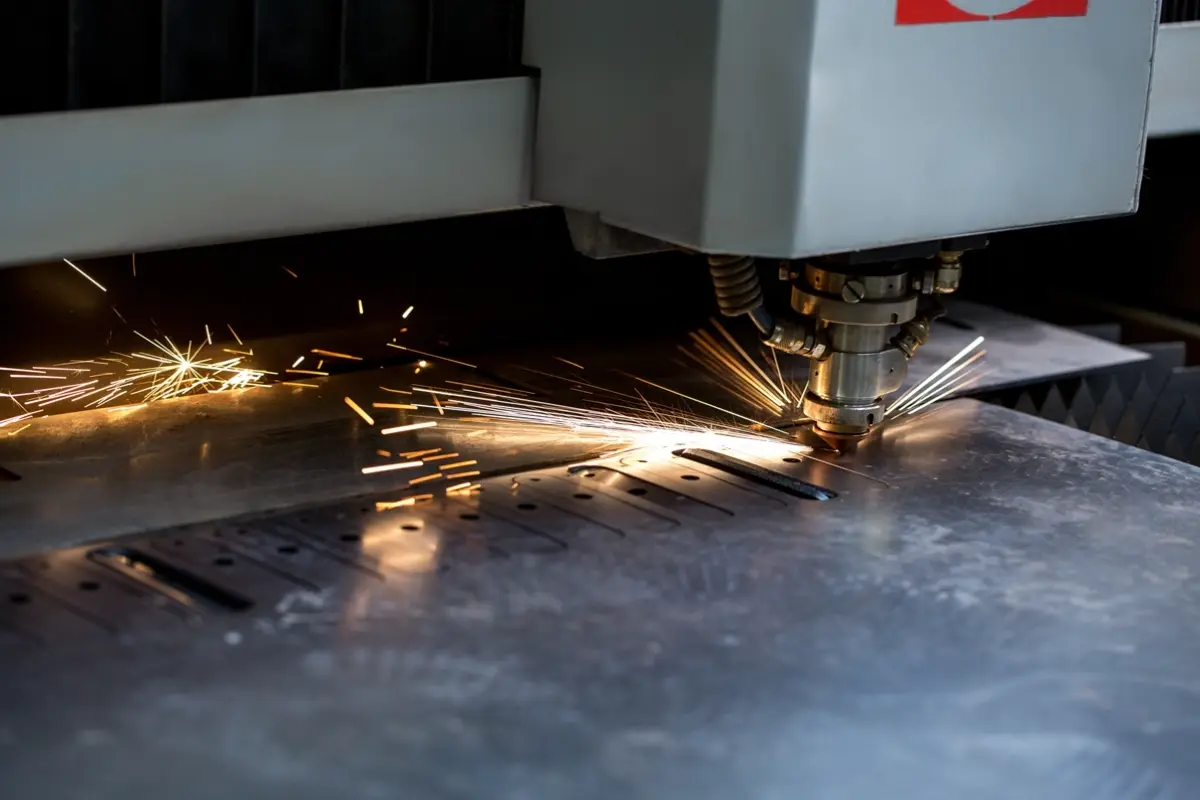
On CNC laser tables, cycle cost reflects total pierce count and linear cut length rather than part footprint. Enclosures featuring dense perforation grids for airflow require hundreds of individual laser pierces. Each pierce adds machine dwell time and consumes assist gas, making high-purity nitrogen cutting a noticeable cost driver on high-hole-count panels.
Press Brake Tooling Access and Staged Setups
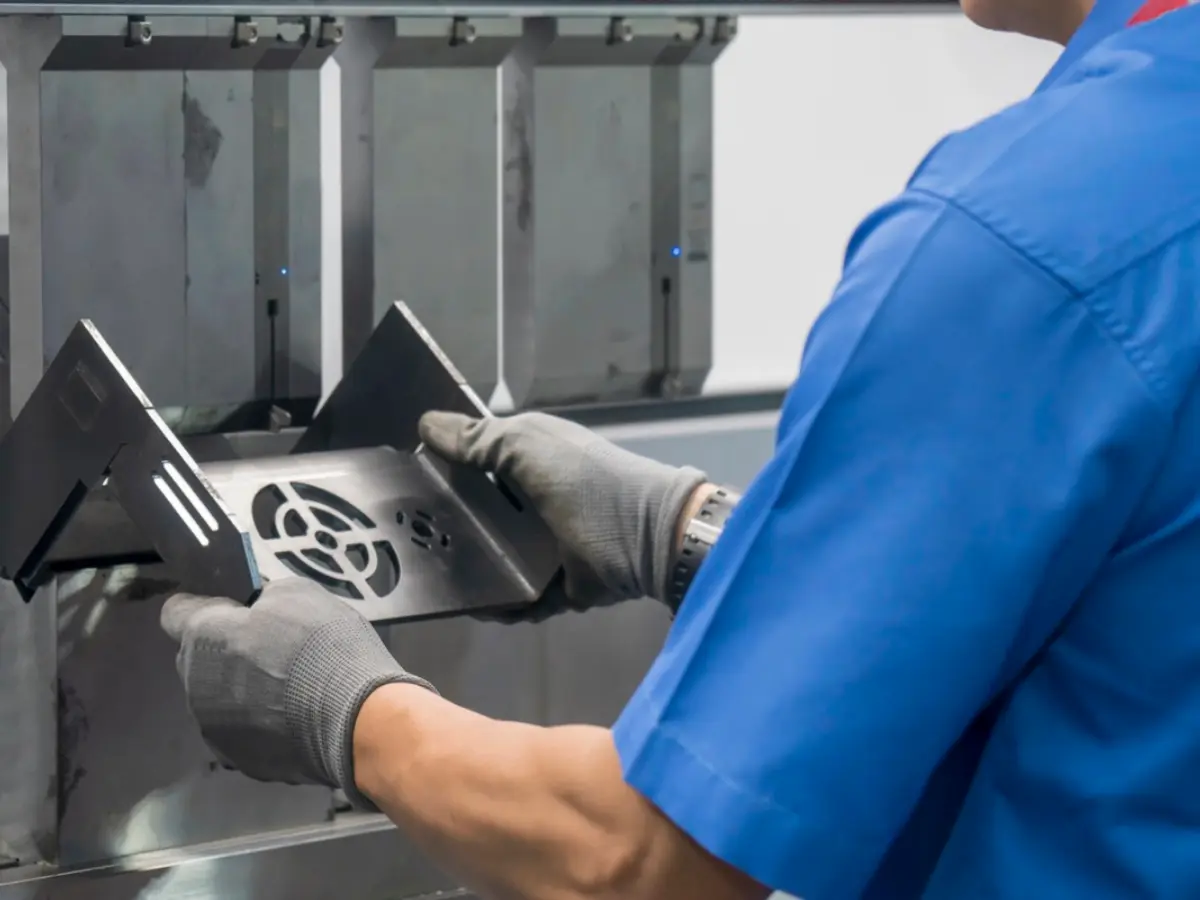
Forming four standard 90-degree flanges on a single plane requires only one operator handling pass using standard V-dies. Conversely, deep box enclosures, narrow return channels, or offset flanges require specialized gooseneck punches, window dies, or multiple staged setups. Every tool change and sheet reorientation increases press brake labor.
Hole-to-Bend Spacing and Distortion Limits
Cutouts positioned closer than three times the material thickness plus the bend radius will stretch and distort during forming. Correcting deformed holes requires secondary reaming, specialized relief cuts in CAD, or moving the hole farther from the bend tangent line. Identifying these clearance limits during early sheet metal design avoids expensive secondary machining.
How Do Joints and Surface Requirements Affect the Quote?
Secondary joining and surface treatments represent the most labor-intensive phases of custom enclosure manufacturing. Drawing specifications determine whether seams require manual welding and grain-matching, and whether critical contact areas require selective masking.
Welded Seams Versus Mechanical Hardware Insertion
Seam design directly dictates manual shop hours. Automated spot welding or self-clinching fasteners (PEM nuts, studs, and standoffs) installed on hydraulic insertion presses take seconds per point. Continuous TIG or MIG seams require precise joint fit-up under 0.5 mm to prevent burn-through on thin metal, followed by visual and dimensional weld inspection to verify joint integrity.
Cosmetic Weld Grinding and Grain Blending
When drawing notes require smooth, seamless exterior corners on visible faces, grinding and grain-matching the weld bead to a uniform brushed or ready-to-paint finish often consumes more labor time than the welding itself. Defining which exterior faces require cosmetic blending and which interior seams can remain as-welded prevents paying for unnecessary finishing labor.
Coating Buildup and Precision Masking Requirements
Industrial powder coating deposits 60 to 100 micrometers (0.002 to 0.004 in) of dry film. Drawings must clearly designate silicone plug masking for threaded inserts and conductive grounding pads. Unmasked threads clog during curing, requiring tedious post-cure chasing with a thread tap, while overspray on grounding studs disrupts electrical continuity.
Which Variables Should an Enclosure RFQ Make Comparable?
Comparing custom enclosure quotes requires aligning drawing revisions and manufacturing scope across all competing suppliers. Use these variables to establish an identical baseline before evaluating design trade-offs with the fabricator:
| Quote Variable | High-Cost Manufacturing Drivers | Define in Drawing or RFQ Package | DFM Trade-Offs to Discuss |
|---|---|---|---|
| Material and blanking | Off-size sheet requirements, high drop scrap, panel flex | Alloy grade, sheet gauge, grain direction, target quantities | Evaluate splitting large panels vs adding stiffener bends to optimize sheet yield |
| Laser cut features | High pierce counts on ventilation grids, tight hole-to-bend spacing | Cutout dimensions, hole-to-bend clearances, deburring standards | Increase hole-to-bend distances to prevent stretch; optimize perforation patterns |
| Forming complexity | Deep return flanges, non-standard bend radii, multiple setups | Critical internal/external dimensions, flange clearance profiles | Standardize internal bend radii to match available tooling; eliminate tool clearance traps |
| Joining and hardware | Continuous cosmetic welds, manual seam blending, tight fit-up | Seam weld symbols, grain-blend criteria, hardware bill of materials | Replace full-length cosmetic welds with stitch welds or tab-and-slot mechanical joints |
| Finishing and masking | Thread clogging, lost ground continuity, rework from overspray | Coating spec (RAL/Pantone), dry film thickness, masked surfaces | Limit tight cosmetic inspection criteria strictly to externally visible user-facing panels |
| Packaging and delivery | Transit deformation, scratched cosmetic faces, unverified logistics | Dunnage specifications, pre-assembled vs flat-pack delivery, Incoterms | Verify whether hardware is installed and whether drop tests/shock packaging are required |
Why Do Prototype and Production Prices Differ?
In precision sheet metal fabrication, unit price differences between prototype runs and volume releases reflect setup amortization and production automation rather than separate manufacturing routes.
Prototype NRE and Machine Setup Amortization
Low-volume prototype orders (1 to 5 units) are dominated by non-recurring engineering (NRE). The fabricator must import CAD data, generate flat patterns, program cutting paths and bend sequences, configure tooling on the press brake, and run bend coupons to determine the precise K-factor for that specific sheet metal lot. Because this front-end setup time is absorbed by only a few pieces, the calculated unit cost appears disproportionately high.
Volume Production Automation and Batch Efficiency
At volume production (hundreds or thousands of units), NRE fees dilute to cents per enclosure. Production unit pricing reflects continuous machine run times, automated hardware insertion, nested batch sheet yields, and bulk powder coating runs. Sourcing teams should instruct suppliers to separate one-time programming and tooling charges from recurring piece-part prices across actual planned order releases.
Frequently Asked Questions
Do I Need a Flat Pattern to Request a Custom Enclosure Quote?
Submit a 3D CAD model (STEP) and a toleranced 2D drawing (PDF) instead of an unfolded flat DXF. Precision fabricators calculate their own flat blanks based on their specific press brake tooling, bottom V-die widths, and material lot ductility. Submitting a customer-unfolded flat pattern with default software bend deductions often causes formed dimensions to drift out of tolerance.
Should the Fabricator Inspect Critical Enclosure Dimensions Before or After Coating?
Inspect overall formed geometry before coating, and verify thread integrity, clearance holes, and mating door gaps after coating. Powder coating adds 60 to 100 micrometers of film thickness. The drawing must identify conductive grounding studs and precision mounting holes so the shop can mask them with high-temperature silicone prior to finishing.
Does Fabricating a Custom Enclosure Give It an IP or NEMA Rating?
No. A bare sheet metal shell does not inherently carry an IP or NEMA rating. Ingress protection depends on the fully integrated assembly, including continuous seal welds, closed-cell gasket compression, cable gland fittings, and latch clamp force. Fabricators build the enclosure to drawing specs, while formal rating certification requires physical laboratory testing of the complete unit.
Are Freight and Import Duties Included in a Custom Enclosure Quote?
Fabrication quotations exclude shipping tariffs unless a specific Incoterms 2020 rule is explicitly named in the quote. For overseas procurement, terms must clarify whether the delivery is EXW (ex-works, freight collected), FOB (freight on board port), or DDP (delivered duty paid to destination facility). Sourcing teams must confirm who handles customs clearance, harbor fees, and inland transport before comparing bids.
What Should Engineering and Sourcing Teams Send for a Rollyu Quote?
To receive an accurate and competitive quotation, provide a complete technical package containing:
- A 3D CAD model in native or neutral STEP format, paired with a 2D PDF drawing detailing all critical post-forming tolerances.
- Exact material grade and thickness specifications (e.g., 5052-H32 Aluminum 0.080 in, 304 Stainless Steel 16 gauge, or SPCC cold-rolled steel).
- Specified welding requirements (weld type, stitch vs continuous, cosmetic grain blending) and an itemized self-clinching hardware schedule (PEM part numbers).
- Precise surface finishing specifications, including coating chemistry, color code, dry film thickness, and drawing-marked masking zones.
- Planned order quantities, required inspection documentation (such as dimensional FAI reports or material test certificates), packaging criteria, and named Incoterms.
Rollyu Precision provides comprehensive sheet metal fabrication services, including CNC laser cutting, press brake forming, TIG, MIG, and spot welding, precision hardware insertion, and secondary finishing. Submitting a fully defined drawing and scope specification allows our engineering team to conduct a thorough DFM review, optimize flat blank yields, and deliver dependable, production-ready enclosure quotes.