
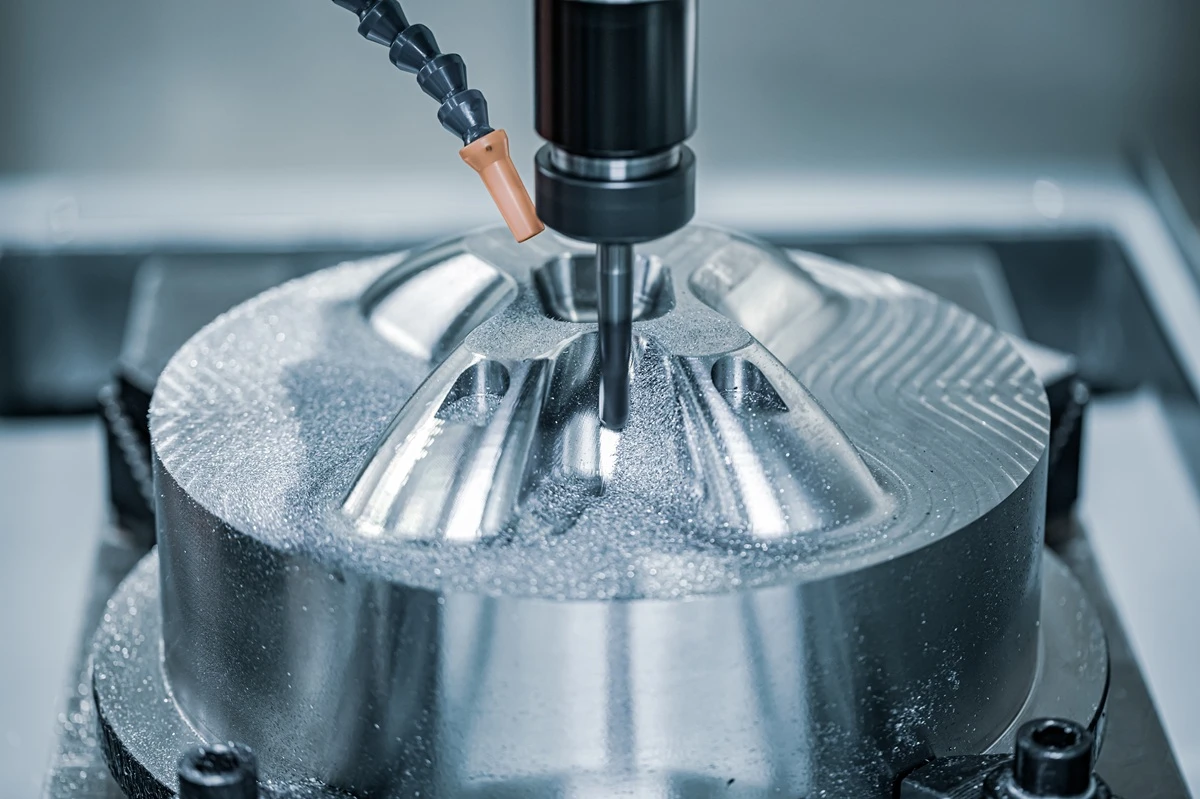
2024 and 6061 are both heat-treatable wrought aluminum alloys, but they solve different engineering problems. 2024 is selected when high strength-to-weight ratio and fatigue performance are central to the design. 6061 is selected when a project needs balanced strength, corrosion resistance, weldability, broad stock availability, predictable finishing, and a lower-risk manufacturing route.
For CNC machined parts, the correct decision depends on more than tensile strength. Temper, plate condition, residual stress, load direction, cyclic duty, outdoor exposure, joining method, coating system, tolerance plan, inspection documentation, and production volume can all change the answer.
What Is the Difference Between 2024 and 6061 Aluminum?
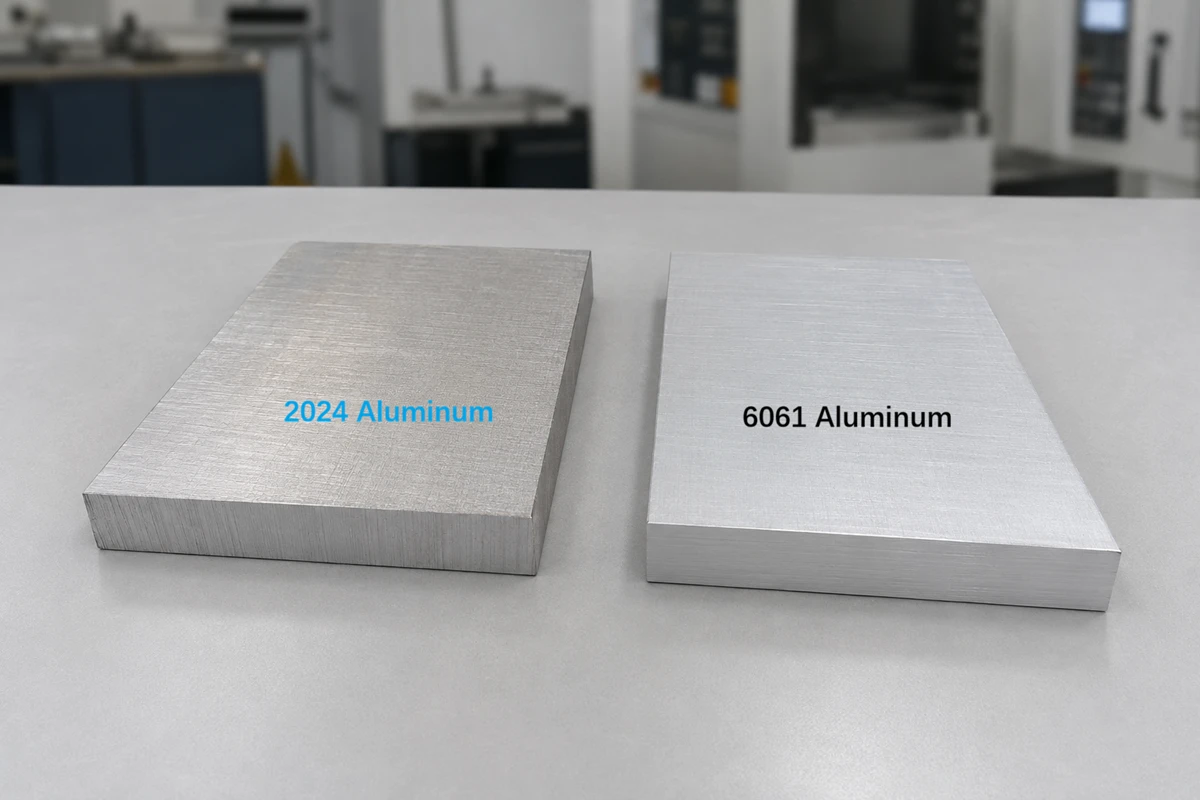
2024 is an aluminum-copper-magnesium alloy. Copper contributes to its strength and fatigue performance, but it also reduces corrosion resistance and makes fusion welding difficult. 6061 is an aluminum-magnesium-silicon alloy known for its balanced mechanical properties, corrosion resistance, weldability, and wide use in machined and fabricated equipment.
The temper must be specified with the alloy. 2024-T3 and 2024-T351 are common engineering conditions; T351 includes stretching after solution heat treatment to reduce residual stress before natural aging. 6061-T6 and 6061-T651 are common for CNC parts, with T651 commonly used for stress-relieved plate.
| Selection factor | 2024 aluminum | 6061 aluminum |
| Primary advantage | High strength and strong fatigue performance | Balanced performance and manufacturing flexibility |
| Common machining temper | T351 plate; T3/T4 in other product forms | T651 plate; T6 bar and extrusion |
| Relative strength | Higher than 6061 in common comparison tempers | Moderate |
| Fatigue performance | Generally stronger for cyclic structural duty | Suitable for many general industrial loads |
| Corrosion resistance | Lower; protection and environment review matter | Better general corrosion resistance |
| Weldability | Poor for conventional fusion welding | Good with established procedures |
| Machinability | Good, often with clean chip formation | Good and widely proven in production |
| Typical fit | Aerospace-style brackets, fittings, tension members, high-load precision parts | Housings, fixtures, frames, robotics and motion-control parts |
2024 vs 6061 Strength and Fatigue Performance
In commonly compared tempers, 2024 provides higher yield and tensile strength than 6061. It is also widely chosen for components exposed to repeated loading, which is why it appears in aircraft structures, high-performance transport equipment, and other fatigue-sensitive assemblies.
That does not mean every high-load part should use 2024. The designer still needs to review stress concentration, notch sensitivity, fastener load transfer, bearing stress, grain direction, fatigue spectrum, operating temperature, corrosion exposure, and safety factor. Material selection cannot replace structural analysis.
| Typical property* | 2024-T351 | 6061-T651 | Design meaning |
| Density | About 2.78 g/cm³ | About 2.70 g/cm³ | Weight difference is small compared with geometry |
| Ultimate tensile strength | About 469 MPa | About 310 MPa | 2024 supports higher static loads |
| Yield strength | About 324 MPa | About 276 MPa | 2024 offers more resistance to permanent deformation |
| Fatigue strength | About 138 MPa | About 96 MPa | 2024 is often favored for repeated cyclic loading |
| Elastic modulus | About 73 GPa | About 69 GPa | Stiffness difference is much smaller than strength difference |
Typical reference values only. Actual minimums and allowables depend on specification, product form, thickness, orientation, temper, test method, and material lot. Use the governing standard, customer specification, and mill certificate for design release.
Which Alloy Is Better for CNC Machining?
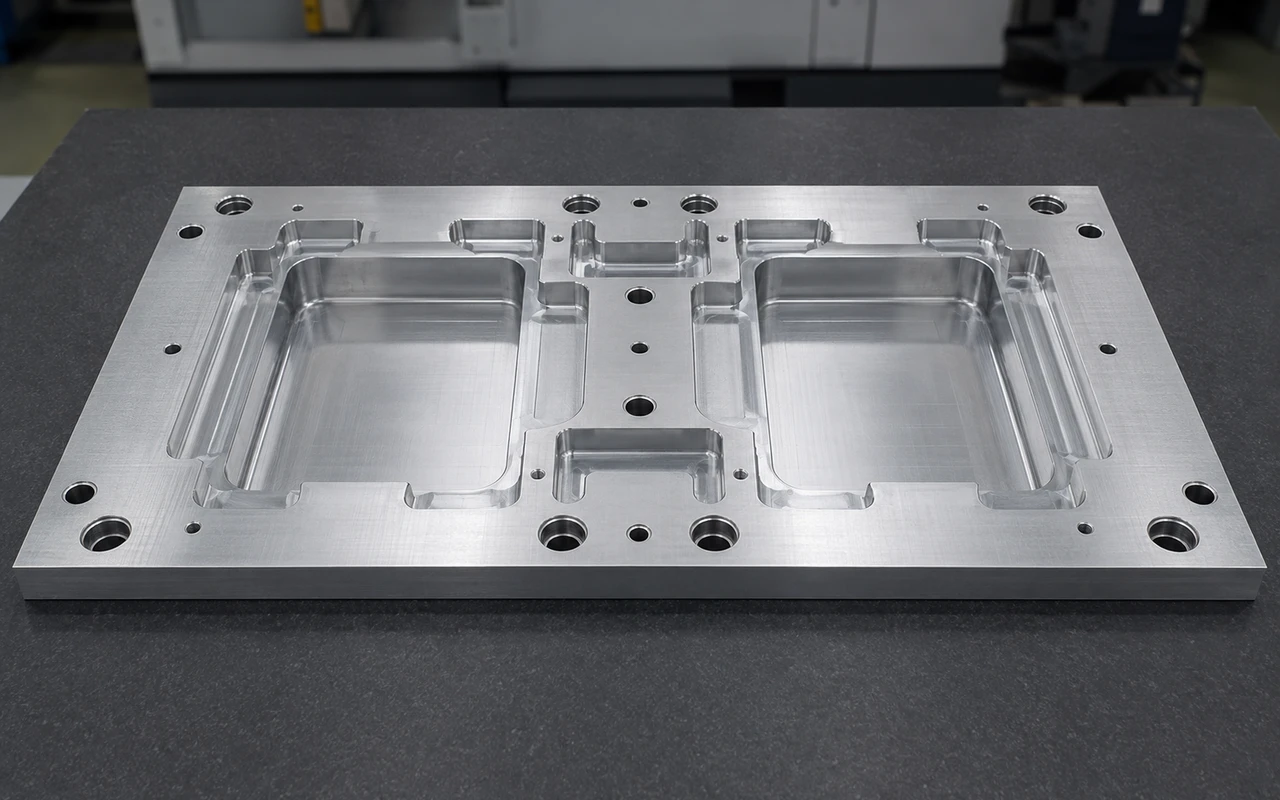
Both 2024 and 6061 machine well with appropriate aluminum tooling. 2024-T351 often produces clean chips and a good as-machined surface. 6061 is the more common general-purpose choice and gives shops broad experience across milling, turning, drilling, tapping, and finishing.
Machining 2024-T351 Aluminum
- Use certified plate with the required temper and grain direction documented.
- Plan datum placement and stock removal around the load path and material orientation.
- Use sharp aluminum-specific tools, stable workholding, and effective chip evacuation.
- Apply staged roughing and finishing for deep pockets, thin walls, and tight flatness.
- Inspect the part after unclamping because residual stress can move critical features.
Machining 6061-T651 Aluminum
- A practical default for plates, housings, brackets, fixtures, mounts, and prototypes.
- Broad stock availability can shorten quotation and prototype lead time.
- Sharp polished cutting edges and coolant help prevent built-up edge and smeared finishes.
- Stress-relieved plate and balanced machining remain important for large thin parts.
Cutting Parameters Must Follow the Actual Setup
A fixed spindle speed or feed copied from a generic guide is not a production specification. Parameters should follow tool diameter, flute count, cutter geometry, radial and axial engagement, machine rigidity, coolant strategy, stock condition, and surface-finish requirement. The approved process should be validated on the actual material and recorded for repeat production.
Dimensional Stability, Temper, and Stock Form
Tight-tolerance parts often fail because the stock condition and machining sequence were treated as purchasing details. Removing a large volume from one side of plate can release residual stress and change flatness, parallelism, bore position, or sealing-face geometry.
For heavily pocketed components, 2024-T351 or 6061-T651 plate can provide a more stable starting point than a non-stress-relieved condition. The final result still depends on symmetric roughing, intermediate relaxation, low-distortion fixturing, controlled finishing cuts, temperature-stable inspection, and measurement after unclamping.
Questions to Resolve Before Quotation
- Is plate, bar, extrusion, tube, or forging required?
- Must grain direction follow the primary stress or fatigue direction?
- Which surfaces define the functional datum structure?
- Are flatness and position requirements applied in the free state or restrained state?
- Will anodizing, chemical conversion coating, painting, or plating affect final dimensions?
Corrosion Resistance and Surface Finishing
6061 has the advantage when a part will operate in humid, outdoor, washdown, or generally corrosive conditions. It can often be used with anodizing or chemical conversion coating and is commonly selected where a predictable visible finish is required.
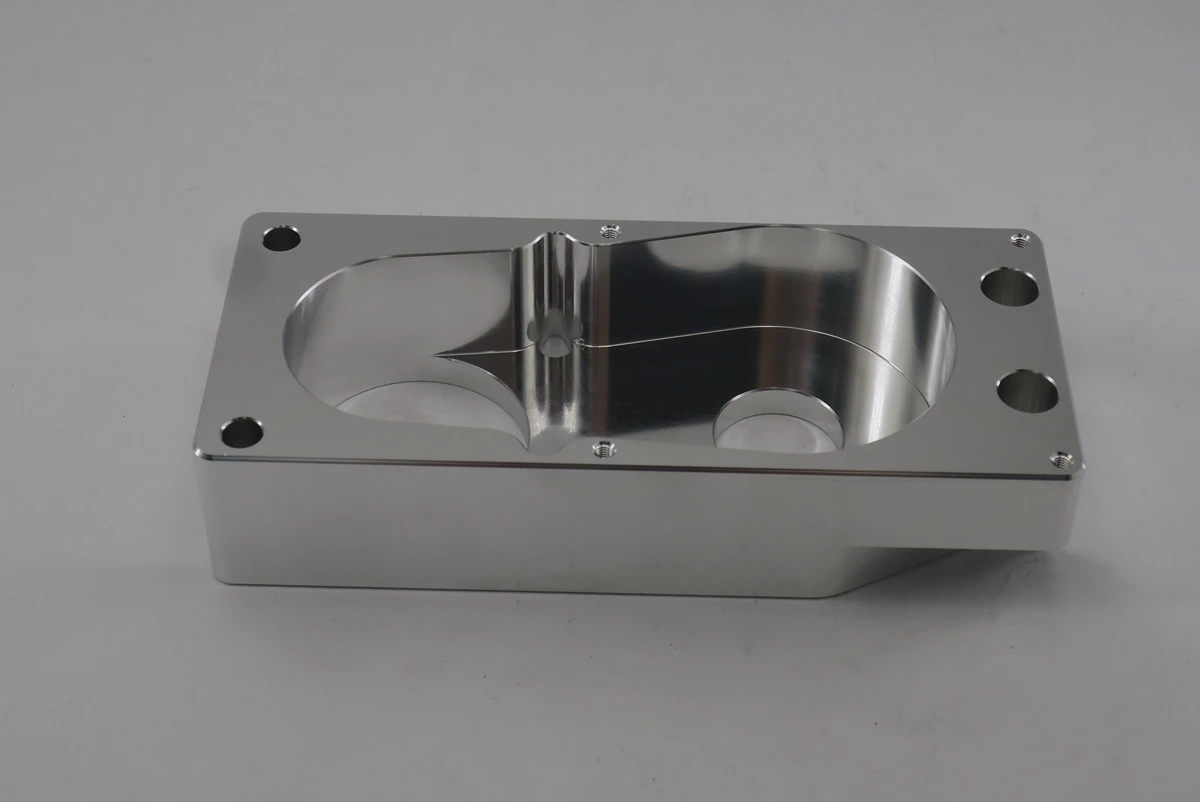
2024 has lower inherent corrosion resistance because of its copper content. Bare 2024 should not be treated as equivalent to bare 6061 in a corrosive environment. Protection may involve clad stock, chemical conversion coating, anodizing, primer and paint, or another customer-approved system. The correct finish depends on electrical bonding, fatigue, wear, dimensional allowance, environment, and industry specification.
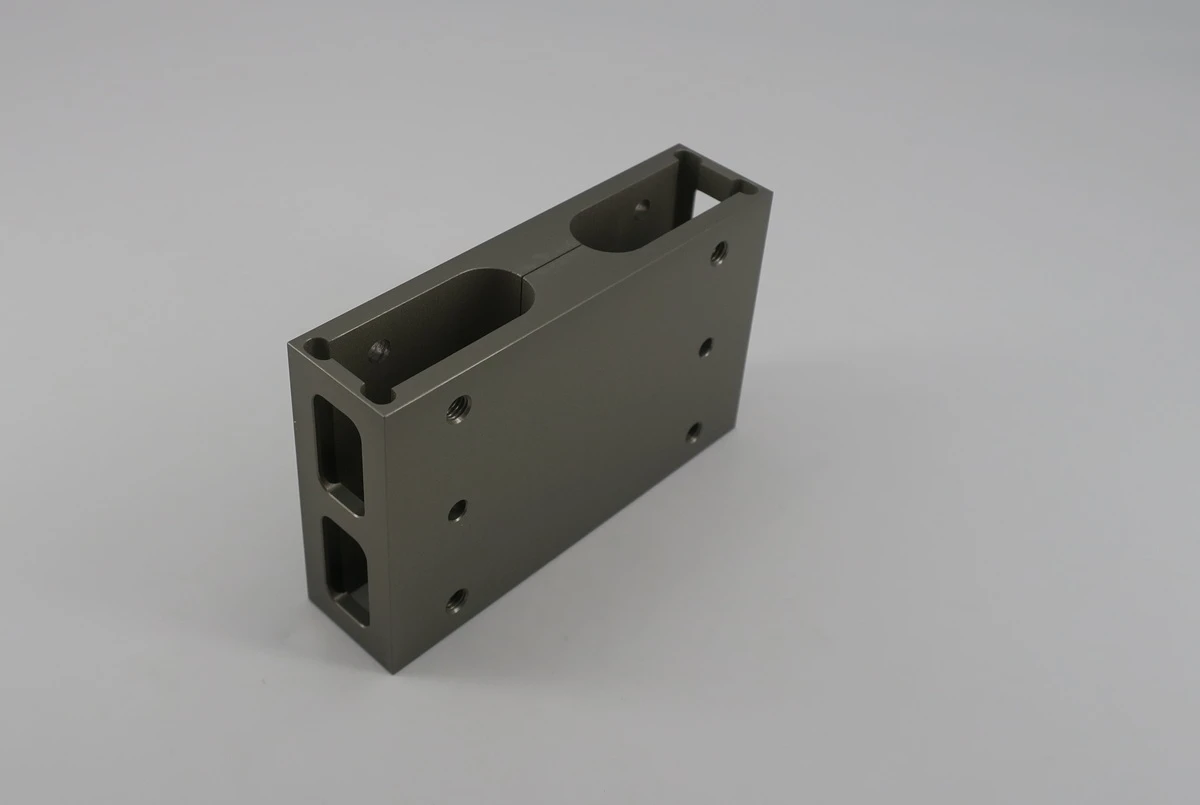
Finishing Details That Belong on the Drawing
- Finish type and governing specification
- Coating thickness and whether it is included in dimensional limits
- Masking for threads, bearing seats, electrical contacts, sealing faces, and precision fits
- Color, gloss, texture, and approved sample requirements for visible surfaces
- Corrosion, adhesion, conductivity, or wear tests and the required reports
Weldability and Assembly Strategy
6061 is normally the better choice for welded structures. It has established welding routes, although welding can reduce strength in the heat-affected zone and may require design or post-weld considerations.
2024 is generally not selected for conventional fusion-welded structures because of hot-cracking risk and reduced joint performance. Designs using 2024 commonly rely on mechanical fasteners, interference fits, pins, bushings, adhesives, or other qualified joining methods. If welding is unavoidable, the joint requires specialist engineering and process qualification.
Typical Applications for 2024 and 6061
Applications Commonly Suited to 2024
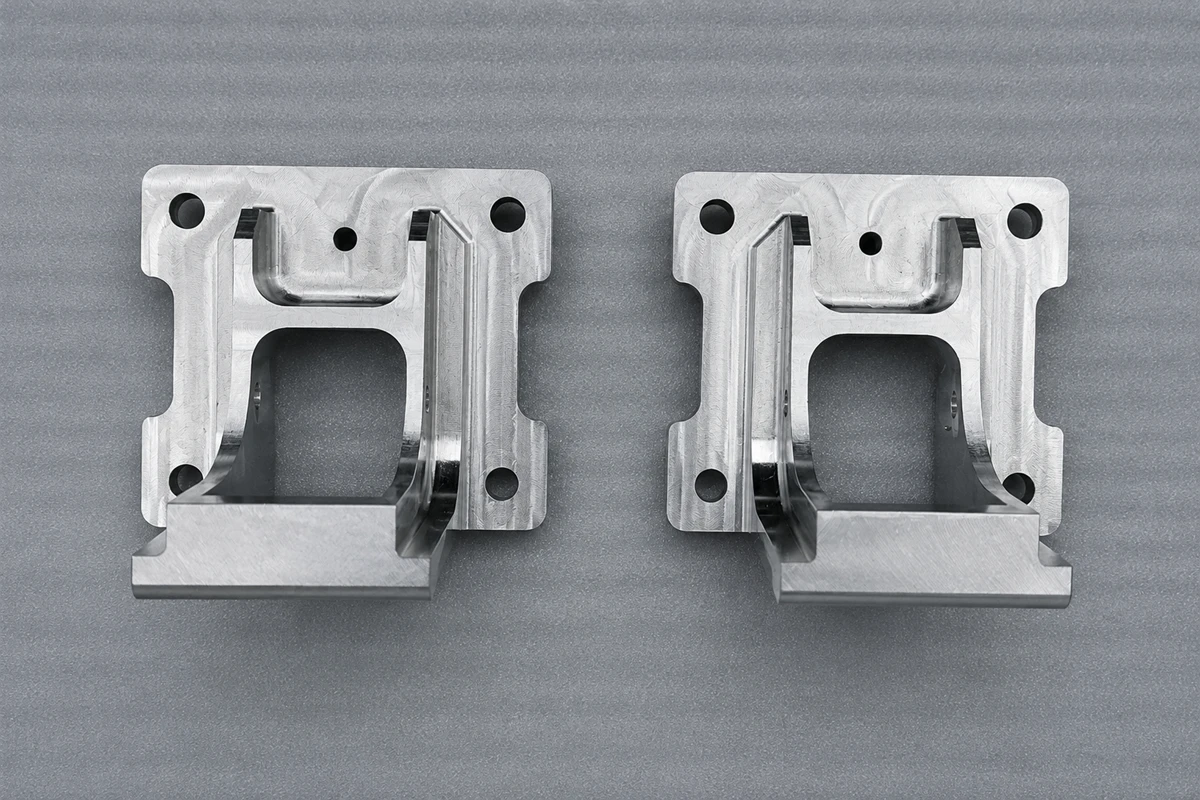
- Fatigue-loaded aerospace and satellite brackets, fittings, frames, and structural links
- High-strength precision plates, tension members, pins, couplings, and fastener-related components
- Transport and test-equipment parts exposed to repeated mechanical loading
- Lightweight fixtures or mechanisms where 6061 does not provide enough strength
Applications Commonly Suited to 6061
- Motion-control bases, stage components, motor mounts, actuator brackets, and frames
- Robotics housings, sensor mounts, end-effector structures, and fixture plates
- Medical and life-science equipment housings and automation components
- Photonics mounts, optical hardware, instrument chassis, and thermal structures
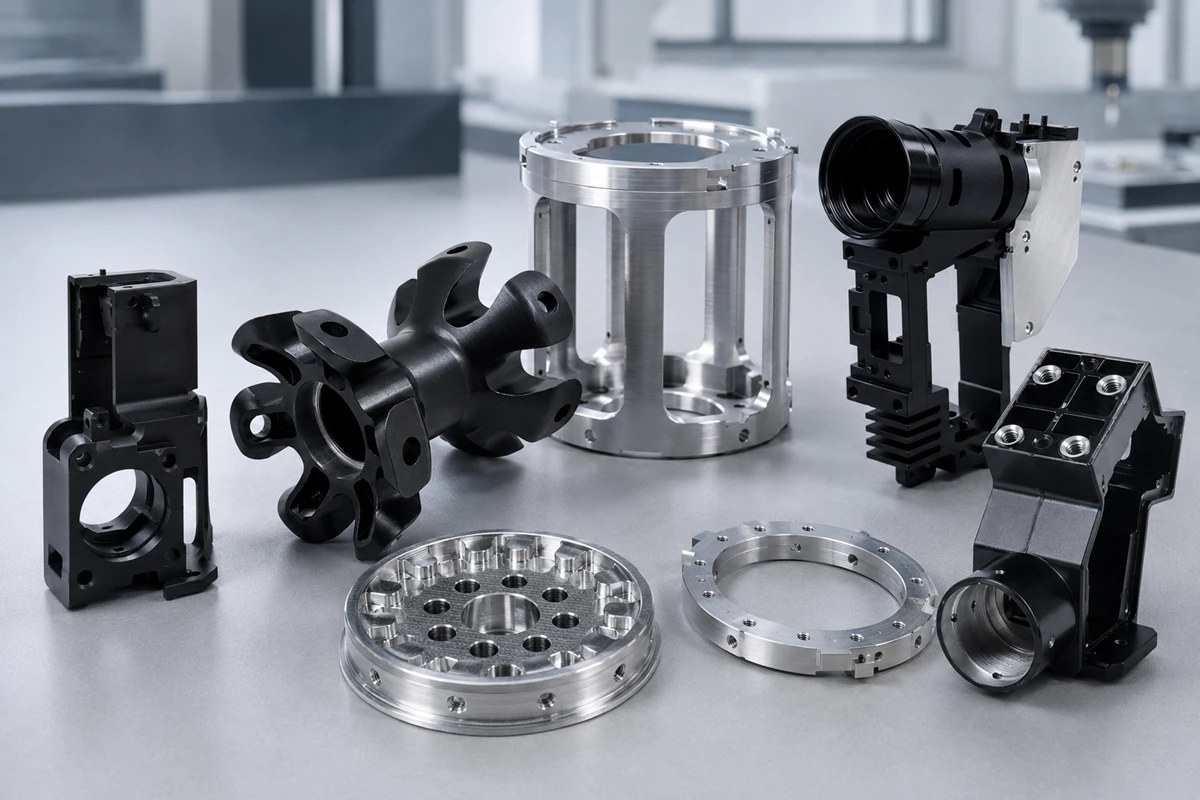
- General industrial prototypes and repeat-production CNC parts
Cost and Supply Considerations
6061 usually offers the simpler sourcing path because plate, bar, tube, and extrusion are widely available in many sizes. 2024 can involve higher material cost, fewer local stock options, stricter certification requirements, and additional corrosion protection.
Total part cost should include more than material price. Compare stock utilization, cutting time, fixture complexity, distortion risk, tool life, coating, masking, inspection, material traceability, first-article documentation, packaging, and scrap exposure. For a fatigue-critical part, the correct 2024 specification may reduce functional risk even if the purchase price is higher. For a general equipment housing, 6061 may deliver equal function with a simpler supply chain.
How to Choose Between 2024 and 6061
| Engineering question | Likely choice | Reason |
| Is cyclic fatigue performance a primary design driver? | 2024 | Higher strength and fatigue capability in common tempers |
| Does the part require welding? | 6061 | More practical and established welding route |
| Will the part face humidity or corrosive exposure? | Usually 6061 | Better general corrosion resistance |
| Is the part a general CNC housing, base, or fixture? | Usually 6061 | Balanced performance, availability, finishing, and cost |
| Is 6061 strength insufficient but 7075 unnecessary? | Evaluate 2024 | High strength with strong fatigue performance |
| Is cosmetic anodized color matching important? | Usually 6061 | More predictable general-purpose cosmetic finishing route |
| Are certified aerospace-style material records required? | Project-specific | Specify standard, temper, lot traceability, and reports |
Practical Selection Rule
Start with 6061 for general precision equipment and move to 2024 only when the load case, fatigue requirement, weight target, or customer specification justifies the change. If 2024 is selected, address corrosion protection, joining, grain direction, temper, traceability, and post-machining inspection at the same time—not after the first parts are made.
What to Include in a 2024 or 6061 Aluminum RFQ
- 3D CAD model and controlled 2D drawing revision
- Alloy, temper, product form, material specification, and grain-direction requirement
- Mill certificate, lot traceability, first-article, or inspection-report requirements
- Critical datums, geometric tolerances, free-state conditions, fits, threads, and surface roughness
- Finish specification, masking, coating allowance, corrosion testing, and visible-surface criteria
- Prototype quantity, annual volume, batch size, packaging, and delivery schedule
How Rollyu Precision Supports Aluminum CNC Projects
Rollyu Precision manufactures custom aluminum parts for motion control, robotics, medical devices, photonics, life-science equipment, semiconductor systems, and space-related applications. Our capabilities include 3-axis, 4-axis, and 5-axis milling, CNC turning, precision grinding, EDM, finishing coordination, and dimensional inspection.
Before quotation, our engineering team can review alloy and temper, stock condition, machining access, thin-wall distortion, datum strategy, coating allowance, inspection method, traceability, and the transition from prototype to repeat production. Rollyu Precision operates under ISO 9001 and ISO 13485 quality systems.
| CTA — Send Your 2024 or 6061 Aluminum Part for DFM Review
Upload your CAD model and 2D drawing. Tell us the load case, fatigue duty, environment, finish, critical tolerances, quantity, and documentation requirements. Rollyu Precision will review the material choice and machining route before quotation. |
Frequently Asked Questions
H3: Is 2024 aluminum stronger than 6061?
Yes, in commonly compared tempers, 2024 generally has higher yield and tensile strength than 6061. Compare the exact temper, thickness, orientation, specification, and certified material values before design release.
H3: Which is better for CNC machining, 2024 or 6061?
Both machine well. 6061 is the more common general-purpose option, while 2024-T351 is a strong choice for higher-strength and fatigue-sensitive parts. Geometry, stock condition, finishing, and inspection often matter as much as cutting behavior.
H3: Is 2024 aluminum corrosion resistant?
Its corrosion resistance is lower than 6061. Parts may require clad stock, conversion coating, anodizing, primer, paint, or another approved protection system depending on the environment.
H3: Can 2024 aluminum be welded?
2024 is generally avoided for conventional fusion-welded structures because of cracking risk and reduced joint properties. Mechanical fastening or another qualified joining method is usually preferred.
H3: What is the difference between 2024-T3 and 2024-T351?
Both are solution heat-treated and naturally aged conditions. T351 also includes controlled stretching for stress relief, making it a common plate condition for machined parts. Confirm the product standard and supplier certification.
H3: Is 2024 better than 7075?
Neither is universally better. 7075 is normally chosen for higher maximum strength, while 2024 is often selected for strong fatigue performance and may be more economical. Corrosion, toughness, temper, and design allowables also matter.
H3: Can 2024 aluminum be anodized?
Yes, but its copper content can affect appearance and corrosion behavior. Define the finish specification, masking, dimensional allowance, and acceptance criteria rather than assuming it will look identical to anodized 6061.
H3: What information is needed for a CNC machining quote?
Send the 3D model, 2D drawing, alloy and temper, material specification, finish, critical tolerances, quantities, traceability, inspection reports, packaging, and delivery target.