
Choose CNC machining for low-volume plastic parts, design changes, tight functional features, and validation before mold tooling. Choose injection molding when the design is stable and order volume can absorb tooling cost.
The choice depends on where the risk sits. CNC machining checks geometry, stock material behavior, threads, bores, and fit before tooling. Injection molding checks molded behavior, including shrinkage, gates, sink marks, draft, and repeat cosmetics.
What Is the Difference Between CNC Machining and Injection Molding?
CNC machining cuts plastic from solid stock; injection molding fills a mold cavity with molten resin. This process difference controls change speed, feature risk, and cost timing.
Cutting Parts From Solid Plastic Stock
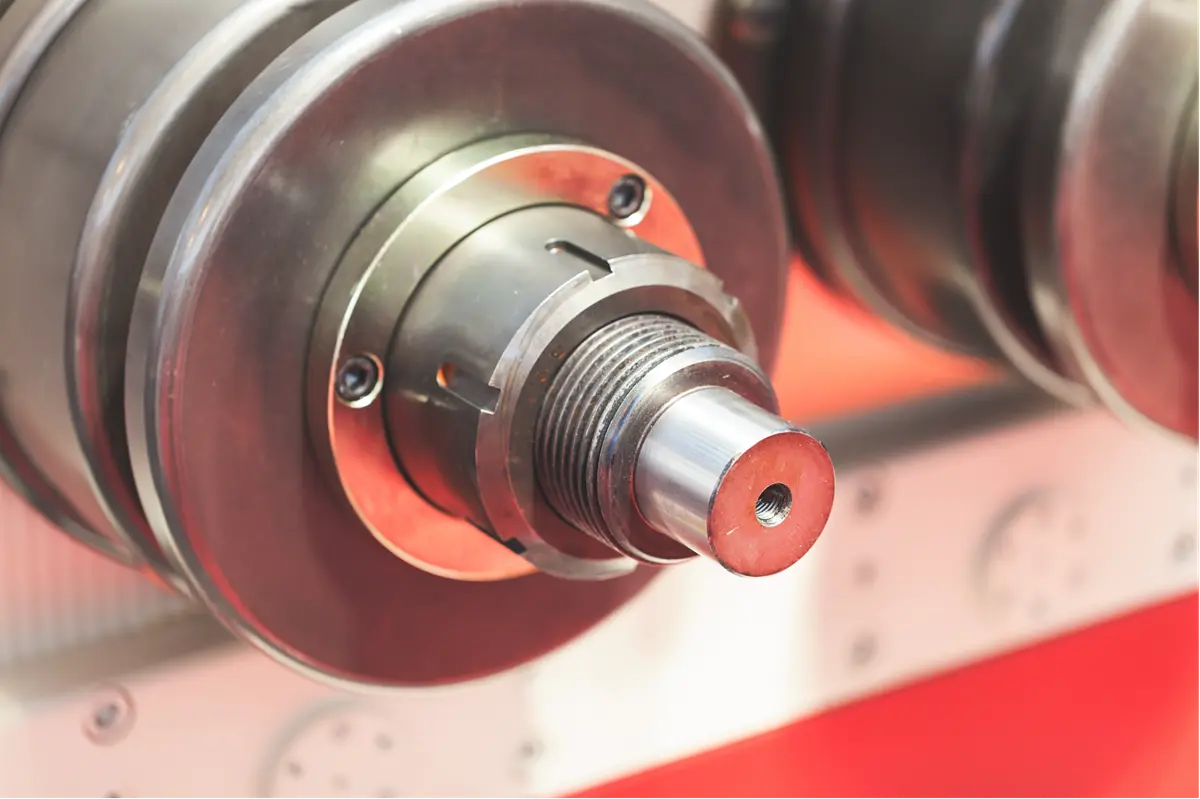
CNC machining cuts plastic from rod, plate, or block stock with end mills, drills, taps, boring tools, and finishing steps when cleaner edges or surfaces matter. This subtractive route fits functional prototypes, bridge parts, fixtures, housings, manifolds, bushings, guides, and validation samples.
CNC machining works best when buyers need real engineering plastic behavior from PEEK, PTFE, POM, PMMA, PA, PC, ABS, or similar stock. For CNC machining parts, Rollyu lists ISO 2768-M plastic dimensions at +/-0.05 mm for linear, hole, and shaft dimensions, compared with +/-0.01 mm for metal dimensions, so buyers should not copy metal tolerance notes onto plastic parts.
Forming Parts Inside an Injection Mold
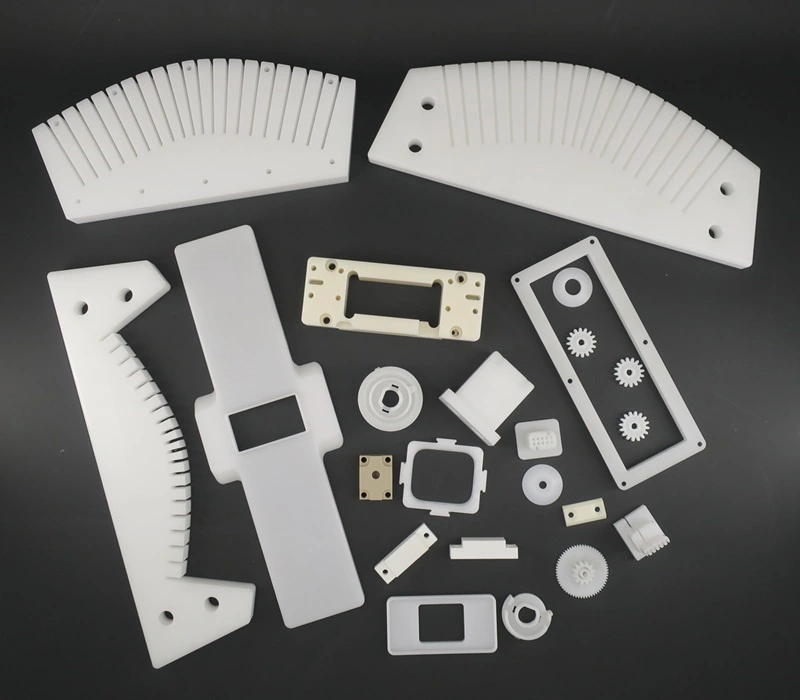
Injection molding forms plastic parts by pushing molten resin into a closed mold, cooling the resin, and ejecting the part. The mold controls cavities, cores, slides, ejector locations, gates, texture, and cooling.
This molding route fits repeat parts once the geometry is stable. The tooling can build ribs, bosses, snap fits, textures, and cosmetic surfaces into each cycle, but mold changes can require tool machining, inserts, gate changes, or new trial shots.
Process Differences That Change Cost, Lead Time, and Design Freedom
CNC machining keeps design changes close to CAD and CAM. Injection molding moves more risk into tooling, resin flow, cooling, and part ejection.
| Decision Factor | CNC Machining | Injection Molding |
|---|---|---|
| Upfront cost | Lower because the project does not need a dedicated mold | Higher because the team must design, machine, sample, and approve the mold |
| Unit cost | Higher at larger volumes because each part still needs machine time | Lower after approval when volume absorbs tooling cost |
| Lead time for changes | Faster when geometry, hole locations, or features change | Slower when mold steel, gates, cooling, or ejector layout must change |
| Design freedom | Strong for flatness, bores, threads, slots, and tight machined features | Strong for molded ribs, bosses, textures, snap fits, and repeated plastic forms |
| Main risk | Workholding, tool access, heat, burrs, and plastic movement after cutting | Shrinkage, sink marks, warpage, gate marks, draft, and tooling rework |
How Do Cost, Volume, and Lead Time Affect the Choice?
CNC machining usually fits unstable designs and low-volume plastic parts. Injection molding usually fits stable designs that need repeat production. Bad timing creates cost in either direction: CNC cost stacks up at volume, while mold tooling can trap a design error inside steel.
Upfront Cost Before Tooling
CNC machining has lower upfront cost because the quote usually covers material, programming, setup, machining, finishing, and inspection. A buyer can test one part, ten parts, or a small bridge run without paying for a production mold.
Injection molding has higher upfront cost because tooling work starts before the first usable molded part exists. The project must pay for mold design, mold machining, gate planning, cooling, ejection, sampling, and corrections before the unit-cost advantage appears.
Unit Cost After Mold Approval
Injection molding lowers unit cost after the team approves the mold and volume rises. Each cycle can produce repeat parts with less labor per part than machining, especially when cosmetic texture, ribs, bosses, and snap fits are already built into the tool.
CNC machining repeats cutting time on every part. The per-part cost can work for low-volume production, replacement parts, validation builds, and bridge orders, but higher repeat quantities often push plastic parts toward injection molding once the design freezes.
Lead Time During Design Changes
CNC machining handles design changes through CAD edits, CAM updates, setup changes, and new inspection checks. That flexibility helps when a prototype reveals a wrong hole location, weak wall, bad cable clearance, or thread depth problem.
Injection molding handles design changes through tool changes. A small feature change may still require welding, re-machining, inserts, gate changes, or another trial run. That delay hurts when the design team finds the problem after approving mold steel.
Production Volume for Mold Tooling
Mold tooling makes sense when expected volume, part stability, and schedule justify the upfront work. Buyers should not treat the mold as a shortcut if the design still has unresolved fit, strength, or cosmetic risks.
Before paying for tooling, check four points:
- Annual volume: The order size should recover mold cost through lower unit cost.
- Design stability: Holes, wall thickness, clips, bosses, ribs, and cosmetic faces should be close to final.
- Material choice: The resin should match strength, temperature, chemical, wear, and appearance needs.
- Inspection plan: Buyers should define critical dimensions, flatness, thread fit, and appearance standards before sampling.
How Do Material Behavior and Design Risks Compare?
Machined plastic and molded plastic can share the same polymer family and still behave differently. Manufacturing method changes stress, texture, dimensional movement, and the checks high-risk features need.
Machined Plastic and Molded Plastic Behavior
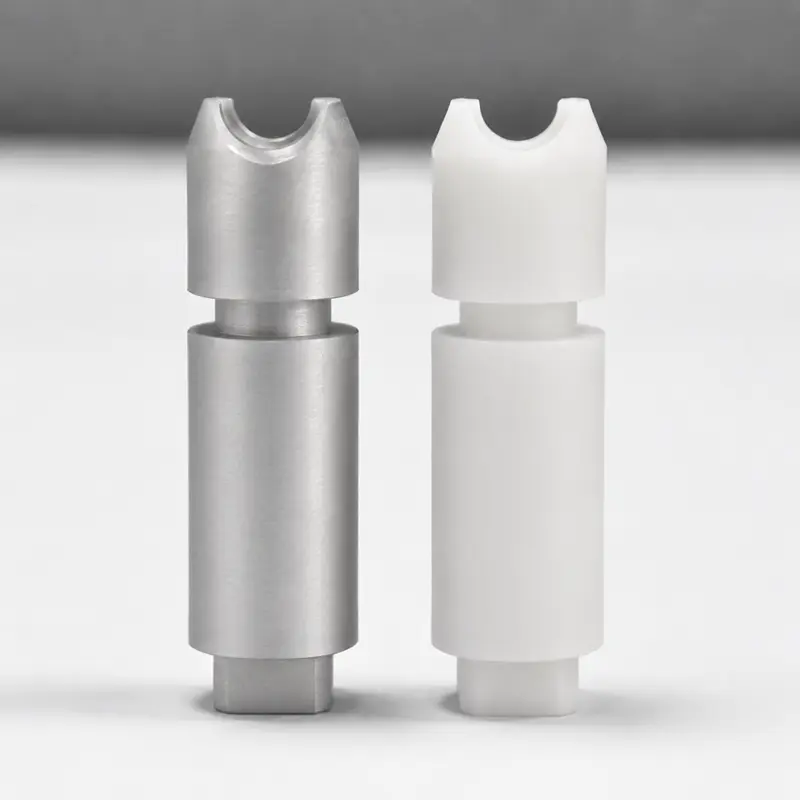
Machined plastic starts with solid stock behavior, then machining adds heat, tool pressure, clamping, and stress release. A flat plate can move after cutting removes material. A thin wall can flex during cutting. A soft or slippery plastic can push away from the tool. Molded plastic behavior depends on resin flow, gate location, cooling rate, shrinkage, packing pressure, and ejection. Glass-filled plastics can also show orientation effects, which can change strength and dimensional movement across the part.
Material choice should follow the test purpose, since plastic machining behavior changes across PEEK, PTFE, POM, PMMA, PA, PC, and other engineering plastics.
Shrinkage, Sink Marks, and Warpage
Injection molding exposes shrinkage, sink marks, and warpage because molten resin cools inside the mold. Thick sections cool slower than thin sections, so bosses, ribs, and heavy corners can pull surfaces inward or bend the part.
CNC machining does not create molded shrinkage, but machined plastic can still warp from stock stress, clamping, heat, and unbalanced material removal. A CNC prototype can prove geometry and function, but a molded trial still needs to verify flow, cooling, gate marks, and shrink behavior.
Threads, Flatness, Tight Features, and Inspection Needs
CNC machining can control threads, bores, slots, sealing faces, and flatness during prototype or low-volume work because cutting tools make those features directly. The inspection plan can focus on the dimensions that control assembly.
Injection molding can produce threads, snap fits, bosses, and thin features, but feature design has to account for draft, tool movement, resin flow, and ejection. Some molded features may need inserts, side actions, collapsible cores, or secondary machining when the part needs tighter control.
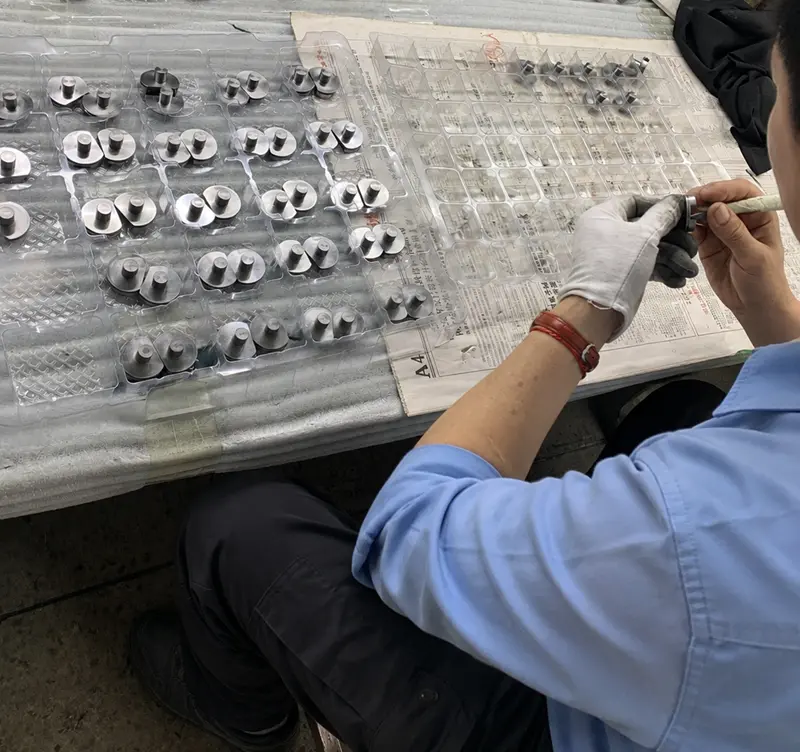
Inspection should match the risk. CMM inspection can verify datums and profile on harder plastics, while thread gauges, bore gauges, pin gauges, micrometers, and visual checks may be better for features that move or flex during contact.
Surface Finish and Cosmetic Expectations
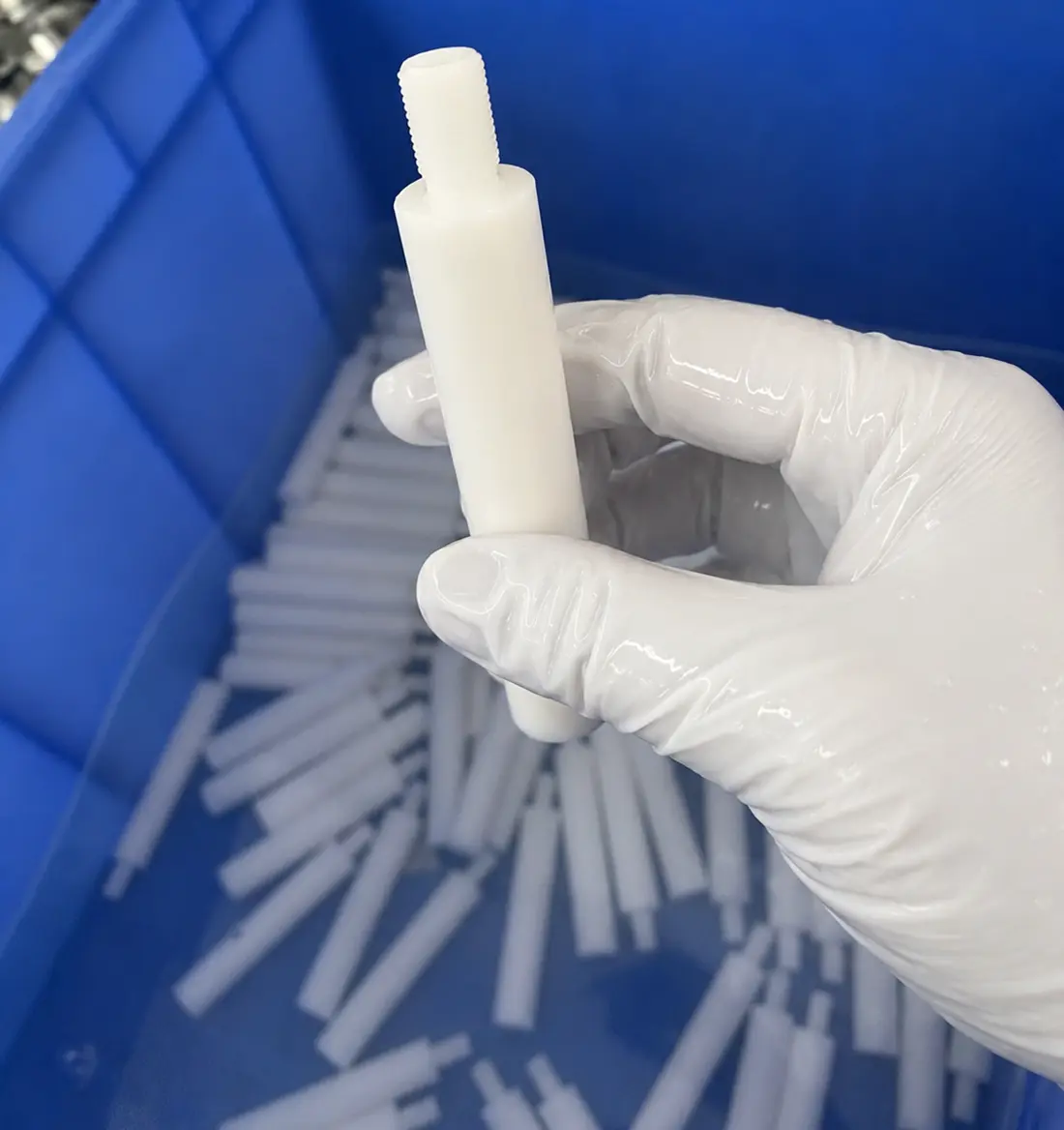
CNC-machined plastic surfaces show tool paths, cutter marks, deburring quality, and polishing choices. Machined surfaces can work for functional parts, but cosmetic faces may need extra finishing or a process change if the buyer expects molded texture.
Injection-molded surfaces follow mold polish, texture, gate placement, venting, and resin behavior. A molded cosmetic part can look consistent at volume, but sink marks, weld lines, flow marks, and gate vestige can appear if the design or tool is not tuned.
When Does Injection Molding Make More Sense?
Injection molding makes more sense when the design freezes, the project needs repeat parts at volume, and molded features are part of the final product. Tooling becomes useful after the team has checked fit, load paths, material choice, and cosmetic requirements.
Stable Designs Ready for Higher-Volume Production
Choose injection molding when CAD, drawings, material, color, texture, and critical dimensions are stable enough for tool design. The mold should not carry unresolved questions about wall thickness, screw bosses, snap fit strength, gasket compression, or assembly clearance.
Injection molding also fits repeat orders that need consistent appearance. After mold approval, the process can reduce unit cost and speed repeat production, as long as the tool and inspection plan match the part risk.
Molded Features Such as Ribs, Bosses, and Snap Fits
Injection molding makes more sense when the final design depends on molded features. Ribs can stiffen a housing without adding heavy walls. Bosses can support screws and inserts. Snap fits can reduce hardware when the geometry, resin, and fatigue risk match the use case.
CNC machining can cut a prototype shaped like a ribbed or snapped molded part, but CNC machining does not prove molded flow, knit lines, shrinkage, draft, or ejection. Use mold-oriented DFM before tooling if ribs, bosses, clips, living hinges, or cosmetic textures drive the product.
When Should You Choose CNC Machining for Plastic Parts?
Choose CNC machining when plastic part risk still lives in geometry, material, tolerance, or documentation. CNC machining lets a buyer test real engineering plastic before mold tooling locks in gate locations, wall choices, and critical features.
Validating Low-Volume Parts Before Tooling
CNC machining fits low-volume plastic parts when the buyer needs real parts before paying for tooling. This use case includes design validation, pilot builds, fixtures, replacement parts, medical device component samples, lab equipment parts, automation hardware, and bridge production.
A focused CNC prototype machining plan can verify fit, threads, sealing faces, wear surfaces, and assembly clearance before mold tooling begins. The machined prototype will not copy every molded behavior, but the part can catch geometry and function problems while changes are still cheaper.
Testing Functional Prototypes in Production-Grade Plastics
CNC machining fits prototypes that must use production-grade plastic stock. PEEK, PTFE, POM, PMMA, PA, PC, ABS, and other plastics can give better feedback on wear, stiffness, heat, chemical exposure, transparency, or insulation than a visual model.
A broader plastic prototype manufacturing plan can still combine methods. A design team may print early shapes, machine functional plastic parts, and use prototype molding only when molded behavior becomes the question.
Checking DFM, Tolerance, and Documentation Requirements
CNC machining is useful when a buyer needs DFM feedback, tolerance review, and inspection records before tool commitment. The supplier should review 3D CAD, 2D drawings, material callouts, thread specs, finish notes, critical dimensions, and test purpose before quoting.
For quote-stage review, Rollyu Precision can pair CNC machining and rapid prototyping with DFM review, CMM inspection, material traceability, dimensional reports, Certificate of Conformance support, and Material Test Reports. This support is useful when a machined plastic part must back a tooling decision, pilot build, or low-volume order.
FAQs
Should You Test a CNC Prototype Before Paying for Injection Mold Tooling?
Yes, test a CNC prototype when geometry or function is not proven. CNC machining can reveal wrong hole positions, weak walls, thread problems, poor clearance, and bad assembly access before mold tooling starts. Molded trials should still confirm shrinkage, gate marks, cosmetic texture, and ejection behavior.
Can CNC Machining Replace Injection Molding for Plastic Parts?
CNC machining can replace injection molding for prototypes, bridge runs, and low-volume custom parts. CNC machining usually cannot match molded economics at higher volumes because every machined part still needs cutting time. Use injection molding when the design is stable and repeat quantity justifies tooling.
Do Injection-Molded Parts Need Draft Angles if CNC-Machined Parts Do Not?
Yes, molded parts usually need draft angles for clean ejection. CNC-machined parts can have straight walls when the cutter and setup can reach the feature, but injection-molded parts must release from the mold. Missing draft can cause drag marks, sticking, distortion, or tool wear.
Why Can a CNC-Machined Plastic Prototype Behave Differently From a Molded Part?
A CNC-machined prototype starts as solid stock, while a molded part cools from molten resin. Stock stress, machining heat, and clamping affect machined parts. Mold flow, gate location, packing pressure, cooling rate, and shrinkage affect molded parts, so both versions need separate validation.
What Files Should Buyers Prepare Before Quoting Plastic Parts?
Prepare a 3D CAD file, a 2D drawing, material grade, quantity, finish, tolerance notes, and test purpose. STEP files help quoting, and drawings should mark critical dimensions, threads, datums, surface finish, inserts, and inspection needs. For molded parts, include draft, wall thickness, texture, color, gate preferences, and expected volume.