
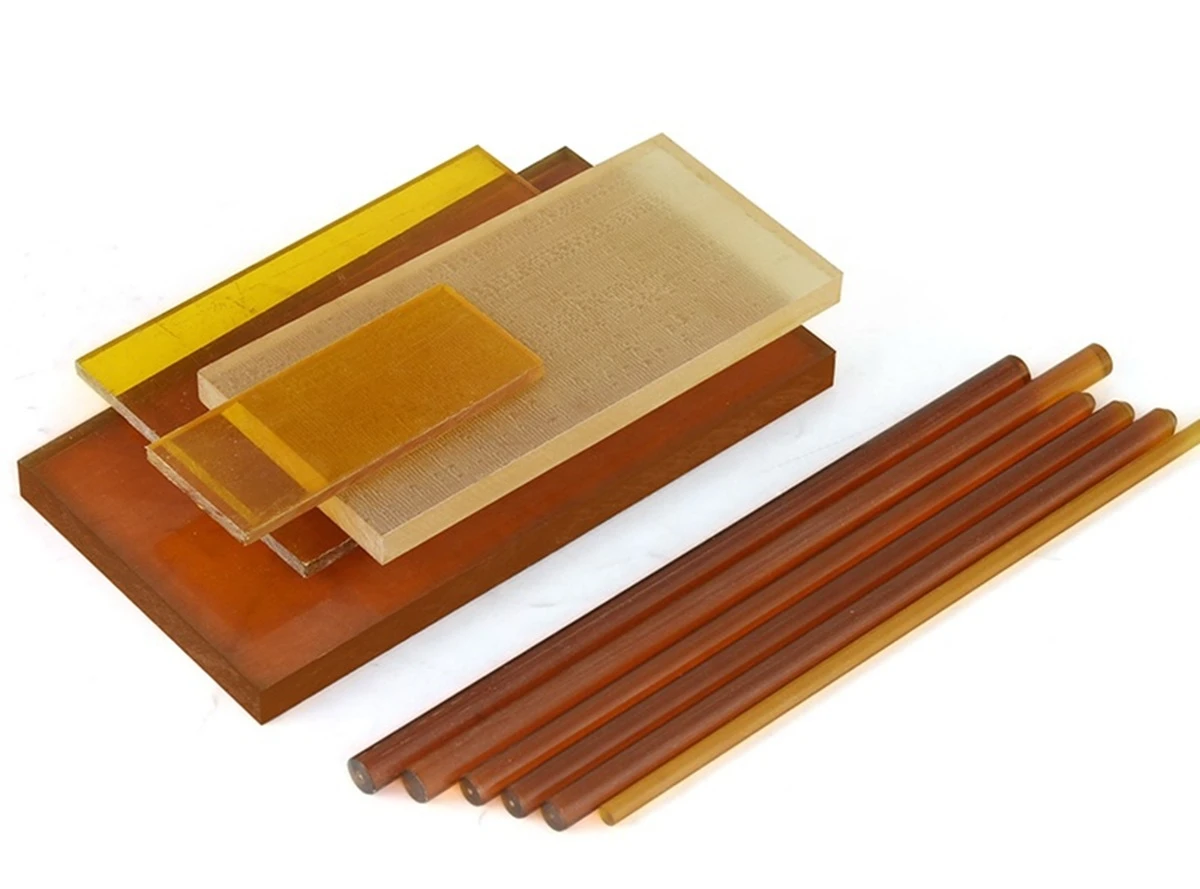
Ultem 1000 is an unreinforced, amorphous polyetherimide (PEI) engineering thermoplastic from the ULTEM™ resin family. It combines elevated-temperature performance, inherent flame resistance, electrical insulation, mechanical strength, and dimensional stability in a lightweight material. Natural stock is typically transparent to translucent amber. For engineers and buyers, ULTEM 1000 is most useful as a specific unfilled PEI option for precision components where the balance of heat resistance, electrical performance, stiffness, and machinability matters.
What Is Ultem 1000?
Ultem 1000 Material Composition
ULTEM 1000 is an unreinforced PEI material rather than a glass-filled grade. Its amorphous polymer structure helps provide dimensional stability, electrical insulation, and elevated-temperature performance without the abrasive glass reinforcement found in grades such as ULTEM 2300. The exact stock shape, color, supplier, and certification should still be confirmed for controlled applications rather than identifying material from appearance alone.
How Ultem 1000 Differs From Reinforced PEI
The absence of glass fiber gives ULTEM 1000 a different balance from reinforced PEI. It is generally less abrasive to cutting tools and easier to finish with clean edges, while glass-filled grades offer higher stiffness and dimensional retention under load. This distinction matters when choosing material for precision housings, insulators, fixtures, connectors, covers, and structural components.
Key Properties of Ultem 1000
Heat Resistance and Dimensional Stability
ULTEM 1000 is commonly associated with a glass-transition temperature around 217°C. This supports its use in elevated-temperature environments, but Tg is not a universal continuous-service temperature for every finished part. Actual performance depends on load, geometry, thickness, environment, and the exact material documentation. ULTEM 1000 also offers useful dimensional stability, although machining stress, temperature, moisture condition, and thin-wall geometry can still influence precision dimensions.
Electrical and Flame Performance
Electrical insulation and inherent flame resistance are important reasons ULTEM 1000 is considered for connectors, instrumentation, electronic supports, and insulating components. Chemical resistance is also broad across many oils, alcohols, hydrocarbons, acids, and weak aqueous solutions. However, strong alkalis and certain solvents can be problematic, and any electrical, flame, medical, aerospace, or other compliance claim must be verified against the exact grade, stock shape, test method, and end-use requirement.
| Property | Engineering Meaning | Engineering Note |
| Reinforcement | Unfilled PEI | Lower tool abrasiveness than glass-filled PEI. |
| Glass transition temperature | About 217°C | Do not use Tg as a blanket continuous-use limit. |
| Appearance | Typically transparent to translucent amber | Color/transparency may vary by stock source and thickness. |
| Dimensional behavior | Good stability for a high-performance amorphous plastic | Heat, stress and wall geometry still matter. |
| Electrical performance | Strong insulating properties | Verify exact grade for regulated requirements. |
| Flame performance | Inherent flame resistance | Certification remains grade- and thickness-specific. |
| Chemical resistance | Compatible with many common industrial fluids | Verify concentration, temperature and exposure time. |
Advantages and Limitations of Ultem 1000
Advantages of Ultem 1000
ULTEM 1000 combines heat capability, electrical insulation, strength, dimensional stability, and flame performance without glass reinforcement. For machining, the unfilled formulation is less abrasive than glass-filled PEI and can produce clean edges with an appropriate process. It is particularly useful for prototypes, low-volume production, engineering changes, and precision non-metallic parts that would not justify injection-molding tooling.
Limitations of Ultem 1000
ULTEM 1000 is not a universal replacement for metal, PEEK, or reinforced PEI. It can be sensitive to localized cutting heat, residual stock stress, excessive clamping pressure, sharp stress concentrators, and some chemical environments. It also provides less stiffness than glass-filled ULTEM 2300. Material selection should therefore be based on the actual mechanical, thermal, electrical, chemical, dimensional, and documentation requirements.
How Machinable Is Ultem 1000?
Machining Behavior of Unfilled PEI
ULTEM 1000 has good machinability for a high-performance amorphous thermoplastic. It can be milled, turned, drilled, bored, and threaded with conventional CNC equipment. Because PEI removes heat more slowly than metals and can deflect under cutting or clamping loads, the process should cut cleanly rather than rub. Sharp cutting edges, positive cutting action, effective chip evacuation, and workholding that supports the part without squeezing it help reduce burrs, smearing, local distortion, and dimensional movement.
Heat, Stress, and Dimensional Control
Large or asymmetric stock removal can release residual stress, particularly in flat plates, thin walls, and deep pockets. Balanced roughing, stabilization before final finishing, and measurement after the part returns to the agreed inspection condition can improve dimensional reliability. Because detailed tool geometry, cutting parameters, heat-control methods, stress-relief decisions, and inspection plans depend on the actual part and process, see our ULTEM Machining Guide for the complete CNC machining methodology.
Ultem 1000 vs. Ultem 2300
Unfilled vs. Glass-Filled PEI
ULTEM 1000 is unfilled PEI, while ULTEM 2300 contains 30% glass fiber. The reinforcement in ULTEM 2300 increases stiffness and can improve dimensional retention under load, but it also increases tool abrasiveness and can make edge quality and surface finishing more demanding. ULTEM 1000 is therefore often attractive when electrical insulation, balanced PEI performance, and cleaner machining are more important than maximum rigidity.
Which Grade Should You Choose?
| Factor | ULTEM 1000 | ULTEM 2300 |
| Reinforcement | Unfilled | 30% glass fiber |
| Relative stiffness | Lower | Higher |
| Tool abrasiveness | Lower | Higher |
| Surface/edge finishing | Generally easier | More demanding |
| Dimensional rigidity under load | Good | Higher |
| Typical selection reason | Balanced PEI properties and clean machining | Higher structural stiffness |
Does Ultem 1000 Absorb Moisture?
Moisture Behavior
ULTEM 1000 absorbs less moisture than nylon, but moisture uptake is not zero. The important distinction is between resin processing and machining finished stock shapes. Drying requirements written for molding pellets should not automatically be copied into a CNC work instruction for plate, rod, or block.
When Conditioning May Matter
For normal machining stock, pre-drying is not a universal requirement. Conditioning may matter when material has been exposed to water or uncontrolled humidity, or when the drawing has unusually sensitive dimensional, dielectric, or cleanliness requirements. In those cases, follow the actual stock-shape supplier’s guidance and allow the blank or finished part to stabilize before final measurement. Stress-relief annealing may be considered for selected geometries with significant stock removal or demanding stability requirements, but it is not mandatory for every ULTEM 1000 part.
Where Is Ultem 1000 Used?
Electrical and Electronic Parts
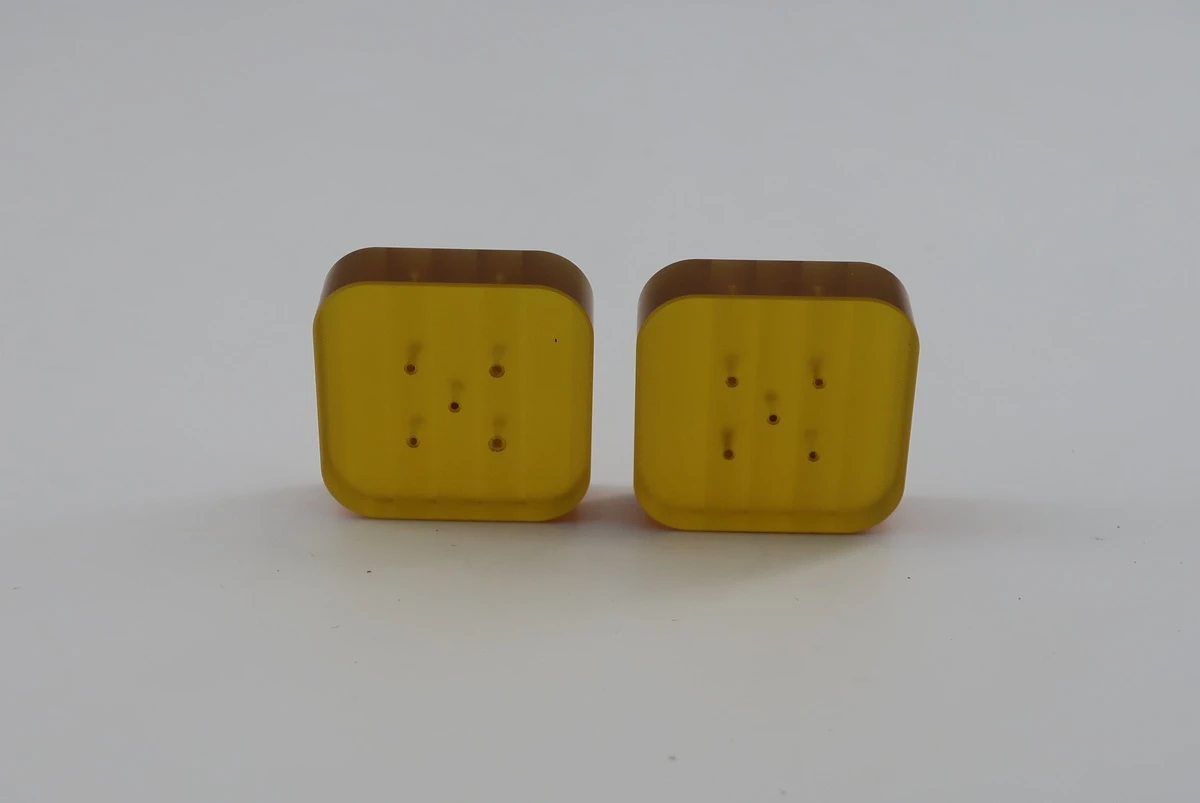
Typical applications include electrical insulators, connector bodies, circuit-board supports, sensor and instrument housings, test fixtures, automation locators, sleeves, spacers, covers, and other precision non-metallic components. The material is attractive when electrical isolation, heat capability, strength, and dimensional reliability are needed in the same part.
Aerospace, Medical, and Industrial Components
PEI materials also appear in aerospace, medical-device, semiconductor, robotics, automotive, and industrial-equipment projects. A material name alone does not establish compliance. If the component will be sterilized, installed in aircraft, used in a controlled life-science environment, or supplied against an electrical or flame specification, confirm the exact resin grade, stock-shape pedigree, test standard, certificate, and end-use requirement.
How to Specify Ultem 1000 for CNC Parts
Material and Stock Requirements
Specify the exact material or an explicitly approved equivalent, stock form, reinforcement state, color if functional, quantity, operating environment, and any required certificate or traceability. Do not assume that every amber PEI stock shape is certified ULTEM 1000.
Tolerances, Inspection, and Documentation
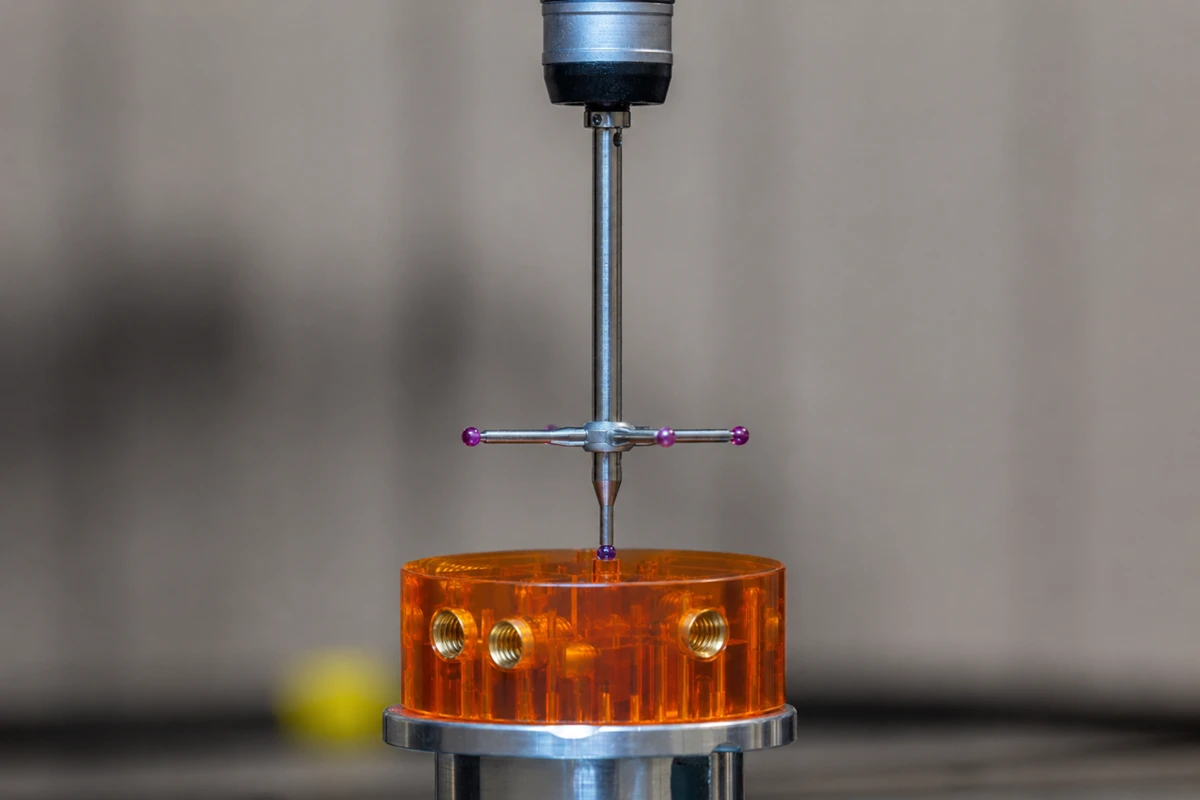
There is no responsible universal tolerance for every ULTEM 1000 part. Capability depends on feature size, wall thickness, aspect ratio, stock stress, machining sequence, temperature, datums, and inspection method. The drawing should identify critical-to-function dimensions and the required inspection condition. Material certificates, FAI, CMM reports, CoC, optical inspection, pin gauges, thread gauges, or other documentation should be specified only where the project requires them.
FAQ About Ultem 1000
What is Ultem 1000?
ULTEM 1000 is an unreinforced polyetherimide (PEI) material in SABIC’s ULTEM resin family, known for heat resistance, electrical insulation, strength, dimensional stability, and flame performance.
Is Ultem 1000 the same as PEI?
ULTEM 1000 is a specific unreinforced PEI grade family. PEI is the generic polymer category, while ULTEM is a trademarked resin family name.
Is Ultem 1000 glass-filled?
No. ULTEM 1000 is unreinforced PEI. ULTEM 2300 is a different grade family containing 30% glass fiber.
What is the difference between Ultem 1000 and 2300?
ULTEM 1000 is unfilled and less abrasive to machine. ULTEM 2300 contains 30% glass fiber, giving it higher stiffness but greater tool wear and more demanding edge finishing.
Is Ultem 1000 easy to machine?
It machines well for a high-performance thermoplastic when heat, chip evacuation, clamping, and residual stress are controlled. Its unfilled formulation is less abrasive than glass-filled PEI.
Does Ultem 1000 absorb moisture?
Yes, but typically less than nylon. Conditioning requirements depend on stock history, supplier guidance, and the dimensional or cleanliness requirements of the part.
Does Ultem 1000 need annealing?
Not as a universal rule. Stress-relief annealing may be considered for selected parts with significant stock removal, tight flatness or dimensional-stability requirements, or known stress concerns.
What is Ultem 1000 commonly used for?
Common uses include electrical insulators, connectors, sensor and instrument housings, fixtures, circuit-board supports, covers, spacers, brackets, and other precision engineering components.
Need Ultem 1000 Part Support?
If you are sourcing a custom ULTEM 1000 or PEI component, send Rollyu Precision your 2D drawing and STEP file together with the exact material requirement, quantity, critical tolerances, surface or edge requirements, operating environment, and inspection expectations. Our engineering team can review grade suitability, stock form, geometry risks, documentation needs, and manufacturability for prototype or low-volume production.