In precision manufacturing, even minor temperature shifts can quietly ruin tight tolerances. While standard metals naturally expand and contract, Invar 36 stays locked in. Thanks to its incredibly low coefficient of thermal expansion (CTE), it is the baseline material when micron-level dimensional stability is mandatory.
You’ll find Invar inside satellite optics, aerospace tooling, and advanced metrology equipment. But capitalizing on that stability takes specific expertise. If you’re building ultra-precise hardware, understanding how this unique alloy behaves—and exactly how to machine it—is your best defense against assembly failure.
What is Invar
Invar is a renowned Nickel-Iron Alloy. Its name is derived from the word “invariable,” which perfectly captures its core physical property: its dimensions remain virtually unchanged across a specific temperature range. Simply put, it is a metal that “defies thermal expansion and contraction.” It is a specialized iron-nickel alloy characterized by its ultra-low coefficient of thermal expansion (CTE).
The Origin and History of Invar Material
The name Invar is derived from the English word “invariable” (meaning unchanging), which perfectly describes its core physical property: its dimensions remain virtually identical despite temperature fluctuations.
The material was first discovered in 1896 by Swiss physicist Charles-Édouard Guillaume. During his research, he observed a fascinating phenomenon: the Coefficient of Thermal Expansion (CTE) of Iron Nickel (Fe Ni) alloys drops to an absolute minimum when the nickel content reaches exactly 36%.
For his groundbreaking discovery of Invar and its massive contribution to the development of precision measurement instruments, Guillaume was awarded the Nobel Prize in Physics in 1920. Notably, he remains the first and one of the few scientists in the field of metallurgy to receive this prestigious honor.
Trademark and Alternative Names for Invar
While “Invar” is widely used as a generic term in the precision machining industry today, Invar® is actually a registered trademark owned by the French company Imphy Alloy.
Global Generic Names for Invar
When not referring to a specific national standard, the most standard academic and commercial names used internationally are:
36% Nickel Iron Alloy
FeNi36
Invar 36 (The most common commercial name. Although originally a French trademark, it has become a genericized term worldwide.)
United States
In US engineering drawings, ASTM standards, and the manufacturing sector, the most common designations are:
UNS K93600: The most authoritative official designation (Unified Numbering System).
Alloy 36:The most common commercial name used by US material suppliers. To avoid trademark infringement with “Invar,” US suppliers usually just refer to it as Alloy 36.
Reference Standards: ASTM F1684, AMS 3159
Europe & Germany (EN / DIN Standards)
When dealing with engineering drawings from European clients, they typically use numeric codes or chemical abbreviations:
1.3912: The universal European Material Number which is the most common designation you will see on drawings.
Ni36 or FeNi36: The standard European material names.
United Kingdom (BS Standards)
While the UK accepts European standards, the most popular name among local suppliers is the registered trademark of Special Metals Corporation:
NILO® 36: In the UK and Commonwealth countries, engineers are highly likely to use Nilo 36 when referring to Invar.
France (AFNOR Standards)
Fe-Ni36
Invar®: Since France is the birthplace of Invar, using the original trademark is the most authentic and official approach.
China (GB standard)
4J36 is the Chinese (GB standard) designation for this iron nickel alloy containing approximately 36% nickel. Internationally, while it is commonly known as Invar or Invar 36, it has different official grades and designations depending on each country’s specific standard system.
Japan (JIS Standards)
JIS FeNi36
JIS C2531: The official Japanese Industrial Standard code.
| Country / Region | Governing Standard | Official Designation / Grade |
| United States | ASTM / AMS | UNS K93600, Alloy 36 |
| Europe / Germany | EN / DIN | 1.3912, Ni36, FeNi36 |
| United Kingdom | BS | NILO® 36 |
| France | AFNOR | Invar®, Fe-Ni36 |
| China | GB | 4J36 |
| Japan | JIS | JIS C2531, JIS FeNi36 |
Types of Invar Materials
In precision manufacturing and materials science, Invar is not a single material, but rather a family of alloys. Based on varying chemical compositions, application scenarios, and specific machining needs, Invar alloys are mainly divided into the following common types:
Standard Invar 36 (Alloy 36)
This is the most common and widely used Invar material. INVAR 36 (equivalent to 4J36 in the Chinese material standard) is a nickel-iron, low expansion alloy containing exactly 36% nickel. It maintains nearly constant dimensions over the range of normal atmospheric temperatures and exhibits an extremely low coefficient of expansion from cryogenic temperatures up to about 500°F (260°C).
Additionally, this alloy retains excellent strength and toughness even in cryogenic environments. INVAR 36 can be hot and cold formed, and it is machined using processes similar to those used for austenitic stainless steels. Furthermore, INVAR 36 is highly weldable when using Filler Metal CF36.
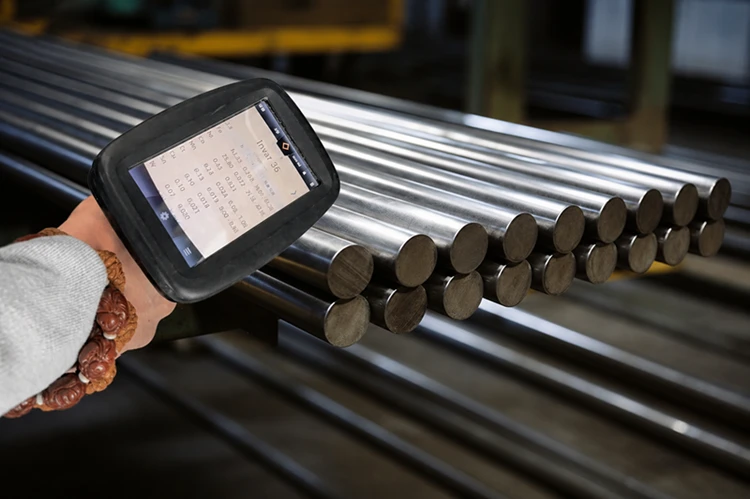
The core Invar 36 material properties
It comes from its unique chemical composition, which contains approximately 36% Nickel (Ni) and 64% Iron (Fe)
Key Properties
It features an exceptionally low coefficient of thermal expansion (CTE) within the temperature range of -100°C to 200°C. Specifically, the CTE of Invar 36 is approximately 1.2 x 10⁻⁶ /°C. To put this into perspective, its thermal expansion rate is only one-tenth (1/10) that of standard steel or cast iron.
Free-Machining Invar 36 (or Free-Cut Invar)
This is a modified alloy specifically engineered to solve the notorious “poor machinability” pain points of standard Invar 36. It is highly friendly to CNC machine shops.
Composition
Based on Invar 36, but with small additions of Selenium (Se) or a higher Carbon (C) content.
Properties
Greatly enhanced cutting performance, optimal chip control (easy chip breaking), extended tool life, and improved surface roughness. Its Coefficient of Thermal Expansion (CTE) is slightly higher than that of standard Invar 36. Additionally, its corrosion resistance and weldability are somewhat compromised in certain extreme environments.
Super Invar (Super Invar 32-5 / Alloy 32-5)
This Invar material was specifically developed to achieve a near-zero coefficient of thermal expansion (CTE) around room temperature (typically about 20°C)
Composition
Consists of approximately 32% Nickel (Ni), 5% Cobalt (Co), and the balance (roughly 63%) Iron (Fe).
Properties
Features a near-zero CTE within a narrow ambient temperature range outperforming standard Invar 36.
Exceptionally High Cost
The material itself is significantly more expensive than standard steel or aluminum alloys.
Phase Transformation Risk
At extremely low temperatures (such as cryogenic environments), the material undergoes an irreversible martensitic phase transformation. This causes permanent dimensional changes, making it strictly unsuitable for cryogenic applications.
Other Related Variants (Invar 42 / Alloy 42, Kovar, etc.)
By adjusting the nickel content, these alloys are designed to match the Coefficient of Thermal Expansion (CTE) of specific materials.
Invar 42 (Alloy 42): Containing 42% nickel, its Coefficient of Thermal Expansion (CTE) is not as remarkably low as standard Invar 36. However, its expansion rate perfectly matches that of certain glasses and ceramics. Consequently, it is extensively used in semiconductor packaging, vacuum tube pins, and glass-to-metal sealing for electronic components.
Kovar (Alloy 29-17): Containing cobalt, this alloy shares similar properties with Alloy 42. It is specifically designed to match the Coefficient of Thermal Expansion (CTE) of specific hard glasses. Consequently, it is widely used for hermetic seals in aerospace applications, as well as in microwave electronics industries.
What is Invar Machining
Invar machining is the specialized CNC process,primarily precision milling and turning,used to manufacture components from a unique 36% nickel iron alloy. The main reason we machine this specific material is its near-zero Coefficient of Thermal Expansion (CTE). This ensures that the finished parts maintain strict dimensional stability and won’t expand or shrink across varying temperatures, which is critical for high-precision industries.
However, because the alloy is notoriously difficult to cut without work-hardening, successfully machining Invar requires specific tooling and high level CNC expertise.
Invar Machining Capabilities and Processes
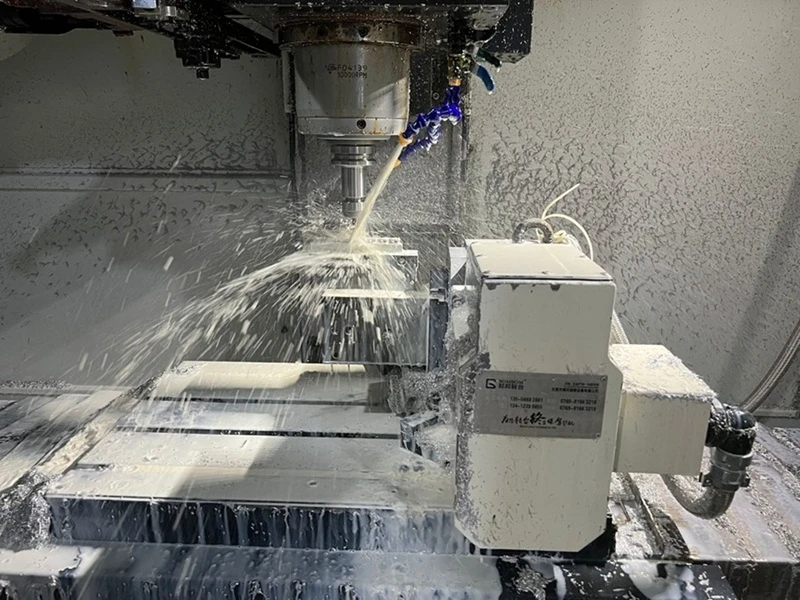
Rollyu Precision comprehensive capabilities include multi-axis CNC milling, turning, deep-hole drilling, and Wire EDM Machining. We tackle Invar’s notorious work-hardening and gummy chips head-on. By strictly enforcing climb milling, dynamic toolpaths, positive rake carbide tooling, and high pressure coolant (TSC), we prevent surface rubbing and heat build-up.
For delicate internal geometries, our zero stress Wire EDM utilizes multiple skim passes to eliminate recast layers. We consistently deliver aerospace grade tolerances, ensuring your components retain their near zero thermal expansion integrity.
CNC Milling Invar
Milling is essential for manufacturing complex Invar parts, such as optical mounts, aerospace brackets, and laser housings. However, unlike turning, milling is an interrupted cutting process. The cutting teeth constantly impact the material, which, combined with Invar’s gummy nature, significantly increases the risk of severe work hardening.
Furthermore,Invar has a nasty habit of producing long, stringy chips that are notoriously difficult to control and can quickly clog the cutting zone.
To successfully mill Invar without destroying the material or the tooling, our CNC machinists rely on a few non negotiable strategies:
Climb Milling is Mandatory:
We strictly use climb milling (down milling) rather than conventional milling. Conventional milling causes the tool to “rub” before cutting, which instantly work-hardens Invar. Climb milling ensures the cutting edge bites directly into the material.
Aggressive Chip Control
To prevent those long, stringy chips from wrapping around the tool, we use ultra sharp solid carbide end mills or indexable cutters with dedicated chip breaker geometries,featuring positive rake angles. This specific geometry shears the gummy material cleanly rather than pushing it.
Constant Feed & Dynamic Toolpaths
We utilize advanced CAM software to program dynamic (trochoidal) toolpaths while maintaining a constant feed rate. This guarantees the tool never dwells or rubs in one spot, which is absolutely critical for minimizing heat build-up and extending tool life. 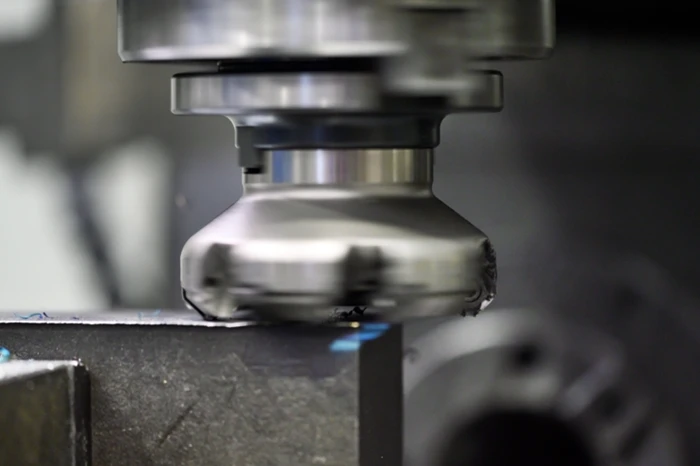
CNC Turning Invar
Unlike milling, CNC turning is a continuous cutting process. While this means the tool doesn’t suffer the same repeated impact, turning Invar introduces a new major challenge: chip control. Because Invar is highly ductile and “gummy,” it has a nasty habit of producing long, stringy chips that simply refuse to break. These chips can quickly wrap around the workpiece or the chuck (a nightmare in the shop known as bird-nesting), ruining the surface finish and trapping massive amounts of heat.
To achieve precise dimensions and excellent surface finishes without destroying the material, our machinists employ strict turning protocols:
Aggressive Chip Control: Those long, stringy chips are arguably the biggest hurdle in turning Invar. To combat this, we rely on high performance carbide inserts featuring sharp, positive rake angles combined with specialized chip breaker geometries. Instead of letting the chips spool out, this specific setup cleanly shears the gummy material and forces the chips to snap into manageable pieces.
Constant Feed & Proper Depth of Cut: Invar hates being babied. We completely avoid extremely light finishing passes or letting the tool dwell in one spot. A light pass or a paused tool will only “rub” the surface, instantly work hardening the material and causing a massive heat spike. Instead, we program a constant, uninterrupted feed rate with a deep enough Depth of Cut (DOC). This ensures the cutting edge never dwells and stays completely under the work-hardened layer from the previous pass.
Targeted High-Pressure Coolant: Standard flood coolant rarely cuts it. We blast high pressure coolant directly at the cutting zone to physically flush away chips, prevent the gummy material from welding to the insert (Built Up Edge), and rapidly pull heat out of the cut.
Wire EDM Machining Invar
When conventional cutting methods become too risky for intricate Invar components, Wire EDM (Electrical Discharge Machining) is our ultimate trump card. Because Wire EDM is a non-contact thermal process, it completely bypasses Invar’s biggest enemy: work-hardening.
There are zero mechanical cutting forces involved, which means no tool deflection, no induced physical stress, and absolutely no burrs. This makes it the perfect method for generating sharp internal corners, delicate splines, and ultra thin walls.
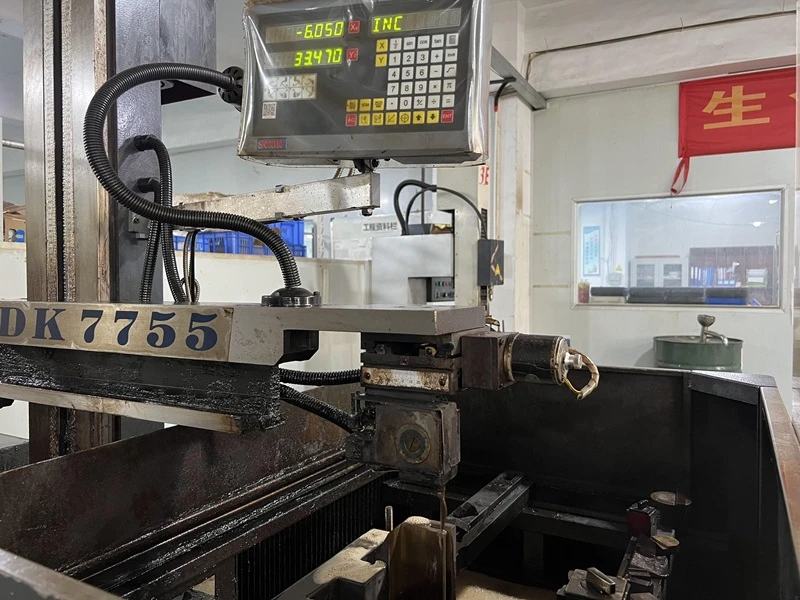
However, EDM machining Invar isn’t just plug and-play. While it eliminates mechanical hardening, the intense heat from the electrical sparks leaves behind a microscopic recast layer (often called the white layer) on the cut edge, which can alter the alloy’s properties. To strictly control this, our EDM operators don’t just rely on a single rough cut.
We program meticulously dialed in multiple skim passes combined with optimized dielectric flushing. This progressive skimming gently removes the recast layer, achieving aerospace grade tolerances and a pristine surface finish without compromising Invar’s near zero thermal expansion integrity.
The Challenges of Machining Invar Alloy
While traditional methods like casting or rolling are used for raw Invar, precision CNC machining for high-end applications involves a steep technical barrier. Although it is softer than many steels, Invar’s unique metallurgical properties create a perfect storm for machinists:
The “Gummy” Factor (High Plasticity): Invar cannot be heat treated to make it crisp. Its low hardness combined with high toughness means it tears rather than shears cleanly. This requires massive cutting forces and makes chip breaking extremely difficult.
Poor Thermal Conductivity: Unlike aluminum or standard steel, Invar traps heat. It prevents cutting temperatures from escaping with the chips, causing intense heat to build up rapidly around the tool and workpiece.
Severe Work-Hardening: This is the ultimate challenge. If a tool rubs against the material or applies excessive pressure without cutting deep enough, the trapped heat and friction cause the Invar to instantly work-harden, destroying the tool edge.
Catastrophic Tool Wear: Because of the extreme heat and cutting forces, standard tools fail almost immediately. High precision Invar machining strictly requires specialized, high-performance tooling and rigid, uncompromising process controls.
Expert Tips for Machining Low CTE Materials (Invar, Kovar, Alloy 42)
When engineers specify Low Coefficient of Thermal Expansion (CTE) alloys for photonics, aerospace, or metrology applications, they are paying a premium for absolute dimensional stability. The irony? Improper CNC machining can completely destroy that stability. Excessive heat and aggressive mechanical forces introduce residual stresses into the material, which can permanently alter its micro structure and compromise its near zero expansion properties.
To preserve the metallurgical integrity of Low CTE materials while achieving aerospace grade tolerances, our shop strictly adheres to the following machining principles:
Dial Down the SFM, Push the Chip Load
Low CTE alloys are notoriously poor thermal conductors. Running standard Speeds and Feeds will instantly burn up the tool and bake the workpiece. We significantly reduce our Surface Feet per Minute (SFM) while maintaining a heavy chip load. This forces the heat to evacuate with the chip, keeping the core material cool and stress-free.
The “Never Dwell” Rule
Like Invar, most Low CTE nickel iron alloys work-harden in a heartbeat. If a cutter dwells, rubs, or takes a pass that is too light, it creates a hardened crust on the surface. We program constant, uninterrupted toolpaths with deep enough cuts to stay firmly under the work-hardened zone.
Sharp, Positive-Rake Tooling
We ditch standard, blunt edged inserts. Machining these gummy alloys demands extremely sharp, positive rake carbide tooling to shear the material cleanly, reducing cutting forces and minimizing mechanical stress imparted into the part.
Protective Coatings & Plating for Invar
While Invar is renowned for its thermal stability, it is still an iron-nickel alloy that requires surface protection against corrosion in harsh environments. Depending on the application’s cosmetic and environmental demands, post-machining finishes like Passivation, Nickel Plating, and custom Painting are commonly applied. However, applying a finish isn’t just an afterthought,it profoundly impacts the final precision of the part.
Passivation for Invar
When dimensional integrity is the absolute highest priority, passivation is our go to. It cleans the surface and promotes a protective oxide layer without adding measurable material. It leaves the part’s geometry and tolerances virtually untouched.
Nickel Plating & Painting:
For maximum corrosion resistance and premium cosmetics, Electroless Nickel Plating (ENP) or engineered paint systems are utilized. The critical challenge here is material buildup. These coatings add measurable thickness that can quickly push a tight tolerance part out of spec.
The Machining Synergy
To solve this, our CNC machining department works backward from the final blueprint. If a part requires a specific plating thickness, we meticulously program the toolpaths to machine the Invar slightly undersize (factoring in the exact plating allowance). This ensures that after the coating is applied, the final product hits the tightest aerospace tolerances dead on.
Heat Treatment for Dimensional Stability: Locking in Invar’s Precision
The entire point of specifying Invar is its unrivaled dimensional stability. However, manufacturing processes like CNC machining, forging, or casting inherently introduce severe residual internal stresses into the material’s microstructure.
If a highly stressed Invar component is put straight into a dimensionally sensitive application (such as an optical mount or metrology housing), those trapped stresses will eventually release. This causes the part to slowly warp or “creep” out of tolerance over time, completely defeating the purpose of using a near-zero CTE alloy.
To prevent this, meticulous thermal management is non-negotiable. We subject our machined Invar components to highly controlled stress relief annealing cycles. This precision heat treatment relaxes the internal stresses trapped during machining, resetting the metallurgical structure. This critical step ensures the final part maintains absolute dimensional integrity and performs exactly as designed in the field.
The process is a progressive manufacturing cycle that alternates machining stages with a high temperature anneal and a two-step low-temperature stress relief to ensure maximum dimensional stability before the final finish machining.
Table Title: Invar 36 Thermal Stabilization Cycles
| Heat Treatment Phase | Approx. Temperature | Primary Purpose |
| Full Annealing | 830°C – 850°C (1525°F – 1560°F) | Resets the microstructure; restores ductility; removes all severe work-hardening. |
| Stress Relieving | 315°C – 600°C (600°F – 1110°F) | Relaxes residual internal stresses caused by rough CNC machining without altering grain structure. |
| Artificial Aging | 96°C (205°F) for 48 Hours | Accelerates microscopic phase shifts to prevent long-term dimensional “drift” in the field. |
Full Annealing Invar: Resetting the Microstructure
When Invar becomes severely work-hardened from previous operations, a full annealing cycle is required to essentially hit the “reset button” on the material. We heat the alloy to approximately 850°C (1560°F) and allow it to soak. The exact soaking time is never a guessing game; it is strictly dictated by the part’s cross-sectional thickness and overall mass.
Stress Relieving Parameters for Invar
Unlike a full “dead-soft” anneal, stress relieving is executed at sub critical temperatures. The primary objective here isn’t to completely restructure the alloy’s crystalline grains, but strictly to relax and eradicate the residual mechanical stresses trapped inside the material from aggressive machining.
To achieve this, the Invar components are subjected to a controlled thermal cycle ranging between 300°C and 600°C (approx. 570°F to 1110°F). This specific temperature window is the absolute sweet spot,it is hot enough to effectively neutralize all internal machining stresses, ensuring the part remains perfectly dimensionally stable without drastically altering the overall metallurgical baseline.
Thermal Stabilizing (Artificial Aging): Preventing Long-Term Drift
While Invar is famous for resisting thermal expansion, it is highly susceptible to temporal instability. Over an extended period, the alloy naturally undergoes very slow, microscopic metallurgical phase shifts. For ultra-precision applications like optics or metrology, this presents a massive risk: the component could slowly “drift” out of tolerance during its service life.
Welding & Fabrication of Invar 36
Strict Process Controls
Invar 36 is highly weldable using a variety of processes, including GTAW (TIG), GMAW (MIG), SMAW (Stick), Plasma, Spot, and Brazing. However, to maintain the structural integrity and near zero CTE of the joint, we highly prioritize Pulsed-Arc transfer modes (Pulsed TIG/MIG) to precisely manage the thermal cycle.
Welding high nickel alloys leaves absolutely zero room for sloppy preparation. We strictly adhere to the following shop protocols:
Pristine Pre-Weld State
Material must be welded in the fully annealed condition. The weld zone is rigorously prepped to a surgically clean state,completely free of hydrocarbons, cutting fluids, surface scratches, or marking paint.
Thermal Management
The absolute golden rule for welding Invar is low heat input. We strictly monitor and maintain an interpass temperature below 120°C (approx. 250°F) to prevent hot cracking and localized distortion. Neither pre heating nor Post-Weld Heat Treatment (PWHT) is required.
Strategic Filler Selection
Filler metal dictates the joint’s performance. If the weld seam must possess the exact same low expansion properties as the base metal, we utilize a matching Invar 36 filler wire. If standard structural joining is the goal, we deploy premium high nickel consumables such as AWS A5.14 ERNiCr-3 (GTAW/GMAW) or AWS A5.11 ENiCrFe-3 (SMAW) to ensure maximum weld ductility and strength.
Install Helicoil Threaded Inserts Into Invar Machined Parts
Because Invar 36 is known for its ‘gummy’ nature and tendency to work harden, tapping and installing threaded inserts requires highly specialized expertise. During our Invar alloy machining process, we utilize high performance STI taps (Screw Thread Insert taps) and specialized cutting fluids to create precise internal threads without galling or tearing the material.
This ensures that when we insert Helicoils for Invar machining parts, the stainless steel inserts seat perfectly, providing maximum thread strength and durability for aerospace and ultra-precision applications.
Industries and Applications for Invar Machined Parts
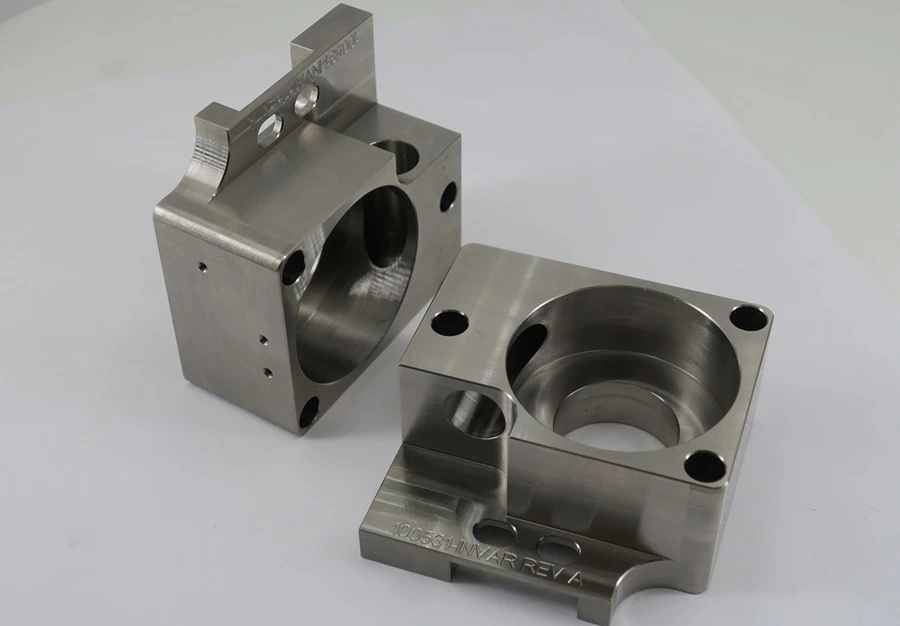
Invar 36 is the ultimate material choice when dimensional stability is non-negotiable. It simply refuses to warp, distort, or creep, regardless of severe temperature fluctuations.
The Science Behind the Stability
This near zero Coefficient of Thermal Expansion (CTE) isn’t magic,it’s physics. As temperatures rise, the alloy’s ferromagnetism naturally decreases. This loss of spontaneous magnetization creates a volume contraction (magnetostriction) that perfectly offsets the material’s natural lattice thermal expansion. The result is absolute dimensional permanence across a incredibly broad temperature range.
Because of this unique “Invar Effect” and its excellent magnetic permeability, our precision Invar components anchor the world’s most critical industries:
Optics, Photonics
Modern optical systems operate on microscopic margins. A dimensional shift of just a few microns due to thermal drift can completely misalign a laser path or ruin a telescope’s focal length. Invar is the backbone of these systems. From deep space satellite imaging payloads and laser housings to precision lens mounts, Invar ensures the optical path remains perfectly calibrated and rigidly stable, completely immune to environmental temperature shifts.
Aerospace
Housing for critical navigation electronics, avionics, and structural drone components where high-altitude thermal extremes would destroy standard metals.
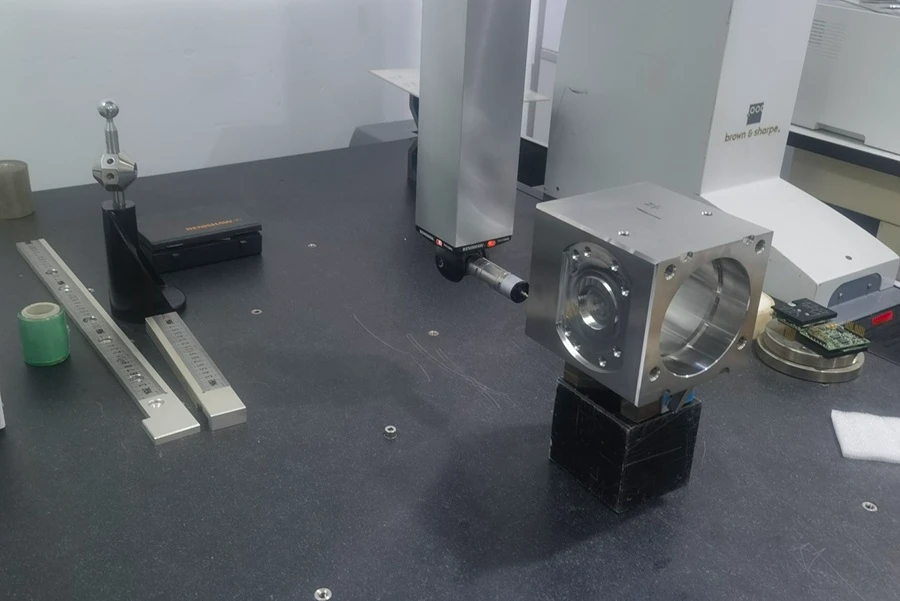
FAQ
Why are Invar machined parts significantly more expensive than standard stainless steel or aluminum
Invar 36 carries a premium price tag for two main reasons. First, its 36% nickel content ties the raw material costs directly to expensive global commodity markets. Second, it’s notoriously difficult to machine. Invar is highly “gummy” and work-hardens rapidly, forcing our CNC operators to drop feeds and speeds to prevent rapid tool failure. Add in the mandatory thermal stress-relieving cycles required between machining operations, and overall production time naturally increases.
What kind of tolerances can Rollyu Precision hold on Invar components
Depending on part geometry, we consistently hold aerospace-grade tolerances down to ±0.002 mm (±0.0001”). While Invar’s near-zero thermal expansion makes dimensional inspection highly predictable, cutting the metal is only half the battle. To actually maintain those tight tolerances, we rely on strict in-house thermal stabilizing cycles. This artificial aging guarantees the material won’t warp or walk after it comes off the CNC machine.
How do you achieve a good surface finish if the material is so “gummy” and prone to Built-Up Edge (BUE)
Achieving a mirror like, low Ra finish on Invar requires specialized expertise. To prevent Built-Up Edge (BUE) on this gummy alloy, we use high-positive rake carbide tooling and high pressure coolant. For ultra critical optical parts, we leave a micro allowance during CNC machining, finishing the job with precision grinding or diamond lapping to guarantee a flawless surface.
Do you provide welding services for Invar assemblies, and will it ruin the CTE
Yes, we provide expert Invar welding and fabrication. Because excessive heat destroys the alloy’s near-zero CTE, we strictly limit heat input using advanced Pulsed TIG/MIG processes. By maintaining interpass temperatures below 120°C (250°F) and exclusively utilizing matching Invar 36 filler wire, we guarantee flawless thermal stability for your critical assemblies.
Does my design really require Invar, or am I over-engineering
If micron level thermal drift compromises your optics, space payloads, or metrology instruments, Invar is essential. However, if you must match glass expansion for hermetic seals, Kovar is better. Rollyu Precision offers Value Engineering consulting. Send us your prints, and our engineers will determine if Invar fits your exact project needs.
Conclusion
Invar 36 was engineered with one uncompromising purpose: to completely eradicate thermal expansion. In highly precise manufacturing, it provides the ultimate baseline for dimensional permanence. However, unlocking that performance comes with severe realities. Machining this incredibly expensive raw material is notoriously complex, making scrap absolutely unacceptable for your overall budgets.
There is zero margin for error. Your supply chain requires a machining partner with absolute metallurgical expertise. That partner is Rollyu Precision. We specialize in custom Invar fabrication with strict tolerances. From optimized tool paths to thermal stabilizing, we deliver perfect components. Request a custom quote today to eliminate drift.