Rollyu Blog | Custom Machining & Services

Blog

From the business, for the world: News about Rollyu

What's happening in the CNC industry and Rollyu? What trends and innovations shouldn’t be missed? Learn more and check out rollyu's news.

CNC machined aluminum parts for precision industries

Aluminum CNC Machining for Medical, Aerospace, Quantum Photonics, and Robotics Parts

Aluminum CNC machining is widely used when engineers need lightweight, corrosion-resistant, dimensionally accurate components without the tooling investment required for casting. The process supports prototypes, low-volume builds, and repeat production while allowing critical holes, bearing seats, optical interfaces, sealing surfaces, threads, and complex three-dimensional features to be produced directly from

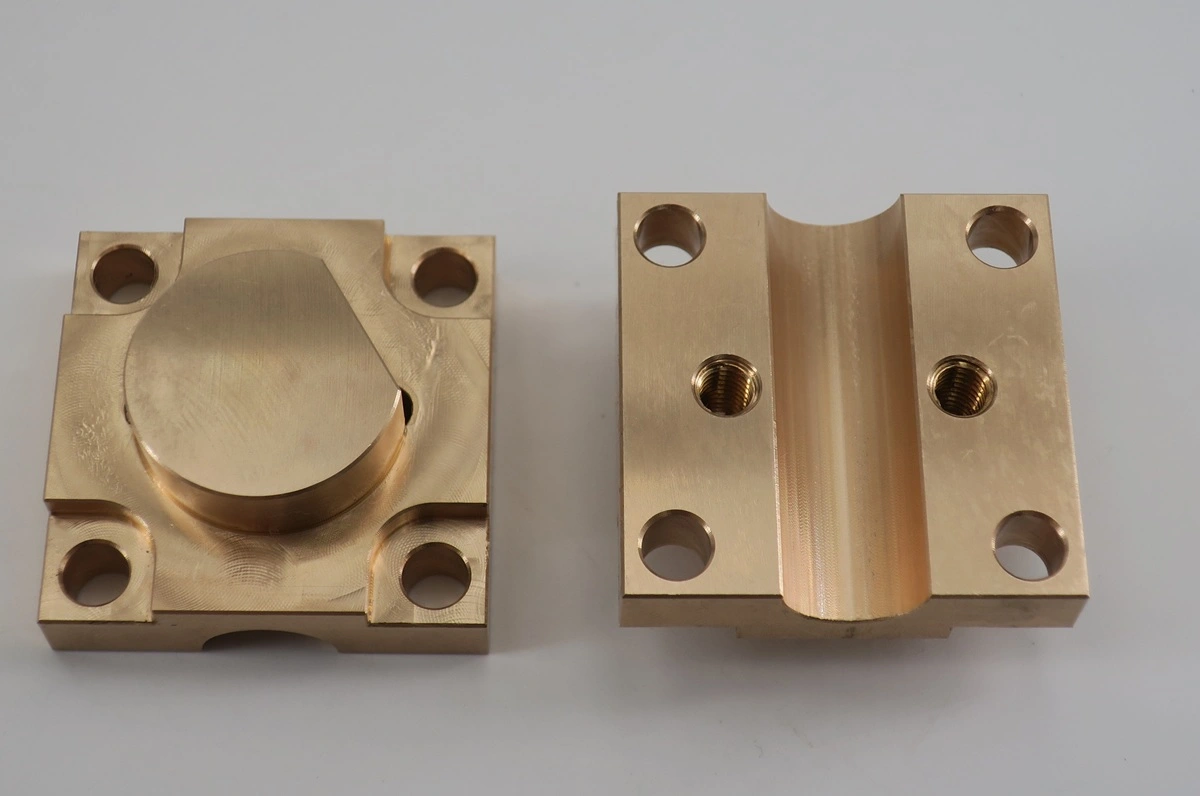
Complex CNC machined copper part with precision holes

Copper CNC Machining: Grades, Processes, and Best Practices

Copper’s excellent electrical and thermal conductivity, corrosion resistance, and ductility make it valuable in electronics, automotive systems, and medical devices. However, its tendency to deform, produce long chips, and adhere to cutting tools can affect accuracy and surface finish. This guide explains how copper CNC machining uses suitable tooling, cutting

Visual inspection of a Zamak die cast housing

How to Choose a Zamak Alloy for OEM Zinc Die Cast Parts

Choose a Zamak grade based on service conditions, part geometry, finishing needs, and approval requirements before tooling.

Plating inspection of a zinc die cast component

Zinc Die Casting for Plated Hardware: How to Prevent Plating Defects

Plated zinc die cast hardware can suffer from blistering, pitting, uneven coating, and corrosion when casting quality, part design, pretreatment, or inspection is poorly controlled. This guide explains how buyers and manufacturers can reduce plating defects from tooling through final inspection.

CMM inspection of a thin-wall zinc casting

Why Use Zinc Die Casting for Thin-Wall Precision Parts?

Zinc die casting supports thin walls, fine details, and consistent dimensions. This guide covers key design, tooling, defect control, alloy, machining, and inspection considerations.

Rockwell hardness testing of hardened steel

Case Hardening vs Through Hardening: What’s the Difference?

Case hardening and through hardening improve steel performance in different ways. One creates a hard, wear-resistant surface over a tougher core, while the other develops hardness through the part’s effective section. This article compares their processes, properties, materials, and applications.   Case Hardening vs Through Hardening: Quick Comparison Case hardening

Press brake bending a steel sheet

Hot Rolled vs Cold Rolled Steel: Differences, Properties, and How to Choose

Hot rolled and cold rolled steel may have similar compositions, but their manufacturing processes create clear differences in surface finish, dimensional accuracy, strength, and cost. This guide explains how each type performs and which applications it suits best.

CMM inspection of 1566 steel parts

1566 Steel Machining: Properties, Heat Treatment and Applications

SAE/AISI 1566 is a high-carbon manganese steel selected for components that require a practical balance of hardness, strength, wear resistance, fatigue performance, and toughness. With approximately 0.60–0.71% carbon, the material can achieve high surface hardness after suitable quenching and tempering. Typical applications include springs, shafts, pins, blades, agricultural equipment parts,

CMM probe head for dimensional inspection

CMM Inspection: How It Works, What It Measures, and When to Use It

This guide covers CMM setup, coordinate measurement, GD&T evaluation, reporting limits, and when CNC part buyers should request CMM results.

CAM programming for 5-axis machining

3+2 Machining vs 5-Axis Machining: What’s the Difference?

Choosing between 3+2 machining and simultaneous 5-axis machining can significantly affect manufacturing cost, lead time, and part quality. While both processes use a five-axis CNC machine, they serve different purposes. This guide explains their key differences and helps you select the right machining strategy for your application.   What Is

TIG welding a sheet metal assembly

Welding Defects: Causes, Prevention, and Inspection in Sheet Metal Parts

Porosity, cracks, poor fusion, burn-through, and distortion can affect weld strength, sealing, or part fit. This guide covers process control, inspection, acceptance criteria, and repair records.

5-axis CNC machining titanium and stainless steel parts

Titanium vs Stainless Steel: Strength, Weight, Cost, and CNC Machining

Grade 5 titanium cuts weight, while 316L stainless steel offers higher stiffness and usually lower machining costs. Compare corrosion, tooling, tolerances, and part fit.

CNC machined aluminum parts for precision industries

Aluminum CNC Machining for Medical, Aerospace, Quantum Photonics, and Robotics Parts

Aluminum CNC machining is widely used when engineers need lightweight, corrosion-resistant, dimensionally accurate components without the tooling investment required for casting. The process supports prototypes, low-volume builds, and repeat production while allowing critical holes, bearing seats, optical interfaces, sealing surfaces, threads, and complex three-dimensional features to be produced directly from

Complex CNC machined copper part with precision holes

Copper CNC Machining: Grades, Processes, and Best Practices

Copper’s excellent electrical and thermal conductivity, corrosion resistance, and ductility make it valuable in electronics, automotive systems, and medical devices. However, its tendency to deform, produce long chips, and adhere to cutting tools can affect accuracy and surface finish. This guide explains how copper CNC machining uses suitable tooling, cutting

Visual inspection of a Zamak die cast housing

How to Choose a Zamak Alloy for OEM Zinc Die Cast Parts

Choose a Zamak grade based on service conditions, part geometry, finishing needs, and approval requirements before tooling.

Plating inspection of a zinc die cast component

Zinc Die Casting for Plated Hardware: How to Prevent Plating Defects

Plated zinc die cast hardware can suffer from blistering, pitting, uneven coating, and corrosion when casting quality, part design, pretreatment, or inspection is poorly controlled. This guide explains how buyers and manufacturers can reduce plating defects from tooling through final inspection.

CMM inspection of a thin-wall zinc casting

Why Use Zinc Die Casting for Thin-Wall Precision Parts?

Zinc die casting supports thin walls, fine details, and consistent dimensions. This guide covers key design, tooling, defect control, alloy, machining, and inspection considerations.

Rockwell hardness testing of hardened steel

Case Hardening vs Through Hardening: What’s the Difference?

Case hardening and through hardening improve steel performance in different ways. One creates a hard, wear-resistant surface over a tougher core, while the other develops hardness through the part’s effective section. This article compares their processes, properties, materials, and applications.   Case Hardening vs Through Hardening: Quick Comparison Case hardening

Press brake bending a steel sheet

Hot Rolled vs Cold Rolled Steel: Differences, Properties, and How to Choose

Hot rolled and cold rolled steel may have similar compositions, but their manufacturing processes create clear differences in surface finish, dimensional accuracy, strength, and cost. This guide explains how each type performs and which applications it suits best.

CMM inspection of 1566 steel parts

1566 Steel Machining: Properties, Heat Treatment and Applications

SAE/AISI 1566 is a high-carbon manganese steel selected for components that require a practical balance of hardness, strength, wear resistance, fatigue performance, and toughness. With approximately 0.60–0.71% carbon, the material can achieve high surface hardness after suitable quenching and tempering. Typical applications include springs, shafts, pins, blades, agricultural equipment parts,

CMM probe head for dimensional inspection

CMM Inspection: How It Works, What It Measures, and When to Use It

This guide covers CMM setup, coordinate measurement, GD&T evaluation, reporting limits, and when CNC part buyers should request CMM results.

CAM programming for 5-axis machining

3+2 Machining vs 5-Axis Machining: What’s the Difference?

Choosing between 3+2 machining and simultaneous 5-axis machining can significantly affect manufacturing cost, lead time, and part quality. While both processes use a five-axis CNC machine, they serve different purposes. This guide explains their key differences and helps you select the right machining strategy for your application.   What Is

TIG welding a sheet metal assembly

Welding Defects: Causes, Prevention, and Inspection in Sheet Metal Parts

Porosity, cracks, poor fusion, burn-through, and distortion can affect weld strength, sealing, or part fit. This guide covers process control, inspection, acceptance criteria, and repair records.

5-axis CNC machining titanium and stainless steel parts

Titanium vs Stainless Steel: Strength, Weight, Cost, and CNC Machining

Grade 5 titanium cuts weight, while 316L stainless steel offers higher stiffness and usually lower machining costs. Compare corrosion, tooling, tolerances, and part fit.

Outstanding Achievements and Partnerships

We take pride in our outstanding achievements and strong partnerships. Our commitment to great communication, service, and integrity has led to excellent results.
Join us as a valued partner, and together, we can make a positive impact on CNC.

Contact Us