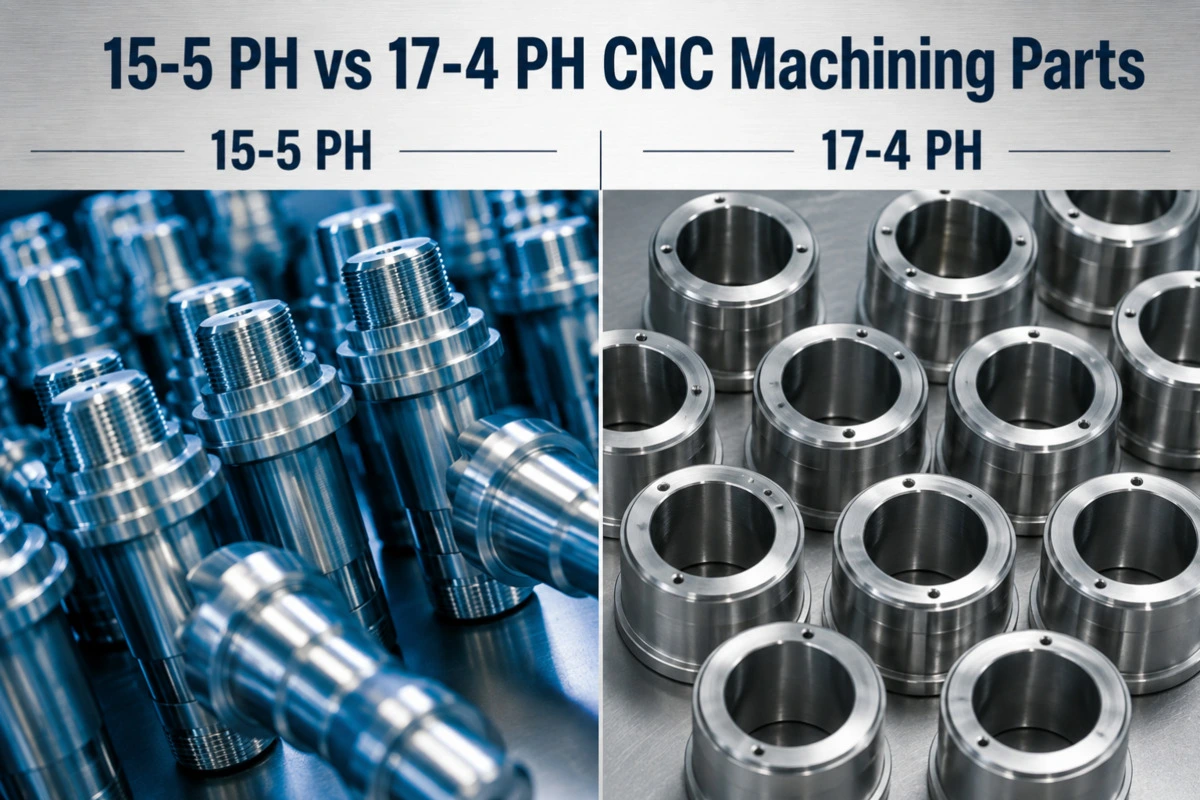
15-5 PH and 17-4 PH are both martensitic precipitation-hardening stainless steels used when a component needs substantially more strength than conventional 300-series stainless steel while retaining useful corrosion resistance.
For CNC machining, however, the two grades should not be treated as interchangeable. The final choice affects raw-material availability, transverse mechanical properties, heat-treatment planning, tool wear, dimensional stability, inspection strategy and total part cost.
For OEM engineers and sourcing teams, the most useful question is not simply “Which alloy is stronger?” It is “Which alloy, heat-treatment condition and machining sequence best match the geometry, load direction, tolerance, environment and qualification requirements of this component?”
What Are 15-5 PH and 17-4 PH Stainless Steels?
17-4 PH Stainless Steel
17-4 PH, also known as UNS S17400 or AISI 630, is one of the most widely used precipitation-hardening stainless steels. It combines high strength, good general corrosion resistance and multiple aging conditions such as H900, H1025, H1075 and H1150. Its broad availability makes it a practical choice for shafts, fittings, actuator components, structural parts, valve hardware and other highly loaded precision components.
15-5 PH Stainless Steel
15-5 PH, UNS S15500, is closely related to 17-4 PH but was developed to provide more consistent transverse properties and a more uniform microstructure. It is often selected for aerospace and other critical components where toughness, section thickness, multi-directional loading or mechanical-property consistency are important.
Both grades obtain their final mechanical properties through solution treatment followed by precipitation aging. Therefore, the drawing should identify not only the alloy but also the required condition and applicable material or heat-treatment specification.
15-5 PH vs 17-4 PH: Key Differences at a Glance
| Factor | 15-5 PH | 17-4 PH | CNC / Sourcing Impact |
| UNS designation | S15500 | S17400 | Confirm exact material callout on drawing |
| Alloy family | Martensitic PH stainless | Martensitic PH stainless | Both are heat-treatable for high strength |
| Transverse properties | Generally more uniform / a key selection advantage | Good, but can be less uniform depending on product form and processing | Relevant to large sections and multidirectional loading |
| Availability | More specialized | Very widely available | 17-4 PH can reduce sourcing risk and lead time |
| Cost tendency | Often higher | Often lower | Actual cost depends on form, condition and certification |
| Machinability | Good with condition-dependent strategy | Good with condition-dependent strategy | Neither grade is “easy” once highly aged |
| H900 condition | Very high strength / high hardness | Very high strength / high hardness | Expect higher cutting force and faster tool wear |
| Higher aging temperatures | Improved toughness / lower hardness | Improved toughness / lower hardness | Often easier to finish-machine than H900 |
| Typical advantage | Toughness and transverse-property consistency | Availability, cost and broad industrial acceptance | Use functional requirement, not grade popularity, to decide |
| Magnetic behavior | Generally magnetic | Generally magnetic | Evaluate before use near sensitive magnetic-field instrumentation |
Chemical Composition and Microstructure
The grades use similar chromium-nickel-copper precipitation-hardening mechanisms, but their composition ranges and melting/processing practices differ. 15-5 PH is designed around a more uniform martensitic structure with reduced delta-ferrite content, which is why it is commonly associated with improved transverse toughness and more consistent properties in critical sections.
| Element | 15-5 PH Typical Range | 17-4 PH Typical Range | Why It Matters |
| Chromium | ~14.0-15.5% | ~15.0-17.5% | Supports passivation and general corrosion resistance |
| Nickel | ~3.5-5.5% | ~3.0-5.0% | Helps control transformation behavior and toughness |
| Copper | ~2.5-4.5% | ~3.0-5.0% | Primary precipitation-strengthening element |
| Nb + Ta | Controlled addition | Controlled addition | Supports precipitation response and microstructural control |
Engineering note: Exact chemistry, product form and certification must be taken from the applicable ASTM/AMS specification and material test report. Do not use a general comparison table as a purchasing specification.
Strength, Hardness and Toughness
Both alloys can reach very high strength after aging. A lower aging temperature such as H900 generally produces higher hardness and strength, while higher aging temperatures trade some strength for improved toughness, ductility and stress-relief behavior. This trend is more important for machining planning than a simple 15-5-versus-17-4 ranking.
| Condition | 15-5 PH – typical trend | 17-4 PH – typical trend | Machining implication |
| Condition A | Solution-treated; lower final hardness than aged condition | Solution-treated; commonly used as machining/intermediate condition | Allows most material removal before final aging |
| H900 | Approximately HRC 40-45+ depending on spec/product form | Approximately HRC mid-40s in typical data | Highest tool wear and cutting-force risk |
| H1025 | Approximately mid/high-30s to low-40s | Approximately high-30s | Balanced strength/toughness; often more manageable than H900 |
| H1150 | Approximately low-30s to mid-30s | Approximately low-30s | Lower hardness; better toughness; often friendlier for finishing |
Corrosion Resistance and Magnetic Behavior
Both grades provide good general corrosion resistance for high-strength stainless applications, but neither should be chosen solely from a generic corrosion ranking. Chloride concentration, cleaning chemistry, temperature, stress, crevices, surface finish, passivation and the selected aging condition can all change service performance.
Both 15-5 PH and 17-4 PH are martensitic precipitation-hardening stainless steels and are generally magnetic. For magnetically sensitive photonics, quantum sensing or scientific-instrument applications, magnetic requirements should be specified separately and verified rather than inferred from the word “stainless.”
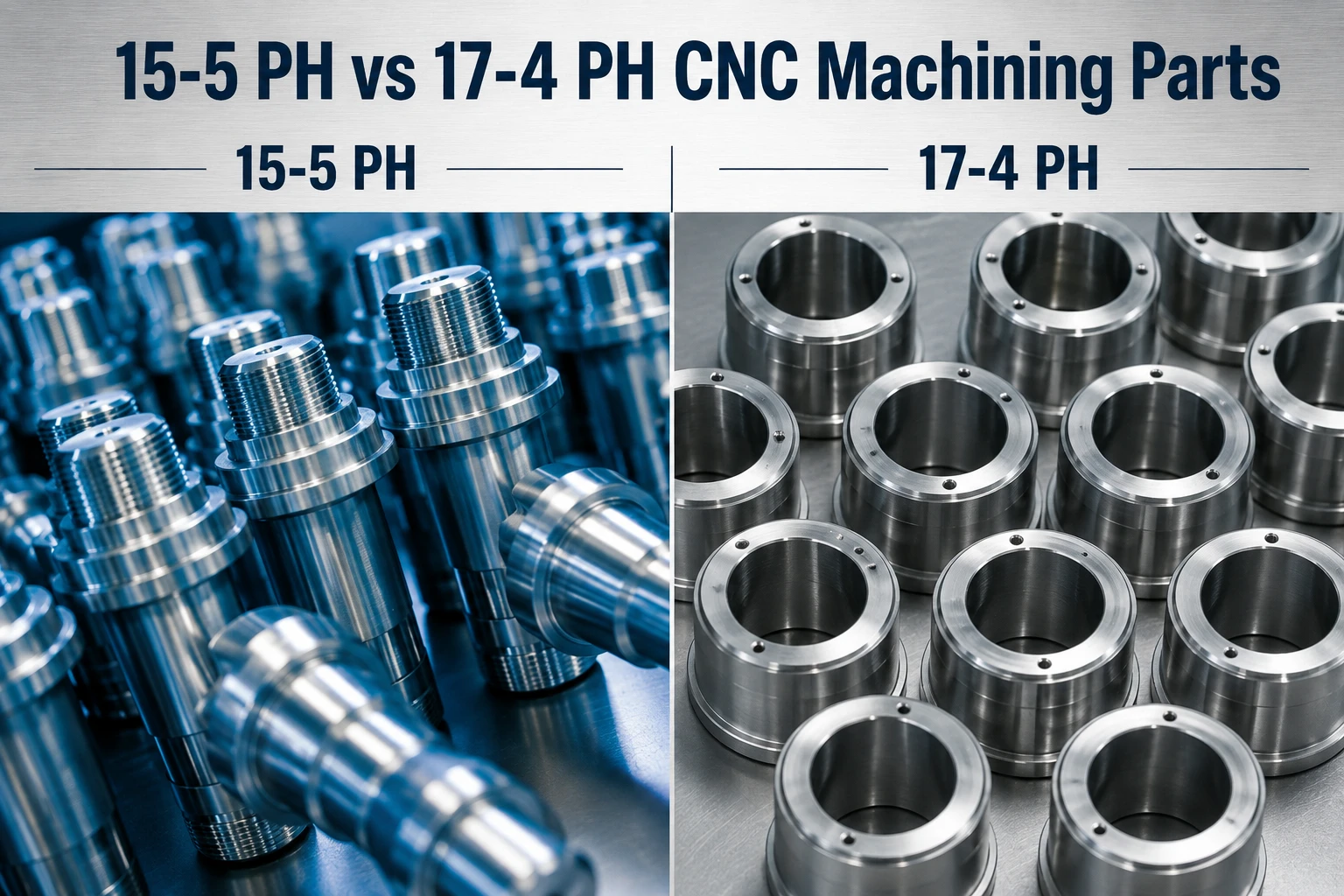
15-5 PH vs 17-4 PH Machinability
Machinability is strongly condition-dependent for both alloys. The biggest practical mistake is to compare grades while ignoring whether the stock is Condition A, H900, H1025, H1150 or another required condition.
Machining in Condition A
Condition A material is frequently selected when substantial material removal is required before final aging. It allows the machining team to establish most of the geometry before the component reaches maximum hardness. However, the process plan must leave appropriate allowance for dimensional movement during aging when final tolerances are tight.
Machining H900, H1025 and H1150
When the material is supplied pre-aged, the benefit is dimensional predictability because no additional aging cycle may be required after machining. The tradeoff is higher cutting force and faster tool wear, particularly in H900. H1025 provides a more balanced strength/toughness condition, while H1150 generally offers lower hardness and improved toughness.
Tooling, Heat and Chip Control
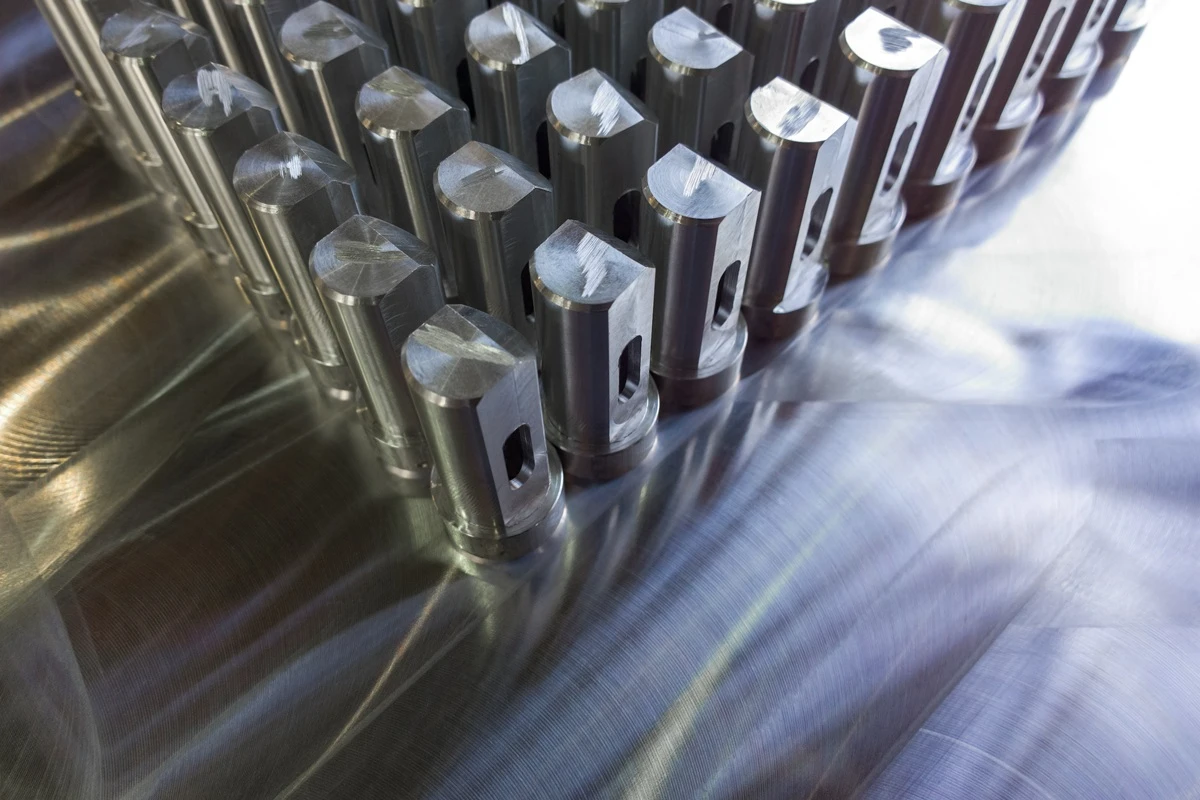
- Use rigid workholding and minimize unsupported tool length, especially on long shafts, thin walls and deep pockets.
- Use carbide or coated carbide tooling selected for PH stainless steel and the actual hardness condition.
- Avoid dwell and rubbing; maintain positive cutting engagement to limit localized heat and premature edge wear.
- Use effective coolant delivery and chip evacuation during drilling, pocketing, slotting and threading.
- Plan tool-life limits around critical dimensions so later parts in a batch do not drift as the cutting edge wears.
- Use staged roughing and semi-finishing when residual stress, thin walls or heat-treatment movement could affect final geometry.
Heat Treatment: H900 vs H1025 vs H1150
The H-number is not a cosmetic suffix. It defines the aging condition and can materially change strength, hardness, toughness and machining behavior. For both 15-5 PH and 17-4 PH, the required condition should be included in the drawing and RFQ.
| Aging condition | Typical purpose | Machining risk | When it may make sense |
| H900 | Maximum or near-maximum strength/hardness | Highest cutting force, edge wear and finishing difficulty | Compact highly loaded parts where strength dominates |
| H1025 | Strength/toughness balance | Moderate-to-high machining difficulty | Mechanisms, shafts and structural parts needing strong but less brittle behavior |
| H1150 | Higher toughness, lower hardness, stress relief | Generally easier to finish than H900 | Parts where toughness, dimensional stability or stress-corrosion performance is more important than peak hardness |
Which Alloy Is Better for Tight-Tolerance CNC Parts?
For precision parts, the material decision should be made together with the manufacturing sequence. A lower raw-material price can be offset by additional finishing, heat-treatment correction, longer lead time or inspection risk. Conversely, paying for 15-5 PH is not justified if the part does not benefit from its more consistent transverse properties.
| Design / sourcing situation | Prefer 15-5 PH when… | Prefer 17-4 PH when… |
| Large or highly loaded section | Transverse toughness and property consistency are critical | Loads are well understood and standard 17-4 properties are adequate |
| Cost-sensitive repeat production | Premium is justified by function or qualification | Availability and material cost are major program drivers |
| Short-lead prototype | Stock is already available in required form/condition | Fast sourcing is critical and 17-4 is readily available |
| Complex multidirectional loading | More uniform mechanical behavior is a design priority | Geometry is simpler or load direction is less demanding |
| Tight post-heat-treatment tolerance | Material/condition plus finishing plan supports stability | Established 17-4 process and post-aging finishing already control the feature |
| Aerospace-style qualification | Specification explicitly calls for 15-5 PH / S15500 | Approved drawing/specification calls for 17-4 PH / S17400 |
Which Alloy Is Better by Industry?
Aerospace and High-Load Structures
15-5 PH may be attractive for critical components requiring consistent transverse properties, toughness and high strength. 17-4 PH remains common when availability, proven history and cost are more important. Typical components include structural fittings, shafts, actuator hardware and high-strength fasteners for space and satellite .
Motion Control and Precision Positioning
Both grades can be used for shafts, couplings, bearing interfaces, actuator components and high-load stage hardware. Prioritize stiffness, fatigue load, bearing fits, runout, concentricity and the final heat-treatment condition.
Photonics and Scientific Instruments
Use either grade only where high strength is actually required. For alignment mechanisms and structural interfaces, dimensional stability can be valuable. Because both alloys are generally magnetic, magnetically sensitive instruments require an explicit magnetic-material review.
Semiconductor and Vacuum Equipment
High-strength shafts, valve hardware, fittings and mechanisms may use PH stainless steels, but vacuum cleanliness, particles, trapped volumes, passivation and surface finishing must be specified separately.
Medical and Surgical Equipment
Both alloys may be used for high-strength instrument mechanisms and structural components where the customer specification permits them. Material condition, cleaning, passivation, traceability and regulatory requirements must be reviewed from the drawing and medical device application.
Real Manufacturing Example: 17-4 PH H1150 Drive Shaft
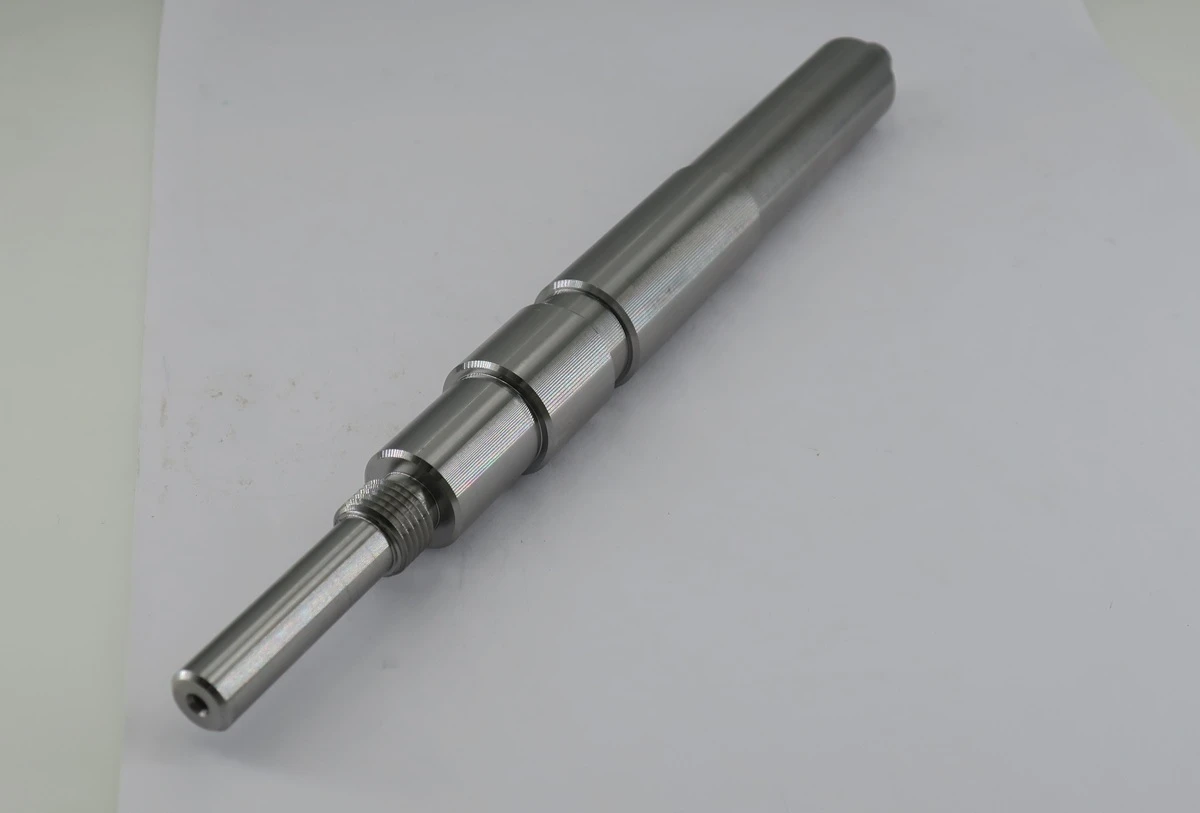
A real Rollyu Precision project provides a useful example of why precipitation-hardening stainless steel machining must be planned around condition, geometry and downstream operations rather than material name alone.
| Project feature | Drawing / process requirement | Manufacturing implication |
| Material | 17-4 PH H1150, specified HRC 28-32 | Pre-aged material requires stable turning conditions and hardness-aware tooling |
| Part type | Long stepped drive-shaft blank | Runout, deflection and datum control must be planned across multiple diameters |
| Overall length | Approximately 8.653 in. | Length-to-diameter ratio increases support and handling risk |
| Thread | 1/2-20 thread on the blank drawing | Thread quality and datum relationship require controlled process sequencing |
| General tolerance | .XXX ±0.005 in. on the supplied drawing | In-process inspection is required to prevent cumulative drift |
| Batch size | 30 pieces in the referenced order | Tool-life and repeatability matter beyond first-article success |
| Downstream work | The customer retained specified grinding / worm-related downstream operations | Supplier scope must be clearly separated from customer-controlled special processes |
Case-study lesson: For 17-4 PH H1150 shaft work, the manufacturing value is not simply “we can turn stainless steel.” It is the ability to control datum strategy, long-part support, thread geometry, tool wear and inspection while preserving stock or interfaces for downstream precision operations.
Cost, Availability and RFQ Risk
17-4 PH is generally more widely stocked and easier to source in common bar and plate forms. 15-5 PH is more specialized and may carry higher material cost, minimum-order requirements or longer lead times. These are not reasons to avoid 15-5 PH; they are reasons to include supply-chain risk in the design decision.
- Confirm stock form, size and heat-treatment condition before freezing the drawing.
- For aerospace or other regulated projects, specify the applicable AMS/ASTM requirement and certification package rather than relying on the alloy name alone.
- Do not substitute 17-4 PH for 15-5 PH, or vice versa, solely because hardness appears similar.
- Quote prototype and production quantities separately when material minimums, heat treatment or grinding drive cost.
- Ask the machining supplier to identify whether final critical dimensions should be established before or after aging.
How Rollyu Precision Machines 15-5 PH and 17-4 PH Stainless Steel
Rollyu Precision supports build-to-print PH stainless steel components from prototype development through repeat production. Manufacturing planning starts with the drawing, material specification, heat-treatment condition and critical functional features.
Drawing and material-condition review – confirm 15-5 PH or 17-4 PH, Condition A / H900 / H1025 / H1150, material standard and certification requirements.
DFM and process-sequence review – determine whether to machine before aging, rough machine before aging and finish afterward, or machine directly from pre-aged material.
Controlled CNC turning / milling – use rigid workholding, carbide tooling, heat control and chip management appropriate to the hardness condition.
Distortion-control plan – use balanced material removal, staged machining and controlled finishing allowance for thin walls, long shafts and asymmetric geometry.
Precision finishing – apply grinding, lapping or other finishing processes where the drawing requires tighter fits or surface control than standard turning/milling alone.
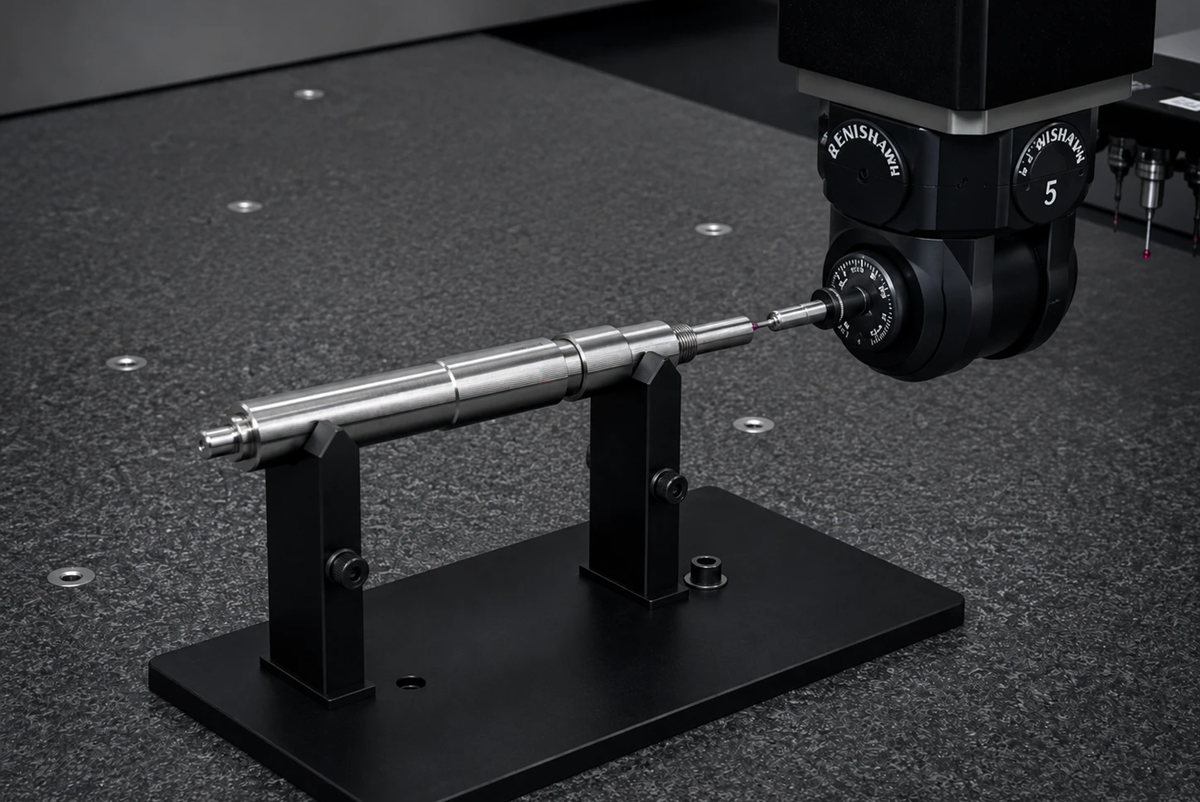
Inspection and documentation – verify critical dimensions, GD&T, threads and datum relationships with appropriate CMM and metrology methods.
Surface finishing coordination – support passivation, polishing, electropolishing, laser marking or other specified post-processes where applicable.
What to Send for a 15-5 PH or 17-4 PH CNC Machining RFQ
| RFQ item | Recommended information | Why it matters |
| 3D CAD | STEP, STP, X_T or equivalent | Defines nominal geometry and supports DFM |
| 2D drawing | PDF / DWG with GD&T | Controls tolerances, datums, threads and inspection |
| Material | 15-5 PH / UNS S15500 or 17-4 PH / UNS S17400 | Avoids ambiguous material selection |
| Condition | Condition A, H900, H1025, H1075, H1150, etc. | Directly affects hardness, machining and sequence |
| Material standard | ASTM / AMS / customer specification | Controls chemistry, properties and certification |
| Critical features | Fits, bores, threads, runout, concentricity, sealing surfaces | Allows risk-based process planning |
| Surface finish | Ra plus passivation / polishing / electropolishing if required | Prevents finish ambiguity |
| Quantity | Prototype + production forecast | Supports correct process and material planning |
| Inspection | FAI, CMM report, material cert, hardness report as required | Defines quality documentation before quotation |
| Application | Aerospace, motion control, semiconductor, medical, scientific, etc. | Helps engineering identify hidden functional risks |
Frequently Asked Questions: 15-5 PH vs 17-4 PH CNC Machining
What is the main difference between 15-5 PH and 17-4 PH stainless steel?
Both are precipitation-hardening stainless steels. 17-4 PH is more widely available and broadly used, while 15-5 PH is commonly chosen when more consistent transverse properties and toughness are important.
Is 15-5 PH stronger than 17-4 PH?
Not universally. Strength depends heavily on heat-treatment condition, product form and specification. Both can reach very high strength in H900; select by required certified properties rather than grade reputation.
Is 15-5 PH easier to machine than 17-4 PH?
Not inherently. Both are machinable, and hardness condition, tool selection, rigidity, chip control and geometry usually have a larger effect on machining difficulty.
Which is easier to machine: H900 or H1150?
H1150 is generally easier to finish-machine because its hardness is lower. H900 typically produces higher cutting forces and faster tool wear.
Can 15-5 PH and 17-4 PH be machined before heat treatment?
Yes. Condition A is often used for major material removal, but the process plan must account for dimensional change during subsequent aging.
Can they be machined after aging?
Yes. Machining pre-aged material can improve dimensional predictability because no later aging cycle may be needed, but tool wear and cutting forces increase as hardness rises.
Which alloy is better for aerospace parts?
Either can be correct. 15-5 PH is often preferred when transverse toughness and property consistency are critical; 17-4 PH is widely used where its certified properties, availability and cost are sufficient.
Which alloy is better for long precision shafts?
The alloy should be selected from mechanical requirements first. From a machining standpoint, long shafts require control of deflection, runout, tool pressure, heat and inspection regardless of whether the material is 15-5 PH or 17-4 PH.
Are 15-5 PH and 17-4 PH magnetic?
Yes. Both are martensitic precipitation-hardening stainless steels and are generally magnetic. Magnetically sensitive instruments should define and verify magnetic requirements separately.
Can these alloys be passivated?
Yes, when the drawing and applicable standard specify passivation. Cleaning and surface-condition control after machining are important for corrosion performance.
Can 17-4 PH be substituted for 15-5 PH?
Only with engineering approval. Similar hardness does not mean identical toughness, transverse properties, certification or qualification status.
What should I send to get a machining quote?
Send the 3D CAD model, 2D drawing, exact alloy, heat-treatment condition, material standard, quantity, surface finish and inspection / certification requirements.
Need Help Choosing 15-5 PH or 17-4 PH for a CNC Machined Part?
| Send Your Drawing for an Engineering Review
Rollyu Precision supports custom 15-5 PH and 17-4 PH stainless steel CNC machining for prototypes and repeat production, including CNC milling, turning, 5-axis machining, grinding, heat-treatment coordination, surface finishing and dimensional inspection. Send 3D CAD + 2D drawing + material condition + quantity + inspection requirements to Rollyu Precision for DFM review and quotation. |