Quick Answer: What Should Engineers Know About Black Anodized Aluminum?
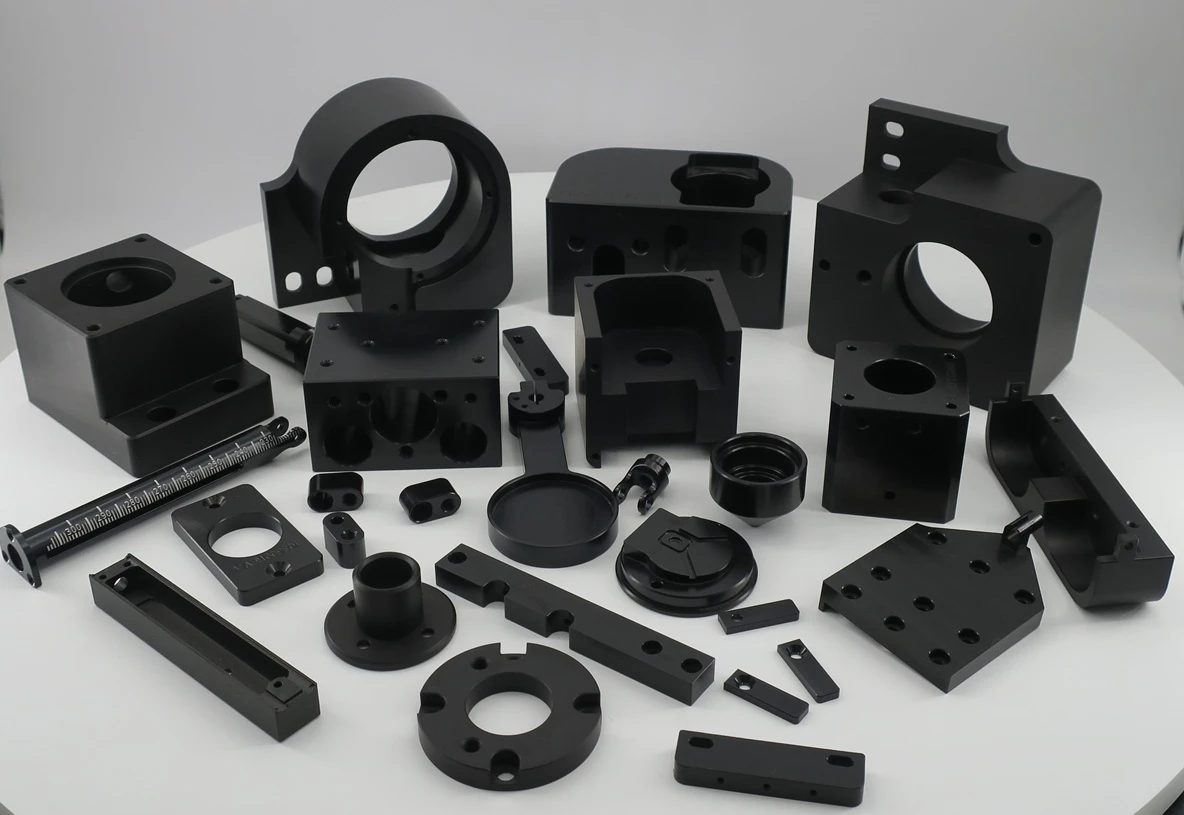
Black anodized aluminum is aluminum that has been electrochemically converted to form an anodic oxide layer and then given a black appearance, commonly through a qualified dye or coloring step followed by sealing when required. For precision CNC parts, the finish can combine corrosion protection, surface durability, electrical insulation and a controlled black appearance without adding a thick paint-like film.
The key purchasing point is that “black anodize” is not a complete engineering specification. Final appearance and dimensional behavior depend on the aluminum alloy and temper, anodizing type, coating requirement, pretreatment, dye/coloring system, sealing method, geometry, racking, masking and inspection criteria. The customer drawing and governing process specification should control the final requirement.
What Does Black Anodizing Mean in CNC Manufacturing?
In precision manufacturing, black anodizing is best treated as a controlled process chain rather than a single cosmetic step. A typical route can include machining and deburring, cleaning, specified mechanical or chemical pretreatment, deoxidizing/desmutting as required, anodizing, black coloring, sealing, and final cosmetic and dimensional inspection.
- Machine and deburr the aluminum part while protecting critical geometry.
- Clean and prepare the surface according to the required visual texture.
- Apply the specified anodizing process and black coloring route.
- Seal when required by the drawing or qualified finishing procedure.
- Inspect appearance, masking boundaries and final-condition critical dimensions.
This sequence matters because anodizing does not reliably hide machining history. Tool marks, polishing direction, bead-blast texture, hand finishing and local scratches can remain visible after finishing and may become more obvious under directional lighting.
Matte, Satin, Gloss and Optical Black: They Are Not the Same Requirement
Matte Black Anodizing
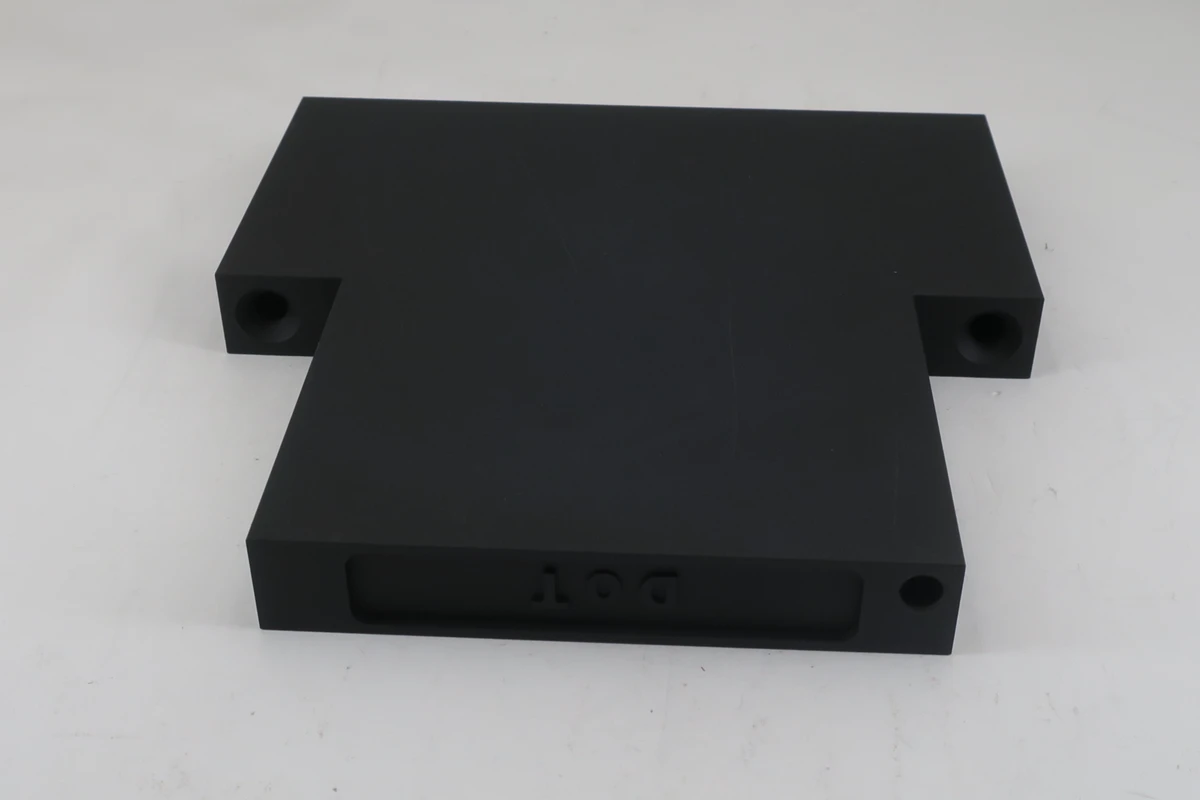
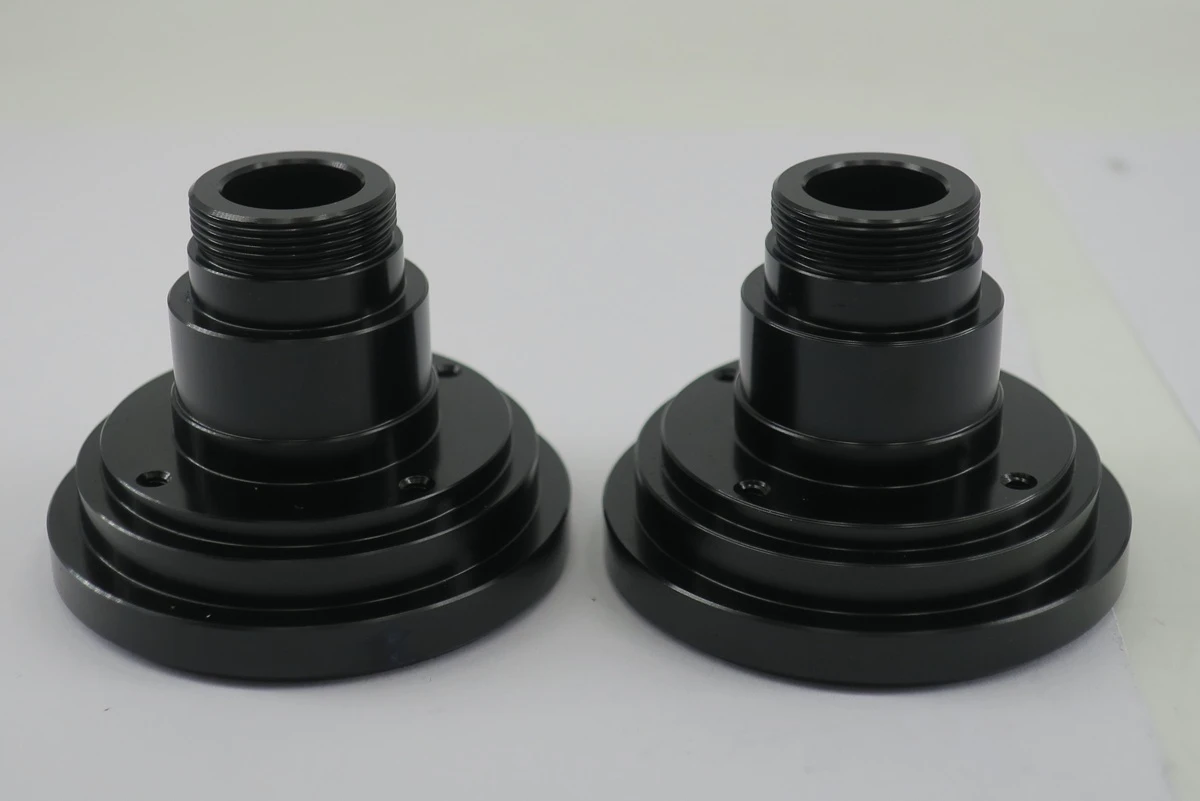
A matte black appearance is commonly created by controlling the surface before anodizing, for example with bead blasting, abrasive finishing or an approved chemical pretreatment. The goal is a more diffuse, low-gloss surface. It is useful for equipment housings, brackets, instrument structures and visible components where glare or machining marks need to be reduced. The exact texture should be defined by an approved sample or measurable surface requirement when appearance is important.
Gloss or Polished Black Anodizing
A brighter black finish starts with a smoother substrate. Polishing, controlled brushing or another qualified bright surface preparation can make the final anodized surface more reflective. This can create a premium visual effect, but it can also make scratches, fingerprints and texture differences easier to see. “Black anodize” alone should not be interpreted as “gloss black.”
Optical Black Anodizing
Photonics and quantum hardware may require surfaces that are not merely black to the eye but engineered for low reflectance or stray-light control. Ordinary decorative or matte black anodizing should not be assigned a universal reflectance value. When optical performance matters, the drawing should define the relevant wavelength range, measurement method, angle or geometry, and acceptance criteria, and the selected finish should be validated with data for the actual process.
Type II Black Anodizing vs Type III Black Hardcoat
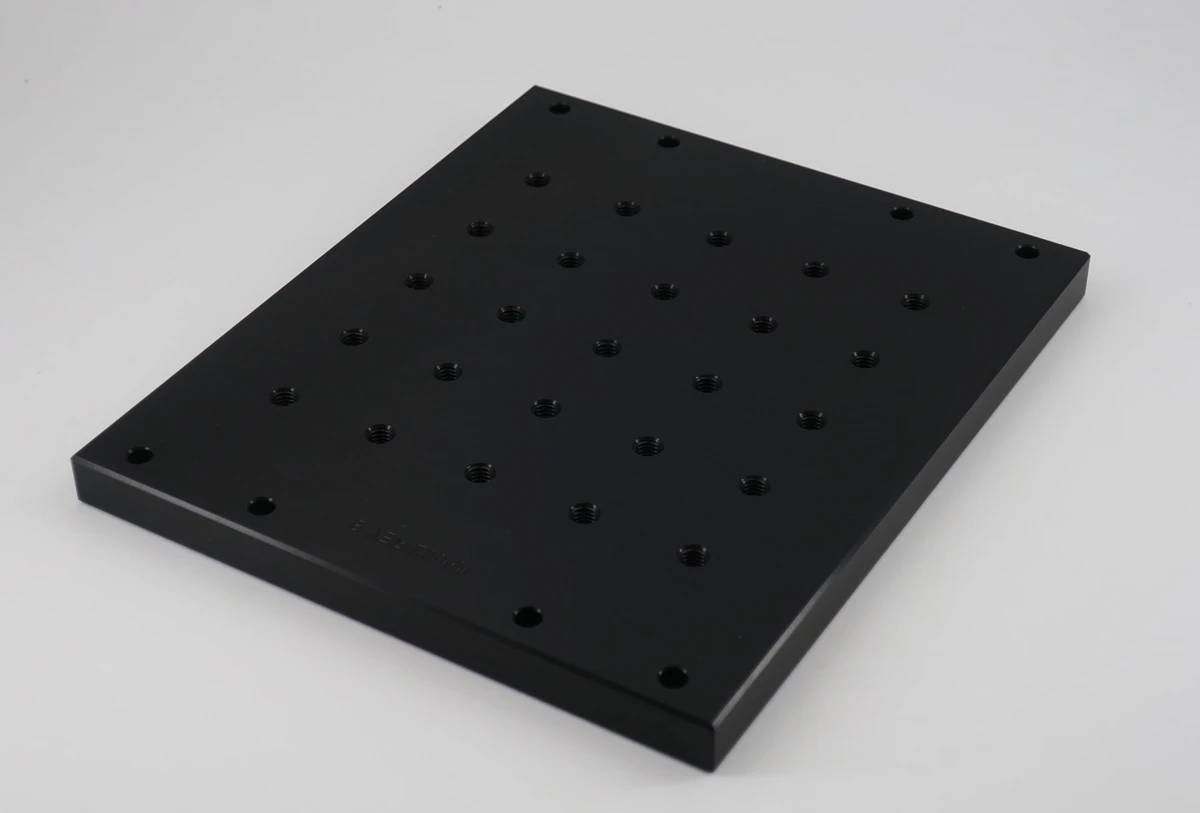
Type II and Type III are common discussion points for CNC aluminum parts, but the choice should be driven by the drawing and functional requirement, not by a belief that Type III is automatically “better.” Type II is commonly selected where appearance and general corrosion protection matter. Type III hardcoat is selected when higher wear or abrasion performance and a harder functional oxide are priorities. Its greater coating effect can increase sensitivity around fits, threads, bores and cosmetic uniformity.
| Decision factor | Type II black anodizing | Type III black hardcoat |
| Primary intent | Appearance + general corrosion protection + moderate surface durability | Higher wear / abrasion performance + harder functional oxide |
| Cosmetic black | Often easier to control as a deep cosmetic black | Naturally darker oxide; black appearance can vary with alloy/process |
| Dimensional sensitivity | Must be reviewed on precision fits, threads and bores | Usually more important because the coating effect is greater |
| Typical fit | Housings, brackets, frames, optical/mechanical structures | Wear interfaces and high-contact functional parts where hardcoat is justified |
| Key risk | Treating color as the complete specification | Selecting hardcoat without reviewing tolerance, roughness, sealing and color consequences |
If a drawing says only “black anodize” without a governing type, class, coating requirement or seal, clarify the requirement before production rather than automatically assuming Type II.
Which Aluminum Alloys Work Well With Black Anodizing?
Most commonly machined wrought aluminum alloys can be anodized, but they do not produce identical visual results. Alloying elements influence oxide formation, natural tone and dye response. For color-critical assemblies, alloy and temper are part of the finishing decision.
| Alloy / family | Practical behavior | Buyer / design note |
| 6061 / 6xxx | Common baseline for precision CNC parts and generally easier to control cosmetically | Good for housings, stages, mounts and frames; use samples for cosmetic-critical work |
| 6082 / 6xxx | Common engineering alloy in many markets | Appearance depends on exact material condition and pretreatment |
| 7075 / 7xxx | Can be black anodized but can show a different base tone or batch response | Do not assume it will visually match 6061 in the same assembly |
| 2024 / 2xxx | Can be anodized; higher copper content can make cosmetic control more challenging | Use project-specific processor capability and approval samples where appearance matters |
| 5xxx wrought alloys | Often suitable for anodizing | Final appearance still depends on temper, chemistry and pretreatment |
| Cast aluminum | Possible, but silicon and local microstructure can increase cosmetic variation | Validate on the actual casting alloy; gray or mottled appearance may be more likely |
Why Do Black Anodized Parts Show Color Variation?
Two parts can both meet a nominal black anodize callout and still differ slightly in shade, gloss or visual depth. The most common causes are material and process variables rather than a single “bad dye” issue.
- Alloy and material lot: different chemistry can form and color the oxide differently.
- Machined surface and pretreatment: tool marks, polishing, Timesaver graining, bead blasting and chemical etching change how the surface reflects light.
- Part geometry and racking: deep pockets, narrow slots, large faces, edges and contact areas can affect local process behavior.
- Coloring conditions: chemistry, concentration, temperature, time, loading and bath condition affect the final black.
- Sealing: the required sealing route influences dye retention, stain resistance and corrosion performance.
- Lighting and viewing angle: daylight, LED inspection lights and photography can make the same black surface look different.
For visible assemblies that must match closely, use the same alloy and temper where practical, define the pre-anodize texture, control the inspection environment, and use an approved master or limit sample. This is a stronger acceptance method than requesting an undefined “perfect black.”
For more information, feel free to check out our article regarding the Color Variation solution case.
How Black Anodizing Affects CNC Tolerances, Fits and Electrical Interfaces
Anodizing changes the aluminum surface, so the final-condition dimension of critical features must be planned before finishing. Avoid using a universal contractual rule such as “all anodizing grows 50% inward and 50% outward.” Practical dimensional behavior depends on the actual process, alloy, coating requirement, geometry and processor control.
Critical Features to Review Before Anodizing
- Bearing seats and precision bores
- Sliding or locating fits
- Threaded holes and external threads
- Seal faces and O-ring-related geometry
- Electrical grounding and bonding surfaces
- Final assembly datums
- Areas that will be laser marked or machined after anodizing
Masking and Local Uncoated Areas
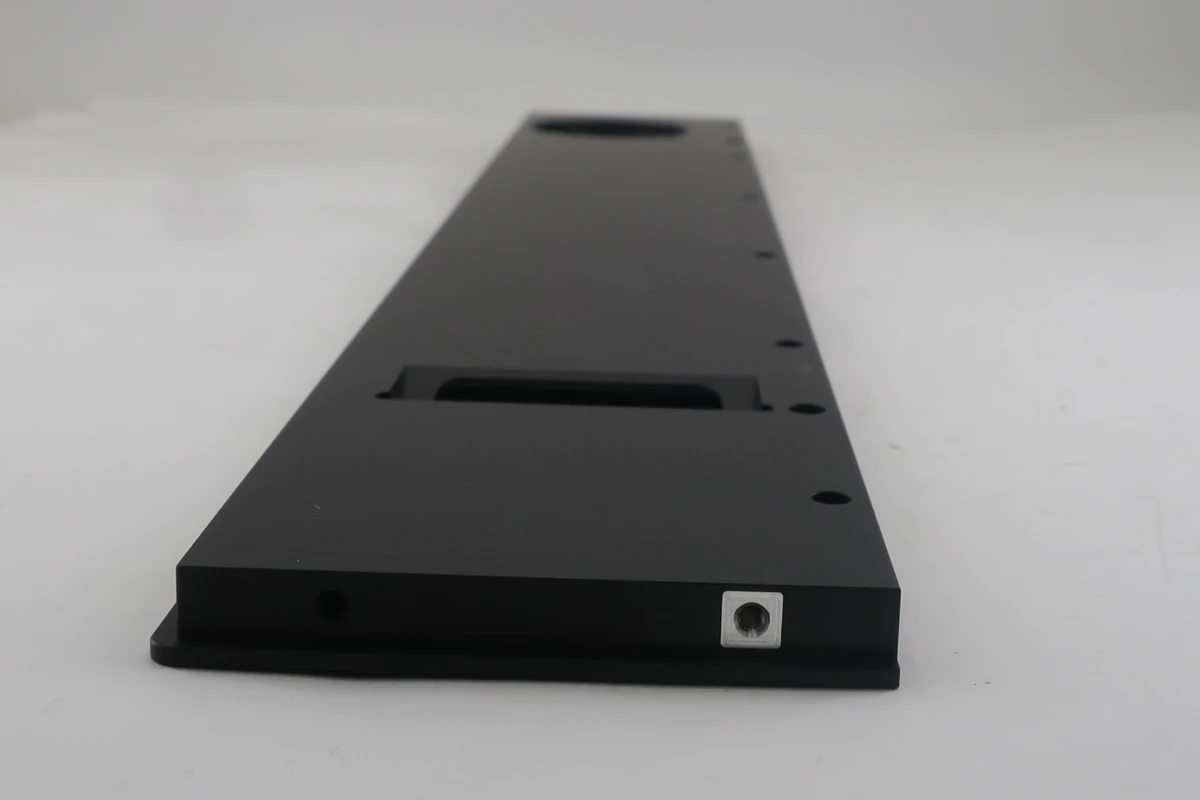
Anodic aluminum oxide is electrically insulating. Grounding pads, bonding surfaces or dimensionally critical locations may require masking or a controlled post-finish operation. Masking should be limited to the surfaces that actually need it because it adds labor and creates visible transition boundaries that may need separate cosmetic acceptance.
Laser Marking on Black Anodized Aluminum
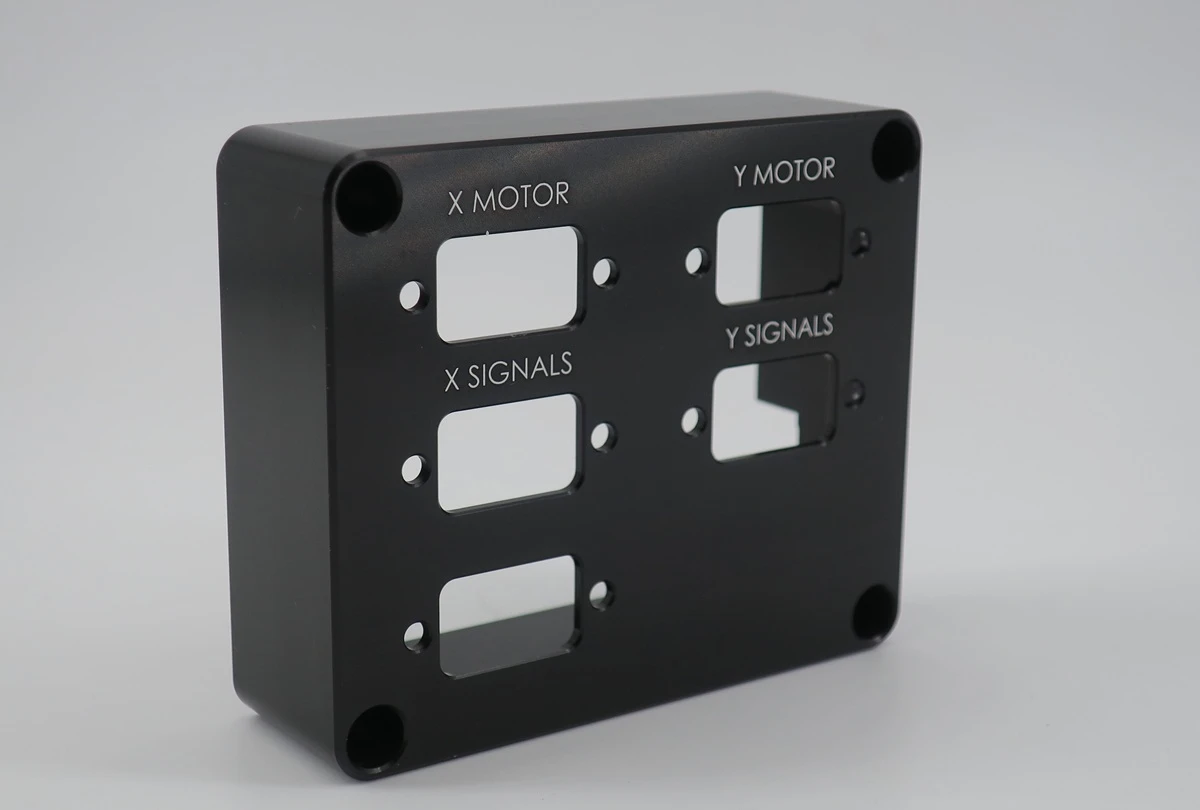
Laser marking after black anodizing is commonly used for serial numbers, legends, alignment marks and instrument labels because it can create strong visual contrast. For engineering drawings, specify the location, content, orientation, readability and any depth or permanence requirement. Do not assume all laser marks are equivalent, especially where small text, optical alignment marks or controlled cosmetic appearance are involved.
Where Black Anodized CNC Parts Are Used
Black anodizing is common in precision equipment because it can support both functional protection and a consistent industrial appearance when the part and drawing are designed for the finishing process. The engineering priorities, however, differ by industry.
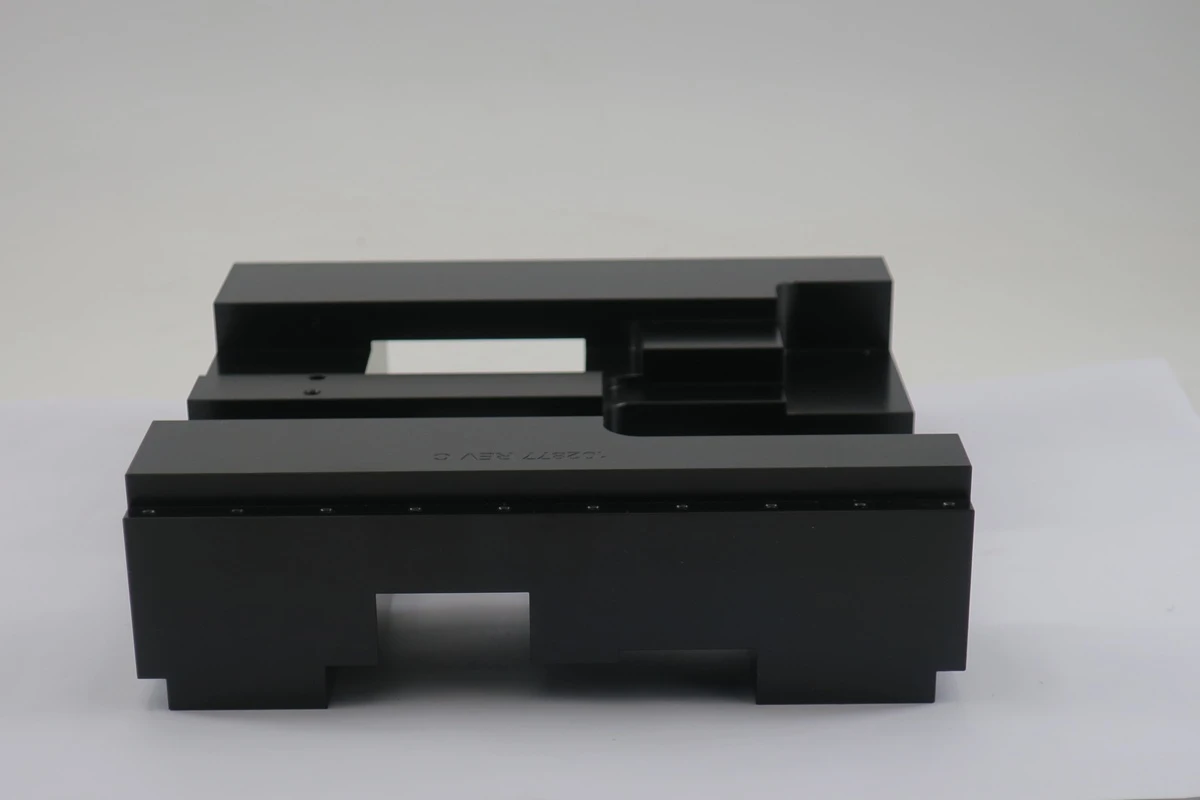
Photonics and Quantum Hardware
Typical parts include optical mounts, detector brackets, stage structures, camera mounts, sensor housings, optomechanical frames and instrument supports. Buyers often care about glare, stray-light control, grounding interfaces, precision bores and cosmetic consistency. A visually dark anodize can reduce visible glare relative to bare aluminum, but optical-critical reflectance must be defined and validated at the wavelengths that matter. Vacuum compatibility, contamination limits and thermal-optical behavior are separate requirements and should not be inferred from the color alone.
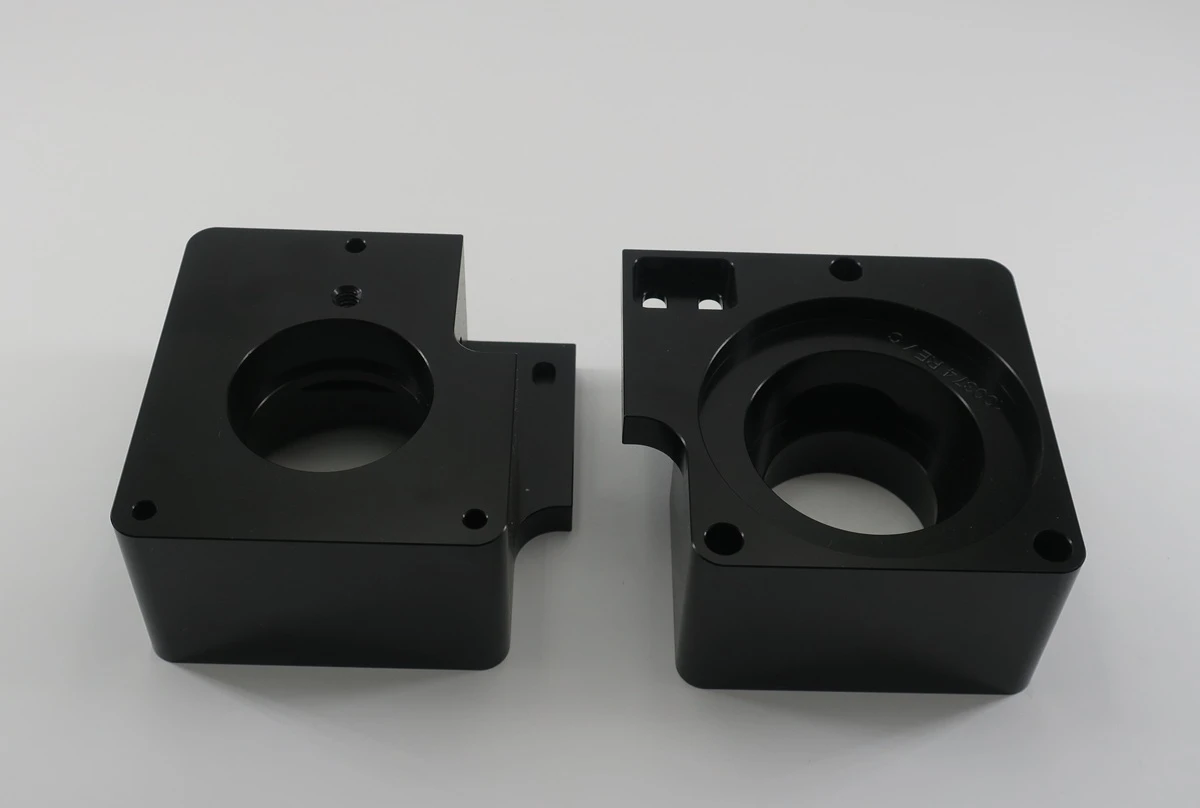
Motion Control
Stage housings, base plates, rotary-stage components, yokes, motor mounts, encoder brackets and camera clamps often use black anodized aluminum. The main risk is usually not color – it is the interaction between the finish and bearing seats, locating bores, sliding interfaces, thread fits and grounding points. Review those interfaces before the RFQ is locked so the machining allowance, masking and final inspection plan are consistent with the finished condition.
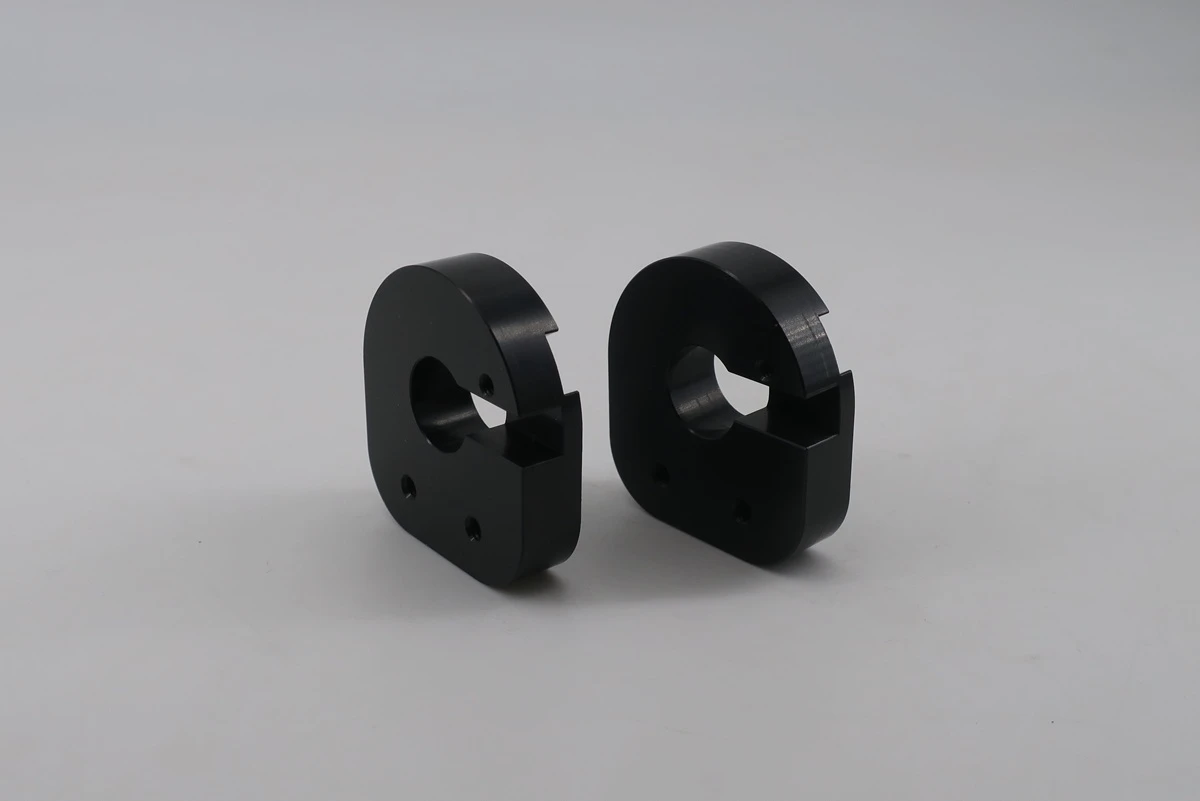
Robotics and Automation
Black anodized aluminum is often used for sensor mounts, actuator housings, end-effector brackets, frames, camera brackets and lightweight structural modules. The finish gives a consistent technical appearance and adds surface protection, but high-wear sliding or clamping interfaces should be evaluated by function. If wear life is the main requirement, compare Type III hardcoat or another engineered surface system instead of selecting a finish based on black color alone.
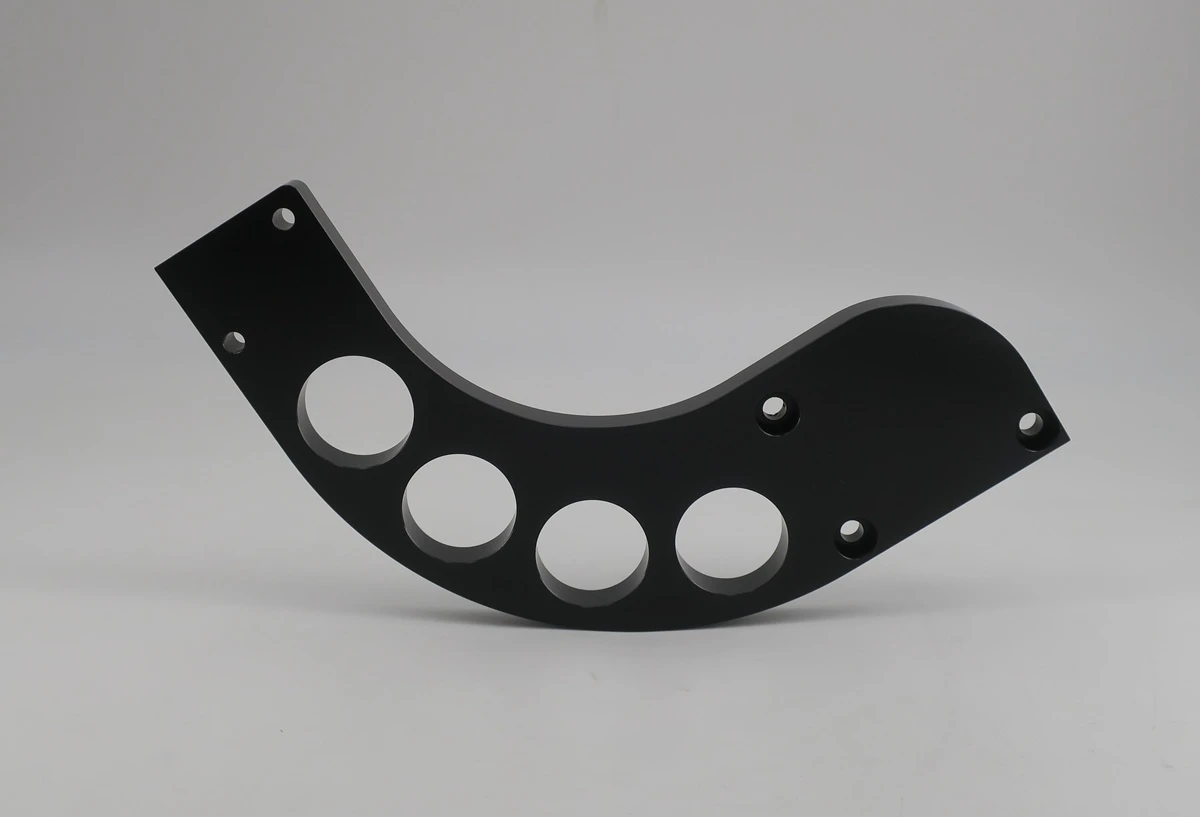
Medical Devices and Dental Equipment
Black or clear anodized aluminum can be used for non-implant equipment housings, diagnostic structures, positioning components, scanner-related structures, instrument panels and dental equipment assemblies. For these applications, buyers commonly focus on cleanable geometry, cosmetic consistency, labeling, dimensional control and documented inspection. Anodizing by itself does not make a component “medical grade,” sterile, biocompatible or compatible with every sterilization process. The device manufacturer must define and validate those requirements for the intended use, cleaning method, patient-contact category and regulatory pathway.
Black Anodizing vs Clear Anodizing, Black Oxide and Powder Coating
These finishes are not interchangeable. The correct choice begins with the substrate, dimensional sensitivity and functional requirement.
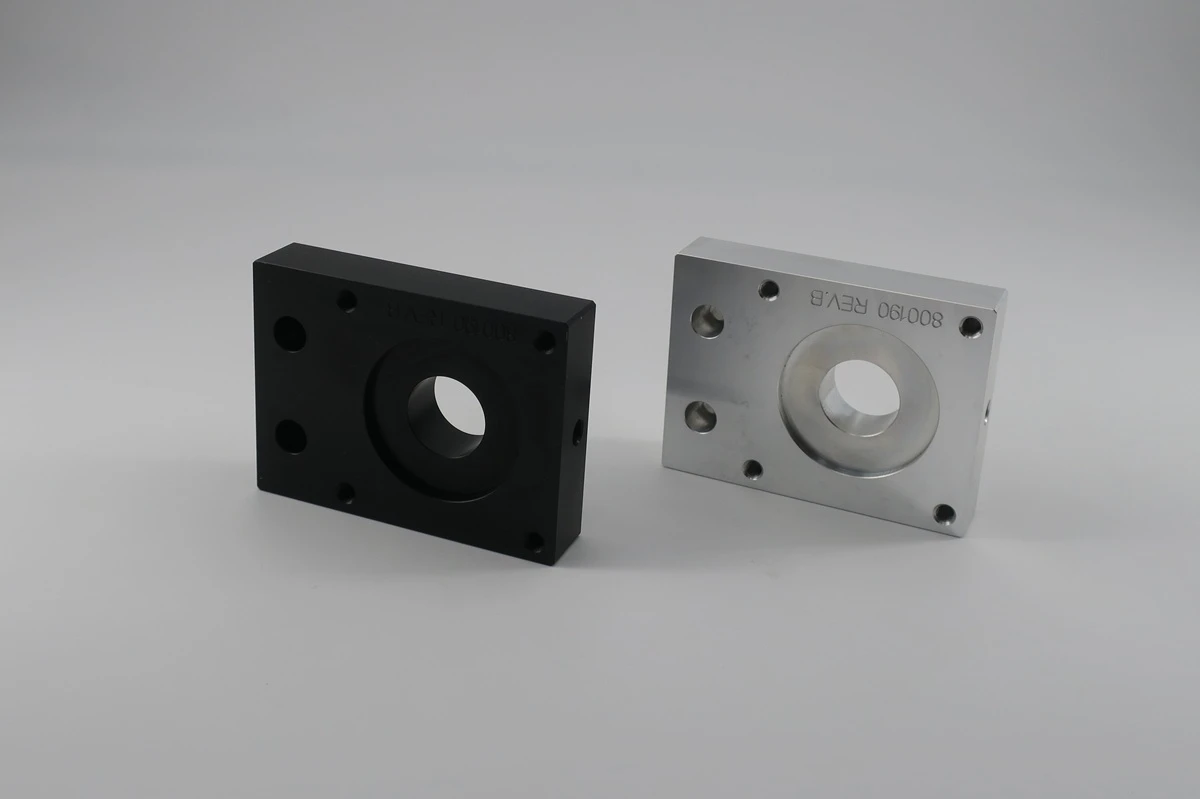
| Finish | Typical substrate | Why buyers choose it | Main limitation / risk |
| Black anodizing | Primarily aluminum | Dark anodized appearance, corrosion protection, surface durability, thin integral oxide | Color/gloss depend on alloy and pretreatment; oxide is insulating; dimensions still need review |
| Clear anodizing | Primarily aluminum | Keeps more of the natural metallic look while adding anodic protection | “Clear” can still vary in silver/gray tone across alloys and processes |
| Black oxide | Primarily ferrous materials | Black conversion finish with very small dimensional effect | Standalone corrosion protection is limited and often depends on oil, wax or seal; not an aluminum-anodize substitute |
| Black powder coating | Many metals compatible with the cure cycle | Opaque black layer, broad texture options and better hiding of surface imperfections | Generally much thicker than anodizing; precision features may need masking; coating can chip if damaged |
How to Specify Black Anodizing on a Drawing or RFQ
A procurement-ready callout defines the variables that materially affect the part. This reduces quotation assumptions, color disputes and late-stage tolerance surprises.
| Item to define | Example / question | Why it matters |
| Alloy and temper | 6061-T6, 7075-T6, etc. | Alloy influences oxide formation, color and cosmetic repeatability |
| Governing specification | MIL-PRF-8625 Type II / Type III, customer spec, or commercial process | Prevents the supplier from guessing the anodizing route |
| Class / color requirement | Class 2 black, or customer-approved black sample when applicable | Separates process classification from visual acceptance |
| Coating / functional requirement | Specified thickness or wear requirement when applicable | Controls dimensional, wear and process expectations |
| Surface preparation | As-machined, bead blasted, Timesaver grain, brushed or polished | Strongly changes matte / satin / bright appearance |
| Seal | As required by drawing or qualified process | Influences dye retention and corrosion performance |
| Masking / finish exclusion | Grounding pads, bearing seats, threads or critical bores | Controls electrical and dimensional interfaces |
| Cosmetic surfaces | Identify visible Class A faces and allowable rack/contact areas | Prevents disputes over hidden or non-critical faces |
| Color acceptance | Master sample, limit samples, controlled lighting or agreed instrument method | Avoids unrealistic “perfect black” expectations |
| Marking | Laser engraving, serial number, orientation and readability | Ensures labels are produced in the correct position and contrast |
How Rollyu Precision Can Reduce Black-Anodize Risk Before Production
Finish quality starts before the anodizing line. For black-anodized precision parts, Rollyu Precision can coordinate the machining and finishing requirements as one manufacturing plan instead of treating surface finishing as an afterthought.
- Review alloy, critical dimensions, cosmetic faces and finish callouts before machining.
- Plan masking or machining allowance for bearing seats, bores, threads and grounding surfaces.
- Control deburring and pre-anodize texture so visible parts have a comparable surface condition.
- Flow customer notes such as Type II / Type III, Class 2, surface grain direction or specified seal to the finishing process.
- Use approved samples or limit samples where batch-to-batch appearance matters.
- Inspect critical dimensions after finishing when the drawing requires final-condition verification.
- Verify laser marking, orientation and cosmetic acceptance after anodizing.
RFQ Checklist for Black Anodized Aluminum CNC Parts
For a faster engineering review and a quote that reflects the real finishing work, include:
- 3D CAD model
- 2D drawing with GD&T and critical dimensions
- Aluminum alloy and temper
- Prototype quantity and expected production quantity
- Anodizing type, class and any coating / wear requirement
- Black color, gloss or physical sample requirement
- Pre-anodize surface finish such as bead blast, Timesaver grain or polished finish
- Masking, electrical grounding and bonding surfaces
- Laser marking / engraving requirements
- Inspection documentation and packaging requirements
| Send Rollyu Precision the 3D CAD, 2D drawing and black-anodize notes together. If the callout is incomplete, the missing finish, masking, dimensional and inspection questions can be identified before production rather than after parts are finished. |
FAQ About Black Anodized Aluminum CNC Parts
What is black anodized aluminum?
It is aluminum with an electrochemically formed anodic oxide layer that is given a black appearance, commonly by a qualified coloring step, with sealing when required by the process or drawing.
Is black anodizing the same as black paint?
No. Paint and powder coating add an external film. Anodizing converts the aluminum surface into an oxide layer, so the underlying machining and pretreatment texture can remain visible.
What is the difference between Type II black anodizing and Type III black hardcoat?
Type II is commonly used for appearance and general protection. Type III is selected mainly for harder, higher-wear functional oxide. Type III also has different dimensional, roughness and cosmetic consequences.
Does black anodizing affect dimensions?
Yes. The finished surface changes and critical bores, fits, threads and sealing features should be reviewed using the applicable process data rather than a universal buildup assumption.
Can 6061 aluminum be black anodized?
Yes. 6061 is widely used for black-anodized CNC parts. Cosmetic-critical work should still control alloy/temper, surface preparation, processing and acceptance criteria.
Can 7075 aluminum be black anodized?
Yes, but its appearance can differ from 6061 because alloy chemistry influences oxide formation and color. Mixed-alloy parts should not be assumed to match visually.
Why can black anodized parts look purple or gray?
Possible causes include alloy chemistry, oxide behavior, coloring conditions, bath control, sealing, surface texture, UV exposure and lighting. Compare the result with the approved sample and process requirement.
Does black anodized aluminum fade in sunlight?
Some colored anodized finishes can change under prolonged UV exposure. Stability depends on the coloring system, sealing and environment; UV-critical applications should use a qualified and validated process.
Is black anodized aluminum electrically conductive?
The anodic aluminum-oxide surface is electrically insulating. Grounding or bonding areas may need masking, finish exclusion or another engineered interface.
Is black anodizing good for photonics and quantum hardware?
It is commonly used for dark optomechanical structures, mounts and housings. If stray-light performance is critical, specify and validate reflectance at the relevant wavelengths rather than relying on visual blackness.
Is black anodized aluminum suitable for medical or dental equipment?
It can be used for certain non-implant equipment components, but anodizing alone does not establish biocompatibility, sterility or sterilization compatibility. Those requirements must be defined and validated by the device manufacturer.
Can black anodized aluminum be laser marked?
Yes. Laser marking is widely used for labels, serial numbers and instrument legends. The drawing should define location, orientation, contrast and any permanence requirement.
Can black anodized parts be stripped and reworked?
Sometimes, but stripping and re-anodizing can remove base aluminum and change dimensions or appearance. Tight-tolerance rework should be reviewed before the existing anodize is removed.
Is black anodizing always better than powder coating?
No. Black anodizing is often attractive for precision aluminum parts and a metallic finish. Powder coating can be better when a thicker opaque coating, wider texture choice or surface-hiding capability is desired. Choose by function and geometry.
Review the Finish Before the Part Reaches the Anodizing Line
Black anodizing performs best when material, machining, surface preparation, anodizing, masking, marking and inspection are planned together. If your project includes Type II black anodize, Type III black hardcoat, matte or polished black, optical requirements, masking, laser marking or cosmetic matching, send the complete RFQ package before the manufacturing route is locked.
Send Rollyu Precision your CAD files and drawings for a DFM + black anodizing review and quotation.