Many treat powder coating as just a cosmetic step, but a poor finish can easily ruin precision parts. Uncontrolled coating thickness, clogged threads, and thermal distortion during baking frequently cause critical components to fail final assembly.
At Rollyu Precision, we approach custom powder coating services as an exact engineering discipline rather than an afterthought. We utilize advanced custom masking and strict process controls to guarantee your final dimensions remain completely intact. Our engineered finishes deliver superior wear resistance and flawless functionality, ensuring your precision assemblies arrive perfectly toleranced and ready for harsh real world environments.
Why Powder Coating Fails in Precision Assemblies
Powder coat fails in precision assemblies when it’s treated as an afterthought rather than a physical dimension. In tight tolerance work, a few extra mils of coating will ruin a perfect fit. Threads bind up, flat sealing surfaces become uneven, and high curing temperatures can warp the metal itself. Ultimately, assemblies fail because the shop just applied paint, rather than engineering a functional finish.
Coating Thickness Is Not Uniform
Unlike thin film plating, powder coat never lays down perfectly flat. Because it relies on electrostatic charge, the powder naturally pools thick in inside corners and pulls away from sharp edges. You can’t just add a flat two mil allowance across the board and call it good. If you ignore how powder actually wraps around complex geometry, those unpredictable high spots will instantly bind up mating parts during assembly.
Edge build up increases thickness
Applying an even powder coat requires masterful gun control. Spray too close or slowly, and the powder piles up; move too fast, and coverage goes bare. Poor spray angles ruin adhesion, while simple drafts can easily deflect powder and cause thin spots. Part geometry adds another layer of difficulty: powder naturally clings to sharp corners. If left unchecked, this heavy edge buildup will instantly ruin tight assembly tolerances and prevent your precision components from fitting together perfectly.
Internal holes shrink after powder coating
Powder coating and precision machining often conflict,especially in threaded and tolerance critical holes. Without proper masking and plugging, powder builds up inside tapped holes (particularly blind holes), leading to rework like thread chasing. In smooth holes, a typical 3 mil coating reduces diameter by 6 mils and creates edge buildup, causing fit issues for pins and fasteners. For CNC machined parts, masking isn’t optional,it’s essential to maintain assembly accuracy and avoid downstream manufacturing problems.
Threads become blocked
A poor powder coating finish can compromise precision machined parts. If tapped holes aren’t properly plugged, coating builds up and cures into a hard layer that blocks threads, causing assembly delays, rework, or scrap.
At Rollyu Precision, powder coating is engineered alongside CNC machining. We precisely mask and plug all critical features, ensuring threads, holes, and mating surfaces remain functional,so your parts arrive assembly ready, with no secondary processing required.
Tolerance Stack Up Is Ignored
Designing bare metal CAD without accounting for coating thickness is a costly trap. A few extra mils quickly multiply across mating surfaces, causing tolerance stack up, binding fasteners, and scrapped parts. We prevent this by planning your finish before machining begins. Our custom powder coating services eliminate dimensional risks by calculating pre coating tolerances and engineering precise masking for interference fits. For ultra tight assemblies, we also provide thin film alternatives like anodizing or PVD to guarantee a flawless final fit.
Functional Surfaces Are Not Protected
Mating faces, bearing journals, and grounding points rely on exact tolerances. When these functional surfaces aren’t carefully protected, that hard earned precision disappears under a thick layer of paint, completely ruining the part’s fit. Our powder coating services are designed around custom masking layouts to prevent this entirely, keeping your crucial dimensions completely bare and accurate right out of the oven.
Sealing surfaces lose flatness
The stakes are just as high for fluid systems. If sealing surfaces lose their flatness due to uneven finish buildup, a high value part instantly turns into scrap. It only takes a microscopic variation in paint thickness to cause Orings to fail and systems to leak. We rely on meticulous process controls to ensure your grooves and mating faces remain completely untouched and dimensionally perfect.
Contact areas become unstable
Poor powder coating can compromise structural integrity. When coating remains on contact surfaces, it compresses under load, causing torque loss, bolt loosening, and long term instability. At Rollyu Precision, we engineer powder coating with precision machining masking all critical interfaces to keep structural zones coating free. The result is reliable metal to metal contact, consistent preload, and assemblies that remain stable over time without performance degradation.
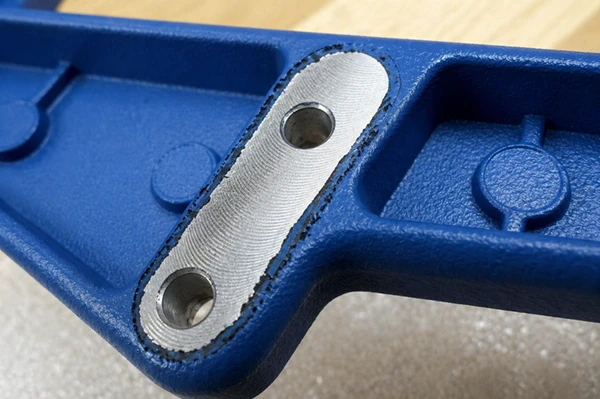
Thermal Curing Introduces Distortion
The heat required to cure finishes often releases trapped machining stresses, causing tight tolerances to unexpectedly shift. We tailor the thermal profiles within our powder coating services to prevent this residual stress from relaxing, keeping your final parts completely stable and dimensionally true.
Heat cycles affect thin wall parts
This intense heat is especially unforgiving on thin walled components. Delicate geometries will easily twist, bow, or sag under standard curing temperatures if they aren’t physically supported the right way. We solve this by engineering custom racking methods specifically designed for fragile structures. This targeted, physical support eliminates the risk of heat warping, ensuring thin cross sections remain perfectly straight from the oven to the assembly line.
Residual stress causes dimensional drift
Aggressive CNC machining traps mechanical stress inside metal. When baked, these internal forces relax, causing tight tolerances to suffer unpredictable dimensional drift. We prevent this by integrating specialized thermal management into our powder coating services. By tailoring the exact curing environment to your alloy’s specific machining history, Rollyu Precision stops the metal from shifting, ensuring your final components remain completely stable and exactly to print.
Engineering Controlled Powder Coating Process
A premium finish shouldn’t compromise tight assembly tolerances. At Rollyu Precision, our custom powder coating process starts with proactive engineering. We analyze your CAD models for stack up risks and engineer precise masking for critical mating faces. Before application, all parts undergo a meticulous pre treatment phase, including degreasing, acid washing, and phosphate finish, to guarantee a clean surface and maximum coating adhesion.
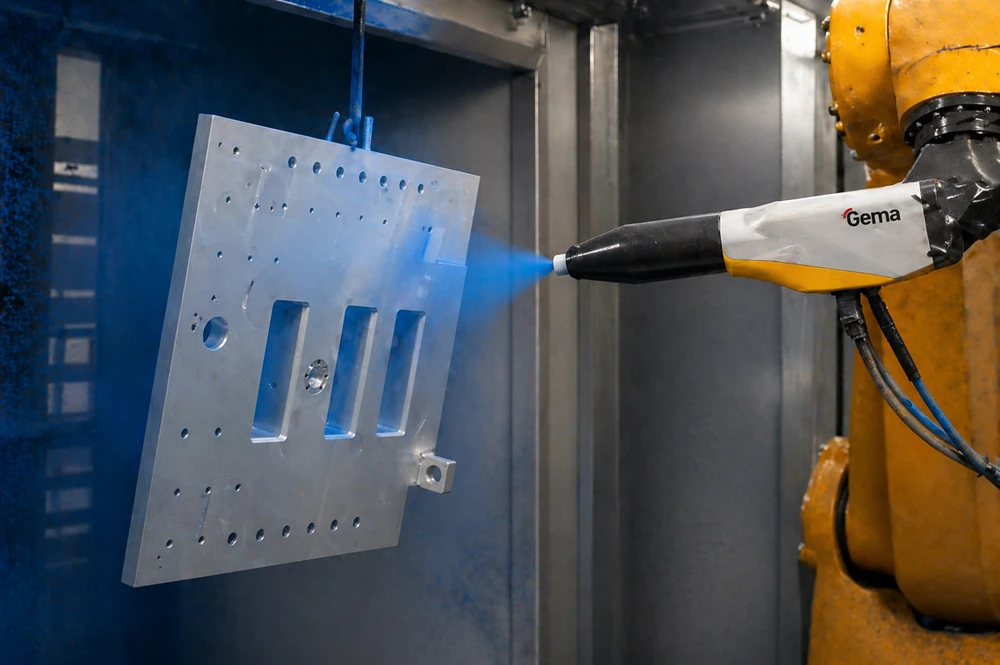
During application, we utilize automated multi axis electrostatic guns and robotic arms to evenly coat complex geometries. We tightly control curing temperatures to prevent metal warping. Finally, every batch undergoes strict quality inspections, including thickness verification, cross hatch adhesion checks, and impact testing. This ensures your custom powder coated parts arrive dimensionally accurate, highly durable, and ready for immediate assembly.
Step 1: Surface Preparation (Critical for Adhesion)
A durable custom powder coating starts long before the spray gun. If bare metal isn’t properly prepared, even premium powder will eventually flake. We treat surface prep as a precise manufacturing step, creating the ideal mechanical profile to lock the coating onto the substrate for maximum adhesion.
Rollyu Precision’s strict pretreatment process includes multi stage degreasing, acid pickling, and phosphating. This guarantees a completely rust free surface with a uniform, dark gray phosphate film. We ensure zero white ash or residual moisture remains, creating the perfect foundation for a flawless powder coat finish.
Degreasing, cleaning, and pre treatment
CNC coolants, stamping oils, and shop dust are the enemies of adhesion. We run every component through a strict, multi stage degreasing and chemical pretreatment wash. This strips away microscopic contaminants and etches the metal, providing a pristine surface that is completely ready to accept the finish.
Ensuring coating consistency and bonding strength
By standardizing our cleaning chemistry, we eliminate unpredictable finish defects like fisheyes, pinholes, or poor edge coverage. This obsessive control guarantees maximum bonding strength, resulting in a perfectly uniform, heavy duty coating that will survive harsh environments and tight assembly tolerances without peeling.
Step 2: Precision Masking Strategy
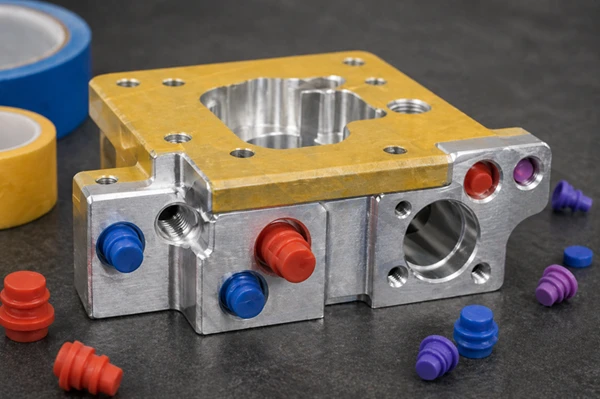
A premium finish shouldn’t ruin your tolerances. We treat masking as a critical engineering phase, not a taping afterthought. By utilizing custom high temp plugs and precise masking layouts, we build a foolproof barrier that keeps coating buildup far away from your most critical dimensions.
Protect threads, bores, and sealing surfaces
Just a few mils of overspray inside a tapped hole or precision bore will instantly cause fasteners to bind. We strictly plug all threaded features and mask critical sealing faces. This guarantees O rings seat perfectly and hardware threads smoothly, saving you from expensive post coat rework.
Define coating zones based on function
Not every surface should be painted. Mating faces, electrical grounding points, and tight interference fits require bare metal to function. We review your blueprints to map out exact coating zones, ensuring the finish only goes exactly where it belongs and nowhere else.
Step 3: Controlled Coating Thickness
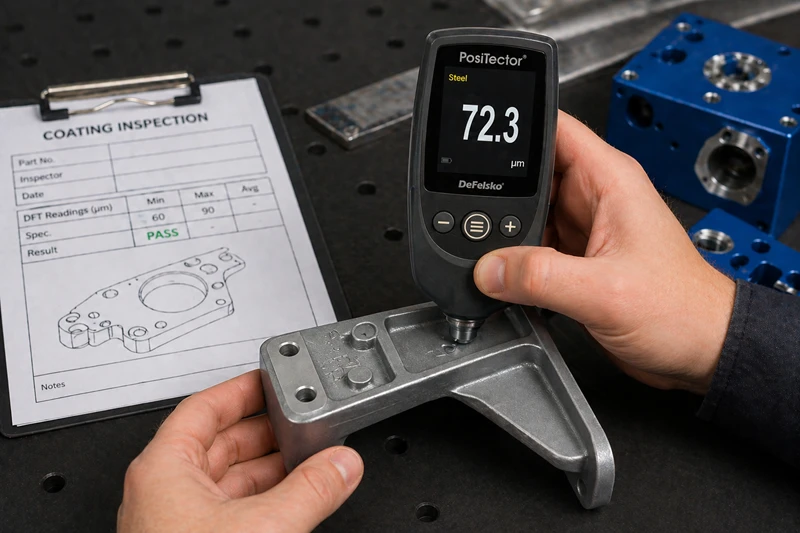
Applying powder isn’t about blasting parts until they look good. It is a precisely calculated build up of material. We treat the final finish as a critical dimension on your print. By strictly regulating our spray parameters, we deliver a uniform layer that protects the metal without blowing out your tolerances.
Typical range: 50 to 120μm
A standard protective finish typically falls between 50 and 120 microns. We continuously monitor the dry film thickness (DFT) to ensure we hit this exact window. This provides maximum durability and corrosion resistance without causing heavy edge build up or an ugly, orange peel texture.
Adjusted based on part tolerance and assembly requirement
We never spray blind. Before firing the gun, we review your blueprints and assembly requirements. If a machined component or sheet metal fabrication part features tight interference fits or complex mating surfaces, we adjust our application parameters. We dial in the exact thickness required to balance aesthetic durability with absolute mechanical function.
| Feature Type | Pre-coat Allowance (Recommended) | Masking Strategy | Final Assembly Impact |
| Tapped Holes | No allowance needed | High-temp Silicone Plugging | Prevents thread seizure |
| Bearing Bores | +0.05mm to +0.10mm | Precision ID Masking | Ensures interference fit accuracy |
| Sealing Surfaces | 0.00mm (Keep bare) | Custom Kapton Tape | Maintains flange flatness |
| General OD/Surfaces | -0.10mm (Total) | No masking required | Maximizes edge protection |
Step 4: Curing Process Optimization
Curing isn’t just baking parts until the powder melts; it is a carefully calculated thermal process. If not managed correctly, oven heat can ruin perfectly machined components. We optimize our curing stage to ensure the polymer cross links for maximum durability without jeopardizing your part’s critical geometry.
Controlled temperature cycles
We never shock precision components with sudden blasts of maximum heat. Instead, we run highly controlled ramp up and cool down profiles. By tightly managing the oven’s temperature gradients based on the specific mass and alloy of your parts, we guarantee a flawless, uniform finish that fully cures.
Minimizing distortion and stress
High oven temperatures can release trapped machining forces, causing dimensional drift or warping thin walls. We engineer custom racking solutions and tailor our thermal profiles to prevent this residual stress from relaxing. This guarantees your components survive the heat and remain perfectly stable, flat, and true to print.
Step 5: Inspection and Quality Control
We don’t just ship shiny parts; we ship precision components. Under high intensity lighting, our inspectors check for cosmetic defects like fisheyes, pinholes, or scratches. We also verify that custom masking lines are crisp and tapped holes remain bare, ensuring a flawless, uniform surface ready for immediate assembly.
| Test Item | Standard Reference | Target Requirement | Engineering Purpose |
| Dry Film Thickness (DFT) | ISO 2360 / ASTM D7091 | 60 – 90 μm (Typical) | Ensures uniformity & fitment |
| Cross-hatch Adhesion | ASTM D3359 | 5B (No detachment) | Long-term coating durability |
| Impact Resistance | ASTM D2794 | > 160 in-lb | Prevents chipping under stress |
| Salt Spray Test | ASTM B117 | 500 – 1000+ Hours | Verifies corrosion protection |
| Pencil Hardness | ASTM D3363 | 2H – 4H | Scratch & mar resistance |
Visual + functional inspection
A good finish must perform exactly as well as it looks. Under high intensity lighting, we inspect for surface defects like fisheyes, pinholes, or heavy orange peel. Beyond cosmetics, we verify that all masking lines are crisp, tapped holes remain completely bare, and the part is genuinely ready for immediate assembly.
Thickness verification where required
Guessing isn’t an option with tight assembly tolerances. Using advanced digital gauges, we measure the dry film thickness (DFT) across multiple data points. This precision verification ensures the powder coating meets your exact blueprint requirements, providing maximum protection without causing interference fits or dimensional stack up risks.
To guarantee long term durability, we conduct rigorous physical checks based on your specifications. This includes falling weight impact testing for coating strength and ASTM D3359 crosshatch adhesion testing. We ensure the final finish is completely free of defects and strictly meets your custom packaging requirements before shipping.
Powder Coating for CNC Machined Parts
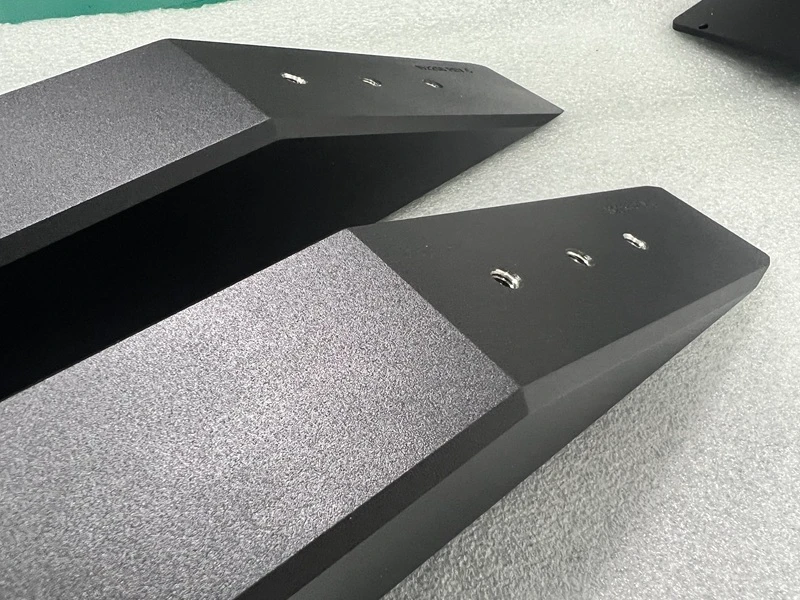
Applying a tough finish to CNC machined parts requires strict engineering control rather than just spraying color. We protect your exact tolerances by treating the final coating layer as a critical dimension.
Through precise masking of threaded holes and careful management of edge buildup, Rollyu Precision’s powder coating services deliver maximum durability without ruining mechanical function. Your custom metal components arrive completely protected, visually flawless, and perfectly ready for immediate assembly.
Challenges in CNC Components
Applying powder coat to machined parts isn’t like painting flat sheet metal. It presents serious engineering hurdles. The added material thickness and high heat curing ovens can easily ruin a perfectly cut component. We strictly control our application process to overcome these specific challenges and protect your part’s mechanical integrity.
Tight tolerances (±0.005 mm)
When you machine a part to ±0.005 mm, a standard 2 mil coating will instantly blow out your critical dimensions. We prevent tolerance stack up through precise thickness control and strategic masking, ensuring the protective layer never ruins your exact blueprint requirements.
Complex geometries
Deep pockets, blind holes, and sharp interior corners create Faraday cage effects, making uniform coverage extremely difficult. We adjust our gun voltages and grounding techniques to drive powder into complex recesses without causing heavy edge build up or uneven surface textures.
Precision interfaces
Overspray on mating faces or inside tapped threads will instantly halt assembly. We map out strict bare metal zones based on your CAD data. Using custom high temp plugs and crisp masking lines, we guarantee functional interfaces remain pristine and ready for hardware.
Our Approach
We don’t treat powder coating as an afterthought. Our approach integrates the finishing process directly into the initial manufacturing plan. By analyzing the engineering requirements of your CNC machined parts, we prevent costly rework, protect critical dimensions, and guarantee the final finish enhances your component rather than destroying its functionality.
DFM review before coating
Before hitting the spray booth, our engineers analyze your blueprints. We look for potential issues like Faraday cage effects in deep pockets or thermal distortion risks. Catching these challenges early allows us to adjust our machining and finishing strategy, ensuring a flawless result.
Tolerance compensation strategy
Coating adds physical material. If a part requires tight assembly fits, we offset our CNC machining toolpaths to account for the exact mil thickness of the powder layer. This proactive strategy guarantees your components still hit their critical blueprint tolerances after they leave the curing oven.
Functional masking design
Standard tape jobs lead to messy edges and ruined parts. We engineer custom masking layouts based on your specific assembly needs. By protecting tapped threads, grounding points, and interference fits with precision high temp plugs, we ensure your components are perfectly prepped for immediate hardware installation.
Powder Coating for Sheet Metal Fabrication Parts
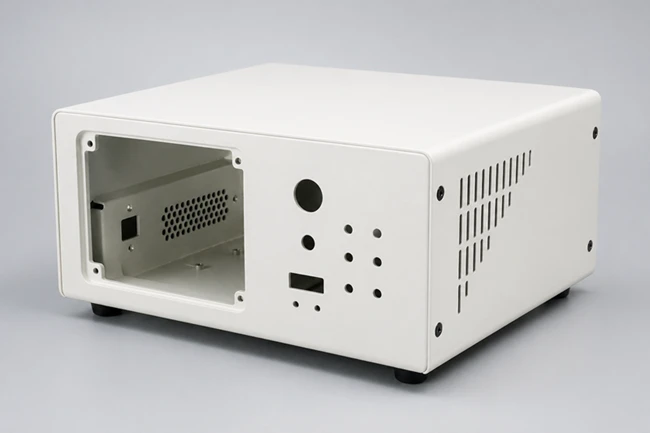
At Rollyu Precision, we use high voltage electrostatic spray guns to draw negatively charged powder evenly onto grounded sheet metal parts, ensuring perfect adhesion across flat expanses, welded joints, and sharp laser cut edges. As the fabricated assemblies bake in our curing ovens, the powder melts into a dense, continuous protective layer. This strictly controlled process guarantees your enclosures and brackets receive a tough, corrosion resistant finish without messy edge buildup.
Common Issues
Powder coating precision parts introduces specific manufacturing risks that can ruin perfectly good components. If the process isn’t strictly controlled, high heat and added material will destroy tight tolerances and geometry. We engineer our finishing workflow to anticipate and eliminate these common defects before they happen.
Warping after curing
High curing temperatures can cause thin walls to distort as residual machining stresses relax. We prevent this thermal warping by designing custom supporting racks and strictly controlling the oven’s heat up and cool down cycles, ensuring your parts remain perfectly flat and true.
Edge thickness inconsistency
Sharp corners naturally attract more charged powder, leading to fat edges, while interior angles repel it. We manipulate spray gun voltages and part grounding paths to overcome these electrostatic challenges, guaranteeing a perfectly even mil thickness across every complex edge and recess.
Cosmetic vs functional conflict
A thick, glossy finish looks great but can instantly ruin tight assembly fits. We solve this conflict by treating the coating as a critical blueprint dimension. Through precise masking and thickness control, we deliver visually flawless cosmetics without sacrificing mechanical function.
Our Solutions
To overcome the inherent risks of powder coating precision parts, we rely on strict engineering controls rather than guesswork. Our comprehensive manufacturing solutions are designed to protect critical dimensions, prevent thermal distortion, and ensure your components arrive flawlessly finished, fully functional, and ready for your assembly line.
Cleanroom Packaging
A perfect finish is useless if it gets scratched in transit. We handle all finished components in a clean, controlled environment. Using custom inserts, foam isolation, and vacuum sealed packaging, we guarantee your powder coated parts arrive at your facility pristine and free of contamination.
Fixture Design to Maintain Flatness
Oven heat can easily distort thin walled components. We engineer and build custom thermal relief racking fixtures specific to your part’s geometry. This rigid support system prevents residual stresses from relaxing during the baking cycle, ensuring every piece remains perfectly flat and true to print.
Uniform Coating Control
Heavy edges and thin recesses ruin assembly tolerances. We carefully manipulate spray gun voltages, ground paths, and powder flow rates to overcome electrostatic challenges. This precise application strategy guarantees a perfectly uniform mil thickness across complex geometries, sharp corners, and deep blind pockets.
Post Process Inspection
We never skip final validation. Before packaging, every part undergoes strict visual and functional checks under high intensity lighting. We verify crisp masking lines, measure exact dry film thickness, and ensure all tapped holes remain completely bare, guaranteeing flawless mechanical performance upon arrival.
Materials We Support
Not all metals react the same way to heat and electrostatic finishing. We tailor our powder coating process to support a variety of industrial metals, including aluminum, carbon steel, and stainless steel alloys. By adjusting our surface preparation and curing cycles for each specific material, we guarantee maximum powder adhesion and superior corrosion resistance. Your parts receive a durable, premium finish regardless of the base metal.
Aluminum Powder Coating
Achieving perfect powder coat adhesion on aluminum requires strict surface preparation to eliminate natural oxidation. We utilize precise pretreatment methods to ensure the powder bonds permanently to your custom fabricated or machined parts. This delivers an exceptionally durable, corrosion resistant finish that thrives in harsh environments without compromising tight tolerances.
Steel Powder Coating
Raw steel is highly vulnerable to rust and demands robust protection. Our finishing process begins with aggressive surface preparation to completely remove mill scale and contaminants. We then bake on a dense polymer shell that seals out moisture, guaranteeing maximum corrosion resistance and exceptional durability for your heavy duty industrial steel components.
Stainless Steel Powder Coating
While stainless steel inherently resists corrosion, some applications demand the visual appeal or extreme barrier protection of a powder coat. Because its smooth surface naturally resists adhesion, we use targeted abrasive blasting to create an aggressive mechanical profile. This ensures the powder permanently bonds to the alloy, delivering a tough, visually flawless finish.
| Base Material | Pre-treatment Process | Adhesion Rating (ASTM D3359) | Key Industry Application |
| Aluminum (6061/7075) | Degreasing + Chromate/Phosphate | 5B (Superior) | Medical & Aerospace |
| Carbon/Cold Rolled Steel | Sandblasting + Zinc Phosphating | 4B – 5B | Automation & Robotics |
| Stainless Steel | Abrasive Blasting (Surface Profile) | 4B | Lab & Life Sciences |
| Zinc/Alum Die Casting | Pre-heating (Outgassing) + Passivation | 4B | Electronic Enclosure |
Sheet Metal Assemblies
Coating fully built sheet metal assemblies requires careful attention to welded seams, overlapping joints, and complex geometries. We utilize precise electrostatic control to drive powder deep into tight corners, guaranteeing complete corrosion protection. Our meticulous process prevents material bridging, ensuring your multi part enclosures and structural frames look flawless and function perfectly.
Industries We Serve
Different industries demand unique performance standards from their powder coated components. At Rollyu Precision, we tailor our masking, thickness control, and curing cycles to meet the strict requirements of sectors like automation, motion control, and new energy. Whether you need heavy duty protective finishes for industrial robotics, chemical resistant coatings for lab equipment and life sciences, or flawlessly clean surfaces for medical devices, we deliver. Our meticulous process ensures every part meets specific industry regulations and survives demanding environments without ever compromising critical functional tolerances.
Medical Devices
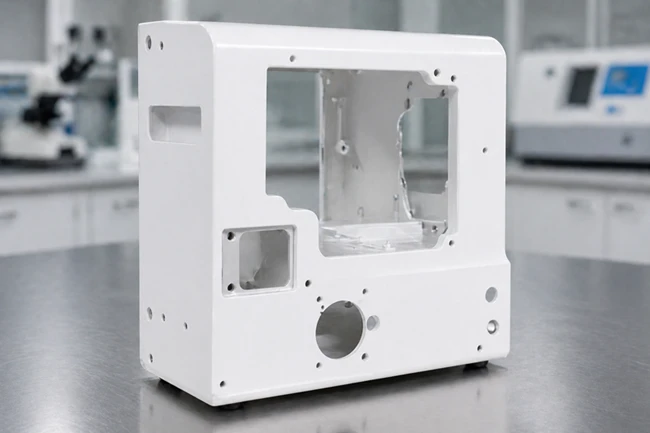
Medical devices require flawless finishes that can withstand harsh sterilization processes while maintaining tight functional tolerances. Rollyu Precision provides premium powder coating solutions for medical housings, surgical robotics, and diagnostic equipment. Our strict process controls ensure every component meets the uncompromising safety and performance standards of the healthcare industry.
Cleanability and particle control
Medical components must survive repeated sterilization and chemical wipe downs without degrading. We apply high density, non porous powder coatings that resist bacteria buildup and aggressive cleaning agents. Our strict adhesion processes prevent flaking or particle shedding, ensuring a sterile, safe environment for critical patient care.
ISO 13485 requirements
Manufacturing for the healthcare sector demands absolute traceability. Our powder coating operations strictly align with ISO 13485 quality management principles. We maintain comprehensive documentation, rigorous process validation, and strict lot control, ensuring your coated parts consistently meet the stringent regulatory requirements of medical device manufacturing.
Robotics & Automation
High speed robotic assemblies and automated machinery require durable finishes that protect against industrial environments without interfering with complex mechanisms. We provide tough, flawless powder coatings for robotic arms, chassis, and automation housings, ensuring your equipment looks professional and performs reliably shift after shift.
Wear resistance
Industrial automation equipment faces constant friction, vibration, and exposure to harsh factory conditions. We apply high performance powder formulations engineered to resist abrasion, impacts, and chemical spills. This durable outer shell extends the lifespan of your robotic components, reducing downtime and maintenance costs.
Precision alignment
Automated systems rely on exact mechanical alignment. We use meticulous masking techniques and precise film thickness control to ensure mating surfaces, mounting points, and sensor brackets remain perfectly bare or within strict tolerances. This guarantees seamless assembly and flawless motion control operation.
Laboratory environments and life science applications demand components that are both highly precise and exceptionally durable. We provide premium powder coating services for analytical instruments, testing enclosures, and lab automation hardware. Our meticulous application process ensures a smooth, non porous finish that protects sensitive equipment while meeting strict laboratory standards.
Chemical resistance
Life science equipment is frequently exposed to harsh reagents, solvents, and biological compounds. We apply specialized, high density powder coatings engineered to provide a robust chemical barrier. This prevents surface degradation, staining, and corrosion, ensuring your lab enclosures maintain their integrity in aggressive environments.
Stability under repeated use
Lab instruments undergo constant handling and heavy daily use. Our precise curing process creates a tough, impact resistant shell that withstands repeated wear, scratching, and frequent cleaning cycles. This durable finish guarantees that your equipment maintains a professional appearance and reliable functionality over a long operational lifespan.
Motion Control Systems
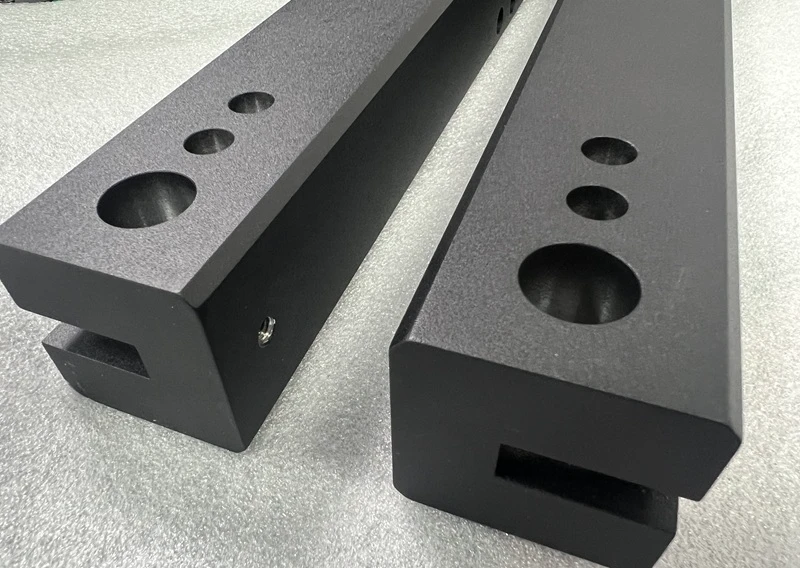
Motion control systems require durable finishes that protect against industrial environments while maintaining exact mechanical precision. We provide premium powder coating for motor housings, actuator brackets, and precision chassis. Our controlled application process ensures a flawless, protective barrier that enhances equipment lifespan without interfering with complex mechanical movements.
Interface stability
In motion control, mating surfaces must remain completely stable under continuous vibration and dynamic loads. We utilize precision masking to keep critical mounting interfaces perfectly bare. This prevents coating compression or shifting over time, ensuring rigid, stable connections that maintain system accuracy.
Precision fit requirements
High performance motion systems rely on tight mechanical tolerances. We strictly control our powder application and curing cycles to maintain exact film thicknesses. This ensures that coated components assemble seamlessly without interference, preserving the flawless mechanical alignment critical for accurate, reliable operation.
Powder Coating vs Other Finishes
Choosing the right finish is critical for your machined and sheet metal components. Compared to traditional wet paint, powder coating delivers superior durability, resisting chips, scratches, and harsh chemicals while emitting zero VOCs. While chemical finishes like anodizing or plating offer extremely tight tolerances, powder coating provides a much thicker, impact resistant protective shell and a wider variety of colors and textures. This makes it an ideal, long lasting choice for demanding industrial, medical, and automation applications.
Powder Coating vs Anodizing
Choosing between powder coating and anodizing depends on your component’s specific application. While both provide excellent corrosion resistance and aesthetic appeal for metal parts, they interact with the substrate differently. Understanding the distinction between an electrochemical conversion and a durable baked on polymer shell ensures you select the optimal finish.
| Feature | Powder Coating | Anodizing | Wet Paint |
| Typical Thickness | 50μm – 120μm (Thick) | 5μm – 25μm (Ultra-thin) | 15μm – 50μm (Thin) |
| Wear & Impact Resistance | Excellent (Flexible shell) | High (Surface hardness) | Moderate |
| Tolerance Control | Challenging; requires masking | Excellent; ideal for fits | Moderate |
| Corrosion Resistance | Excellent | Excellent (Aluminum only) | Varies by coating type |
| Color/Texture Options | Unlimited + Textures | Limited to metallic tones | Unlimited |
| Environmental Impact | Eco-friendly (Zero VOCs) | Moderate (Chemical baths) | Poor (Solvent emissions) |
Powder coating: thicker, protective layer
Powder coating applies a thick, baked on polymer layer over the metal surface. This creates an incredibly durable, impact resistant shell that excels at hiding minor surface imperfections. It is ideal for components requiring heavy duty protection against wear, harsh chemicals, and outdoor elements, offering vibrant colors and varied textures.
Anodizing: thin, precise, better for tight tolerance
Anodizing is an electrochemical process that converts the metal surface into a highly durable oxide finish. Because the layer is exceptionally thin and integrates directly with the substrate, it is the superior choice for high precision machined parts where maintaining extremely tight mechanical tolerances and precise assembly fits is critical.
Powder Coating vs Painting
Selecting the ideal finish is critical for your components, as choosing the wrong process often leads to assembly failure. Both powder coating and wet painting offer distinct advantages depending on your requirements. Understanding their differences in application, durability, and thickness ensures you make the right choice for your project.
Powder coating: durable, uniform
Powder coating provides an exceptionally durable, uniform finish. Applied as a dry powder and baked into a solid polymer shell, it offers superior resistance to chips, scratches, and fading. This makes it ideal for industrial parts requiring maximum protection and a consistently flawless, heavy duty surface.
Painting: thinner, more flexible
Wet painting applies a thinner, more flexible layer of pigment and resin. This thin profile is highly suitable for complex geometries or assemblies where tight clearances are critical. It offers excellent custom color matching and is ideal for substrates unable to withstand high baking temperatures.
Ceramic Coating vs Powder Coating
Comparing ceramic coating and powder coating comes down to operating temperatures and durability needs. Both provide excellent protection for metal parts but serve distinct industrial purposes. Understanding their unique properties regarding heat tolerance, impact resistance, and application thickness ensures you select the optimal finish for your project.
Powder coating: durable, impact resistant
Powder coating applies a thick, baked on polymer shell that offers superior resistance to impacts, scratches, and abrasion. It is highly cost effective and provides a wide range of colors and textures, making it the preferred choice for structural components and heavy duty industrial enclosures.
Ceramic coating: extreme heat resistance
Ceramic coating goes on much thinner and is specifically engineered to withstand extreme temperatures, often exceeding 1,000°F. It provides excellent thermal insulation and chemical resistance, making it the ideal finish for exhaust systems, engine components, and high heat industrial applications where powder coating would melt or fail.
Why Choose Rollyu Precision’s Custom Powder Coating Services
A durable, flawless finish is crucial for high tech manufacturing. Rollyu Precision provides custom powder coating services built for tight tolerance medical, laboratory, and motion control systems. We use precise masking to protect critical mating surfaces and strictly control coating thickness so your parts fit perfectly every time. Get fully finished, ready to assemble components with maximum resistance to wear, chemicals, and corrosion, without ever compromising your strict mechanical requirements.
Engineering driven coating approach
At Rollyu Precision, our custom powder coating isn’t just cosmetic; it’s driven by strict engineering principles. We analyze your exact mechanical requirements to develop a tailored coating strategy, ensuring precise masking and optimal thickness to guarantee your high tech components function flawlessly.
Experience with precision CNC parts
We understand the complex challenges of finishing precision CNC machined parts. Rollyu Precision applies advanced masking techniques to protect critical threads and mating surfaces. This guarantees our highly durable powder coating enhances your components without ever interfering with strict assembly tolerances.
ISO 9001 & ISO 13485 certified
Our ISO 9001 and ISO 13485 certifications guarantee the highest manufacturing standards. Rollyu Precision delivers compliant, reliable custom powder coating ideal for medical devices and laboratory equipment. Trust our documented processes to provide consistent, safe, and durable finishes for your most critical applications.
Full process quality control
Rollyu Precision implements strict quality control at every stage of the custom powder coating process. From initial surface preparation to final thickness verification and adhesion testing, we ensure your finished parts perfectly meet exact specifications for durability, corrosion resistance, and flawless aesthetics.
Fast response for DFM and coating review
Accelerate your product development with Rollyu Precision. We provide rapid Design for Manufacturing (DFM) feedback and comprehensive coating reviews early in the process. Our proactive engineering support eliminates production bottlenecks, ensuring your custom powder coated components are delivered quickly and perfectly executed.
FAQ
What is powder coating?
Powder coating is a dry finishing process where powder is electrostatically applied and cured under heat to form a protective layer.
How thick is powder coating?
Typically 50–120 microns (0.05–0.12 mm), but thickness varies depending on geometry and application.
Does powder coating affect tolerances?
Yes. Coating adds thickness and can change fits, threads, and sealing surfaces if not properly controlled.
Can CNC machined parts be powder coated?
Yes, but requires masking, thickness control, and tolerance compensation to ensure proper assembly.
Is powder coating better than anodizing?
Not always. Powder coating is thicker and more durable, while anodizing is thinner and better for precision tolerances.
How long does powder coating last?
Powder coating can last 10–20 years depending on environment, material, and process quality.
Conclusion
Selecting the right powder coating partner is essential for the success of your precision components. Rollyu Precision combines engineering expertise, strict ISO certified quality control, and advanced masking techniques to deliver flawless, highly durable finishes. We ensure your parts withstand harsh environments without ever compromising critical mechanical assembly tolerances.
Request a Coating Review
Don’t let inferior finishing compromise your high tech assemblies. Partner with Rollyu Precision to elevate your medical, laboratory, motion control, or automation equipment with our custom powder coating services. Contact our engineering team today for rapid DFM feedback and a competitive quote. We are ready to deliver perfectly finished, ready to assemble parts that exceed your expectations