Ceramic CNC machining is a new technology of subtractive machining that involves the use of computer-controlled technology to convert high-performance ceramics to high-precision components. It is a serious response to the extreme-environments applications, where materials must deliver superior hardness, thermal stability, and corrosion resistance. Aerospace, medical, and ceramic in semiconductor industries rely on it heavily because tolerances stay tight even under harsh conditions.
Demand has surged as technical ceramics evolve. Their brittleness once limited options, yet advances in tooling and programming now unlock innovative designs. To realize these complex geometries, understanding how to choose an online CNC service that offers precision ceramic capabilities is essential.
What is Ceramic CNC Machining?
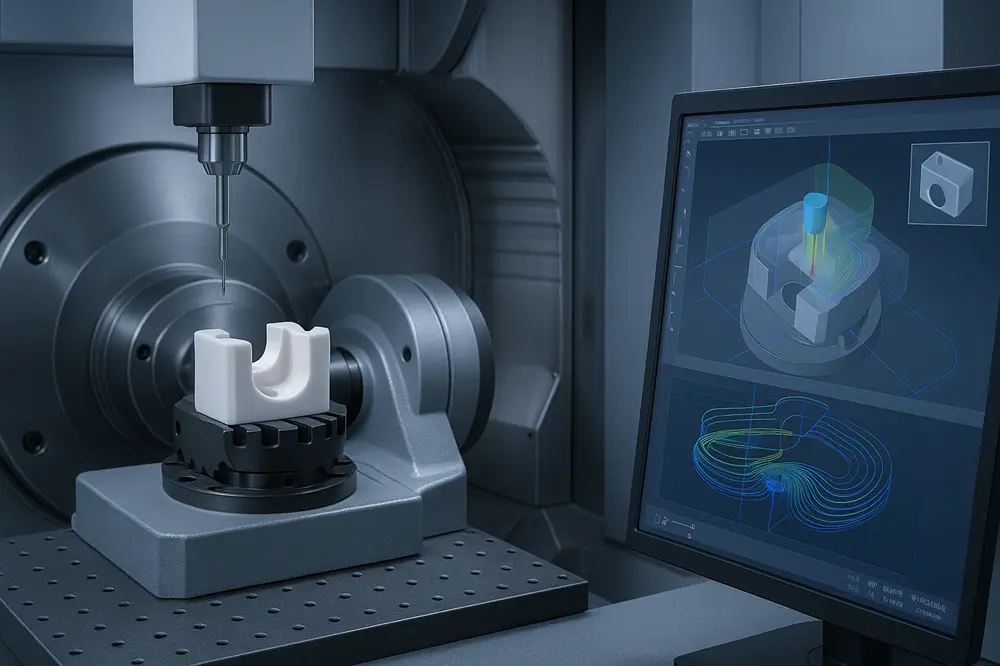
Ceramic CNC machining is a subtractive, computer-controlled process, it shapes extremely hard and brittle ceramics into complex, high-precision components. Diamond-tipped or PCD tools mounted on mills, lathes, or grinders remove material despite the ceramic’s superior hardness and abrasiveness, which often exceed those of most metals.
Fully sintered ceramics pose the greatest challenge, yet modern techniques now deliver tight tolerances and intricate geometries that traditional forming methods simply cannot match. Low cutting speeds, rigid fixturing, and advanced coolant strategies prevent cracking; the result is functional parts ready for extreme heat, wear, or chemical exposure.
Once limited to pre-sintered “green” blanks, the technology has matured. Today, direct machining of dense, fired ceramics is routine in aerospace, medical implants, ceramic in semiconductor equipment, and defense applications.
How Does Ceramic CNC Machining Work?
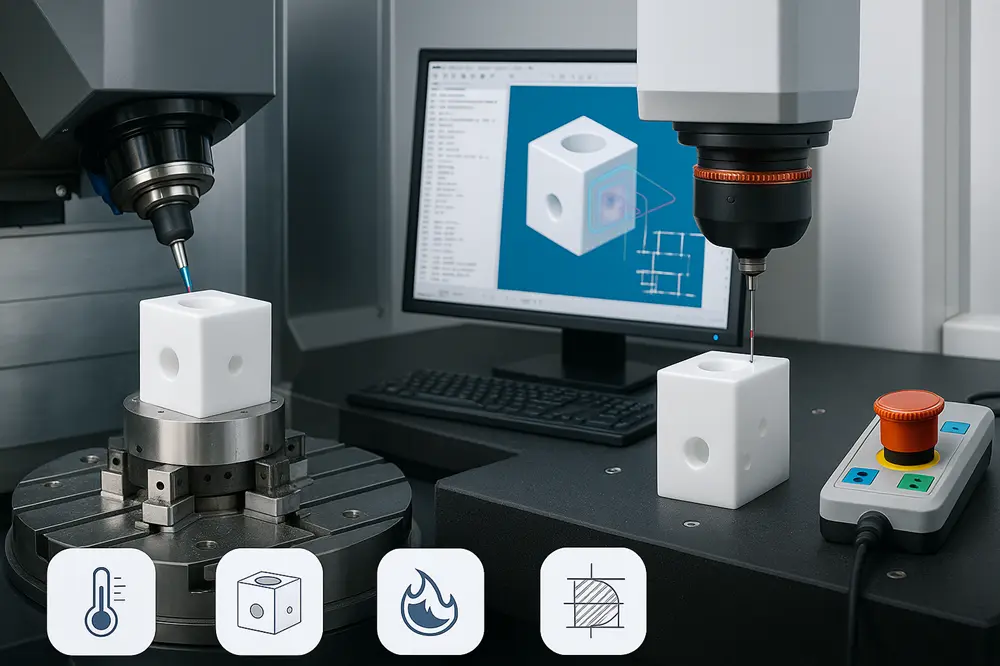
Ceramic CNC machining is a process of converting the digital design into precision parts using a methodical process to overcome the material’s brittle nature. It is initiated with CAD/CAM programming to generate toolpaths and G-code instructions. Workpieces are then sandwiched in place after choosing a material to ensure that they do not crack. Diamond-coated tools (PCD/CBN) are used in the machining, starting with rough machining and moving to fine finishing on the micron level. Lastly, the finishing of the required surface finishes is done through post-processing using grinding or polishing, and then quality assurance by CMM.
Key Processes in Ceramic CNC Machining
Ceramic machining via CNC involves techniques that are used in order to attain accuracy and control material brittleness.
Diamond Grinding
It is a basic method that involves the use of diamond-cutting grinding wheels to remove materials precisely. It produces smooth surfaces and tolerances without producing a lot of heat, which causes micro-cracks.
5-Axis Diamond Machining
The state-of-the-art methodology makes it possible to make five axial cuts at the same time, making it possible to use intricate geometries, outlines, and 3D formations in one configuration. It is required for advanced parts such as turbine blades and medical implants.
Ultrasonic Machining
This non-thermal abrasive slurry is used to cut material using high-frequency vibration, without creating stress on the material. It can be used to cut accurate holes and delicate shapes in fragile ceramics.
Laser-Assisted Machining
The cutting tool is softened temporarily by heating the ceramic locally with a laser, which removes the hardness of the ceramic. This reduces the forces of the cutter, reduces wear of the tool, and eliminates damage beneath the surface.
Post-Machining Polishing
This last process employs successively finer abrasives in order to obtain mirror-like finishes. It decreases friction and improves the performance of the medical implants and optical components.
Key Variables That Affect Machining Quality
The quality of machining of ceramics can be obtained by strict control of the following important factors:
Feed and Speed Optimization
The exact feed rates and speed of cutting eliminate overloading of the force and the heat. As an illustration, zirconia grinding is usually carried out at 25-40 m/s with the feed rate at 0.5-3 mm/min.
Coolant Control
Effective management of the coolants eliminates heat and abrasive particles to avoid thermal shock and increase the life of diamond tools.
Fixturing to Prevent Micro-Cracking
Vacuum chuck or soft job fixturing prevents the stress concentrations that would crack brittle ceramics.
Tool Path Optimization
The toolpaths are planned to reduce wastage of motion, and the tool load is kept constant to enhance the surface finish and the integrity of the part.
Use of Green State Machining
Green-state machining shapes ceramics while they’re still soft and unsintered, letting ordinary carbide tools remove material far faster than on fully dense parts. Intricate features such as deep pockets, thin walls, sharp corners can form without excessive tool wear. Designers oversize the model to allow for firing shrinkage, then a quick finish pass on the sintered piece restores tight tolerances and full performance.
What Types of Ceramic Material are Used in CNC Machining?
The choice of ceramic material is essential to CNC machining and the best part performance. For materials in ceramics, the various types of ceramics provide different combinations of properties that can be used in industries.
Alumina (Al2o3)
Alumina ceramic is useful as a high-hardness and high-quality electrical insulator, electrical insulator, wear part, and cutting tool. Alumina ceramic machining delivers exceptional hardness, precision, and thermal stability, enabling ultra-reliable components for medical, photonics, aerospace, and ceramic in semiconductor applications.
Zirconia (zro2)
Zirconia ceramic is a biocompatible and high-fracture-toughness material which can be used as a medical implant, dental prosthetic, and precision bearing.
Silicon Carbide (SiC)
It is furnished with very high hardness and thermal conductivity and is applied in mechanical seals, ceramic wafer, semiconductor apparatus and abrasives.
Silicon Nitride (Si3N4)
It offers good thermal shock resistance and strength and is applied in engine parts, bearings, and cutting tools.
Boron Nitride (BN)
It is thermally conducting and lubricated and is used in high temperatures and electrical insulators.
Graphite
It is prized for thermal stability and electrical conductivity, which makes it a perfect EDM electrode and furnace component in high temperatures.
Aluminum Nitride (AlN)
It has high electrical insulation and thermal conductivity, with heat sinks and electronic substrates in high demand.
Benefits of Ceramic CNC Machining
Ceramics are unique, with many benefits that can be used in high-performance applications that are enabled by precision machining.
Exceptional Hardness and Wear Resistance
Ceramics are one of the most difficult materials to be found and in some cases, it can be superior to hardened steel. This makes them the most suitable parts that undergo intensive abrasion and consequently increases service life and handles the downtime tremendously.
High-Temperature Performance
This has enabled ceramics to maintain their mechanical properties and dimensional stability at temperatures that would melt and deform metal and is applicable in aerospace engines and industrial furnaces.
Excellent Corrosion and Chemical Resistance
They are highly unreactive and acids, alkali and other harsh chemicals do not oxidise or corrode them; therefore, they are dependable in hostile environments like chemical processing.
Dimensional Stability and Creep Resistance
Another key aspect of ceramics, under thermal cycling as well as mechanical stress, in terms of volume and shape, is that of low thermal expansion coefficients which is fundamental to precision instruments and gauges.
Electrical Insulation and Dielectric Strength
Ceramics are good electrical resistance even at high temperatures. It is a fundamental characteristic of substrates, insulators, electronics and high voltage components.
Lightweight Yet High Strength
A large number of technical ceramics have a high ratio of their strength to their weight, which is useful in minimizing weight in their application in aerospace and automotive, enhancing efficiency and performance.
Ultra-smooth Surface Finish
A very smooth surface (as smooth as Ra 0.006mu) can be obtained via CNC machining and followed by polishing, and this is essential in order to minimize friction, inhibit sticking, and enhance hygiene in the field of medicine and food processing.
Biocompatibility for Medical Use
Certain ceramics like zirconia and alumina are biocompatible and this means that the human body will not reject them. This makes them the material of choice in dental implants, prosthetics, and bony replacements.
Long Service Life and High Reliability
The wear resistance, strength, and stability in the environment are combined, which leads to components with extremely long service life and high reliability, which minimizes the costs of maintenance and system failures.
What are the Applications of Ceramic CNC Machining?
The CNC machining of ceramics permits the production of high-quality ceramics to meet the industry’s needs, where high performance is needed.
Semiconductor and Wafer Fabrication Tools
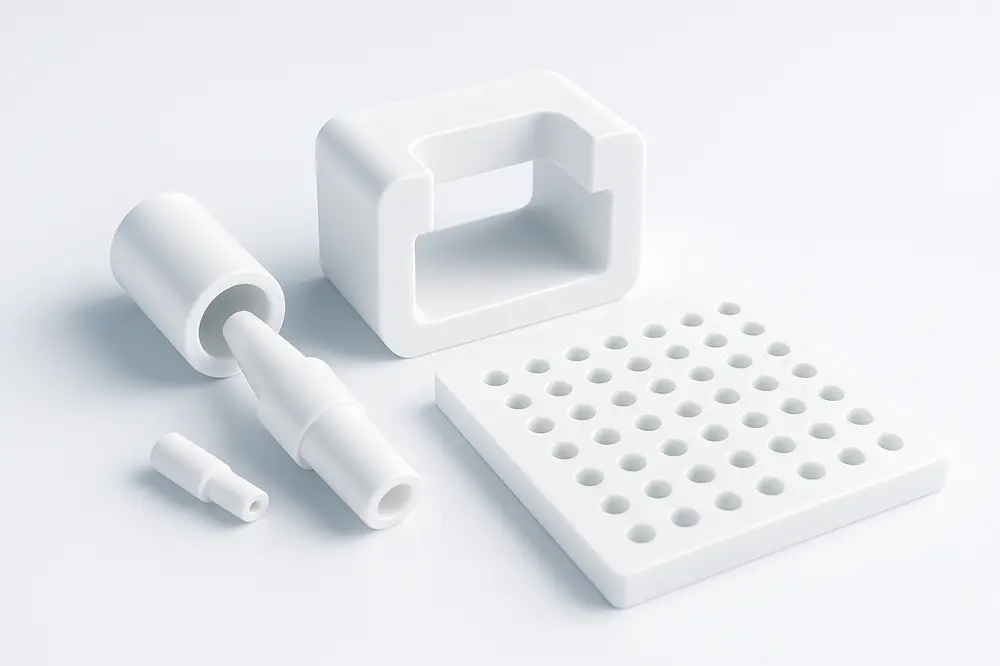
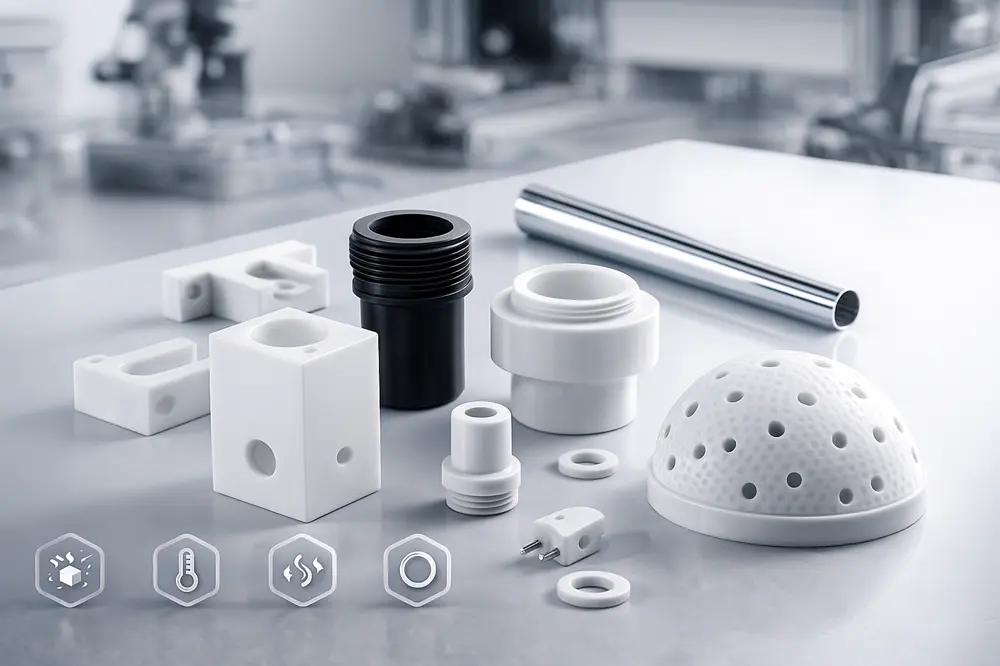
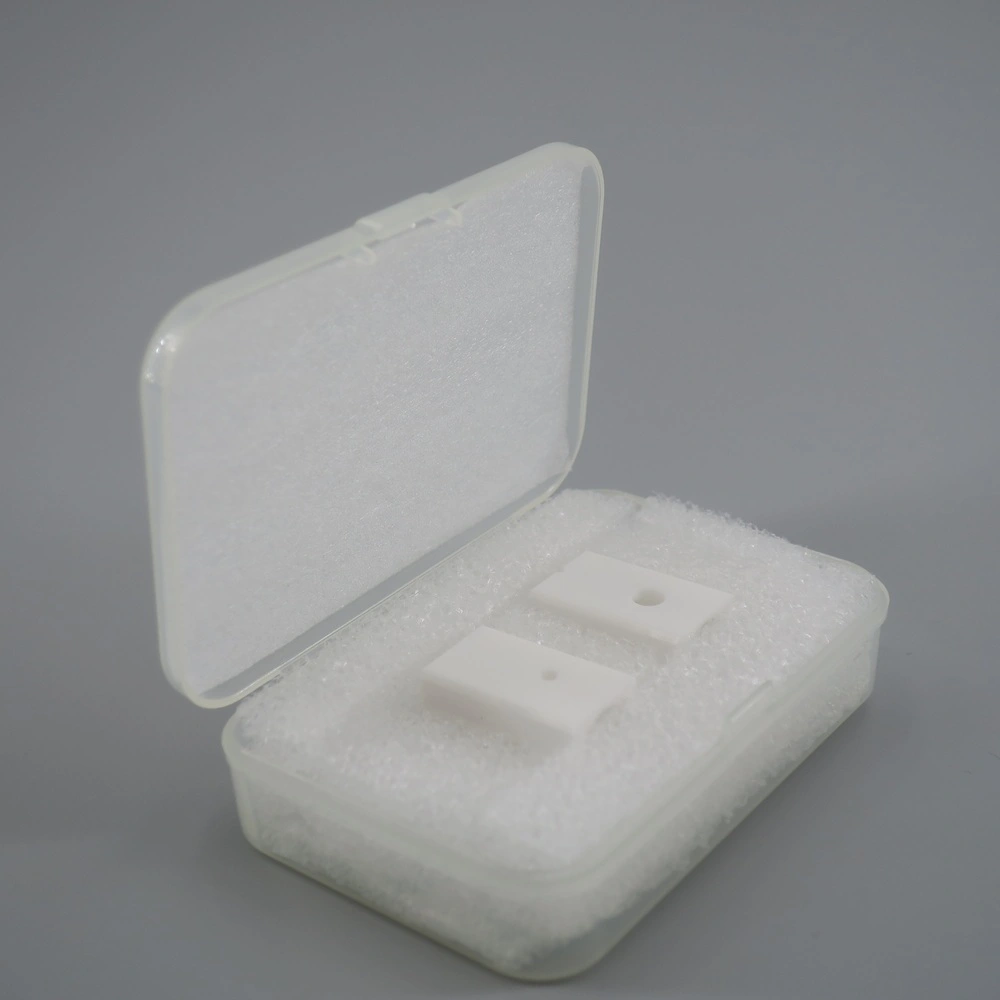
Ultra-pure alumina machining and aluminum nitride produce important semiconductor devices such as ceramic wafer, ceramic ring, alumina plate , wafer handlers and plasma erosion-resistant chambers, where their high electrical insulation and plasma erosion resistance ensure that they are contamination-free in manufacturing of ceramics.
Aerospace Industry
Silicon carbide and silicon nitride products are capable of withstanding high heat in turbine blades, heat shields, and radomes, which are huge in weight and have to be durable to support jet engines and spacecraft.
Medical Devices
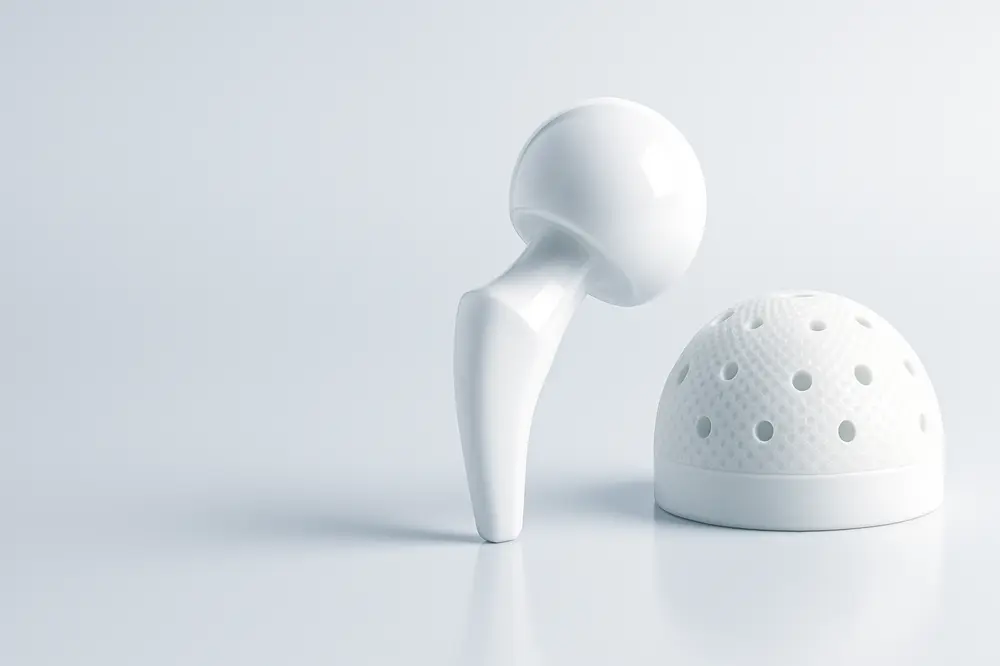
Zirconia and alumina ceramic CNC machining parts offer exceptional biocompatibility, mechanical strength, and corrosion resistance—making them ideal for surgical instruments, orthopedic implants, dental prosthetics, bone screws, arthroplasty components, and other long-term implantable medical devices. Their inert, non-reactive surfaces ensure safe integration with human tissue, while precision CNC machining enables tight tolerances, smooth surfaces, and reliable dimensional stability required for ISO13485:2016 medical applications.
Dental Equipment
Zirconia is a breakthrough in the field of dentistry because it is used to create long-lasting, beautiful crowns, braces, and implants that resemble natural teeth but have outstanding strength.
Automotive
Ceramics are used in sensors, catalyst supports, brakes, and in more advanced brakes, in silicon nitride bearings, and cordierite catalytic converters allow high temperature operation.
Renewable Energy
Silicon carbide solar heat exchanger components and wind turbine electronics have been used in tough environments and are more efficient and durable.
Chemical Processing Equipment
Alumina and silicon carbide can offer outstanding seals, valves, and pump liners corrosion to highly corrosive acids and alkalis.
Finding the Right Partner: What to Look For in a Machining Service
In the choice of a good manufacturing partner, it is very important for the success of your ceramic component project. Some factors that should be considered are:
Equipment
Find suppliers that have developed CNC equipment with multi-axis capability and specialized tools, such as diamond-impregnated tools that are needed in the processing of ceramics.
Expertise
Select partners that have experience working with technical ceramics that provide material knowledge and design manufacturability (DFM) support to produce the best results.
Quality Assurance
Test sound quality systems, which are normally ISO 9001 & ISO13485 certified with internal metrology measures such as CMMs used in dimensional verification and quality control.
Capabilities
Give preference to full-service providers who can provide full-service design through finishing and both green state machining and fully sintered machining of complex parts.
Tolerance Levels
Make sure that the supplier is capable of doing machining tolerances of ceramic, generally in the range of 0.01 to 0.05 mm, though tighter tolerances may be needed.
Why Rollyu is Your Ideal Partner for Ceramic Machining
Rollyu Precision and CNC machining parts have built our name on rock-solid accuracy and reliability in the extremely demanding sphere of high-tech manufacturing. Through our experience in Ceramic CNC machining, your most challenging projects land in capable hands.
Advanced Equipment and Technology
Investments in top-shelf tech guarantee standout results. We have a machine park with high precision equipment, such as 5-axis CNC machining equipment and high precision grinding equipment, which are fitted with polycrystalline diamond (PCD) and cubic boron nitride (CBN) tooling. This enables us to address complicated geometries and gain the tolerance of ceramic components that is extremely tight.
Curious how we turn sketches into hardware? Learn about our enhanced CNC machining capabilities here.
Proven Expertise In Technical Ceramics
Our engineering team brings deep material science knowledge and extensive experience on work across technical ceramics like alumina variants, zirconia, silicon nitride, and silicon carbide. We know the machining subtleties of your material and give valuable design contributions to make your parts perform, manufacturably, and cost-effectively.
ISO-Certified Quality Assurance
Quality runs through every step at Rollyu. All of our projects, starting with the inspection of the initial materials up to the shipment, are under the control of our ISO9001 & 13485-certified quality management system. We use accurate measuring tools, CMMs, to make sure all the parts are done to your specification and highest industry standards.
Your One-Stop Partner for Full-Service Capabilities
We at Rollyu provide a genuine full-service operation. From initial concept through material selection, rapid prototyping, volume production, and final finishing; everything happens under one roof.
We excel where margins are razor-thin and failure isn’t an option: high-pressure space systems, satellite components, and other mission-critical programs.
One partner, zero hand-offs, total accountability.
FAQ
Why are Ceramics Difficult to Machine?
Ceramics resist machining due to extreme hardness that accelerates abrasive wear on diamond tooling, coupled with negligible fracture toughness and low thermal conductivity that trigger rapid crack propagation. Sophisticated coolant control is, therefore, necessary.
What are the Most Common Problems in Ceramic Machining?
Surface/subsurface cracking from thermal shock or excessive cutting forces; edge chipping and breakout due to low fracture toughness; accelerated diamond-tool wear from improper speeds/feeds; dimensional drift caused by residual stress release; and vibration-induced micro-fractures in brittle setups. These defects usually trace back to inadequate fixturing rigidity, poor coolant delivery, or parameter sets borrowed from metals.
What Information Should I Provide for an Accurate Quote?
To deliver an accurate price and optimal design advice, supply these essentials: detailed CAD files (STEP or IGES preferred), exact material grade, required tolerances, surface finish specs, estimated annual or batch quantities, plus the part’s operating environment and application context.
Armed with that data, we spot potential pitfalls early and propose cost-saving tweaks before tooling ever spins.
Conclusion
Ceramic CNC machining delivers high-performance components that thrive in extreme conditions from aerospace extremes to medical implants, by harnessing ceramics’ unmatched hardness, thermal stability, and corrosion resistance. As tooling and processes evolve, innovation accelerates; yet success still hinges on partnering with experts who navigate brittleness and precision demands without compromise.
Choose the right supplier like Rollyu, who can wade through the mazes of technical ceramics, and your parts won’t just meet specs, they’ll redefine what’s possible in mission-critical applications.