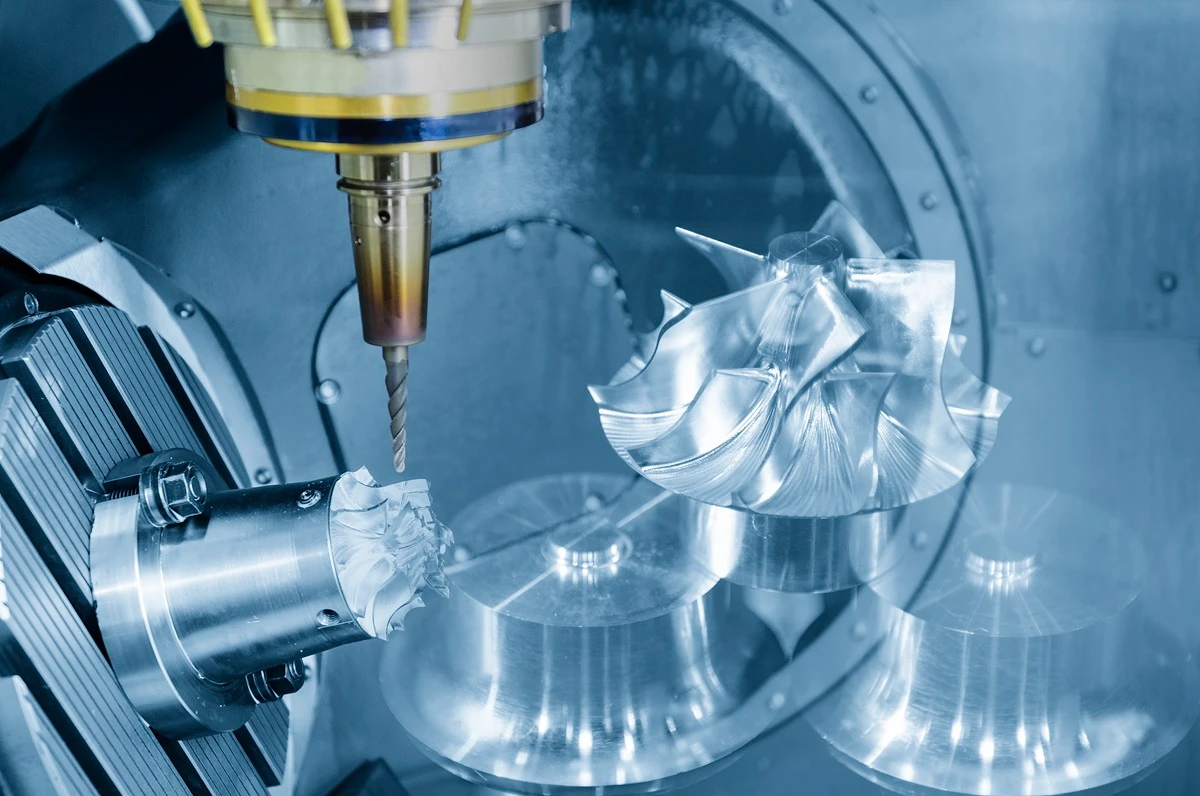
Medical and aerospace manufacturers demand complex parts with tighter tolerances faster than ever. Traditional 3 axis machining struggles with these intricate designs, forcing operators into multiple manual setups. These repeated clampings waste production time and introduce costly alignment errors.
5 axis CNC machining solves this alignment problem by rotating the cutting tool and workpiece simultaneously. This advanced process allows you to machine complex geometries in a single setup.
This guide covers everything you need to know about this technology:
- Core mechanics of 5 axis systems
- Key advantages over 3 axis methods
- Actionable Design for Manufacturability (DFM) tips
What is a 5 Axis CNC Machine?
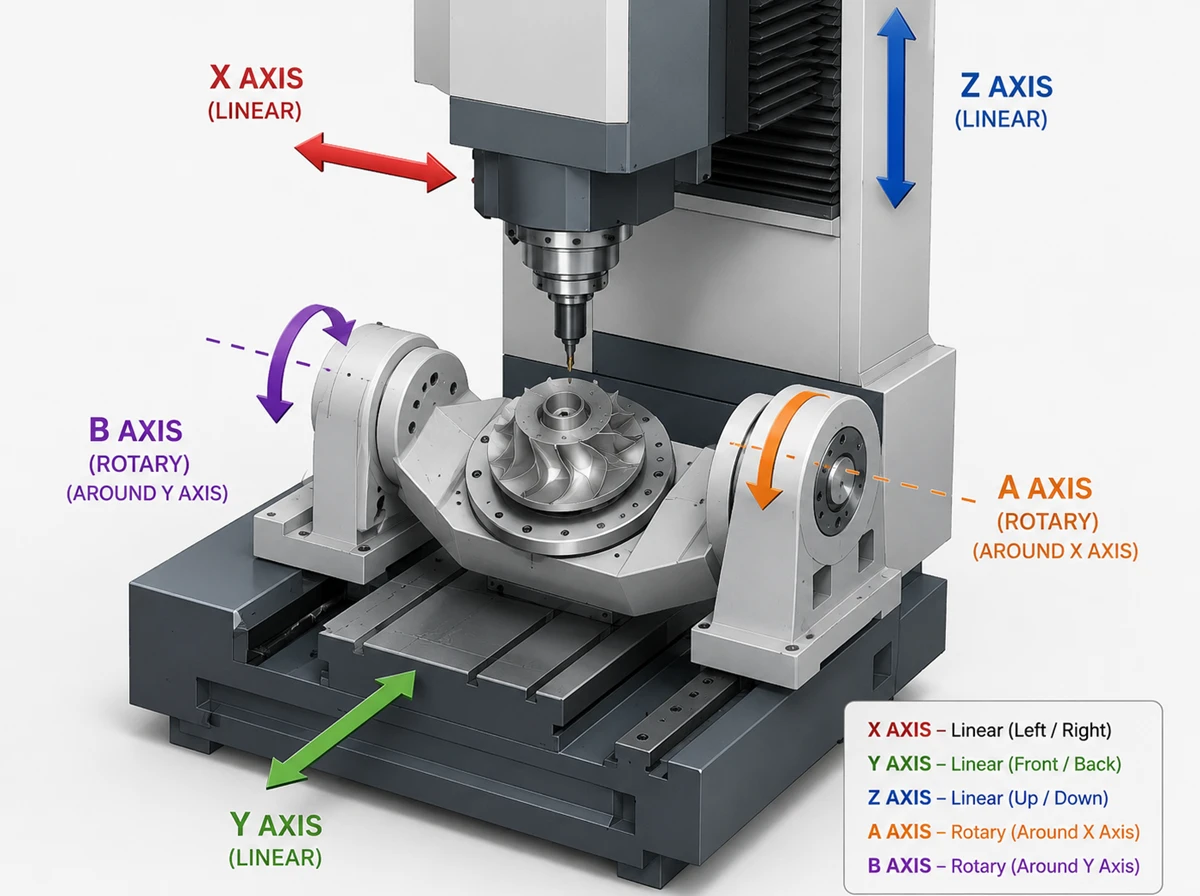
A 5 axis CNC machine is a subtractive manufacturing system that moves a cutting tool and a workpiece across five independent axes simultaneously. Standard equipment operates along three linear axes (X, Y, and Z). Advanced 5 axis technology adds two rotational axes (A and B) to approach the material from almost any angle.
This multidirectional movement allows engineers to machine complex geometries in a single operation. Consolidating the setup process reduces manual handling, drops production lead times, and maintains tight dimensional control across multiple part faces.
Why Choose 5 Axis CNC for Complex Parts
5 axis CNC machining helps reduce production risks for components with difficult features. By rotating the part and tool together, this process removes the need for multiple manual setups.
Minimized Stacking Errors
Moving a workpiece between different machines automatically introduces alignment variations. 5 axis machining prevents this dimensional drift by completing all features in one setup. Keeping the part secured firmly in a single location supports precise feature alignment across complex assemblies.
Expanded Geometric Capabilities
Traditional milling limits cutters to planar movements. 5 axis systems tilt the tool, allowing it to reach difficult areas without requiring custom fixturing. This multi angle capability easily handles deep pockets, undercuts, and compound angles.
Consistent Precision and Tolerances
Tight tolerance parts demand uninterrupted machining paths. Since the operator rarely unclamps the workpiece, the machine maintains strict dimensional control. Rollyu Precision routinely achieves tolerances down to ±0.005 mm for critical aerospace and medical device components using this method.
Improved Surface Finishes
Long cutting tools often vibrate and leave chatter marks. 5 axis machines address this tool deflection problem by tilting the spindle, which allows operators to use short and rigid end mills. This orientation improves surface continuity and prevents blend lines on contoured faces.
Optimized Production Lead Times
Manual repositioning breaks workflow efficiency. By combining multiple operations into one continuous program, 5 axis technology limits machine idle time. This consolidation accelerates turnaround times from initial prototyping to full volume production.
When to Choose 5 Axis CNC over 3 Axis CNC
Choosing between 3 axis and 5 axis CNC machining depends heavily on part geometry and production volume. 3 axis equipment handles flat and simple components economically. 5 axis systems process organic shapes and multiple part faces efficiently.
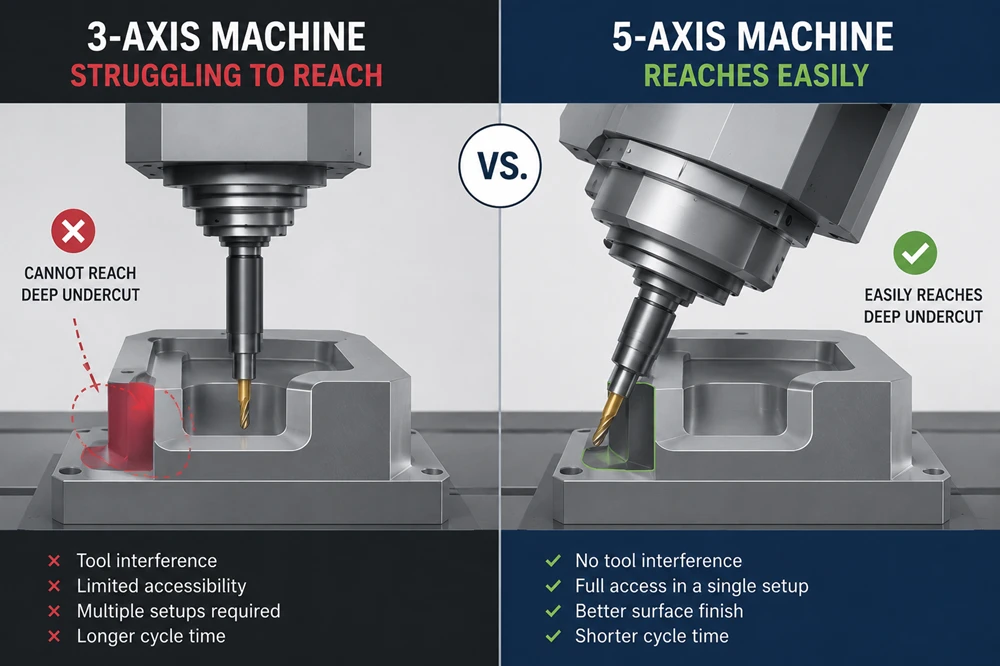
| Feature | 3 Axis CNC | 5 Axis CNC |
|---|---|---|
| Movement Axes | X, Y, Z linear only | X, Y, Z linear plus A and B rotational |
| Best For | Flat parts and simple pockets | Complex curves and multiple angle features |
| Setup Frequency | High (requires manual flipping) | Low (machines multiple sides at once) |
| Tooling Reach | Limited by fixed spindle angle | Deep reach using short tools |
| Programming Time | Low | High |
Tackling Geometric Complexity
Part shape dictates the required machining capability.
- 3 Axis Milling: Works highly efficiently for base plates and shallow cavities where the cutting tool approaches from one direction.
- 5 Axis Machining: Becomes necessary when components feature deep undercuts, compound angles, or organic freeform surfaces. The extra rotational axes allow the cutter to track complex contours without interference.
Considering Setup and Repositioning Time
Manual repositioning introduces human error and slows down manufacturing.
- 3 Axis Machines: Require operators to unclamp and flip the part to machine different sides.
- 5 Axis Systems: Complete intricate components in a single setup. This continuous operation prevents alignment variations and drastically reduces total cycle time.
Balancing Cost and Production Volume
Machine time and engineering effort directly affect unit pricing.
- 3 Axis Production: Requires lower upfront programming and lower machine rates. This lower investment makes the process highly economical for simple batches.
- 5 Axis Production: Involves higher initial CAM programming costs and premium machine rates. However, the technology becomes the cheaper option for complex parts by removing the labor costs associated with custom fixtures and repeated manual setups.
Top Industries Relying on 5 Axis CNC Technology
5 axis CNC machining delivers the precise geometric control and material traceability required by heavily regulated manufacturing sectors.
Medical and Surgical Devices
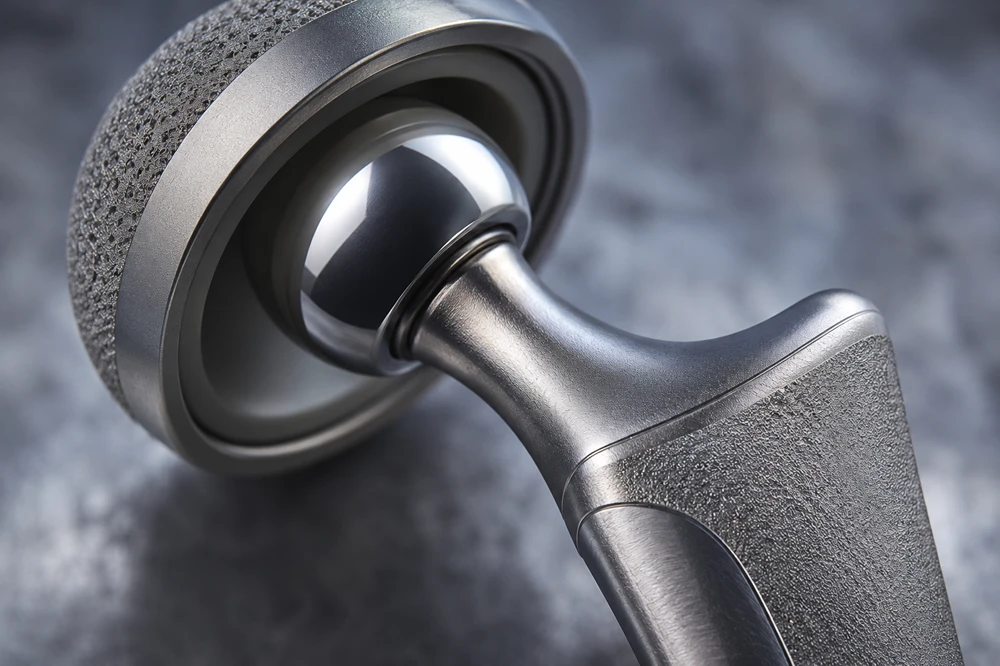
Medical engineers require biocompatible materials machined to strict anatomical specifications. By manipulating the tool across multiple planes, 5 axis systems shape difficult materials like titanium and PEEK into complex organic forms.
- Key Applications: Implantable device casings, diagnostic sensor housings, and orthopedic joint replacements.
- Compliance Need: Manufacturing these components requires ISO 13485 certified workflows to verify full material traceability.
Semiconductor Equipment
Vacuum environments and chip fabrication lines demand highly repeatable parts to prevent particle contamination. 5 axis milling creates complex chamber bodies and fluid distribution blocks with secure sealing surfaces.
- Key Applications: Wafer lift arms, electrostatic chuck components, and precision alignment blocks.
- Compliance Need: Semiconductor tooling requires cleanroom ready finishes and tolerances routinely reaching ±0.002 mm for critical alignments.
Robotics and Automation
Autonomous systems rely on precisely aligned kinematic linkages for smooth motion control. 5 axis machining delivers the strict concentricity and lightweight structural strength needed for continuous mechanical operation.
- Key Applications: End effector frames, precision gear housings, and complex angle sensor brackets.
- Compliance Need: These dynamic parts demand strict positional tolerances to prevent mechanical binding and excessive wear.
Photonics and Aerospace
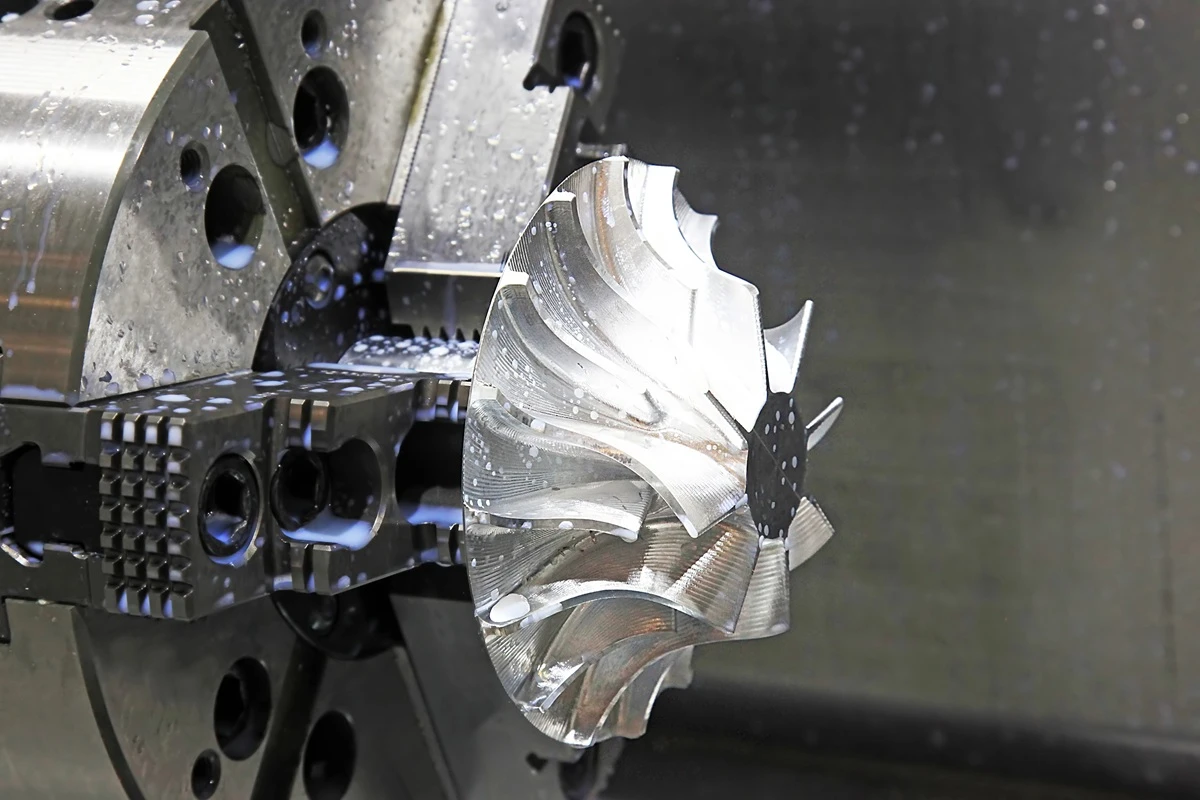
Flight vehicles and laser systems operate under extreme thermal and vibratory stress. 5 axis systems machine lightweight alloys and thermally stable metals into intricate structural frames without inducing harmful material stress.
- Key Applications: Beam steering brackets, optical lens holders, and aerospace engine components.
- Compliance Need: Photonics components require mirror finish surfaces for laser alignment, while aerospace parts demand full dimensional inspection reports to verify flight readiness.
DFM Tips for Designing 5 Axis CNC Parts
Optimizing part geometry for 5 axis movement reduces machine time and lowers production costs.
Avoiding Unnecessary Tight Tolerances
Specify tight dimensional limits strictly on critical mating surfaces or sealing faces. Loosening global tolerances across the rest of the part drawing prevents excessive tool wear and reduces expensive inspection time.
Adding Radii to Internal Corners
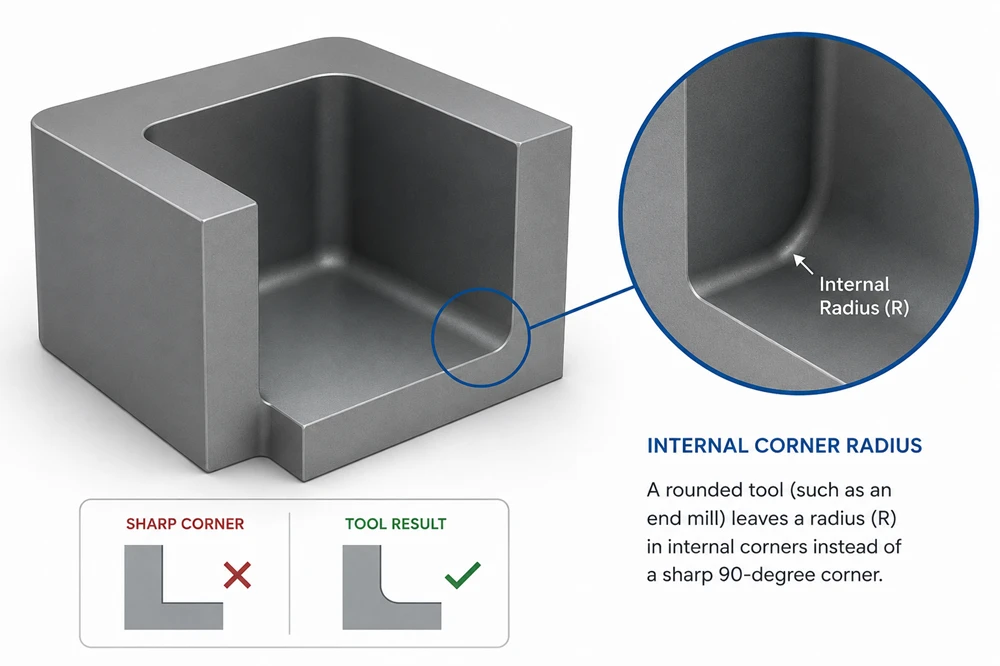
Add internal radii that exceed the cutting tool radius to allow smooth cutter transitions. Since round end mills cannot machine sharp internal corners without overcutting, this design adjustment improves surface finish and reduces the need for manual deburring.
Consolidating Multipart Assemblies
Combine several components into a single solid block to leverage the full capability of 5 axis systems. This unified design approach significantly reduces complex assembly steps and prevents tolerance accumulation errors across the final product.
Why Choose Rollyu Precision for 5 Axis CNC Services?
Rollyu Precision helps buyers reduce supplier risk when sourcing complex 5 axis components. We combine advanced machining capabilities with strict inspection protocols to deliver repeatable results for regulated industries.
- Certified Quality: Operating under ISO 9001:2015 and ISO 13485:2016 systems supports strict process control for your critical applications.
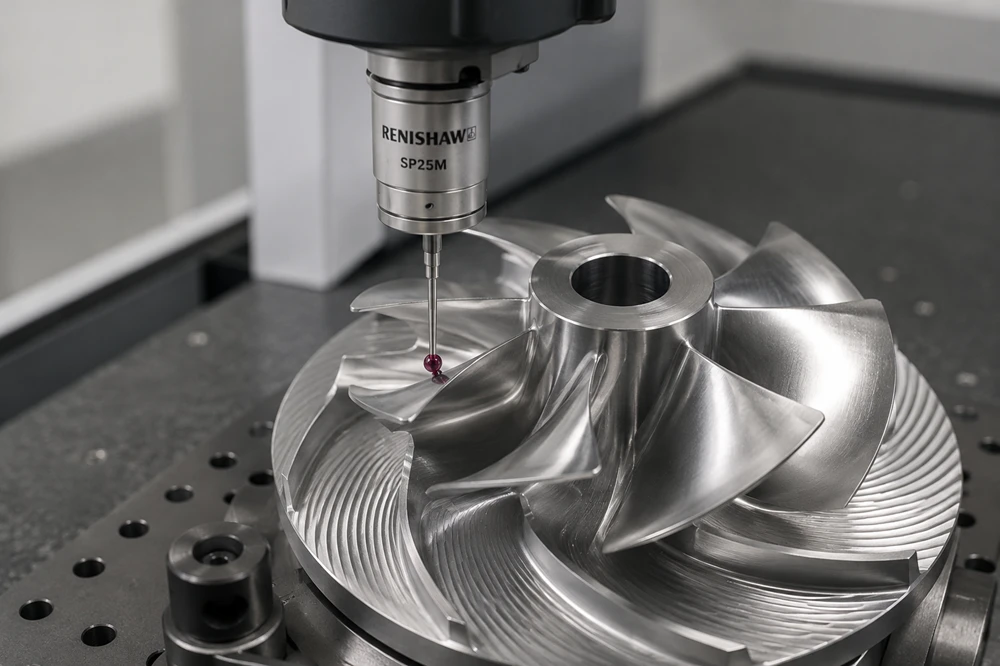
- Proven Precision: Our facilities routinely achieve dimensional tolerances down to ±0.005 mm, which our quality team verifies using calibrated CMM equipment.
- Complete Traceability: Every shipped part includes full documentation, ranging from raw material test reports to final dimensional verification.
- Engineering Support: We provide upfront Design for Manufacturability (DFM) reviews to optimize your part design and lower your overall production costs.
FAQ
What type of workholding is typically used in 5 Axis CNC machining?
Zero point clamping systems, dovetail fixtures, and soft jaws are the standard workholding types used in 5 axis CNC machining. These compact methods expose five sides of the raw material to the cutter. Rigid bottom clamping prevents vibration during high speed rotational milling.
Is special CAM software required for 5 Axis machining?
Yes, 5 axis machining requires advanced CAM software to synchronize toolpaths across multiple planes simultaneously. Standard 3 axis programs cannot calculate dynamic tool angles. Specialized software prevents mechanical interference by running virtual collision simulations before production begins.
What is the difference between Trunnion and Swivel Head 5 Axis machines?
The primary difference is movement: trunnion machines rotate the work table, while swivel head machines rotate the spindle. Trunnions provide excellent rigidity for small to medium components. Manufacturers use swivel heads to machine massive structural parts.
How do 5 Axis CNC machines prevent tool collisions?
5 axis CNC machines prevent tool collisions using virtual CAM simulations before machining and internal spindle sensors during operation. Programmers verify the exact toolpath digitally to detect interference. Modern 5 axis centers halt movement automatically if physical sensors detect unexpected loads.
What are “barrel cutters” and why are they used in 5 Axis machining?
Barrel cutters are specialized end mills with large radius profiles used to rapidly finish deep contoured surfaces. Manufacturers use these cutters to take wider stepovers, which reduces cycle times by up to eighty percent. This geometry improves surface continuity across complex aerospace molds.