Choose Grade 5 titanium when cutting density by about 45% versus 316L can improve payload or moving mass. Choose 316L stainless steel when higher stiffness and usually lower machining cost matter more. TIMET lists Ti-6Al-4V at 4.42 g/cm³, while Outokumpu lists 316L at 8.0 g/cm³.
The titanium vs stainless steel choice can change with grade and condition, so this analysis uses Ti-6Al-4V Grade 5 and annealed 316L as reference grades.
What Are the Main Differences Between Titanium and Stainless Steel?
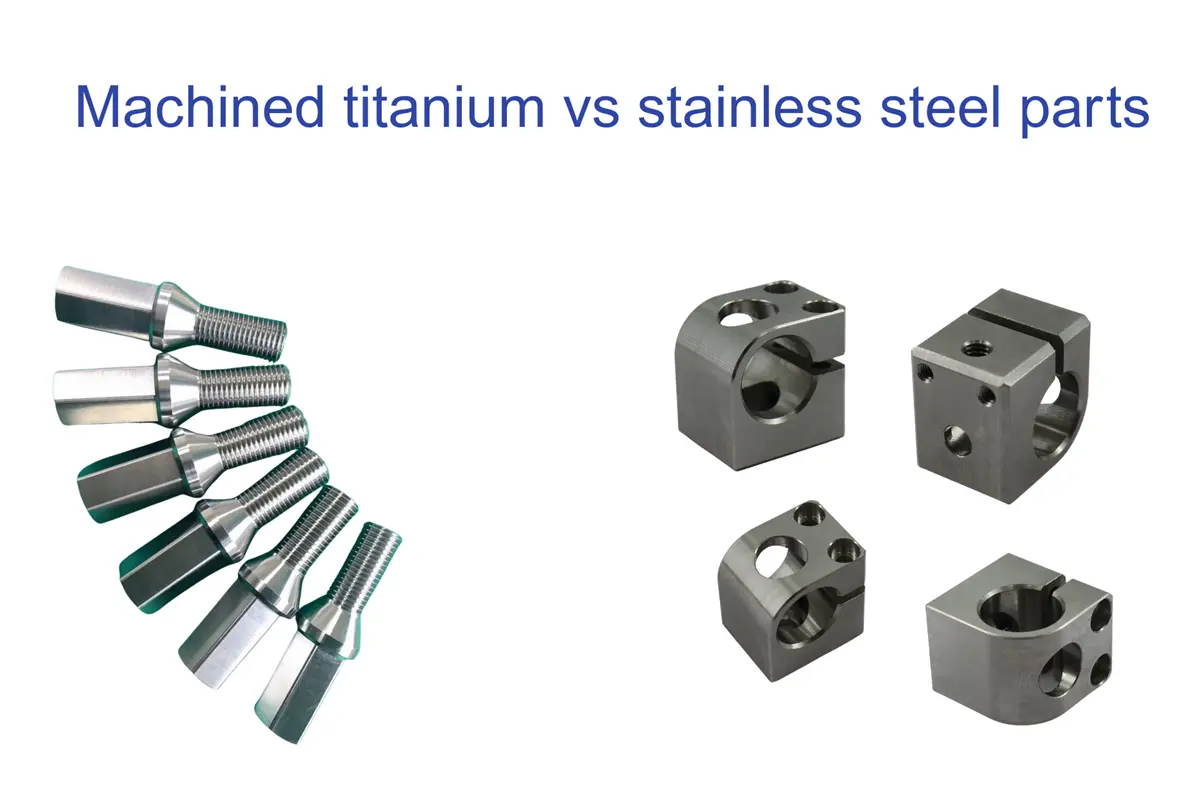
Grade 5 titanium is lighter and stronger for its weight. Annealed 316L stainless steel is much stiffer and usually costs less to machine. Corrosion, fatigue, and heat performance still depend on the exact environment, material condition, and part geometry.
| Selection factor | Grade 5 titanium, Ti-6Al-4V | 316L stainless steel | CNC part impact |
|---|---|---|---|
| Density at room temperature | 4.42 g/cm³ | 8.0 g/cm³ | Titanium reduces mass at the same part volume |
| Young’s modulus at room temperature | 107 to 122 GPa | About 200 GPa | Stainless steel deflects less at the same geometry and load |
| Thermal conductivity at room temperature | 6.6 W/m·K | About 15 W/m·K | Titanium keeps more cutting heat near the tool edge |
| Corrosion behavior | Strong seawater resistance | Strong general corrosion resistance, with grade-specific chloride limits | Fluid chemistry and crevice geometry can change the result |
| Machining behavior | Lower cutting speeds and concentrated heat | Work hardening, built-up edge, and burr risk | Both materials need stable cutting and planned tool changes |
| Typical cost direction | Higher stock, cycle, and tool cost | Usually lower stock and machining cost | Geometry and inspection can outweigh the material price gap |
TIMET and Outokumpu publish the property values shown above. Use these figures for screening. Final design allowables must come from the material standard, product form, and condition stated on the drawing.
Weight and Strength-to-Weight Ratio
Grade 5 titanium weighs about 56% as much as 316L stainless steel at equal volume. Grade 5 also provides high tensile and yield strength for its mass, which suits brackets, moving arms, and rotating hardware where inertia or payload limits system performance.
Weight savings alone do not justify substitution. Titanium’s lower elastic modulus can require thicker walls, ribs, or shorter spans to control deflection. Engineers must size the section for stiffness, fatigue, bearing stress, and joint behavior instead of comparing tensile strength alone.
Stiffness and Fatigue Performance
Stainless steel is much stiffer than Grade 5 titanium. Outokumpu lists 316L near 200 GPa, while TIMET gives Grade 5 a range of 107 to 122 GPa. Under the same load and geometry, the titanium part can deflect about 1.6 to 1.9 times as much.
Higher strength does not prevent elastic deflection. Stainless steel often fits alignment plates, shafts, housings, and clamped joints where movement controls function. Titanium can meet the same stiffness target when the design adds section depth or support.
Material family alone does not determine fatigue life. Alloy condition, grain direction, notch radius, thread root, surface finish, residual stress, and load ratio all affect crack initiation. Fatigue calculations must use data for the specified grade and product form, while the drawing should remove sharp transitions and uncontrolled tool marks from highly loaded features.
Corrosion and Heat Resistance
Grade 5 titanium resists seawater through a stable oxide film. Stainless steel also relies on a passive film, but 316L can pit or corrode in crevices when chloride level, temperature, deposits, or stagnant flow exceed the grade’s limits.
The service environment must define the choice. Specify the fluid, concentration, temperature, pressure, cleaning chemistry, and expected deposits because a material that performs well in clean seawater may fail in a hot, reducing, or oxygen-limited crevice.
TIMET reports that Grade 5 retains reasonable properties to about 350°C (660°F). For sustained heat, engineers should select the grade from code-based allowable stress data. Stainless steel families include grades for higher temperatures, although 316L is not a universal heat-resistant alloy.
Cutting Behavior and Tool Wear
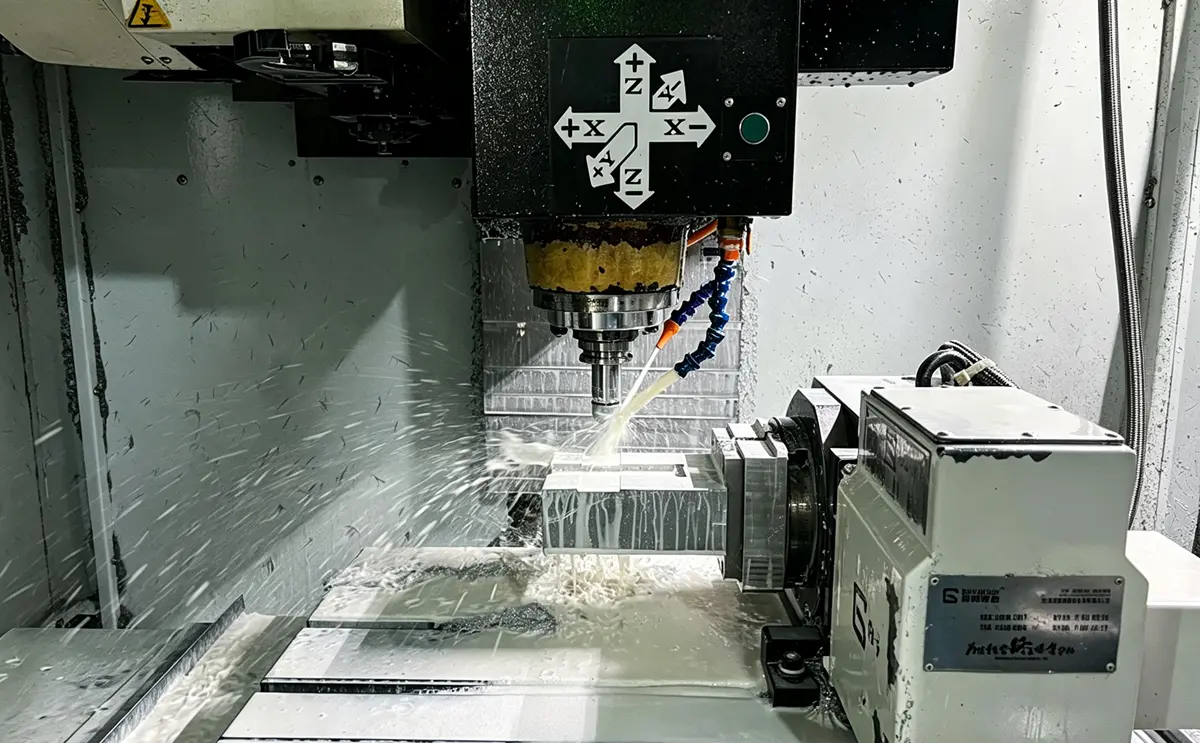
Titanium concentrates heat at the cutting edge because Grade 5 conducts heat at about 6.6 W/m·K, less than half the published value for 316L. Titanium also reacts with tool materials. Excessive speed can therefore cause flank wear, edge chipping, poor finish, and dimensional drift.
ATI recommends slow speeds, heavy feeds, rigid tooling, and abundant nonchlorinated cutting fluid for Grade 5. The final parameters must match tool diameter, cutter engagement, machine power, coolant delivery, and part stiffness.
Austenitic stainless steel work hardens and can form a built-up edge. The cutting edge must stay below the hardened layer, with enough feed to cut instead of rub. Stable workholding and chip control protect the finish, while CNC cutting tool selection must account for tool geometry, entering angle, wear limits, and feature access.
Tolerance and Surface Quality
Material choice alone does not set machining tolerance. Geometry, workholding, cutting heat, tool wear, and measurement strategy control the result.
- Titanium thin walls can spring away from the cutter, especially around deep pockets and long unsupported features.
- 316L can work harden, form burrs, and distort after heavy stock removal.
- Both materials benefit from separate roughing and finishing passes, stable datums, measured tool wear, and in-process checks.
Critical drawings should define datum structure, fit, profile, position, runout, surface roughness, and edge condition. The drawing should also state whether each tolerance applies before or after finishing.
Finishing specifications must match the material. Stainless steel may need passivation or electropolishing after machining. Titanium may need controlled cleaning, polishing, blasting, anodizing, or another specified treatment. Applying the wrong treatment can leave embedded contamination or change a critical edge.
Cycle Time and Machining Cost
Titanium usually costs more to buy and machine. Lower cutting speeds, shorter tool life, the need for reliable coolant delivery, and costly material loss raise quote risk. Deep pockets and thin walls may also need semi-finishing passes before the final cut.
316L usually produces a lower total quote, but austenitic stainless steel is not free-machining. Work hardening, stringy chips, small threaded holes, and cosmetic finishes can extend cycle time. A complete quote separates stock, setups, machine time, tooling, finishing, inspection, documentation, and packaging.
Which Material Fits Different CNC Machined Parts?
Titanium fits parts where lower mass, corrosion resistance, or high specific strength changes system performance. Stainless steel fits parts where stiffness, wear, cleanability, heat exposure, or cost controls the decision.
Aerospace and Robotics Parts
Titanium suits aerospace brackets, sensor mounts, fasteners, and robotic end-effector parts when lower moving mass improves payload, acceleration, or energy use. Grade 2 and Grade 5 titanium serve different load and fabrication needs. Grade 2 is more formable and resists general corrosion well. Grade 5 provides higher strength for weight-sensitive parts.
Stainless steel often fits shafts, pins, bearing supports, gear housings, and base plates. Higher stiffness can protect alignment without added ribs or section depth. Hardenable stainless grades may also suit surfaces that would wear 316L too quickly.
Medical and Life Science Parts
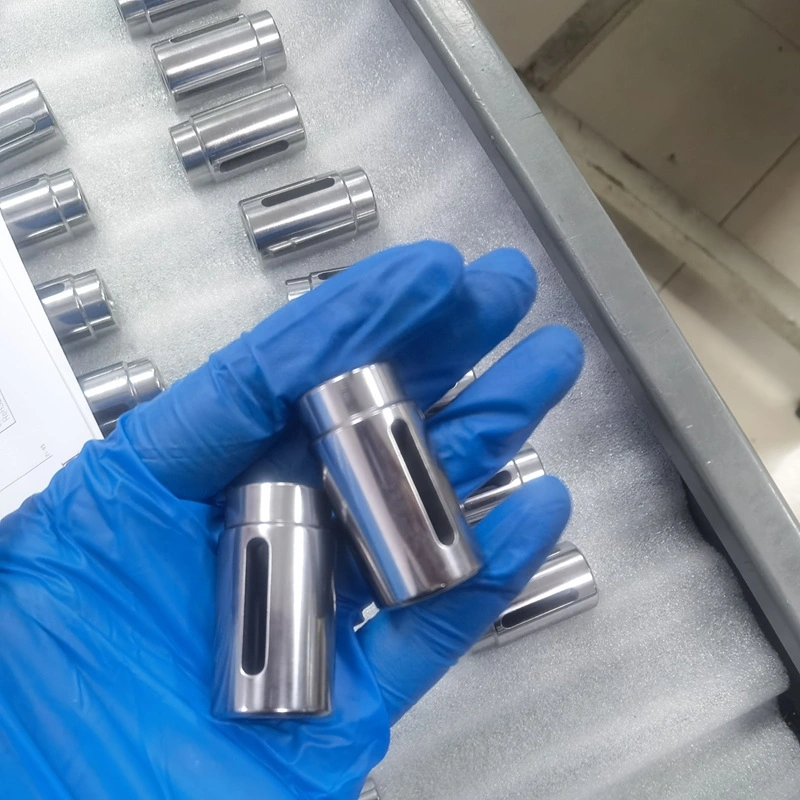
Implant-related components require the specified medical titanium grade, often Ti-6Al-4V ELI rather than general-purpose Grade 5 stock. Weight-sensitive surgical hardware may also use titanium when the approved specification permits titanium. 316L and medical-grade stainless variants fit instruments, diagnostic equipment parts, fluid-handling hardware, and cleanable housings. Medical use does not make these grades interchangeable.
The drawing should control the material specification, product condition, surface finish, cleaning, marking, and traceability. Sterilization chemistry and crevice geometry also affect corrosion behavior. Buyers sourcing medical device CNC machined components should confirm the supplier’s scope. The quote must distinguish a component made to print from a finished regulated device.
Semiconductor and Industrial Automation Parts
Stainless steel often fits vacuum manifolds, frames, stages, fasteners, and automation fixtures because higher stiffness protects alignment. Cleanable surfaces also support vacuum and particle-sensitive assemblies. The drawing must state low-permeability requirements because cold work and weld ferrite can change magnetic response.
Titanium fits selected wafer-handling parts, moving mechanisms, chemical-service hardware, and low-mass fixtures when corrosion or inertia justifies the added machining cost. Semiconductor drawings may also control particle traps, dead legs, surface roughness, cleaning, packaging, and material certificates. These requirements can drive the process more than the alloy name.
How Do You Choose a CNC Supplier for Titanium and Stainless Steel Parts?
Choose a supplier that controls grade identity, cutting heat, tool wear, workholding, finishing, and inspection within one production plan. Reject a quote that omits material certification, post-finish dimensions, or the features most likely to move.
Material and Application Experience
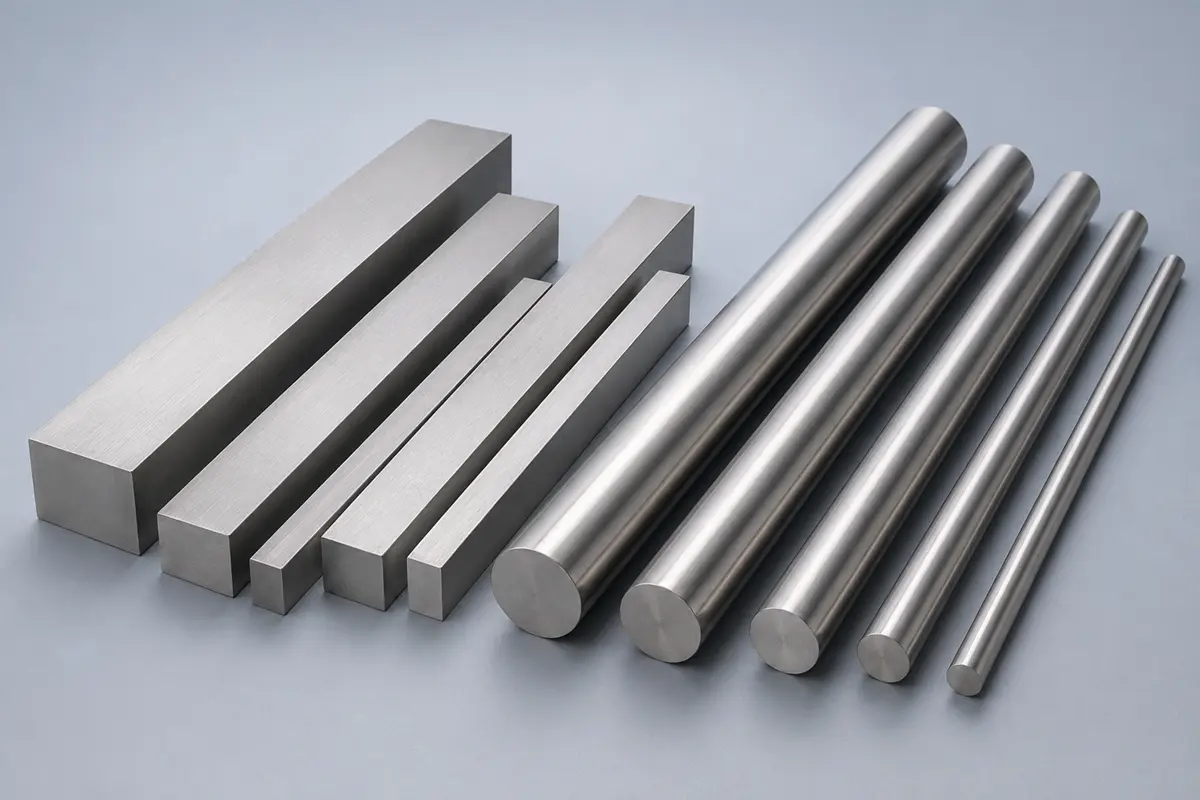
The supplier should ask for the exact alloy, specification, condition, product form, and service environment. “Titanium” and “stainless steel” are incomplete RFQ descriptions. Grade 2, Grade 5, 304, 316L, 17-4 PH, and duplex stainless steels have different strength, corrosion, magnetic, heat-treatment, and machining behavior.
Rollyu Precision machines titanium and stainless steel parts with DFM review, dimensional inspection, and material traceability. The quote should state which controls apply to the part instead of relying on a general capability statement.
DFM and Geometry Review
DFM review should flag features that drive scrap or cycle time before programming begins. Thin titanium walls may deflect. Deep small holes can overheat tools. Sharp internal corners force smaller cutters, while long threads raise galling and tap-breakage risk.
The same review should challenge tolerances that do not protect fit or function. A larger internal radius, better tool access, or separate pre-finish and post-finish dimensions can reduce cost without changing the part’s function.
Tooling and Process Control
The process plan should define roughing, semi-finishing, finishing, coolant delivery, tool-life limits, and inspection points. Titanium needs sharp tools, rigid setups, steady engagement, and reliable coolant access. Austenitic stainless steel needs enough feed to avoid rubbing, plus chip control that prevents recutting.
Rollyu’s CNC machining parts capability includes multi-axis machining, turning, Wire EDM, micro-machining, finishing, and dimensional inspection. Buyers should confirm the selected machine, workholding concept, tool access, and post-finish measurement plan for the quoted geometry.
Inspection and Material Traceability
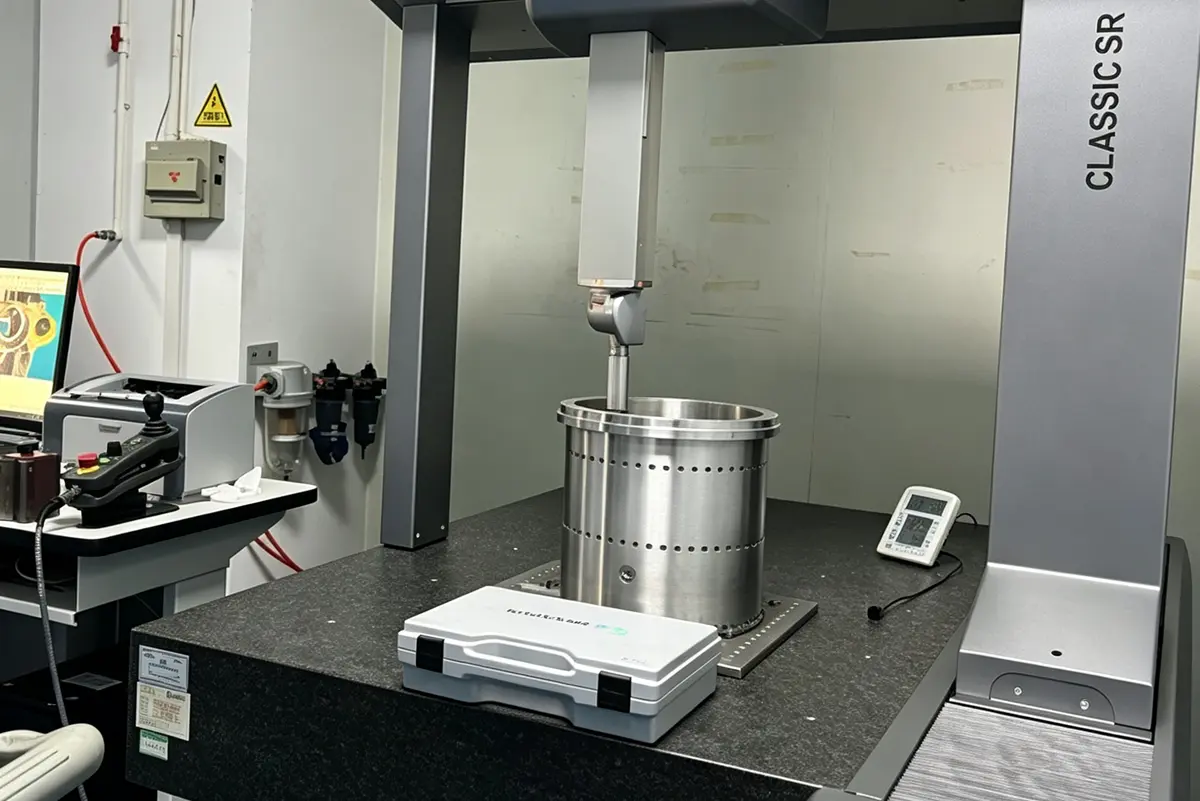
Inspection should follow drawing risk. CMM inspection can verify position, profile, and datum relationships. Micrometers, bore gauges, thread gauges, height gauges, and roughness testers cover features that may not suit a CMM probe path.
Rollyu holds ISO 9001:2015 and ISO 13485:2016 certifications and supports Material Test Reports, Certificates of Conformance, dimensional reports, FAI, and lot-level traceability when specified. A First Article Inspection report should connect each drawing requirement to a measured result before repeat production starts.
Finishing and Secondary Operations
The supplier should define which dimensions apply before and after finishing. Passivation can remove free iron from stainless steel surfaces, while electropolishing can change edge geometry and surface condition. Titanium handling and finishing must prevent embedded ferrous contamination. Cleaning must follow the drawing.
The quote should identify masking, edge breaks, thread protection, cosmetic limits, and roughness direction. If another company performs a finishing step, the supplier must preserve lot identity and acceptance records through that operation.
Quote Detail and Production Planning
A complete RFQ package should include:
- The 3D model and controlled 2D drawing
- Material grade, specification, condition, and quantity
- Critical tolerances and surface finish
- Inspection level and certificate requirements
- Packaging needs and target schedule
The buyer and supplier should resolve model and drawing conflicts before releasing the job. The final quote should also state setup assumptions, secondary operations, inspection deliverables, and lead-time drivers. Production planning must define tool-change criteria, first-piece approval, in-process sampling, and repeat-order controls.
FAQs
Can titanium replace stainless steel without redesigning the part?
Titanium usually requires a design check before replacing stainless steel. Titanium’s lower modulus changes deflection, joint preload, thread bearing, vibration, and wall stability even when static strength is adequate. Recheck geometry, fatigue, thermal expansion, galvanic contact, finish, and the governing material specification before changing the drawing.
Can titanium and stainless steel be used together without galvanic corrosion?
Titanium and passive stainless steel can share a joint, but electrolyte exposure controls the risk. Nickel Institute guidance places passive 304 stainless and titanium in a low-risk pairing. If stainless steel loses passivity, isolate the metals, improve drainage, seal the joint, or test the couple in the actual service fluid.
How can galling be prevented in titanium and stainless steel threads?
Prevent galling with lubrication, adequate clearance, clean threads, and controlled assembly speed. A compatible dissimilar nut, insert, or dry-film coating can reduce adhesive contact after galvanic review. Test the assembly before approving production torque values. NASA reports severe galling when titanium surfaces slide against each other.
Does machined titanium need passivation or another surface treatment?
Machined titanium does not need stainless steel passivation by default. Titanium forms a protective oxide film, but machining residue and embedded iron still require controlled cleaning. ASTM F86 covers surface preparation for metallic surgical implants, while the drawing may require anodizing, polishing, blasting, coating, or another validated treatment.
Is titanium magnetic, and which stainless steel grades are magnetic?
Grade 5 titanium is effectively nonmagnetic for most part-selection decisions. TIMET lists relative permeability near 1.00005. Annealed 304 and 316 stainless steels also have low permeability, although cold work and weld ferrite can increase magnetic response. Ferritic, martensitic, and duplex stainless steels are magnetic. Specify a maximum permeability when magnetic behavior affects sensors or vacuum equipment.