
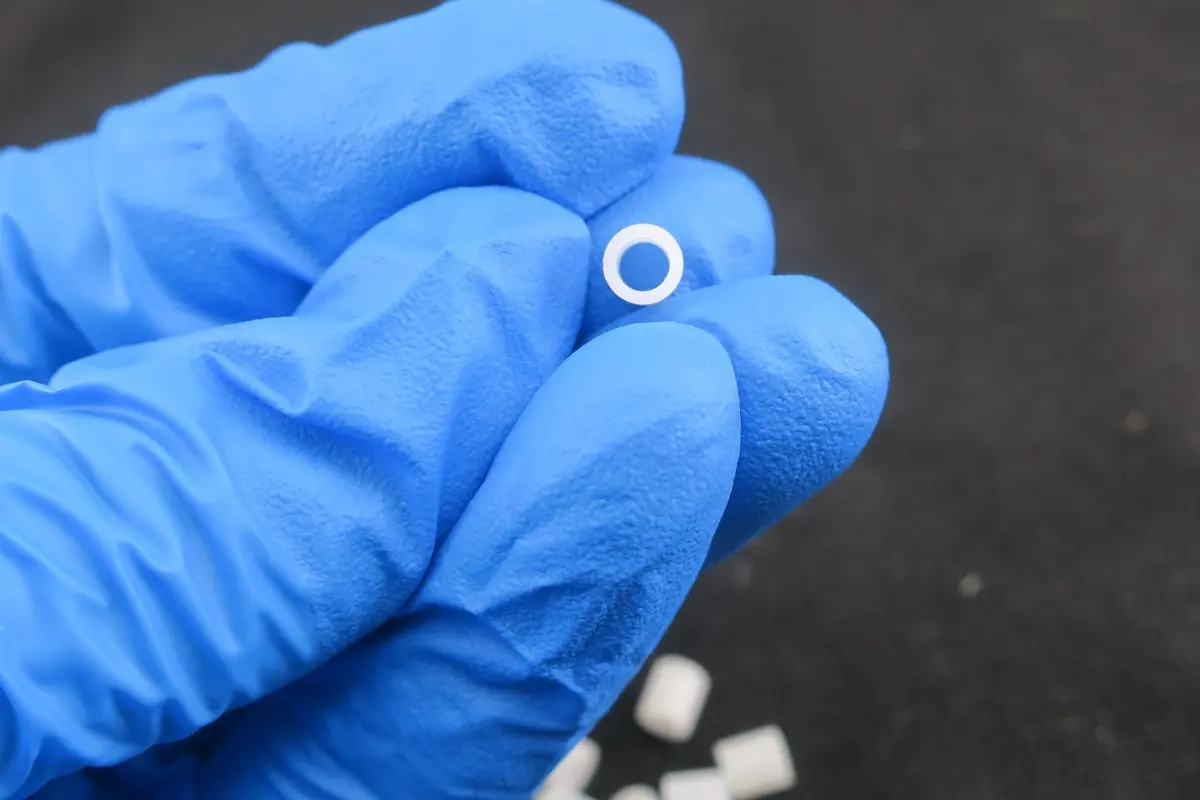
Most medical fasteners in a device assembly can stay standard catalog parts. A custom fastener is worth its cost only when the catalog cannot supply a needed feature, material and finish combination, cleaning resistance, retention method, or lot record. This guide covers medical device fasteners that hold equipment and reusable instruments together: screws, shoulder screws, captive screws, standoffs, pins, and inserts. Implant screws, surgical tissue fasteners, and fabric straps follow different requirements and fall outside this scope.
What Makes a Fastener Medical Grade
“Medical grade” on a fastener quote is a purchasing label, not a defined specification. Medical grade screws and pins earn the label through three things the drawing and records can prove: a named material specification, defined processing with lot records, and acceptance by the device manufacturer.
Named Material Specification
ASTM F899, for example, covers the chemistry of wrought stainless steels used for surgical instruments; mechanical properties and heat treatment come from the governing material standard or the purchase agreement. Implant alloys such as Ti-6Al-4V ELI to ASTM F136 are written for surgical implants and carry requirements most equipment fasteners do not need. A quote that says only “medical grade stainless” leaves grade, condition, and hardness undefined.
Defined Processing and Lot Records
Passivation, electropolishing, cleaning, and packaging belong on the drawing or purchase order rather than being inferred from the word “medical.” Each lot should then ship with records tied to that material and process: a material test report (MTR), a certificate of conformance (CoC), and lot identification that let a Supplier Quality Engineer trace a delivered fastener back to its heat of material.
Supplier Certification and Device Responsibility
A supplier’s ISO 13485 certificate shows that its quality system was audited, not that any single fastener is approved. The FDA’s Quality Management System Regulation (QMSR), effective February 2, 2026, incorporates ISO 13485:2016 into 21 CFR Part 820, yet FDA does not require ISO 13485 certificates, and a certificate does not exempt a manufacturer from inspection. Acceptance of the fastener, including any biological evaluation under FDA’s guidance on ISO 10993-1, stays with the device manufacturer.
Why Most Medical Device Fasteners Start as Catalog Parts
Catalog fasteners are the right default because they ship from stock, follow known thread standards, and carry no development cost. Check two things before moving away from them.
Requirements Stock Hardware Already Covers
Many requirements that sound specialized are already met by stock parts:
- 316 stainless steel and titanium screws for corrosion resistance or low magnetic response.
- Security drives that deter unauthorized adjustment.
- Captive panel screws that stay with a service door.
- Self-clinching nuts and studs that add threads to thin sheet metal enclosures.
Tolerances That Rule Out Stock Parts
Tight tolerances copied onto every dimension of a screw or pin can rule out stock sizes and lower-cost processes while adding nothing to the assembly. Before requesting a custom part, the Design Engineer should mark which dimensions actually control fit or function and check whether a stock size meets those limits.
When Medical Fasteners Need a Custom Design
A custom or modified fastener is justified when a requirement fails one of the five checks below and no stock part closes the gap. Each check leads to a different fix, so identify the actual shortfall before sending out quotes for non standard fasteners.
Function Features No Catalog Part Offers
A missing function feature is the easiest gap to confirm, because a catalog either lists the geometry or it does not. Typical cases include:
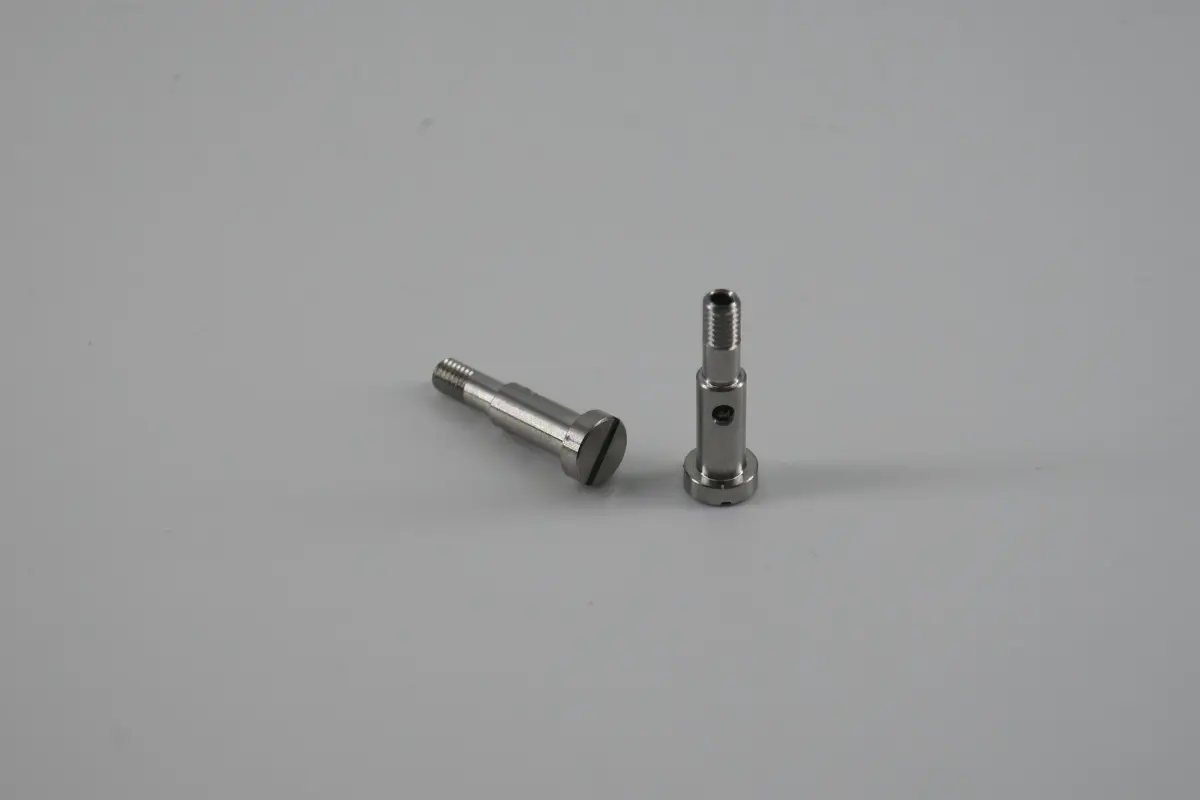
- A shoulder screw whose shoulder diameter and length set the pivot clearance in a surgical robot joint or instrument hinge.
- A screw with an integrated standoff, dowel, or locating diameter that replaces two or three loose parts.
- Miniature threads or slender lengths for handheld instruments where the smallest stock sizes are still too large.
- A sealing screw with an O-ring groove under the head for a fluidic or diagnostic instrument.
- A thumbscrew or knurled head sized for tool-free access during setup or cleaning.
Combining parts can cut assembly steps and loose hardware, but the combined part still has to be measurable. Each functional diameter needs a datum and an inspection method before the design is released.
Material and Finish Combinations Outside Stock
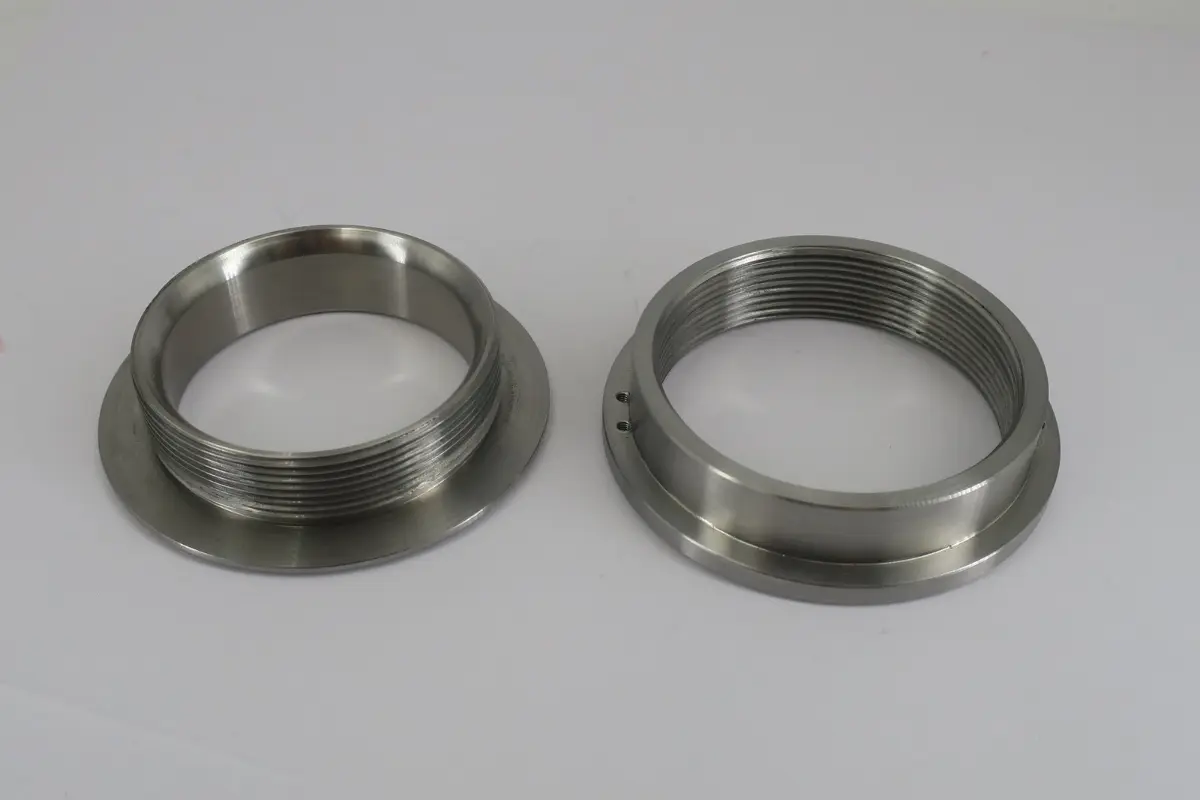
Distributors stock common grades in common finishes. A requirement moves outside stock when it names a specific grade and condition, such as a hardened martensitic stainless steel pin for a reusable instrument, a 17-4 PH screw in a stated aged condition, or PEEK where the joint needs a non-metallic, electrically insulating fastener.
Mating materials deserve the same attention as the fastener grade. Aluminum and titanium are prone to galling, especially in tapped holes, so thread material pairs and lubrication should be chosen together. Pin and bore hardness also need to be specified as a pair, so installation does not shave debris from either part.
Cleaning and Sterilization Exposure
For reusable devices, the device manufacturer writes the processing instructions, and every fastener has to survive them. ISO 17664-1 covers the information manufacturers provide for processing critical and semi-critical devices, including cleaning, disinfection, and sterilization steps.
That exposure changes fastener design in three practical ways:
- Blind threads, deep recesses, and gaps under heads can trap soil, so a cleanable design keeps crevices open to cleaning or seals them.
- Platings and coatings need confirmation against the actual cleaning chemistry and sterilization method before release.
- Threadlockers and nylon patches need the same compatibility check as the fastener material.
Vibration Loosening and Service Access
Preload holds a properly tightened screw through friction, but intense vibration can defeat tightening alone. Common retention methods include nylon patches or nylon-insert nuts, threadlocker, and double nuts. Specialized locking washers also resist loosening, yet they can mar surface coatings and the parts beneath them, which creates its own risk in medical equipment.
Service access adds a second problem. A screw dropped during field service can fall into electronics or a moving mechanism, so captive screws that stay attached to the panel are common on access doors. Stock captive panel screws suit standard sheet metal doors. A custom captive screw makes sense when panel thickness, retention travel, or head clearance falls outside catalog ranges.
Lot Records a Distributor Cannot Supply
Catalog hardware bought through distribution may arrive with a general certificate of conformance rather than heat-level material reports, revision-controlled drawings, or lot segregation. For a fastener classified as critical, those gaps can block incoming acceptance. ISO 13485:2016 asks device manufacturers to set supplier evaluation criteria proportionate to the risk associated with the medical device, and a made-to-print part from a supplier that controls material, process, and lot identity can close the gap.
How to Choose Between Standard, Modified, and Custom Fasteners
Choose the least custom route that closes the actual gap. Each step away from stock adds cost and lead time, but also adds control over geometry, material, and records.
| Route | What Changes | Fits When | Main Cost and Lead-Time Driver | Records to Confirm | Main Risk |
|---|---|---|---|---|---|
| Standard catalog | Nothing; stock part | Common sizes, grades, drives, and retention styles | Stock availability | CoC; material certificates if offered | Source or lot changes without notice |
| Modified standard | A secondary operation on a stock part, such as shortening, adding a patch, cross-drilling, or passivating | A stock part missing one feature or finish | Secondary setup and minimum lot size | Base-part certificates plus records for each added operation | Original certificates may not cover the modified part |
| Custom CNC or Swiss machined | Machined from bar to a drawing | Prototypes, low to mid volumes, integrated features, specialty alloys, PEEK | Machine time per part and material cost | MTR, CoC, dimensional report, FAI | Higher piece price at high volume |
| Custom cold headed | Formed from wire with dedicated tooling | Stable designs at high volume with formable geometry | Tooling design and setup, often weeks | MTR, CoC, tooling and process records | Tooling cost and limited room for design changes |
Volume and design stability usually decide between the last two routes. Custom CNC machined parts let a team revise a fastener between prototype and pilot lots with a program change, while cold heading pays back once a design is frozen and quantities can carry the tooling.
How Process Choice Affects Custom Medical Fasteners
Process choice sets piece cost, lead time, achievable features, and how easily the design can change. Settle it before finalizing tolerances, because each process favors different geometry.
Cold Heading
Cold heading forms the head and shank from coiled wire in dies. Design and setup for cold-formed parts often take weeks, and short runs may not justify the cost, so cold heading fits stable, high-volume screws and pins with formable geometry.
CNC and Swiss Turning
CNC turning cuts the fastener from bar stock, so a revision needs a new program rather than new tooling. That makes turning the usual route for prototypes, low to mid volumes, and parts with cross holes, flats, undercuts, or several precision diameters. Machining from bar removes more material than forming, so titanium or specialty alloy parts carry a higher material cost per piece.
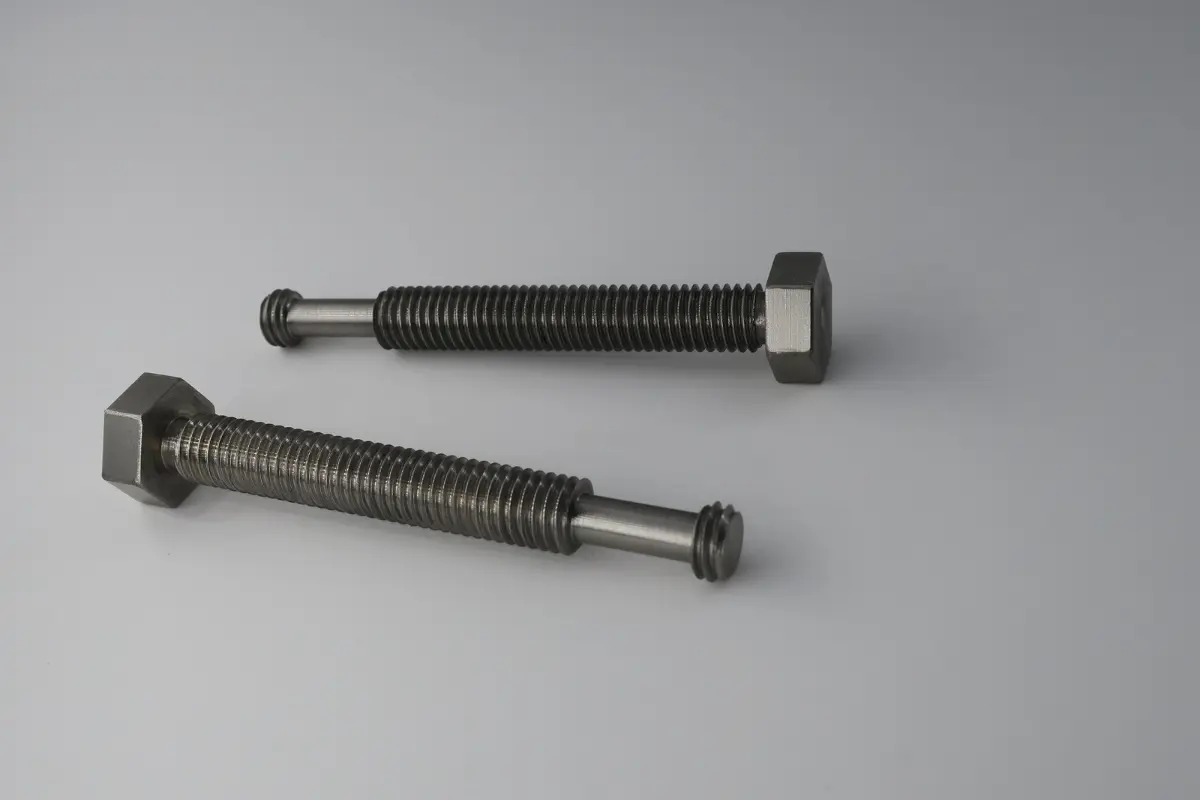
Swiss-type lathes feed bar stock through a guide bushing that supports it very near the cut, which lets long, slender parts such as pins, miniature screws, and long shoulder screws run without deflection. Production Machining notes that parts with a length-to-diameter ratio above 3:1 should run with the guide bushing in place. Choosing CNC Swiss machining over a conventional lathe for a given fastener comes down mainly to its diameter, length, and feature count.
Finishing After Threading
Finishing acts on the surface after thread size is set, so the drawing has to say whether thread dimensions apply before or after finishing. Electropolishing removes metal, and NASA’s electropolishing process specification tells designers to state the acceptable range of material removal on the drawing.
Gauge threads after final finishing to check that the finished screw still fits. Engineers specifying passivation for stainless steel parts should name both the passivation specification and the acceptance test the supplier will report.
What to Specify on a Custom Fastener Drawing and RFQ
A complete RFQ lets the supplier quote the right process and lets incoming inspection accept parts against clear criteria. Group the requirements into features, materials and finishes, and records.
Thread and Critical-Feature Acceptance
Acceptance criteria belong on the drawing, so the supplier quotes the right inspection and incoming inspection has a clear pass or fail. Start with the thread: state size, pitch, and tolerance class, and name the gauge method so both sides check the thread the same way. Then flag the critical-to-function dimensions, such as shoulder diameter and length, head height, and runout between diameters. These features decide how the fastener fits and moves in the assembly, so they usually carry tighter tolerances and more frequent inspection than the rest of the part.
Drive selection belongs in the same review. Countersunk and button heads use a smaller driver than cap screws of the same thread size, so their recesses strip more easily under high installation torque; when a joint needs that torque, the largest practical head avoids rework at assembly. Finally, list any torque, pull-out, or functional test the joint depends on, with its sampling plan, so the test is priced into the quote rather than added after delivery.
Material, Finish, and Cleanliness Callouts
Write material, finish, and cleanliness requirements as values a supplier can check, because terms like “medical grade” or “clean” give nothing to measure. The material callout needs the specification, grade, and condition, plus a hardness range where wear or galling matters.
The finish callout should state the specification and the stage at which it applies, since a finish applied after threading changes the surface the thread gauge sees. For electropolishing, add the allowed material removal range. Cleaning, packaging, and lot segregation complete the callout, and each should read as an acceptance criterion, such as a visual standard, a package type, or one lot per bag, rather than a general instruction.
Documentation and Lot Traceability
List the exact records each lot must ship with, and ask for first article inspection on new or revised part numbers. Require lot identification on every package so a nonconformance can be contained to one heat or production lot. Report scope and timing follow the same logic as inspection documents for medical device CNC parts, where prototype builds, revisions, and repeat lots each call for a different record set.
When a CNC Machining Supplier Is the Right Source
A CNC machining supplier fits when the fastener has turned and milled features, ships in prototype to mid-volume lots, uses an alloy or PEEK that fastener mills do not stock, or must follow a revision-controlled drawing with lot records. Simple, high-volume screws with stable designs usually cost less from a cold heading specialist.
Rollyu Precision Capabilities for Custom Fasteners
Rollyu Precision produces custom turned parts through CNC turning, Swiss turning for small precision components, and milling for cross holes, flats, and slots. Documented finishing options include passivation and electropolishing, and inspection support includes thread gauging, CMM measurement, first article inspection, and lot-level material traceability.
Certificate Check and Quote Inputs
The company lists ISO 9001:2015 and ISO 13485:2016 certification, so ask for the current certificate and its scope during supplier qualification, as with any fastener source. To start a quote for medical device components, send the drawing, material specification, finish callout, lot quantities, and required records. That package lets the engineering team review the process route, finishing sequence, and record set before pricing.
Frequently Asked Questions
Are Stainless Steel Medical Screws Magnetic?
Some are. Grades 304 and 316 are generally non-magnetic when annealed, but cold work can make them magnetic. Martensitic grades such as 416 and precipitation-hardening grades such as 17-4 PH are magnetic. For parts used in the MR environment, specify grade and condition, and consider titanium or PEEK where magnetic response must stay minimal.
What Happens If a Fastener Changes After Design Freeze?
The swap becomes a controlled design change, even when the new fastener looks equivalent. ISO 13485:2016 clause 7.3.9 requires documented change control that includes a review of the change’s effects, so the substitute may need new verification or validation.
Can Self-Tapping Screws Be Used in Medical Device Housings?
Yes, for joints that are rarely opened. Self-tapping screws lose tightness after about two to three removal cycles, so for panels opened during service, consider machine screws in threaded inserts or tapped metal.
Do Internal Fasteners That Never Touch the Patient Need Biocompatibility Testing?
Usually not, but the device manufacturer makes that call. FDA’s ISO 10993-1 guidance covers materials with direct or indirect body contact, so a screw sealed inside an electronics enclosure normally falls outside it, while a fastener in a patient fluid path or a reusable instrument may not.
Source
- Quality Management System Regulation – Frequently Asked Questions, https://www.fda.gov/medical-devices/quality-system-qs-regulationmedical-device-current-good-manufacturing-practices-cgmp/quality-management-system-regulation-final-rule-amending-quality-system-regulation-frequently-asked, U.S. FDA. Supports the QMSR effective date, the incorporation of ISO 13485:2016 into 21 CFR Part 820, and that FDA does not require ISO 13485 certificates or exempt certificate holders from inspection.
- ISO 13485:2016 Medical devices – Quality management systems (incorporated by reference), https://law.resource.org/pub/us/cfr/ibr/inc/iso/iso.13485.2016.pdf, ISO via Public.Resource.Org. Supports clause 7.3.9 on design changes and clause 7.4.1 on risk-proportionate supplier criteria.
- Use of International Standard ISO 10993-1, “Biological evaluation of medical devices – Part 1: Evaluation and testing within a risk management process,” https://www.fda.gov/media/142959/download, U.S. FDA. Supports the scope of biological evaluation for direct and indirect body contact.
- Standard Specification for Wrought Stainless Steels for Surgical Instruments (F899-23), https://store.astm.org/f0899-23.html, ASTM International. Supports the chemistry-only scope of ASTM F899.
- Standard Specification for Wrought Titanium-6Aluminum-4Vanadium ELI (Extra Low Interstitial) Alloy for Surgical Implant Applications (UNS R56401), https://store.astm.org/f0136-26.html, ASTM International. Supports the implant scope of ASTM F136.
- ISO 17664-1:2021 Processing of health care products, Part 1: Critical and semi-critical medical devices, https://www.iso.org/standard/81720.html, ISO. Supports the manufacturer’s role in providing processing instructions.
- PRC-5009 Electropolishing Process Specification, https://www.nasa.gov/wp-content/uploads/2023/03/prc-5009-current.pdf, NASA. Supports specifying the acceptable material removal range on the drawing.
- Magnetic Effects of Stainless Steels, https://assda.asn.au/publications/technical-faqs/magnetic-effects-of-stainless-steels, Australian Stainless Steel Development Association. Supports the cold-work effect on 304 and 316 magnetism.
- Magnetism in Stainless Steel, https://www.fastenal.com/content/feds/pdf/Article%20-%20Magnetism%20in%20Stainless%20Steel.pdf, Fastenal Engineering. Supports the magnetic classification of martensitic and precipitation-hardening grades.
- How to Choose Fasteners for Your Medical Device, https://www.mpo-mag.com/contents/view_online-exclusives/2018-08-29/how-to-choose-fasteners-for-your-medical-device/, Medical Product Outsourcing. Supports loosening and retention methods, washer risks, galling, head drive sizing, and self-tapping screw reuse limits.
- How It Works – Cold Forming makes fasteners and a lot more, https://todaysmachiningworld.com/magazine/how-it-works-cold-forming-makes-fasteners-and-a-lot-more/, Today’s Machining World. Supports wire as the cold heading feedstock, design and setup lead times measured in weeks, and limited cost fit for small quantities.
- Recognizing the Swiss Advantage, https://www.productionmachining.com/articles/recognizing-the-swiss-advantage, Production Machining. Supports guide bushing support near the cut and the 3:1 length-to-diameter guideline.