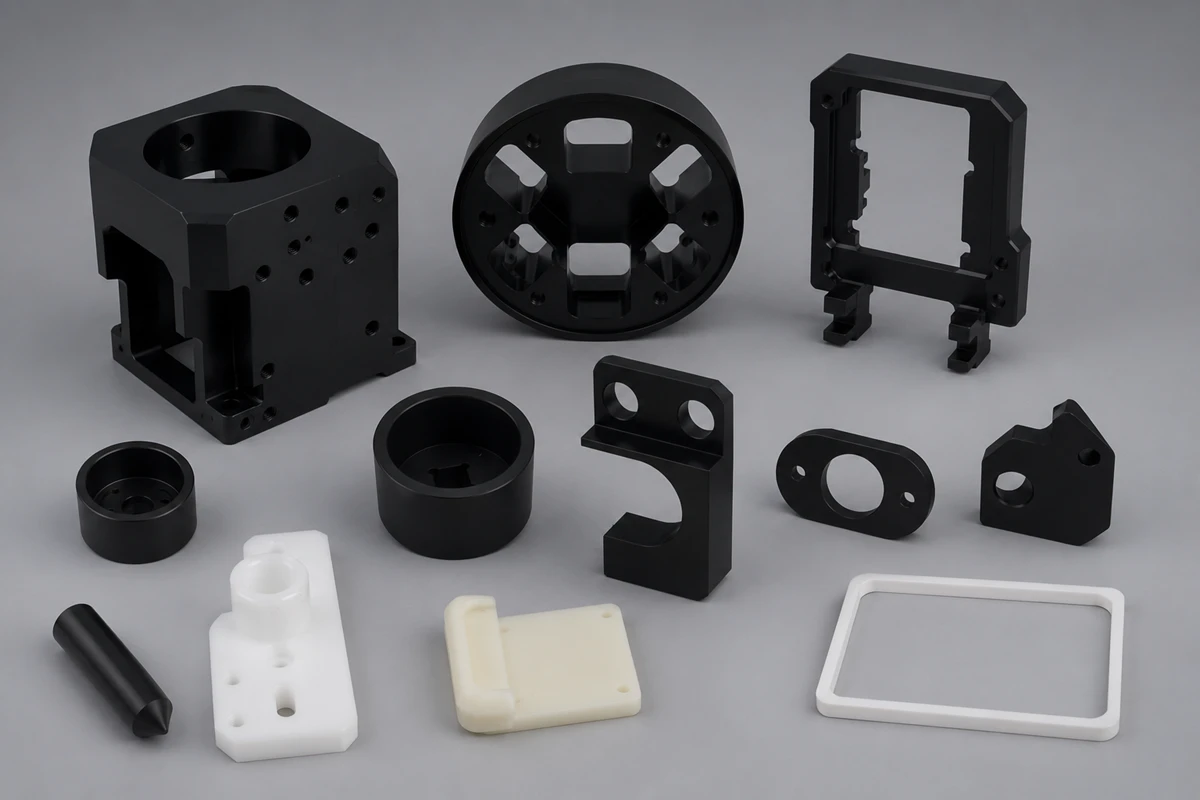
Engineers love Delrin (POM) for its ‘plastic steel’ properties, but machining it to tight tolerances is notoriously difficult due to its tendency to deform. At Rollyu Precision, we don’t just cut plastic; we manage its internal stresses. By implementing a rigorous set of internal controls, we consistently hold tolerances within 0.05mm, ensuring part stability from the first prototype to full-scale production. Below, we break down the exact methodology our team uses to eliminate deformation and guarantee precision.
Why Does POM Deform During Machining
While POM is prized for its “Plastic Steel” properties, its physical structure makes it inherently unstable during aggressive material removal. The primary culprits are internal stress and thermal expansion.
Thermal Expansion and Frictional Heat
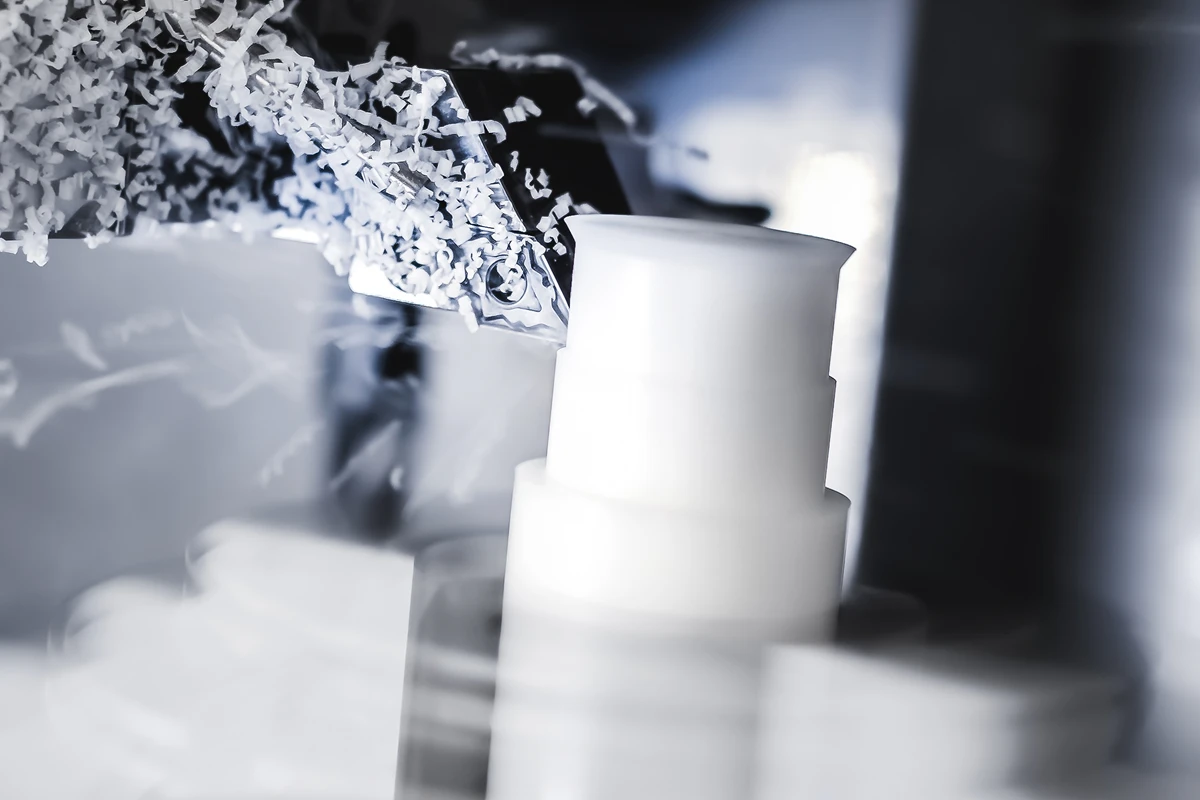
As a semi-crystalline thermoplastic, POM has a high coefficient of thermal expansion. During CNC machining, the friction between the cutting tool and the workpiece generates localized heat. Because POM does not dissipate heat as quickly as metals, this thermal energy causes the material to expand rapidly. If the temperature is not strictly managed, the part will contract unevenly as it cools, resulting in warping or “oil-canning” effects.
Residual Stress and High Crystallinity
POM’s rigidity comes from its high degree of crystallinity. However, this dense molecular structure often traps significant internal stresses during the initial extrusion or injection molding process. When you machine a part—especially when performing heavy roughing or creating thin-walled geometries—you disrupt the material’s equilibrium. This “stress relief” causes the material to spring or bow as it seeks a new balance. Furthermore, even a minor moisture absorption rate of 0.2-0.3% can lead to hygroscopic expansion, complicating dimensional stability in tight-tolerance projects.
Engineering Strategies to Control POM Machining Deformation
Achieving dimensional stability with Delrin (POM) requires a holistic approach. At Rollyu Precision, we mitigate deformation by addressing five critical technical dimensions:
Material Pre treatment and Moisture Control
The foundation of a precision-machined part starts with the raw stock. Because POM is semi-crystalline, its molecular structure is sensitive to environmental factors.
Moisture Management
POM can absorb 0.2-0.3% moisture, leading to significant swelling. We pre-dry all POM stock in industrial ovens at 80°C for 4 hours (adhering to ISO 62 standards) to ensure the material is stable before the first cut.
Batch Consistency
We perform Melt Flow Index (MFI) testing to account for shrinkage variations between batches, which can fluctuate by up to 0.5% according to ASTM D955.
Optimizing CNC Machining Parameters
Precise control of the cutting environment can reduce internal stress-induced deformation by over 60%
Linear Cutting Speed
We maintain speeds between 300-500 m/min. Exceeding this threshold generates localized friction that can soften the polymer, leading to “gumming” and dimensional inaccuracy.
Feed Rate Optimization
For high-tolerance finishing, we utilize a feed rate of ≤ 0.05 mm/rev. During roughing, this is increased to 0.15 mm/rev to balance efficiency with thermal load.
Specialized Tooling
We use high-grade carbide tools with a relief angle (clearance) > 12°. This sharp geometry reduces the tool-to-part contact area, significantly lowering frictional heat
Precision Fixturing and Thermal Mold Design
3-2-1 Positioning Principle
We apply the 3-2-1 constraint method to ensure all six degrees of freedom are locked without over-clamping, preventing the material from bowing under pressure
Mold Temperature Control
By using dedicated temperature controllers maintained at 60±5°C, we ensure a uniform thermal gradient. We keep cooling rates below 3°C per second to prevent “quenching cracks” caused by rapid thermal shock.
Table 1: Optimized CNC Machining Parameters for POM (Delrin)
| Parameter | Roughing Phase | Finishing Phase | Technical Goal |
| Linear Cutting Speed | 300 – 400 m/min | 400 – 500 m/min | Prevent localized melting/softening |
| Feed Rate | 0.10 – 0.15 mm/rev | ≤ 0.05 mm/rev | Reduce mechanical load & friction |
| Cutting Depth (ap) | 1.0 – 2.0 mm | ≤ 0.5 mm | Minimize “Heat Soak” in thin walls |
| Tool Geometry | Carbide / Relief >12° | Carbide / Relief >15° | Clean shearing, minimal heat |
Advanced Thermal Field Management
Thermal expansion is the primary enemy of POM precision. If the machining zone exceeds 120°C, deformation rates spike exponentially.
Layered “Heat Soak” Machining
We implement a maximum cutting depth of 0.5mm per layer. Between passes, we incorporate 30-second cooling intervals to allow residual heat to dissipate.
High-Pressure Air Cooling
Instead of liquid coolants which can cause hygroscopic issues, we use 0.4-0.6 MPa compressed air. Directed from a distance of 50mm, this provides targeted heat removal while keeping the work area clean.
Post Machining Stress Relief and Stabilization
Even with optimized cutting parameters, aggressive material removal inevitably disrupts the internal equilibrium of POM. To achieve and maintain micron level precision, Rollyu Precision employs a rigorous three-step stabilization protocol:
Multi-Stage Roughing Strategy
For standard components, we perform a primary roughing pass to remove bulk material. however, for complex geometries with thin walls or minimal structural support, we implement a Double Roughing sequence.
The Logic: By removing material in two distinct stages, we allow internal stresses to release gradually rather than all at once, preventing the “spring-back” effect that can ruin a precision part’s geometry.
Stress Relief Annealing (UL 746B)
Following the roughing stages, parts undergo controlled annealing. Adhering to UL 746B standards, we heat-treat the components at 120°C for 2 hours. This critical step eliminates up to 90% of residual stress, ensuring that the part remains stable during the final finishing pass and throughout its service life.
Thermal Equilibrium and Finishing
Before the final precision pass, parts are transferred to our climate-controlled machine shop, maintained at a constant 24-25°C (75-77°F).
The “Rest” Protocol: Components are allowed to rest for a minimum of 2 hours to reach thermal equilibrium. This ensures the material has fully stabilized from the annealing process, allowing our CNC machines to hold tolerances within 0.05mm with absolute repeatability.
Optional Hygroscopic Stabilization
For ultra-precision applications where even 0.2% moisture absorption could affect performance, we immerse components in 25°C water for 48 hours. This allows the Delrin to reach its natural saturation point before the final light precision pass, effectively “locking in” the dimensions for the long term.
Case Study: Medical Device Precision
In dental equipment assemblies, dimensional consistency is not only a cosmetic requirement. Even small deformation in plastic functional features can affect assembly alignment, snap-fit engagement, sliding consistency, long-term positioning stability, and automated assembly repeatability.
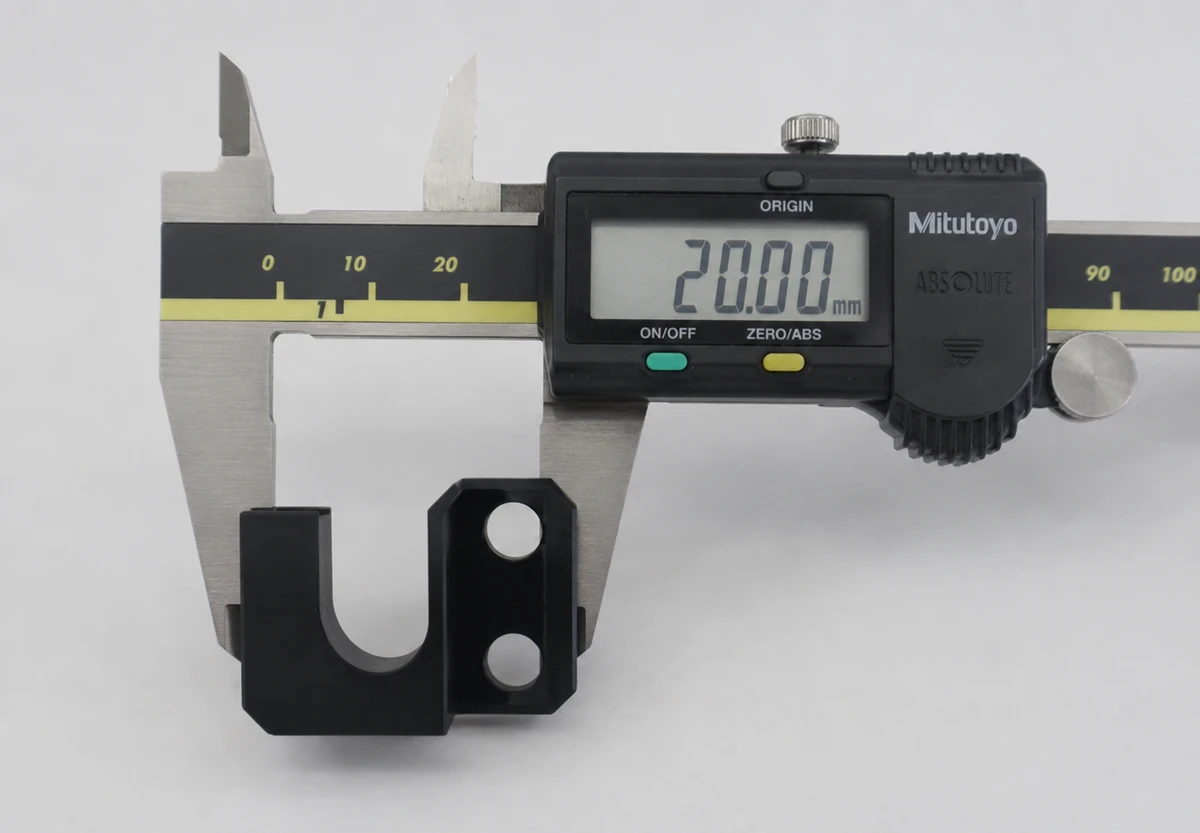
This case study highlights how Rollyu Precision addressed deformation and dimensional stability challenges in a precision-machined Black Delrin (POM) dental component used in a medical device assembly.
The component featured thin-wall sections and integrated snap-fit structures. While Delrin offers excellent machinability and low moisture absorption, the customer experienced dimensional variation and feature deformation during production, resulting in inconsistent assembly performance.
Table 2: Performance Comparison – Dental Component Optimization
| Metric | Before Optimization | After Rollyu Optimization | Improvement |
| Flatness Tolerance | 0.12 mm | 0.03 mm | 75% More Accurate |
| Snap-Fit Consistency | High Variation | Stable / Repeatable | Assembly Success 100% |
| Residual Stress | High (Warping detected) | <10% (Stabilized) | Long-term Stability |
| Precision Standard | ISO 2768-f (Medium) | ISO 2768-mK (Fine) | High-Tier Compliance |
The Challenge
The component contained several geometry characteristics that increased deformation risk:
Thin unsupported wall sections
Asymmetrical open-frame structure
Integrated functional snap features
Local stress concentration near corners
Narrow dimensional tolerance requirements for mating assembly
During initial production, the lower engagement tabs showed visible positional variation and deformation after machining and handling.
This caused:
Inconsistent assembly feel
Reduced alignment accuracy
Potential long-term fatigue risk
Cosmetic inconsistency between parts
For dental device applications, such variation was unacceptable.
Root Cause Analysis
After process evaluation, several contributing factors were identified:
Residual Stress Release in Delrin Structure
Although Delrin provides excellent dimensional stability, internal stress can still accumulate in asymmetrical geometries during machining.
Once the part was unclamped, localized stress release caused slight feature movement.
Fixture Clamping Pressure
Excessive localized clamping force during machining amplified distortion risk around the lower functional tabs.
Toolpath & Material Removal Sequence
The original machining sequence removed supporting material too early, reducing structural rigidity during later operations.
Edge Condition & Deburring Influence
Aggressive manual deburring introduced additional force to the thin functional areas.
Optimized Machining Sequence for Open-Frame Stability
Process Improvements
Rollyu Precision implemented several corrective actions:
Optimized Machining Sequence
Material support was retained longer during machining to improve rigidity.
Fixture Redesign
Clamping pressure distribution was adjusted to reduce localized stress concentration.
Controlled Deburring Process
Deburring methods were standardized to minimize manual deformation risk.
Geometry Stability Verification
Critical functional dimensions and feature symmetry were inspected after machining and after stress release stabilization.
The component featured a large open-frame geometry with thin unsupported side structures and integrated lower snap tabs.
To reduce deformation during machining, Rollyu Precision modified the machining sequence to retain more material support during intermediate operations.
Critical internal pocket machining was postponed until the final stages to maintain structural rigidity throughout the process.
This was particularly important around:
- the 60.2 mm internal opening area
- the lower functional engagement tabs
- the narrow side wall regions near the R0.5 and R1 transitions
Result
After process optimization:
Snap feature consistency improved significantly
Functional tab alignment became stable
Assembly repeatability improved
Cosmetic consistency improved across batches
Part deformation was effectively controlled
The improved process enabled stable production for dental equipment assembly requirements.
Engineering Insight
Plastic precision components are often underestimated in medical and dental manufacturing.
In reality, achieving stability in functional Delrin parts requires understanding:
Material behavior
Stress management
Machining strategy
Fixture interaction
Deburring influence
Assembly mechanics
At Rollyu Precision, we focus not only on dimensional inspection —
but on how components behave in real assembly environments.
If you are developing precision plastic components for:
Dental devices
Medical equipment
Laboratory automation
Motion control systems
Rollyu’s engineering team can support manufacturability review and process optimization for stable production.
Conclusion
Achieving Quantifiable Precision
Managing POM deformation is a science of controlling material, process, and thermal variables. For thin-walled or deep-cavity designs, we often utilize Moldflow Finite Element Analysis (FEA) to predict and counteract deformation before the first chip is cut.
As a leading CNC supplier in Shenzhen, Rollyu Precision provides the technical expertise that North American and European engineers rely on for mission-critical plastic components.
FAQ
What is the best way to prevent Delrin parts from warping
The most effective way is a combination of stress-relief annealing at 120°C and using sharp, high-clearance carbide tools to minimize heat during the CNC process.
How does moisture affect POM machining
POM absorbs about 0.2-0.3% moisture, which can cause the material to swell. Pre-drying the material at 80°C for 4 hours ensures dimensional stability during and after machining.
Can you achieve ISO 2768-mK tolerances with POM
Yes. Through layered machining (cutting depths < 0.5mm) and stabilized temperature control, it is possible to achieve ISO 2768-mK precision even for complex geometries.
Why choose a Shenzhen supplier like Rollyu Precision for POM parts
Rollyu Precision combines the cost-efficiencies of Shenzhen’s supply chain with high-end quality standards (ISO/ASTM), providing advanced thermal management and FEA analysis that standard machine shops may overlook.