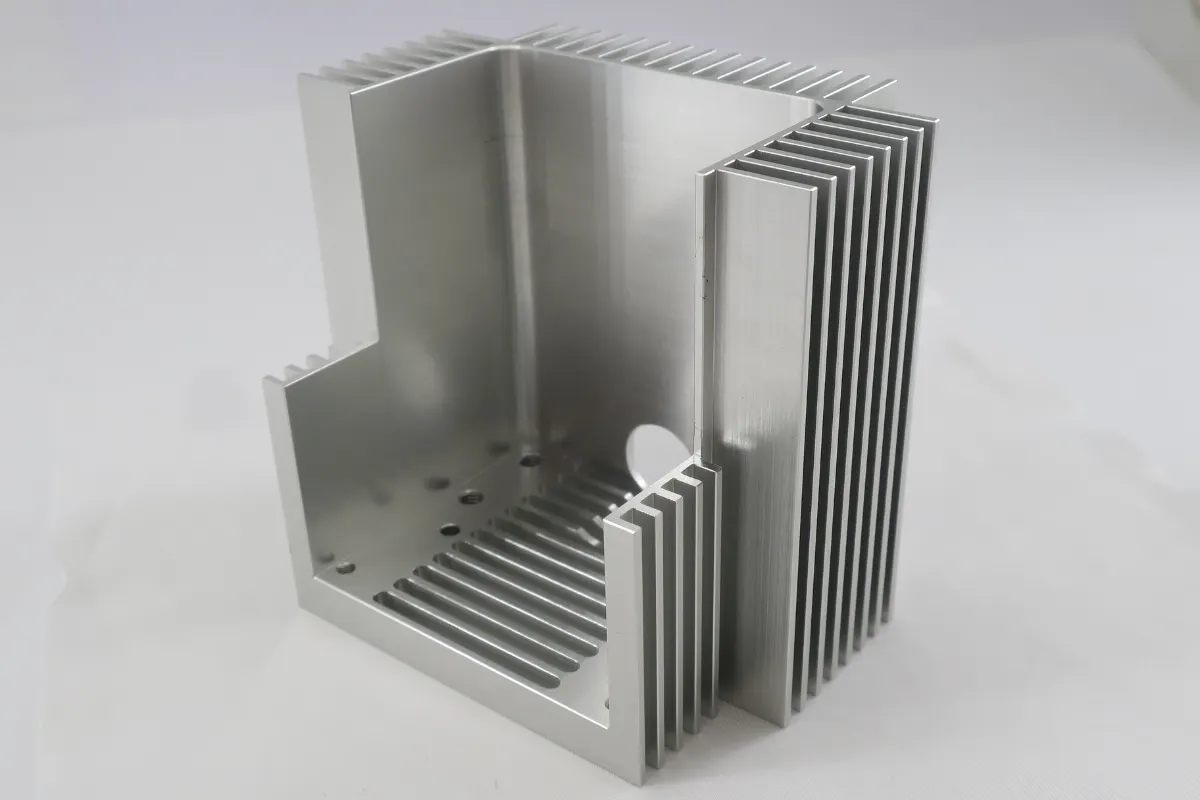
Choose a heat sink manufacturing process by fin geometry, alloy, and production volume. Extrusion suits constant two-dimensional fin profiles at volume, die casting suits three-dimensional housings with integrated fins at high volume, and CNC machining suits prototypes, low volumes, and precision mounting pads. Skiving, forging, and bonded or folded fins reach fin densities the main three cannot, and production runs often pair a formed blank with CNC machining on mating features.
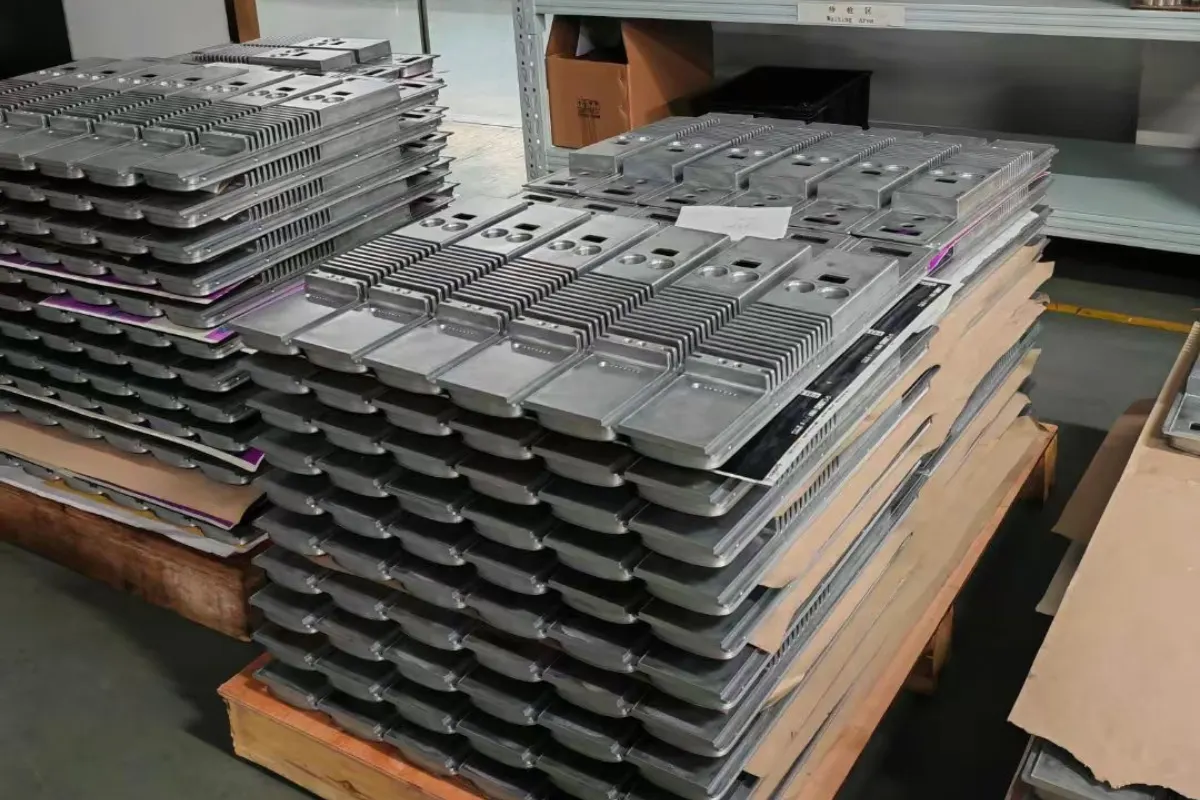
How the Main Processes Compare
Each process limits how thin and how closely spaced the fins can sit, which alloys it accepts, and what tooling it requires before the first part. Fin limits below follow an Electronics Cooling design-for-manufacturability study for 50 mm tall fins.
| Process | Geometry It Forms | Minimum Fin Thickness | Max Height-to-Gap Ratio | Typical Alloys | Tooling and Volume Fit |
|---|---|---|---|---|---|
| Extrusion | Constant 2D profile | 1 mm | 8:1 | 6063, 6061 | Extrusion die; mid to high volume |
| High-pressure die casting | 3D housings with drafted fins | 1.75 mm | 6:1 | A380, cast Al, zinc | Steel die; high volume |
| CNC machining | 3D pockets, steps, custom fins | 0.5 mm | Not stated (1 mm min gap) | 6061, 6063, C11000, C10100, C14500 | Zero tooling; prototypes to mid volume |
| Skiving | Thin fins sliced from one block | 0.3 mm | 25:1 | Copper, aluminum | Skiving tool; mid volume |
| Forging | Closed-die pin or plate fins | 0.4 mm | 50:1 | Aluminum, copper | Forging die; mid to high volume |
| Bonded or folded fins | Sheet fins in a grooved base | 0.75 mm bonded, 0.25 mm folded | 60:1 bonded, 40:1 folded | Aluminum or copper | Fin/fixture tooling; large sinks |
Extrusion
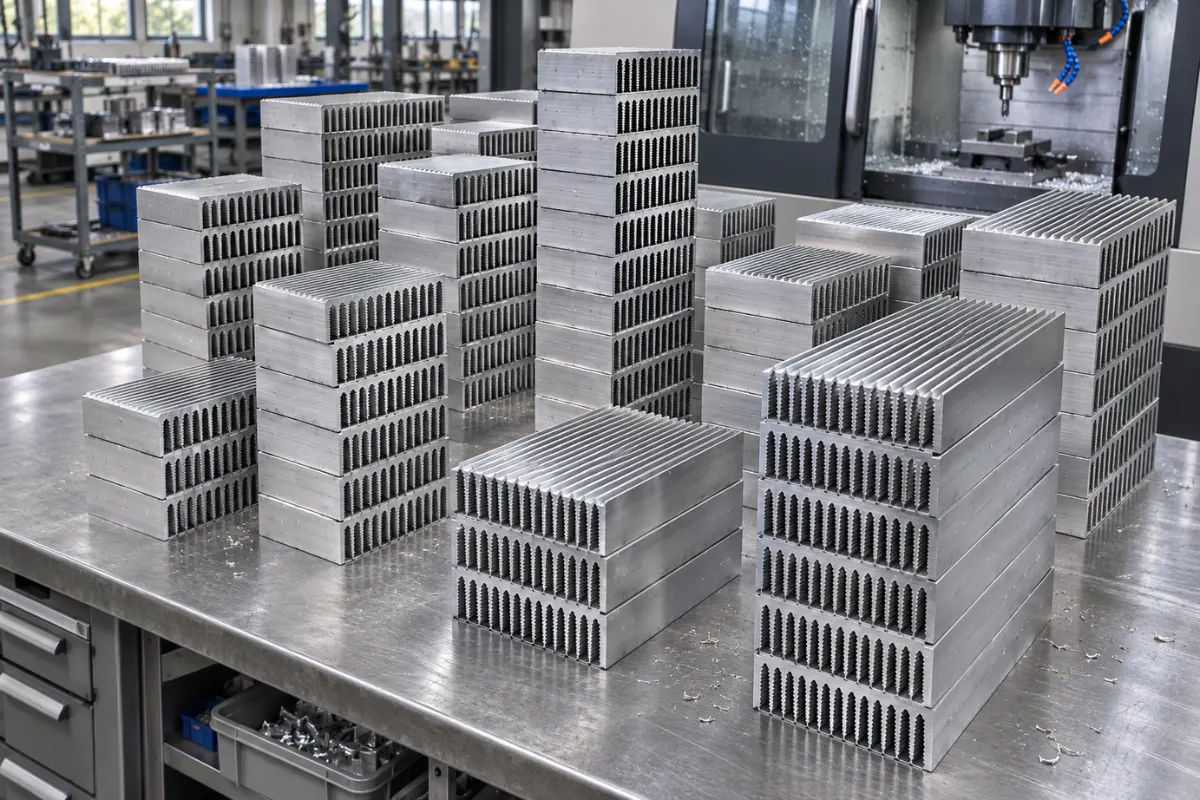
Pushing heated aluminum through a steel die produces continuous bars with one constant profile, spreading die costs across production volume. Narrow, deep channels rely on thin die tongues that cap fin density, while features off the extrusion axis (cross-cuts, tapped holes, and flat mounting pads) require secondary CNC machining.
High-Pressure Die Casting
Injecting molten aluminum or zinc into hardened steel dies forms housings, bosses, and fins in one cycle without a housing-to-cooler joint. Draft angles needed for die release keep cast fins thicker and wider spaced than extrusions, while critical mounting pads, bores, and threads require post-cast machining.
CNC Machining
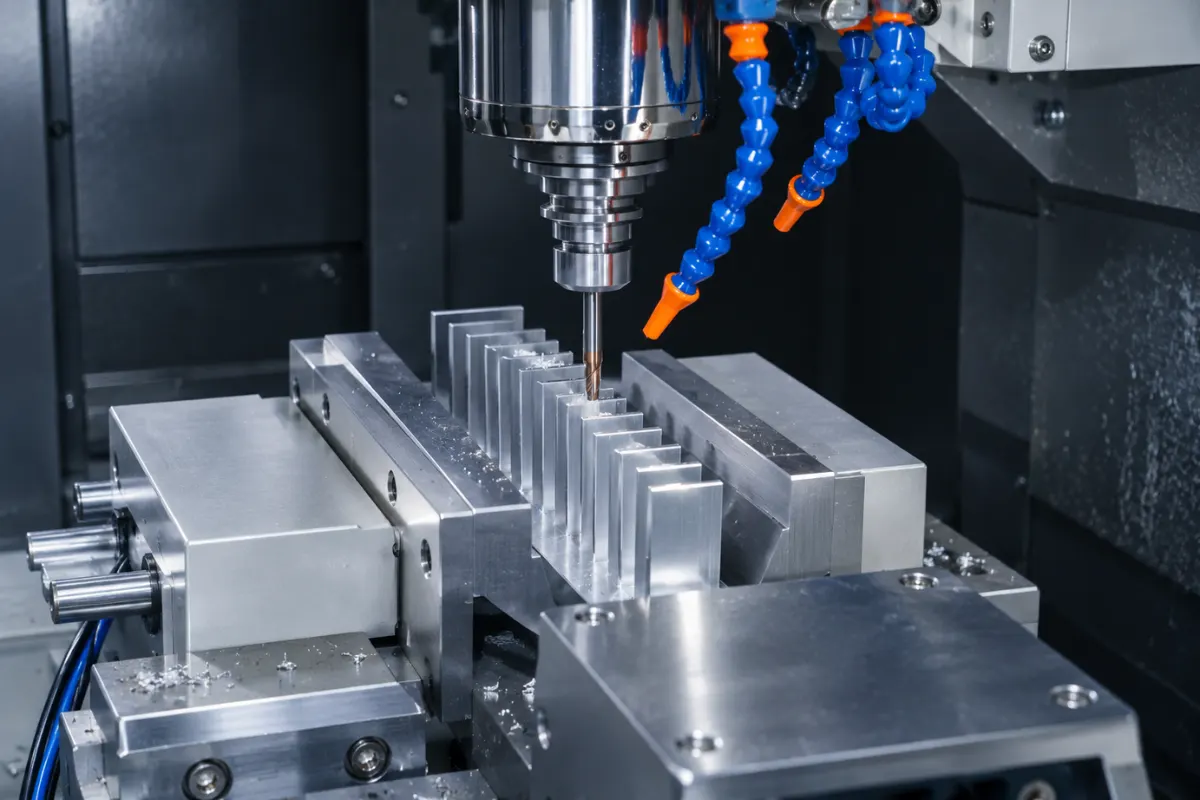
Milling cuts vertical fins, stepped pedestals, O-ring grooves, and mounting holes directly from solid plate or bar, so design changes need only a new toolpath. Tall fin arrays, however, turn most of the billet into chips and drive cycle time up on wide footprints.
Skived, Forged, and Bonded Fins
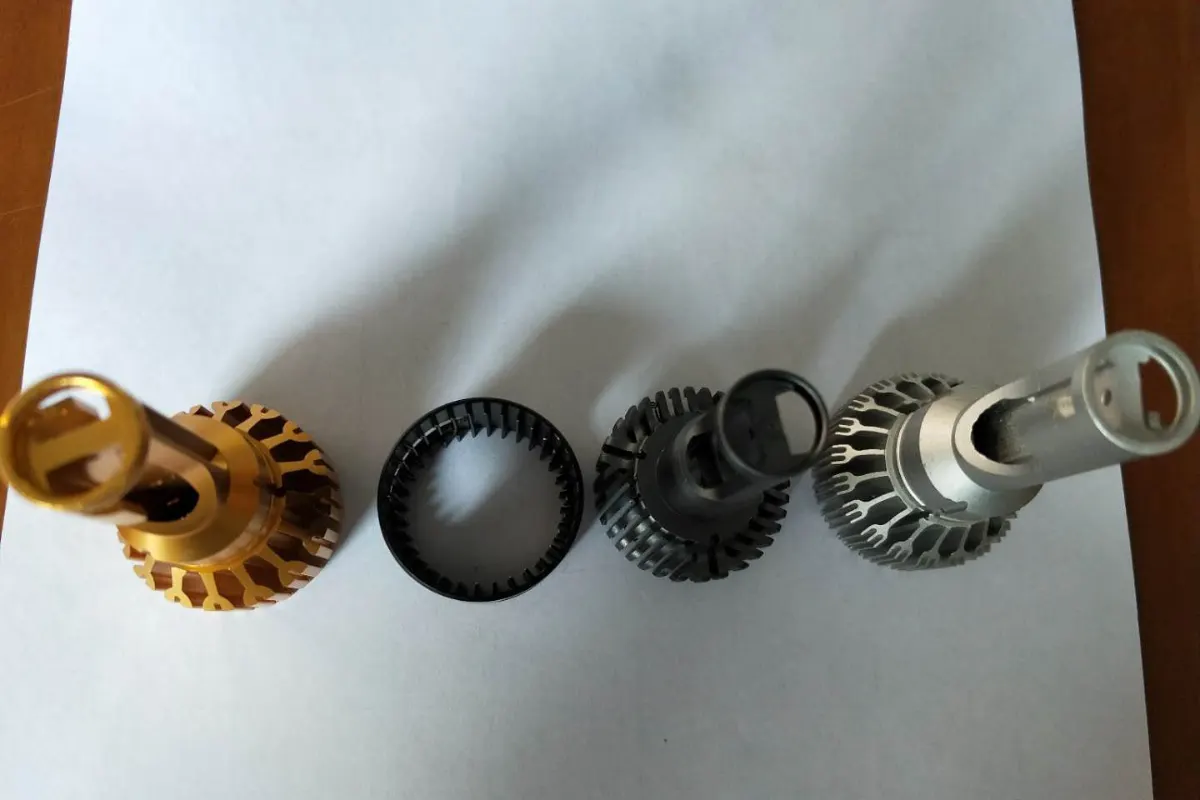
Skiving slices delicate one-way fins from solid aluminum or copper with no root joint. Forging presses omnidirectional pin arrays, whereas bonded or folded designs join sheet fins into grooved bases where epoxy, braze, or solder adds fin-root thermal resistance.
How Material Choice Narrows the Process
Select alloy and process together, because additions that raise castability or strength also lower bulk thermal conductivity.
| Alloy | Thermal Conductivity | Process Fit | Machining and Joining Notes |
|---|---|---|---|
| 6063-T5 aluminum | 209 W/m·K | Extrusion | 145 MPa yield strength; short threads need deeper engagement or inserts |
| 6061-T6 aluminum | 167 W/m·K | CNC from plate, structural extrusions | Crisp chip breaking; 276 MPa yield strength |
| A380 die-cast aluminum | 109 W/m·K | High-pressure die casting | 7.5% to 9.5% Si, 3.0% to 4.0% Cu; subsurface porosity risk under pad cuts |
| C11000 and C10100 copper | About 391 W/m·K | CNC, skiving, brazed assemblies | Machinability rating 20; C10100 resists brazing hydrogen embrittlement |
| C14500 tellurium copper | About 355 W/m·K | CNC with dense tapped grids | Machinability rating 85 |
A380 trades roughly half of 6063’s conductivity for mold filling, which die-cast coolers offset with wider surface area or wrought hotspot inserts. Choosing between cast and wrought aluminum for custom parts also turns on porosity, strength, and tooling cost.
Between wrought grades, 6063 fits extrusion while stronger 6061 handles billet machining; the differences between 6061 and 6063 for CNC parts extend to anodize appearance and thread strength. Copper takes over when concentrated heat flux outgrows aluminum, at roughly three times the weight.
Choosing a Route by Volume and Geometry
CNC machining from solid fits changing designs and low volumes that will not pay back a die. It also forms undercuts, stepped pedestals, and interrupted fins in one piece without bolted sub-joints that add thermal resistance.
Once forecast demand justifies tooling, extruding 6063 fin bars or casting A380 housings and machining only cross-slots, tapped patterns, dowel bores, and contact pads lowers unit cost. Because cutting into cast blanks can expose subsurface porosity, a die casting quality plan should define final pad acceptance and inspection evidence.
No fixed crossover quantity applies between billet machining and hard tooling. Compare quotes for solid CNC against die cost plus secondary machining at your forecast volume.
Rollyu Precision’s CNC and Die-Casting Scope
Rollyu Precision covers two of the three main routes: aluminum and copper CNC machining, and aluminum and zinc die casting. For billet heat sinks and secondary work on cast blanks, 3-, 4-, and 5-axis mills, lathes, and Wire EDM cut fins, datums, and precision bores under a quality management system that Rollyu states holds ISO 9001:2015 and ISO 13485:2016 certification.
For integrated enclosures, Rollyu’s aluminum and zinc die-casting services include H13 tool steel molds and post-machining such as milling, drilling, reaming, and tapping, alongside anodizing, powder coating, and nickel plating finishes.
Rollyu’s thermal work also spans semiconductor equipment components, including cooling plates, heat sinks, and thermal management modules. If a design calls for extruded blanks, skived or forged fins, or bonded and folded assemblies rather than billet CNC or die casting, confirm sourcing or secondary-machining scope during quoting.
Frequently Asked Questions
Can You Prototype in 6061 Before Switching to 6063 Extrusion?
Yes, if the machined prototype follows extrusion geometry limits from the start. Milled 6061-T6 blocks cut thinner fins and narrower channels than an extrusion die can push without deflecting thin die tongues, which forces a redesign at scale-up. Because moving to extruded 6063-T5 also raises conductivity (167 to 209 W/m·K) while cutting yield strength nearly in half (276 to 145 MPa), verify thread engagement and boss strength before ordering the die.
Which Process Gives the Lowest Thermal Resistance at the Fin Root?
Monolithic processes leave no interface barrier at the fin root. According to the Electronics Cooling study, skiving forms fins and base from one integral block, whereas epoxy in bonded fins and braze or solder joints in folded designs add thermal resistance at the root. Extruded, cast, forged, and CNC-machined heat sinks are likewise one-piece, though cast alloys conduct less heat than wrought grades.
Sources
- Design for Manufacturability of Forced Convection Air-Cooled Fully Ducted Heat Sinks, Electronics Cooling: Minimum fin thickness, height-to-gap ratios, and fin-root joint resistance by process.
- Aluminum 6063-T5, ASM Aerospace Specification Metals: Thermal conductivity and yield strength of 6063-T5.
- Aluminum 6061-T6, ASM Aerospace Specification Metals: Thermal conductivity and yield strength of 6061-T6.
- Aluminum Casting A03800 Alloy, AZoM: Thermal conductivity and composition of A380.
- Aluminum Alloys, North American Die Casting Association: Die-filling capacity and the role of silicon in aluminum die-casting alloys.
- UNS C11000, Copper Development Association: Thermal conductivity and machinability rating of C11000.
- UNS C10100, Copper Development Association: Thermal conductivity, machinability, and resistance to hydrogen embrittlement during brazing.
- UNS C14500, Copper Development Association: Thermal conductivity and machinability rating of C14500.