
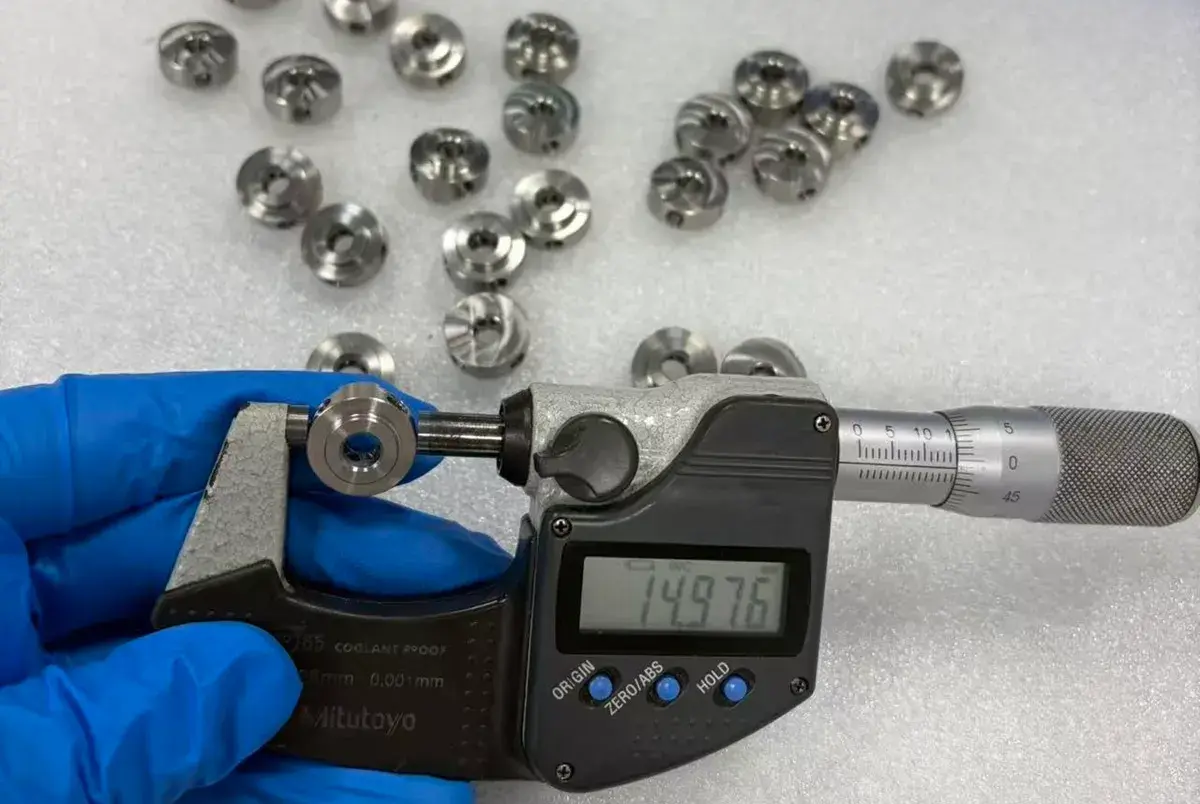

Specify the exact stainless steel grade, stock form, material standard, and delivery condition on the CNC drawing, starting from what the part touches and what it has to withstand. A manifold exposed to cleaning solution, a drive pin under load, and a cutting edge each call for different material checks. Put the finish and inspection requirements on the same drawing so the shop quotes against your acceptance criteria.
What Does Medical Grade Stainless Steel Mean?
Medical grade stainless steel is a label, not a specification. Like surgical stainless steel, it can refer to different alloys, and FDA evaluates biocompatibility on the finished device, including sterilization and manufacturing residues, rather than clearing a material on its own. The drawing still has to name the actual specification.
That specification depends on the part. ASTM F899 covers the chemical composition of wrought stainless steels for surgical instruments, so hardness and mechanical properties need separate requirements. ASTM F138 covers UNS S31673 bar and wire for surgical implants, which is a different designation from commercial 316L (UNS S31603). When a drawing calls for F138, check the mill documentation against that specification and product form.
Which Stainless Steel Grade Fits the Part?
Shortlist grades by the exposure or load that governs the feature. A stationary housing with routine wipe-downs and a load-bearing pin in a reusable instrument pose different problems, even though both are stainless steel.
| Grade | When to Consider It | What to Check Before Specifying It |
|---|---|---|
| 304 | Equipment hardware where the specified cleaning and service environment is compatible with 304 | Compare corrosion resistance with 316L if the part will see chlorides. |
| 316L | Diagnostic fluid fittings or machined blocks where resistance to pitting in chloride-bearing media matters | Check the actual fluid and cleaning chemistry. Lower carbon reduces the risk of sensitization near a weld, where carbide formation can reduce corrosion resistance. |
| 17-4 PH | Instrument drive pins or similar parts where higher strength or hardness drives the selection | Call out the aging condition, such as H900 or H1150. It affects strength, hardness, and when to finish tight features. |
| 420 | A cutting feature or wear surface that calls for a hardened steel | Check the hardness target and the reprocessing environment together. Carbon in martensitic grades ties up some chromium, which can lower corrosion resistance. |
Consider a diagnostic manifold with intersecting bores and an O-ring groove. When machining 316L, the shop needs to plan deburring access where the bores meet and protect the groove’s sealing surface. A 17-4 PH drive pin has a different constraint: if the design calls for aging, decide which diameters the shop will finish afterward, since heat treatment can change dimensions.
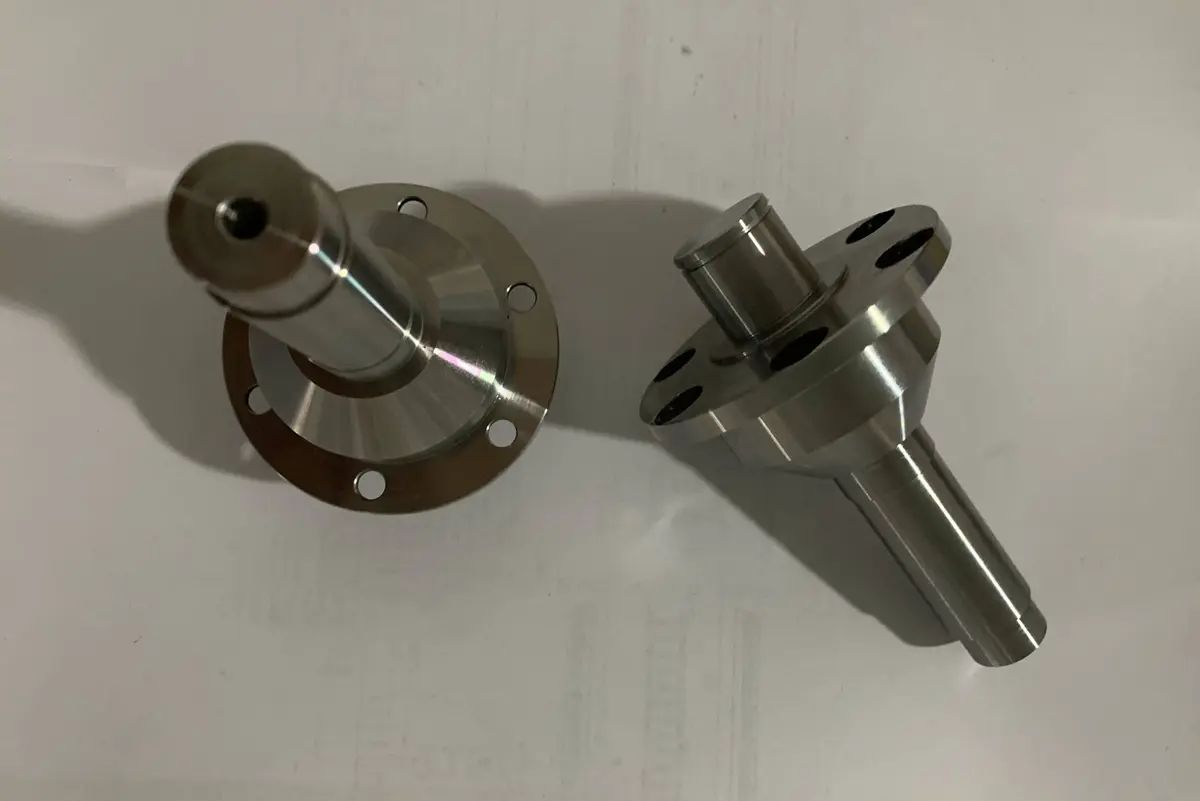
What Does the Finished Surface Need to Do?
Tie each finish callout to what the surface does, and state whether its dimensions apply before or after any treatment.
Surface Texture and Burrs
A seal groove needs a defined surface texture for the mating seal, and intersecting fluid passages need a deburring requirement the shop can verify inside the part. Where a roughness limit matters, mark the face or feature and give the metric and units, such as Ra (arithmetic average roughness) in µm. On a sealed manifold, keep the groove’s finish and dimensions separate from the finish on the outside faces.
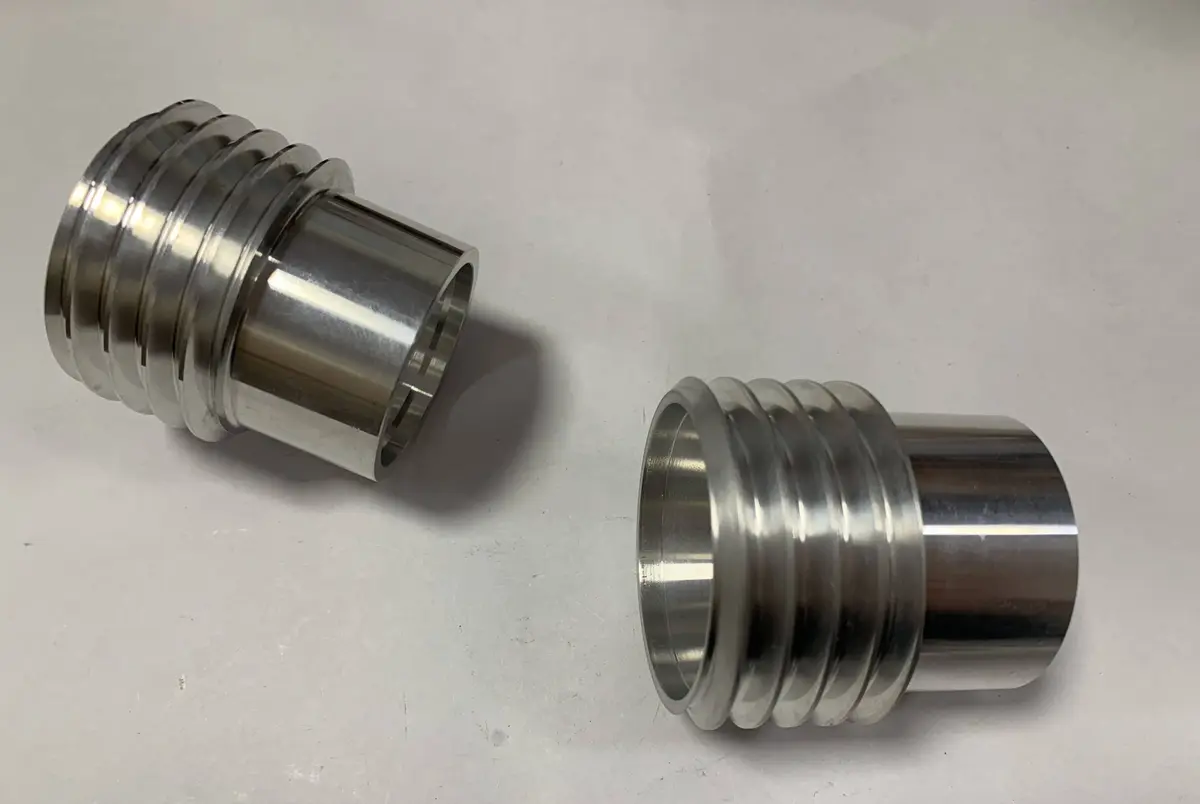
Passivation and Electropolishing
Chemical passivation removes free iron from stainless steel surfaces, and ASTM A967/A967M covers chemical passivation treatments and the tests for treated parts. If the drawing calls for passivation, agree on the treatment and verification test before the shop prices it. Electropolishing removes surface metal, so account for it where final fits or edge geometry depend on the amount removed. State which measurements apply after the specified treatment, and inspection can then check the sealing features in their finished condition.
What Goes on the Drawing and RFQ?
Send a drawing that lets the shop price the exact stock, machining, finishing, and inspection sequence, with the referenced finish and inspection specifications attached.
- Material. State the grade or UNS designation, applicable material standard, stock form, and condition, and whether an alternate needs written approval.
- Functional surfaces. Identify the surfaces that control fit or sealing. Call out the finish and any burr limits where the feature is hard to reach or inspect.
- Acceptance records. Specify which dimensions need reported results and which inspection and material records the job needs. A material test report (MTR) identifies the raw material grade and heat or lot. If the drawing requires traceability, ask the shop how it keeps that report tied to the finished lot.
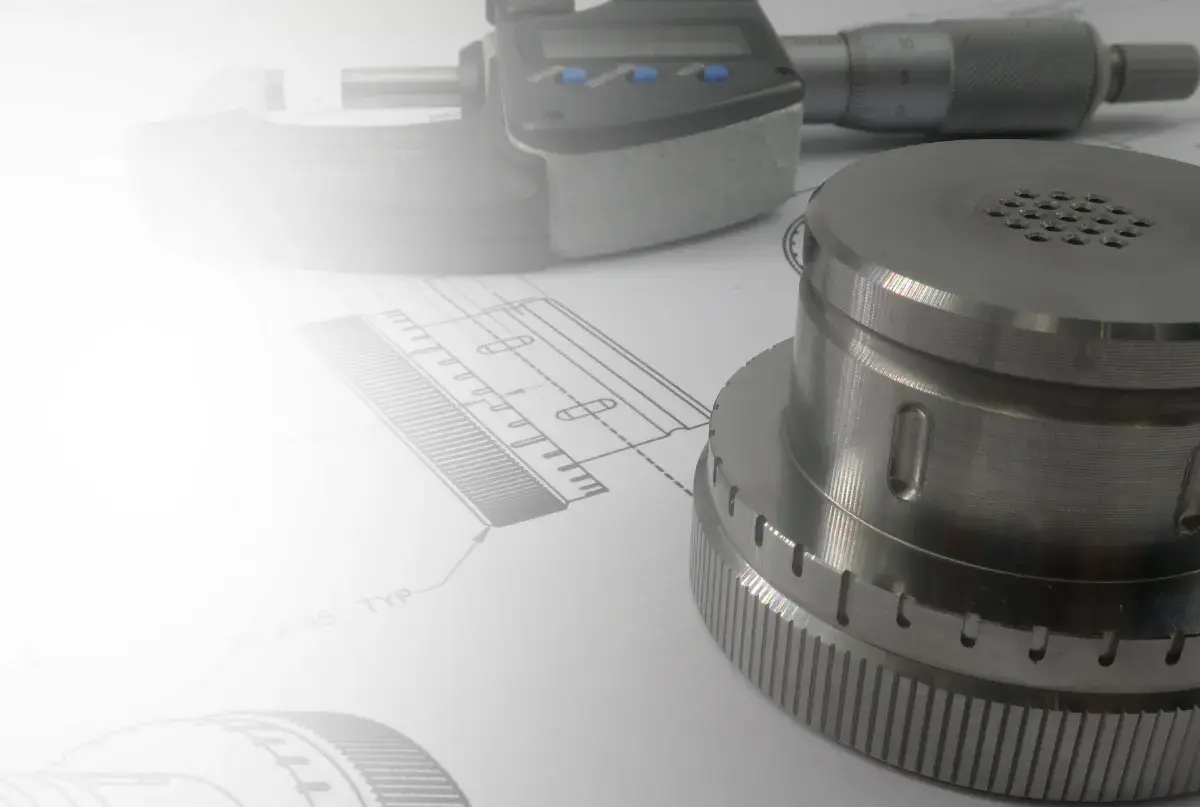
For a hypothetical diagnostic manifold made from bar, the material line could read 316L stainless steel bar, UNS S31603, ASTM A276/A276M, annealed. Add separate notes for the groove finish and the acceptance criteria for intersecting bores, and if the design requires passivation, identify which dimensions apply after finishing. Send that drawing revision with the request for quote (RFQ) so the supplier prices the same requirements your inspection team will use.
How Rollyu Precision Supports the CNC Build
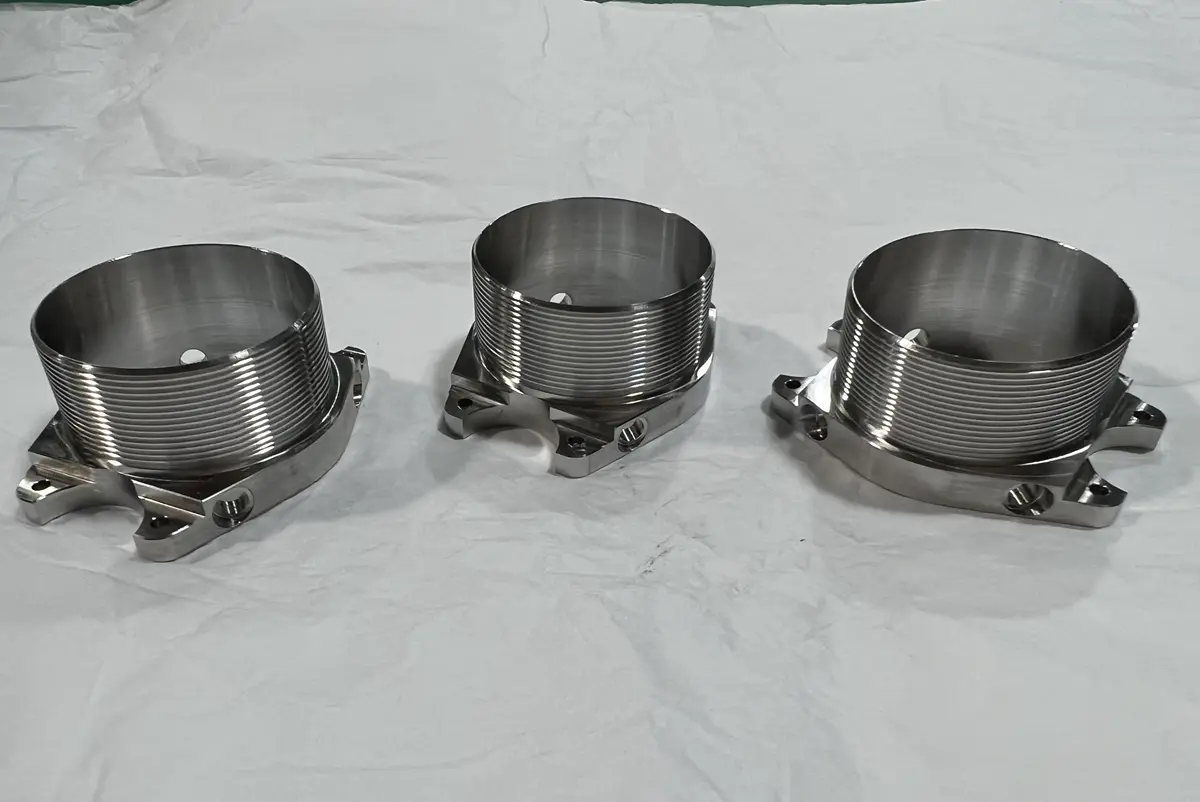
Rollyu Precision machines 316L and 17-4 PH stainless steel medical device components and states that its quality management system is certified to ISO 13485:2016. A design for manufacturability (DFM) review lets the engineering team resolve stock condition, tool access, and finishing while the drawing is still open to revision.
Machining and Finishing Critical Features
Ports on adjacent faces can need tool access from more than one direction, and Rollyu offers 3-, 4-, and 5-axis milling plus Swiss machining for small turned parts such as instrument shafts. For parts that call for passivation or electropolishing, Rollyu can coordinate those operations with CNC machining. Share the treatment specification and the surfaces it applies to. The shop can then plan how to finish and measure critical features.
Material Traceability and Dimensional Inspection
Rollyu supports lot-level material traceability and coordinate measuring machine (CMM) inspection. For a job that calls for first article inspection (FAI), it can supply the FAI report along with the MTR and dimensional results the project specifies. For medical device component machining, send the current drawing, target quantity, and any open material or finish decisions. The review can then show what each option changes in the machining plan and which records come with the parts.
Frequently Asked Questions
Does Surgical Stainless Steel Contain Nickel?
Yes, stainless steels in the 316 family, including 316L, contain nickel. If the device has a nickel restriction, check the specified alloy chemistry and assess patient exposure under the intended conditions of use. Bulk nickel content and the amount released at the surface are separate measurements.
Can 316 and 316L Be Dual Certified?
Yes. A mill can certify the same stock as both 316 and 316L if it meets both grades’ chemistry and mechanical requirements for that product. Check that the lot’s certificate shows both designations under the material standard on the drawing before accepting it as dual-certified stock.
Can Handheld XRF Tell 316 From 316L?
No. Handheld X-ray fluorescence (XRF) can identify the 316 alloy family, but it cannot measure carbon, so it cannot confirm the low-carbon grade. If the inspection plan calls for carbon verification, use a carbon-capable method such as spark optical emission spectroscopy (OES).
Sources
- ASTM F899, Wrought Stainless Steels for Surgical Instruments, ASTM International: Chemical composition scope for wrought stainless steels used in surgical instruments.
- ASTM F138, Stainless Steel Bar and Wire for Surgical Implants (UNS S31673), FDA Recognized Consensus Standards: Chemical, mechanical, and metallurgical requirements for implant bar and wire.
- ASTM A276/A276M, Stainless Steel Bars and Shapes, ASTM International: Bar product scope for the example drawing.
- 316L Stainless Steel, Universal Stainless: UNS S31603 designation and ASTM A276 applicability for bar.
- ASTM A967/A967M, Chemical Passivation Treatments for Stainless Steel Parts, ASTM International: Chemical passivation treatments and verification tests.
- ASTM B912, Passivation of Stainless Steels Using Electropolishing, ASTM International: Electropolishing mechanism and its scope for stainless steels.
- Stainless Steel Alloys for Medical Device Instrumentation, Carpenter Technology: Grade selection, low-carbon 316L and sensitization, carbon and chromium in martensitic grades, and dual-certified stock.
- Basics of Biocompatibility, FDA: Assessment of the device in its final finished form, including manufacturing methods and residues.
- Biological Responses to Metal Implants, FDA: Metal ion release from a device surface.
- ISO 13485:2016, Medical Device Quality Management Systems, ISO: Scope of the quality management standard.
- PMI Technologies: What’s the Difference Between XRF, LIBS, and OES?, Thermo Fisher Scientific: Handheld XRF’s carbon limitation and carbon-capable OES.