316 stainless steel is selected when a component must combine corrosion resistance, mechanical durability, cleanability and dimensional stability. These requirements appear in very different products—from ultra-high-vacuum interfaces and low-dead-volume fluidic manifolds to rowing-boat mounting pins and medical-device hardware. The applications vary, but the manufacturing question is the same: can the supplier machine the part without allowing work hardening, heat, burrs or finishing variation to compromise its function?
At Rollyu Precision, 316 and 316L stainless steel parts can be produced by CNC milling, turning, multi-axis machining, EDM, grinding and controlled secondary finishing. The most successful projects begin with the complete operating environment: fluid or gas exposure, vacuum level, sealing method, cleaning process, mating materials, allowable surface treatment and inspection requirements.
Why Engineers Choose 316 Stainless Steel
The molybdenum addition in 316 stainless steel improves resistance to pitting and crevice corrosion compared with common 304 stainless steel, particularly in chloride-bearing or chemically demanding environments. This is why 316 and low-carbon 316L are frequently specified for wetted components, marine hardware, laboratory instruments, medical devices and vacuum assemblies.
| Design requirement | Why 316/316L can fit | Typical machined parts |
| Corrosion resistance | Useful where parts contact saline, cleaning chemicals, humid air or process media | Manifolds, valve bodies, fluidic blocks, marine pins |
| Cleanability | Dense metallic surfaces can be machined, passivated and—when specified—electropolished | Medical housings, dental components, instrument chambers |
| Vacuum compatibility | Suitable for precision flanges and interfaces when material, cleaning and sealing requirements are controlled | ISO-K/CF adapters, sampling blocks, motion-system brackets |
| Mechanical durability | Good strength and wear resistance for repeated assembly and outdoor service | Threaded pins, shafts, clamps, watch or wearable hardware |
| Weldability | Supports fabricated assemblies, although the drawing must manage distortion and post-weld inspection | Tubes, chambers, brackets and welded fluidic structures |
316 vs. 316L: Which Grade Should Be Specified?
316 and 316L have similar corrosion behavior, but 316L has a lower carbon limit. Designers often prefer 316L for welded parts and for many medical, pharmaceutical, vacuum and high-cleanliness applications because the lower carbon content reduces the risk of sensitization in heat-affected zones. The correct choice must still come from the drawing, applicable standard and validation plan—not from the visible appearance of a finished part.
| Drawing note
State the exact grade, product form, condition, material certification requirement, passivation or electropolishing standard, critical surfaces and any prohibited substitutions. “Stainless steel” alone is not a sufficient purchasing specification. |
Why Machining 316 Stainless Steel Is Difficult
The corrosion resistance that makes 316 valuable also creates manufacturing challenges. Its relatively low thermal conductivity keeps heat near the cutting edge, while its ductility encourages built-up edge and long chips. If a tool rubs instead of cutting, the surface can work-harden rapidly. The next tool pass then encounters a harder layer, increasing cutting force, dimensional drift and tool wear.
Work hardening: interrupted or hesitant cutting can harden the surface before the next pass.
Heat concentration: heat remains near the tool and workpiece, accelerating wear and affecting size control.
Chip control: stringy chips can scratch surfaces, recut in pockets or damage small features.
Burr formation: cross-holes, thread exits, sealing grooves and miniature ports require planned deburring.
Distortion: thin walls, rings and asymmetric manifolds may move as internal stress is released.
Galling and thread seizure: mating stainless threads may require geometry, finish, lubrication or material-pairing review.
A Reliable CNC Machining Strategy for 316 Stainless Steel
Maintain a positive cut
Rigid workholding, sharp carbide tooling and stable toolpaths help the cutting edge shear material instead of rubbing it. Tool engagement should be planned so the cutter does not dwell on a work-hardened surface. Parameters must be validated for the specific machine, tool diameter, tool coating, coolant delivery, feature geometry and stock condition.
Control heat and chips
Consistent coolant delivery helps manage heat and flush chips from deep pockets and bores. In turning, chip-breaker selection and feed stability matter. In milling, adaptive or controlled-engagement toolpaths can reduce sudden load changes. A supplier should not publish a single universal speed-and-feed recipe because the correct values depend on the complete cutting system.
Plan the machining sequence around functional datums
Vacuum sealing faces, manifold ports, bearing fits, electrode interfaces and threaded pin shoulders should be tied to a deliberate datum strategy. Semi-finishing, stress-relief review, part rotation and final light finishing passes can reduce the risk that an early operation distorts a critical relationship.
Treat deburring as an engineered operation
A burr left inside a fluidic channel can trap contamination, disturb flow or detach during service. A raised edge on a sealing face can create a leak path. Drawings should identify no-burr zones, allowable edge breaks and inaccessible cross-port intersections. Inspection may require borescopes, microscopy, pin gauges or validated cleaning.
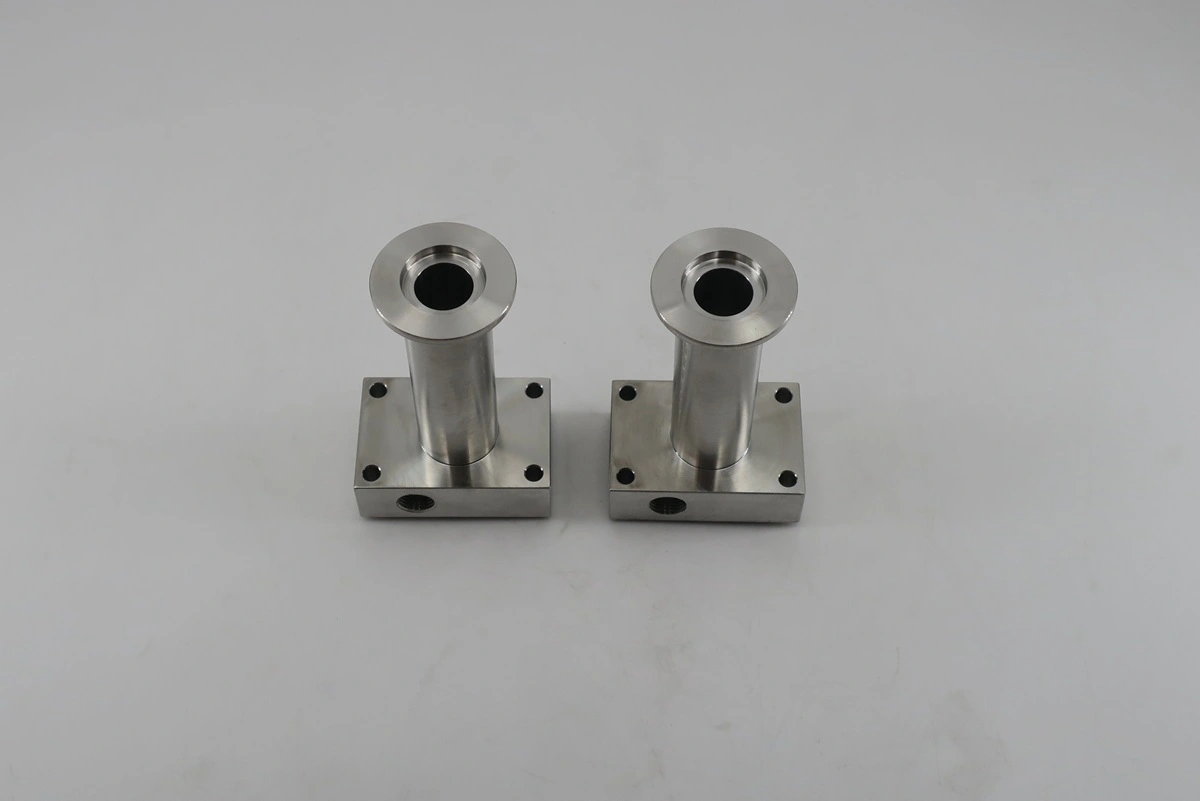
Application 1: UHV and Vacuum Motion-Control Components
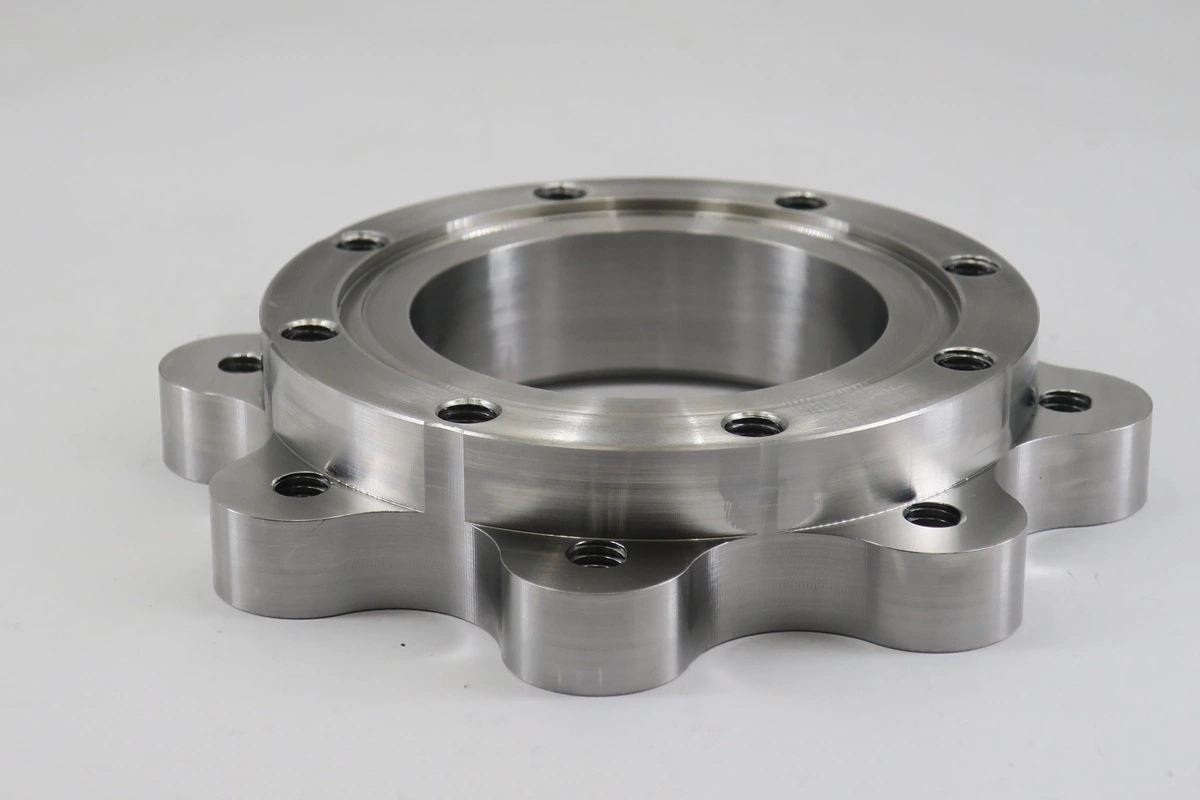
Vacuum hardware is not defined by material alone. Performance depends on sealing geometry, surface finish, concentricity, cleanliness, trapped-volume control and the compatibility of every mating component. For UHV and high-vacuum motion systems, 316L is commonly considered for flanges, adapters, actuator interfaces, sensor mounts, sampling blocks and structural parts that must remain stable in a clean vacuum environment.
ISO-K, KF, CF and custom vacuum-interface adapters
Actuator housings, stage brackets and feedthrough-support components
Gas-sampling blocks and mass-spectrometer interface parts
Vacuum-compatible rings, clamps, spacers and precision mounting plates
Low-outgassing assemblies requiring controlled cleaning and packaging
The RFQ should state the vacuum range, flange standard, seal type, leak-test requirement, surface-finish zones, cleaning specification, weld requirements and whether material certificates are mandatory. A visually polished face is not proof of vacuum sealing performance; geometry and verified surface condition are what matter.
Application 2: Fluidic Manifolds and Flow-Control Hardware
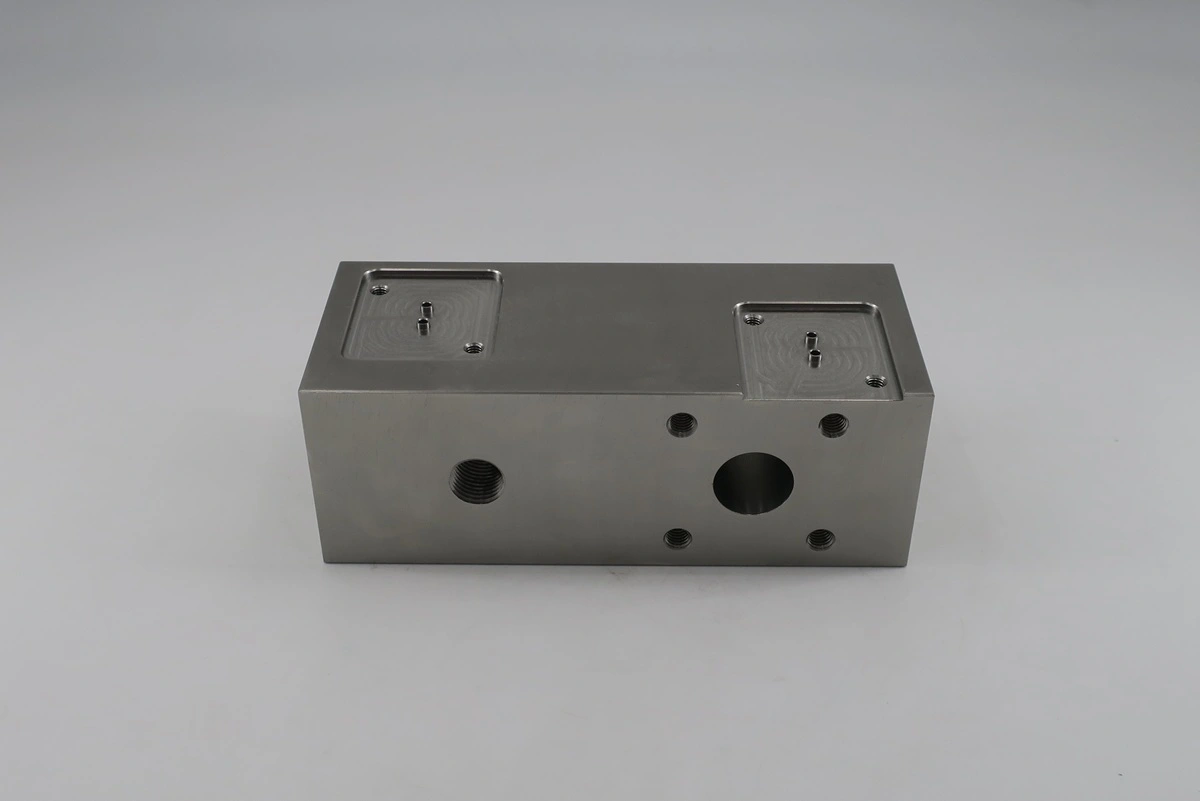
Compact fluidic systems often replace multiple fittings and tubes with one machined manifold. The benefit is smaller system volume, fewer leak points and more repeatable routing. The manufacturing risk shifts into the block: intersecting bores, threaded ports, sealing pockets, valve interfaces and hidden channels must all be correctly located, burr-free and clean.
Typical 316/316L machined components include pump and valve bodies, sensor housings, pressure plates, service-panel manifolds, miniature mixing blocks, fluid-distribution plates and corrosion-resistant fittings. Critical requirements may include port-to-port position, flatness across mating surfaces, thread-gauge acceptance, controlled surface finish and pressure or helium leak testing.
Application 3: Electrochemical Cells, DEMS, EC-MS and Reaction Analysis
Differential electrochemical mass spectrometry (DEMS), electrochemical mass spectrometry (EC-MS), flow chemistry, fuel-cell testing and real-time reaction-analysis systems combine chemical exposure with gas or liquid transport and highly sensitive measurement. These instruments may use 316/316L for structural bodies, compression plates, vacuum interfaces, gas-conditioning housings and metallic wetted parts, while PEEK, PTFE or other polymers provide electrical isolation and chemical compatibility in selected locations.
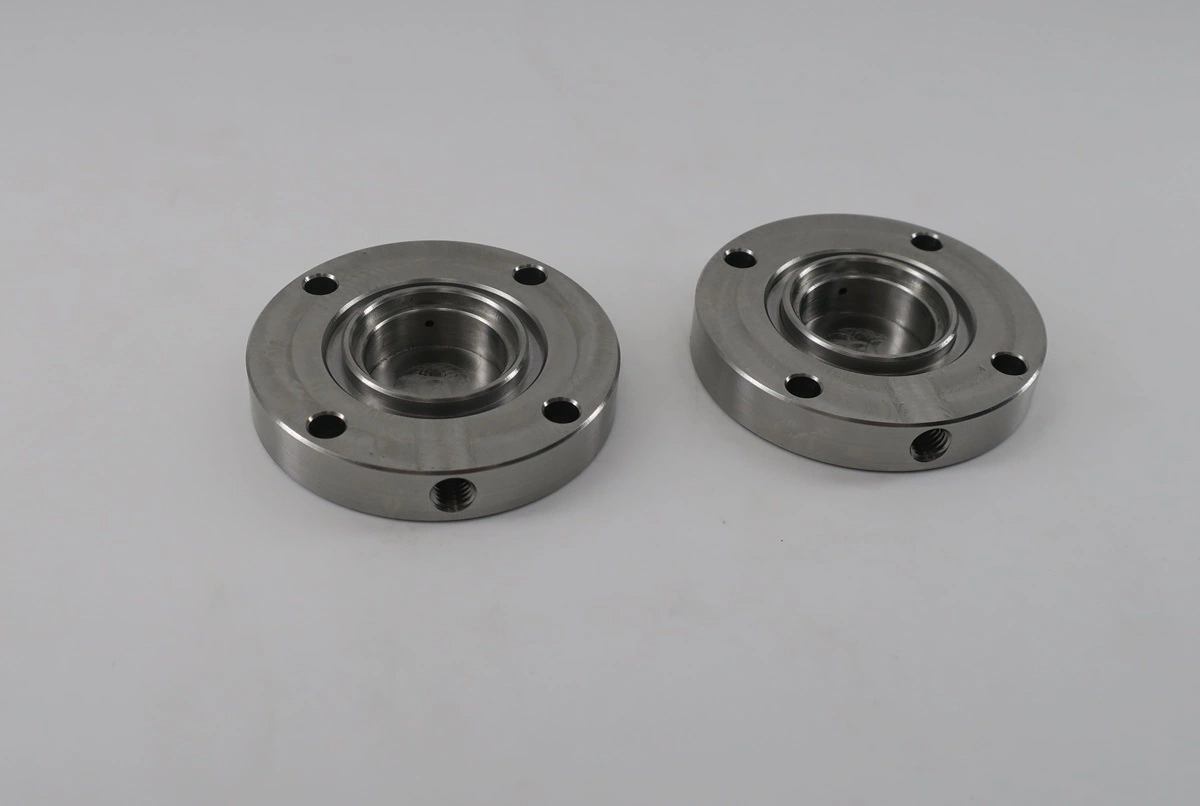
Machined components can include electrochemical-cell bodies, electrode support plates, membrane interfaces, saturator housings, gas–liquid separators, liquid nitrogen phase separator, reaction chambers, capillary adapters and low-dead-volume manifolds. The part drawing should resolve media compatibility, electrical isolation, gasket compression, dead-volume targets, pressure, temperature and cleaning. Material selection must be made at the system level; 316L is not automatically suitable for every electrolyte or acid.
Application 4: Gas–Liquid Separation Components
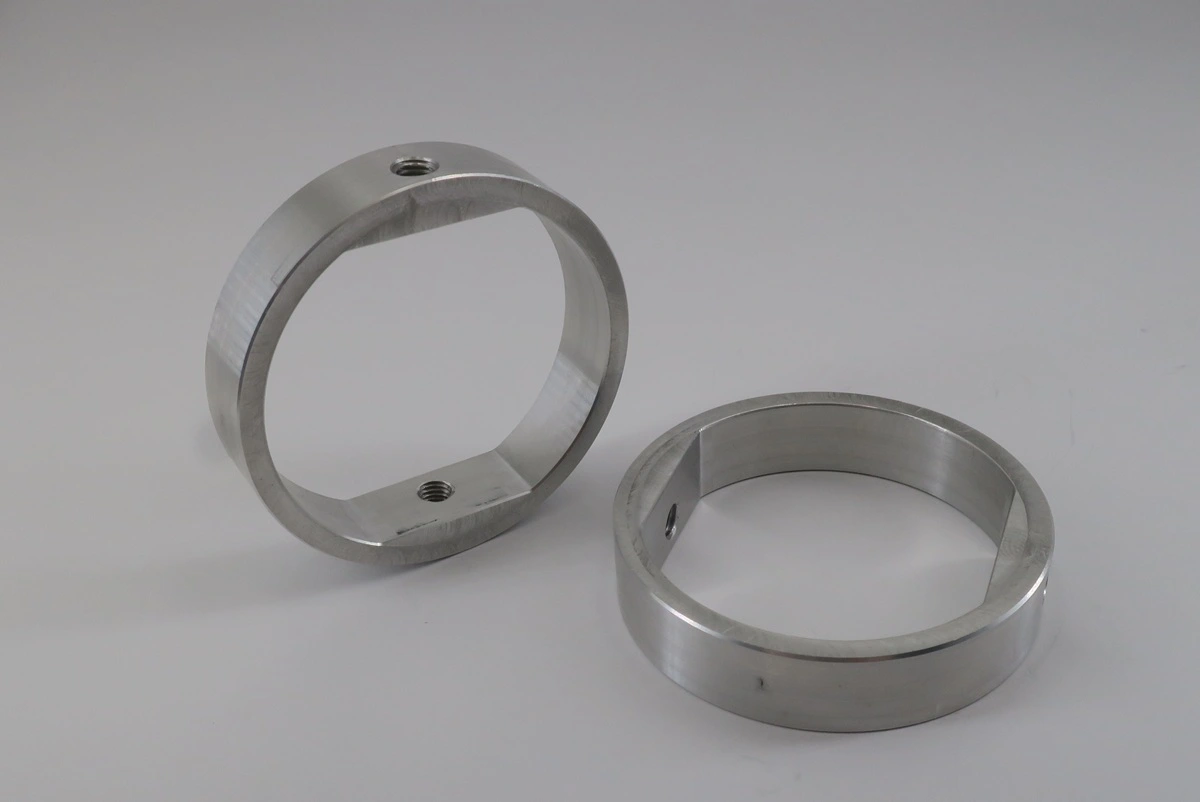
Gas–liquid separation hardware must manage flow distribution without introducing unwanted pressure drop, liquid carryover or excessive internal volume. In compact analytical instruments, a small housing or ring may control the position of a membrane, liner, seal or internal separator. Small errors in roundness, groove geometry or compression height can affect the behavior of the entire assembly.
Rollyu can manufacture saturator bases, separator housings, support rings, clamping rings, membrane seats and custom adapters from drawing-specified materials. For these parts, the inspection plan should cover sealing diameters, groove width and depth, port position, mating-face flatness and assembly stack height.
Application 5: Oar Board Fit Pins and Rowing-Boat Hardware
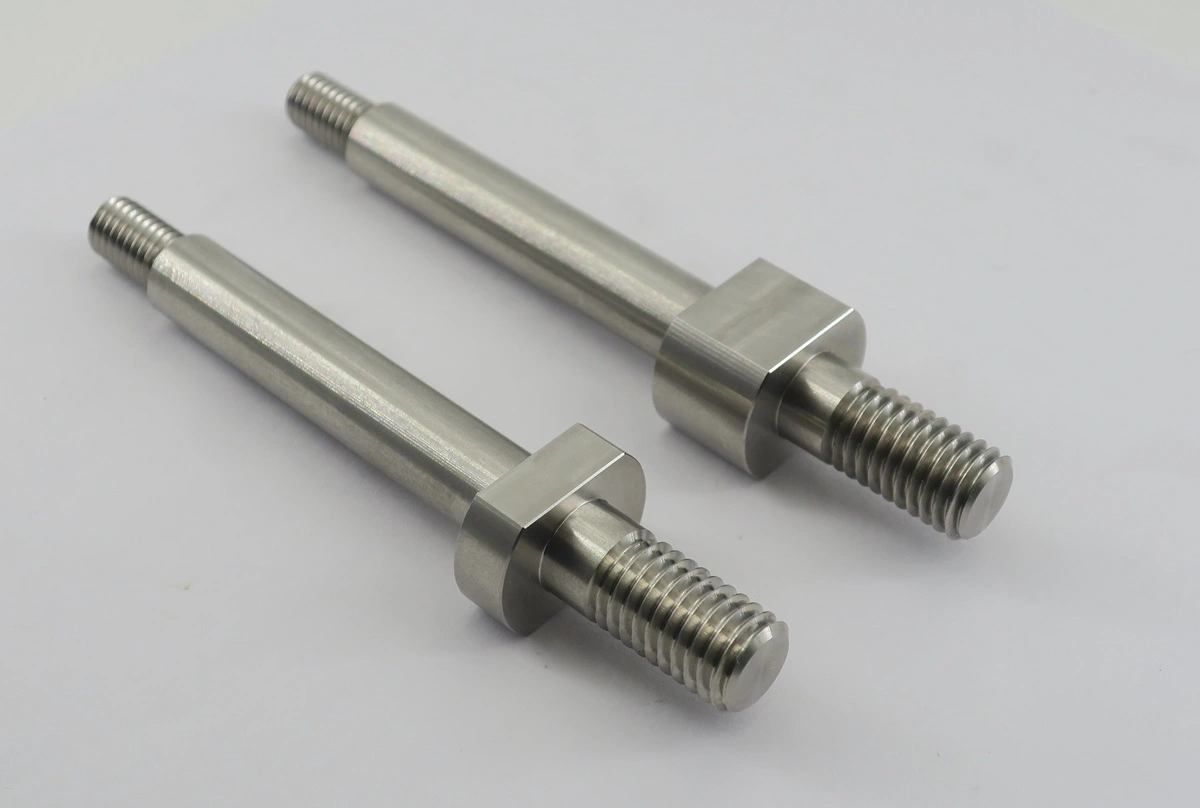
316 stainless steel is also relevant far outside the laboratory. Rowing boats and coastal equipment face rain, splash, humidity, sweat and repeated outdoor handling. Custom oar board fit pins can combine double-ended threads, long precision-turned diameters and integral wrench flats in one durable component. The purchasing priorities are corrosion resistance, thread fit, straightness, smooth handling surfaces and interchangeability across assemblies.
For a rowing-boat mounting pin, Rollyu can machine turned shafts, double-ended threads, locating shoulders and wrench flats, followed by controlled deburring and polishing. If the boat is used in saltwater, the customer should still define rinse, maintenance and anti-galling expectations. Stainless-on-stainless threaded joints may seize if the design and service procedure do not address galling.
Application 6: Medical Watches and Wearable Medical Devices
Medical watches and wearable monitoring devices need more than a premium appearance. Housings, backs, bezels, buttons, charging interfaces and miniature threaded hardware may face sweat, cleaning agents, repeated skin contact and daily impact. 316L is widely considered for wearable hardware because of its corrosion resistance and finish potential, but biocompatibility is a device-level claim that requires the correct material documentation, surface condition, manufacturing controls and product validation.
Precision machining requirements can include thin walls, fine threads, sealing grooves, cosmetic surfaces, laser-marking zones and consistent transitions between polished and brushed finishes. Critical dimensions should be inspected before and after finishing because polishing, blasting or electropolishing can change edges and fits.
| Medical compliance note
ISO 13485 certification supports a controlled quality-management system, but it does not by itself make an individual machined part biocompatible, sterile or approved for a specific medical use. Those claims require the customer’s regulatory and validation process. |
Application 7: Medical and Dental Equipment
316/316L components can be suitable for diagnostic instruments, surgical equipment, dental devices, laboratory automation and reusable accessories where corrosion resistance and cleanability are important. Examples include instrument housings, threaded shafts, valve bodies, fluidic manifolds, sterilization-compatible fixtures, handpiece components and sensor interfaces.
The RFQ should identify whether the part contacts the patient, operator, sample or process fluid; the cleaning and sterilization method; cosmetic requirements; sharp-edge restrictions; lot traceability; material certification; and any special process validation. Dental and medical parts often need both dimensional inspection and documented visual acceptance standards.
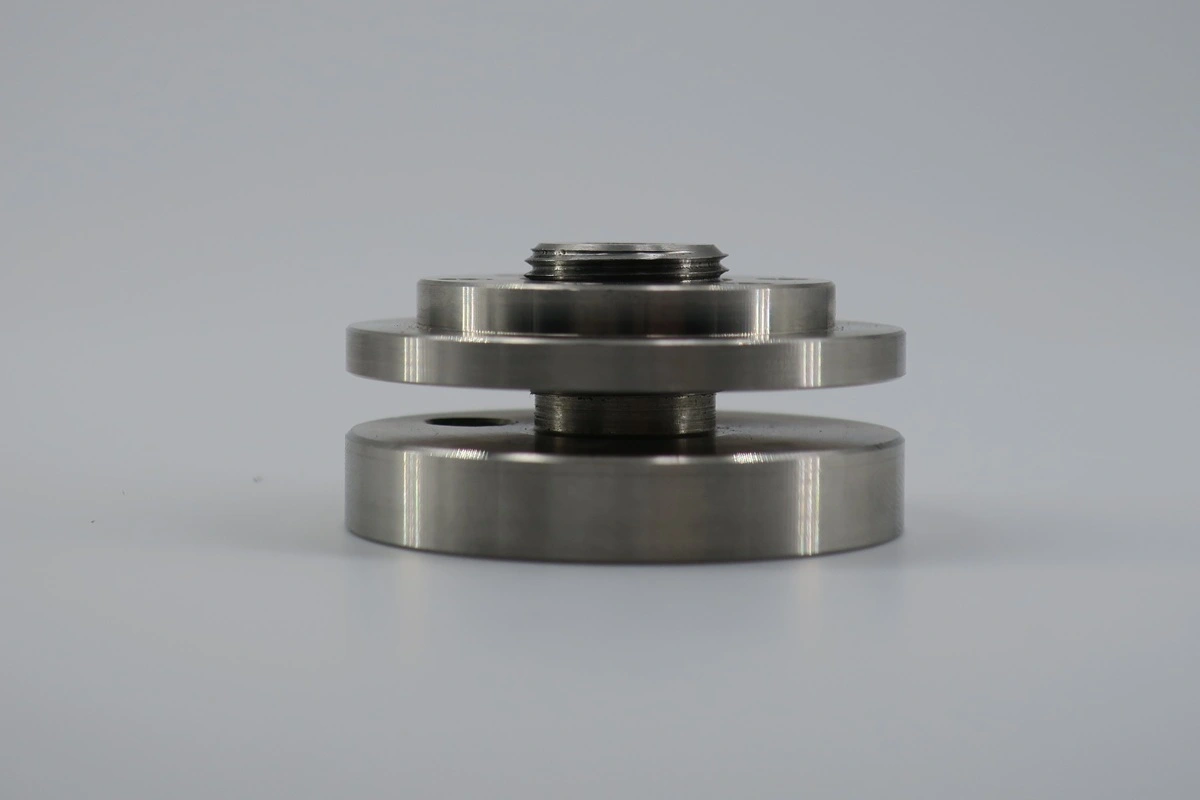
Surface Finishing for Machined 316 Stainless Steel Parts
| Finish / process | Primary purpose | Engineering consideration |
| As-machined | Maintains controlled geometry with minimal secondary change | Specify tool-mark limits and Ra only where function requires it |
| Mechanical polishing | Improves appearance and can smooth accessible surfaces | May round edges or change critical dimensions |
| Bead blasting | Creates a uniform matte appearance | Mask sealing faces, fits and threads when required |
| Passivation | Removes free iron and supports formation of the passive surface | Specify applicable standard and cleaning sequence |
| Electropolishing | Smooths and brightens the surface; may improve cleanability | Material removal affects edges, threads and dimensional allowance |
| Laser marking | Adds identification and traceability | Location and contrast must not compromise a sealing or wetted surface |
Quality Control: What Should Be Verified?
A useful inspection plan follows function instead of measuring every dimension the same way. The most important features often include sealing faces, mating datums, coaxial bores, port positions, threads, grooves, flatness and surface condition. Depending on geometry, verification may use CMM inspection, optical measurement, profilometry, pin and thread gauges, concentricity checks, microscopy and leak or pressure testing specified by the customer.
Incoming material identification and certificates when required
First-article inspection against drawing datums and critical characteristics
In-process control to detect tool wear before final features drift
Thread verification using specified gauges and acceptance criteria
Surface-roughness measurement on functional zones—not assumed from appearance
Defined deburring and cleanliness acceptance for channels and ports
Lot traceability, inspection records and controlled packaging for medical or clean applications
Design Tips for Lower-Risk, More Economical Parts
Use realistic tolerances and surface-finish requirements only on functional features.
Provide tool access and avoid unnecessarily deep, narrow pockets.
Identify sealing faces, no-burr areas and prohibited edge breaks on the drawing.
Avoid blind intersecting passages that cannot be inspected or cleaned unless they are essential.
Specify thread standard, class, gauge method, engagement length and anti-galling strategy.
Define finishing allowances and which surfaces must be masked or protected.
For thin rings and housings, discuss stock form, datum sequence and distortion control before release.
Supply 3D CAD plus a controlled 2D drawing with revision, material, finish and inspection notes.
How to Choose a 316 Stainless Steel Machining Supplier
A capable supplier should be able to discuss the equipment surrounding the part, not only the nominal dimensions. For vacuum and analytical systems, ask about sealing surfaces, burr control, cleaning and leak-test coordination. For medical and dental equipment, ask about traceability, documented inspection and change control. For marine pins and shafts, ask about straightness, thread quality, polishing and galling risk.
| Supplier question | What a strong answer should address |
| How will you prevent work hardening? | Stable engagement, sharp tooling, rigid workholding, heat and chip control |
| How will hidden ports be deburred and cleaned? | Defined access method, inspection method and acceptance criteria |
| How are sealing faces protected? | Machining sequence, handling, packaging and measured surface requirements |
| Can finishing affect dimensions? | Pre-finish allowance, masking and post-finish inspection |
| What quality documentation is available? | Material records, FAI, CMM reports, gauge records and lot traceability as specified |
Frequently Asked Questions
Is 316 stainless steel difficult to machine?
Yes. It work-hardens, retains heat near the cutting edge and produces ductile chips. Stable cutting, rigid setups, sharp tooling, appropriate coolant and planned deburring are essential.
What is the difference between 316 and 316L for machining?
They machine similarly, but 316L has a lower carbon limit and is often preferred for welded, medical, vacuum and high-cleanliness applications. The drawing should specify the grade and certification requirements.
Is 316 more corrosion resistant than 304?
Generally, 316 offers better resistance to pitting and crevice corrosion in many chloride-bearing environments because it contains molybdenum. Actual suitability depends on concentration, temperature, exposure time and surface condition.
Is 303 easier to machine than 316?
Generally yes. 303 is designed for improved machinability, but it normally provides lower corrosion resistance and is not a direct substitute when the application requires 316/316L performance.
Can 316 stainless steel be used for UHV components?
It can be suitable for many vacuum components, especially when grade, geometry, welding, cleaning, surface condition and leak testing are controlled. Vacuum compatibility is an assembly-level requirement.
Can Rollyu machine fluidic manifolds with intersecting ports?
Yes, subject to drawing review. Port layout, tool access, cross-hole deburring, cleaning, sealing surfaces, pressure requirements and inspection access should be addressed before quotation.
Is 316L automatically biocompatible for medical devices?
No. Material grade is only one input. Biocompatibility and regulatory suitability depend on the finished part, surface condition, manufacturing controls, intended contact and customer validation.
What files should I send for a quotation?
Send a 3D model, controlled 2D drawing, material grade, quantity, finish, critical tolerances, inspection requirements, operating environment and any cleaning, traceability or certification requirements.
Request a Quote for 316 Stainless Steel Machined Parts
| From complex prototypes to repeat production
Rollyu Precision supports CNC milling, turning, multi-axis machining, EDM, grinding, finishing coordination and dimensional inspection for 316 and 316L stainless steel components. Our ISO 9001 and ISO 13485 quality systems support demanding industrial and medical-device supply chains. |
Send your 3D CAD files and 2D drawings to Rollyu for an engineering review. Include the application, material grade, quantity, critical tolerances, finish, inspection requirements and any vacuum, fluidic, medical, dental or marine service conditions. We will review manufacturability, risk areas and the most practical production route before quotation.
| READY FOR ENGINEERING REVIEW?
Upload your drawings through the Rollyu website or contact the team with your project requirements. Ask for a manufacturability and inspection review for your 316/316L component. |