Design a microfluidic manifold by choosing the flow-path geometry, material, and sealing method together. Passage dimensions set how fluid distributes between branches, and the material decides which reagents, temperatures, and cleaning conditions the body can tolerate. Plan machining access and inspection alongside those choices, before the part is released for production.
What Is a Microfluidic Manifold?
A microfluidic manifold routes fluid between tubing, valves, pumps, sensors, or a microfluidic chip through connected passages and ports. It can split one inlet into several outlets, combine flows, or connect external equipment to a chip.
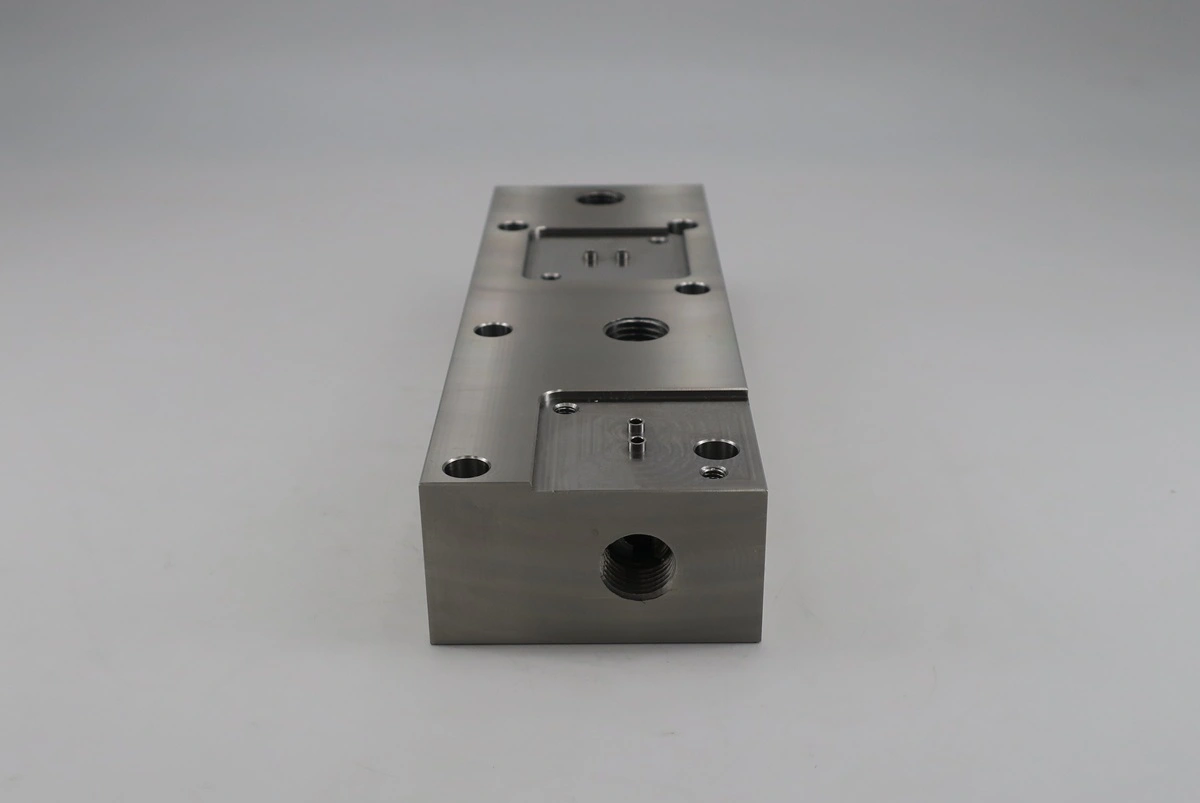
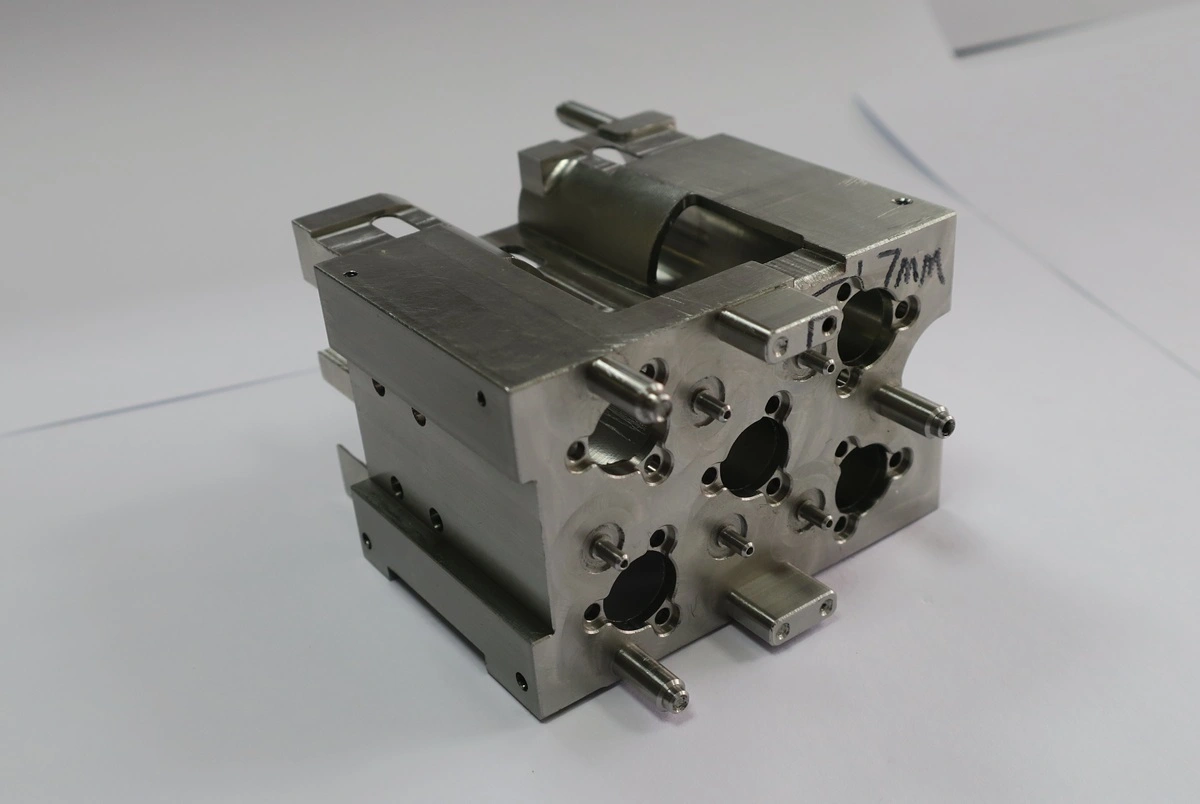
A custom fluid manifold arranges those connections around the instrument’s layout. Common builds include cross-drilled passages in a solid block and open channels machined into layers that are later joined. The manifold may also feed a separate chip whose reaction channels are made by a different process.
Which Design Details Control Manifold Performance?
The flow path, ports, and seals have to work together in the finished assembly. Design each feature around its function and around how it will be machined and inspected.
Flow Paths and Machining Access
Map the inlets, outlets, branches, and component connections before detailing the block. In pressure-driven liquid systems, channel length and cross-section set flow resistance and the split between branches, so check the intended distribution by analysis or prototype testing before fixing passage dimensions. The construction method then adds its own checks:
- Drilled passages: identify the tool approach, hole intersections, and access holes that need closures. Long, small-diameter passages make drill guidance and chip evacuation harder, so plan deep hole drilling around the depth-to-diameter ratio, material, and tool access.
- Milled channels: allow for the internal radii the end mill leaves and the method that closes the channel. Build the cover or bonded layer into the manufacturing plan from the start, since a multilayer bonded design needs a supplier with that specific capability.
Port Geometry and Sealing Surfaces
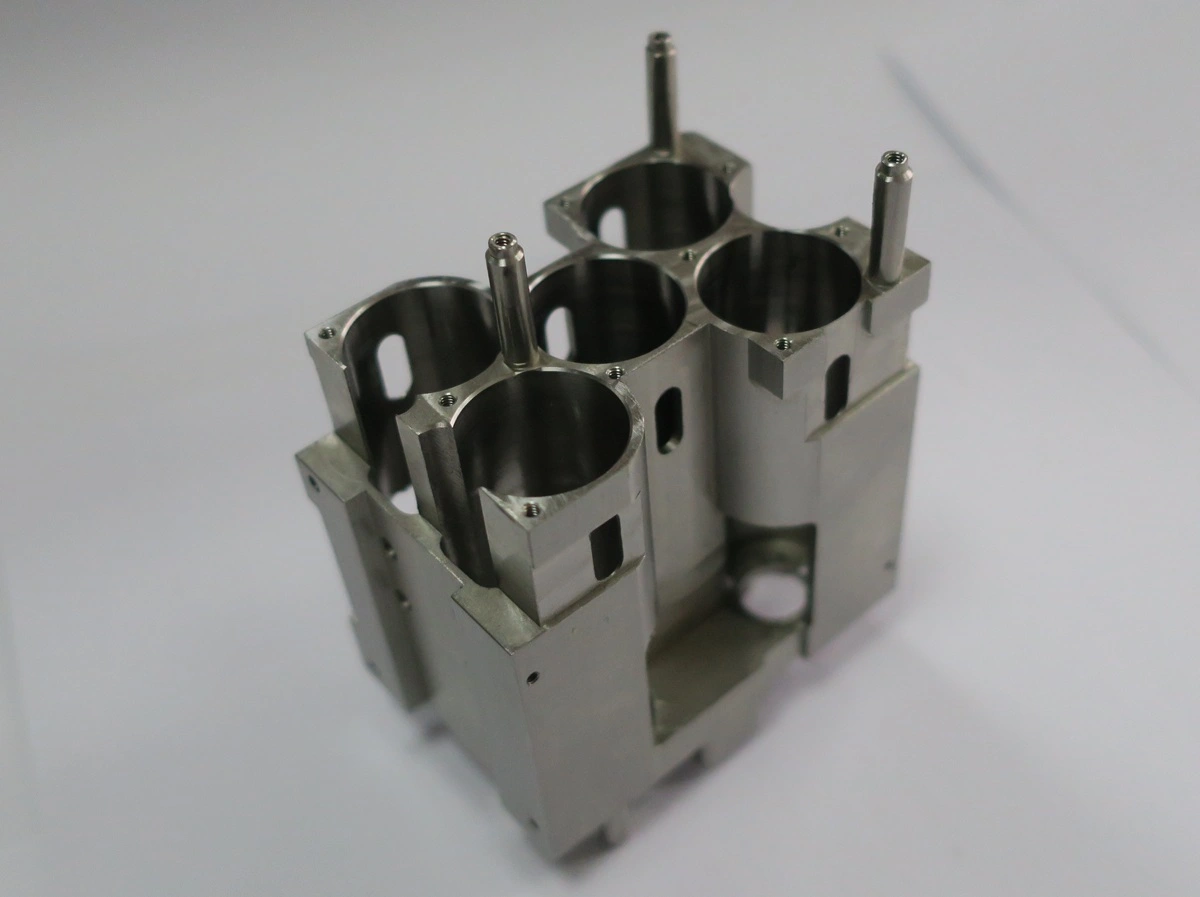
Define each port from the mating fitting’s drawing, including the thread, receiving-port profile, and sealing surface. A matching thread size alone doesn’t confirm that the rest of the connection geometry fits.
At a chip or cover interface, control the port pattern relative to the locating features and sealing faces. Groove depth, flatness, surface finish, and port position each serve a different requirement, so tighten only the features that govern the connection, with tolerances set by their function. Where edge condition affects a seal or passage intersection, specify it, and make sure deburring and finishing keep the intended seat and groove geometry.
Dead Volume and Cleaning Access
Blind extensions and recesses trap fluid that takes longer to flush. Review those pockets against the volume needed to connect the ports, and check carryover with the actual fluid and wash sequence.
Schedule deburring, cleaning, and debris checks while the passages are still open. Once a cover or plug closes them off, some internal features become hard to inspect or rework, so agree on those checks as part of the manufacturing plan.
How Do You Choose a Manifold Material?
Choose the material for the complete exposure cycle, cleaning agents included. Chemical concentration, temperature, contact time, and mechanical load all affect compatibility, so check the specific grade against those conditions before comparing optical access, stiffness, and joining method. Seals, fittings, closures, and joining materials belong in the same review wherever they touch the fluid.
| Material | Why Choose It | Main Tradeoff or Design Check |
|---|---|---|
| PEEK, or polyether ether ketone | Heat-resistant, chemically resistant machined bodies | Opaque; the grade still has to be checked against the complete exposure cycle |
| PMMA, or acrylic | Transparent bodies for observing fluid paths | Reagent, cleaning-agent, and temperature compatibility shape both the material choice and the channel-closing method |
| PC, or polycarbonate | Transparency combined with impact resistance | Solvent resistance and surface finishing need attention, especially where optical clarity matters |
| PTFE, or polytetrafluoroethylene | Chemically resistant fluid-handling components | Deformation under sustained load affects clamped and threaded features |
| 316L stainless steel | Rigid metal bodies and interfaces | Corrosion resistance depends on the medium and service conditions; specify the finished surface |
For PEEK CNC machining, name the exact grade before quoting, because unfilled PEEK and reinforced or bearing grades are different materials. Keep that grade consistent across the drawing, purchasing requirements, and material records.
For a transparent manifold, define what the viewing area has to do. Watching for bubbles and reading an optical signal through the body place different demands on the material and surface, so specify the viewing location and its finish.
How Does Rollyu Precision Support Manifold Manufacturing?
Rollyu Precision machines metal and engineering-plastic parts for diagnostic instruments and lab automation, including microfluidic interface blocks and housings, with design for manufacturability (DFM) support and documented inspection. Engineering teams can settle material, feature geometry, and inspection requirements with one manufacturing partner.
DFM and Multi-Axis Machining
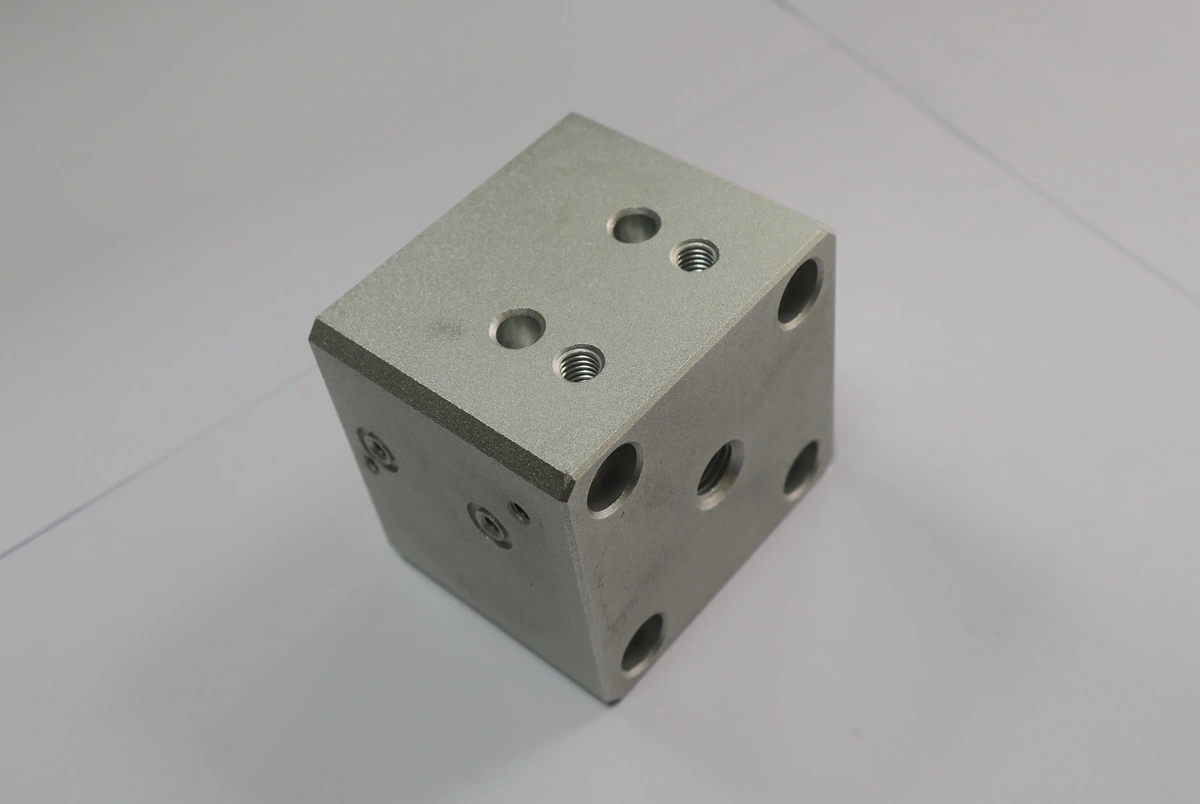
Rollyu offers CNC milling and turning, 3-, 4-, and 5-axis machining, and micro-machining. For a manifold with ports on several faces, use the DFM review to settle tool access, workholding, and the locations of critical features. Bring the mating-part geometry and datum references into that review so the machining plan keeps the port pattern aligned with the sealing surfaces.
Material Traceability and Inspection
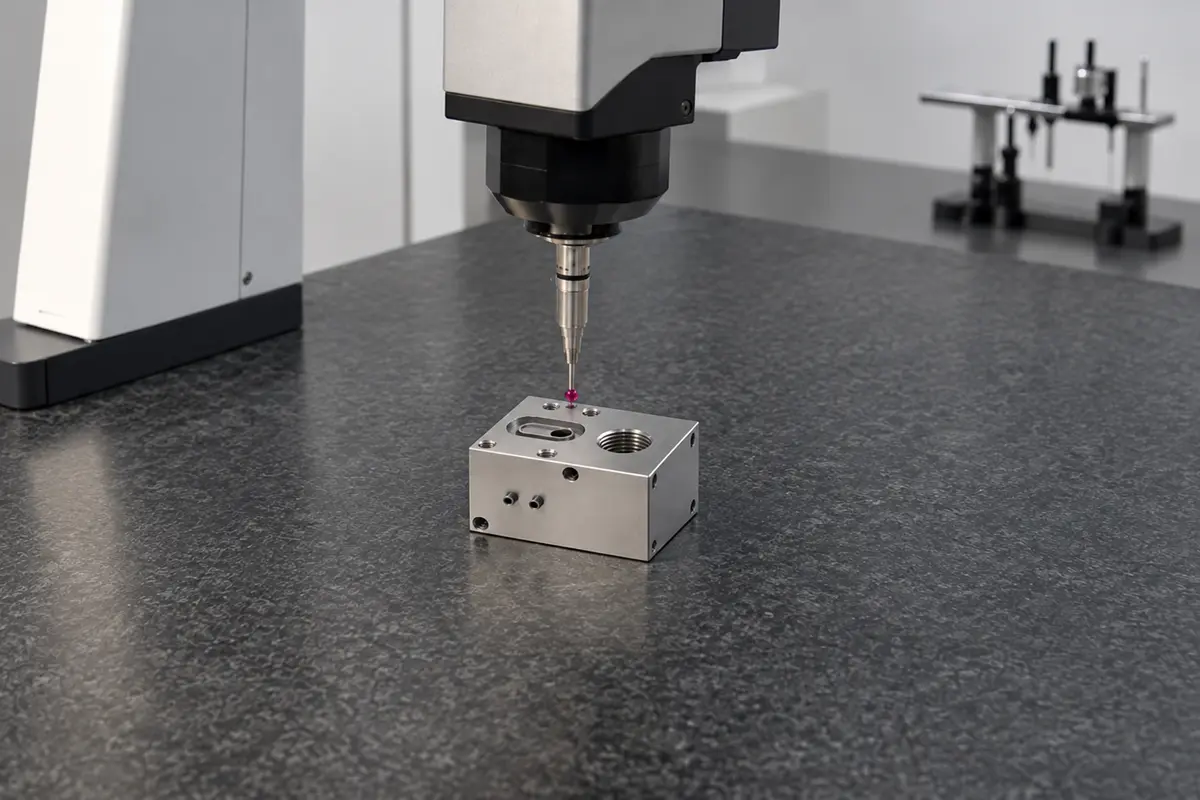
For life sciences components, Rollyu provides lot traceability and material certifications, first article inspection, dimensional verification, and coordinate measuring machine (CMM) inspection of accessible features. Documentation can include first article inspection reports, dimensional reports, Certificates of Conformance, and Material Test Reports.
Rollyu holds ISO 9001:2015 and ISO 13485:2016 certifications for its quality management systems. Agree on the critical characteristics and delivery records during the technical review so the inspection package matches the drawing and purchasing requirements. Specify leakage and pressure tests separately from dimensional inspection, with the test configuration, conditions, acceptance criteria, and responsible party.
Prototype-to-Production Support
Rollyu Precision’s CNC machining services support prototypes and low- to mid-volume production for life sciences equipment. Its machining materials include PEEK, PTFE, acrylic, polycarbonate, and stainless steel, so polymer and metal options can be compared within the same project.
Use prototypes to answer the design’s open questions, then tie assembly and test findings to the drawing revision and the affected features. Carry the accepted grade, geometry, surface condition, and inspection requirements into repeat orders.
What Should You Send for a Manifold Quote?
Send a coordinated package that shows the flow connections, mating components, and finished-part requirements:
- 3D CAD model and technical drawing at the same revision
- Material grade, quantity, and prototype or production status
- Flow schematic identifying ports and connected components
- Fitting and seal details, including the mating geometry
- Critical dimensions, datums, surface requirements, and inspection records
- Process fluids, cleaning exposure, and operating pressure and temperature
Flag open decisions, such as the material or cover construction, so the review concentrates on the choices that affect machining. Send the CAD model and drawing to Rollyu Precision for DFM feedback and a machining quote.
Frequently Asked Questions
When Is a Standard Manifold Enough?
A standard manifold is enough when its port layout, material, connections, and operating limits meet the system requirements. Custom machining makes sense when the instrument needs a different layout or a dedicated interface to another component.
Does CNC Manifold Machining Require an Injection Mold?
No. Direct CNC machining produces the finished manifold from stock without an injection mold, although the job may still need dedicated workholding or fixtures. Machining a mold to replicate microfluidic devices is a separate production route.
Can You Change Materials After Prototype Testing?
Yes, but a new material can change chemical interactions, surface behavior, or the joining method. Recheck the affected requirements before carrying the earlier prototype results into production.