
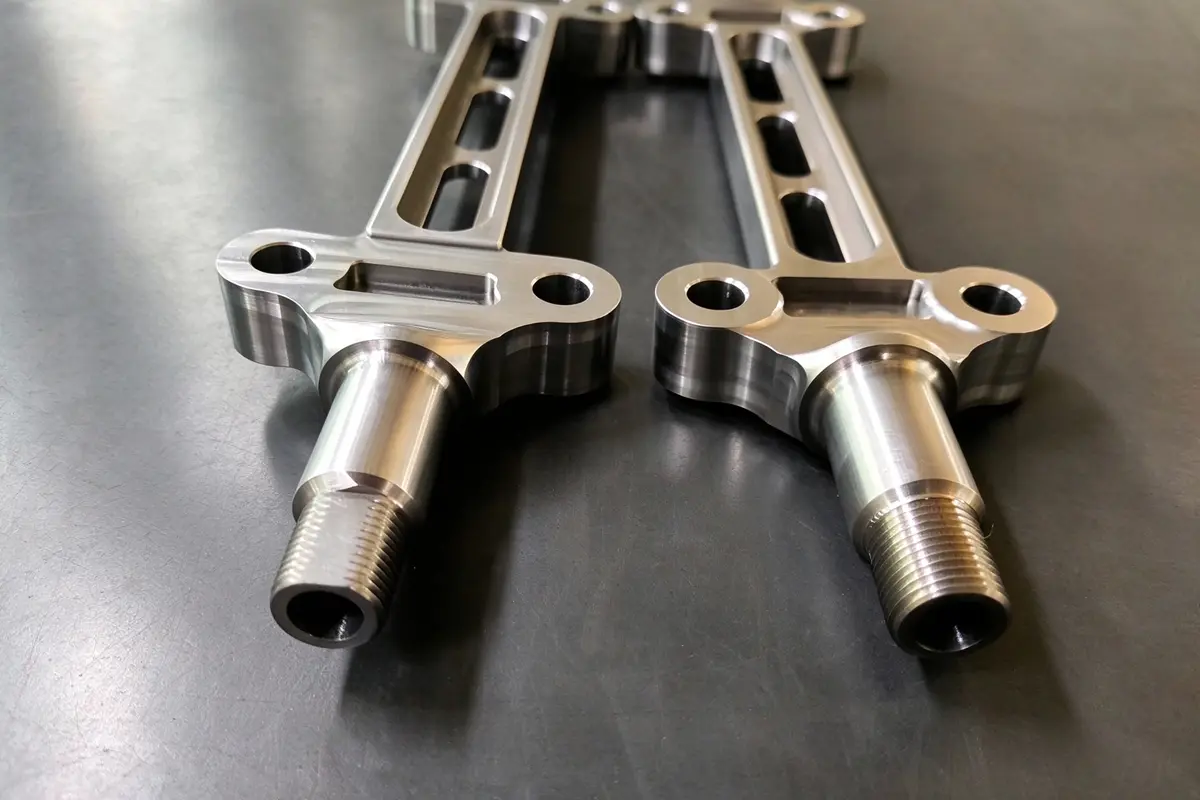
Grade 5 titanium is the engineering designation for Ti-6Al-4V, an alpha-beta alloy containing roughly 6% aluminum and 4% vanadium. It combines high tensile strength, low density, and strong corrosion resistance. For precision CNC parts, specifying Grade 5 requires more than checking a material strength chart. Engineering and sourcing teams must verify raw material heat treatment, design for lower stiffness compared to steel, and account for slower machining cycles.
What Is Grade 5 Titanium?
Grade 5 titanium is an alloyed titanium material engineered for structural performance. It represents the most widely produced titanium alloy worldwide, accounting for more than half of all titanium metal consumed across industrial, aerospace, and marine hardware.
Ti-6Al-4V Composition and Alloy Classification
Unlike commercially pure titanium grades (Grades 1 through 4), which consist of unalloyed titanium with controlled levels of dissolved oxygen and iron, Grade 5 is an alpha-beta dual-phase alloy. Its nominal chemical composition includes:
- Aluminum (5.5% to 6.75%): An alpha-phase stabilizer that increases tensile strength, creep resistance, and high-temperature capability while slightly reducing alloy density.
- Vanadium (3.5% to 4.5%): A beta-phase stabilizer that permits heat treatment, improves ductility, and promotes a fine microstructural grain distribution.
- Titanium (Balance): Typically accounting for approximately 88% to 90% of total alloy mass.
- Interstitial elements: Strictly limited fractions of iron (up to 0.40%), oxygen (up to 0.20%), carbon (up to 0.08%), nitrogen (up to 0.05%), and hydrogen (up to 0.015%).
Standard consensus specifications such as ASTM B348/B348M-25 govern Grade 5 titanium bars and billets for general industrial use. The combination of alpha and beta crystalline phases provides mechanical strength roughly double that of commercially pure Grade 2 titanium.
Material Condition and Property Variations
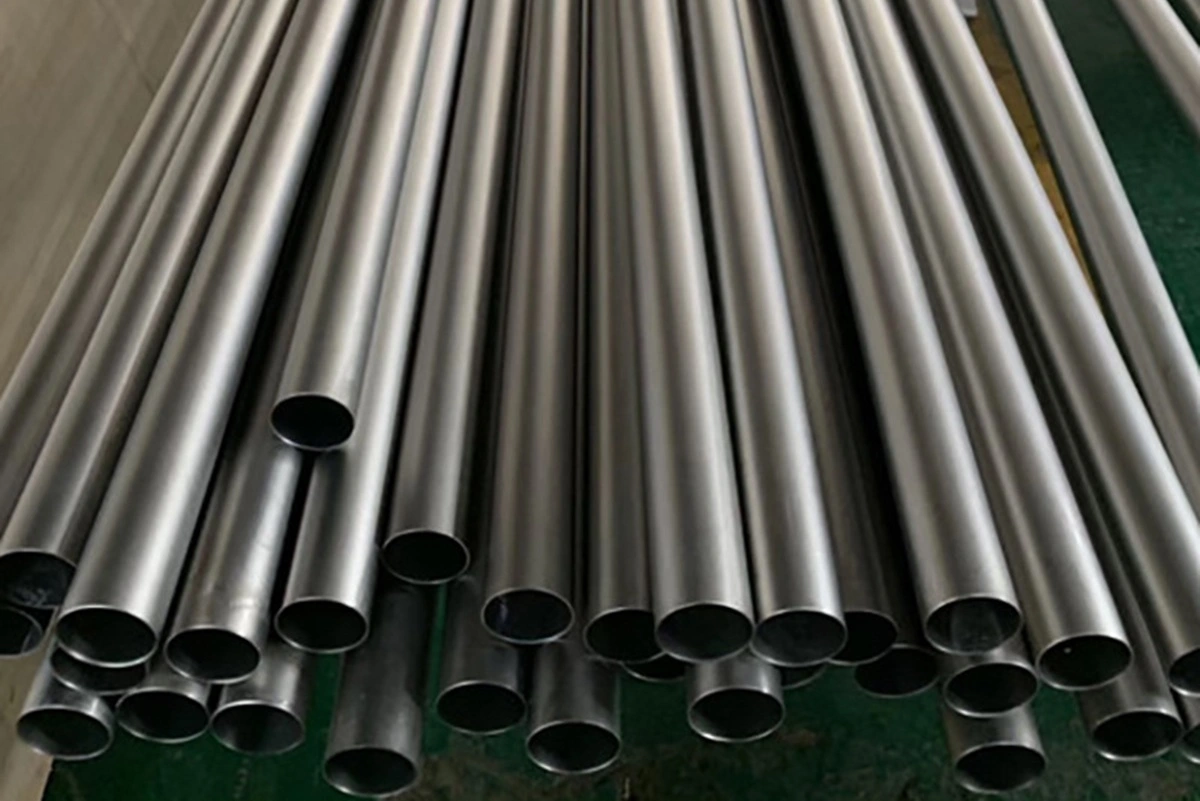
Mechanical properties in Grade 5 titanium vary based on heat treatment and raw material supply condition. Mills typically deliver commercial bar, rod, and plate stock in the mill-annealed condition, offering typical room-temperature values around 880 MPa (128 ksi) yield strength, 950 MPa (138 ksi) ultimate tensile strength, and 14% elongation. While solution treating and aging (STA) can raise tensile strength above 1,100 MPa (160 ksi) through high-temperature heating, rapid quenching, and controlled aging, that thermal cycle reduces ductility and fracture toughness.
Published figures in producer data sheets, such as the ATI Grade 5 technical data sheet, represent typical averages rather than guaranteed minimums. Because actual design limits depend on stock thickness, grain orientation, and the governing consensus standard, engineering drawings should cite the governing specification and mandate lot-specific Material Test Reports (MTRs) rather than treating generic handbook tables as contractual limits.
When Does a CNC Part Call for Grade 5 Titanium?
Specifying Grade 5 titanium makes sense when a component must handle high mechanical stress under strict weight budgets, or when it operates in harsh chemical or thermal environments. High yield strength alone is rarely enough to justify the alloy. Teams must weigh physical advantages against stiffness limits and production costs.
Strength-to-Weight Ratio and Structural Load
Grade 5 titanium has a mass density of approximately 4.43 g/cm³ (0.160 lb/in³). This is roughly 56% the density of carbon or stainless steel (~7.8 to 8.0 g/cm³), while delivering comparable or superior yield strength to common heat-treated structural steels. This high specific strength makes Grade 5 well suited to dynamic mechanical assemblies, robotic arms, aerospace brackets, downhole tools, and high-speed rotating spindles. If an aluminum 6061-T6 or 7075-T6 part cannot meet safety factors under repeated cyclic loading or fatigue stress, Grade 5 titanium provides structural capacity without imposing the heavy mass of steel.
Elastic Modulus and Thin-Wall Deflection
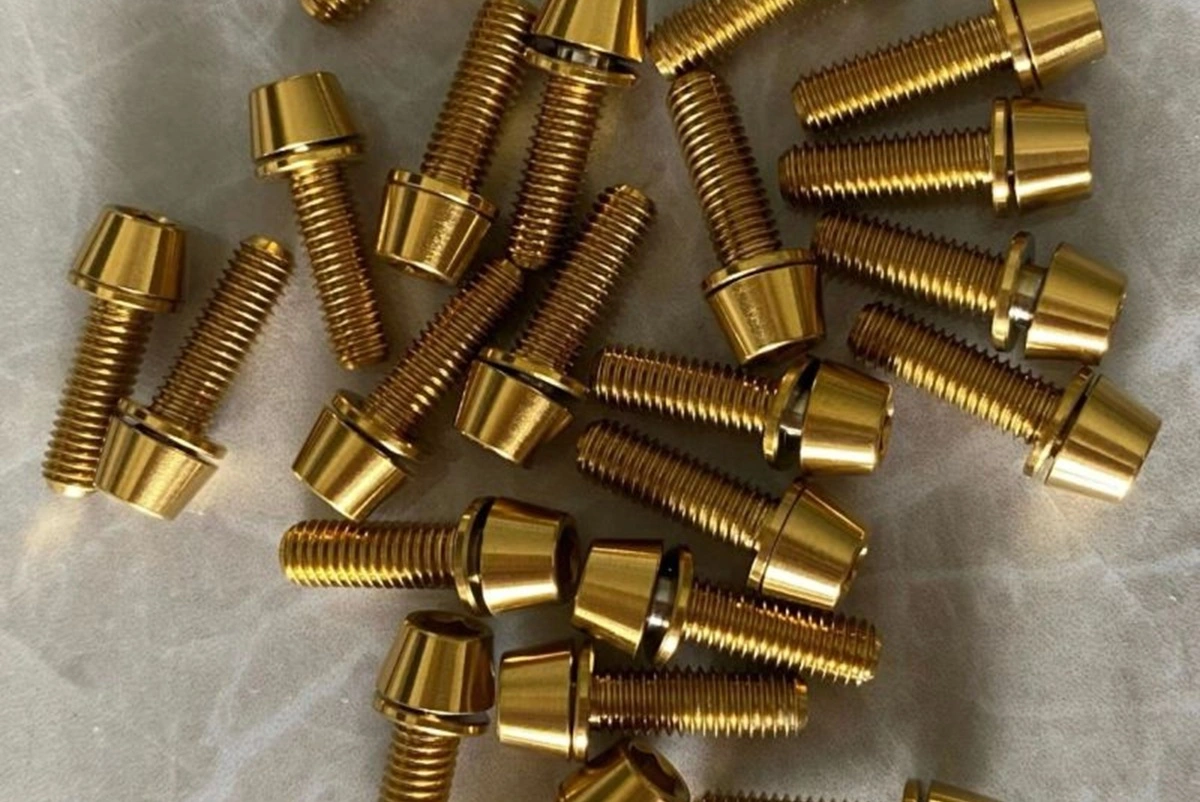
A common design pitfall with Grade 5 titanium is assuming that high tensile strength guarantees structural stiffness. Grade 5 has an elastic modulus of approximately 114 GPa (16.5 × 10⁶ psi), roughly half that of structural steels (200 GPa to 210 GPa). Because of this lower modulus, a slender titanium component or thin-walled housing deflects roughly twice as far as an identical steel geometry under the same bending load.
Design engineers must calculate cross-sectional moments of inertia and increase section thicknesses where parts demand rigidity. During CNC machining, that same compliance causes unsupported ribs and walls to flex away from cutting pressure, demanding rigid setup support and balanced toolpaths to avoid taper and chatter.
Environmental Resistance and Temperature Limits
Grade 5 titanium forms an instantaneous, tenacious surface oxide film (primarily TiO2) upon exposure to oxygen or moisture. This passive layer protects against saltwater, marine atmospheres, wet chlorine, organic acids, and micro-pitting in high-velocity fluid systems. Thermal stability also extends its operating envelope well beyond structural aluminum alloys. While aluminum grades begin losing strength rapidly above 150 °C (300 °F), Grade 5 titanium retains useful mechanical properties up to approximately 400 °C (750 °F), making it an established choice for heat shields, sensor enclosures, and turbine-adjacent components.
Selection Tradeoffs for Precision Components
Before finalizing a Grade 5 callout, design engineers should compare functional part requirements directly against alloy behavior and required verification steps.
| Part requirement | Relevant Grade 5 characteristic | Engineering condition to confirm |
|---|---|---|
| Structural weight reduction | Density of ~4.43 g/cm³ with yield strength over 800 MPa | Confirm that high-strength aluminum (7075-T6) cannot satisfy fatigue or temperature demands. |
| Resistance to elastic deflection | Elastic modulus of ~114 GPa (lower stiffness than steel) | Calculate deflection on cantilevered tabs and thin walls; increase section thickness where needed. |
| Marine or chemical corrosion | Self-healing passive titanium oxide film | Verify operating chemical concentrations; avoid uninhibited dry chlorine or reducing acids. |
| Elevated operating temperature | Stable mechanical performance up to ~400 °C (750 °F) | Check thermal expansion matching against mating aluminum or steel hardware. |
| Precision dimensional tolerance | High material hardness combined with low thermal conductivity | Identify non-critical surfaces to allow realistic shop tolerances; restrict ±0.01 mm to functional fits. |
When to Reconsider Grade 2 Titanium
Grade 5 is not the default choice for every titanium component. Commercially pure Grade 2 titanium remains the superior option when structural load-bearing capacity is secondary to chemical processing resistance, cold formability, or component cost. Grade 2 offers higher elongation (typically 20% or more), superior weldability, and lower raw material and machining costs.
If a part functions primarily as a fluid manifold, chemical sensor housing, or non-structural cover, engineering teams should review the practical differences between commercially pure titanium and dual-phase alloys in our Grade 2 vs Grade 5 titanium comparison before committing to Grade 5.
Medical Device and Surgical Implant Specifications
The phrase “medical-grade titanium” is frequently used in marketing, but it has no formal standing in engineering standards. Medical devices, surgical instruments, and implantable components require strict adherence to specific consensus standards rather than colloquial names.
Grade 23 titanium is Ti-6Al-4V ELI (Extra Low Interstitial). It features tighter maximum limits on interstitial elements, particularly oxygen (capped at 0.13%) and iron (capped at 0.25%). These reduced interstitials enhance fracture toughness and low-cycle fatigue resistance, making Grade 23 a common choice for orthopedics and bone fixation screws.
However, standard Grade 5 is not excluded from surgical applications, nor does every implant mandate Grade 23. ASTM International publishes distinct standard specifications: ASTM F1472-23 covers wrought Ti-6Al-4V with standard interstitial limits, while ASTM F136-26 governs Ti-6Al-4V ELI for surgical implant applications. Medical device engineers must identify the exact ASTM or ISO standard required for their regulatory submission, along with validated cleaning, passivation, and lot traceability protocols.
How Does Grade 5 Titanium Affect CNC Machining and Part Cost?
The machining characteristics of Grade 5 titanium directly influence part quotes, cycle times, and dimensional inspection overhead. The alloy cuts differently than routine metals because of its thermal, chemical, and elastic traits.
Heat Concentration and Tool Wear
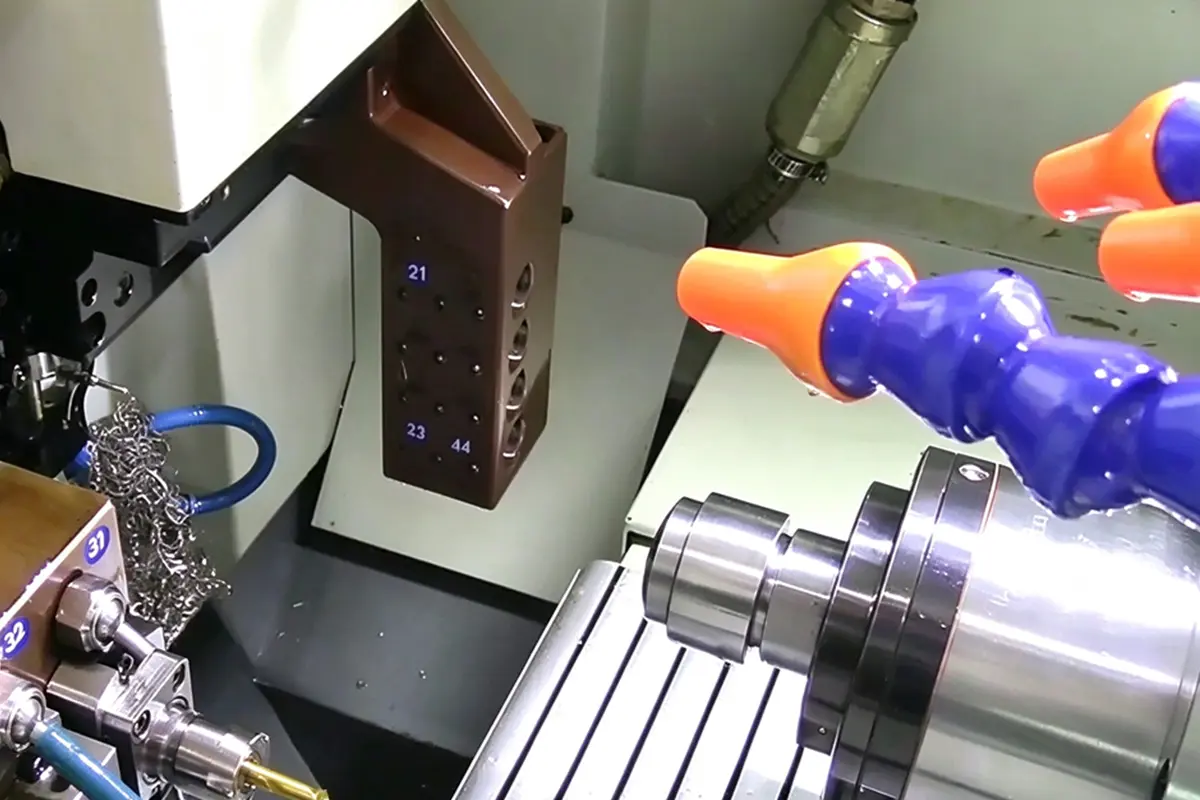
Grade 5 titanium has low thermal conductivity (roughly 6.7 W/m·K at room temperature, compared to 167 W/m·K for 6061 aluminum and 50 W/m·K for standard carbon steels). Because cutting heat cannot readily transfer into the chips during milling or turning, up to 80% of the thermal energy concentrates directly at the cutting edge and tool rake face. Temperatures at the shear zone can exceed 800 °C. At these temperatures, titanium chemically reacts with standard cutting tool materials, causing tool cratering, micro-chipping, and galling. CNC machinists must use specialized carbide grades, physical vapor deposition (PVD) coatings, high-pressure coolant, and conservative cutting speeds to maintain tool life.
Workholding, Cutting Forces, and Deflection
Grade 5 titanium’s lower stiffness causes the workpiece to spring back and deflect away from the cutting tool during milling passes. This spring-back increases rubbing along the tool relief flank, accelerating flank wear and introducing chatter vibrations. Machining complex Grade 5 parts requires rigid machine setups, stiff fixturing, and short tool reach. Deep pockets with tight corner radii force the use of long, slender end mills, which chatter in titanium and leave tapered walls. Design teams should maximize internal corner radii and maintain uniform wall thicknesses wherever possible.
Cost Drivers in Machining Quotes
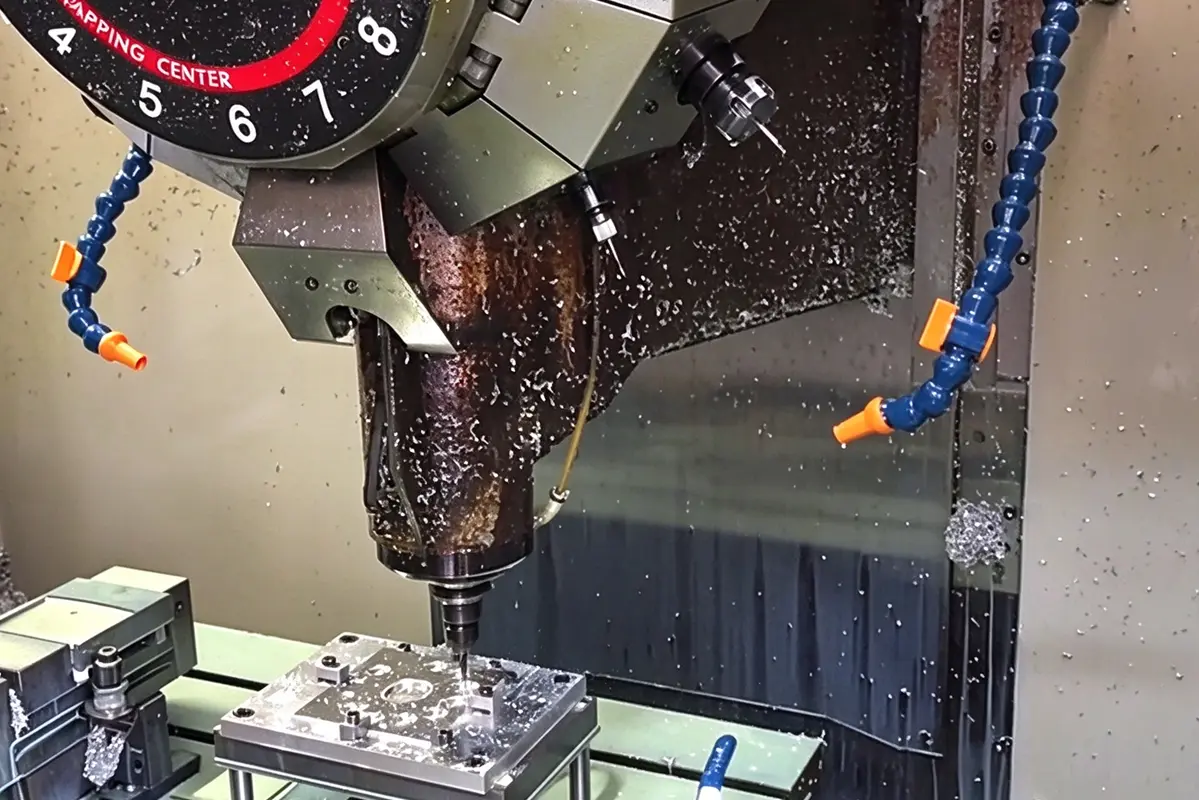
Machine runtime and tool consumption drive Grade 5 machining costs rather than raw billet weight. Surface cutting speeds typically drop to 40 to 80 meters per minute (m/min), compared to over 300 m/min for aluminum alloys, directly multiplying machine cycle time. Frequent tool changeovers and cutter touch-offs add further cost and extend lead times. Machinists must also run in-process dimensional checks across production batches to catch tolerance drift before features fall out of specification. Sourcing and engineering teams can review specialized tooling strategies, cutting parameters, and machine setups in our titanium machining guide.
What Should Engineering and Sourcing Teams Put on the Drawing and RFQ?
A complete, precise drawing package prevents quoting assumptions, reduces manufacturing lead times, and ensures delivered parts match functional requirements.
Material Grade, Specification, and Supply Condition
Avoid ambiguous drawing callouts such as “Titanium” or “Ti-6Al-4V.” The drawing title block and RFQ notes should explicitly define:
- Alloy designation: “Titanium Grade 5 (Ti-6Al-4V, UNS R56400).”
- Governing material standard: Reference the exact consensus standard, such as ASTM B348 for industrial bars, AMS 4928 for aerospace forgings and bars, or ASTM F1472 for surgical implant applications.
- Supply condition: State the thermal condition, such as “Mill-Annealed” or “Solution Treated and Aged (STA).”
- Stock form: Specify whether the part requires bar stock, forged billet, or plate, particularly if grain direction affects part loading.
Critical Tolerances, Datums, and Surface Finishes
Define tolerances based on genuine assembly and functional needs. Applying a global tight tolerance (such as ±0.01 mm) across an entire titanium part inflates machining costs and extends cycle times unnecessarily. Engineers should isolate precision tolerances to critical bearing bores, alignment pin holes, and sealing faces, leaving non-mating surfaces with broader shop limits. Primary datums should sit on accessible surfaces where the machine setup can clamp firmly without distorting the finished part during machining. In addition, engineers should designate surface finish requirements (such as Ra 0.8 µm or Ra 1.6 µm) only where necessary, as achieving fine surface finishes on titanium may require secondary grinding, lapping, or controlled polishing passes.
Material Test Reports and Quality Documentation
Quality documentation confirms that delivered metal matches specification requirements and regulatory criteria. Sourcing teams should require a certified Material Test Report (MTR) traceable to the melt heat lot, verifying actual tensile strength, yield strength, elongation, and interstitial gas chemistry. The drawing package should also specify whether the project requires a standard final inspection report, coordinate measuring machine (CMM) data, or a full First Article Inspection (FAI) report before shipment. For critical structural or aerospace hardware, engineers should identify any required non-destructive testing, such as ultrasonic testing (UT) for internal billet soundness or liquid penetrant inspection (PT) for surface integrity.
Confirming Project Capabilities With Rollyu Precision
For complex titanium components, engineering teams can consult Rollyu Precision during early design phases. In addition to custom CNC machining across Grade 5 titanium, stainless steels, aluminum alloys, and high-performance plastics, the engineering team provides an initial DFM review of 3D CAD models and 2D engineering drawings to check tool access, assess deflection risk in challenging geometries, and confirm clamping stability.
Sourcing and engineering teams who match drawing requirements against verified CNC machining capabilities can establish achievable tolerances, CMM inspection plans, delivery schedules, and certified documentation packages tailored to their project.
Frequently Asked Questions
Is Grade 5 Titanium Always Stronger Than Stainless Steel?
Grade 5 titanium provides higher yield strength than common austenitic stainless steels like 304 or 316, but certain high-strength martensitic or precipitation-hardened steels can match or exceed its absolute tensile strength. Grade 5 delivers a yield strength around 880 MPa, whereas annealed 316 stainless steel yields near 290 MPa. However, specialty steels like 17-4 PH in the H900 condition can achieve yield strengths above 1,100 MPa. Grade 5’s real advantage is specific strength: it reaches comparable load capacity at roughly half the weight of steel.
Can Grade 5 Titanium Be Heat Treated After CNC Machining?
Grade 5 titanium can receive stress-relief heat treatments after rough machining, but full solution treating and aging (STA) is rarely performed on finish-machined parts. Solution heat treatment requires temperatures near 950 °C followed by water quenching, which induces severe distortion and forms an oxygen-rich, brittle surface layer called alpha case. To maintain tight tolerances, teams should purchase raw stock in the desired final heat-treated condition, or stress-relieve rough-machined parts before final finish machining.
What Is the Difference Between ASTM B348 and Aerospace or Medical Specifications?
ASTM B348 is a baseline industrial specification establishing standard chemical composition ranges and minimum mechanical properties for titanium bars and billets. Aerospace standards (such as AMS 4928) and medical implant standards (such as ASTM F1472) impose tighter controls. These higher-tier specifications mandate strict melt practice controls, microstructural grain size verification, mandatory ultrasonic testing for internal voids, and full pedigree traceability from the raw ingot to the final machined component.
When Should an Engineering Team Choose Grade 23 Over Grade 5?
An engineering team should specify Grade 23 (Ti-6Al-4V ELI) when the part requires enhanced fracture toughness and resistance to fatigue crack propagation, particularly in cryogenic environments or long-term surgical implants. Grade 23 reduces interstitial oxygen, nitrogen, carbon, and iron levels. This compositional refinement improves ductility and damage tolerance under cyclic loading, although it results in a modest 5% to 10% reduction in static tensile strength compared to standard Grade 5.