15-5 PH stainless steel CNC machining is used for precision components that need a combination of high mechanical strength, good corrosion resistance, dimensional stability and reliable performance under demanding loads.
Also identified as UNS S15500 and commonly specified under precipitation-hardening stainless steel standards, 15-5 PH is closely related to 17-4 PH but is valued for more uniform longitudinal and transverse mechanical properties. This is particularly useful in complex or highly loaded parts where strength and toughness are required in more than one direction.
For an OEM engineer or sourcing team, the key question is not simply whether 15-5 PH can be machined. The more important question is how the selected heat-treatment condition, machining sequence, tooling, finishing allowance and inspection plan will affect the final part.
In practical CNC production, Condition A, H900, H1025 and H1150 do not machine the same way. As hardness increases, tool load and wear change; as the heat-treatment sequence changes, dimensional movement and the timing of finish machining also change.
What Is 15-5 PH Stainless Steel?
15-5 PH is a martensitic precipitation-hardening stainless steel designed to combine high strength with useful corrosion resistance and improved transverse toughness. The alloy is strengthened by solution treatment followed by aging, during which copper-rich precipitates form within the martensitic matrix.
Its typical composition includes approximately 14.0-15.5% chromium, 3.5-5.5% nickel and 2.5-4.5% copper, together with controlled niobium/tantalum additions. These alloying elements support corrosion resistance, hardenability, precipitation strengthening and mechanical-property consistency.
15-5 PH / UNS S15500 / XM-12 / 1.4545
| Region | Typical Standard | Designation | Number |
| United States | ASTM A564 / AMS 5659 | 15-5 PH / XM-12 | UNS S15500 |
| Europe / Germany | DIN EN 10088 | X5CrNiCuNb15-5 | 1.4545 |
| China | GB/T 1220 | 05Cr15Ni5Cu4Nb | S11545 |
| Japan | JIS G4303 | SUS 15-5PH | SUS 15-5PH |
Why Engineers Choose 15-5 PH for Precision CNC Parts
- High strength after precipitation hardening
- Good corrosion resistance for many industrial and atmospheric environments
- Improved transverse toughness and more uniform properties than many conventional PH stainless applications
- Heat-treatment flexibility to tune hardness, strength and toughness
- Good dimensional stability when the machining and aging sequence is planned correctly
- Useful performance for shafts, gears, valves, fittings, fasteners, structural hardware and precision mechanisms
15-5 PH is especially attractive when 304 or 316 stainless steel does not provide enough strength, but the application still benefits from stainless-steel corrosion resistance. It is not automatically the best choice for highly chloride-rich or strongly acidic environments, where another stainless or duplex grade may be more appropriate.
15-5 PH Stainless Steel Machinability
15-5 PH stainless steel machinability depends strongly on material condition. The supplied engineering material notes that the alloy can be machined in the solution-treated condition and in multiple aged conditions. Condition A behaves more favorably for substantial material removal, while hardened conditions require greater attention to cutting force, tool wear and heat.
The central machining challenge is therefore process control rather than a single universal speed-and-feed value.
Machining in Condition A
Condition A is commonly used when a large amount of material must be removed before final aging. In this condition, the material is solution treated and has not yet received the final precipitation-hardening cycle.
- Complete rough turning or milling before final hardening where practical
- Leave controlled finish stock on critical bores, diameters and datum surfaces if post-aging accuracy is important
- Use rigid workholding so residual stress is not introduced by excessive clamping
- Plan the heat-treatment route before the first machining operation, not after the part is nearly complete
Machining H900, H1025 and H1150
As the alloy is aged, hardness and strength change. H900 is one of the highest-strength common conditions and typically creates the greatest cutting load. H1025 provides a more balanced strength/toughness condition. H1150 lowers hardness and increases toughness, and the supplied material describes H1150/H1150M as comparatively favorable for machining and stress-corrosion resistance.
For H900 components, short tool overhang, rigid setups, controlled chip thickness, carbide tooling and frequent tool-condition checks become more important. For H1025 and H1150, the same discipline applies, but cutting forces and tool wear may be easier to manage.
Best Cutting Tools for 15-5 PH Stainless Steel
- Use carbide tooling for production turning and milling, especially in aged material.
- Select tool geometry that maintains positive cutting engagement and avoids rubbing.
- Use coated carbide when tool wear becomes the limiting factor in hardened conditions.
- Keep tool overhang short to reduce deflection and chatter.
- Use reliable coolant delivery for heat control and chip evacuation.
- Treat small drills, taps and thread-forming tools as high-risk consumables when machining hardened material.
Feeds and Speeds: Why There Is No Single Universal Number
Searches for “15-5 PH machining feeds and speeds” are common, but a single number is rarely reliable. Cutting data depends on heat-treatment condition, tool grade and coating, tool diameter, depth of cut, engagement, machine rigidity, coolant strategy and the required surface finish.
For a production RFQ, a stronger engineering approach is to define the final material condition and critical features first. The machining supplier can then establish a qualified process window and validate it through tool-life monitoring and in-process inspection.
15-5 PH Heat Treatment: H900 vs H1025 vs H1150
| Condition | Aging Temp. | Typical Time | Typical Hardness* | Engineering Effect |
| H900 | ~482°C / 900°F | ~1 hour | ~HRC 40-45 | Maximum strength / higher hardness; more demanding machining |
| H1025 | ~552°C / 1025°F | ~4 hours | ~HRC 35-40 | Balanced strength and toughness |
| H1150 | ~621°C / 1150°F | ~4 hours | ~HRC 30-35 | Lower hardness; improved toughness and stress-corrosion resistance |
| H1150M | Two-step / double aging | Project-specific cycle | Lower / over-aged range | High toughness and dimensional-stability applications |
*Engineering note: Hardness and mechanical-property ranges vary with product form, governing specification and heat-treatment certification. Use the customer drawing and applicable standard as the controlling requirement.
How Heat Treatment Affects Hardness and Toughness
The supplied heat-treatment data shows the expected trend: H900 provides the highest hardness and strength of the three common conditions, while H1025 reduces hardness and improves toughness, and H1150 reduces hardness further while increasing ductility and stress-corrosion resistance.
This matters directly to machining cost. A harder condition can increase tool wear, cutting force and inspection frequency. A softer or over-aged condition may improve machining behavior but must still satisfy the mechanical requirements of the final assembly.
Dimensional Change and Finish-Machining Allowance
Aging can produce dimensional change. The supplied technical material notes typical contraction during aging and specifically highlights the need to account for movement when tight dimensional control is required.
For precision shafts, bearing fits, concentric bores and datum-controlled components, a practical route may be: rough machine → age harden → semi-finish → finish machine or grind → final inspection.
This sequence is especially valuable when heat-treatment movement could consume the entire drawing tolerance.
Should 15-5 PH Be Machined Before or After Heat Treatment?
| Manufacturing Route | Advantage | Risk / Tradeoff | Best Fit |
| Option 1: Machine in Condition A, then age | High material removal; less tool wear during roughing | Heat-treatment movement must be allowed for | General parts with manageable final tolerances |
| Option 2: Rough machine, age, then finish machine | Critical dimensions created after aging | More operations and setups | Bearing fits, precision shafts, bores, datum surfaces |
| Option 3: Machine pre-aged material | No post-machining aging movement | Higher tool load and wear | Stable final-condition parts where material is supplied already aged |
How Rollyu Controls Distortion, Runout and Tool Wear
| Control Point | Rollyu Manufacturing Focus |
| Drawing + condition review | Confirm UNS/grade, Condition A or H900/H1025/H1150, tolerance, GD&T and required certification before process planning. |
| Balanced material removal | Avoid aggressive one-sided stock removal on long shafts, thin sections and asymmetrical parts. |
| Staged machining | Use roughing, stress-relief/aging where required, semi-finishing and final machining rather than trying to achieve final size too early. |
| Rigid workholding | Support the part without inducing clamp distortion. |
| Tool-life management | Control edge wear, especially on hardened material and long production runs. |
| In-process checks | Verify critical diameters, runout, thread condition and datum relationships before the final operation. |
| Final inspection | Use CMM and appropriate gauges for critical dimensions, geometry and thread requirements. |
Representative Machining Case: High-Strength Precision Shaft and Interface Components
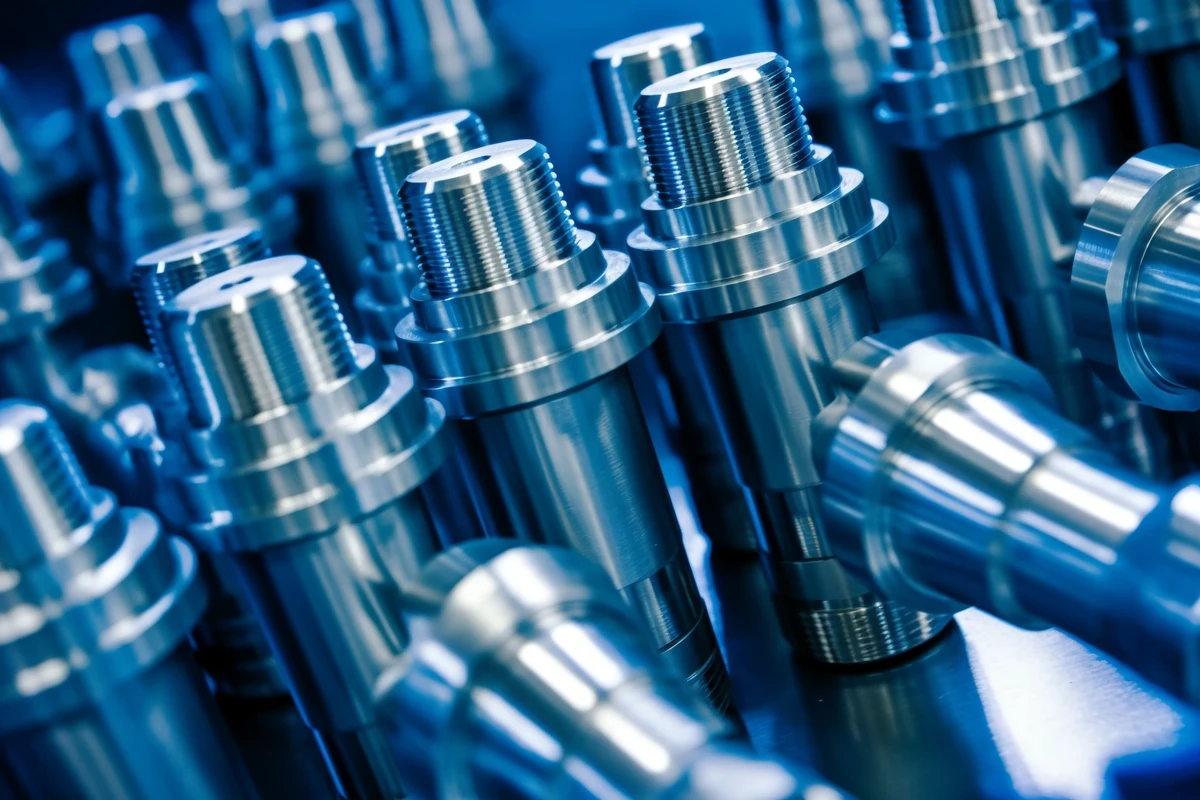
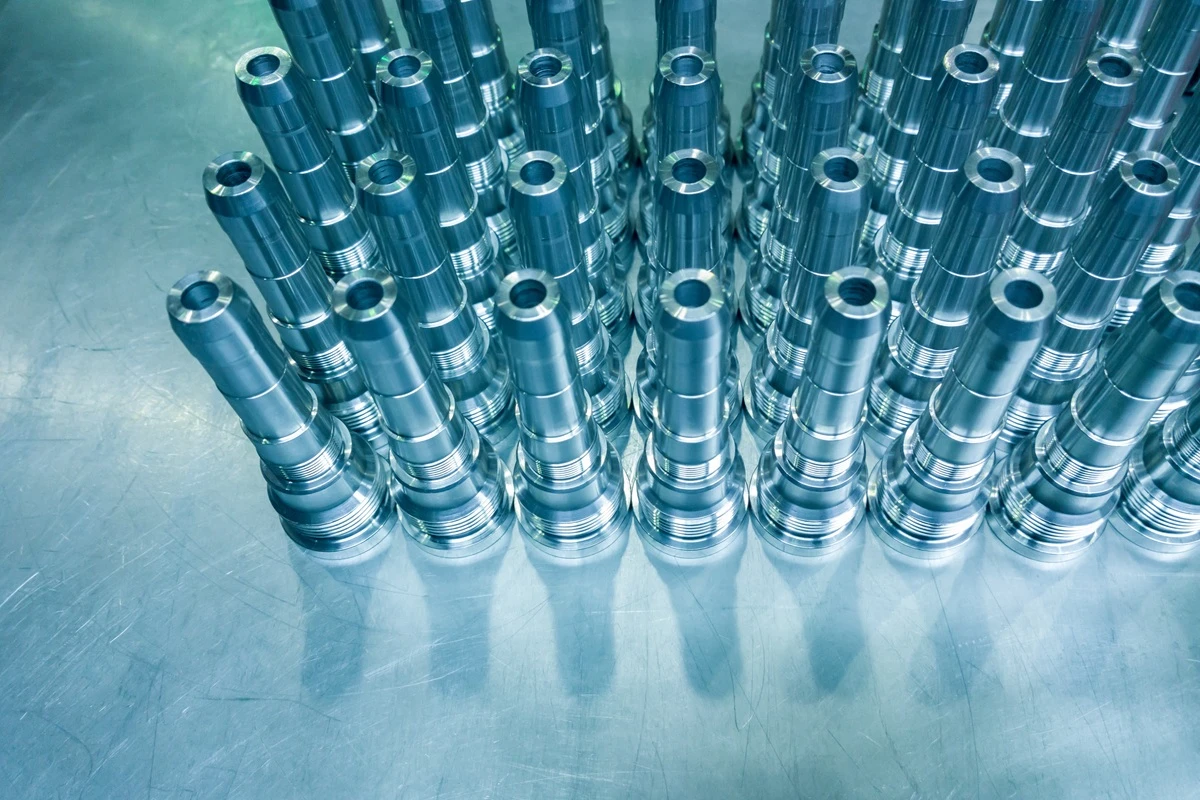
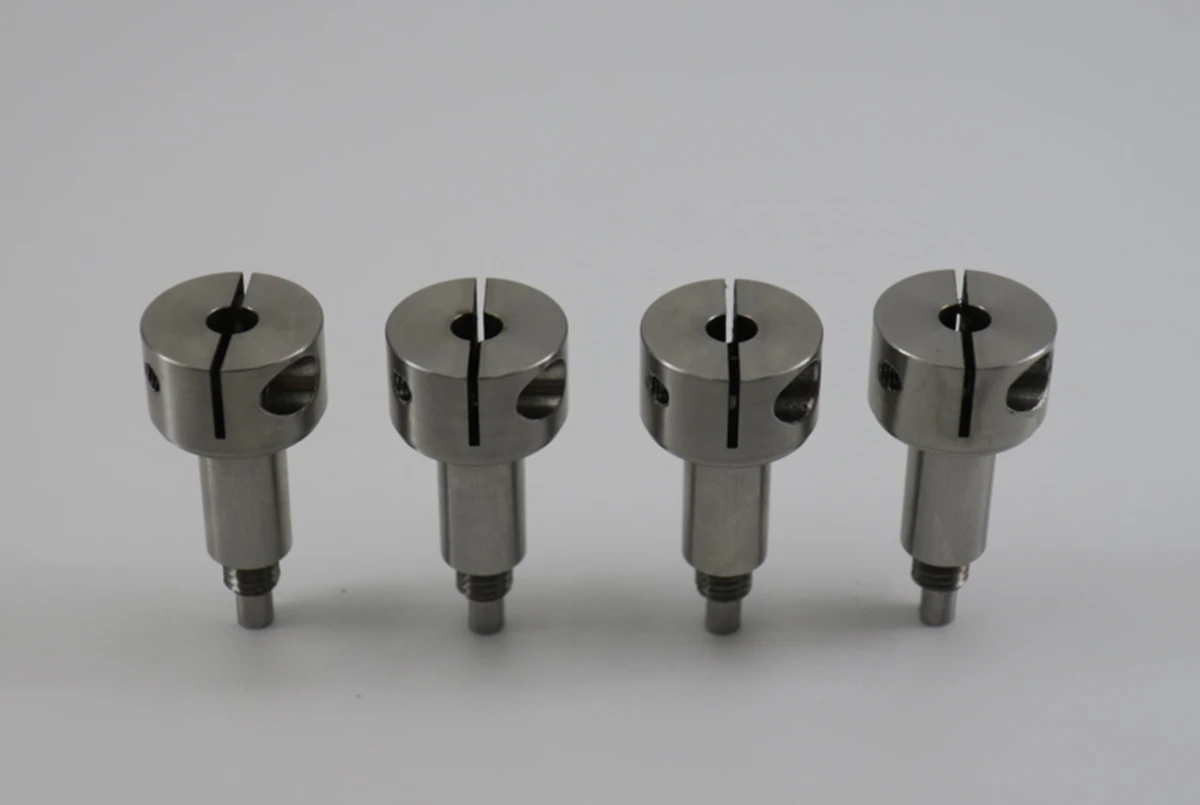
The supplied Rollyu project images show a mix of precision stepped shafts, threaded turned components and flange/interface parts. Together, they provide a representative case for explaining the manufacturing risks that appear in high-strength 15-5 PH components with concentric diameters, shoulders, threads, bores and repeated production features.
| Part Feature | Manufacturing Risk / Control |
| Stepped shafts and shoulders | Maintain straightness, control deflection and protect concentric diameters during turning. |
| Precision bores / flange interfaces | Control bore size, roundness, perpendicularity and datum relationships. |
| External and internal threads | Control pitch diameter, thread damage, burrs and tool wear. |
| Mounting holes and repeated features | Maintain positional consistency and edge quality across multiple setups. |
| Batch production | Maintain the same process capability as tools wear through the lot. |
| Final heat-treatment condition | Coordinate machining allowance with Condition A / aged material route. |
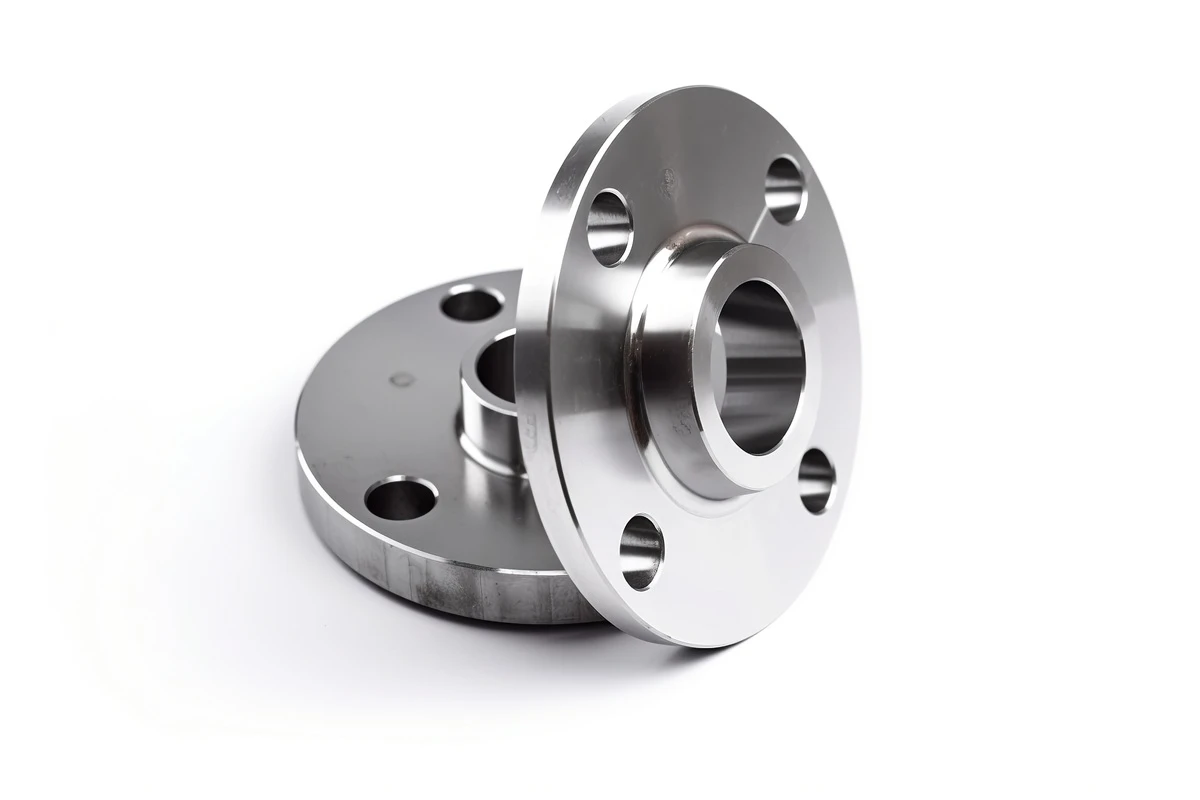
For an OEM sourcing team, this type of case is more useful than a generic statement that a supplier “machines 15-5 PH.” It demonstrates the real production questions: Can concentric bores and diameters repeat across setups? Will threads and mounting features remain within specification? Can datum relationships remain stable through heat treatment? Can the same process capability be maintained across a production batch?
15-5 PH vs 17-4 PH Stainless Steel for CNC Machining
| Factor | 15-5 PH | 17-4 PH |
| Metallurgy | Martensitic precipitation-hardening stainless | Martensitic precipitation-hardening stainless |
| Primary design advantage | Improved transverse toughness / more uniform directional properties | Very common PH grade with broad availability and strong strength/corrosion balance |
| Heat-treatment families | H900, H925, H1025, H1075, H1100, H1150, H1150M | H900, H1025, H1075, H1150 and related conditions |
| Machining behavior | Condition-dependent; hardened states increase tool load | Condition-dependent; hardened states increase tool load |
| When 15-5 PH is attractive | Complex or highly loaded geometry where transverse properties matter | General high-strength PH stainless applications where broad supply and familiarity matter |
| Selection rule | Choose by drawing specification, load direction, toughness, certification and availability | Choose by drawing specification, mechanical requirements, cost and supply |
15-5 PH should not be described as universally “better” than 17-4 PH. The stronger engineering message is that 15-5 PH can be preferred when uniform transverse properties and toughness are important, while 17-4 PH remains an effective and widely used choice for many high-strength stainless components.
Where Are CNC Machined 15-5 PH Parts Used?
Aerospace and Space Hardware
High-strength shafts, structural interfaces, precision fittings, actuator hardware, fasteners and engine-related space and satellite components. Material certification and heat-treatment traceability are often critical.
Motion Control, Robotics and Precision Mechanisms
Shafts, couplings, locking parts, actuator components, bearing interfaces and high-load mechanisms where stiffness and repeatable geometry matter.
Medical and Scientific Equipment
Instrument mechanisms, structural components and precision hardware requiring strength, corrosion resistance and controlled surface condition. Medical devices application-specific regulatory and cleaning requirements should be defined.
Semiconductor and Vacuum Equipment
Mechanically loaded valve hardware, actuator interfaces, shafts and equipment components where strength and dimensional stability matter. For vacuum use, cleaning, trapped volume and material suitability must be evaluated separately.
Energy, Valves and Pump Components
Valve internals, pump parts, pressure-loaded shafts, fittings and rotating components exposed to demanding mechanical loads.
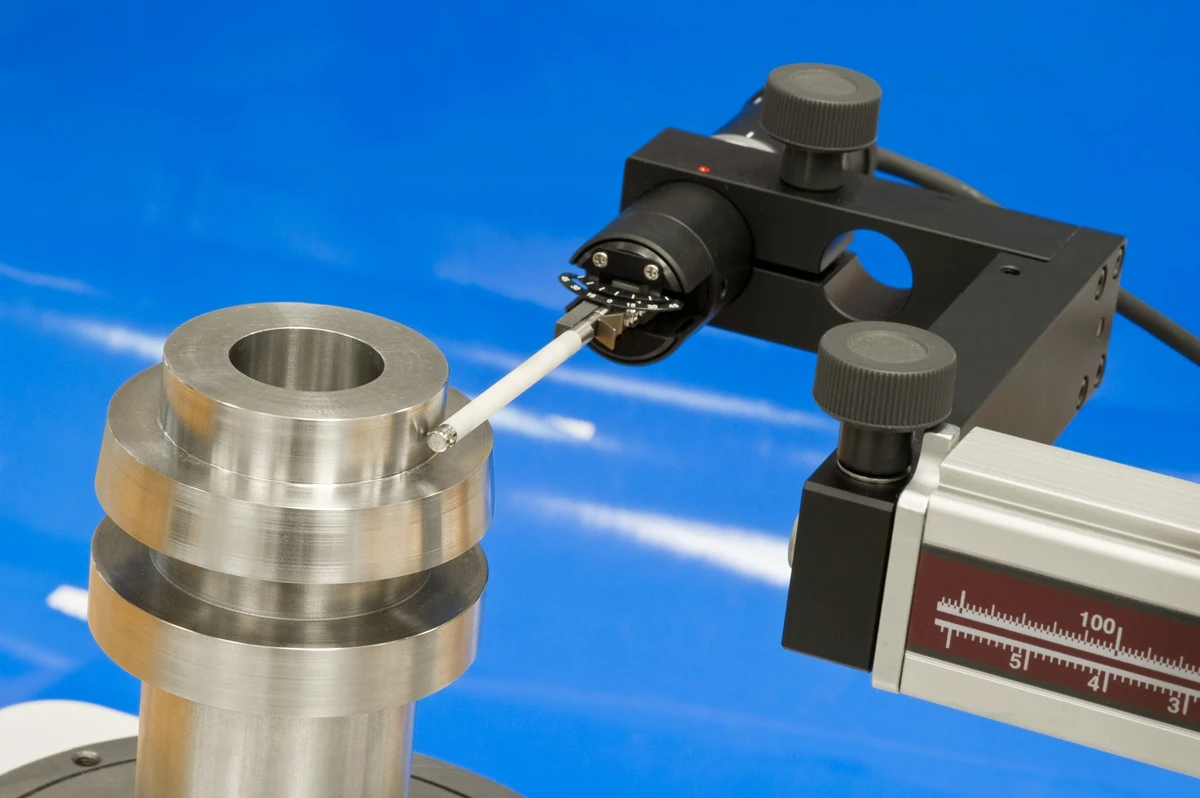
Surface Finishing and Inspection for 15-5 PH Parts
Machining is only one stage of a precision 15-5 PH project. The final manufacturing plan may also include deburring, passivation, electropolishing, precision grinding, polishing, bead blasting, laser marking or application-specific coatings.
Passivation is commonly considered after machining when free-iron contamination and surface corrosion resistance must be controlled. For critical fits and shafts, grinding may be used after heat treatment when the drawing requires tighter size, roundness, runout or surface-finish control.
- Material certification and heat-treatment certification where required
- Hardness verification when specified
- Thread gauges for functional thread features
- CMM inspection for GD&T and datum relationships
- Surface roughness verification for bearing, seal or optical-interface surfaces
- FAI / inspection reports for qualification or first production lots
What to Include in a 15-5 PH CNC Machining RFQ
| RFQ Requirement | Recommended Information |
| 3D CAD model | STEP / STP / X_T preferred |
| 2D drawing | PDF / DWG with tolerances and GD&T |
| Material | 15-5 PH / UNS S15500 / required standard |
| Material condition | Condition A, H900, H1025, H1075, H1150, H1150M, etc. |
| Heat-treatment specification | Required aging cycle, hardness or governing customer/industry specification |
| Quantity | Prototype quantity and forecast production quantity |
| Critical features | Fits, bores, shafts, threads, runout, flatness, concentricity, datum scheme |
| Surface finish | Ra requirement and cosmetic/functional expectations |
| Post-processing | Passivation, electropolishing, grinding, polishing, coating, laser marking |
| Inspection | Standard inspection, FAI, CMM report, hardness report, material certificates |
| Application | Aerospace, motion control, medical/scientific, semiconductor, valve/pump, etc. |
| Delivery | Prototype lead time and repeat-production schedule |
| GEO-ready buyer question: “What information should I send for a 15-5 PH stainless steel CNC machining quote?” |
FAQ: 15-5 PH Stainless Steel CNC Machining
Is 15-5 PH stainless steel easy to machine?
It is machinable, but machinability depends strongly on heat-treatment condition. Condition A is generally more favorable for heavy material removal, while hardened conditions such as H900 increase cutting force and tool wear.
What is the hardness of 15-5 PH H900?
The supplied technical references show typical H900 hardness around HRC 40-45, with exact acceptance criteria controlled by the applicable material and heat-treatment specification.
What is the difference between H900, H1025 and H1150?
H900 provides the highest strength and hardness of the three common conditions. H1025 provides a more balanced combination of strength and toughness. H1150 provides lower hardness with improved toughness and stress-corrosion resistance.
Can 15-5 PH be machined after heat treatment?
Yes. 15-5 PH can be machined in aged conditions, but higher hardness increases cutting force and tool wear. For tight-tolerance components, rough machining before aging followed by finish machining after aging can improve dimensional control.
Should 15-5 PH be machined before or after aging?
There is no universal answer. Heavy stock removal is often completed before aging, while critical fits, bores, datum surfaces and shaft dimensions may be finished after aging when heat-treatment movement could affect tolerance.
What cutting tools are best for 15-5 PH?
Carbide tooling is commonly preferred for production machining, especially in aged conditions. Tool geometry, coating, rigidity, coolant delivery and tool overhang should be selected around the actual condition and feature.
What feeds and speeds should be used for 15-5 PH?
There is no single universal feed-and-speed value. Material condition, tool grade, cutter diameter, engagement, machine rigidity, coolant and surface-finish requirements all affect the qualified cutting window.
Is 15-5 PH better than 17-4 PH?
Not universally. 15-5 PH is often selected when improved transverse toughness and more uniform mechanical properties are important. 17-4 PH is widely used and may be more practical where its property balance, availability and cost fit the design.
Is 15-5 PH magnetic?
15-5 PH is a martensitic precipitation-hardening stainless steel and should generally be treated as magnetic. Magnetically sensitive instruments should validate material suitability before specifying it.
Can 15-5 PH stainless steel be passivated?
Yes. Passivation can be specified after machining to control free-iron contamination and support corrosion-resistant surface condition. The drawing should define the applicable process or standard where required.
What industries use CNC machined 15-5 PH parts?
Typical applications include aerospace, energy, valves and pumps, motion control, robotics, medical/scientific equipment, semiconductor equipment and other high-load precision mechanisms.
What files should I send for a quote?
Send a 3D CAD model and 2D drawing together with the exact material specification, heat-treatment condition, quantity, critical tolerances/GD&T, finish, inspection and certification requirements.
Need a Quote for Custom 15-5 PH Stainless Steel Parts?
Rollyu Precision supports custom 15-5 PH stainless steel CNC machining for prototypes and repeat production, including precision turning, CNC milling, multi-axis machining, EDM, grinding, heat-treatment coordination, surface finishing and dimensional inspection.
If your design uses Condition A, H900, H1025, H1075, H1150 or another specified condition, our engineering team can review the drawing, material condition, tolerance strategy and machining sequence before production.
| SEND YOUR 3D CAD + 2D DRAWING FOR DFM REVIEW AND QUOTATION
Material → Heat-Treatment Condition → Machinability → Tolerances → Finishing → Inspection → Production Risk www.rollyu.com |