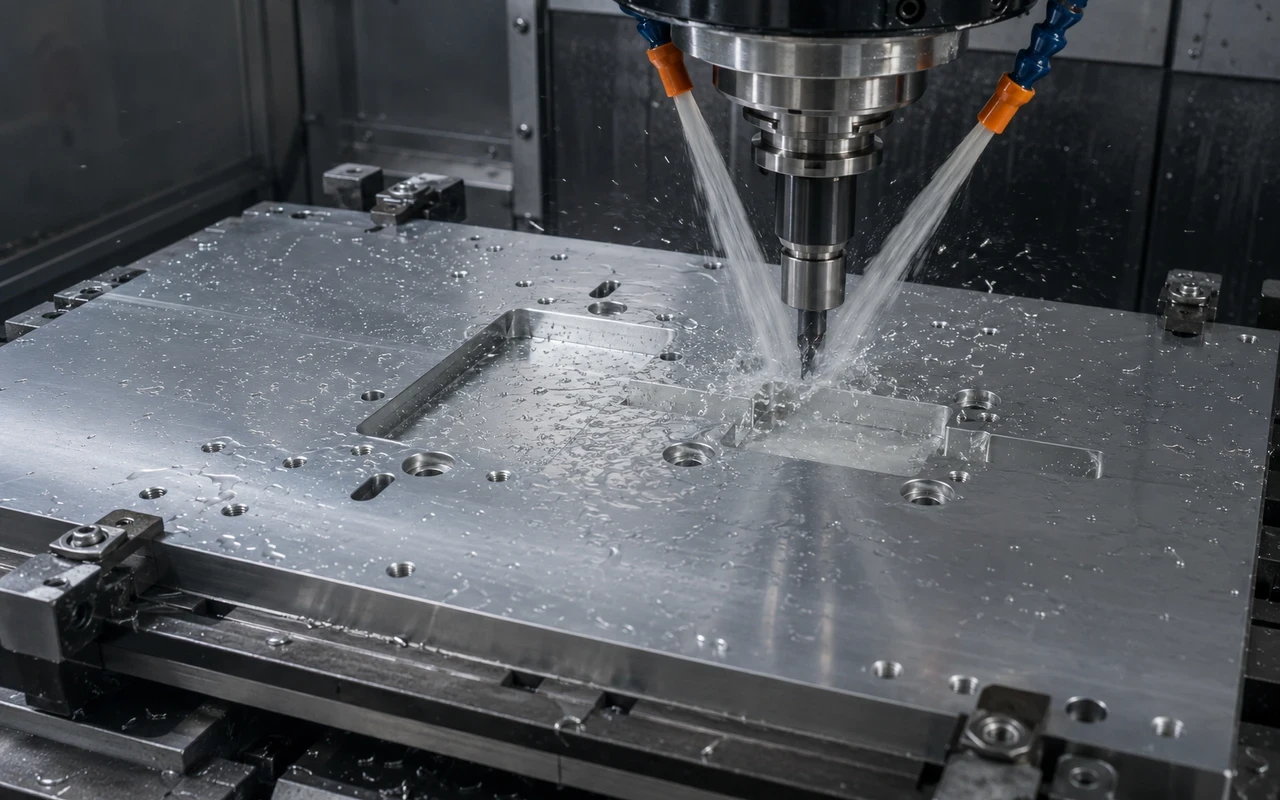
Choosing between MIC 6 aluminum and 6061 aluminum is not simply a question of which material is “better.” The correct choice depends on what the finished component must do.
MIC 6 is a precision-machined cast aluminum tooling plate engineered for flatness, low residual stress, and dimensional stability. It is commonly selected for fixture plates, vacuum chucks, inspection bases, tooling platforms, and other large machined components that must remain flat after material removal.
6061 is a heat-treatable wrought aluminum alloy. In T6 or T651 temper, it provides substantially higher mechanical strength, good corrosion resistance, reliable anodizing performance, and good weldability. It is widely used for structural brackets, equipment frames, housings, robotics components, optical mounts, and general precision-machined parts.
The short answer is:
Choose MIC 6 when flatness, dimensional stability, and low-distortion machining are the priorities.
Choose 6061-T6 or 6061-T651 when strength, structural performance, welding, anodizing, or material availability matters more.
Consider ATP-5 when you need cast tooling-plate stability with higher strength, better elongation, and more predictable coating or welding performance.
This guide compares MIC 6 vs 6061 and ATP-5 from a CNC machining and engineering perspective.
What Is MIC 6 Aluminum?
MIC 6® is a proprietary precision-machined cast aluminum plate developed for applications requiring dimensional stability and close control of flatness.
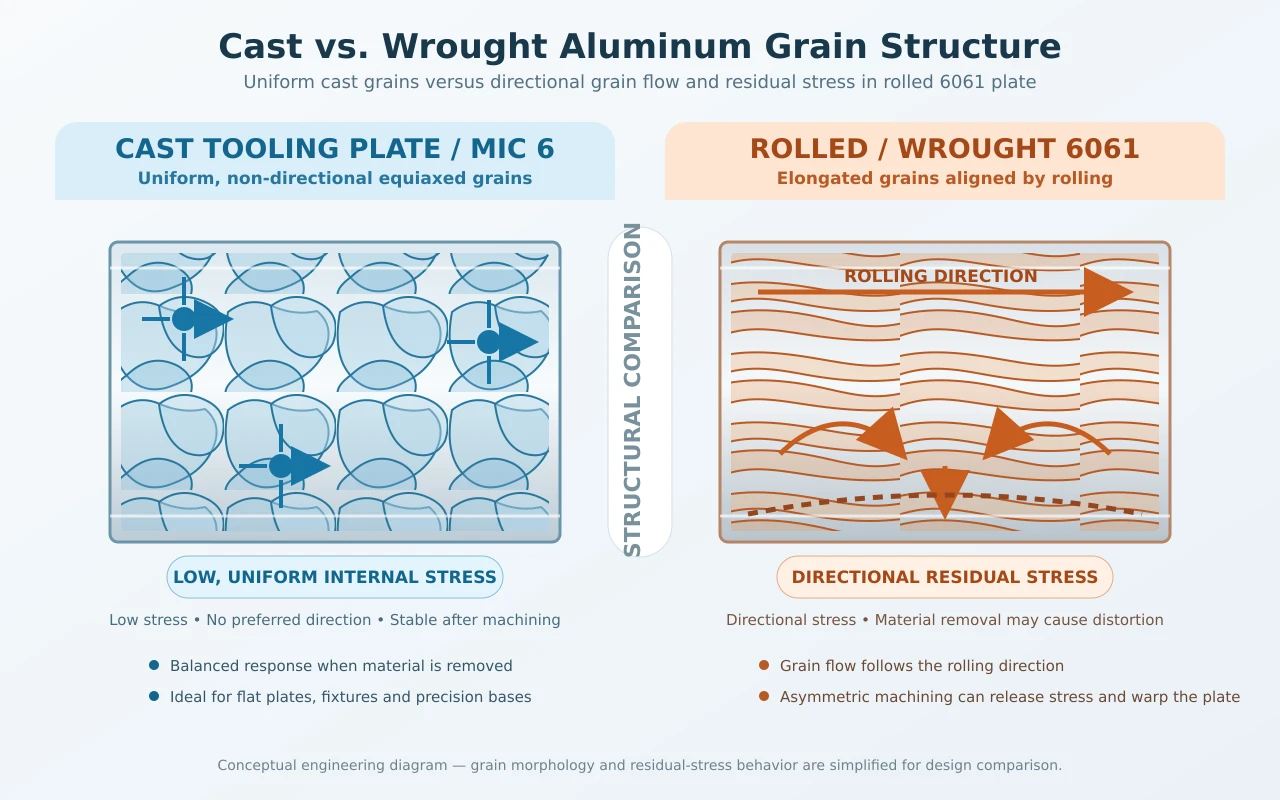
Unlike rolled aluminum plate, MIC 6 is cast near its final thickness and subjected to a separate thermal stress-relief process. Its relatively uniform, granular structure helps minimize the internal stresses that can cause a plate to move after heavy machining.
MIC 6 is supplied with precision-machined surfaces, making it suitable for projects where the incoming plate must already provide consistent thickness and flatness.
Key characteristics of MIC 6
- Precision-machined on both major faces
- Low residual stress
- Good dimensional stability during machining
- Predictable formation of small, uniform chips
- Consistent thickness across large plates
- Suitable for extensive pocketing and material removal
- Commonly used for tooling, fixtures, vacuum plates, and inspection bases
- Lower mechanical strength than 6061-T6 or T651
The MIC 6 product literature describes the material as fully stress-relieved and free-cutting, with small, uniform chip formation during high-speed machining. MIC 6 technical brochure
What Is 6061 Aluminum?
6061 is a wrought aluminum-magnesium-silicon alloy available in sheet, plate, bar, extrusion, and other stock forms.
For CNC-machined components, the most common conditions are:
- 6061-T6: solution heat-treated and artificially aged
- 6061-T651: solution heat-treated, stress-relieved by stretching, and artificially aged
- 6061-T6511: commonly supplied as stress-relieved extruded bar or profile
6061-T651 plate is usually preferable to standard T6 plate for extensive machining because the stretching operation reduces residual stress. However, it is still a wrought product with a directional grain structure, so thin sections and asymmetrical material removal may cause distortion.
Key characteristics of 6061
- Higher tensile and yield strength than MIC 6
- Good corrosion resistance
- Good weldability
- Consistent response to clear, colored, and hard anodizing
- Broad availability in different stock forms
- Suitable for load-bearing structural parts
- Good machinability with appropriate cutting parameters
- Greater distortion risk than cast tooling plate during heavy, uneven machining
Typical 6061-T6/T651 properties published by Kaiser Aluminum include an ultimate tensile strength of approximately 310 MPa and yield strength of approximately 276 MPa. Actual values depend on product form, thickness, specification, and supplier certification. Kaiser Aluminum 6061 technical data
MIC 6 Aluminum vs 6061: Quick Comparison
| Property | MIC 6 cast tooling plate | 6061-T6/T651 |
| Product type | Precision cast tooling plate | Wrought heat-treated aluminum |
| Primary advantage | Flatness and dimensional stability | Strength and versatility |
| Typical tensile strength | Approximately 165 MPa | Approximately 310 MPa |
| Typical yield strength | Approximately 105 MPa | Approximately 276 MPa |
| Typical elongation | Approximately 3% | Approximately 17% |
| Residual stress | Very low after thermal stress relief | Reduced in T651, but generally higher than cast tooling plate |
| Grain structure | Relatively uniform and non-directional | Directional from rolling or extrusion |
| Heavy material removal | Low distortion risk when machined correctly | Greater risk of movement, especially with asymmetric pocketing |
| Incoming surface | Precision machined on two sides | Mill finish unless supplied as precision-machined tooling plate |
| Flatness | Excellent for tooling applications | Depends on plate specification and supplier |
| Welding | Possible only with careful procedure; not normally the first choice | Generally good |
| Anodizing | Possible, but cosmetic appearance can vary | Normally more uniform and predictable |
| Corrosion resistance | Moderate | Good |
| Structural loading | Best for light or moderate noncritical loads | Better for structural and load-bearing parts |
| Availability | Primarily plate in a limited size range | Widely available in plate, sheet, bar, tube, and extrusion |
| Typical applications | Fixtures, vacuum chucks, inspection plates, tooling bases | Brackets, frames, housings, structural plates, robotics parts |
Mechanical properties are typical reference values rather than design allowables. Always confirm the material certificate and applicable specification before finalizing a load-bearing design.
Why MIC 6 and 6061 Behave Differently During Machining
Cast vs. wrought structure: a uniform stress-relieved tooling plate compared with directional grain and residual stress in rolled 6061.
The main difference between MIC 6 and 6061 is not the cutting tool or spindle speed. It is how the material was produced.
MIC 6 has a stress-relieved cast structure
MIC 6 is manufactured to minimize residual stress. When pockets, channels, and large openings are machined into the plate, removing material is less likely to release enough internal stress to cause major bowing or twisting.
This makes MIC 6 especially useful for:
- Large plates with extensive pockets
- Vacuum chuck plates
- Inspection fixtures
- Optical and motion-control baseplates
- Semiconductor equipment tooling
- Machine tables and router beds
- Assembly fixtures requiring repeatable datum surfaces
6061 has a directional wrought structure
6061 plate is rolled, while 6061 bars and profiles may be extruded. These processes produce directional grain flow and can leave residual stress within the stock.
T651 plate is stress-relieved by stretching, which improves machining stability. However, distortion can still occur when:
- Most material is removed from only one side
- Thin walls remain after machining
- Large pockets are machined without balanced roughing
- The plate is heavily clamped during machining
- Finishing is completed immediately after aggressive roughing
- The stock has insufficient allowance for stress redistribution
For precision 6061 plates, Rollyu may use balanced roughing, staged machining, controlled clamping, intermediate relaxation, and final face finishing to manage movement.
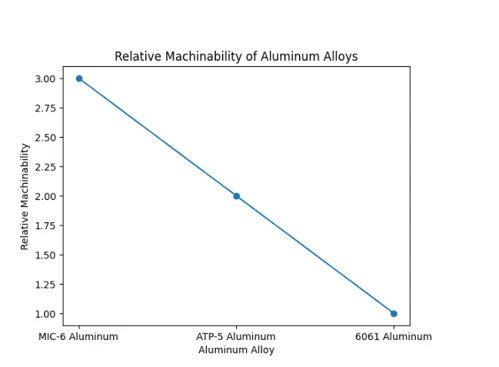
Is MIC 6 Easier to Machine Than 6061?
Both materials machine well, but they behave differently.
MIC 6 produces small, relatively uniform chips and is well suited to high-speed milling. Its low residual stress also makes the final geometry more predictable after extensive material removal.
6061 machines efficiently with sharp carbide tools, correct chip evacuation, and suitable coolant or lubrication. However, it can produce longer or more adhesive chips under unsuitable cutting conditions, and thin or heavily pocketed parts may move as internal stresses are released.
Therefore, “machinability” should not be reduced to a single numerical ranking.
MIC 6 machining advantages
- Predictable chip formation
- Low distortion after pocketing
- Good surface finish
- Reduced need to face large stock before machining
- Reliable flatness for fixtures and reference plates
- Stable behavior during multi-stage machining
6061 machining advantages
- Higher allowable structural strength
- Good drilling, tapping, milling, and turning performance
- Easier sourcing in many shapes and thicknesses
- Suitable for welded assemblies
- Better choice when anodizing appearance is important
- Often more cost-effective for structural production parts
Which Material Holds Flatness Better After Machining?
MIC 6 normally provides the more predictable result when the component is:
- Large and plate-like
- Extensively pocketed
- Thin relative to its overall length and width
- Used as a precision reference surface
- Required to maintain flatness without post-machining stress relief
MIC 6 precision tooling plate is commonly supplied with a thickness tolerance of approximately ±0.005 inch. Published flatness tolerances typically vary with plate thickness, so the applicable supplier specification must be confirmed for the ordered gauge.
6061-T651 can also produce accurate, flat parts, but machining strategy becomes more important. A large 6061 component may require:
- Oversized stock
- Balanced facing on both sides
- Symmetrical roughing
- Low-stress workholding
- A relaxation period after roughing
- Reinspection before finishing
- Final grinding or lapping for demanding flatness
Flatness is not determined by material alone
The final result also depends on:
- Plate dimensions and thickness
- Amount and location of material removed
- Tool pressure and cutting temperature
- Clamping force
- Machining sequence
- Datum strategy
- Surface finishing
- Inspection temperature
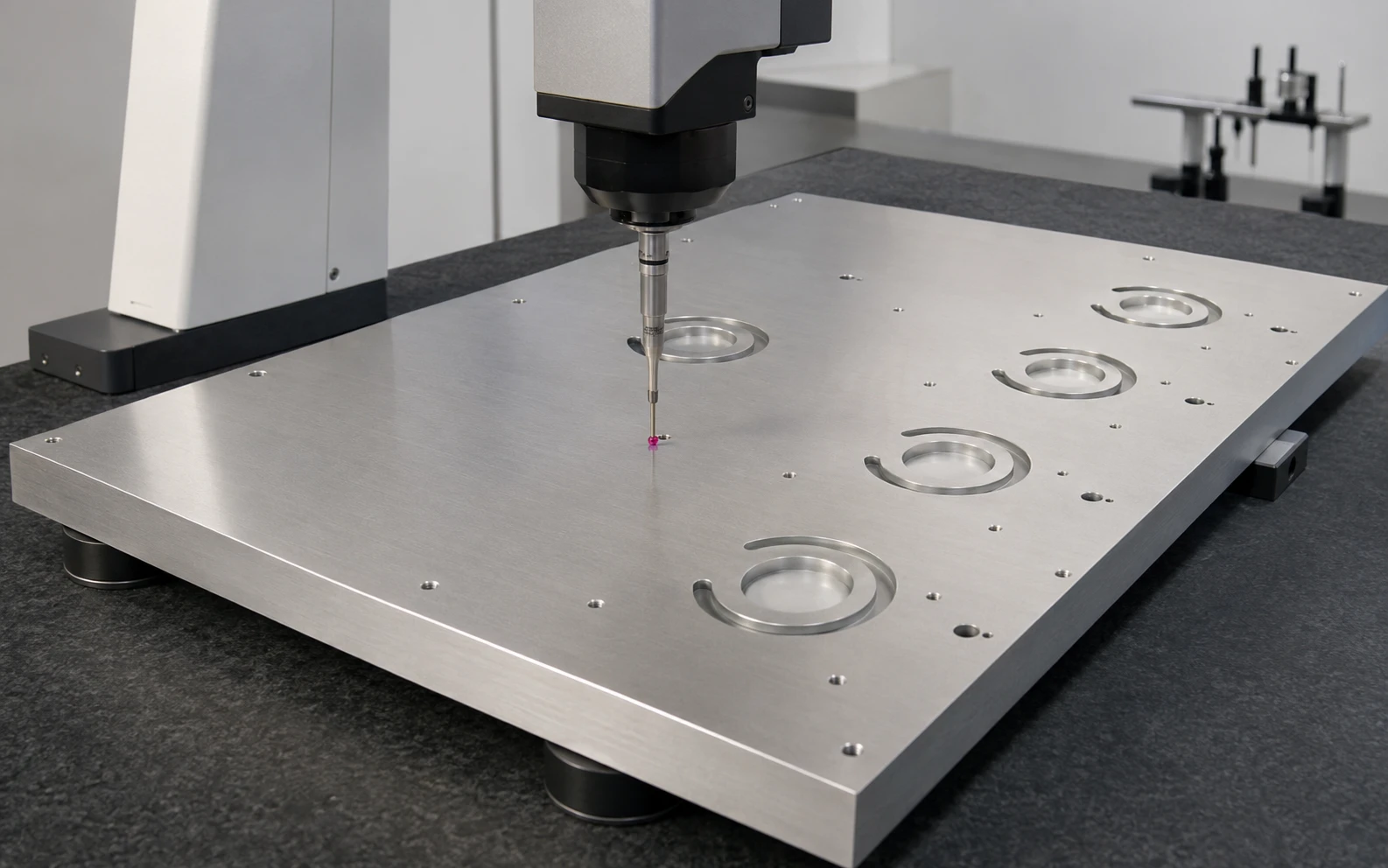
- Support method during CMM inspection
A stable material can still produce an out-of-tolerance part if the machining and inspection plan is incorrect.
Which Is Stronger: MIC 6 or 6061?
6061-T6 and T651 are significantly stronger than MIC 6.
This makes 6061 the more appropriate material for components exposed to:
- Structural loads
- Bending stress
- Shock or impact
- Repeated mechanical cycling
- Fastener preload
- Cantilever loads
- Robotic motion and acceleration
- Welded frame construction
MIC 6 should primarily be selected for stability and precision—not maximum mechanical strength.
When strength should override flatness
Choose 6061 when the part is a:
- Robotic arm bracket
- Motion-stage structural housing
- Motor mounting plate
- Load-bearing equipment frame
- Satellite or aerospace support bracket
- Medical-equipment structure
- Welded automation assembly
- High-preload mechanical connection
Choose MIC 6 when the part is a:
- Fixture plate
- Inspection base
- Vacuum chuck
- Calibration platform
- Machine reference plate
- Optical bench insert
- Semiconductor handling fixture
- Low-load precision equipment base
MIC 6 vs 6061 for Threads and Inserts
6061 generally provides better mechanical performance for direct threads because of its higher strength and ductility. MIC 6 can be drilled and tapped successfully, but repeated assembly may wear or damage threads, particularly when:
- Fasteners are frequently removed
- High tightening torque is required
- The thread engagement is short
- The equipment experiences vibration
- Stainless steel screws are used repeatedly
- The thread is close to a thin edge or pocket
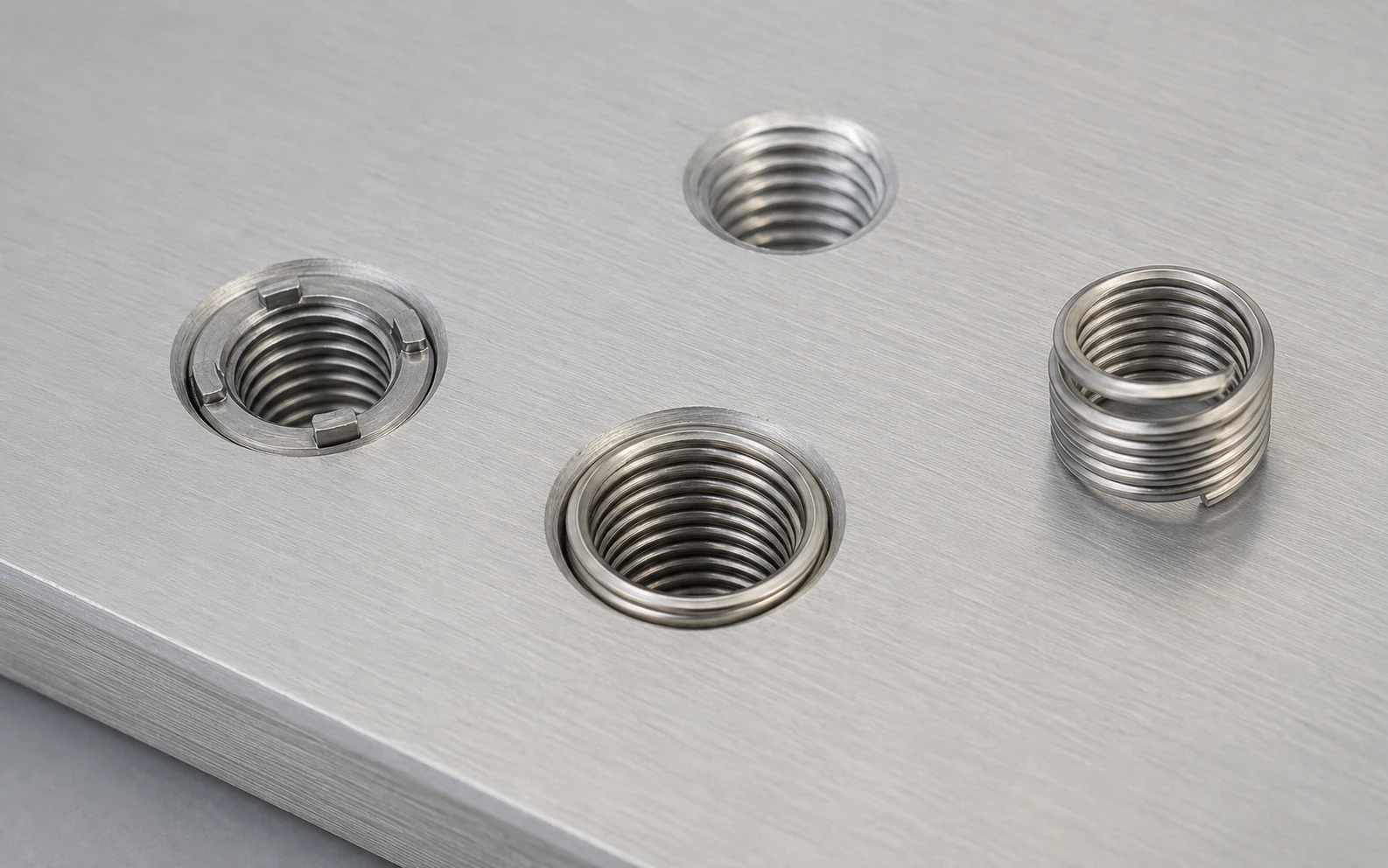
Thread reinforcement for MIC 6
For durable MIC 6 assemblies, consider:
- Stainless steel helical inserts
- Key-locking threaded inserts
- Solid threaded bushings
- Longer thread engagement
- Through-bolts with nuts
- Dowel pins for shear loads
- Separate steel wear plates
Thread inserts allow the MIC 6 plate to provide dimensional stability while the steel insert handles repeated fastener installation.
Surface Finishing: MIC 6 vs 6061
Anodizing 6061
6061 is normally the better choice for projects requiring:
- Clear anodizing
- Black anodizing
- Red, blue, or other decorative colors
- Type III hard anodizing
- Consistent cosmetic appearance
- Wear-resistant oxide layers
Critical bores, threaded holes, grounding areas, sealing surfaces, and bearing fits should be masked or dimensionally compensated for the coating thickness.
Anodizing MIC 6
MIC 6 can be anodized, but the cosmetic result may be less uniform than anodized 6061. Color variation or a mottled appearance may occur because MIC 6 is a cast tooling plate rather than a conventional wrought alloy.
For functional projects, possible options include:
- Clear or black anodizing after sample approval
- Hard anodizing after process validation
- Electroless nickel plating
- Chemical conversion coating
- Nickel or other engineered coatings
- Painting or powder coating where appropriate
- Leaving noncritical surfaces as machined
If appearance is important, Rollyu recommends processing a representative material sample before coating the full production batch.
MIC 6 vs 6061 for Welding
6061 is the preferred choice for welded aluminum assemblies.
It is commonly welded by TIG or MIG, although the heat-affected zone will lose some T6/T651 strength unless the assembly receives appropriate post-weld heat treatment.
MIC 6 is usually used as a machined plate rather than a welded structural material. Welding introduces localized heat and can compromise the stability that justified selecting MIC 6 in the first place.
For MIC 6 assemblies, mechanical fastening is often more practical:
- Bolts and threaded inserts
- Dowel pins
- Precision shoulders
- Clamping frames
- Replaceable brackets
- Bonded interfaces where technically appropriate
MIC 6 vs 6061 vs ATP-5
ATP-5 is a precision-machined cast tooling plate manufactured from an aluminum-magnesium alloy associated with AA 5083 chemistry. Like MIC 6, it is designed for dimensional stability and precision plate applications.
According to Vista Metals’ published data, ATP-5 is fully homogenized and stress-relieved, precision machined on both sides, and designed for vacuum integrity, anodizing, coatings, welding, and high-speed machining. Vista Metals ATP-5 data sheet
| Property | MIC 6 | ATP-5 | 6061-T6/T651 |
| Material form | Cast tooling plate | Cast tooling plate | Wrought alloy |
| Primary selection reason | Flatness and stability | Stability with higher strength and elongation | Structural strength and versatility |
| Typical tensile strength | 165 MPa | 283 MPa | 310 MPa |
| Typical yield strength | 105 MPa | 124 MPa | 276 MPa |
| Typical elongation | 3% | 12–15% | About 17% |
| Typical hardness | 65 HB | 70 HB | About 95 HB |
| Dimensional stability | Excellent | Excellent | Good when stress-relieved and correctly machined |
| Anodizing response | Functional but potentially variable | Generally more suitable | Generally good and consistent |
| Welding | Not normally preferred | Better cast-plate option for welding | Good |
| Vacuum applications | Commonly used | Vacuum integrity is a published feature | Possible with correct stock and leak-testing |
| Structural loading | Limited | Better than MIC 6, below 6061-T6 | Best of the three for higher loads |
| Typical applications | Fixtures, bases, vacuum plates | Fixtures, molds, vacuum tables, automation tooling | Frames, brackets, housings, structural plates |
When to choose ATP-5
ATP-5 may be a strong option when the project requires:
- Cast tooling-plate stability
- Higher elongation than MIC 6
- Improved corrosion resistance
- Better anodizing or plating response
- Welding of a precision cast plate
- Vacuum or pressure integrity
- Large tooling and automation plates
Material availability varies by region, size, and thickness. Rollyu can evaluate MIC 6, ATP-5, 6061-T651, and other cast tooling plate alternatives during the RFQ stage.
Application-Based Material Selection
MIC 6 and ATP-5, with their superior low residual stress and exceptional flatness, are the preferred choices for precision fixtures, vacuum chucks, and CMM inspection bases. Conversely, 6061-T6/T651 is better suited for load-bearing structural components and cosmetic parts due to its high mechanical strength and excellent weldability. In CNC machining, selecting the right material based on whether the part requires “high dimensional stability” or “high load-bearing strength” is key to optimizing machining efficiency, controlling costs, and extending component service lif
| Application | Recommended material | Selection reason |
| Precision fixture plate | MIC 6 or ATP-5 | Low stress and stable flatness |
| Vacuum chuck | MIC 6 or ATP-5 | Stable plate and predictable channel machining |
| CMM inspection base | MIC 6 | Dimensional stability |
| CNC router table | MIC 6 or ATP-5 | Large flat reference surface |
| Robot structural bracket | 6061-T6/T651 | Higher mechanical strength |
| Motion-control baseplate | MIC 6 for stability; 6061 for load | Depends on stiffness and load path |
| Optical mounting platform | MIC 6 | Stable datum surfaces |
| Welded machine frame | 6061 | Better weldability |
| Anodized equipment housing | 6061 | More consistent cosmetic finish |
| Mold or thermoforming plate | MIC 6 or ATP-5 | Stability during temperature and machining cycles |
| Semiconductor fixture | MIC 6 or ATP-5 | Flatness, repeatability, and complex channel machining |
| High-load mounting plate | 6061-T651 | Higher yield strength |
How to Choose Between MIC 6 and 6061
Before specifying the material, answer these questions:
Is the part load-bearing?
If yes, calculate the actual tensile, bending, fatigue, and fastener loads. 6061 is normally the safer starting point.
Will most of the plate be machined away?
If large pockets or channels remove substantial material, MIC 6 or ATP-5 may reduce distortion risk.
Is flatness a functional requirement?
State the required flatness, the inspection support method, the datum scheme, and the measurement temperature. Do not rely only on the incoming plate specification.
Does the part require welding?
6061 is generally preferred. ATP-5 may be considered when a cast tooling plate is necessary, subject to validated welding procedures.
Is a cosmetic anodized finish required?
6061 normally provides more predictable appearance. For MIC 6, approve a finish sample before production.
Will threads be assembled repeatedly?
For MIC 6, specify stainless steel inserts or another thread-reinforcement method.
Is material availability important?
6061 is usually available in more thicknesses, stock forms, and global supply channels. MIC 6 and ATP-5 availability should be confirmed early.
How Rollyu Precision Machines MIC 6 and 6061 Components
Rollyu Precision supports custom MIC 6, ATP-5, and 6061 aluminum projects from prototype quantities through repeat production.
Our machining and quality-planning support includes:
- Three-, four-, and five-axis CNC milling
- Large aluminum baseplate and fixture machining
- Vacuum channels and O-ring sealing grooves
- Precision drilling, reaming, boring, and tapping
- Stainless steel threaded insert installation
- Balanced roughing and distortion-control strategies
- Surface grinding and lapping coordination
- Anodizing, conversion coating, electroless nickel, and other finishes
- CMM inspection of flatness, hole position, and critical datums
- Material certification and dimensional inspection reports
- Protected packaging for finished reference surfaces
For suitable part sizes and geometries, Rollyu can support tight machining tolerances down to ±0.005 mm. Flatness and parallelism capabilities must be evaluated separately according to plate size, thickness, material-removal pattern, datum strategy, and inspection setup.
Final Verdict: MIC 6 or 6061?
Neither material is universally better.
Choose MIC 6 when the project prioritizes:
- Flatness
- Low residual stress
- Dimensional stability
- Extensive machining
- Precision tooling or inspection
- Reliable reference surfaces
Choose 6061-T6 or T651 when the project prioritizes:
- Structural strength
- Mechanical loading
- Welding
- Consistent anodizing
- Broad material availability
- Cost-effective production
Choose ATP-5 when you want:
- Cast tooling-plate stability
- Higher strength and elongation than MIC 6
- Better coating and welding characteristics
- Vacuum or pressure integrity
- An alternative precision tooling plate
The best material decision should be based on the finished component—not only the price or the incoming stock specification.
Frequently Asked Questions
Is MIC 6 stronger than 6061 aluminum?
No. 6061-T6 and T651 have substantially higher tensile and yield strength. MIC 6 is selected primarily for dimensional stability, flatness, and low-distortion machining.
Is MIC 6 easier to machine than 6061?
Both materials machine well. MIC 6 often behaves more predictably during extensive material removal because of its low residual stress and produces small, uniform chips. However, 6061 can achieve high machining productivity with suitable tooling and cutting parameters.
Is MIC 6 the same as 6061 aluminum?
No. MIC 6 is a proprietary precision cast tooling plate, while 6061 is a standardized wrought aluminum-magnesium-silicon alloy available in multiple tempers and stock forms.
Can MIC 6 replace 6061?
MIC 6 can replace 6061 in some low-load fixture, baseplate, vacuum chuck, and inspection-tool applications. It should not automatically replace 6061 in load-bearing structural components.
Can 6061 replace MIC 6?
Yes, when the design can tolerate additional machining steps and distortion-control measures. For demanding flatness, 6061 may require balanced roughing, stress-relieved stock, final grinding, or lapping.
Can MIC 6 be anodized?
Yes, but the color and cosmetic appearance may be less uniform than anodized 6061. A sample coupon or first-article finish approval is recommended.
Can MIC 6 be welded?
It can be welded under controlled conditions, but welding is generally avoided because heat can affect dimensional stability. Mechanical fastening is often a better assembly method.
What is the difference between MIC 6 and ATP-5?
Both are precision cast tooling plates. MIC 6 is widely specified for flatness and dimensional stability. ATP-5 typically provides higher strength and elongation and is promoted for improved corrosion resistance, welding, coatings, and vacuum integrity.
Which material is better for a vacuum chuck?
MIC 6 and ATP-5 are usually strong candidates because of their dimensional stability and precision-machined surfaces. Final selection should also consider porosity, vacuum integrity, plate size, surface treatment, and leak-testing requirements.
Which material is best for a robotic baseplate?
MIC 6 may be better when alignment and stable datum surfaces are the main requirements. 6061-T651 may be better when the plate carries significant structural or dynamic loads. Some systems use MIC 6 for the precision mounting platform and 6061 for the supporting frame.
Need Help Choosing MIC 6, 6061, or ATP-5?
Send Rollyu Precision your drawing, STEP file, material specification, flatness requirement, surface-finish requirement, and expected order quantity.
Our engineering team will review:
- Material suitability
- Distortion risk
- Machining and workholding strategy
- Thread and insert requirements
- Surface-treatment compatibility
- Datum and inspection planning
- Cost-effective material alternatives
| PRIMARY CTA Upload Your Drawing for a DFM Review |
| SECONDARY CTA Request a MIC 6 or 6061 Machining Quote |