POM, also known as Delrin or Polyoxymethylene, is one of the most commonly used engineering plastics in modern manufacturing. This thermoplastic is widely applied in components and manufacturing products because it combines reliable processing capability with balanced material characteristics. Today, these materials can be found in automotive, electronics, medical, and equipment manufacturing.
What Is POM (Delrin)
Definition of Polyoxymethylene (POM)
POM, short for Polyoxymethylene, is an engineering thermoplastic commonly known as Delrin or acetal. Acetal is the general material family name widely used in industrial manufacturing, while Delrin is one of the most recognized commercial grades. The resin is commonly used for components requiring stable material behavior and reliable manufacturing quality.
Difference Between POM-H and POM-C
POM materials are mainly divided into two categories: POM-H (homopolymer) and POM-C (copolymer). POM-H generally provides higher stiffness and structural strength, while POM-C offers better chemical resistance and improved processing reliability in certain environments.
| Property | POM-H | POM-C |
| Structure | Homopolymer | Copolymer |
| Stiffness | Higher | Moderate |
| Strength | Higher | Slightly Lower |
| Chemical Resistance | Moderate | Better |
| Moisture Resistance | Good | Good |
| Machining Stability | Good | Better |
| Typical Applications | Structural Parts | Chemical / Precision Parts |
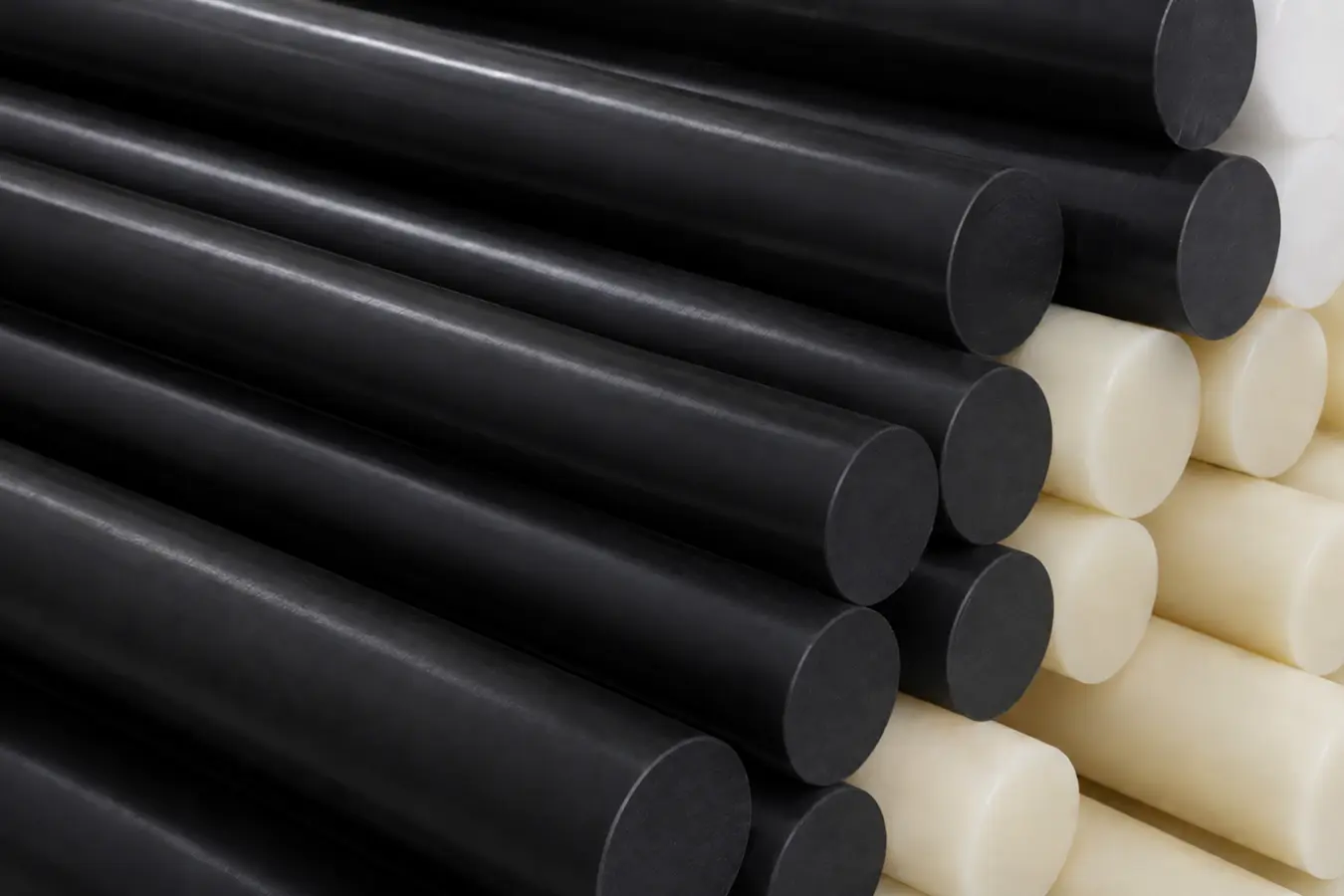
Key Characteristics of Delrin Material
Delrin material is commonly used in manufacturing applications because it combines dimensional consistency and processability. These characteristics make it suitable for automotive, electronics, medical, and automation applications.
Mechanical Properties and Strength of POM
High Strength and Rigidity
This material is known for its high stiffness and load-bearing capability compared with many standard plastics. Such properties allow parts to maintain structural integrity under continuous stress.
Wear Resistance and Fatigue Resistance
The polymer performs well in applications involving sliding contact or rotational motion. Its low-friction behavior helps reduce surface wear during long operating cycles, making it suitable for gears, bushings, rollers, and moving parts.
Hardness and Dimensional Stability
Delrin also provides relatively high surface hardness while maintaining accurate part geometry during operation. This helps reduce unwanted movement or deformation between mating parts.
Advantages and Limitations of POM Material
One advantage of the thermoplastic is that it combines structural capability with lightweight properties, allowing certain metal parts to be replaced in suitable applications. However, prolonged exposure to excessive heat or strong impact conditions may affect long-term durability.
Chemical Structure and Material Characteristics
Molecular Structure of POM
POM is a semi-crystalline engineering thermoplastic with a dense molecular arrangement. This structure contributes to smooth surface behavior and low internal friction in sliding-contact applications.
Chemical Resistance
The material has good resistance to oils, fuels, lubricants, coolant, grease, hydraulic fluid, and many common workshop chemicals. Because of this, it is frequently used for fluid-handling parts, fuel-related hardware, and equipment exposed to cleaning chemicals or workshop environments.
Low Moisture Absorption
Compared with nylon and some other plastics, the resin absorbs very little moisture from surrounding environments. This helps reduce humidity-related expansion during storage and operation.
Heat Resistance Limitations
Although the polymer performs well under normal operating temperatures, continuous exposure to excessive heat may cause thermal degradation or deformation.
POM CNC Machining and Processing Performance
Common POM Processing Methods
CNC Milling — Used for slots, contours, pockets, and detailed plastic features.
CNC Turning — Suitable for cylindrical parts such as bushings, spacers, rollers, and sleeves.
Injection Molding — Commonly used for large-volume plastic parts with repeatable structures.
Extrusion — Primarily used to produce rods, sheets, and tubes for secondary fabrication.
| Processing Method | Typical Use | Advantages |
| CNC Milling | Slots, contours, pockets | Good for complex features |
| CNC Turning | Bushings, rollers, sleeves | Efficient for round parts |
| Injection Molding | Large-volume production | High repeatability |
| Extrusion | Rods, sheets, tubes | Suitable for secondary machining |
Why POM Is Suitable for CNC Machining
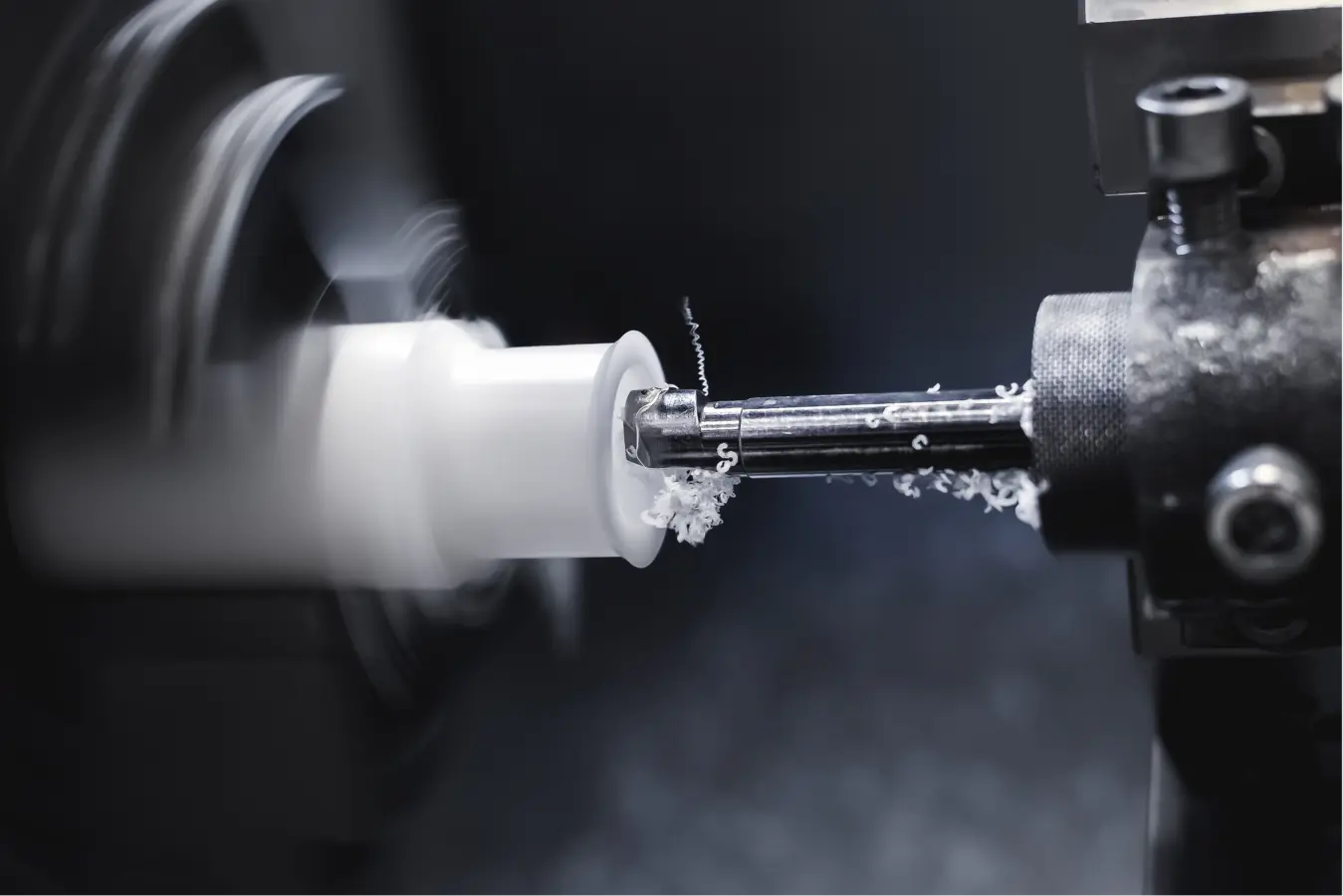
Chip evacuation is usually cleaner than with many softer plastics. During milling and turning operations, the material produces relatively stable chip flow and lower cutting resistance, helping reduce burr formation around machined edges.
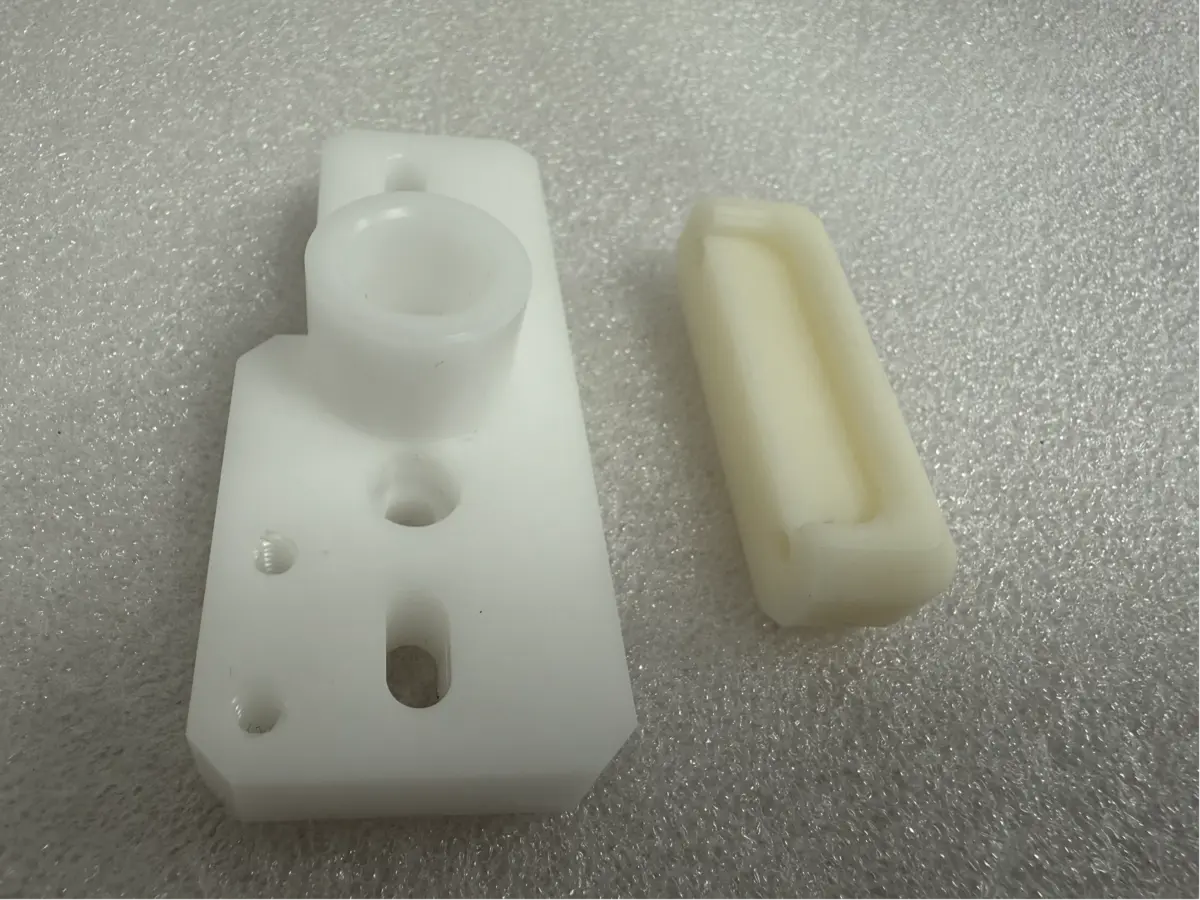
Machining Challenges and Considerations
During long machining cycles, excessive heat may affect edge condition or create localized deformation. Thin-wall parts may also shift if fixture pressure is too high. In some cases, stringy chips can accumulate around cutting areas, especially during deep-pocket or high-speed operations.
Threading and Tight-Tolerance Machining
Threaded POM parts require careful control of tapping depth, hole accuracy, and fixture stability during machining. Improper tapping parameters may increase the risk of thread stripping, especially in small-diameter holes or thin-wall sections. Burr control around threaded holes is also important for assemblies requiring smooth engagement and accurate fitting.
Common Machining Defects in POM Parts
Several machining defects may appear during POM processing if cutting conditions are not properly controlled. Common issues include burr formation, melting edges, chip wrapping, hole deformation, and tapping cracks around threaded features. These problems are typically related to excessive heat, unstable fixturing, improper feed rates, or worn cutting tools.
Surface Finish and Dimensional Accuracy
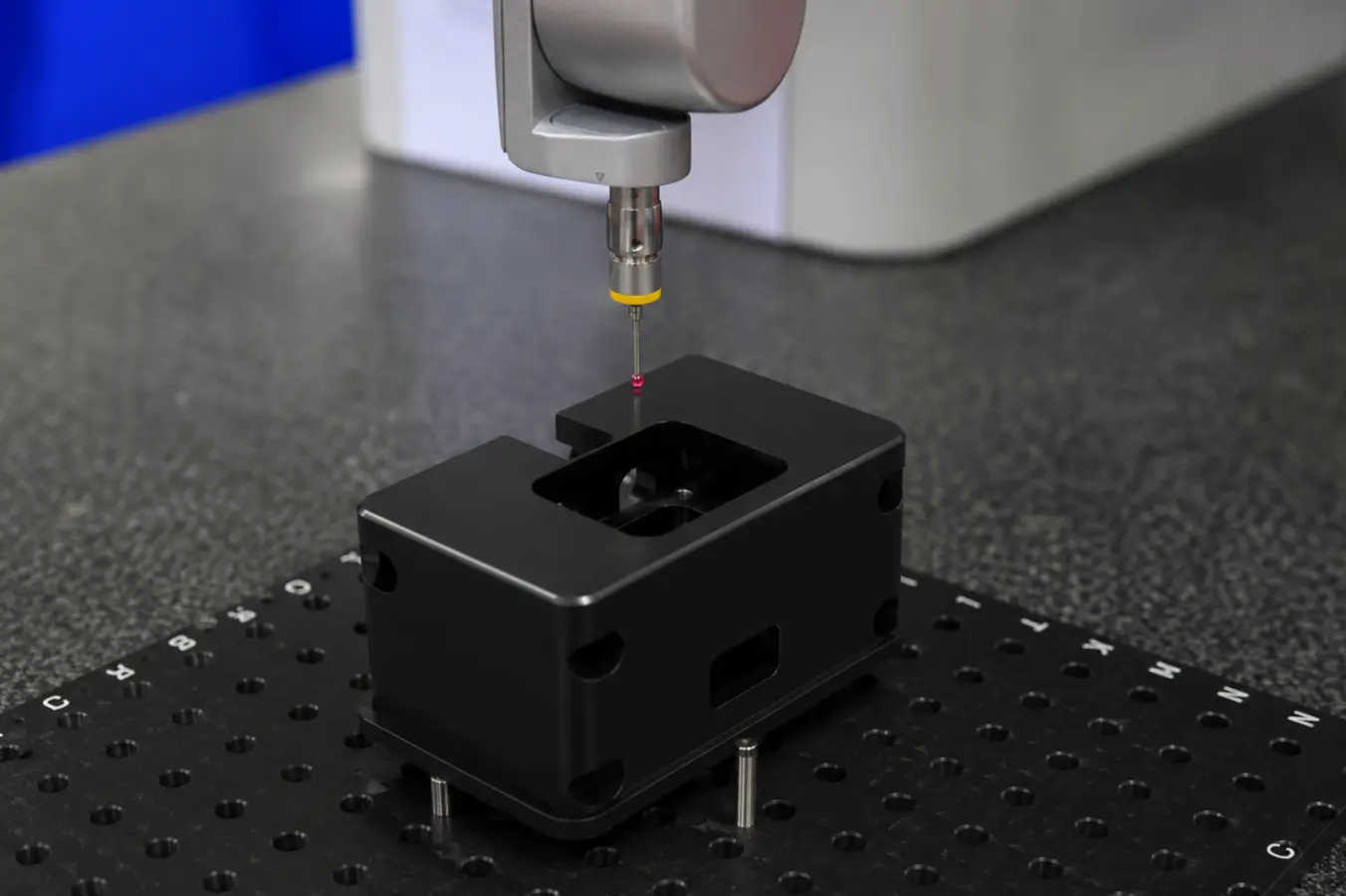
Under suitable machining conditions, this thermoplastic can achieve smooth machined surfaces and relatively tight tolerances. For tighter specifications, manufacturers often optimize cutting paths, fixture support, and tooling stability throughout production.
Industrial Applications of POM (Delrin)
Automotive Components
Repeated movement inside locking systems and fuel-delivery assemblies often requires low-friction materials capable of long operating cycles. Because of this, POM is widely used for door-lock mechanisms, fuel-system hardware, small gears, and interior functional structures.
Medical Device Parts
Compact medical assemblies often require lightweight materials with clean machining behavior and accurate dimensional fitting. Delrin is frequently selected for positioning fixtures, instrument handles, laboratory devices, and diagnostic equipment containing small moving structures.
Electronics and Electrical Components
The thermoplastic is frequently found in connectors, switch parts, cable-management hardware, and sensor housings. Small moving features inside electronic products often require materials capable of maintaining accurate fitting during repeated operation.
Aerospace and Industrial Equipment
In aerospace and automation systems, the polymer is commonly used for guides, rollers, spacers, and motion-control hardware involving repeated positioning or sliding contact.
Chemical Processing Applications
Because the material resists many oils, fuels, and industrial fluids, it is commonly used in pump hardware and fluid-control systems. However, strong oxidizing chemicals and elevated operating temperatures still require careful compatibility evaluation.
Future Trends of POM Materials
Modified and Reinforced POM Materials
Manufacturers are developing reinforced grades with improved toughness, thermal resistance, and wear characteristics. Glass-fiber-reinforced materials and self-lubricating formulations are becoming increasingly common in high-load applications.
POM in New Energy and Automation Industries
Electric vehicles, robotics, and automated production systems are creating new opportunities for engineering plastics. POM is increasingly used in charging-system hardware, sensor carriers, and compact automation structures.
Future Demand for Precision Plastic Components
As products become smaller and more integrated, demand for high-accuracy plastic parts continues increasing across electronics, medical technology, and automation sectors.
Conclusion
POM is commonly used for gears, rollers, spacers, and other parts that require smooth movement and stable performance. The material machines cleanly and works well for both custom parts and production runs. Rollyu provides CNC machined POM components for a wide range of industrial applications.
Frequently Asked Questions About POM (Delrin)
What is POM material used for
POM is commonly used for gears, bushings, rollers, connectors, spacers, and other plastic parts used in automotive, electronics, and manufacturing products.
Is Delrin stronger than nylon
Delrin generally offers higher stiffness and better dimensional control, while nylon usually provides better impact resistance and flexibility.
Is POM good for CNC machining
Yes. The material machines cleanly and is widely used for milling, turning, drilling, and threading operations in custom plastic part manufacturing.
What are the disadvantages of POM
POM is less suitable for prolonged high-temperature environments and may crack under strong impact or excessive stress concentration.
Can POM replace metal components
In certain lightweight and low-load applications, the thermoplastic can replace metal parts to reduce weight and simplify manufacturing.