
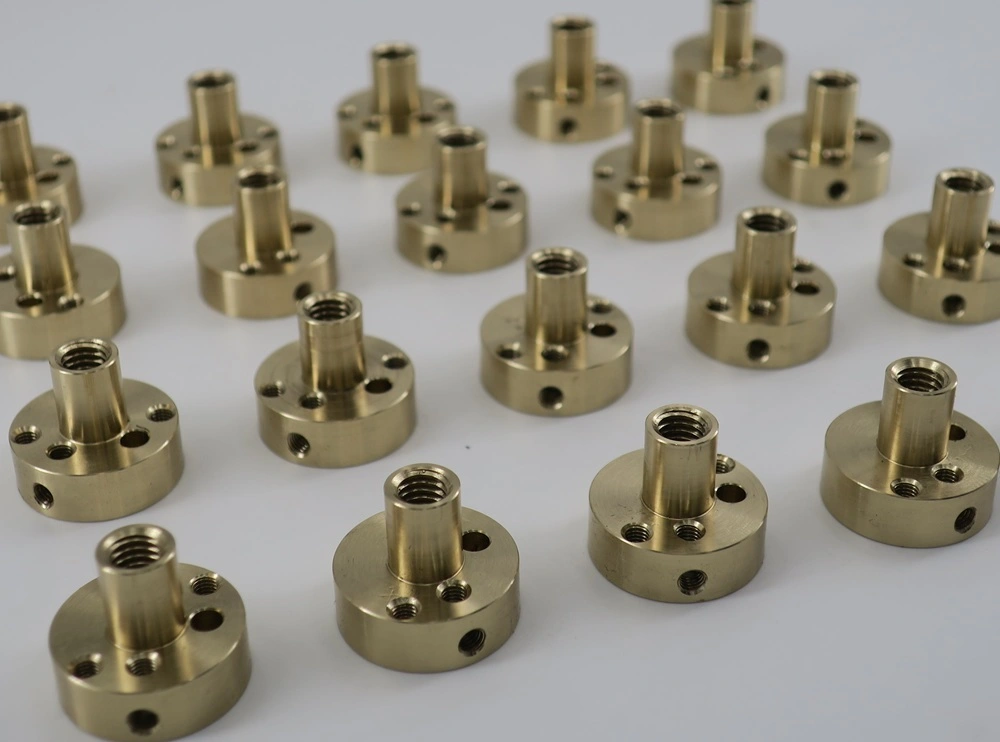

Aluminum bronze is a high-strength copper alloy renowned for its outstanding wear and corrosion resistance, making it essential for harsh marine and industrial environments. However, the exact tough nature that makes it so valuable also requires highly specialized manufacturing skills. At Rollyu Precision Hardware, we have extensive experience mastering this material. In this guide, we will dive deep into aluminum bronze machining properties, applications, and CNC challenges. Whether you are designing aerospace components or heavy-duty bearings, understanding how this alloy behaves during CNC machining is critical for achieving tight tolerances and flawless finishes for your next project.
What Is Aluminum Bronze
Aluminium bronze (often spelled as aluminium bronze in European and international markets) is a highly specialized family of copper alloys renowned for their exceptional strength, durability, and resistance to corrosion. While traditional bronzes have been used for thousands of years, the introduction of aluminum into the copper matrix creates a modern, high-performance material designed to withstand some of the most demanding industrial environments, from marine engineering to aerospace components.
The Core Aluminum Bronze Composition
To understand why this material performs so well, we have to look at the aluminium bronze composition. Unlike standard brass (copper and zinc) or traditional bronze (copper and tin), this alloy is primarily composed of copper blended with 5% to 11% aluminum.
Depending on the specific industrial requirements, other alloying agents such as iron, manganese, silicon, or nickel are often added to enhance its mechanical properties. A prime example is nickel aluminum bronze (NAB). By adding nickel and iron, this specific variant achieves incredible fracture toughness, anti-galling properties, and extreme resistance to seawater corrosion, making it a top choice for manufacturing ship propellers, valves, and heavy-duty pump components.
Why Is It Stronger Than Regular Bronze
If both are copper-based, what makes aluminium bronze so much stronger than traditional tin-based bronze? The answer lies in metallurgy and surface chemistry.
First, the addition of aluminum fundamentally alters the crystalline structure of the copper, significantly increasing both its tensile strength and yield strength. It allows the material to carry much heavier loads without deforming.
Second, and perhaps most importantly, the aluminum in the alloy reacts with oxygen in the atmosphere to form a thin, tough, and self-healing layer of aluminum oxide (alumina) on the surface of the metal. This microscopic shield prevents further oxidation and provides outstanding resistance to wear, chemicals, and saltwater. Regular bronze lacks this protective alumina layer, which is why aluminum bronze easily outperforms it in high-stress, highly corrosive CNC machining applications.
Properties of Aluminum Bronze Alloys
Aluminum bronze alloys are known for their excellent combination of mechanical strength, corrosion resistance, and long-term wear performance. As a high-performance copper alloy, aluminum bronze is widely used in marine, aerospace, heavy equipment, and industrial applications where components must operate reliably under harsh conditions.
Compared with standard bronze and many other copper alloys, aluminum bronze provides significantly higher strength and better resistance to abrasion, impact, and surface damage. These aluminum bronze properties make the material especially suitable for precision components exposed to heavy loads, friction, and corrosive environments.
Corrosion Resistance and Marine Performance
One of the most important advantages of aluminium bronze is its exceptional corrosion resistance, particularly in seawater and chloride-rich environments. Because of this, aluminum bronze is commonly used as a marine bronze alloy for shipbuilding, offshore systems, pump housings, valve components, and other applications exposed to saltwater.
Unlike many ferrous materials, aluminum bronze forms a naturally protective oxide layer on the surface, helping prevent rapid corrosion and material degradation in aggressive industrial environments.
Wear Resistance and Mechanical Strength
Aluminum bronze alloys also offer excellent wear resistance and anti-galling performance. The material performs extremely well in applications involving continuous friction, sliding contact, and high mechanical stress. As a result, aluminum bronze is widely used for bearings, bushings, gears, sleeves, and other heavy-duty moving components.
Compared with standard bronze materials, alu bronze material provides much higher mechanical strength while still maintaining good machinability for precision CNC manufacturing. Certain grades, such as nickel aluminum bronze, are especially valued in aerospace, marine, and heavy industrial systems because of their superior fatigue strength and structural stability.
Conductivity and Industrial Reliability
In addition to its mechanical durability, aluminum bronze offers good thermal and electrical conductivity compared with many steel-based alloys. This allows the material to perform reliably in both structural and conductive applications where strength and corrosion resistance are equally important.
Key Properties of Alu Bronze Materials
| Property | Rating / Characteristic | Industrial Benefit for CNC Parts |
| Corrosion Resistance | Excellent (Especially Seawater) | Ideal for marine hardware, offshore oil rigs, and pump housings. |
| Wear Resistance | Very High | Exceptional lifespan for parts exposed to continuous sliding friction. |
| Tensile Strength | High (Often 85,000+ psi) | Withstands massive mechanical loads without deforming. |
| Anti-Galling | Excellent | Prevents metal-to-metal surface damage in heavy-duty bearings. |
| Machinability | Moderate (approx. 50-60%) | Requires rigid CNC setups, carbide tooling, and expert chip control. |
Common Types of Aluminum Bronze
When specifying materials for CNC machining, it is important to know that alu bronze material is not a single material, but a family of alloys. Each grade is engineered with specific alloying elements to meet different industrial demands. Below are the most common types and how they compare to other industry-standard materials.
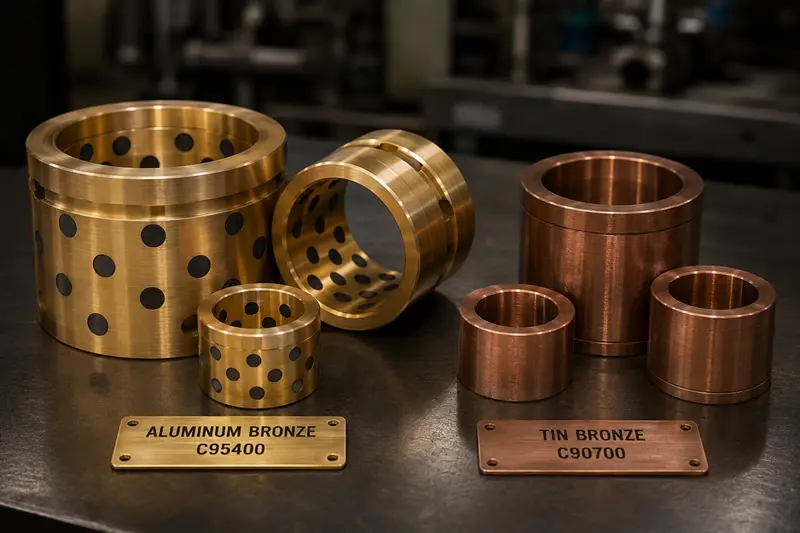
C95400 Aluminum Bronze
Widely regarded as the go-to general-purpose grade, C95400 (or 954 bronze) provides an ideal balance of high tensile strength, machinability, and fatigue resistance. Because it thrives under heavy loads and abrasive friction, manufacturers routinely rely on this tough alloy to produce heavy-duty gears, worm wheels, wear plates, and high-strength bushings that easily outlast standard metals in harsh environments.
Nickel Aluminum Bronze
For demanding marine and aerospace environments, nickel aluminum bronze (NAB) is a highly reliable choice. By incorporating nickel and iron into the base alloy, NAB achieves superior fracture toughness along with exceptional resistance to seawater corrosion, pitting, and marine biofouling. Sometimes referred to as aluminum nickel bronze, this resilient material is routinely specified for critical, high-stress components like ship propellers, offshore oil rig hardware, desalination plant valves, and heavy-duty pump shafts.
Bearing Bronze vs Aluminum Bronze
When specifying materials for high-friction parts like bushings and bearings, engineers often weigh aluminum bronze against traditional bearing bronze. A frequent point of confusion in this debate revolves around the popular 660 bronze (SAE 660 / C93200). To ensure your CNC machined components perform as intended, it is important to clarify that 660 is actually a high-leaded tin bronze, not an aluminum bronze at all.
Here is how they compare:
660 Bronze (Standard Bearing Bronze)
Offers excellent anti-friction qualities, good conformability, and works perfectly in applications with medium loads and high speeds. It also tolerates temporary losses of lubrication well.
Aluminum Bronze (e.g., C95400)
Designed for extreme conditions. It handles massive loads, heavy impacts, and low speeds where 660 bronze would be crushed. However, because it is much harder, it requires reliable, continuous lubrication and harder mating shafts to prevent scoring.
At Rollyu Precision Hardware, we help our clients navigate these exact comparisons, ensuring you choose the right alloy for your specific mechanical requirements.
Phosphor Bronze vs Aluminum Bronze
When deciding between these two materials, the right choice depends entirely on the mechanical demands of your application.
Phosphor Bronze
Alloyed with tin and a small amount of phosphorus, this material is highly valued for its electrical conductivity, superb spring qualities, and excellent fatigue resistance. It is relatively easy to CNC machine and serves as the industry standard for manufacturing electrical contacts, fasteners, and light-duty springs.
Aluminum Bronze
By contrast, this heavy-duty alloy trades conductivity for brute strength. It is significantly harder, offering vastly superior wear and saltwater corrosion resistance. While it is much tougher on cutting tools, it is the absolute clear winner for high-stress applications—such as marine hardware and heavy-load bearings—where softer metals like phosphor bronze would quickly deform or fail.
| Bronze Alloy | Defining Characteristic | Load Capacity | Machinability |
| Aluminum Bronze (e.g., C95400) | Brute strength & saltwater resistance | Very High | Difficult (Requires rigid tooling) |
| 660 Bearing Bronze (C93200) | Excellent anti-friction & conformability | Medium | Excellent |
| Phosphor Bronze | High fatigue resistance & conductivity | Low to Medium | Good |
| Nickel Aluminum Bronze (NAB) | Ultimate fracture toughness & anti-pitting | Extreme | Difficult |
CNC Machining Services for Aluminum Bronze Components
Machining aluminum bronze requires specialized expertise to handle high cutting forces and rapid tool wear. At Rollyu Precision, we provide professional CNC machining services for custom aluminum bronze components. We deliver high precision parts for marine systems, aerospace equipment, and heavy industrial applications, ensuring reliable performance, strict dimensional accuracy, and exceptional wear resistance in demanding environments.
Precision CNC Milling
Our precision CNC milling process creates complex shapes and intricate features from tough aluminum bronze alloys. We utilize advanced rigid milling centers and premium carbide tooling to minimize heat buildup, ensuring excellent surface finishes and tight tolerances for custom brackets, wear plates, and machine housings.
Advanced CNC Turning
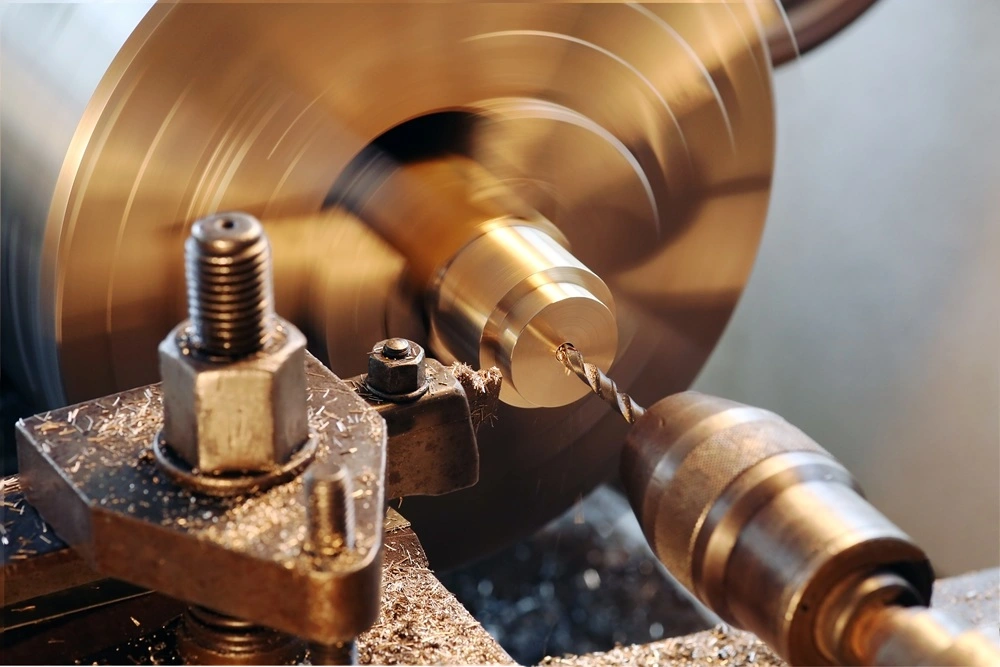
We utilize advanced lathe centers for precision CNC turning of aluminum bronze to manufacture cylindrical parts like bushings, bearings, and valve stems. By optimizing cutting speeds and coolant flow, our turning process achieves precise diameters, superior concentricity, and excellent surface finishes for high load industrial applications.
Wire EDM Services
Electrical discharge machining is ideal for cutting complex geometries in hard aluminum bronze without inducing mechanical stress. Our wire EDM services deliver exact profiles and sharp internal corners, making it the perfect solution for creating precision gears, custom molds, and specialized fluid control components.
CNC Drilling Capabilities
Drilling aluminum bronze demands careful chip evacuation and temperature control to prevent material hardening. Our CNC drilling process uses specialized drill bits and advanced cooling techniques to produce accurate holes, deep cavities, and precise threads for aerospace hardware, marine pumps, and heavy duty industrial valves.
Tight Tolerances and Small Batch Production
Many aluminum bronze applications require high dimensional accuracy and long-term mechanical stability. Our machining processes are designed to support tight tolerances for critical industrial components used in harsh operating conditions.
In addition to production machining, we also support:
- Small batch production
- Prototype machining
- Custom engineered components
- Low-volume industrial parts
- Precision replacement components
Whether you require CNC milled aluminum bronze parts or precision CNC turned bronze components, our team can help manufacture reliable parts that meet demanding engineering and performance requirements.
Why Is Aluminum Bronze Difficult to Machine
Machining aluminum bronze is significantly tougher than working with standard brass or steel. The very properties that give it exceptional strength and wear resistance also generate high cutting forces, excessive heat, and rapid tool wear. To successfully overcome these challenges, manufacturers must rely on specialized tooling strategies, optimized cutting parameters, and highly stable process control.
Gummy Chips and Poor Chip Control
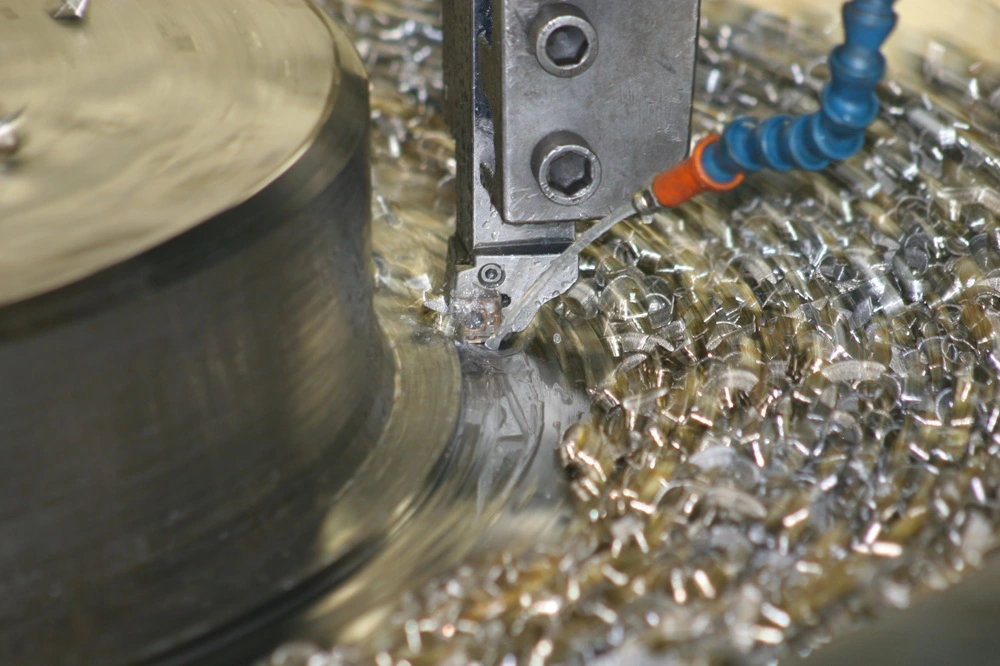
One of the biggest challenges in aluminum bronze machining is the formation of long, gummy chips. Instead of breaking cleanly during cutting, the material tends to produce continuous stringy chips that can wrap around tools and workpieces.
This poor chip control can lead to:
- Surface finish problems
- Tool instability
- Increased machine downtime
- Damage to finished components
For bronze CNC machining operations, proper chip evacuation is extremely important to maintain machining stability and dimensional accuracy.
Rapid Tool Wear and Heat Buildup
Aluminum bronze alloys generate significant friction during cutting, which causes rapid heat buildup at the tool edge. Because the material combines high strength with abrasive characteristics, cutting tools can wear out much faster compared with aluminum or standard steels.
Excessive heat can also lead to:
- Reduced tool life
- Poor surface quality
- Dimensional instability
- Built-up edge formation
To improve aluminum bronze machinability, manufacturers often use high-performance carbide tooling combined with optimized coolant strategies to reduce friction and stabilize cutting temperatures.
Work Hardening During Machining
Another major issue when machining copper alloys such as aluminum bronze is work hardening. During aggressive cutting operations, the surface layer of the material can quickly harden under pressure and heat.
Once work hardening occurs, the material becomes even more difficult to machine, leading to:
- Increased cutting resistance
- Accelerated tool wear
- Reduced machining efficiency
Maintaining stable cutting speeds and proper feed rates is critical to minimize this effect during bronze CNC operations.
CNC Machining Tips for Aluminum Bronze
Successful aluminum bronze machining depends heavily on proper machining strategies and tooling selection. To improve machining performance and reduce production costs, manufacturers commonly apply the following methods:
- Use sharp carbide tooling for better wear resistance
- Apply high-pressure coolant to control heat buildup
- Optimize cutting speed and feed rates
- Avoid excessive tool engagement
- Maintain stable chip evacuation during machining
With the correct CNC machining setup, aluminum bronze alloys can still achieve excellent dimensional accuracy and surface finish for demanding industrial applications such as marine hardware, valve systems, bearings, and aerospace components.
| Machining Challenge | Why It Happens | Rollyu Precision CNC Solution |
| Gummy, Stringy Chips | High material ductility prevents chips from breaking cleanly. | Utilize sharp carbide inserts with optimized chip breakers and high-pressure coolant. |
| Rapid Tool Wear | Abrasive material structure generates extreme friction. | Apply premium coated tooling and optimize feed rates to minimize cutting edge degradation. |
| Excessive Heat Buildup | Lower thermal conductivity than aluminum retains heat at the cut. | Use targeted flood coolant and avoid excessive tool engagement to stabilize temperatures. |
| Work Hardening | Material surface hardens under high pressure and rubbing. | Maintain aggressive, continuous feed rates; never let the cutting tool dwell or rub on the surface |
Common Applications of Aluminum Bronze
Because of its excellent corrosion resistance, high mechanical strength, and outstanding wear performance, aluminum bronze is widely used in demanding industrial environments where standard copper alloys or steels may fail prematurely. At Rollyu Precision, we leverage these properties to CNC machine custom precision components exposed to heavy loads, continuous friction, moisture, and corrosive operating conditions.
Today, our aluminum bronze machined parts serve critical roles across aerospace, automation, and fluid control system.
Aerospace and Defense Components
Certain grades, particularly nickel aluminum bronze, are heavily utilized in the aerospace sector because of their high strength-to-weight ratio, fatigue resistance, and dimensional stability. Rollyu Precision frequently machines these materials to meet the tight tolerances required for critical mechanical flight systems.
Typical applications include:
- Aerospace structural components
- Landing gear hardware and bearings
- High-load aircraft bushings
- Hydraulic system actuators
Automation and Robotics Systems
Aluminum bronze components are essential for the smooth, continuous operation of modern automation systems and industrial robotics. They offer the exceptional wear resistance and high strength needed to reduce maintenance downtime and ensure long-lasting performance in demanding automated production environments.
Typical applications include:
- Precision bushings and sleeve bearings
- Wear plates and sliding guides
- Worm gears and robotic joint components
- Custom leadscrew nuts
- Heavy-duty fastening hardware
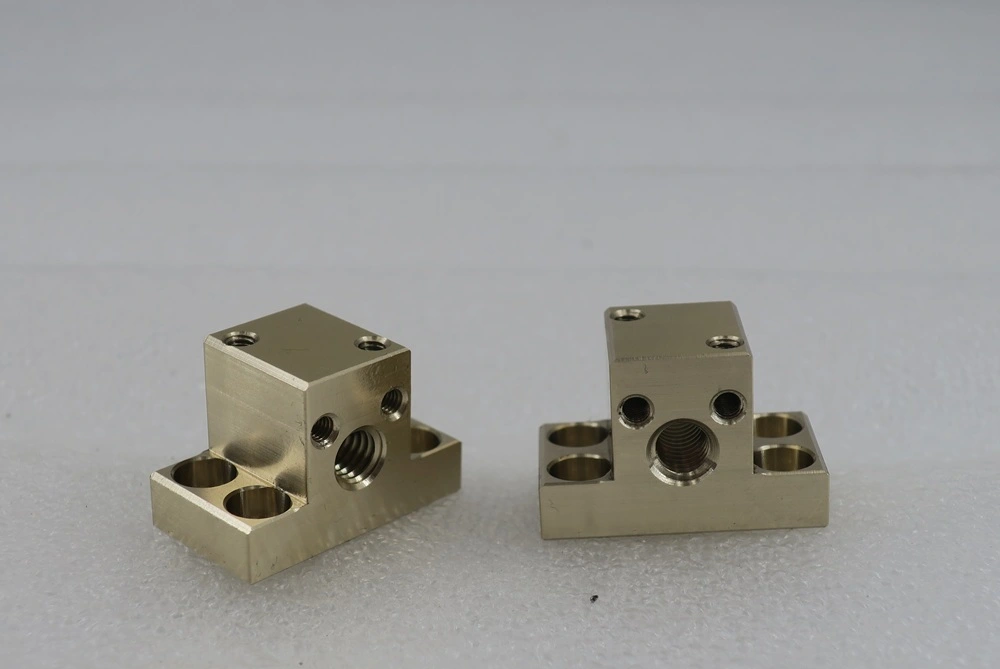
Industrial Bearings and Bushings
Known for its outstanding anti-galling properties, aluminum bronze is a top choice for high-load friction applications. Machined bearings and bushings made from this alloy can operate continuously under high mechanical stress while maintaining an extended service life, far outperforming softer standard bronze alloys.
Typical applications include:
- Heavy-duty industrial bushings
- Sleeve bearings for rotating equipment
- Sliding wear components
- Friction-resistant mechanical assemblies
Pump and Valve (Fluid Control) Systems
Fluid control is a major application area for aluminum bronze. The material performs exceptionally well in systems involving high pressure, fluid friction, and repeated mechanical movement. Its unique blend of machinability and corrosion resistance makes it ideal for handling both industrial fluids and harsh chemicals.
Typical applications include:
- High-pressure valve bodies and seats
- Precision valve stems
- Pump housings and impellers
- Sealing components
- Flow control hardware
Frequently Asked Questions About Aluminum Bronze
Is aluminum bronze corrosion resistant
Yes. This alloy is highly corrosion resistant, especially in seawater, chloride-rich environments, and harsh industrial conditions. The alloy forms a protective oxide layer on the surface, helping prevent rapid corrosion and material degradation. Because of this, it is widely used for marine components, automation,pump parts, valve systems, and offshore equipment.
Is aluminum bronze difficult to machine
Yes. Aluminum bronze machining is generally considered more difficult than machining standard brass or softer copper alloys. The material produces high cutting forces, rapid heat buildup, gummy chips, and accelerated tool wear during CNC machining. Successful aluminum bronze machining usually requires carbide tooling, optimized cutting speeds, stable coolant application, and proper chip evacuation.
What is 954 aluminum bronze
954 aluminum bronze, also known as C95400 aluminum bronze, is a high-strength copper alloy containing aluminum and iron. It offers excellent wear resistance, high mechanical strength, and strong corrosion resistance, making it suitable for heavy-duty industrial applications such as bushings, gears, bearings, valve components, and marine hardware.
What is the difference between aluminum bronze and phosphor bronze
The main difference is that aluminum bronze provides much higher strength, better wear resistance, and superior seawater corrosion resistance compared with phosphor bronze. Phosphor bronze is generally easier to machine and offers better electrical conductivity, making it more suitable for springs, electrical contacts, and precision wear parts.
Does aluminum bronze rust
No. Aluminum bronze does not rust like iron or carbon steel because it does not contain enough iron to form traditional rust. However, the surface may gradually develop oxidation or discoloration over time, especially in harsh environments. This oxidation layer actually helps improve corrosion resistance.
Is aluminum bronze good for marine applications
Yes. Aluminum bronze is considered one of the best copper alloys for marine applications because of its excellent seawater resistance, anti-corrosion properties, and resistance to biofouling. It is commonly used for ship hardware, marine pump parts, propeller systems, valve components, and offshore equipment exposed to saltwater environments.
Conclusion
Aluminum bronze is a heavy-duty copper alloy built to survive extreme environments. While its hardness and heat retention can make it tough to machine, its outstanding resistance to wear, heavy loads, and saltwater corrosion makes it an irreplaceable material for marine, aerospace, and heavy equipment applications.
Machining this challenging alloy takes the right tooling and real expertise. Rollyu Precision specializes in custom aluminum bronze CNC milling and turning, delivering reliable, tight-tolerance parts from rapid prototypes to full production runs. Need durable custom components for your next project? Contact us today to discuss your design and get a free quote.