

6061 and 6063 are both heat-treatable 6xxx-series aluminum alloys, but they are not interchangeable. For most machined parts, 6061 is the stronger and more broadly available starting point. For extruded profiles, visible surfaces, and parts where corrosion resistance and anodized appearance matter more than maximum load capacity, 6063 can be the better fit.
The right choice depends on more than a property table. Engineers and buyers should compare the temper, starting stock, load path, wall thickness, cosmetic requirements, post-machining finish, inspection plan, and production quantity. This guide explains how those factors affect CNC machining, part quality, and total manufacturing risk.
| Quick answer
Choose 6061 when strength, stiffness, general machinability, and readily available plate or bar are the priorities. Choose 6063 when the design starts from an extrusion, requires a clean cosmetic anodized surface, or favors complex profiles and corrosion resistance over higher structural strength. |
What Is the Main Difference Between 6061 and 6063 Aluminum?
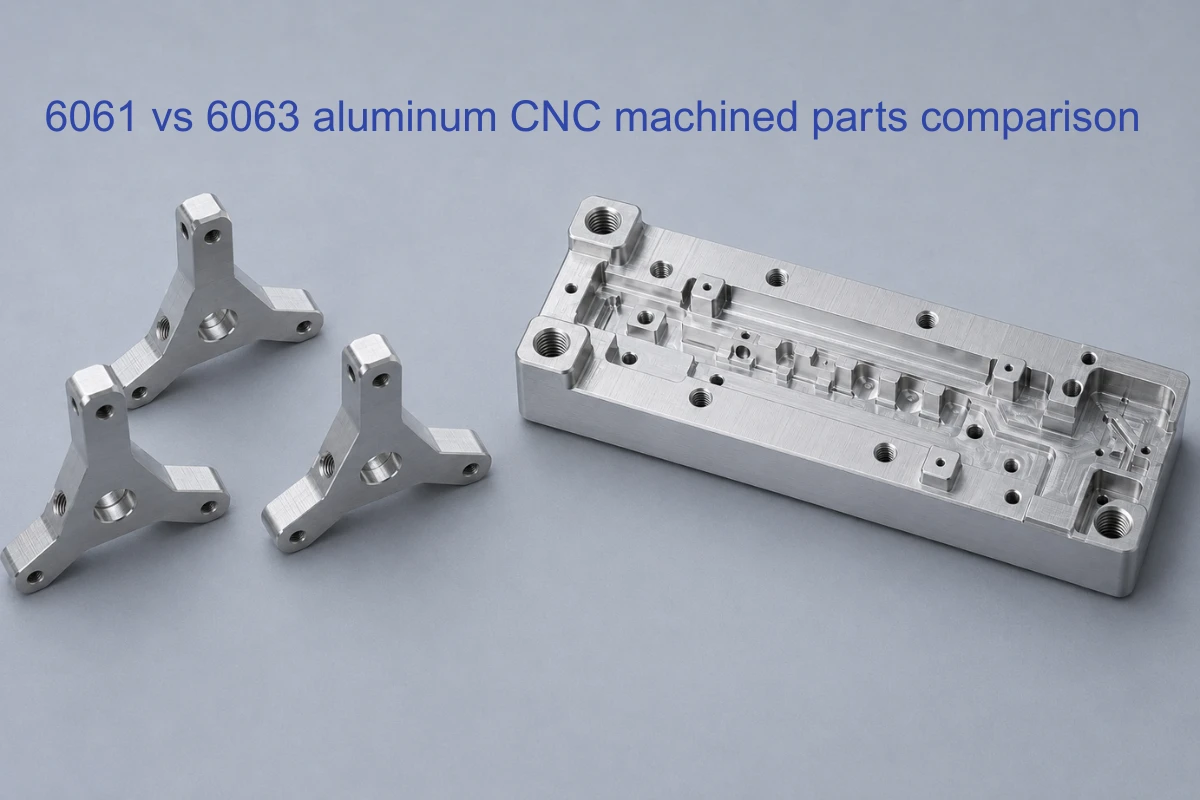
Both alloys use magnesium and silicon as their principal alloying elements. Their different composition limits and common tempers produce different engineering behavior. In comparable tempers, 6061 normally provides higher tensile and yield strength. 6063 generally offers better extrudability, a smoother as-extruded surface, strong corrosion resistance, and an excellent response to decorative anodizing.
This distinction matters because a CNC shop does not machine an alloy name in isolation. It machines a specific product form and temper. A 6061-T651 plate, a 6061-T6 bar, a 6063-T5 extrusion, and a 6063-T6 extrusion can respond differently to clamping, material removal, straightness control, and finishing.
| Selection factor | 6061 aluminum | 6063 aluminum |
| Typical design priority | Balanced structural performance and general CNC use | Extrudability, visible finish, corrosion resistance |
| Relative strength | Higher in comparable common tempers | Lower than 6061 in comparable common tempers |
| Common stock forms | Plate, bar, tube, and extrusion | Extrusion, tube, channel, and profile |
| CNC cutting behavior | Usually the easier all-around machining choice | Machinable, but softer material may smear or build up on the cutting edge |
| Thin/long profile risk | Depends on stock and geometry | Extrusions can release residual stress and move after cutting |
| Anodized appearance | Good, but chemistry and stock history can affect shade | Often preferred for smooth, consistent cosmetic results |
| Typical precision parts | Brackets, housings, base plates, fixtures, mounts | Rails, frames, profile housings, covers, heat-sink profiles |
Property values vary with temper, thickness, stock form, specification, and supplier. Final design decisions should use the applicable material standard and the mill certificate for the purchased lot.
6061 vs 6063 Strength: Which Alloy Handles More Load?
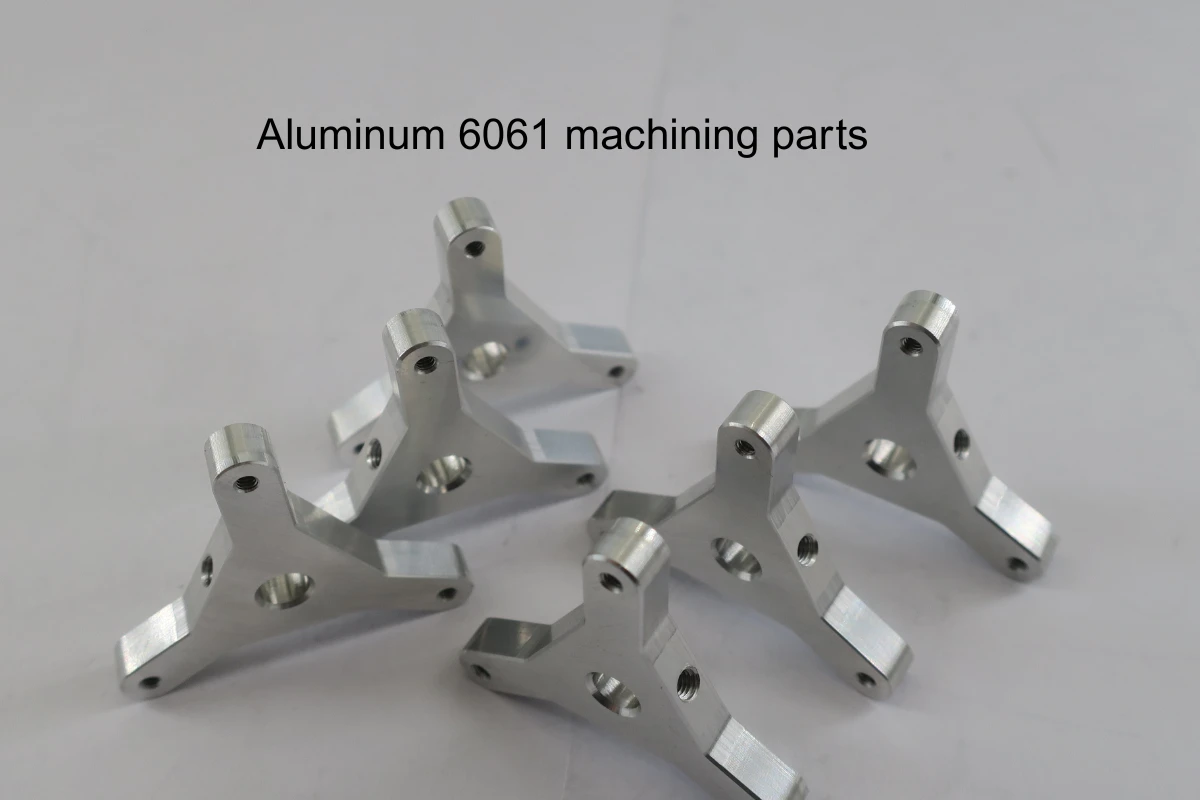
For load-bearing machined components, 6061 is normally the safer starting point. In commonly specified T6 conditions, it generally has higher yield and tensile strength than 6063. This makes 6061 a common choice for machine brackets, motion-control bases, robot structures, fixtures, equipment frames, and housings with threaded or highly loaded features.
6063 should not be rejected simply because it is lower in strength. It performs well in lightly loaded rails, enclosures, heat-sink profiles, covers, instrument frames, and other components where geometry provides stiffness. However, a 6063 part should not be substituted for a 6061 part without checking the actual load, vibration, fatigue, thread engagement, wall thickness, safety factor, and temper.
Strength Is Not the Same as Dimensional Stability
A stronger alloy does not automatically remain flatter after machining. Flatness and positional accuracy also depend on the starting stock, residual stress, grain direction, pocket depth, wall symmetry, clamping force, heat input, and when the part is inspected. A deeply pocketed 6061 plate can distort, and a long 6063 extrusion can bow after sections are removed.
For tight-tolerance parts, the machining plan should include balanced stock removal, staged roughing and finishing, appropriate stress-relieved stock when available, controlled workholding, and inspection after the part has been unclamped.
Which Is Better for CNC Machining: 6061 or 6063?
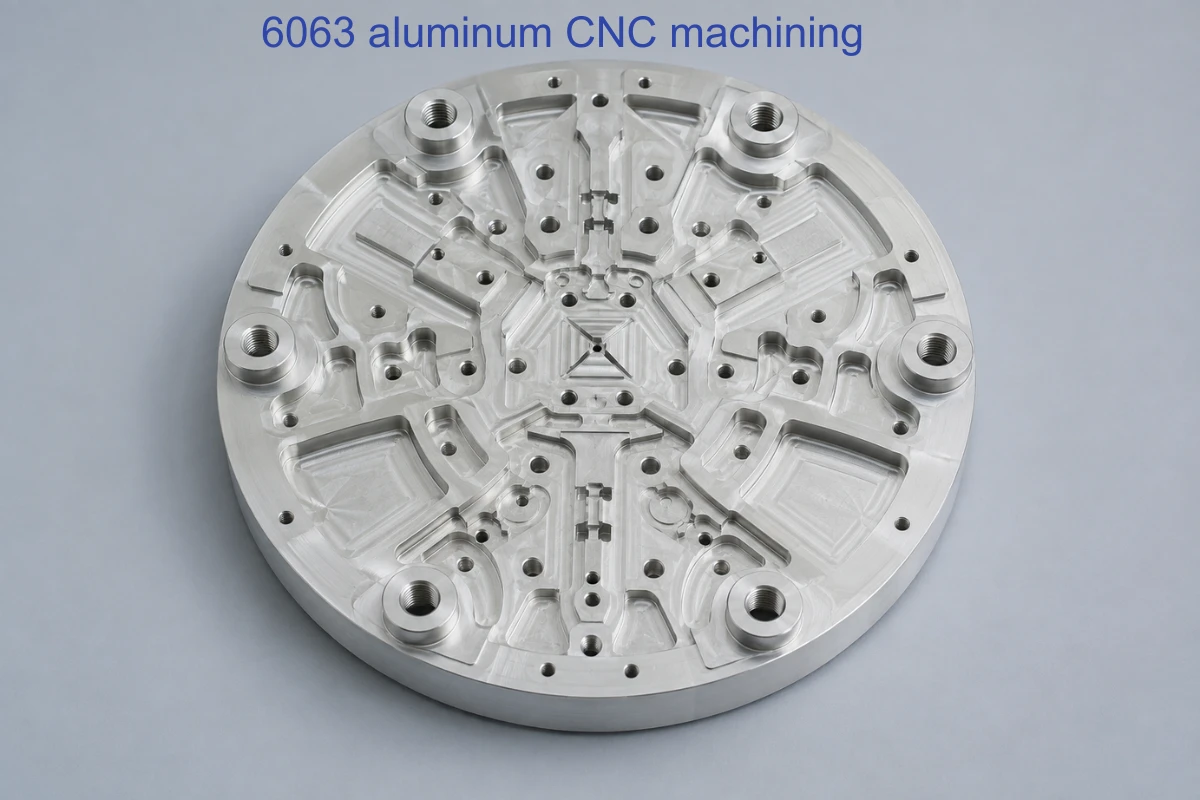
6061 is usually preferred for general CNC milling and turning. It is widely stocked, cuts predictably with aluminum-specific tooling, and supports a broad range of structural and precision applications. 6063 can also be CNC machined successfully, especially when the blank is an extrusion that already contains the required cross-section.
Machining 6061 Aluminum
- Well suited to milled plates, brackets, housings, mounts, fixtures, and turned components.
- Commonly available in plate and bar, which simplifies prototypes and low-volume production.
- Supports pockets, bores, threads, sealing faces, and multi-axis features when the drawing defines realistic tolerances.
- Still requires distortion control for thin walls, large pockets, and tight flatness or parallelism.
Machining 6063 Aluminum
- Best suited when an extrusion removes substantial machining time and material waste.
- Useful for long rails, profile housings, frames, heat sinks, channels, and visible aluminum components.
- Sharp polished cutting edges, effective chip evacuation, and suitable coolant help reduce built-up edge and surface smearing.
- Soft jaws, broad support, and controlled clamping help protect cosmetic faces and prevent thin profiles from collapsing.
- Long or asymmetric extrusions may require staged machining and intermediate straightness checks.
Do Not Copy Cutting Parameters Blindly
Spindle speed and feed should be selected from the cutter diameter, flute count, tool geometry, machine capability, radial and axial engagement, coolant strategy, and required surface finish. A fixed speed copied from a generic material guide may be unsuitable for a small end mill, a large face mill, or a thin-wall profile. The shop should validate the process on the actual stock and record the approved parameters for production.
6061 vs 6063 for Anodizing and Cosmetic Surfaces
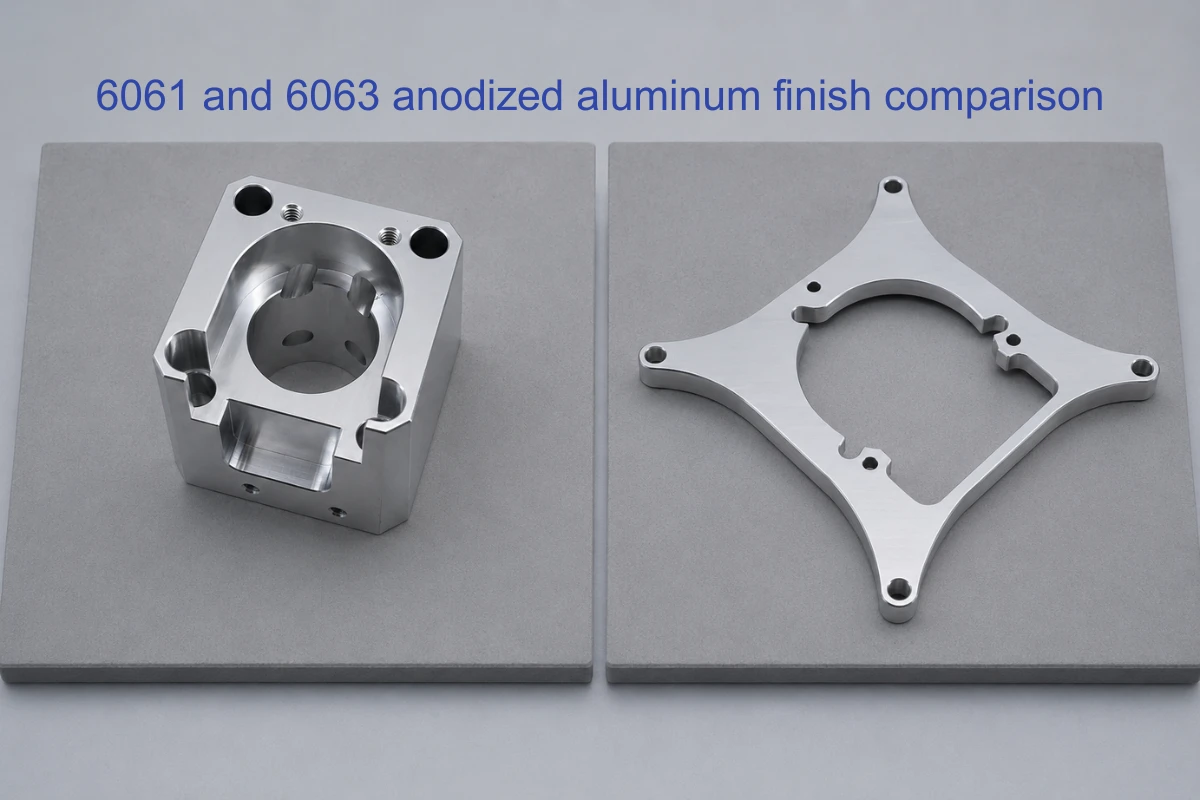
Both alloys can be anodized, but 6063 is widely selected for visible extrusions because its surface quality and alloy chemistry can support a clean, consistent cosmetic result. This is valuable for exposed rails, frames, instrument housings, lighting components, display structures, and motion-control covers.
6061 also anodizes well and remains the more common choice for many functional CNC parts. The final appearance of either alloy depends on more than the alloy number. Material lot, temper, grain direction, extrusion history, surface roughness, tool marks, bead blasting, racking position, bath control, dye, sealing, and part orientation can all affect color and gloss.
How to Reduce Anodizing Variation
- Use one verified alloy, temper, and material lot for cosmetic assemblies whenever possible.
- Define visible faces, acceptable color range, gloss, texture, and comparison method on the drawing or finish specification.
- Machine visible surfaces with a consistent toolpath direction and avoid hand blending unless it is controlled.
- Create an approved limit sample for color-critical production instead of relying only on a color name.
- Mask threads, electrical contact areas, bearing seats, sealing faces, and precision fits where coating buildup is unacceptable.
- Inspect critical dimensions after anodizing when coating thickness can affect assembly.
Stock Form Can Decide the Best Alloy
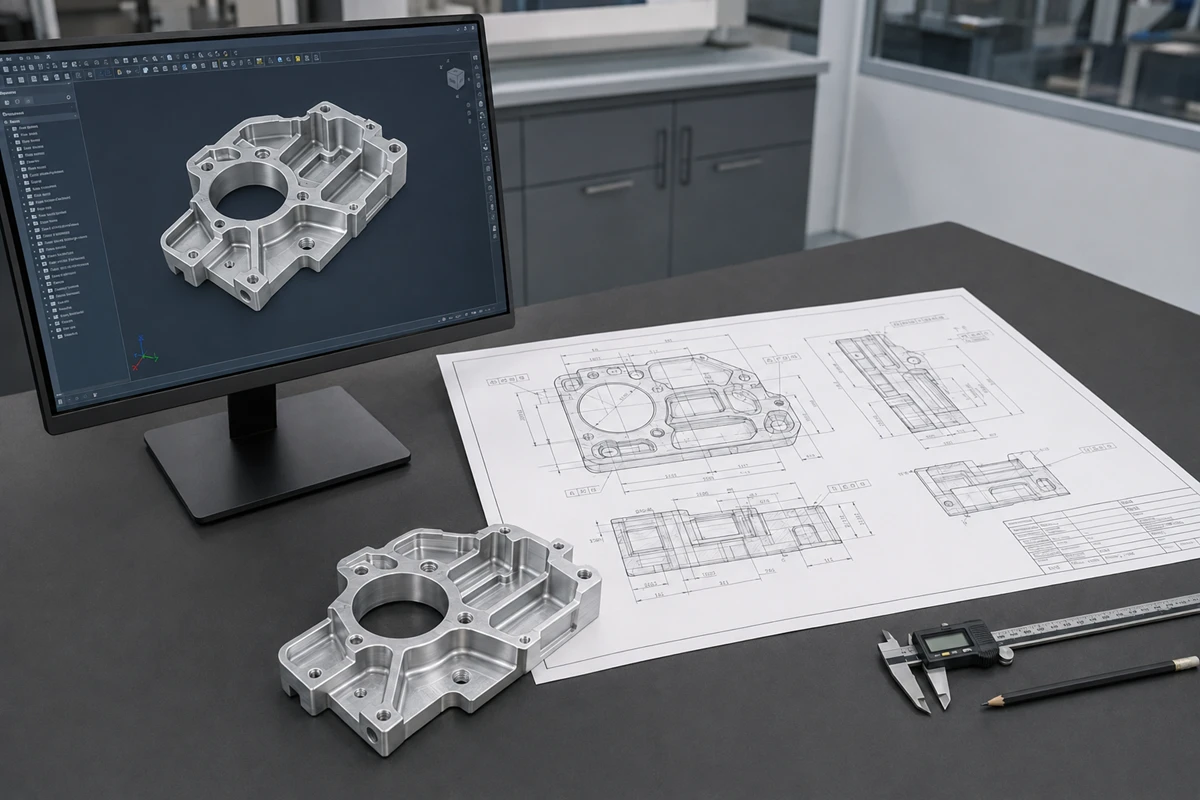
The best alloy on paper may not be the best manufacturing route. A 6063 extrusion can be economical when its profile eliminates deep slotting, repeated cavities, or large amounts of scrap. A 6061 plate or bar can be more practical when the geometry is fully three-dimensional, production volume is low, or extrusion tooling is not justified.
| Part condition | Preferred starting point | Why |
| Prototype machined from standard plate or bar | 6061 | Broad availability and a straightforward low-volume route |
| Long rail or repeated constant cross-section | 6063 extrusion | Near-net profile can reduce cycle time and material waste |
| Highly loaded bracket or machine base | 6061 | Higher strength in comparable common tempers |
| Visible anodized profile or frame | 6063 | Strong extrusion and cosmetic-finish advantages |
| Deep 3D pockets and multiple precision bores | Usually 6061 | General machinability and stock availability |
| Thin cosmetic cover based on an extrusion | Often 6063 | Efficient profile plus good visible surface quality |
Typical CNC Machined Applications
Applications Commonly Suited to 6061
- Motion-control stage bases, motor mounts, actuator brackets, and equipment frames
- Robotic end-effector brackets, joint housings, sensor mounts, and fixture plates
- Medical and life-science equipment housings, internal structures, and automation fixtures
- Photonics mounts, optical breadboard accessories, instrument chassis, and alignment hardware
- General industrial prototypes and low-to-medium-volume machined components
Applications Commonly Suited to 6063
- Linear rails, guide profiles, covers, frames, and long motion-system components
- Extruded heat-sink profiles with secondary milling, drilling, or tapping
- Visible instrument bezels, panels, profile housings, and anodized covers
- Lighting bodies, optical support profiles, display structures, and clean exterior components
- Lightly loaded corrosion-resistant frames and enclosure systems
Cost Comparison: Raw Material Price Is Only One Factor
There is no universal rule that 6063 finished parts always cost less than 6061 parts. Price and availability change with region, temper, form, size, order quantity, and mill minimums. More importantly, total part cost includes extrusion tooling, minimum order quantity, material utilization, setup, cycle time, fixturing, deburring, straightening, anodizing yield, inspection, and scrap risk.
For prototypes, 6061 plate or bar may be less expensive because it avoids extrusion tooling and minimum quantities. For stable production of a long constant profile, a 6063 extrusion can reduce material removal and cycle time enough to provide the better total cost. A supplier should compare both routes when annual volume and geometry justify the analysis.
How to Choose Between 6061 and 6063
| Engineering question | If yes | Likely direction |
| Does the part carry significant structural, shock, or fatigue load? | Strength is a primary requirement | Start with 6061 and verify the temper |
| Is the part based on a long, constant, or complex cross-section? | Extrusion can remove major machining time | Evaluate 6063 extrusion |
| Is a uniform visible anodized finish a primary requirement? | Cosmetic variation drives acceptance | Evaluate 6063, lot control, and finish samples |
| Is this an early prototype or low-volume 3D geometry? | Tooling and MOQ should stay low | 6061 plate or bar is often practical |
| Are walls thin or features heavily pocketed? | Distortion risk is high | Review stock, roughing balance, fixturing, and inspection |
| Are critical bores, threads, or fits anodized? | Coating changes dimensions | Define masking and post-finish inspection |
A Practical Decision Rule
Use 6061 as the default for general-purpose CNC machined parts unless the drawing has a clear reason to favor 6063. Use 6063 when extrusion economics, corrosion resistance, or cosmetic anodizing is central to the design. If the part needs both a 6063-style profile and higher structural strength, compare 6061 extrusion availability, section geometry, temper, and production cost rather than forcing the choice from alloy name alone.
What to Include in an RFQ for 6061 or 6063 Parts
- 3D CAD model and a controlled 2D drawing revision
- Alloy, temper, material specification, and any certification or traceability requirement
- Preferred stock form, or permission for the supplier to propose plate, bar, tube, or extrusion
- Critical dimensions, datum scheme, geometric tolerances, fits, threads, and surface roughness
- Visible and hidden surfaces, cosmetic acceptance criteria, color target, gloss, texture, and approved sample requirements
- Anodizing type, coating thickness, masking locations, sealing, and any corrosion or wear testing
- Prototype quantity, annual volume, batch size, inspection reports, packaging, and delivery schedule
How Rollyu Precision Supports Aluminum CNC Machining
Rollyu Precision manufactures custom aluminum components for quantum instruments, motion control, robotics, medical devices, photonics, life-science equipment, semiconductor systems, and space-related applications. Our team supports 3-axis, 4-axis, and 5-axis milling, CNC turning, precision grinding, EDM, finishing coordination, and dimensional inspection.
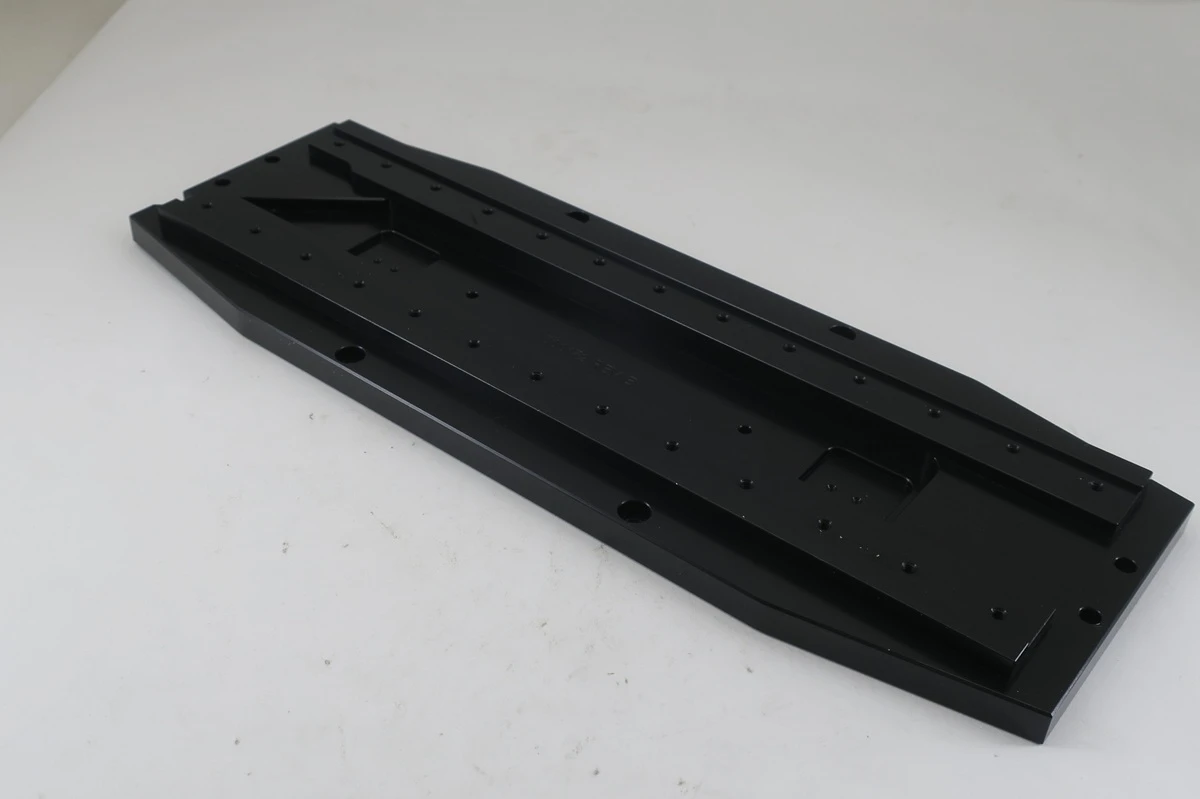
Before production, we can review material and temper, stock form, machining access, thin-wall risk, critical tolerances, anodizing allowances, inspection requirements, and the transition from prototype to repeat batches. Rollyu Precision operates under ISO 9001 and ISO 13485 quality systems.
| CTA — Send Your 6061 or 6063 Part for DFM Review
Upload your 3D CAD files and 2D drawings. Tell us the application, load, visible surfaces, finish, critical tolerances, quantity, and inspection needs. Rollyu Precision will review the machining route and help you compare 6061, 6063, stock form, finishing, and production risks before quotation. |
Primary CTA button: Upload CAD Files & Get a Quote
Secondary CTA button: Request a Material Review
Frequently Asked Questions
Is 6061 or 6063 better for CNC machining?
6061 is generally the better all-around choice for CNC machining because it combines strength, availability, and predictable cutting behavior. 6063 is a strong candidate when machining an extrusion or when corrosion resistance and cosmetic anodizing are more important than maximum strength.
Is 6063 aluminum easy to machine?
Yes. 6063 can be milled, drilled, tapped, and turned, but its softer and more ductile behavior can promote built-up edge, smearing, burrs, or deformation if tooling, chip evacuation, workholding, or feeds are unsuitable.
Is 6063 stronger than 6061?
No, not in comparable common tempers. 6061 normally has higher yield and tensile strength. Always compare the specified temper, product form, thickness, and governing material standard.
Which alloy is better for anodizing, 6061 or 6063?
Both can be anodized. 6063 is often favored for visible extrusions and decorative finishes, while 6061 is widely used for functional anodized CNC parts. Material lot, pretreatment, tool marks, blasting, racking, dye, and sealing all influence the final appearance.
Can 6063 replace 6061 in a drawing?
Only after an engineering review. The substitution can change strength, fatigue behavior, thread performance, stock availability, machining response, finish appearance, and cost. Do not approve an alloy change based only on similar chemistry.
Should I specify 6063-T5 or 6063-T6?
Choose the temper from the required strength, formability, stock availability, profile geometry, dimensional needs, and finishing plan. T6 generally provides higher strength, while T5 is common in extruded products. Confirm the required properties with the applicable specification and mill certificate.
Is a 6063 extrusion always cheaper than machining from 6061?
No. Extrusion tooling and minimum order quantities can make it unsuitable for prototypes or low volume. At repeat production volumes, a near-net 6063 profile may reduce material waste and CNC cycle time enough to lower total part cost.
What files are needed for a quote?
Send a 3D CAD model, 2D drawing, alloy and temper, finish specification, visible-surface requirements, quantities, inspection needs, and delivery target. If the material is not fixed, identify the load, environment, and cosmetic requirements so the supplier can review alternatives.