303 stainless steel machining is frequently selected for precision components that require stainless-steel strength and moderate corrosion resistance but must also be produced efficiently.
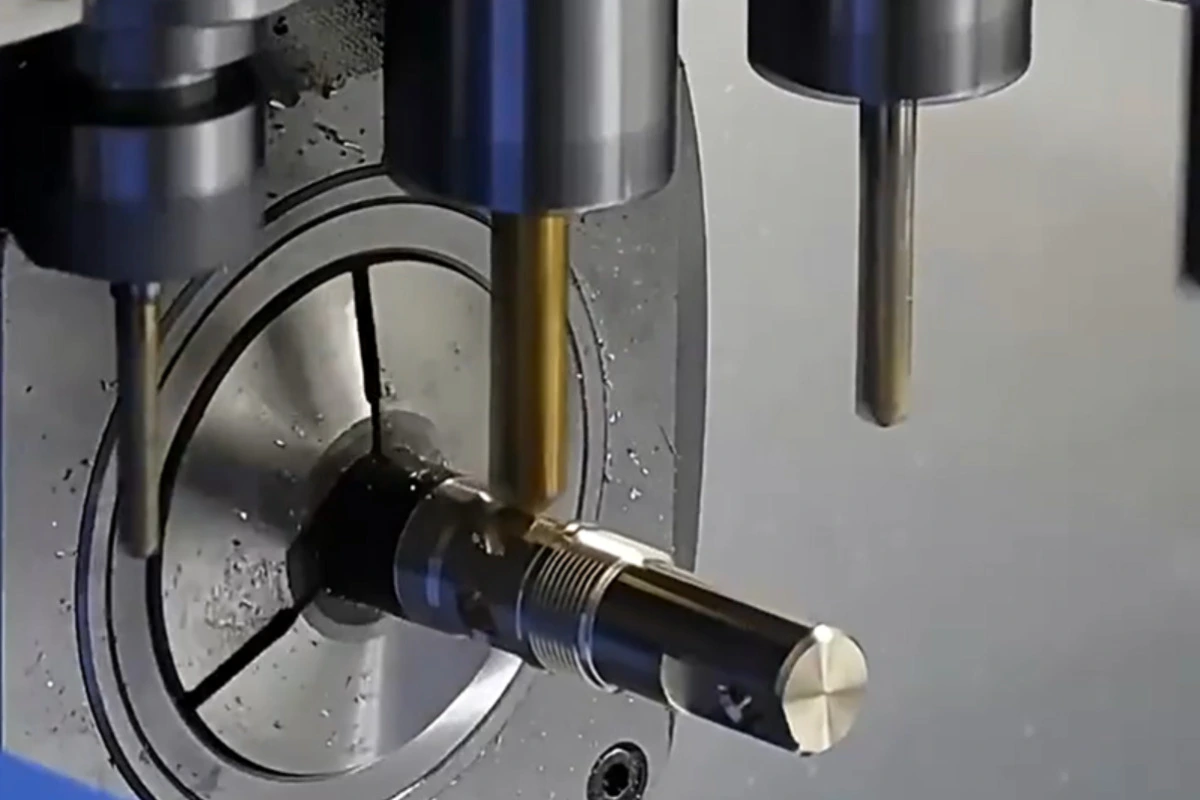
Type 303 is a free-machining austenitic stainless steel. Its sulfur addition promotes chip breaking, reduces the tendency to produce long stringy chips and allows it to be machined more efficiently than standard austenitic grades such as 304 and 316.
These characteristics make 303 stainless steel particularly suitable for precision shafts, bushings, threaded fittings, instrument components, encoder hubs, spindle parts, fasteners and other components involving extensive turning, drilling, tapping or threading.
However, its machining advantages involve important trade-offs. Type 303 generally has lower corrosion resistance, poorer weldability and more limited suitability for highly hygienic, chloride-rich or aggressive chemical environments than 304 or 316L.
The correct material decision therefore depends on more than machinability. Engineers must evaluate the component’s environment, loading, cleaning requirements, manufacturing volume, surface finish and joining method before specifying 303 stainless steel.
At Rollyu Precision, we provide CNC milling, precision turning, Swiss machining, grinding and secondary finishing for custom 303 stainless steel parts—from engineering prototypes to repeat production.
What Is 303 Stainless Steel?
303 stainless steel, also identified as UNS S30300 or EN 1.4305, is an austenitic chromium-nickel stainless steel designed specifically for improved machinability.
Its composition is broadly derived from 304 stainless steel, but sulfur is intentionally added to form manganese sulfide inclusions within the material. These inclusions help the cutting tool separate the metal into shorter, more manageable chips.
This improves:
- Chip breaking;
- Cutting-tool performance;
- Machining speed;
- Surface-finish consistency;
- Threading and tapping efficiency;
- Productivity in automated turning;
- Tool life in suitable machining conditions.
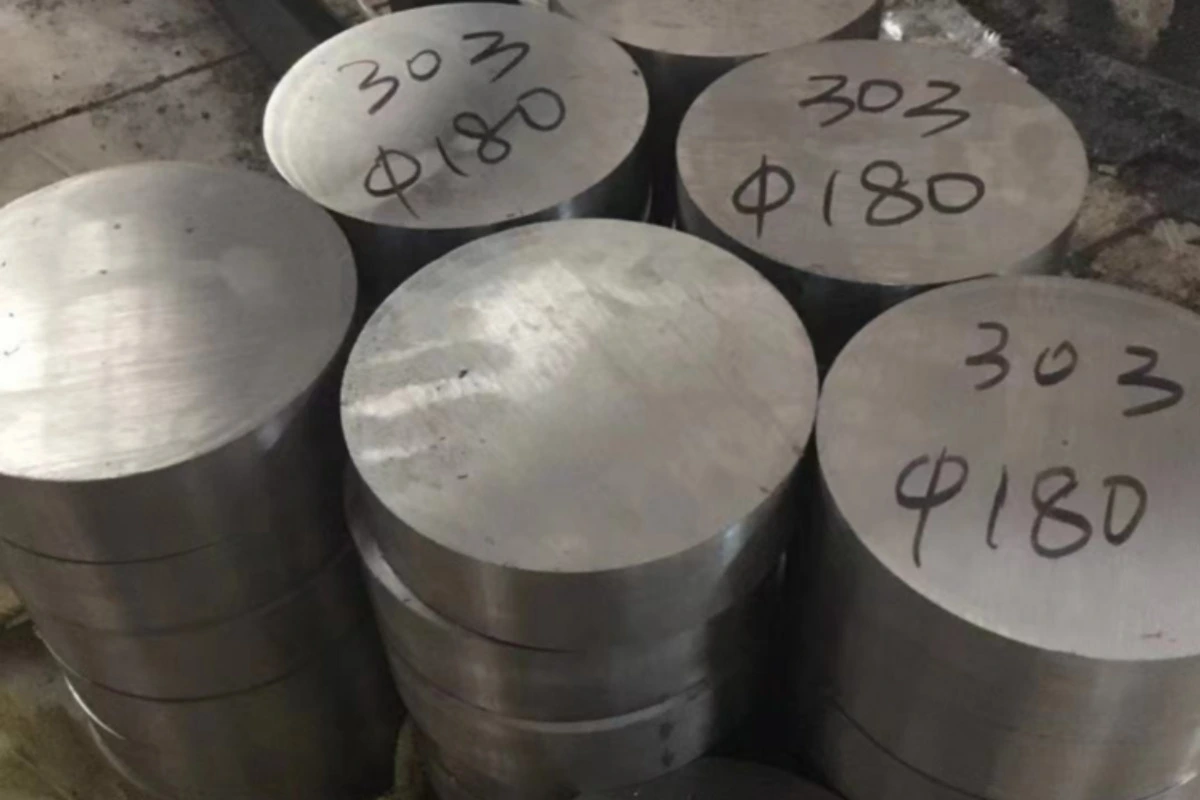
303 is commonly supplied as round bar, hexagonal bar, rod, flat bar and other bar-stock forms. It is especially useful for turned components manufactured on CNC lathes, Swiss-type machines and automatic screw machines.
Typical Chemical Composition of 303 Stainless Steel
Exact composition limits depend on the applicable material specification, but standard 303 stainless steel typically contains:
| Element | Typical specification range |
| Chromium | Approximately 17–19% |
| Nickel | Approximately 8–10% |
| Carbon | 0.15% maximum, depending on specification |
| Manganese | 2.00% maximum |
| Silicon | 1.00% maximum |
| Phosphorus | Controlled by specification |
| Sulfur | Intentionally increased for machinability |
| Iron | Balance |
The increased sulfur content is responsible for most of the alloy’s machining advantages, but it also explains why 303 generally has lower pitting and crevice-corrosion resistance than 304.
Material composition must always be confirmed against the applicable ASTM, AMS, EN or customer-specific specification rather than relying on a generic online table.
Why Is 303 Stainless Steel Easier to Machine?
Standard austenitic stainless steels can be difficult to machine because they tend to work-harden, retain heat near the cutting edge and produce long, continuous chips.
Type 303 reduces these problems through its sulfur-bearing inclusions.
During machining, these inclusions help interrupt the continuity of the metal matrix. This encourages shorter chips and reduces the cutting force required to remove material.
The practical benefits can include:
- More predictable chip formation;
- Easier chip evacuation;
- Reduced risk of chips wrapping around the workpiece;
- Higher potential machining productivity;
- Lower tool wear than 304 or 316 under comparable conditions;
- Improved performance in drilling, tapping and threading;
- Consistent finishes on precision-turned components;
- Lower machining cost for suitable production parts.
The British Stainless Steel Association publishes a relative machinability index of approximately 0.85 for free-machining 303, compared with approximately 0.52 for standard 304. These figures are comparative—not guaranteed cutting parameters—but they illustrate the substantial difference between the two grades.
Is 303 Stainless Steel as Easy to Machine as Aluminum?
No.
The term “free-machining” means that 303 is easier to machine than most other austenitic stainless steels. It does not mean that it behaves like aluminum or free-machining brass.
303 remains a relatively strong stainless steel with lower thermal conductivity than many conventional engineering materials. Successful machining still requires:
- A rigid machine and workholding setup;
- Sharp cutting tools;
- Appropriate carbide grades and tool geometries;
- Stable feed rates;
- Controlled heat generation;
- Effective coolant delivery;
- Reliable chip evacuation;
- Minimal tool overhang.
Advantages of 303 Stainless Steel CNC Machining
Excellent Machinability
Machinability is the primary reason engineers choose 303 instead of 304.
It is particularly useful when a component requires multiple machined features, including:
- External and internal threads;
- Deep or stepped bores;
- Grooves and undercuts;
- Cross holes;
- Knurled features;
- Precision shoulders;
- Small diameters;
- Repeated drilling and tapping operations.
Good Surface-Finish Potential
Stable chip formation and lower cutting resistance can help produce a clean machined finish.
The achievable surface roughness depends on the machining process, tooling, feed rate, workholding, material condition and secondary finishing requirements. Specifying a surface finish should therefore be based on the component’s function rather than an unnecessarily restrictive universal value.
Efficient Production of Turned Components
303 stainless steel is particularly well suited to CNC turning and Swiss machining.
Long, slender parts can be supported close to the cutting area on a Swiss-type machine, helping control deflection while producing multiple features in one manufacturing cycle.
Typical parts include:
- Precision shafts;
- Threaded pins;
- Bushings;
- Spacers;
- Fittings;
- Instrument stems;
- Encoder hubs;
- Connector bodies;
- Retaining components;
- Custom fasteners.
Useful Galling Resistance
The sulfide inclusions in 303 may improve its behavior in certain sliding or threaded applications by reducing the tendency toward adhesive galling compared with some standard austenitic grades.
This does not eliminate the need to evaluate lubrication, contact stress, surface finish and mating-material selection.
Cost Efficiency for Machining-Intensive Parts
Although 303 material may cost more than carbon steel, it can reduce total manufacturing cost when compared with more difficult-to-machine stainless grades.
Potential savings may come from:
- Shorter cycle times;
- Improved tool life;
- More stable chip control;
- Fewer production interruptions;
- More reliable threading;
- Reduced manual chip removal;
- Better repeatability in automated production.
The economic advantage becomes more significant when a part has complex turned features or is produced in repeated batches.
Limitations of 303 Stainless Steel
303 should not be selected solely because it machines quickly. Its limitations must be reviewed against the component’s operating environment.
Lower Corrosion Resistance Than 304 and 316L
The manganese sulfide inclusions that improve machinability can also act as initiation points for localized corrosion.
303 is generally suitable for indoor, controlled or mildly corrosive environments. It is less suitable for:
- Marine exposure;
- Chloride-rich environments;
- Aggressive cleaning chemicals;
- Strong acids;
- Continuous wet service;
- Highly corrosive process fluids;
- Applications requiring maximum pitting resistance.
For these environments, 304, 316L, duplex stainless steel or another corrosion-resistant alloy may be more appropriate.
Poor Weldability
Type 303 is not normally selected for welded structures.
Its sulfur content increases the risk of hot cracking and can reduce weld quality. If a design requires substantial welding, 304 or 316L is usually a safer material choice.
Mechanical fastening, threading, retaining rings or press-fit assembly may be preferable when 303 must be used.
Not Hardenable by Conventional Heat Treatment
Like other austenitic stainless steels, 303 cannot be significantly hardened by conventional quench-and-temper heat treatment.
Its strength and hardness can be increased through cold working, but this can also affect machinability, dimensional behavior and magnetism.
If the application requires a heat-treatable stainless steel with higher hardness or wear resistance, grades such as 416, 420, 440C or 17-4PH may be more suitable.
Limited Suitability for Hygienic Food-Contact Applications
303 should not automatically be described as a food-grade substitute for 304 or 316L.
Its sulfur-rich inclusions reduce corrosion resistance and may make the surface less suitable for demanding hygienic environments. For product-contact components exposed to aggressive washdown, chlorides, CIP chemicals or strict sanitation requirements, 304 or 316L is generally preferred.
303 may still be used in dry, non-product-contact or controlled food-equipment applications, subject to the equipment manufacturer’s risk assessment and applicable regulations.
303 vs 304 Stainless Steel for CNC Machining
The decision between 303 and 304 usually comes down to manufacturing efficiency versus corrosion resistance and fabrication flexibility.
| Property | 303 stainless steel | 304 stainless steel |
| Machinability | Excellent for an austenitic stainless steel | More difficult to machine |
| Chip control | Shorter and more manageable | More likely to produce long, stringy chips |
| Corrosion resistance | Moderate | Better than 303 |
| Weldability | Poor | Good |
| Formability | More limited | Good |
| Heat-treatment hardening | No | No |
| Magnetic behavior | Normally low in the annealed condition; may increase after cold work | Normally low in the annealed condition; may increase after cold work |
| Typical applications | Shafts, bushings, fittings, threaded parts and fasteners | Housings, fabricated components, food equipment and welded structures |
| Best selection criterion | Extensive machining and production efficiency | Corrosion resistance, forming and weldin |
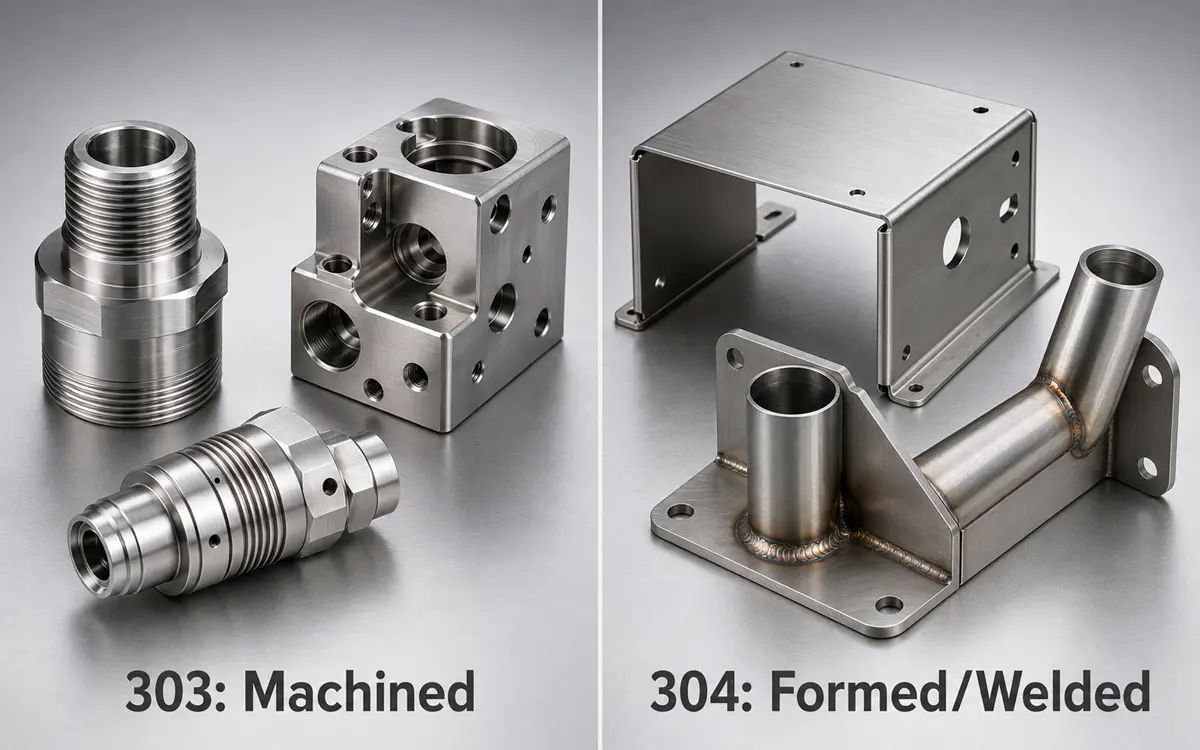
Choose 303 When:
- The part contains extensive turning, drilling or threading;
- Production efficiency is a major cost driver;
- The environment is controlled or only mildly corrosive;
- Welding is not required;
- Bar stock is suitable for the design;
- The component is produced in repeated batches;
- Clean chip control is important for automated production.
Choose 304 When:
- Better corrosion resistance is required;
- The component will be welded;
- The design requires substantial forming;
- The part will experience regular washdown;
- Chlorides or cleaning chemicals may be present;
- Machining cost is less important than environmental durability.
303 vs 316 Stainless Steel
316 and 316L contain molybdenum, which improves resistance to pitting in chloride-containing environments.
Compared with 303, 316L normally offers:
- Better chloride resistance;
- Better performance in marine conditions;
- Better suitability for pharmaceutical and hygienic processing;
- Better weldability;
- Broader use in medical and fluid-handling equipment.
However, 316L is more demanding to machine. It tends to work-harden, generate heat and produce difficult chips.
Choose 303 when machining efficiency is the priority and the operating environment is controlled. Choose 316L when corrosion resistance, cleanability or exposure to chlorides is more important than machining speed.
CNC Machining Processes for 303 Stainless Steel
CNC Turning
CNC turning is commonly used for:
- Shafts;
- Bushings;
- Threaded fittings;
- Spindles;
- Pins;
- Sleeves;
- Connector bodies;
- Cylindrical instrument parts.
303’s chip-breaking behavior makes it particularly suitable for automated turning and bar-fed production.
Swiss Machining
Swiss machining is useful for small-diameter and long, slender 303 components.
Typical applications include:
- Miniature shafts;
- Medical-equipment pins;
- Optical-instrument adjustment screws;
- Connector bodies;
- Motion-control components;
- Precision fasteners;
- Sensor components.
The guide bushing supports the workpiece close to the cutting tool, helping reduce deflection and maintain concentricity.
CNC Milling
CNC milling is used for:
- Instrument blocks;
- Small manifolds;
- Mounting components;
- Clamps;
- Optical frames;
- Test-equipment parts;
- Complex fittings.
Three-, four- and five-axis machining can reduce the number of setups for parts with features on multiple sides.
Drilling, Tapping and Threading
303 performs well in drilling and threading operations, but process control remains important.
Blind holes require particular attention to:
- Chip evacuation;
- Bottom clearance;
- Thread depth;
- Tool wear;
- Coolant delivery;
- Burr removal.
Thread acceptance should be verified with the specified thread gauges rather than relying only on measured major and minor diameters.
Grinding and Precision Finishing
Grinding may be used where the design requires tighter control of:
- Shaft diameter;
- Roundness;
- Cylindricity;
- Bearing fits;
- Surface finish;
- Datum relationships.
The machining route should be planned around the final tolerance and surface requirement instead of applying grinding to every feature.
Best Practices for Machining 303 Stainless Steel
Maintain a Rigid Setup
Machine rigidity and stable workholding help control vibration, dimensional variation and inconsistent surface finish.
Thin-walled or slender parts may require:
- Custom soft jaws;
- Guide-bushing support;
- Reduced clamping force;
- Balanced material removal;
- Intermediate stress-relief evaluation;
- Finish machining in a separate operation.
Use Sharp, Positive-Geometry Tools
Sharp carbide tools with suitable positive rake geometry can reduce cutting force and heat.
The correct insert grade and coating depend on whether the operation involves continuous turning, interrupted milling, grooving, threading or drilling.
Avoid Tool Dwelling and Rubbing
Although 303 is easier to machine than 304, it can still work-harden.
The tool should maintain an effective chip load and continue cutting below any work-hardened surface. Excessive dwelling, rubbing or repeated shallow passes can accelerate wear and reduce dimensional stability.
Control Heat and Deliver Coolant Effectively
Coolant helps:
- Remove heat;
- Lubricate the cutting interface;
- Flush chips from the cutting zone;
- Reduce built-up edge;
- Protect the machined surface from recutting.
High-pressure or accurately directed coolant can be particularly useful for drilling, grooving and deep-bore work.
Plan Chip Evacuation
303 generally produces better chips than 304 or 316, but chip evacuation must still be considered for:
- Deep blind holes;
- Internal grooves;
- Small-diameter bores;
- Threading operations;
- Swiss-turned parts;
- Unattended production.
Tool geometry, coolant direction and programmed chip-breaking cycles should be matched to the specific feature.
Validate Cutting Parameters on the Actual Setup
Generic speed-and-feed tables should be treated only as starting references.
The final parameters depend on:
- Material condition and bar quality;
- Tool manufacturer’s recommendations;
- Tool diameter and overhang;
- Machine power and rigidity;
- Coolant system;
- Feature geometry;
- Required tolerance;
- Surface-finish requirement;
- Production quantity.
A controlled first-article process is more reliable than copying a single universal parameter from an online chart.
Typical Applications of Machined 303 Stainless Steel Parts
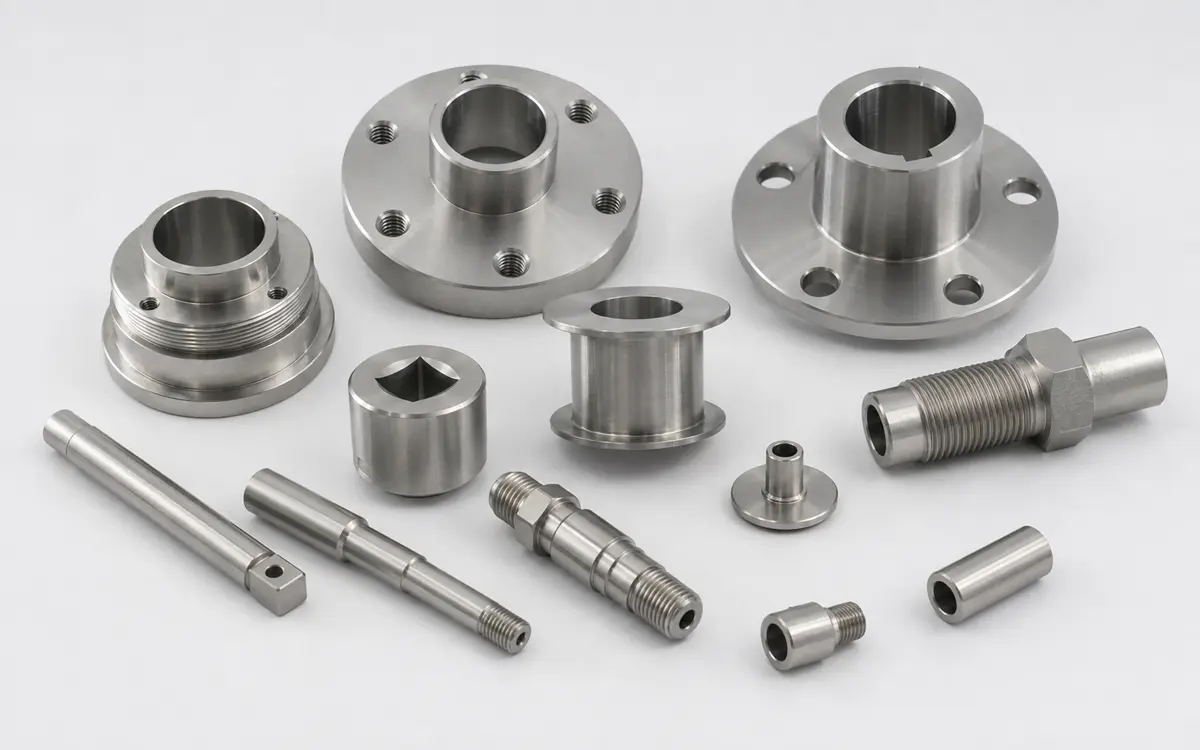
Motion-Control Systems
303 may be selected for:
- Encoder hubs;
- Precision shafts;
- Spindle components;
- Tailstock interfaces;
- Threaded adjustment parts;
- Couplings;
- Bushings;
- Locating pins.
These applications benefit from efficient turning, reliable threads and consistent dimensional control.
However, the designer must evaluate bearing contact, fatigue loading, magnetic sensitivity and environmental exposure before finalizing the material.
Photonics and Optical Instruments
Potential components include:
- Adjustment screws;
- Optical-mount hardware;
- Threaded lens-retaining components;
- Connector bodies;
- Small shafts and pivots;
- Instrument clamps;
- Positioning components.
303 can be useful for highly machined parts in controlled laboratory or instrument environments. For vacuum, cryogenic, magnetic or ultra-clean systems, the material must be reviewed against the specific outgassing, magnetic and cleanliness requirements.
Force and Torque Measurement Equipment
Typical applications may include:
- Wire-terminal grips;
- Load-interface components;
- Threaded adapters;
- Instrument shafts;
- Sensor housings;
- Alignment pins;
- Test-fixture components.
The material is useful when multiple threaded and turned features drive machining cost.
Medical and Dental Equipment
303 may be considered for non-implantable, non-critical components used in controlled environments, including:
- Adjustment mechanisms;
- Equipment housings;
- Instrument-interface parts;
- Threaded components;
- Diagnostic-equipment hardware;
- Internal mechanical components.
It should not automatically be selected for implants, patient-contact instruments, sterile fluid paths or components exposed to aggressive disinfectants. In these cases, 316L, 17-4PH, titanium or another qualified material may be more appropriate.
Rollyu Precision’s ISO 13485 quality system supports controlled manufacturing, inspection and traceability, but the device manufacturer remains responsible for material selection and regulatory validation.
Aerospace and Industrial Equipment
303 is commonly considered for non-structural components such as:
- Fittings;
- Bushings;
- Threaded hardware;
- Valve components;
- Instrument parts;
- Springs and retaining features;
- Precision fasteners.
Material specifications, grain direction, traceability and applicable aerospace requirements must be confirmed before production.
Surface Finishing Options for 303 Stainless Steel Parts
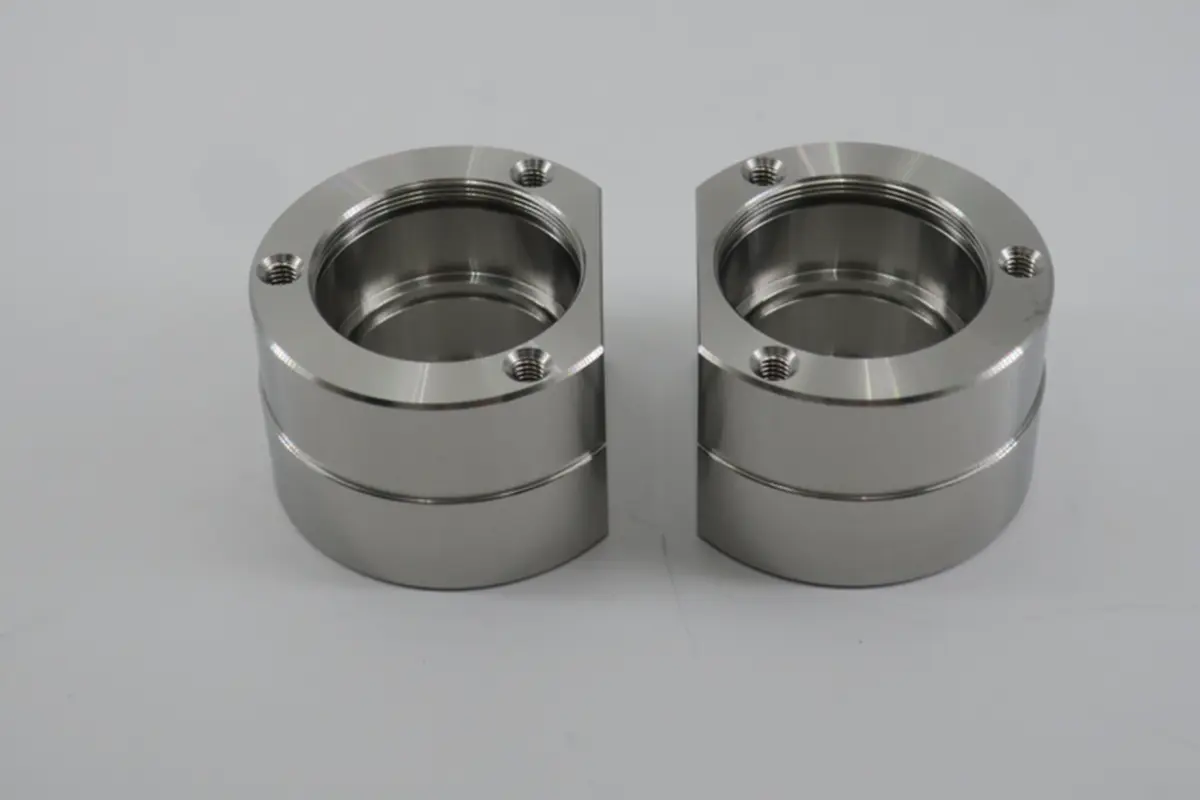
Passivation
Passivation removes free iron and machining contamination from the surface and supports formation of the stainless steel’s protective oxide layer.
Common specifications include ASTM A967 and AMS 2700.
Passivation does not transform 303 into 316L, and it does not eliminate the corrosion limitations created by sulfide inclusions. The process, solution and acceptance criteria should be specified according to the application.
Mechanical Polishing
Mechanical polishing can improve:
- Surface appearance;
- Cleanability;
- Contact performance;
- Friction behavior;
- Cosmetic consistency.
Critical dimensions must be protected because polishing removes material and can round edges.
Electropolishing
Electropolishing removes a controlled surface layer through an electrochemical process.
Potential benefits include:
- Reduced surface roughness;
- Improved surface cleanliness;
- Removal of small burrs and embedded contamination;
- A bright, reflective appearance;
- Improved corrosion behavior compared with an untreated contaminated surface.
The amount of material removed must be included in the dimensional plan, particularly for precision bores, sealing diameters, threads and close fits.
Bead Blasting and Laser Marking
Bead blasting can create a uniform matte appearance, while laser marking can add:
- Part numbers;
- Serial numbers;
- Batch codes;
- Orientation marks;
- QR or data-matrix codes.
Marking location and depth must be controlled so that functional, sealing or fatigue-critical surfaces are not affected.
Quality Control for 303 Stainless Steel Machined Parts
Material Certification and Traceability
Where required, Rollyu can maintain material identity from incoming bar stock through production and final delivery.
Documentation may include:
- Mill material certificates;
- Heat or batch numbers;
- Incoming material verification;
- Production-traveler records;
- Finishing certificates;
- Inspection reports;
- Lot-controlled packaging.
First-Article and In-Process Inspection
A robust inspection plan may include:
- Incoming material verification;
- Setup and first-piece inspection;
- In-process monitoring of critical dimensions;
- Tool-wear compensation;
- Final dimensional inspection;
- Surface-finish verification;
- Thread-gauge inspection;
- Visual and packaging inspection.
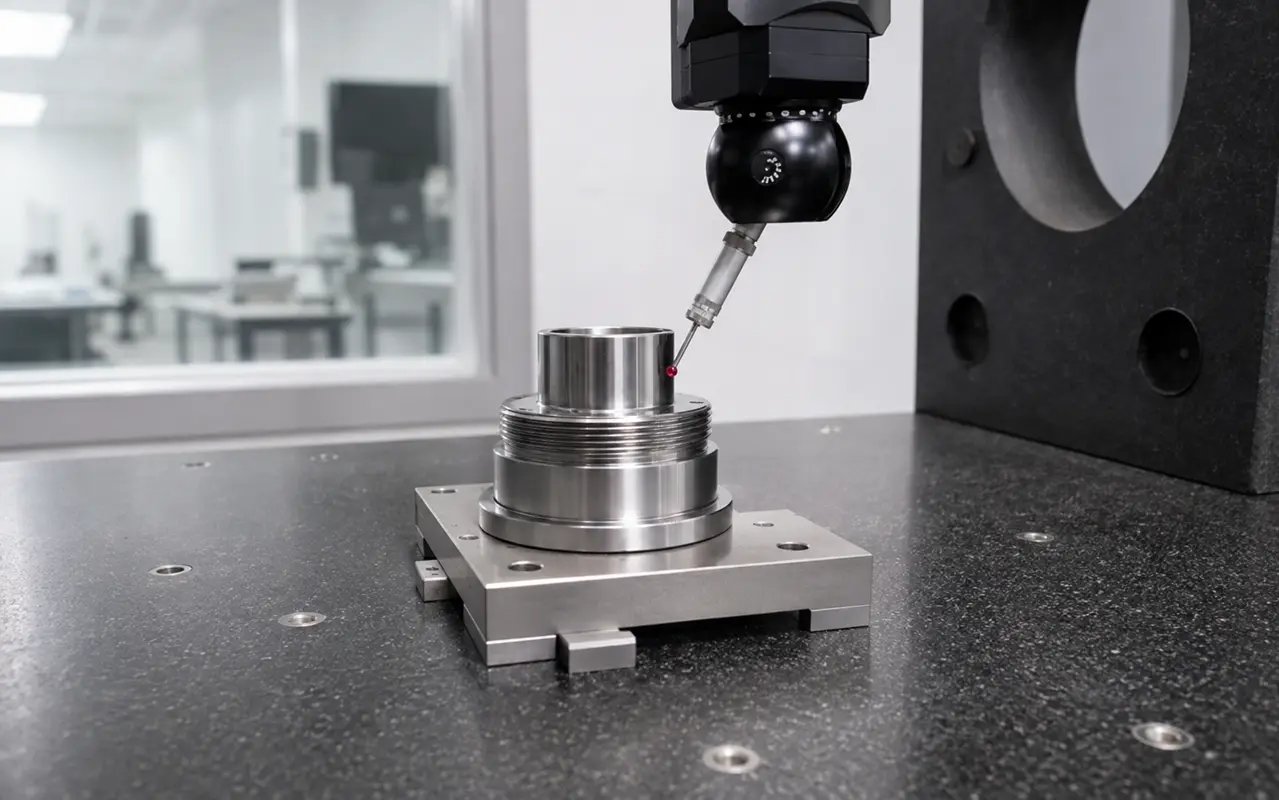
CMM and Dimensional Verification
Coordinate measuring machines are useful for inspecting:
- True position;
- Concentricity and coaxial relationships;
- Flatness and parallelism;
- Complex profiles;
- Multi-datum geometries;
- Hole patterns.
Micrometers, bore gauges, height gauges, optical comparators, pin gauges and thread gauges may be more efficient for routine production characteristics.
Surface-Roughness Inspection
Surface roughness should be specified only where it affects:
- Sealing;
- Friction;
- Bearing performance;
- Fatigue;
- Cleanliness;
- Optical or cosmetic requirements.
Unnecessarily tight finish requirements can increase polishing, grinding and inspection costs without improving component performance.
How to Reduce the Cost of 303 Stainless Steel Parts
Design for Manufacturability
Cost can often be reduced by:
- Using standard bar diameters;
- Standardizing hole and thread sizes;
- Avoiding unnecessarily deep pockets;
- Adding practical internal corner radii;
- Providing tool access;
- Limiting extreme length-to-diameter ratios;
- Separating cosmetic and functional surfaces;
- Applying tight tolerances only to functional features;
- Avoiding unnecessary secondary grinding.
Select the Right Production Quantity
Larger batches can reduce unit cost by distributing programming, setup, tooling and first-article inspection costs across more parts.
However, the correct batch size should also consider:
- Design maturity;
- Engineering revisions;
- Inventory cost;
- Annual demand;
- Supplier lead time;
- Validation requirements.
For new products, a smaller pilot batch may reduce the risk of holding obsolete inventory.
Specify the Correct Stainless Steel Grade
Using 303 when the part truly requires 316L can cause premature corrosion or validation problems. Using 316L when the environment only requires 303 may increase machining cost unnecessarily.
Material selection should balance:
- Corrosion exposure;
- Machining content;
- Welding requirements;
- Strength and hardness;
- Magnetic requirements;
- Cleaning and sterilization;
- Quantity and target cost.
Why Choose Rollyu Precision for 303 Stainless Steel Machining?
Rollyu Precision supports custom 303 stainless steel parts through an integrated range of manufacturing processes:
- CNC turning;
- Swiss machining;
- Three-, four- and five-axis milling;
- Drilling, tapping and threading;
- EDM;
- Precision grinding;
- Mechanical polishing;
- Passivation and electropolishing coordination;
- Laser marking;
- Dimensional and surface inspection.
Our quality capabilities include:
- ISO 9001:2015 certification;
- ISO 13485:2016 certification;
- Material traceability;
- First-article inspection;
- In-process inspection;
- CMM dimensional reports;
- Thread and pin-gauge inspection;
- Surface-roughness measurement;
- Prototype-to-production support.
We work with engineering and procurement teams in medical equipment, photonics, motion control, robotics, automation, semiconductor equipment and precision instrumentation.
Conclusion
303 stainless steel machining offers an effective balance of production efficiency, stainless-steel performance and dimensional repeatability.
Its free-machining characteristics make it particularly valuable for shafts, bushings, threaded fittings, instrument parts, fasteners, encoder hubs and other components containing substantial turning, drilling or threading.
However, 303 is not the correct choice for every stainless steel application. Its reduced corrosion resistance, poor weldability and limited suitability for aggressive hygienic environments must be considered during material selection.
The best results come from matching the material to the operating environment, applying stable machining practices and controlling critical dimensions through a documented inspection process.
FAQ: 303 Stainless Steel Machining
Is 303 stainless steel easy to machine?
Yes. Type 303 is one of the easiest austenitic stainless steels to machine. Its sulfur addition promotes chip breaking and generally allows more efficient turning, drilling and threading than 304 or 316.
It still requires sharp tools, rigid workholding, stable feeds and effective coolant delivery.
What is 303 stainless steel used for?
Common applications include shafts, bushings, fasteners, fittings, threaded components, encoder hubs, adjustment screws, valve parts and precision instrument components used in controlled or mildly corrosive environments.
What is the difference between 303 and 304 stainless steel?
303 provides better machinability and chip control. 304 provides better corrosion resistance, weldability and formability.
Choose 303 for machining-intensive parts in controlled environments. Choose 304 when corrosion exposure, welding or fabrication requirements are more important.
What is the difference between 303 and 316 stainless steel?
316 and 316L provide better resistance to chlorides, chemicals and marine conditions because they contain molybdenum. They are normally more difficult and expensive to machine than 303.
Is 303 stainless steel magnetic?
303 is generally non-magnetic or only weakly magnetic in its annealed condition. Cold working and machining can introduce some magnetic response.
If magnetic permeability is a critical requirement, it should be specified and verified rather than assumed from the grade alone.
Can 303 stainless steel be hardened by heat treatment?
No. Conventional heat treatment does not significantly harden 303 stainless steel. Its strength and hardness can be increased through cold working.
For a heat-treatable stainless steel, consider grades such as 416, 420, 440C or 17-4PH, depending on the application.
Can 303 stainless steel be welded?
Welding 303 is generally not recommended because its sulfur content increases the risk of hot cracking and poor weld quality. For welded components, 304 or 316L is usually a better choice.
Can 303 stainless steel be passivated?
Yes. 303 components can be passivated after machining to remove free iron and surface contamination.
Passivation supports the natural protective oxide layer, but it does not give 303 the same corrosion resistance as 304 or 316L.
Is 303 stainless steel suitable for food-contact parts?
It depends on the application and applicable regulations.
303 may be acceptable for dry, non-product-contact or controlled equipment components. For direct food contact, aggressive washdown, chloride exposure or stringent hygienic requirements, 304 or 316L is generally preferred.
Is 303 stainless steel suitable for medical-device parts?
It may be suitable for certain non-implantable, non-critical equipment components in controlled environments.
Material selection for patient-contact, implantable, sterilized or fluid-path components requires application-specific engineering and regulatory evaluation.
What surface finishes are available for 303 stainless steel?
Available options may include:
- As-machined finish;
- Mechanical polishing;
- Bead blasting;
- Passivation;
- Electropolishing;
- Laser marking;
- Application-specific coatings.
The finishing process must be included in the dimensional plan because polishing and electropolishing remove material.
What information should be included in a 303 stainless steel RFQ?
For an accurate quotation, provide:
- 3D CAD file, preferably STEP;
- Fully dimensioned 2D drawing;
- Material grade and applicable specification;
- Required quantity and annual demand;
- Critical tolerances;
- Surface-roughness requirements;
- Thread specifications;
- Passivation or other finishing requirements;
- Inspection and documentation requirements;
- Target delivery date.
CTA: Request a Quote for Custom 303 Stainless Steel Parts
Need precision 303 stainless steel components with reliable threads, controlled fits and documented inspection?
Send Rollyu Precision your STEP files, drawings, target quantity, material specification and critical requirements. Our engineering team will review the design, identify manufacturing risks and provide practical DFM feedback before production.
Upload Your Drawings for a 303 Stainless Steel Machining Quote
Email: info@rollyu.com
Website: https://rollyu.com/contact/
From one-off prototypes and pilot batches to repeat production, Rollyu Precision supports precision-machined 303 stainless steel parts for medical equipment, photonics, motion control, robotics and industrial instrumentation.