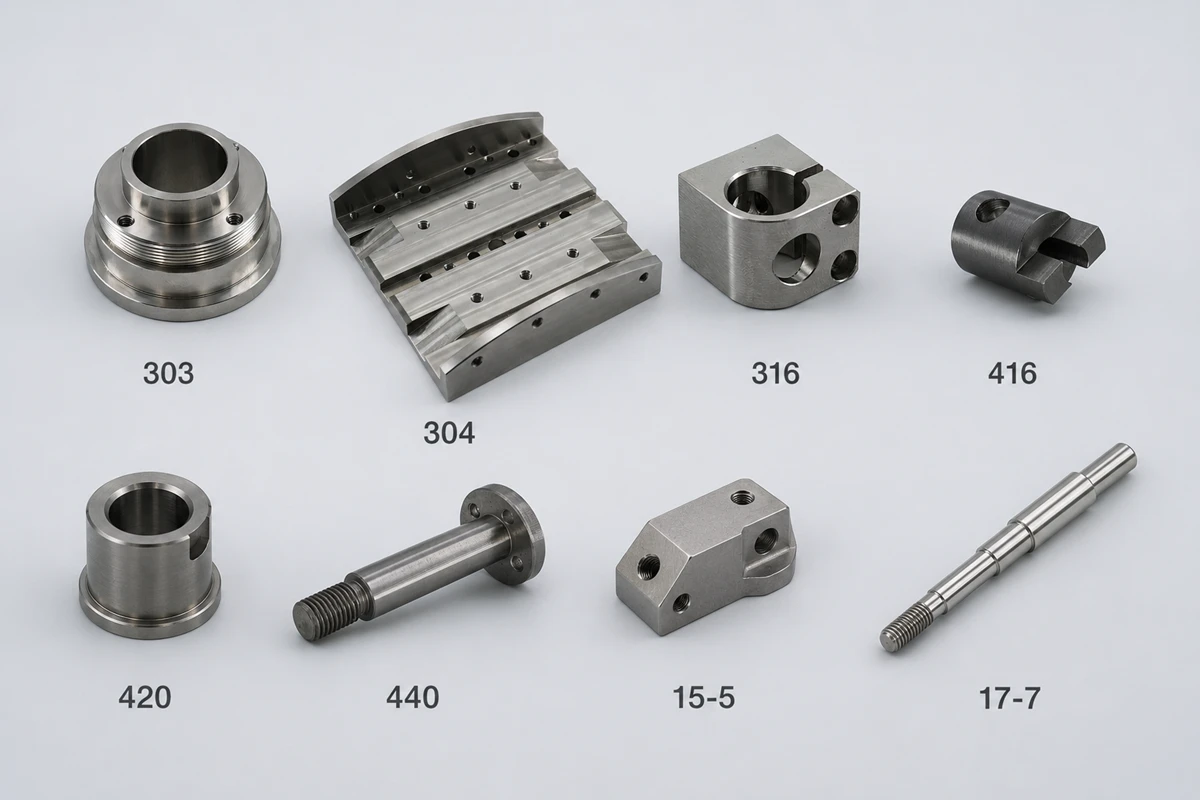
Rollyu Precision provides custom stainless steel CNC machining services for complex parts that need corrosion resistance, strength, repeatable dimensions and dependable surface quality. We machine 303, 304, 316L, 416, 420, 440C, 17-4PH and 15-5PH stainless steel for prototypes and production components used in dental equipment, medical devices, photonics, food machinery, vacuum motion systems and motion control systems.
| Quick answer
Choose 303 for machining efficiency, 304 for general corrosion resistance, 316L for stronger resistance to chlorides and cleaning chemicals, 416/420/440C for increasing hardness and wear resistance, and 17-4PH or 15-5PH when high strength and dimensional stability matter. Final selection must also consider heat treatment, welding, cleaning, surface finish and the actual service environment. |
Send a 2D drawing or 3D model and identify the operating environment, mating features, critical dimensions, quantity and documentation needs. Rollyu can review material choice, machining sequence, finish allowances and inspection requirements before production.
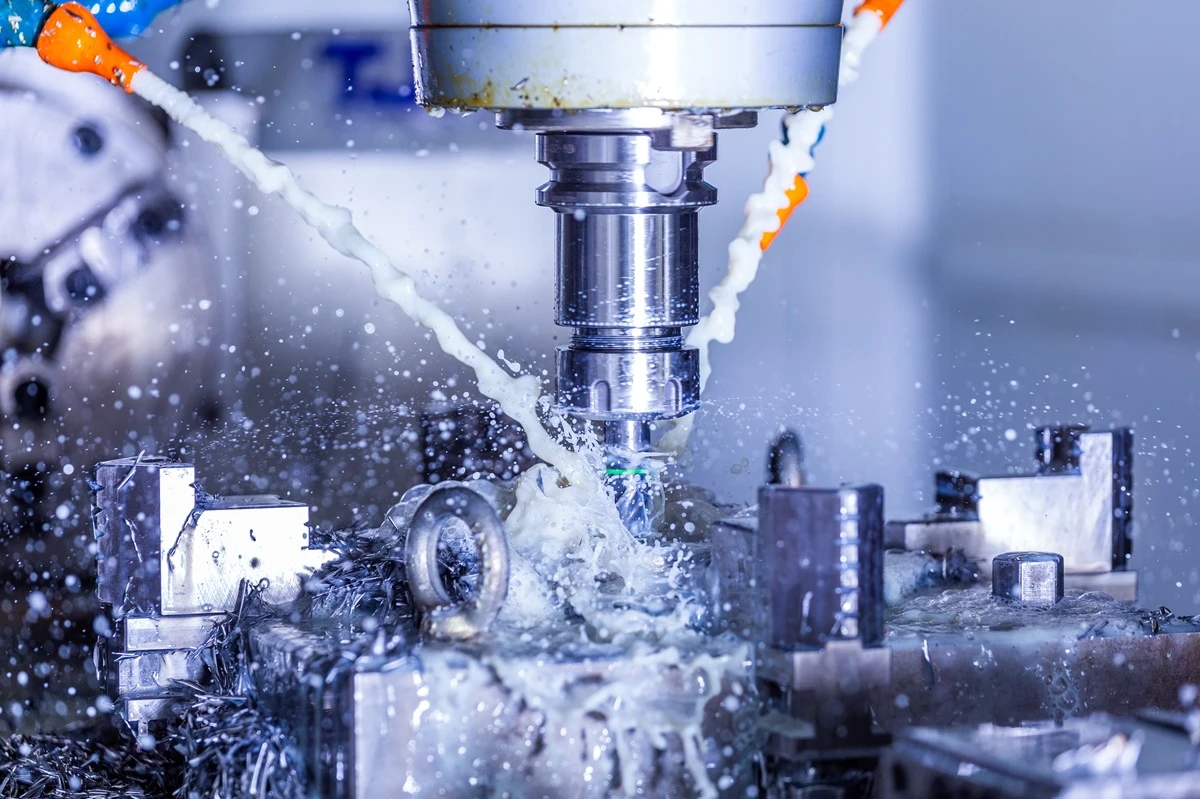
Why Engineers Choose Stainless Steel for Precision CNC Parts
Stainless steel is not one material. Austenitic, martensitic and precipitation-hardening grades respond differently to cutting, heat treatment, corrosion and finishing. The best grade is the one that balances part performance with manufacturing risk—not simply the grade with the highest strength or corrosion rating.
- Corrosion resistance for repeated cleaning, humidity, process fluids and exposed equipment surfaces.
- Mechanical strength for shafts, brackets, clamps, stages, couplings and structural interfaces.
- Wear or hardness options for sliding, rotating and contact features.
- Stable, cleanable surfaces for medical, dental, food-processing and precision-instrument assemblies.
- Broad post-processing choices, including passivation, electropolishing, grinding, lapping, heat treatment and permanent marking.
Stainless steel also creates machining challenges. Many grades retain heat at the cutting edge, work-harden when tools rub, generate difficult chips and spring away from the tool. Thin walls, deep pockets, small threads and intersecting holes therefore need deliberate toolpaths, sharp tooling, controlled engagement and a clear datum strategy.
Stainless Steel Grade Comparison for CNC Machining
| Grade | What it does well | Machining / design note | Typical precision-part fit |
| 303 | Best machinability among the listed austenitic grades; good general corrosion resistance. | Sulfur improves chip breaking but reduces corrosion and weldability versus 304/316L. | Shafts, spacers, standoffs, threaded parts, couplings. |
| 304 | Balanced corrosion resistance, availability, formability and weldability. | Work-hardens; use positive cutting action and avoid dwell. | Brackets, covers, housings, plates, general equipment parts. |
| 316L | Higher resistance to chlorides and many cleaning environments; low carbon supports welded assemblies. | Tougher to machine than 303; heat and work hardening require disciplined cutting. | Medical/dental hardware, food-contact parts, fluid and vacuum equipment. |
| 416 | Free-machining martensitic stainless; heat treatable. | Better cutting behavior than many stainless grades, but only moderate corrosion resistance. | Pins, shafts, threaded components, valve and actuator parts. |
| 420 | Heat-treatable hardness with useful corrosion resistance. | Plan stock and finish machining around hardening distortion. | Wear parts, instrument features, valve parts, contact surfaces. |
| 440C | Very high hardness and wear resistance after heat treatment. | Tooling, grinding allowance and heat-treatment sequence are central to the process plan. | Bearing-like components, seats, precision wear parts. |
| 17-4PH | High strength, corrosion resistance and useful dimensional stability after precipitation hardening. | Specify material condition and final heat-treatment state on the drawing. | High-load brackets, shafts, motion and vacuum-system components. |
| 15-5PH | High strength with good transverse toughness and consistency. | Condition and heat-treatment sequence control final properties and size. | Loaded structural parts, motion hardware, aerospace-style precision components. |
| Selection warning
“Stainless” does not mean immune to corrosion, cleanroom-ready, food-safe, implantable or suitable for ultra-high vacuum by itself. Those outcomes depend on the exact alloy and condition, design geometry, finish, cleaning, joining, environment and validation requirements. |
How to Select the Right Stainless Steel Grade
Select for the dominant failure mode
Start with what the part must resist: corrosion, wear, high static load, fatigue, cleaning chemistry, temperature, galling or dimensional movement. Then screen for secondary constraints such as welding, magnetic response, appearance, availability and cost.
| Engineering priority | Start with | Why | Confirm before release |
| Fast, economical machining | 303 | Excellent chip control and throughput for detailed turned or milled parts. | Corrosion exposure, welding and customer material restrictions. |
| General equipment corrosion resistance | 304 | Versatile baseline for brackets, housings and fabricated/machined parts. | Chlorides, crevices and cleaning chemicals. |
| Aggressive cleaning or chloride exposure | 316L | Improved pitting resistance and low-carbon weldability. | Surface finish, passivation, fluid compatibility and traceability. |
| Machinable, heat-treatable shaft or pin | 416 | Combines machinability with martensitic hardening potential. | Corrosion severity and final hardness. |
| Hard, wear-resistant feature | 420 or 440C | Higher attainable hardness; 440C is selected when maximum wear resistance dominates. | Grinding allowance, distortion, toughness and corrosion. |
| High strength with corrosion resistance | 17-4PH | Strong, widely used precipitation-hardening option. | Required condition, heat-treatment route and dimensional change. |
| High strength plus transverse toughness | 15-5PH | Consistent PH structure for demanding loaded parts. | Availability, condition and qualification requirements. |
Designing Stainless Steel Parts for Machinability and Repeatability
Control work hardening and heat
A tool that rubs instead of cuts can harden the surface ahead of the next pass. Rollyu plans tool engagement, feed, coolant delivery and tool replacement to maintain a positive cut. Stable workholding and short tool overhangs help control vibration and protect surface finish.
Design accessible internal features
Internal corners should use the largest practical radius. Deep, narrow pockets and high aspect-ratio slots increase tool deflection and inspection difficulty. If a square internal corner is functionally required, wire EDM or a designed relief may be more reliable than forcing a small end mill into the geometry.
Protect thin walls and critical relationships
Thin walls can move after roughing, heat treatment or unclamping. A risk-controlled process may use balanced stock removal, semi-finishing, rest periods or stress-relief/aging steps, then finish critical bores, faces and datums in a stable setup. Drawings should define which feature relationships matter to assembly—not only isolated size tolerances.
Plan threads, burr control and finish allowances
Small stainless threads are vulnerable to tool wear, burrs and galling. Specify thread standard, class, depth and gauging expectations. Cross-holes and intersecting passages should carry explicit deburring requirements. Electropolishing, grinding, lapping and hardening can change dimensions, so the machining drawing should reserve allowance where necessary.
Rollyu Stainless Steel CNC Machining Capabilities
Rollyu combines process planning, machining, coordinated finishing and inspection for stainless steel precision machined parts. The exact route is selected from geometry, tolerance, material condition, quantity and end-use risk.
| Capability | Best suited to | Buyer value |
| 3-, 4- and 5-axis CNC milling | Brackets, housings, manifolds, optical mounts, stage components and multi-face features. | Fewer setups can protect positional relationships and reduce accumulated error. |
| CNC turning and Swiss machining | Shafts, pins, bushings, nozzles, spacers, couplings and small threaded parts. | Efficient concentric features and repeatable bar-fed production. |
| Wire / sinker EDM where required | Sharp profiles, narrow slots, hardened material and features difficult to reach with cutting tools. | Non-contact cutting can solve geometry or hardness constraints. |
| Precision grinding and lapping | Hardened diameters, sealing faces, bearing fits and demanding flatness or finish. | Finishing after heat treatment supports final size and surface requirements. |
| CMM and dimensional inspection | Critical feature relationships, first articles and production verification. | Inspection evidence tied to drawing requirements. |
| Coordinated finishing | Passivation, electropolishing, heat treatment, marking and other drawing-specified processes. | One RFQ can cover the complete manufacturing route. |
| Tolerance note
Rollyu publishes capability down to ±0.005 mm for suitable features. Achievable tolerance depends on part size, geometry, material condition, heat treatment, surface finish and inspection method. Apply tight tolerances only to function-critical features and confirm them during DFM review. |
Application-Specific Stainless Steel Machining Experience
The following examples are based on application categories and part descriptions in Rollyu’s supplied manufacturing data. They demonstrate relevant geometry and assembly experience; the recommended alloy still needs to be confirmed for each new drawing and operating environment.
Dental Equipment
Dental systems combine compact mechanisms, optical alignment, repeated cleaning and user-facing surfaces. Relevant part types include camera holders, lens-holder clamp bases, aligner tubes, standoff blocks, alignment blocks, shafts and precision brackets. 316L is a strong starting point for cleaning and corrosion requirements; 303 may suit protected, highly machined mechanisms; and 17-4PH may suit small high-load features. Define sterilization or disinfection chemistry, edge-break requirements, cosmetic zones and traceability on the RFQ.
Medical Devices
Medical equipment often needs stable housings, sensor mounts, manifolds, shafts, mixer components and instrument brackets with controlled burrs and documented inspection. 316L is frequently selected for corrosion resistance and cleanability, while 17-4PH supports higher structural loads. Material selection does not establish biocompatibility or sterilization readiness by itself; the complete material condition, finish, cleaning and device validation plan must be specified.
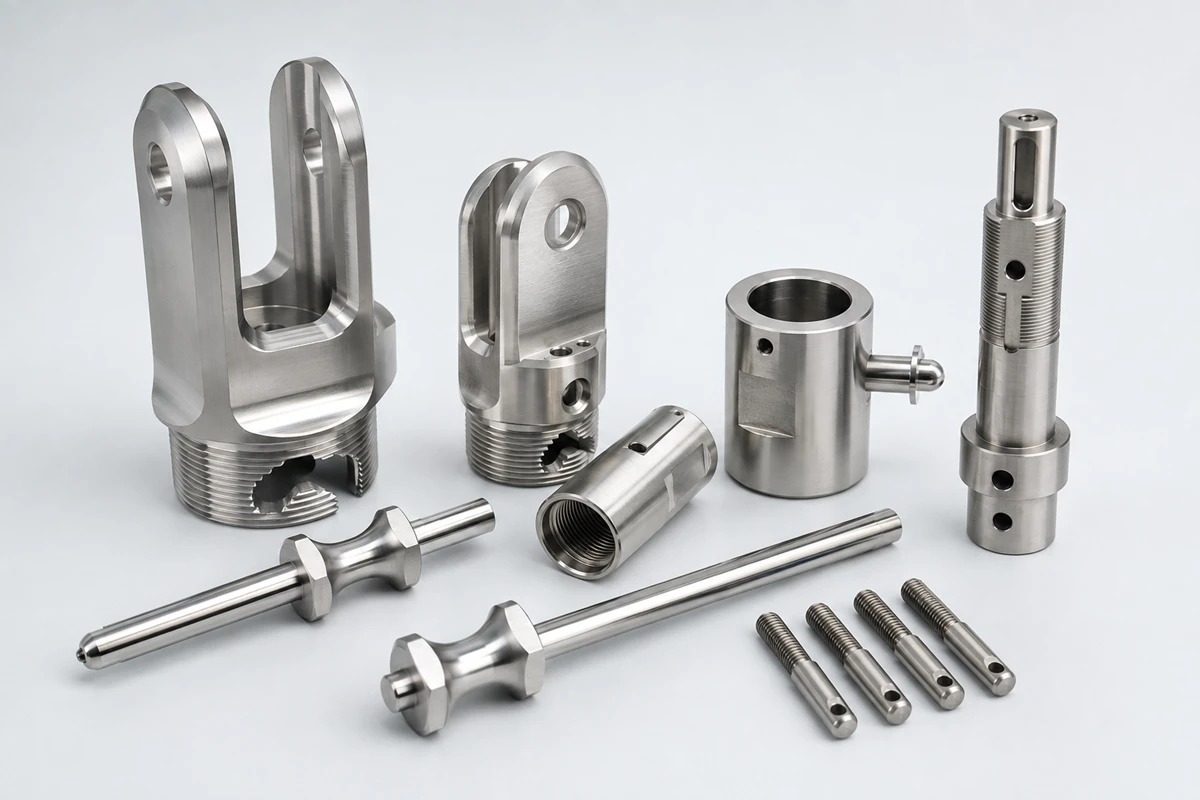
Photonics and Optical Systems
Optical assemblies depend on datum quality, bore position, angular relationships and low-distortion clamping. Supplied part descriptions include camera holders, lens-holder clamp bases, Bragg clamps, opto alignment tools, pyro-mount brackets and gimbal centerposts. 303 can reduce machining risk in intricate adjustment hardware; 304 and 316L add corrosion resistance; 17-4PH can improve stiffness and strength in loaded mounts. Identify optical datums, blackened or non-reflective areas, particle-sensitive surfaces and post-finish critical dimensions.
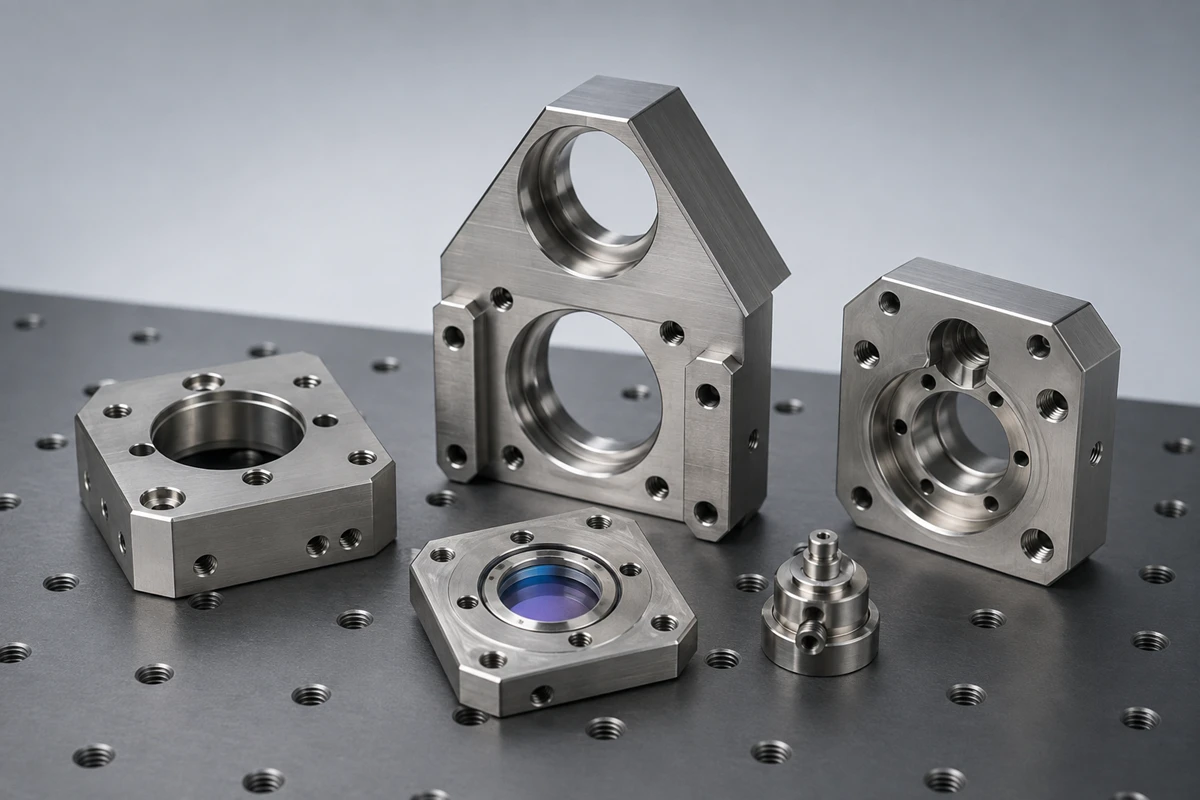
Food Machinery
Depositors, fillers, pumps, decorating equipment and processing machines use stainless shafts, mixer components, sensor and drain brackets, tanks, nozzles, plates and handling hardware. 304 is a common general-purpose choice; 316L is preferred when salt, acidic product or aggressive washdown makes corrosion more demanding. Hygienic performance depends on drainable geometry, accessible radii, sealed joints, surface finish and validated cleaning—not alloy name alone.
Vacuum Motion Systems
Vacuum stages and in-vacuum mechanisms use encoder brackets, slides, bases, mount plates, drive shafts, spindles, rigid couplings, anti-rotation rods and bearing-side hardware. 303 may help with intricate shafts and threaded components; 316L may suit corrosion-sensitive or cleaning-intensive hardware; 17-4PH can support highly loaded stage parts. Vacuum suitability depends on material condition, trapped-volume design, lubricants, cleaning, venting, packaging and the target pressure. Specify vacuum level, bake temperature, allowed lubricants and cleaning protocol in the RFQ.
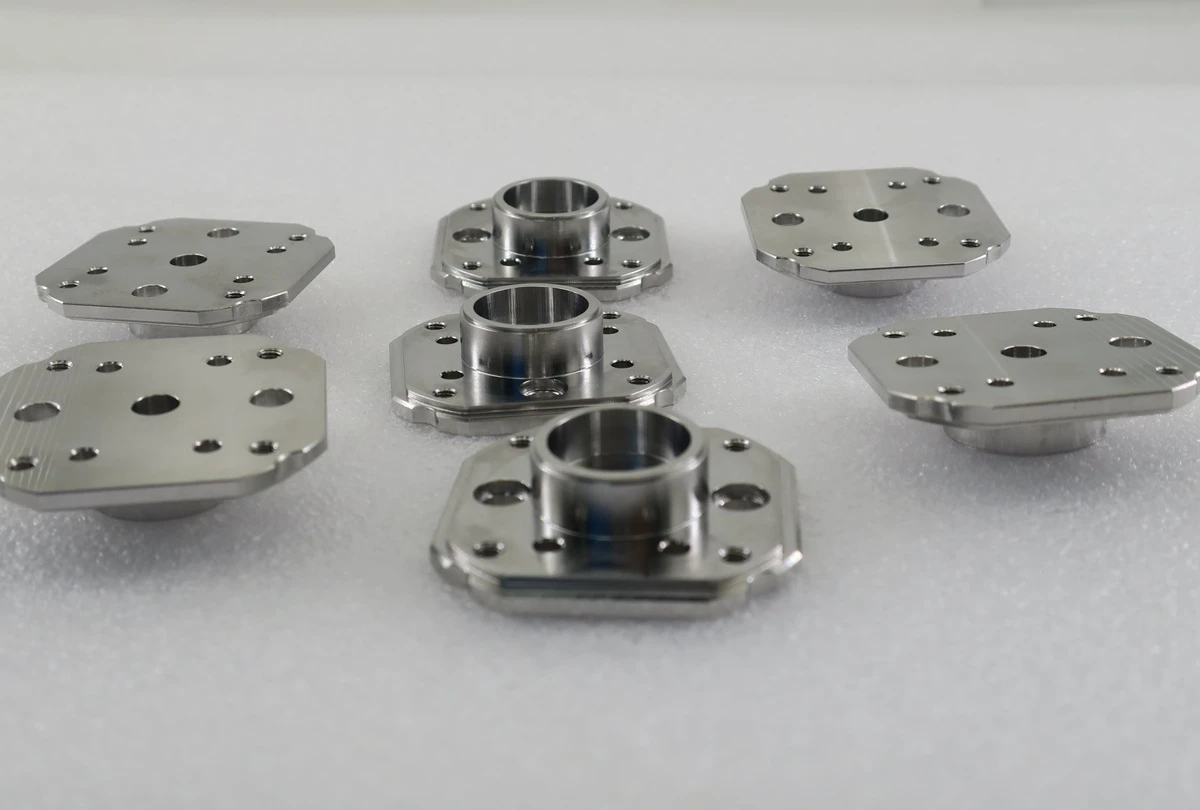
Motion Control Systems
Motion assemblies require concentric shafts, stable bearing fits, precise bracket datums and repeatable encoder/readhead positioning. Relevant components include primary shafts, spindle parts, stage brackets, readhead brackets, e-chain brackets and bearing interfaces. 303 supports efficient shaft machining, 17-4PH and 15-5PH provide higher strength, and 420 or 440C may be considered for localized wear. Define runout, coaxiality, bearing fits, surface texture and inspection datum structure clearly.
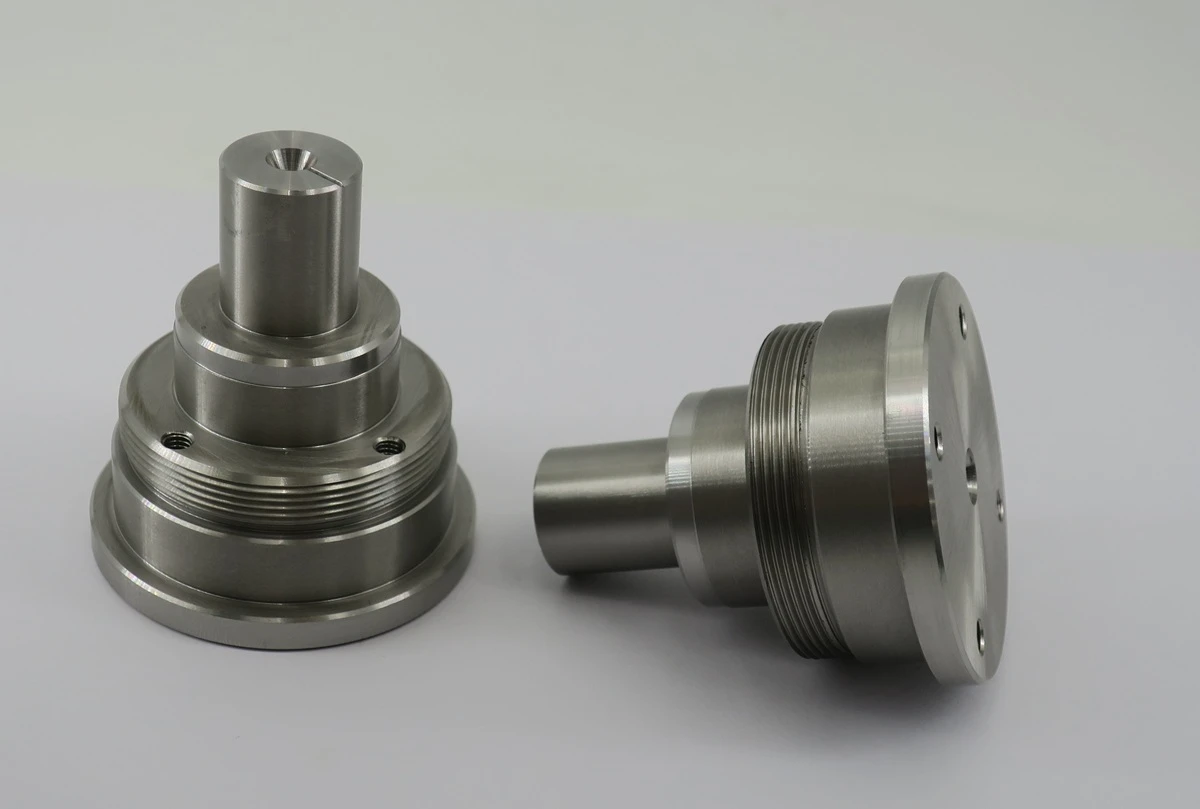
Surface Finishes and Post-Processing for Stainless Steel Parts
| Process | Purpose | Drawing / RFQ note |
| As machined | Fastest route when tool marks and standard deburring are acceptable. | Define allowed tool marks, edge breaks and any sealing or optical surfaces. |
| Passivation | Removes free iron contamination and supports formation of the natural passive surface. | Reference a suitable process such as ASTM A967/A967M and specify verification if required. |
| Electropolishing | Electrochemically removes a controlled surface layer to smooth micro-peaks and improve cleanability/appearance. | Critical dimensions, edges and threads may need masking or pre-process allowance. |
| Grinding / lapping | Controls size, flatness, roundness or finish beyond normal milling/turning. | Identify the exact surfaces, direction, Ra requirement and post-treatment size. |
| Heat treatment | Develops hardness or strength in 416, 420, 440C, 17-4PH and 15-5PH. | State material condition, final hardness or mechanical requirement, and when inspection occurs. |
| Bead blast / brushed / polish | Creates a consistent cosmetic texture or reduces visible machining marks. | Use approved samples for cosmetic zones; protect sealing, hygienic, optical and precision-fit surfaces. |
| Laser marking / engraving | Adds durable identification, serial numbers or scale marks. | Provide artwork, depth/contrast requirement and no-mark zones. |
Passivation and electropolishing are not interchangeable. Passivation is primarily a chemical cleaning and passive-layer support process with minimal intended material removal. Electropolishing intentionally removes surface material. Both require process control, and neither compensates for poor geometry, embedded contamination, incorrect alloy selection or inadequate cleaning validation.
Quality Planning and Documentation
A strong stainless steel purchase order defines proof as clearly as it defines dimensions. Rollyu operates under ISO 9001 and ISO 13485 quality systems and uses CMMs, micrometers, thread gauges and surface roughness testing as appropriate. Requested documentation should be agreed before production so the process and price reflect the real acceptance plan.
- Material certificate or mill test report, including grade and condition where required.
- Certificate of conformance and special-process certificates.
- First article inspection or dimensional report for designated features.
- CMM report, thread-gauge results or surface-roughness evidence when specified.
- Lot traceability, serial marking, controlled cleaning and packaging requirements.
- Approved deviation process and revision-controlled drawings/models.
What to Include in Your RFQ
- Upload the 3D CAD model and a controlled 2D drawing. The drawing should govern tolerances, threads, datums, finish and notes.
- Specify stainless grade and condition—or state the operating environment and ask for a DFM/material recommendation.
- Identify critical-to-function dimensions, mating parts, fit requirements, runout and geometric tolerances.
- State prototype and production quantities, annual volume and target delivery date.
- Define passivation, electropolishing, heat treatment, grinding, marking, cleaning and packaging requirements.
- List inspection and documentation deliverables, including material certificates, first article, CMM report and traceability.
- For medical, dental, food or vacuum equipment, describe chemical exposure, cleaning/sterilization cycle, pressure, bake temperature and regulatory or customer specifications.
| Request a stainless steel machining quote
Send your drawing, model, quantity and application requirements to Rollyu Precision. The engineering team can review alloy choice, tolerance risk, finish allowances and inspection requirements, then provide a manufacturing plan and quotation. |
EMAIL info@rollyu.com | WEB www.rollyu.com | TEL +86 152 1949 7088
Frequently Asked Questions
What is the best stainless steel for CNC machining?
There is no universal best grade. Choose 303 for machining efficiency, 304 for a balanced general-purpose option, 316L for more demanding corrosion and cleaning environments, 416/420/440C for heat-treatable hardness, and 17-4PH or 15-5PH for high-strength precision components.
What is the difference between machining 303 and 304 stainless steel?
303 contains machinability-enhancing additions that improve chip breaking and cutting speed. 304 generally offers better corrosion resistance and weldability. Use 303 for complex machined features when the environment permits; use 304 when corrosion, forming or welding has higher priority.
Should I choose 304 or 316L stainless steel?
Choose 304 for general equipment in moderate environments. Choose 316L when chloride exposure, aggressive cleaning or corrosion margin justifies the added material and machining cost. Confirm the real chemical, temperature and crevice conditions.
Can 17-4PH be machined before heat treatment?
Yes, many 17-4PH parts are rough- or finish-machined in a solution-treated condition and then aged, but the route depends on final properties and tolerance. Allow for dimensional change and plan final grinding or finishing when the drawing requires it.
When are 416, 420 and 440C appropriate?
416 is useful for efficiently machined, heat-treatable shafts and pins in moderate corrosion environments. 420 provides higher hardness for wear features. 440C is selected for very high hardness and wear resistance, often with grinding after heat treatment.
Does stainless steel need passivation after CNC machining?
Often, but not automatically. Machining and handling can leave free-iron contamination. Passivation may be specified to clean the surface and support corrosion resistance. The need and test method depend on the application, alloy and customer specification.
Is electropolishing the same as passivation?
No. Passivation chemically cleans the surface with minimal intended material removal. Electropolishing removes a controlled layer to smooth and brighten the surface. Electropolishing can change dimensions and edge geometry, so allowances may be needed.
What tolerances can Rollyu hold on stainless steel machined parts?
Rollyu publishes capability down to ±0.005 mm for suitable features. Actual capability depends on size, geometry, material condition, heat treatment, surface finish, quantity and inspection method. Confirm each critical tolerance during DFM review.
Can Rollyu support prototypes and production orders?
Yes. Rollyu supports prototypes through repeat production. The process plan, tooling, inspection sampling and documentation can be scaled to quantity and risk.
Is 316L automatically suitable for vacuum or medical use?
No. Alloy selection is only one input. Vacuum service also depends on cleaning, venting, trapped volumes, lubricants and bake conditions. Medical suitability also depends on device contact, finish, cleaning, sterilization, traceability and validation.
What files should I send for a quote?
Send a 3D model, controlled 2D drawing, quantity, alloy/condition, finish, critical features, inspection plan and application environment. If the alloy is undecided, describe the performance and cleaning requirements so engineering can review options.