
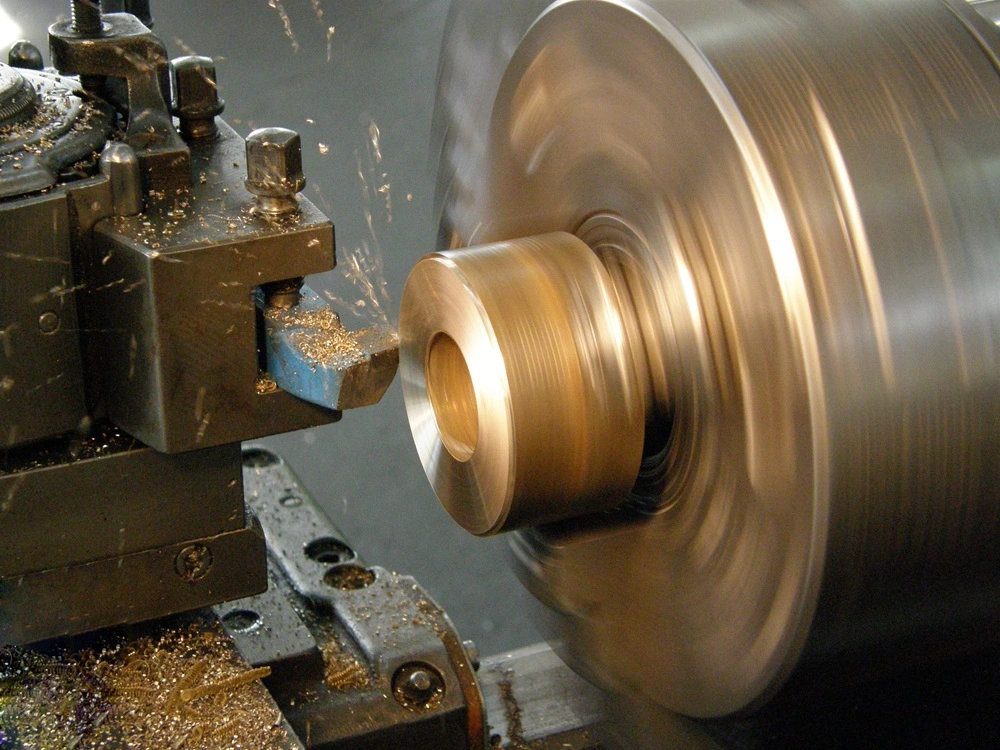
Phosphor bronze and aluminum bronze are both copper-based alloys, but they are designed for different engineering applications. Phosphor bronze is mainly used for conductivity and fatigue resistance, while aluminum bronze is preferred for strength, wear resistance, and corrosion resistance
Quick Comparison: Phosphor Bronze vs Aluminum Bronze
| Property | Phosphor Bronze | Aluminum Bronze |
| Electrical Conductivity | Higher | Lower |
| Mechanical Strength | Moderate | High |
| Fatigue Resistance | Excellent | Good |
| Wear Resistance | Good | Excellent |
| Marine Corrosion Resistance | Moderate | Excellent |
| Machinability | Easier | More Difficult |
| Typical Applications | Springs, Electrical Contacts | Marine Parts, Valves, Bearings |
Phosphor Bronze and Aluminum Bronze
What Is Phosphor Bronze
Phosphor bronze is a copper alloy primarily composed of copper, tin, and a small amount of phosphorus. Common grades such as C51000 are known for their balanced combination of strength, elasticity, and corrosion resistance.
The addition of phosphorus helps improve hardness, fatigue resistance, and wear performance, while the high copper content maintains good conductivity. Because of these properties, phosphor bronze is widely recognized for its excellent spring performance and dimensional stability under repeated stress.
What Is Aluminum Bronze
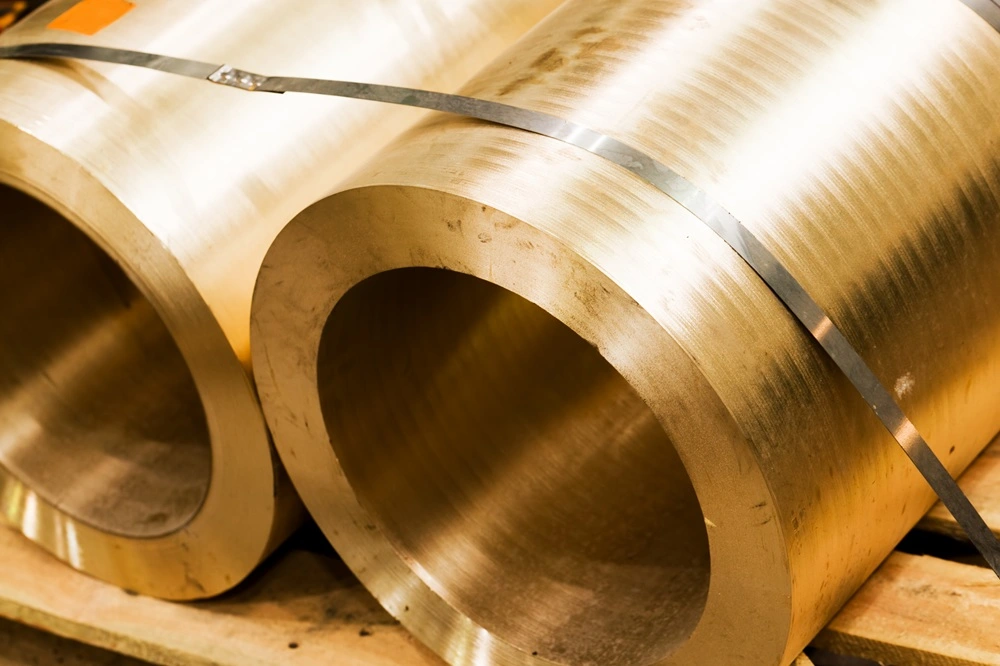
Aluminum bronze is a copper alloy primarily made from copper and aluminum, with some grades containing additional elements such as iron or nickel. Nickel aluminum bronze is one of the most widely recognized grades because of its high strength and enhanced corrosion resistance.
The aluminum content forms a protective oxide layer on the material surface, helping improve resistance to oxidation, wear, and seawater corrosion. Compared with many other copper alloys, aluminum bronze also offers excellent hardness, durability, and anti-galling performance under demanding operating conditions.
Mechanical Property Differences
Strength and Hardness
Aluminum bronze generally provides higher tensile strength and hardness than phosphor bronze, making it more suitable for components exposed to heavy mechanical loads and high surface pressure. Its higher load capacity also helps reduce deformation in demanding operating conditions.
Phosphor bronze offers more moderate strength levels but maintains better flexibility and dimensional stability in precision mechanical systems.
Fatigue Resistance
Phosphor bronze performs exceptionally well under cyclic loading because of its strong elastic recovery and stable spring behavior. The material can repeatedly flex under stress while maintaining its original shape and mechanical performance over time.
Although aluminum bronze also provides good durability, it is less optimized for continuous elastic movement and repeated spring loading compared with phosphor bronze.
Wear and Galling Resistance
Aluminum bronze offers superior resistance to friction, abrasion, and surface galling in heavy-load systems. Its hard surface structure helps reduce material transfer and surface damage in components operating under high contact pressure.
Phosphor bronze provides stable wear performance in lighter-duty moving systems but is generally less resistant to severe abrasion and heavy mechanical friction than aluminum bronze.
| Property | Phosphor Bronze | Aluminum Bronze |
| Electrical Conductivity | Higher | Lower |
| Mechanical Strength | Moderate | High |
| Fatigue Resistance | Excellent | Good |
| Wear Resistance | Good | Excellent |
| Marine Corrosion Resistance | Moderate | Excellent |
| Machinability | Easier | More Difficult |
| Typical Applications | Springs, Electrical Contacts | Marine Parts, Valves, Bearings |
Corrosion Resistance Comparison
Humid and Industrial Environments
Both phosphor bronze and aluminum bronze offer good corrosion resistance in humid and industrial conditions, but their performance characteristics are different. Phosphor bronze maintains stable surface performance in environments exposed to moisture, oxidation, and mild industrial chemicals, making it suitable for long-term operation in controlled mechanical systems.
Aluminum bronze provides stronger resistance to aggressive industrial exposure because its aluminum content reacts with oxygen to form a dense protective oxide layer. This surface film helps reduce oxidation and slows down surface deterioration under more demanding operating conditions.
Marine and Seawater Exposure
Aluminum bronze performs significantly better in marine and seawater environments due to its highly protective oxide layer and strong resistance to saltwater corrosion. The alloy also shows excellent resistance to biofouling and seawater-induced surface damage, making it highly reliable in continuously wet or offshore operating conditions.
Phosphor bronze can tolerate moderate moisture exposure, but prolonged contact with seawater and high-salinity environments may gradually reduce its long-term corrosion performance compared with aluminum bronze.
Electrical Conductivity Comparison
Phosphor Bronze Conductivity
Phosphor bronze generally provides higher electrical conductivity than aluminum bronze, allowing more efficient current transfer in systems requiring stable electrical performance. Its lower electrical resistance helps maintain consistent signal transmission and reduces energy loss during operation.
Aluminum Bronze Conductivity
Aluminum bronze has comparatively lower conductivity because the alloy contains a higher percentage of strengthening elements that reduce electron flow efficiency. While it can still conduct electricity, it is typically less suitable for applications where electrical reliability, stable conductivity, and precise current transfer are critical engineering requirements.
Machinability and CNC Machining Challenges
Phosphor bronze and aluminum bronze behave very differently during CNC machining because of their material structure and cutting response.
Machining Characteristics of Phosphor Bronze
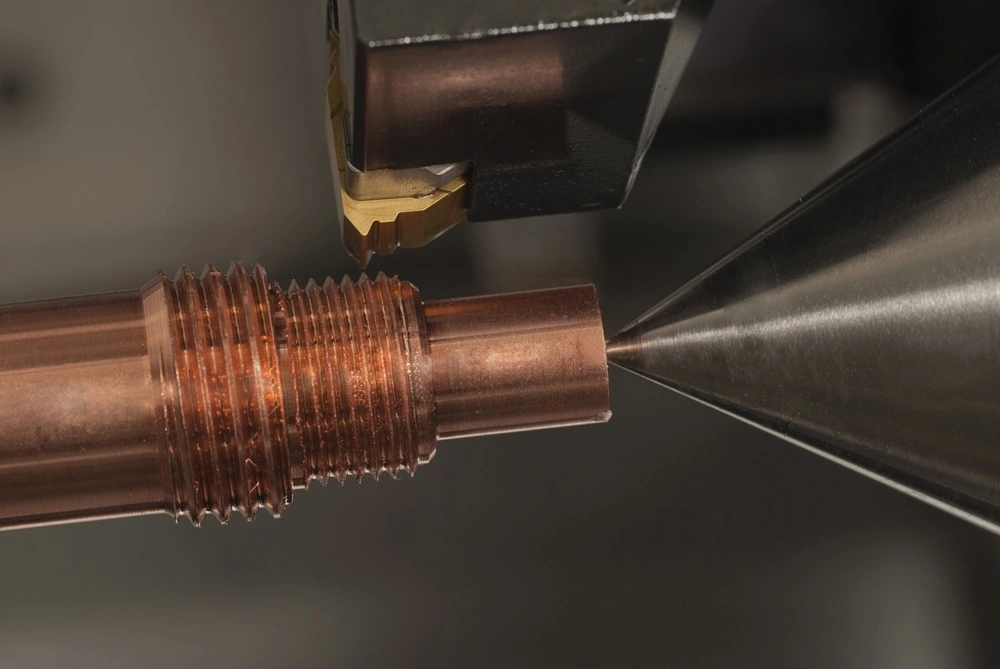
Phosphor bronze is generally easier to machine and can produce stable dimensional accuracy in precision machining operations. However, the material may still create burr formation along sharp edges, especially when machining thin sections or fine features. Chip control can also become inconsistent during high-speed cutting, requiring careful feed rate adjustment and proper tool geometry to maintain clean surface finishes.
Machining Challenges of Aluminum Bronze
Aluminum bronze is considerably more difficult to machine because of its high toughness and strong abrasion resistance. The material often produces gummy cutting behavior, built-up edge formation, chatter during interrupted cutting, higher cutting temperatures, aggressive tool wear, and severe tool stress during continuous machining operations. Work hardening can also occur if cutting parameters are not properly controlled, increasing tool wear and reducing machining stability.
To improve machining performance, manufacturers commonly use carbide tooling, rigid machine setups, high-pressure coolant systems, and slower cutting speeds when machining aluminum bronze components.
Typical Applications
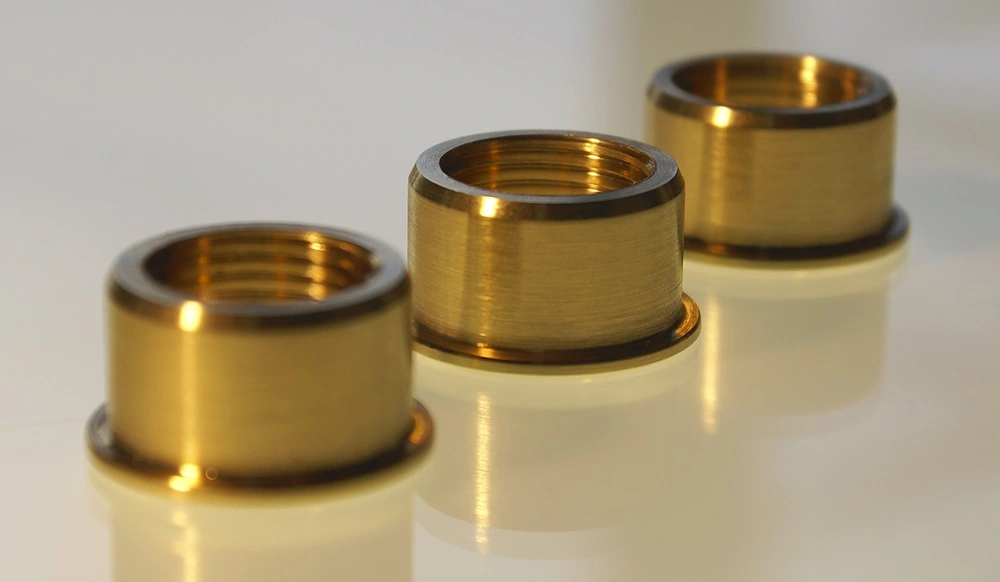
Applications of Phosphor Bronze
Phosphor bronze is widely used in precision electrical and mechanical components where stable conductivity and controlled movement are required.
Common applications include:
- Springs
- Electrical contacts
- Terminals
- Precision connectors
- Contact clips
- Electronic hardware
Applications of Aluminum Bronze
Aluminum bronze is commonly used in heavy-duty industrial equipment operating under demanding mechanical conditions.
Typical applications include:
- Marine equipment
- Valve components
- Pump systems
- Offshore hardware
- Heavy-duty bearing systems
- Industrial wear parts
Which Alloy Should You Choose
Selecting the right alloy depends on the actual operating requirements of the component, including load conditions, electrical performance, environmental exposure, and service life expectations.
| If You Need | Better Choice | |
| Stable electrical conductivity | Phosphor Bronze | |
| Precision signal transfer | Phosphor Bronze | |
| High-load mechanical durability | Aluminum Bronze | |
| Seawater exposure resistance | Aluminum Bronze | |
| Elastic movement and recovery | Phosphor Bronze | |
| Severe surface wear resistance | Aluminum Bronze | |
| Lower machining difficulty | Phosphor Bronze | |
| Abrasion resistance under friction | Aluminum Bronze |
Frequently Asked Questions About Phosphor Bronze vs Aluminum Bronze
Which bronze alloy is better for electrical contacts
Phosphor bronze is generally preferred for electrical contacts because it offers higher electrical conductivity, stable current transfer, and reliable performance under repeated movement.
Is aluminum bronze suitable for seawater environments
Yes. Aluminum bronze is widely used in seawater and offshore environments because its protective oxide layer provides excellent resistance to saltwater corrosion and biofouling.
Which alloy is easier to machine, phosphor bronze or aluminum bronze
Phosphor bronze is usually easier to machine and produces more stable cutting performance. Aluminum bronze is more difficult to machine because of its higher toughness, work hardening tendency, and increased tool wear during CNC operations.
Can phosphor bronze be used for springs
Yes. Phosphor bronze is commonly used for springs, connector clips, and elastic electrical components because of its excellent fatigue resistance and elastic recovery under cyclic loading.
Why is aluminum bronze more wear resistant
Aluminum bronze has higher hardness and stronger resistance to abrasion and surface galling. This allows the alloy to perform reliably in high-load systems with continuous friction and sliding contact.
Is aluminum bronze stronger than phosphor bronze
In most engineering applications, aluminum bronze provides higher tensile strength and load capacity than phosphor bronze, making it more suitable for heavy-duty mechanical systems.
What are the common grades of phosphor bronze and aluminum bronze?
Common phosphor bronze grades include C51000 and C52100, while widely used aluminum bronze grades include C95400 and nickel aluminum bronze alloys such as C63000.
Which bronze alloy is better for CNC machining projects
The better alloy depends on the operating requirements of the component. Phosphor bronze is often selected for precision electrical and spring-loaded parts, while aluminum bronze is commonly used for high-strength industrial components exposed to severe wear or corrosive environments.
Conclusion
If your project requires stable conductivity, precise contact performance, or repeated elastic movement, phosphor bronze is usually the better choice. If the component will operate under heavy loads, severe friction, seawater exposure, or harsh industrial conditions, aluminum bronze is generally the more reliable option.
The best material selection ultimately depends on the actual operating environment, machining requirements, and long-term performance expectations of the component. At Rollyu Precision, we support customers with custom CNC machining for phosphor bronze, aluminum bronze, and other engineering copper alloys, helping optimize both material selection and manufacturing quality for precision industrial parts.