
Confused about Invar vs Kovar Discover the key differences in thermal expansion chemical composition applications and machining tips for your CNC project.
Invar vs Kovar Which Precision Alloy is Right for Your Project
When producing highly sensitive components for the aerospace, telecommunications, or medical sectors, controlling thermal expansion is a critical priority. In the realm of precision engineering, two nickel iron alloys stand out above the rest: Invar and Kovar
Because both are nickel iron alloys known for their controlled thermal expansion they are frequently confused. However, they are engineered to solve two entirely different engineering problems.
If you had to distinguish them in a single sentence:
What is Invar The Zero Expansion Alloy
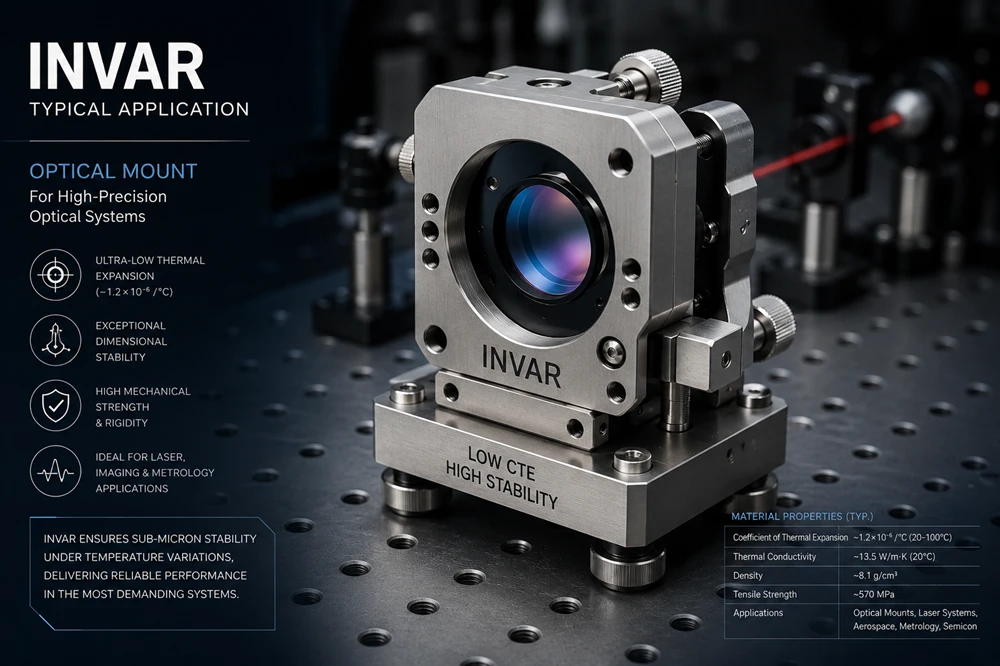
Invar, specifically Invar 36, is an alloy composed of roughly 36% nickel and 64% iron. Named after the word “invariable,” its core characteristic is that its dimensions hardly change at all when exposed to temperature fluctuations.
Near-Zero Thermal Expansion
The primary goal of Invar is to achieve a near-zero Coefficient of Thermal Expansion (CTE). This incredible dimensional stability is maintained from extreme cryogenic temperatures up to about 200 degrees Celsius.
Ideal Applications
If you are building a precision tool or instrument that absolutely cannot grow, shrink, or warp when the temperature changes, Invar is undoubtedly the ultimate material of choice.
What is Kovar The Glass Sealing Alloy
Kovar is a specialized alloy composed of roughly 29% nickel, 17% cobalt, and 54% iron. Unlike Invar, it isn’t designed for zero expansion. Instead, its controlled thermal expansion rate perfectly matches borosilicate glass and alumina ceramics.
The Metal-Glass Challenge
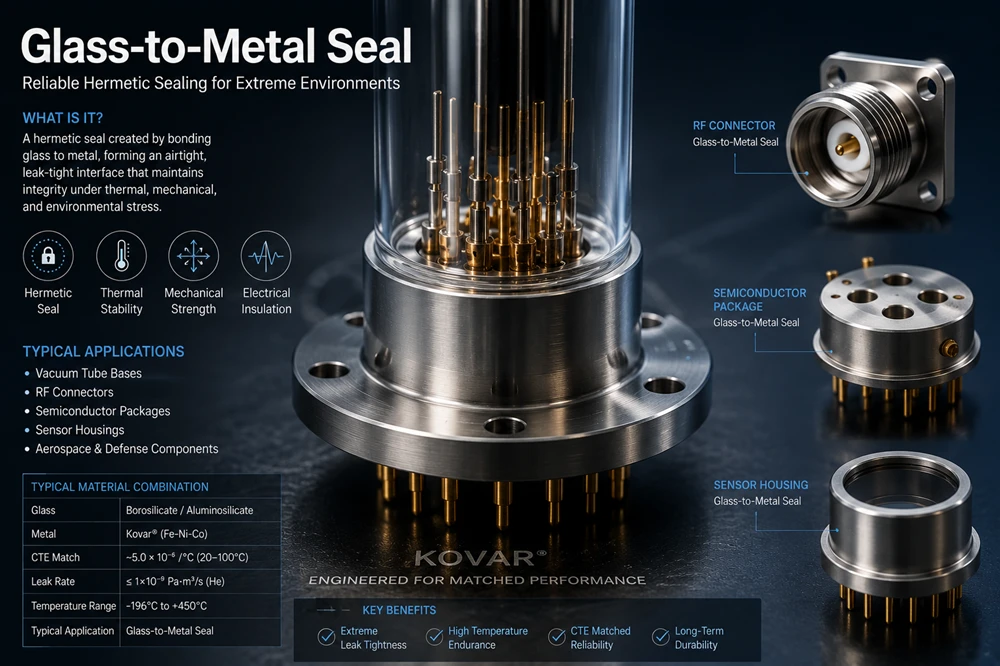
Metals and glass usually expand at completely different rates. If you heat a standard steel wire sealed inside a glass tube, the metal expands much faster, inevitably causing the glass to shatter.
Permanent Hermetic Seals
Because Kovar expands and contracts at the exact same rate as glass, it guarantees a permanent hermetic seal. This unique property makes it the ultimate material choice for glass-to-metal bonding applications.
Invar vs Kovar Head to Head Comparison
To understand which alloy you need we must compare their thermal behaviors chemical compositions and industry applications.
Thermal Expansion Goals The Biggest Difference
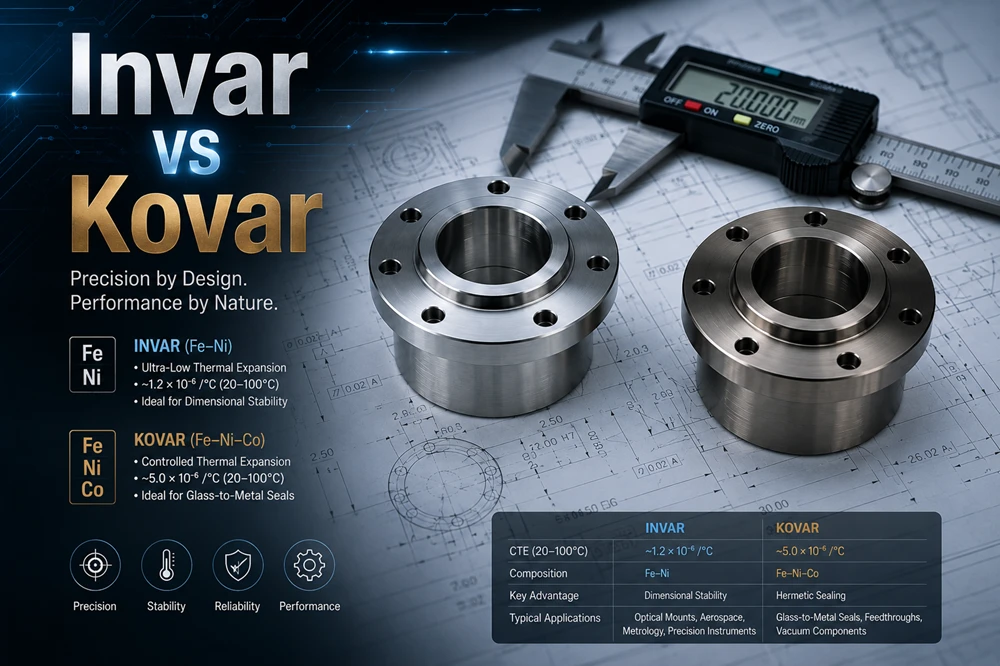
While both are specialty nickel-iron alloys, their primary difference lies in how they handle temperature fluctuations. Invar is engineered to maintain absolute dimensional stability by resisting expansion entirely. Conversely, Kovar is designed to expand at a very specific, controlled rate.
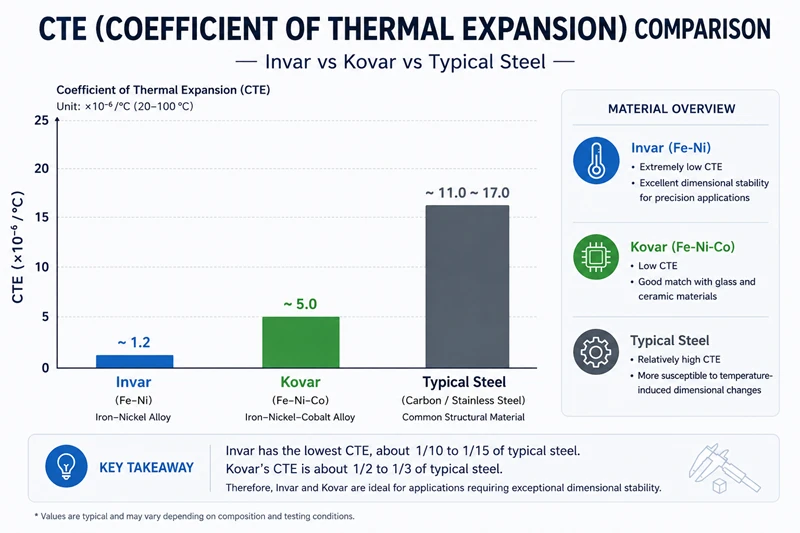
Invar has an exceptionally low CTE
The goal is stability. It is designed to resist expansion entirely. Between room temperature and 200 degrees Celsius its CTE is roughly 1.2 x 10⁻⁶ /°C. It is used to keep parts dimensionally static regardless of the environment.
Kovar has a matched CTE
The goal is compatibility. Its CTE is roughly 5.0 x 10⁻⁶ /°C which is significantly higher than Invar. However it is designed to expand predictably so it can move in perfect harmony with hard glass and ceramics preventing cracks and vacuum leaks.
| Feature | Invar 36 | Kovar |
| Primary Goal | Absolute dimensional stability | Perfect glass-to-metal sealing |
| CTE (up to 200°C) | ~1.2 x 10⁻⁶ /°C (Near-Zero) | ~5.0 x 10⁻⁶ /°C (Matched) |
| Thermal Behavior | Resists thermal expansion entirely | Expands in harmony with glass/ceramics |
| Cobalt Content | 0% | 17% |
| Machinability | Extremely difficult | Slightly harder than Invar |
Chemical Composition
The introduction of Cobalt is the key chemical difference between the two materials.
Invar 36 Chemical Composition
36 percent Nickel and 64 percent Iron. Contains no Cobalt.
Kovar Chemical Composition
29 percent Nickel 17 percent Cobalt and 54 percent Iron.
| Chemical Element | Invar 36 | Kovar |
| Nickel (Ni) | 36% | 29% |
| Iron (Fe) | 64% | 54% |
| Cobalt (Co) | 0% | 17% |
Typical Industry Applications
Because of their distinct thermal behaviors these two metals operate in entirely different battlefields.
Invar Primary Battlefield Precision Mechanics and Optics
Used in high tech equipment where even a 1 micron deformation would cause catastrophic system failure.
- Typical Parts: Ultra precision 5 axis air bearing stage bases interferometer mounts aerospace composite curing molds laser cavities and OLED shadow masks.
Kovar Primary Battlefield Electronic Packaging and Vacuum Sealing
Used heavily in Glass to Metal Sealing.
- Typical Parts: Semiconductor packaging aerospace microwave housings vacuum tubes X ray tube pins and Radio Frequency RF connectors.
Machinability Are Invar and Kovar Hard to CNC Machine
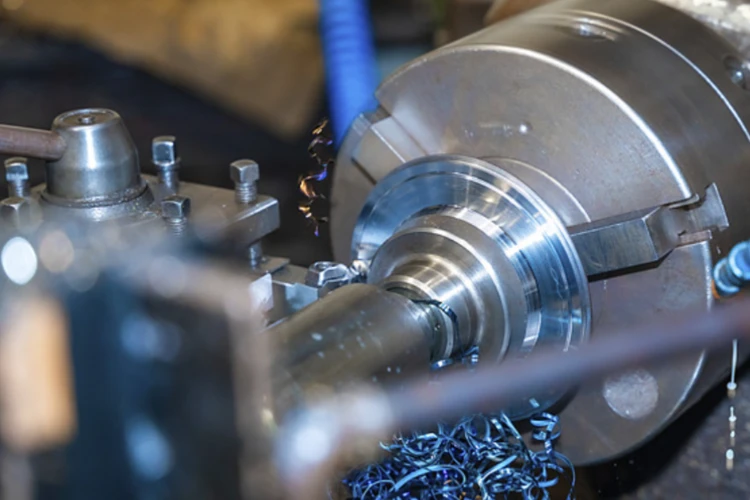
Yes. From a CNC machining perspective Invar and Kovar are notoriously difficult to machine. Working with them requires an experienced manufacturing partner like Rollyu Precision.
Similar Cutting Experience
Both alloys feature an austenitic structure. They are highly tough and extremely gummy to cut. They produce long continuous stringy chips that are difficult to break and prone to wrapping around cutting tools and spindles.
Severe Work Hardening
Both materials are highly susceptible to rapid surface work hardening caused by cutting friction. If your cutting tool rubs against the material rather than cutting cleanly the surface hardens immediately rapidly destroying the tool on the next pass.
Optimal Machining Strategy
Successfully machining these materials requires sharp cutting tools with a large positive rake angle exceptional cooling and lubrication slightly lower cutting speeds and heavier feed rates to ensure the cutting edge gets completely beneath the work hardened layer.
The Minor Difference
Because Kovar contains 17 percent Cobalt its strength and hardness are slightly higher than Invar. This means Kovar may wear down cutting tools slightly faster but the overall CNC machining strategy remains identical.
Frequently Asked Questions
Can Kovar be used instead of Invar
No they are generally not interchangeable. If your goal is to stop a component from expanding under heat like an optical mount Kovar will expand too much and cause alignment issues. If your goal is to seal metal to glass like a vacuum tube Invar expansion rate will not match the glass causing the seal to break
Are Invar and Kovar magnetic
Yes. Because they are both heavily iron based alloys both Invar and Kovar are highly magnetic at room temperature. However they both lose their magnetism when heated past their respective Curie temperatures.
Do Invar and Kovar rust easily
Yes. Unlike stainless steel, neither Invar nor Kovar contains Chromium, which is the element that prevents rust. Because they are iron-based alloys, both are highly susceptible to oxidation and will rust quickly if exposed to moisture, high humidity, or even the sweat from bare hands. Invar and Kovar parts usually require protective surface plating (such as nickel, silver, or gold) for long-term use.
Which is harder to machine: Invar or Kovar
Both are considered extremely difficult to CNC machine because they are tough, “gummy,” and prone to severe work hardening. However, Kovar is slightly harder to machine than Invar. The addition of 17% Cobalt in Kovar increases its strength and hardness, leading to slightly faster cutting tool wear compared to Invar 36.
Conclusion
Choosing between Invar and Kovar depends entirely on your thermal expansion needs: absolute stability or perfect glass-to-metal sealing. Because both alloys are notoriously difficult to machine, partnering with an experienced manufacturer is critical. Trust Rollyu Precision for your custom CNC machining needs. Contact us today to discuss your precision alloy project and get a competitive quote.